David C. Smith, Part 4: The Fall of the First World and Four Horror Novels
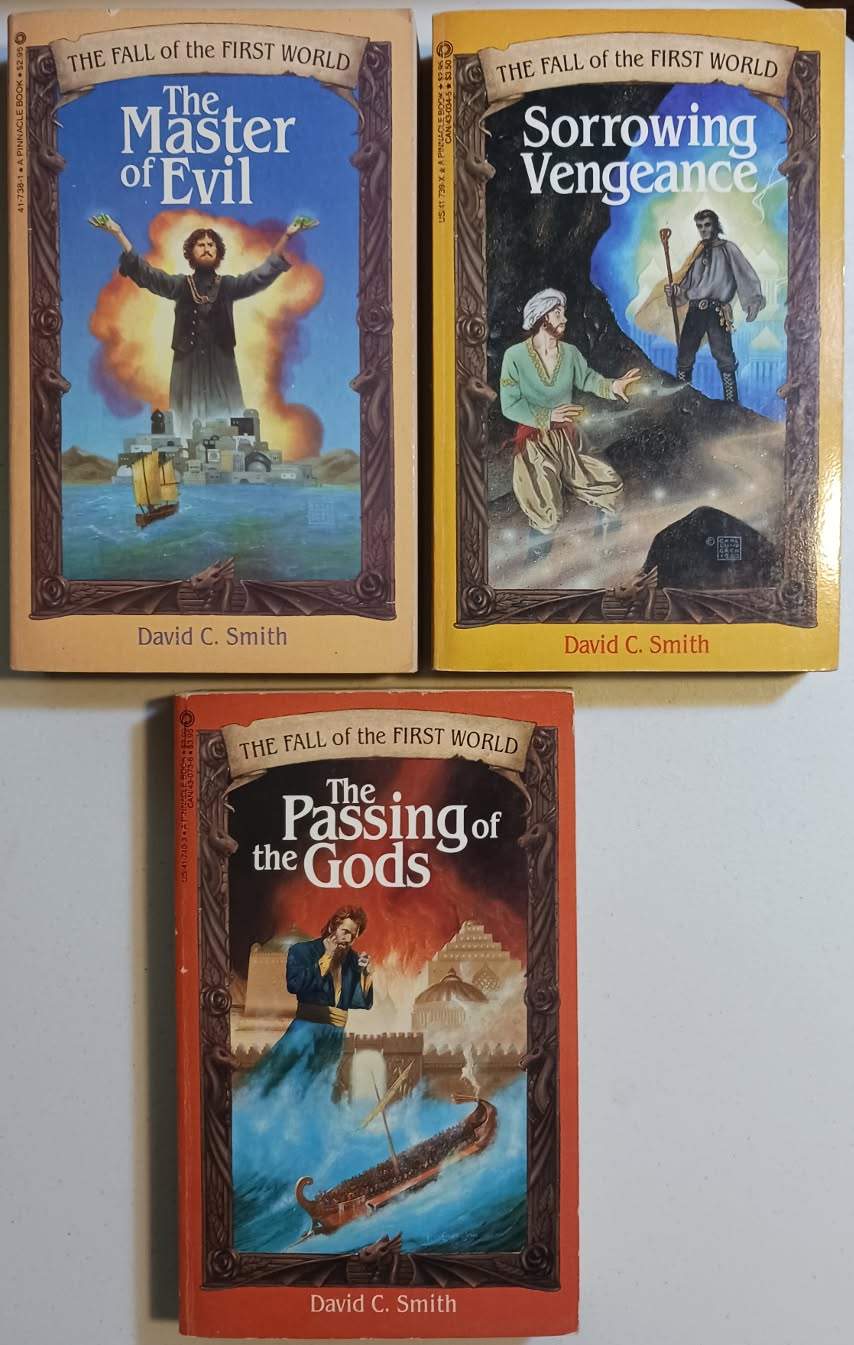
David C. Smith also wrote a trilogy of fantasy novels under the collective heading of The Fall of the First World. These were all released in 1983 from Pinnacle Books and are:
1. The Master of Evil, January 1983. Cover by Carl Lundgren
2. Sorrowing Vengeance, September 1983. Cover by Carl Lundgren
3. The Passing of the Gods, December 1983. Cover by Kevin Johnson
This trilogy is less Sword & Sorcery and more High Fantasy, although it’s not exactly that either. It’s hard to categorize. In some ways, the political maneuverings in the series are a harbinger for later series such as Game of Thrones.
[Click the images for First World versions.}
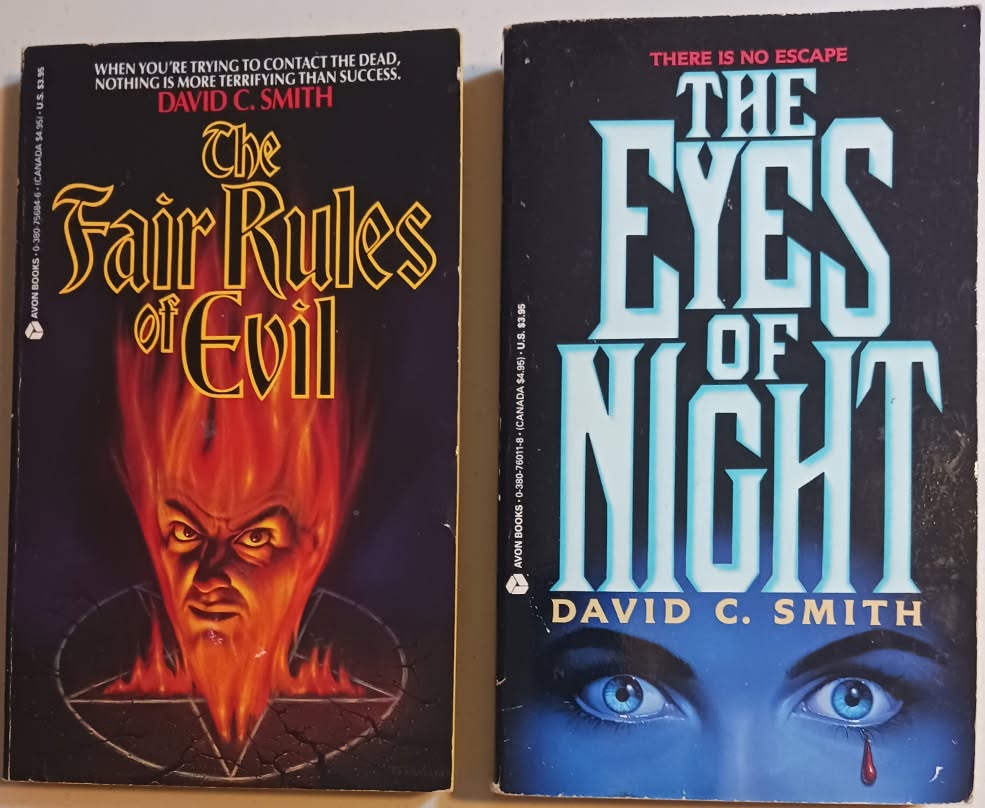
Smith has worked in the horror field as well. I much enjoyed a 2-book series he wrote featuring the character David Trevisan, who is about to become a priest when he discovers the truth of the supernatural world. The Fair Rules of Evil (1989, cover by James Warren) and The Eyes of the Night (1991, cover by Tim O’Brien) were both released by Avon Books.
A haunted house novel for those who love such works as The Haunting of Hill House by Shirley Jackson (which I do) is Smith’s book Coven House. Relentlessly horrifying. This was released in 2021 by Pulp Hero Press. I’m not sure who did the cover.
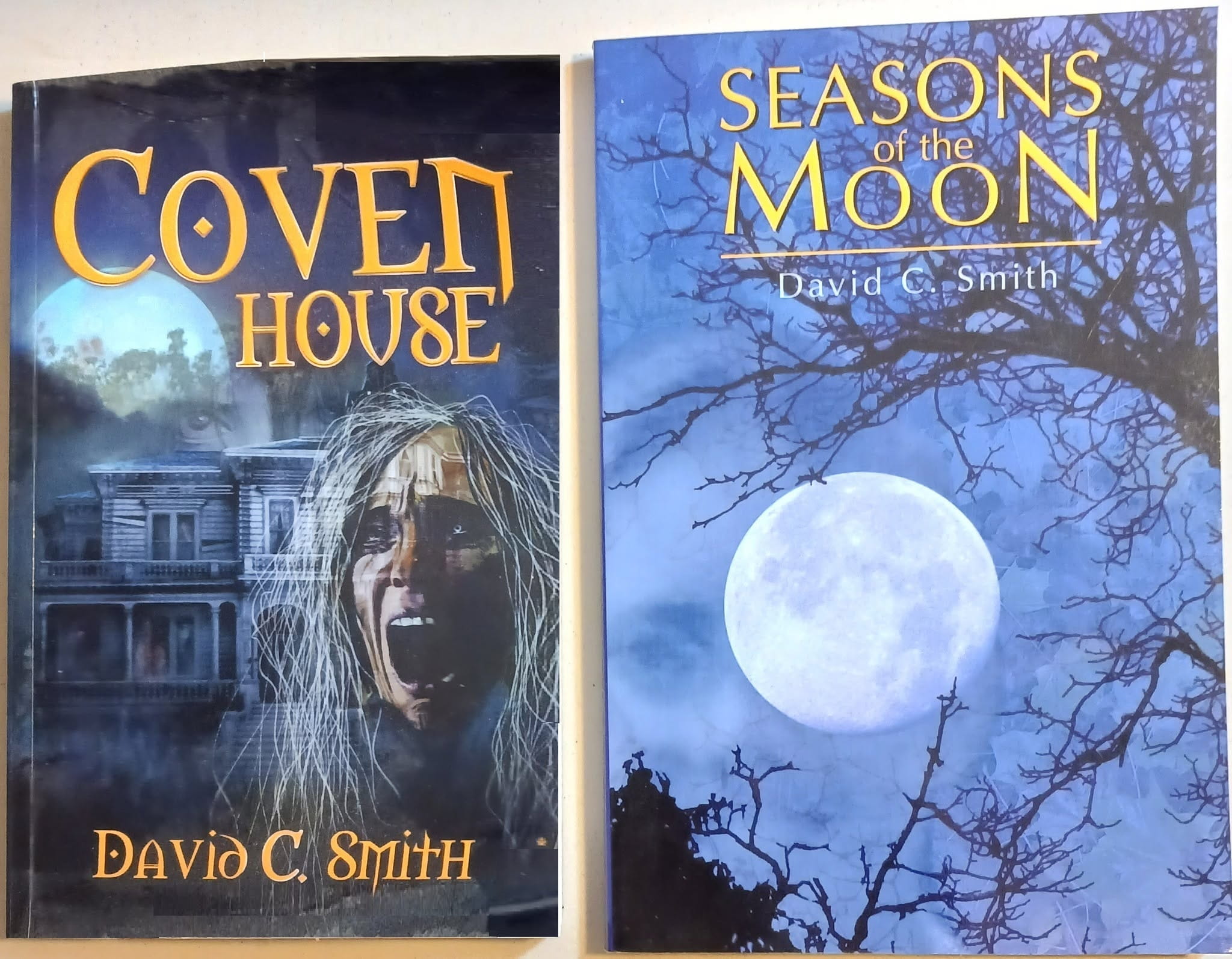
And then there’s Seasons of the Moon, which I loved but found very difficult to categorize. Perhaps “literary horror!” (Cover design by David M. Stanley).
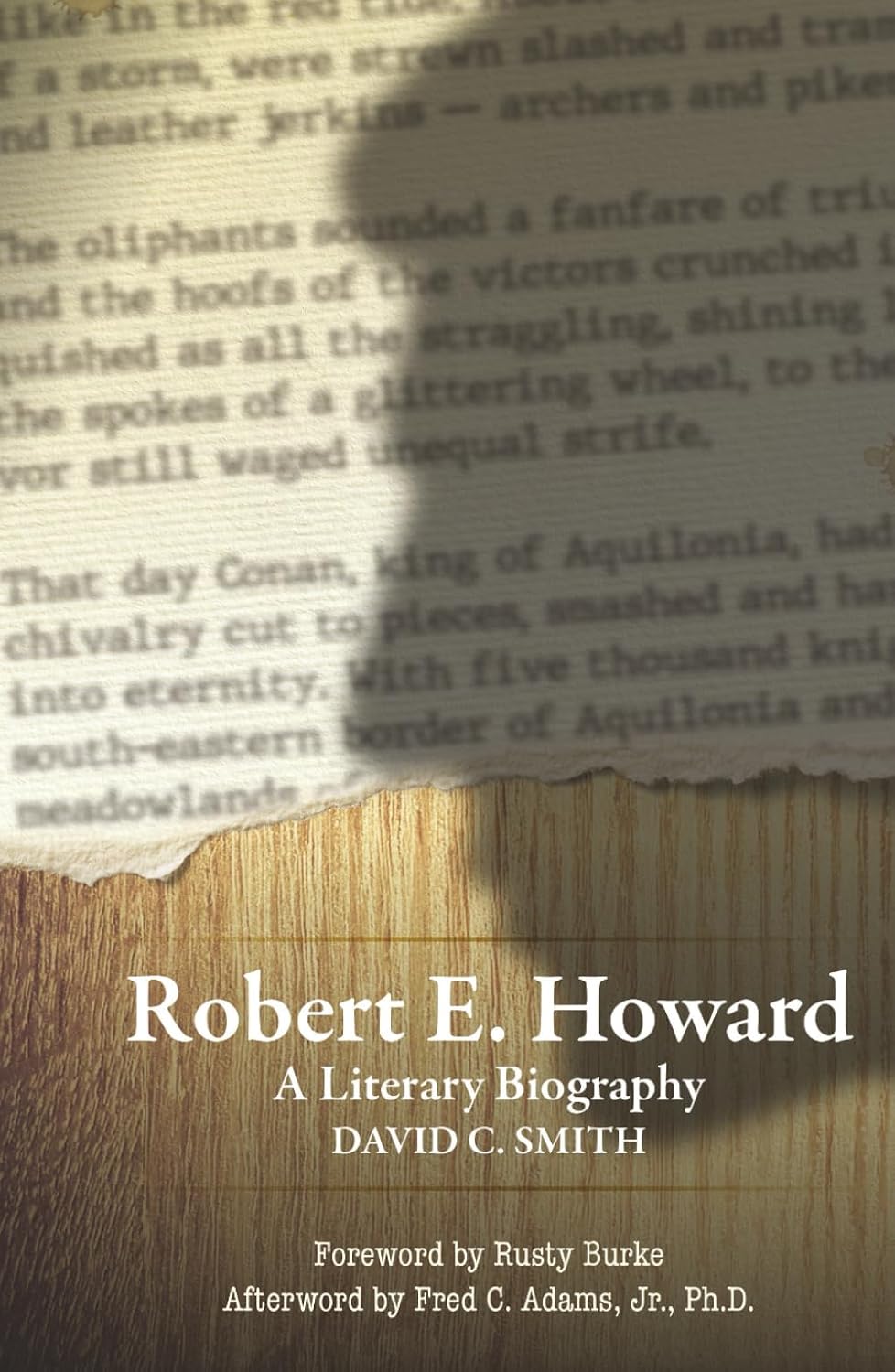
In addition to writing fiction, Smith has worked as a professional editor through much of his life. He’s been an English teacher and wrote an English textbook. One of his recent nonfiction works is: Robert E. Howard, A Literary Biography, which won an award for outstanding achievement from the Robert E. Howard Foundation. It came out in 2018 from Pulp Hero Press.
 |
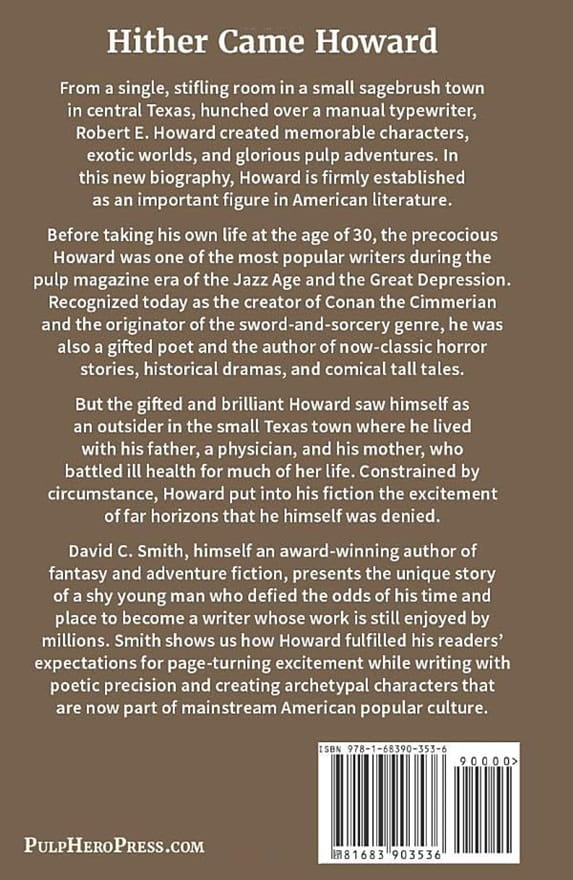 |
Robert E. Howard: A Literary Biography (Pulp Hero Press, September 30, 2018)
The other installments in this series include:
David C. Smith & Robert E. Howard, Part One
David C. Smith & Robert E. Howard, Part Two: Red Sonja
David C. Smith, Part Three: Oron and the Tales of Attluma
David C. Smith, Part Four: The Fall of the First World and Four Horror Novels
David C. Smith, Part 5: Sometime Lofty Towers
Smith has more work out there that I haven’t read yet so somewhere down the line we may see his name again. But for now, we’ll close out our series with a review of what may be his best work — the novel Sometimes Lofty Towers. See you next week.
Charles Gramlich administers The Swords & Planet League group on Facebook, where this post first appeared. His last article for us was Part Three of his review of the heroic fantasy of David C. Smith. See all of his recent posts for Black Gate here.
Excellent series of articles, Charles. I first read FOTFW — as Dave and I call it — in 1983. Have read it 3 times since. It’s Dave’s magnum opus. I’ve always said it was Epic Sword & Sorcery, something I tried and failed to finish, although much of that ended up in one form or another in 4 Mad Shadows novels. Dave, like Black Gate itself, is another reason I returned to writing in 2007. He’s been a pen-pal, my editor, my co-author, and above all, my friend since 1978. Great job, Charles!
glad you enjoyed.
Joe, thanks, my friend. And I’d say that with your Mad Shadow series you are definitely hitting your stride with epic sword & sorcery fiction, for sure. Take a bow. It’s really good work. And, hey, you helped get *me* back into writing, don’t forget, when Janine and I moved here to Chicago after I’d given up for so many years.
Charles, thanks so much for highlighting The Fall of the First World and my horror novels. I’m proud of all of them and put a lot of work into them. Yes, “literary” is the tone or element I go after in a number of my books that don’t fit easily into any category. And that’s precisely the reason why I’ve had to work outside mainstream publishing, which requires easily categorized product by writers who have earned “brand name” status. This makes me a bit irritable, of course, but is also necessary for publishers to continue having anything to publish that will attract readers. And that includes me and the “categorizable” fiction I myself read. Years ago, when I delivered the MS of “Eyes of Night” to my then-agent, Don Maas, in Manhattan, I told him I wanted to be like a movie director and try writing different kinds of novel just as directors take on different projects. He advised me, quite correctly, that authors are more like actors who are regarded as being predictably suited for one sort of role over another–comedian, action star, etc. His advice was honest and truthful, but I continue trying to be a movie director and go my own way with my own ideas! Doesn’t mean I’m special or anything, just interested in going where my ideas for stories take me. TFOTFW came about when my agent at the time (I’ve had a few) said, in 1979, that publishers were looking for fantasy trilogies to buy; this was around the time when The Lord of the Rings and The Sword of Shannara, etc., really took off. Epic fantasy then hadn’t *quite* settled into the forms we’re familiar with now, so I took my own path with my trilogy, naturally, making it feel quasi-historical as well as steeped in old mythological tropes. Took a few years for it to sell; when it did, it didn’t do well because fantasy trilogies had by then taken the predictable forms we now know, i.e., kings and queens and kingdoms and thrones and dragons, etc. Mine is different, either disappointingly so for most readers or refreshingly so for others. But I’ve always wondered if GRR Martin ever read TFOTFW and got some ideas or inspiration from it, although we know he’s a good enough writer by himself. But like most of us, he probably reads–or read, then–“everything.” So I have wound up being a goofy guy who writes oddball stuff. Although I hope that Coven House truly scares some folks. The short story I based it on, published in Weird Tales, frightened at least one reader who said so in a review. Also, my family says I talk too much, and this long paragraph from a goofy guy proves that!
writers use words. We can’t blame them for that. Thanks for your insight into your work.