Browsed by
Author: John ONeill

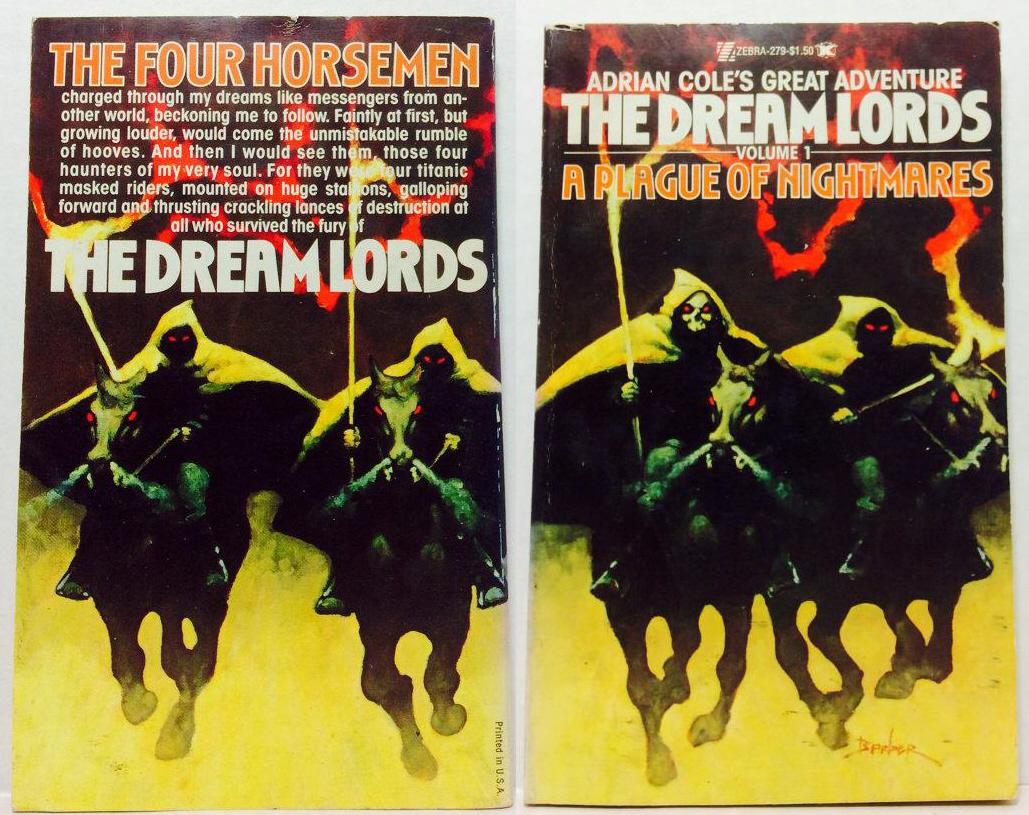
Vintage Treasures: The Dream Lords by Adrian Cole
Vintage Treasures: The Dream Lords by Adrian Cole

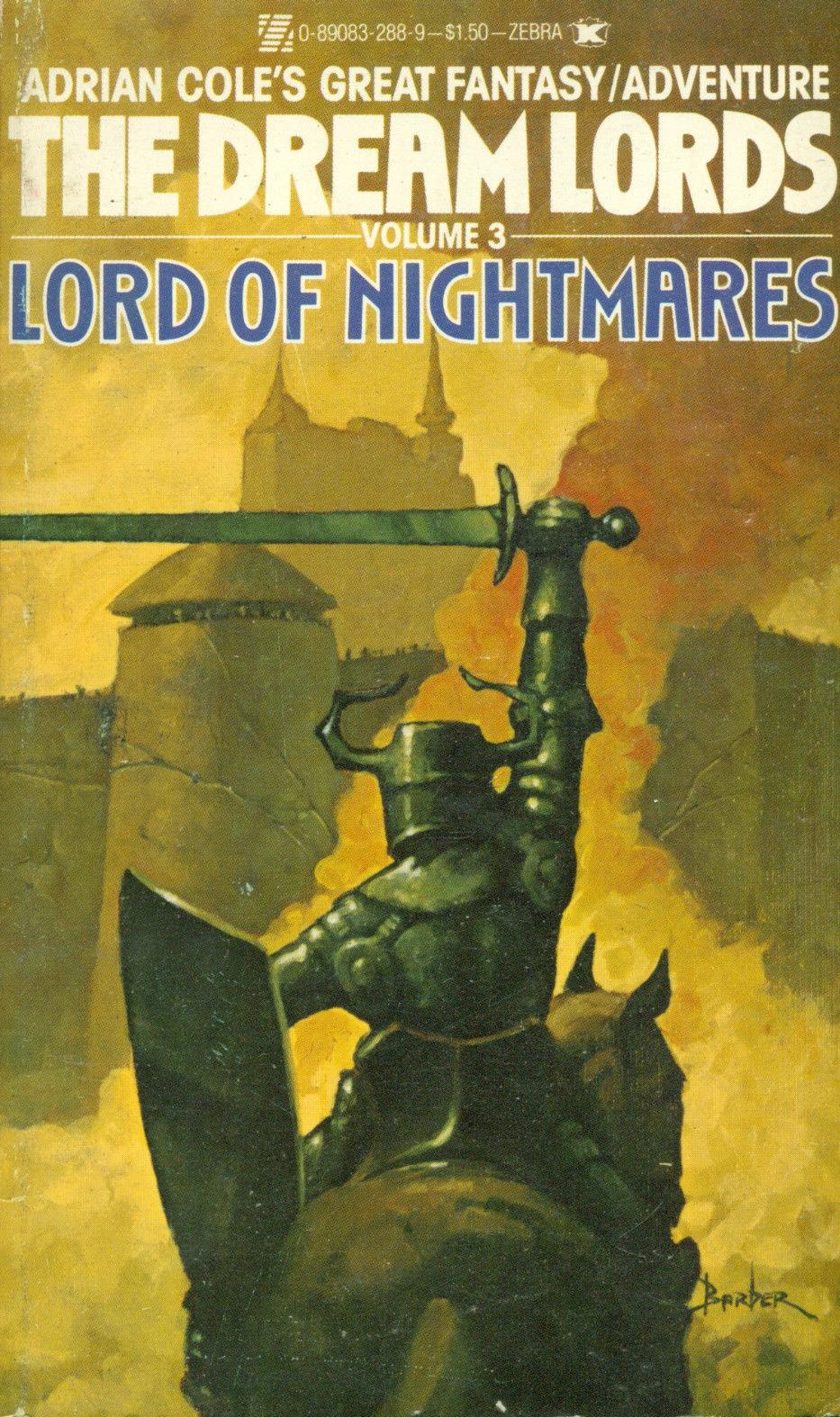
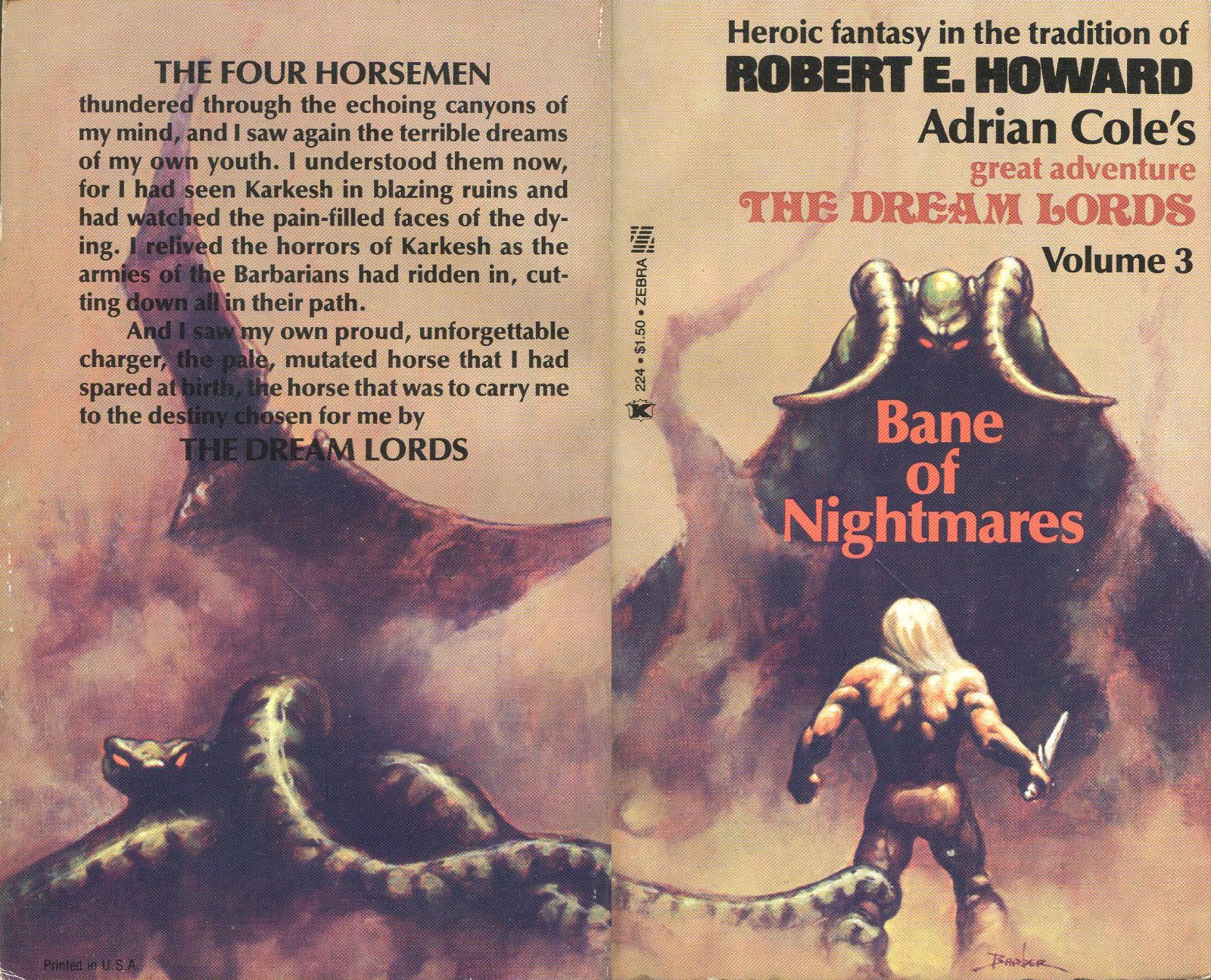
The Dream Lords 1 A Plague of Nightmares-small The Dream Lords 2 Lord of Nightmares-small The Dream Lords 3 Bane of Nightmares-small

I don’t often hear of fantasy described as “In the tradition of Tolkien and Lovecraft!” Just seems like an odd mix to me. But that’s exactly how Adrian Cole’s first three novels, collectively known as The Dream Lords trilogy, are described.

Cole is a British writer also known for his four-volume Omaran Saga, and his more recent trilogy The Voidal, which Fletcher Vredenburgh called “an endless collection of interesting settings: universe-sized dimensions; monster-infested pocket worlds; a realm filled not with planets but islands that float in space.” But I was first introduced to him with The Dream Lords, which he reportedly wrote after reading Tolkien’s The Lord of the Rings while working in a library in the mid-seventies.

Interestingly, this series has no second volume. It has a first volume, A Plague of Nightmares, and two third volumes, Lord of Nightmares and Bane of Nightmares, but no second volume. That’s cool.
Read More Read More

The Omnibus Volumes of Steven Brust: The Adventures of Vlad Taltos

The Omnibus Volumes of Steven Brust: The Adventures of Vlad Taltos

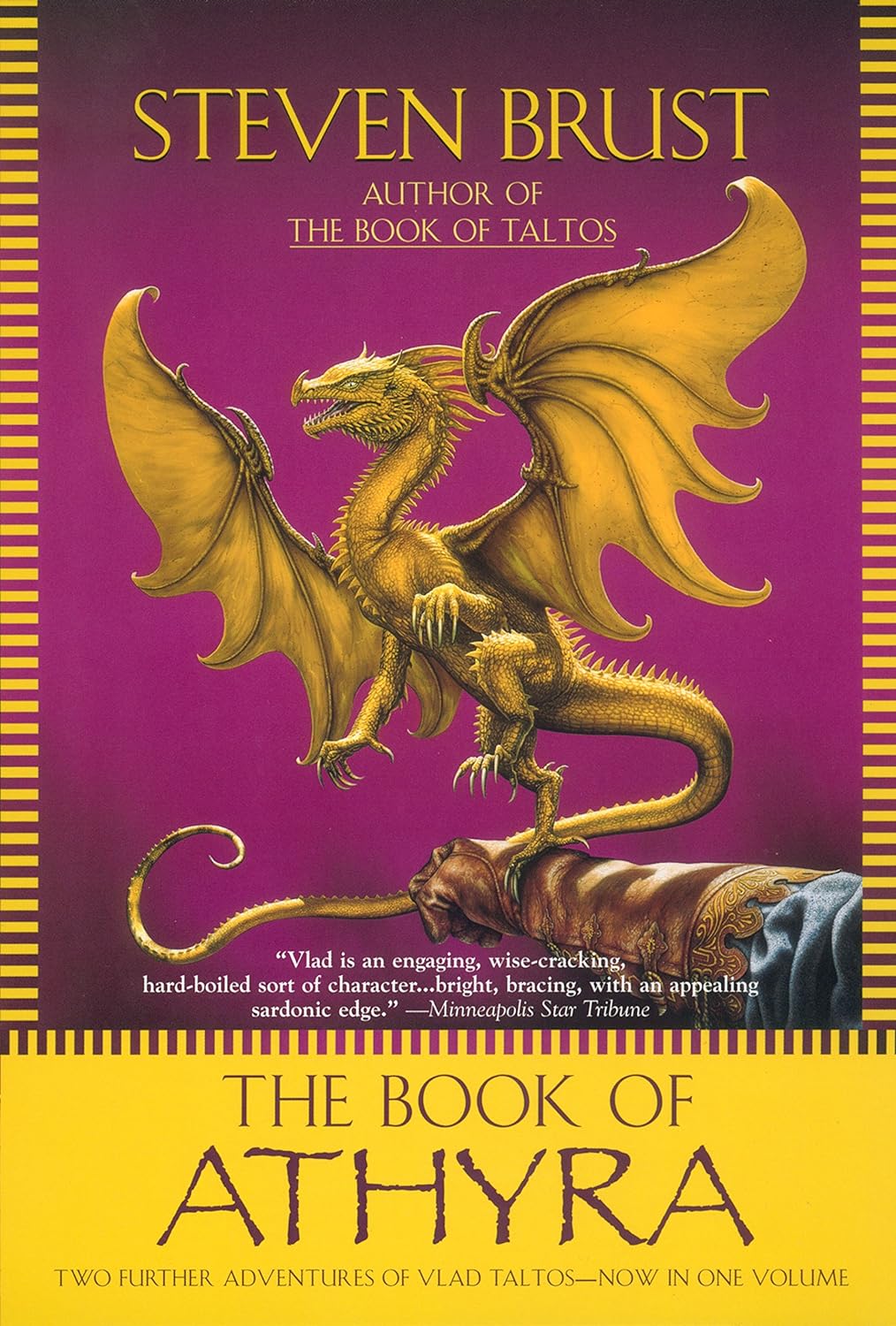
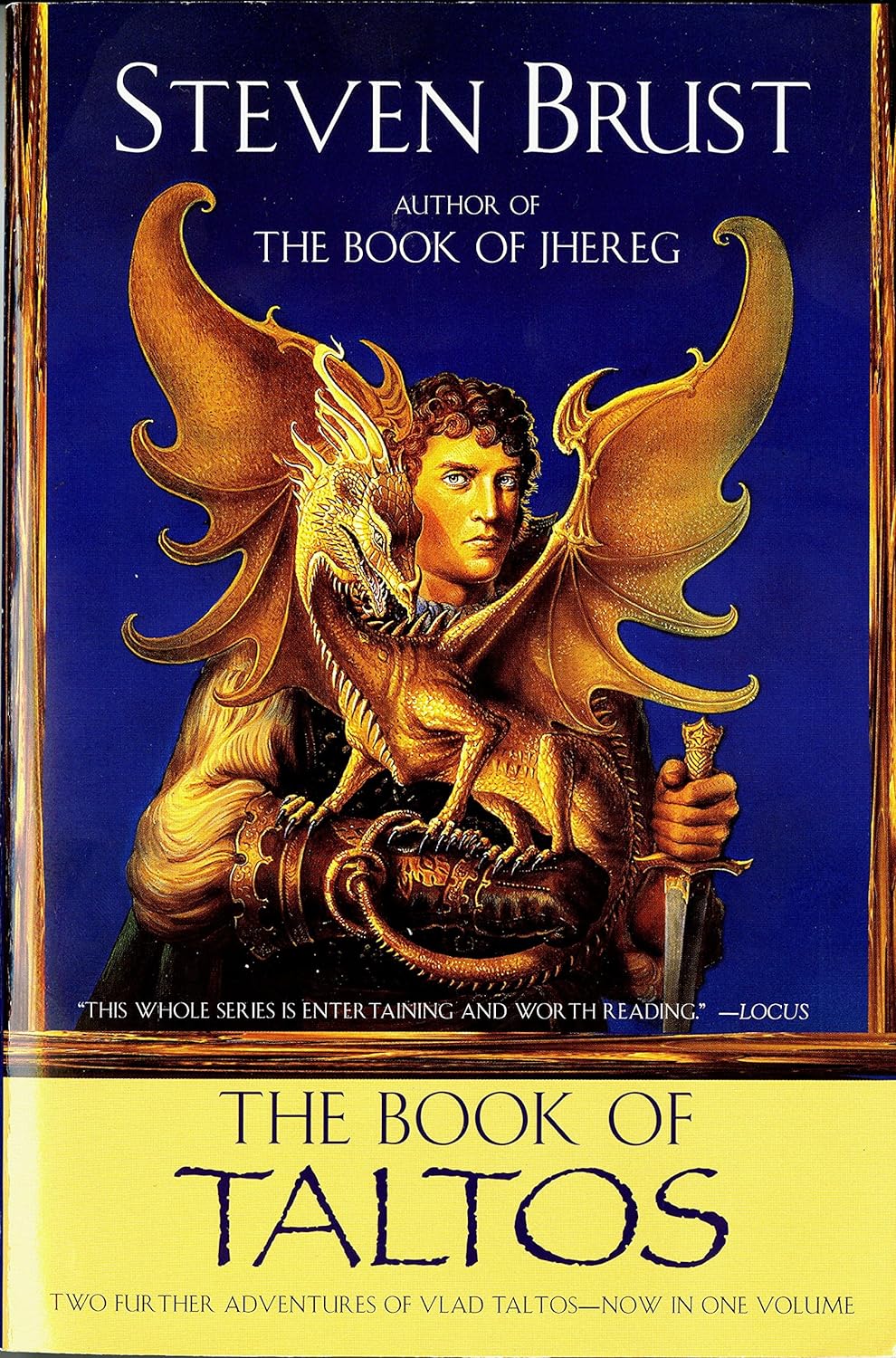
The Book of Jhereg-small The Book of Taltos-small The Book of Athyra-small


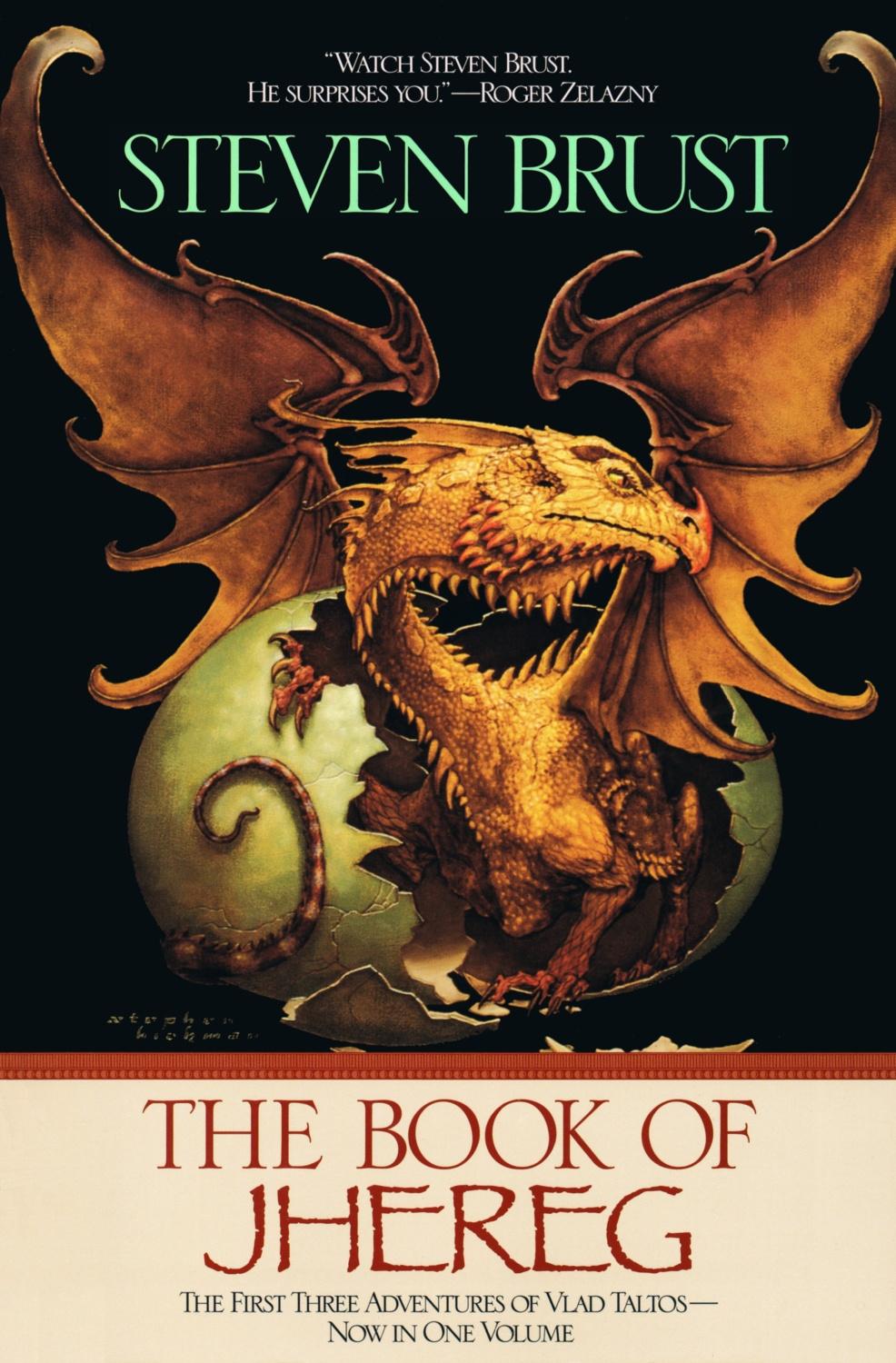
The omnibus editions of The Adventures of Vlad Taltos from Ace Books, collecting

the first seven volumes: The Book of Jhereg (1999), The Book of Taltos (2002), and
The Book of Athyra (2003). Covers by Stephen Hickamn, Kinuko Y. Craft, Ciruelo Cabral

Steven Brust’s Vlad Taltos novels are unique in modern fantasy. They’re caper novels in which a supremely gifted assassin, Vlad Taltos, teams up with a group of like-minded companions (including pickpockets and vampires) to right wrongs, alter the course of destiny, and sometimes make a little coin. The odds are always against them, and things don’t always go their way, but Vlad, our protagonist and narrator, has a wry and self-deprecating sense of humor that makes the books highly entertaining. There are plenty of great reviews out there I could point you to, but one of my favorites is this concise one-paragraph bit from Amazon reviewer Wizard’s Apprentice:

Vlad is a human in a city dominated by eight-foot Dragaerans, who never have to shave and live to be a thousand. It’s their turf, and their rules, and they routinely conquer and abuse “Easterners” like Vlad. He’s not the type to take this, so he becomes a “Jhereg” assassin, working up the ranks of a criminal syndicate until he comes to boss dozens of Dragaerans around, befriending some and terrorizing others. He adopts a new-hatched mini-dragon or jhereg, finding that the cat-sized beast has a humanlike intelligence and a nasty sense of humor, and wins a grudging respect from the dominant species. All his friends are 900 years old, or undead vampires, or legendary thieves; but don’t hold it against them. Vlad solves mysteries and evades death, and cooks fiery fungus-laced omelets, in a bizarre semi-alien milieu. He finds love. He sharpens knives. He gloomily bandages his jhereg bites. He’d be right at home in a Zelazny novel, which is reason enough to buy this or any other Brust book.

Read More Read More

Future Treasures: Thrones & Bones: Nightborn by Lou Anders

Future Treasures: Thrones & Bones: Nightborn by Lou Anders

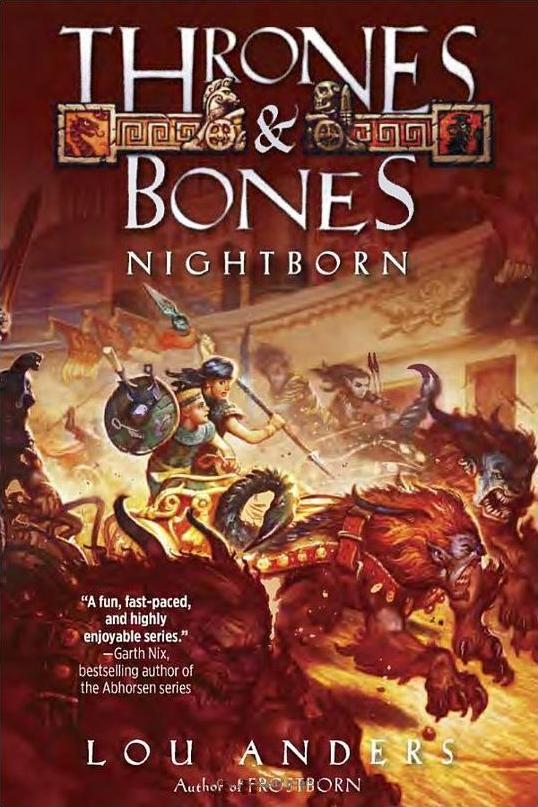
Thrones & Bones Nightborn-smallLou Anders sent ripples through the entire industry last September when he stepped down as the Editorial Director at Pyr, where he’d launched one of the most successful and acclaimed new SF and fantasy imprints in a decade. What could possibly lure Lou away from such a stellar career? The breakout success of his first novel, Thrones & Bones: Frostborn, a middle-grade fantasy that was the start of an exciting new series. The second volume, Nightborn, finally arrives next month.

Karn Korlundsson is a gamer. Not a riddle solver. But in order to rescue his best friend, Thianna Frostborn, he will need to travel to the faraway city of Castlebriar (by wyvern), learn how to play a new board game called Charioteers (not a problem), decipher the Riddle of the Horn, and tangle with mysterious elves.

Meet Desstra. She’s in training to join the Underhand — the elite agents of the dark elves. When she crosses paths with Karn, she is not all that she appears to be.

Everyone is chasing after the horn of Osius, an ancient artifact with the power to change the world. The lengths to which Karn will go in the name of friendship will be sorely tested. Who knew that solving a riddle could be so deadly?

In an article for Black Gate last August Lou described his ambitions for Thrones & Bones, saying “I set out to build a world that would invoke all the sense of wonder I’d experienced myself as a reader, as large in scope and scale as Nehwon, or Greyhawk, or the Young Kingdoms.” Those ambitions are very clear in Nightborn, which also includes instructions for playing the game Charioteers featured in the novel.

Thrones & Bones: Nightborn will be published by Crown Books for Young Readers on July 14, 2015. It is 351 pages, priced at $16.99 in hardcover and $10.99 for the digital edition. Cover by Justin Gerard. Check out ThronesandBones.com for additional games, maps, character profiles, and more.

New Treasures: The Sin Eater’s Daughter by Melinda Salisbury

New Treasures: The Sin Eater’s Daughter by Melinda Salisbury

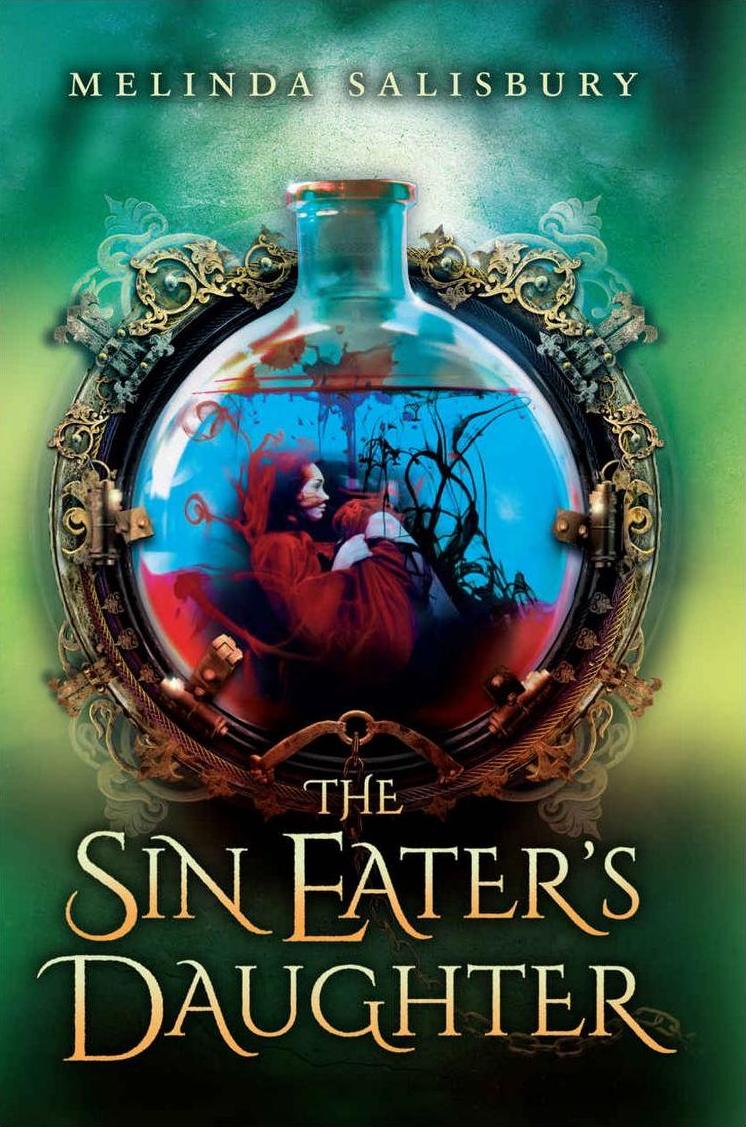
The Sin Eater's Daughter-smallWhen I arrived at the Nebula Awards weekend here in Chicago two weeks ago, I was given a bag with a generous number of book and magazines donated by various publishers. This is a common (and much loved) practice at many awards banquets and professional conventions. There was a fine assortment of books and advance galleys from some big names in my bag, but oddly the one I started reading first was from a debut writer, Melinda Salisbury. Chalk that up to an absolutely gorgeous cover, and an intriguing synopsis that includes court intrigue, treason, royal secrets, young love, and the incarnation of a goddess whose very touch brings death…

Seventeen-year-old Twylla lives in the castle. But although she’s engaged to the prince, Twylla isn’t exactly a member of the court.

She’s the executioner.

As the Goddess embodied, Twylla instantly kills anyone she touches. Each month, she’s taken to the prison and forced to lay her hands on those accused of treason. No one will ever love a girl with murder in her veins. Even the prince, whose royal blood supposedly makes him immune to Twylla’s fatal touch, avoids her company.

But then a new guard arrives, a boy whose easy smile belies his deadly swordsmanship. And unlike the others, he’s able to look past Twylla’s executioner robes and see the girl, not the Goddess. Yet Twylla’s been promised to the prince, and knows what happens to people who cross the queen.

However, a treasonous secret is the least of Twylla’s problems. The queen has a plan to destroy her enemies, a plan that requires a stomach-churning, unthinkable sacrifice. Will Twylla do what it takes to protect her kingdom? Or will she abandon her duty in favor of a doomed love?

The Sin Eater’s Daughter was published by Scholastic Press on February 24, 2015. It is 311 pages, priced at $17.99 in hardcover and $9.99 for the digital edition. The cover artist is uncredited.

Lightspeed 61: Queers Destroy Science Fiction! Special Issue

Lightspeed 61: Queers Destroy Science Fiction! Special Issue

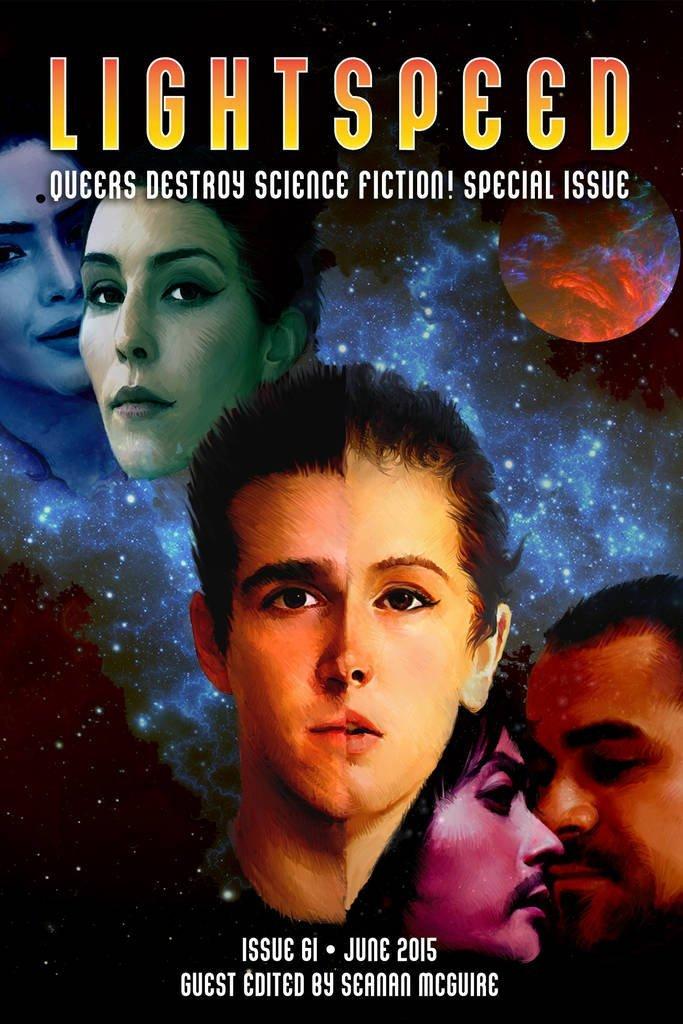
Lightspeed 61-smallJohn Joseph Adams shook this town to its roots with his groundbreaking Women Destroy Science Fiction! issue of Lightspeed, released last June. Funded by an enormously successful Kickstarter campaign, WDSF! spawned a two successful sequels, Women Destroy Fantasy! and Women Destroy Horror!

In January of this year, John invited his readers to take a sledgehammer to the tight strictures of the genre once again, by funding a special Queers Destroy Science Fiction! of Lightspeed. The Kickstarter campaign closed on February 16; with an initial goal of $5,000, the campaign successfully raised $54,523 from 2,250 backers, surpassing even the lofty success of WDSF!

John and his team delivered the issue right on time this month. Lightspeed 61: Queers Destroy Science Fiction! is guest-edited by Seanan McGuire, and the magazine contains the following stories:

Emergency Repair” by Kate M. Galey
勢孤取和 (Influence Isolated, Make Peace)” by John Chu
Bucket List Found in the Locker of Maddie Price, Age 14, Written Two Weeks Before the Great Uplifting of All Mankind” by Erica L. Satifka
Melioration” by E. Saxey
Rubbing is Racing” by Charles Payseur
Helping Hand” by Claudine Griggs
The Lamb Chops” by Stephen Cox

Read More Read More

The Novels of Tanith Lee: The Secret Books of Paradys

The Novels of Tanith Lee: The Secret Books of Paradys

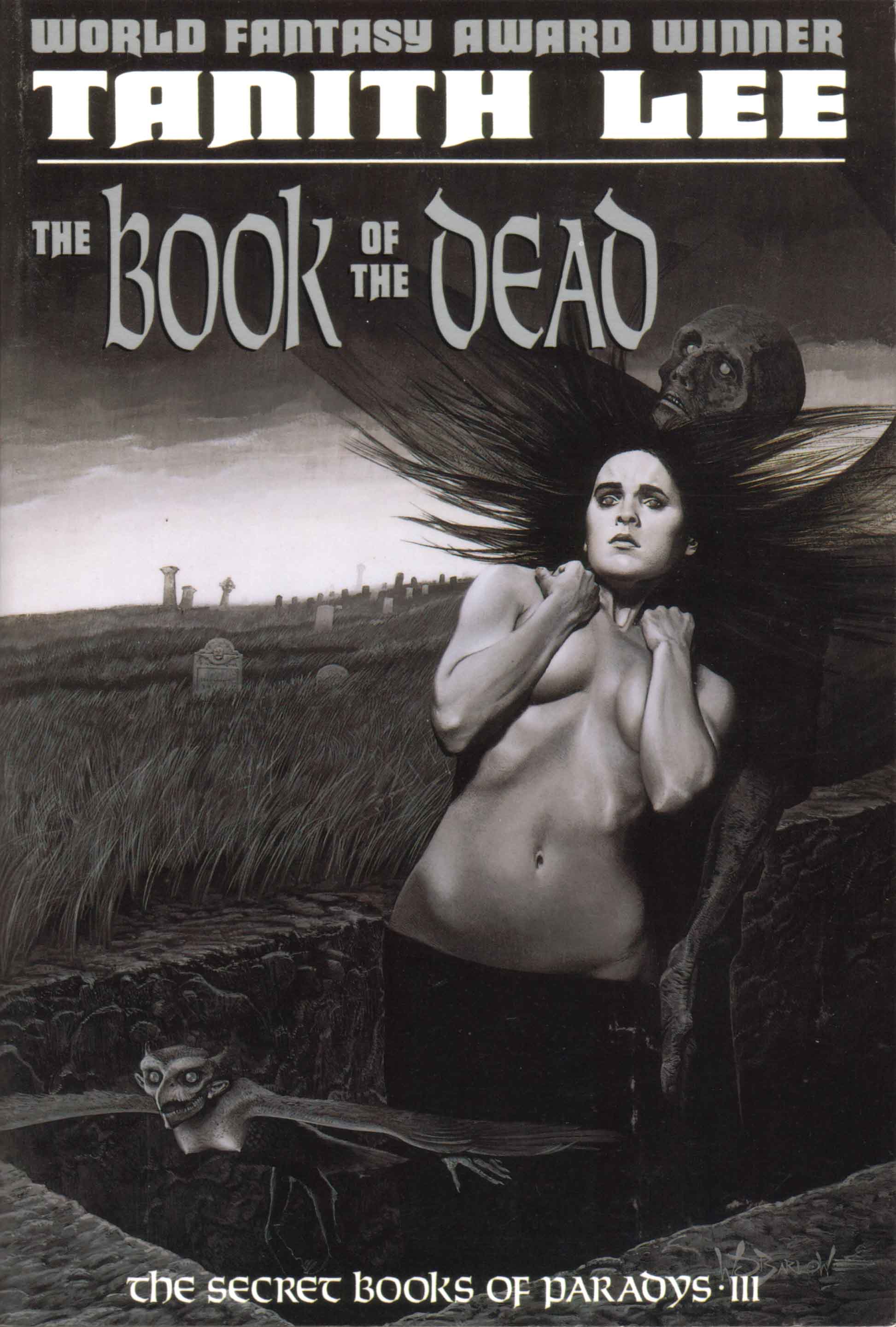
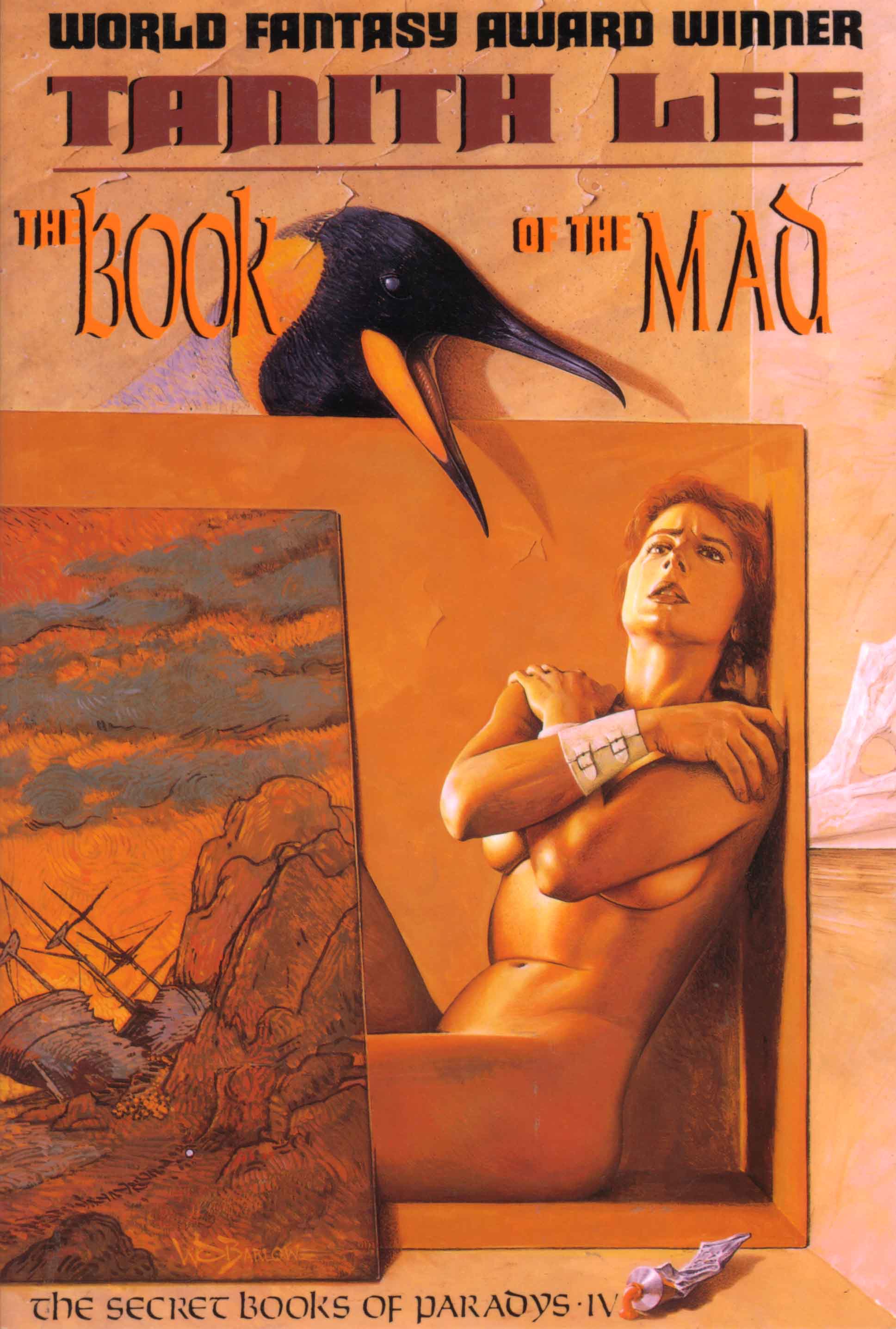
The Book of the Damned Tanith Lee-small The Book of the Beast Tanith Lee-small The Book of the Dead Tanith Lee-small The Book of the Mad Tanith Lee-small

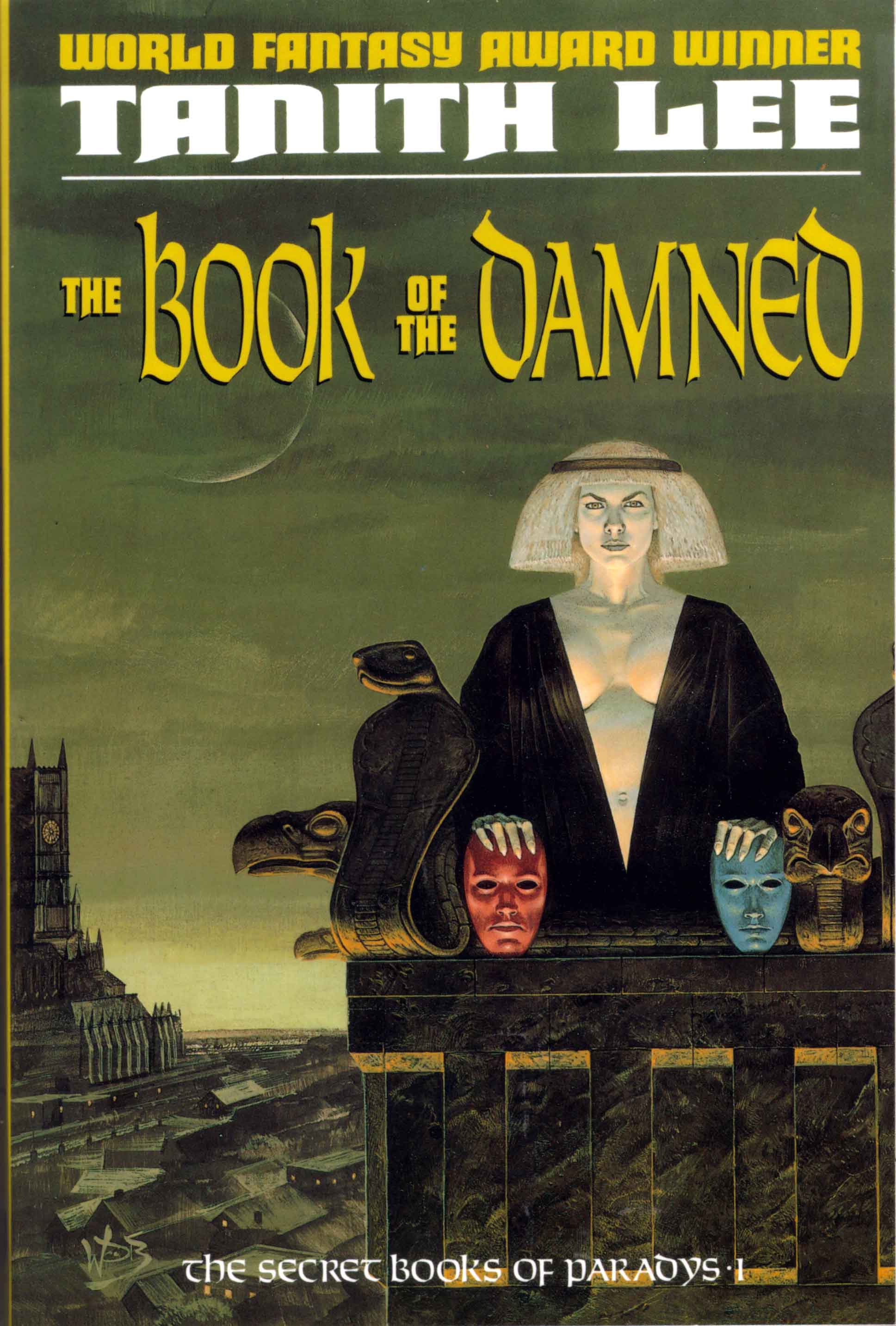
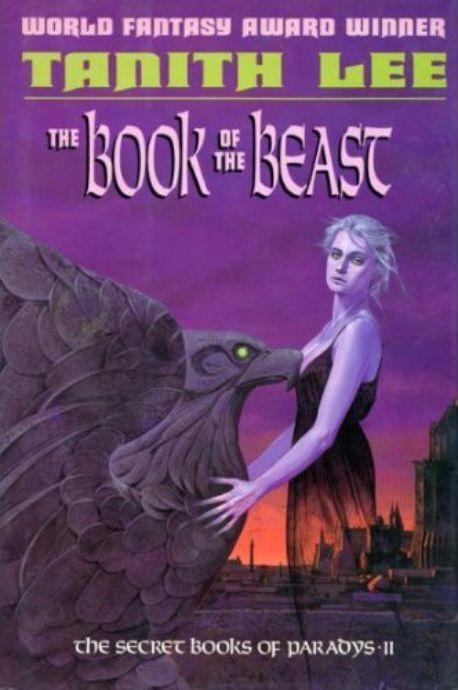
We’re continuing with our look at the extraordinary 40-year career of Tanith Lee, who passed away on May 24th. We started with The Wars of Vis trilogy and her acclaimed Tales From the Flat Earth, and today we turn to her four-volume saga, The Secret Books of Paradys, published in the US by The Overlook Press between 1990-1993, with a striking series of covers by Wayne Barlowe (above).

Matthew David Surridge wrote a fine summary of the entire series for us two years ago, and I doubt I could do a better job of summarizing them than he did:

The fictive city of Paradys itself seems to accrue layers of meaning and complexity like a recurring landscape in a lucid dream. Above all, the books are weird with the weirdness of nightmare; though written with incredible technical skill, it’s difficult to articulate a single overall theme to the books, though multiple meanings suggest themselves.

Paradys is a city in northern France, originally a Roman settlement based around the exoploitation of soon-played-out silver mines. It developed over time into a major city, with a cathedral and taverns and damned poets and all the appurtenances of decadent gothic romance. The various stories of Paradys take place in different eras of the city’s life, told from different perspectives, using different styles. They’re linked by certain patterns of imagery — notably the ambiguous symbol of the moon — and a concentration on colour: each book, or long story, has a certain colour which defines it, and all colour-references within that story will refer either to white, black, or that specific hue. I can only imagine how difficult that technique is, but it’s incredibly effective at building distinct and distinctive atmospheres…

Read More Read More

The Bard’s Tale IV Kickstarter Fully Funded After 12 Days

The Bard’s Tale IV Kickstarter Fully Funded After 12 Days

The Bards Tale IV

The Bard’s Tale was one of the first computer role playing games I ever played. It was developed in 1985 by Interplay, and published by Electronic Arts. I was in grad school at the time, and I’d play on the computers in the lab. Wandering around the 30×30 map of the ancient town of Skara Brae at night, getting killed by monsters, over and over (and over…) again. Good times, good times.

The Bard’s Tale sold, like, a billion copies, and became one of the big RPG franchises of the 80s (alongside Wizardry, Ultima, and SPI’s Gold Box games). There were two sequels and a construction set, before Interplay split off from Electronic Arts and began developing Dragon Wars (which was called Bard’s Tale IV until a month before its release in 1990). The Bard’s Tale franchise became dormant then, until Interplay founder Brian Fargo revived it for the first release from InXile Entertainment, The Bard’s Tale, in 2004. That game was a light-hearted console-style action game (with some absolutely killer tavern tunes).

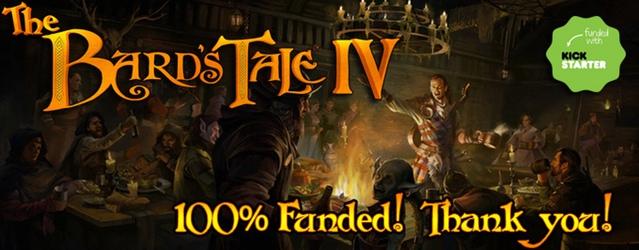
Fast forward to 2015, where InXile Entertainment is now a triple-A studio with one of the finest RPGs in recent memory under its belt, Wasteland 2, and a reputation for record-breaking Kickstarter successes (Wasteland 2 and Torment: Tides of Numenera.) On June 2 Brian Fargo and team launched a new Kickstarter campaign, to fund a sequel to the original Bard’s Tale trilogy. The Bard’s Tale IV promises to be a modern single-player, party-based dungeon-crawler, an experience rich in exploration and combat, and “dungeons filled with challenging puzzles and devious riddles.” InXile set a goal of $1.25 million, and crossed that threshold in just 12 days. With 22 days to go, the campaign has over 28,600 backers, and plenty of exciting stretch goals, like free copies of the original games, a code wheel, and more. Check out the Kickstarter page here.

The Top 50 Black Gate Posts in May

The Top 50 Black Gate Posts in May

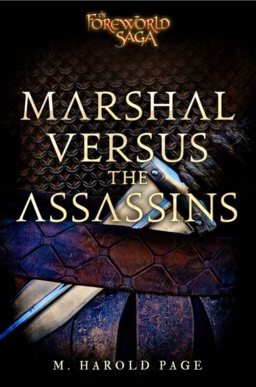
Marshall Versus the Assassins-smallM. Harold Page had a good month in May, with two of the Top Three articles. His detailed breakdown on choreographing dramatic combat, and mastering the conflicting demands of narrative and blow-by-blow description, “How To Write a Good Fight Scene,” was our #1 article. And just to show how easy it is, he also nabbed the #3 slot, with a look at the similarities between Edmond Hamilton’s pulp classic Return to the Stars and Ridley’s Scott SF masterpiece, in “Blade Runner: Edmond Hamilton’s Tears in the Rain?”

Bob Byrne prevented Martin from stealing all the glory by taking the #2 slot, with “The Public Life of Sherlock Holmes: Adventures With Jeremy Brett,” just one of two Jeremy Brett article to make this list last month. I guess good things come in pairs.

Thomas Parker claimed fifth place with his look at Alice Sheldon and James Tiptree Jr, “The Woman Who Was a Man Who Was a Woman.” And Mark Rigney took #7 with a piece on adventures in role playing, “Long Arc or Short Arc?” (Mark’s complete epic adventure The Temple Of the Sea Gods also made the Top 50 list.)

Rich Horton was next, with “A Modest Proposal to Improve the Hugos,” a follow-up to his detailed article on the Rabid Puppy/Sad Puppy debacle, “The 2015 Hugo Nominations,” one of our most widely-read articles last month.

Read More Read More

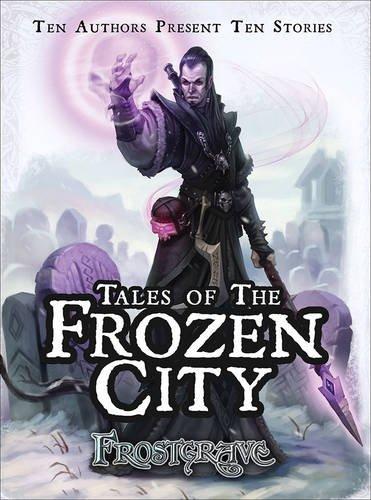
Future Treasures: Frostgrave: Tales of the Frozen City edited by Joseph McCullough

Future Treasures: Frostgrave: Tales of the Frozen City edited by Joseph McCullough

Frostgrave Tales of the Frozen City-smallJoseph McCullough is the author of one of the most popular articles in Black Gate history, “The Demarcation of Sword and Sorcery,” which today is considered one of the defining texts on the genre. He’s published fiction in BG and elsewhere, and is currently Project Manager for Osprey Adventures.

His latest project is the wargame Frostgrave: Fantasy Wargames in the Frozen City, coming in July from Osprey. In support of the new game, Osprey is also publishing Frostgrave: Tales of the Frozen City, a new anthology edited by Joe which contains ten original stories telling the tale of wizards and other adventurers, as they venture into the ruins of the Frozen City.

Long ago, the great city of Felstad sat at the centre of a magical empire. Its towering spires, labyrinthine catacombs and immense libraries were the wonder of the age, and potions, scrolls and mystical items of all descriptions poured from its workshops. Then, one cataclysmic night, a mistake was made. In some lofty tower or dark chamber, a foolish wizard unleashed a magic too powerful to control. A storm rose up, an epic blizzard that swallowed the city whole, burying it deep and leaving the empire as nothing more than a vast, frozen wasteland. The empire shattered, and the magic of the world faded. As the centuries came and went, Felstad passed from history to legend and on into myth. Only a few wizards, clinging to the last remnants of magical knowledge, still believed that the lost city had ever actually existed. But their faith was rewarded.

Read More Read More

July 2015 Asimov’s Science Fiction Now on Sale

July 2015 Asimov’s Science Fiction Now on Sale

Asimovs-Science-Fiction-July-2015-smallBlack Gate blogger Derek Künsken has a big novella in Asimov’s Science Fiction this month, and it’s already getting great reviews. Clancy Weeks at Tangent Online had this to say about it:

I love a good mystery, and “Pollen From a Future Harvest” by Derek Künsken is indeed a good mystery. Some of that mystery is in parsing the twists and turns related to time travel, along with the prose itself, but it is rewarding nonetheless. Major Okonkwo, of the Sixth Expeditionary Force of the Sub-Saharan Union, is a military auditor — a bookkeeper — and she has been given the open-ended task of auditing the entire base. There are layers, sub-plots, and twists here, but the main issue is dealing with a possible “grandfather paradox” associated with time travel… Something has happened up the line, and Okonkwo needs to find out why, and if it is related to the recent death (some would say murder) of her senior husband. There is an amazing amount of backstory we learn along the way, and rich, multi-layered world-building… a very good and entertaining read.

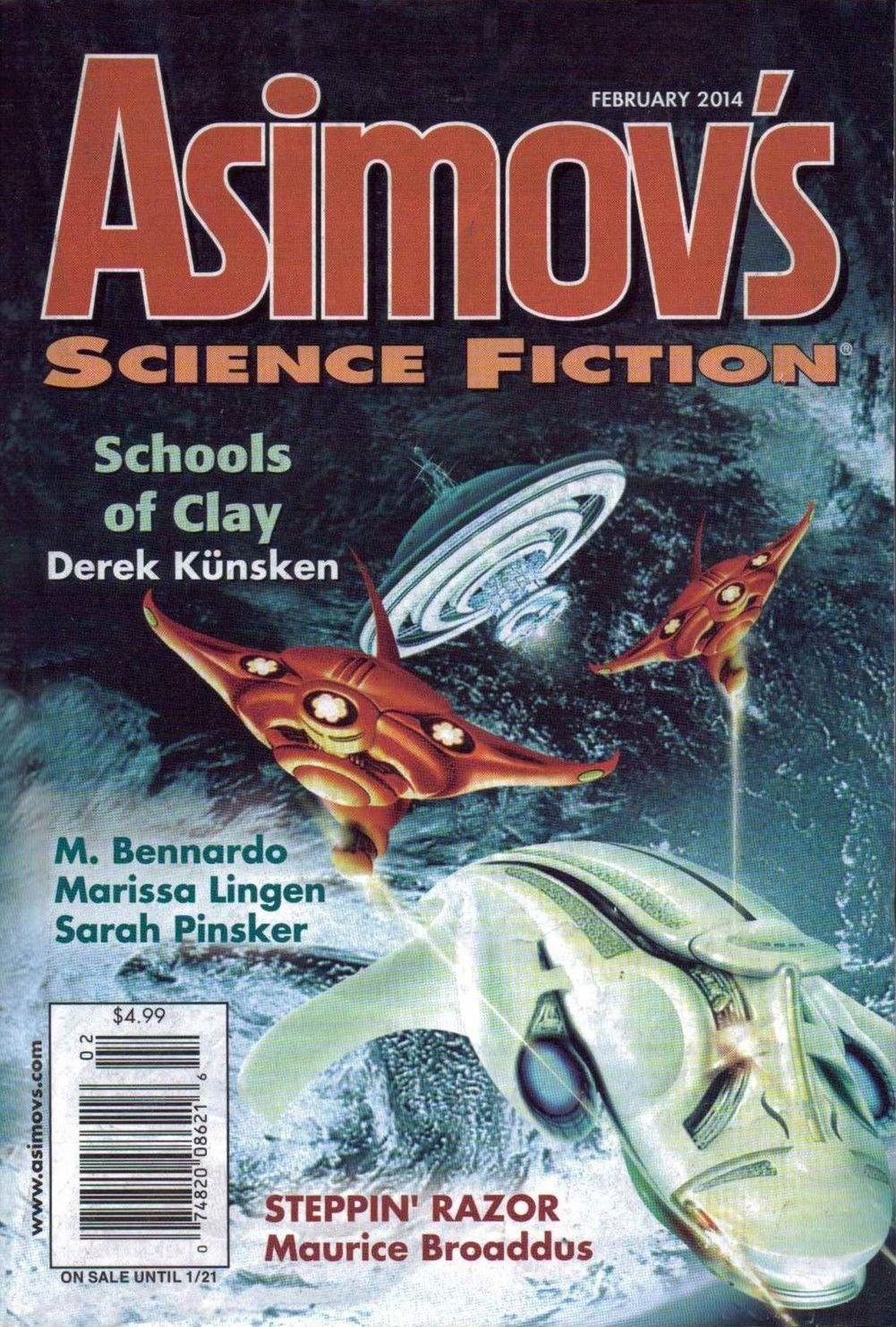
Derek made the cover this month, for the second time (the first was for his novelette “Schools of Clay” in the February 2014 issue.) I had the chance to meet Derek for the first time at the Nebula Awards weekend here in Chicago from June 4-June 7, where we talked space opera, writing, and conventions. He’s a remarkably astute observer of the field, and has a very keen eye on short fiction markets. He also brought me up-to-date on the state of fandom in my home town of Ottawa, which I greatly appreciated. His detailed summary of the Nebula weekend is here.

Read More Read More