Browsed by
Author: John ONeill

December 2016 Apex Magazine Now Available

December 2016 Apex Magazine Now Available

apex-december-2016-smallI’m long overdue to check in on Apex. It releases its content in stages, one week at a time, which leaves me a narrow window at the end of the month to report on the magazine if I want all the content links to work. Since Lightspeed, Nightmare, and a few others do the same thing, it’s inevitable that a few magazines get dropped every month.

Well, enough of my troubles. You want to hear about all the great things in the latest issue, and rightly so. Here’s editor Jason Sizemore with his summation of the December Apex, from his editorial.

Issue 91 closes the year with some compelling and powerful original fiction by Lavie Tidhar (“Red Christmas”), K.T. Bryski (The Love It Bears Fair Maidens”), and Helen Stubbs (“Uncontainable”). These stories are different from one another in terms of subject, tone, and pacing, but they are all stories I feel will inspire some interesting conversations.

Our nonfiction offerings this month is loaded with interviews of author Helen Stubbs and cover artist Billy Nuñez, a reprint of Keffy R.M. Kehrli’s Upside Down: Inverted Tropes in Storytelling essay “Tropes as Erasers,” managing editor Lesley Conner’s behind the curtains reveal of how she selects cover art, and a feature on the short film I Remember the Future based on Michael A. Burstein’s story of the same name.

Finally, our reprint this month is Burstein’s hopeful Nebula Award-nominated “I Remember the Future.” Not only does it compliment the feature on the short film in this issue, but 2016 has been a tough year for many, so I feel it is appropriate that we close it out with a little light.

Here’s the complete TOC, with links to all the free content.
Read More Read More

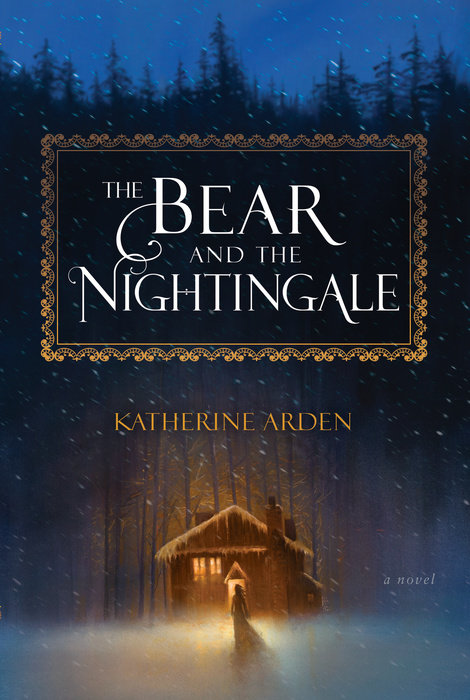
Future Treasures: The Bear and the Nightingale by Katherine Arden

Future Treasures: The Bear and the Nightingale by Katherine Arden

the-bear-and-the-nightingale-smallOne of the many nice things about Christmas is how it re-introduces me to fairy tales. Maybe it’s being surrounded by a blanket of snow, or not having to trudge to work every day, or the constant squeal of kids in the house… or just the magic of the season. Whatever it is, I’m more open to fairy tales this time of year, including the kind that come between hard covers.

The Bear and the Nightingale is the debut novel by Katherine Arden, with more than a hint of a Russian fairy tale setting. Naomi Novik calls it “A beautiful deep-winter story, full of magic and monsters,” and Booklist says it’s “Utterly bewitching… peopled with vivid, dynamic characters, particularly clever, brave Vasya, who outsmarts men and demons alike to save her family.” It arrives in hardcover next month from Del Rey.

At the edge of the Russian wilderness, winter lasts most of the year and the snowdrifts grow taller than houses. But Vasilisa doesn’t mind — she spends the winter nights huddled around the embers of a fire with her beloved siblings, listening to her nurse’s fairy tales. Above all, she loves the chilling story of Frost, the blue-eyed winter demon, who appears in the frigid night to claim unwary souls. Wise Russians fear him, her nurse says, and honor the spirits of house and yard and forest that protect their homes from evil.

After Vasilisa’s mother dies, her father goes to Moscow and brings home a new wife. Fiercely devout, city-bred, Vasilisa’s new stepmother forbids her family from honoring the household spirits. The family acquiesces, but Vasilisa is frightened, sensing that more hinges upon their rituals than anyone knows.

And indeed, crops begin to fail, evil creatures of the forest creep nearer, and misfortune stalks the village. All the while, Vasilisa’s stepmother grows ever harsher in her determination to groom her rebellious stepdaughter for either marriage or confinement in a convent.

As danger circles, Vasilisa must defy even the people she loves and call on dangerous gifts she has long concealed — this, in order to protect her family from a threat that seems to have stepped from her nurse’s most frightening tales.

The Bear and the Nightingale will be published by Del Rey on January 10, 2017. It is 336 pages, priced at $27 in hardcover and $12.99 for the digital edition.

The Library of America Publishes Elmore Leonard — Again

The Library of America Publishes Elmore Leonard — Again

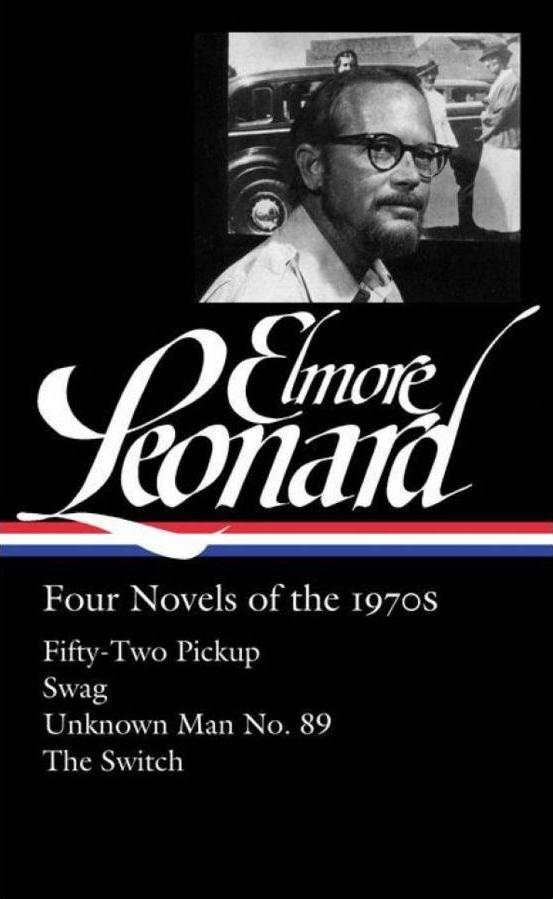
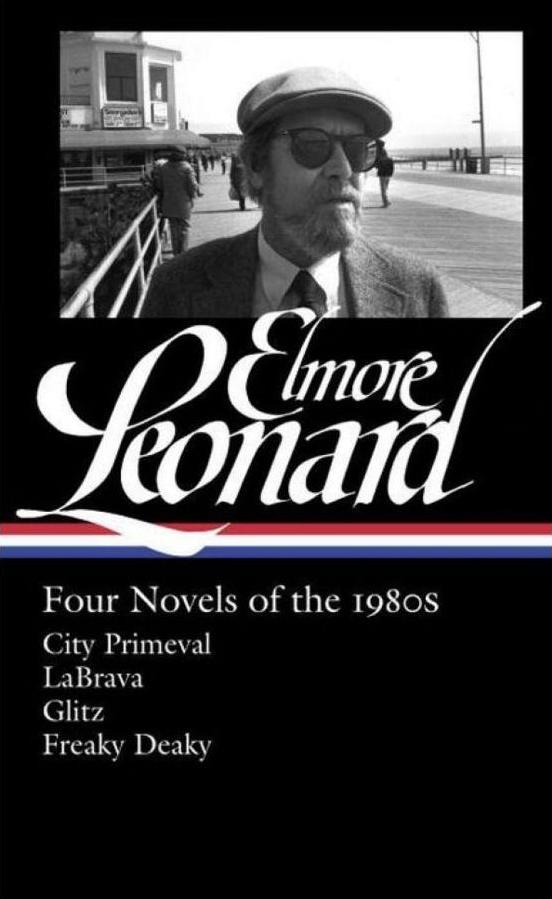
Elmore Leonard Four Novels of the 1970s-small Elmore Leonard Four Novels of the 1980s-small elmore-leonard-four-later-novels

Back in January I dashed off a brief New Treasures article titled The Library of America Publishes Elmore Leonard, in which I highlighted the first two volumes of The Library of America’s omnibus editions of Leonard, Four Novels of the 1970s and Four Novels of he 1980s.

Despite the fact that Leonard never wrote a single SF or fantasy novel (and we’re very much a fantasy blog), it became one of the most popular New Treasures articles I’ve ever written — and in fact, it still outperforms half of the New Treasures articles I write every month. Elmore Leonard is a popular writer in any genre.

So I could hardly ignore the third and final volume in the set, Elmore Leonard: Four Later Novels. Like the others it contains four full novels (Get Shorty, Rum Punch, Out of Sight, and Tishomingo Blues, published between 1990-2002). Here’s the description, which does a find job of summarizing each of Leonard’s freewheeling plots in a single sentence.

Read More Read More

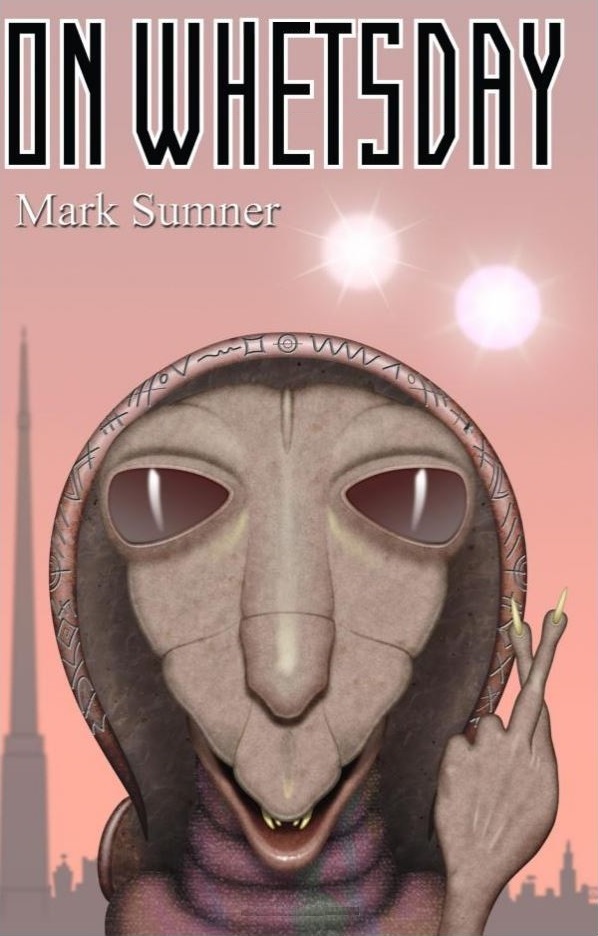
The Very Opposite of a First Contact Novel: On Whetsday by Mark Sumner

The Very Opposite of a First Contact Novel: On Whetsday by Mark Sumner

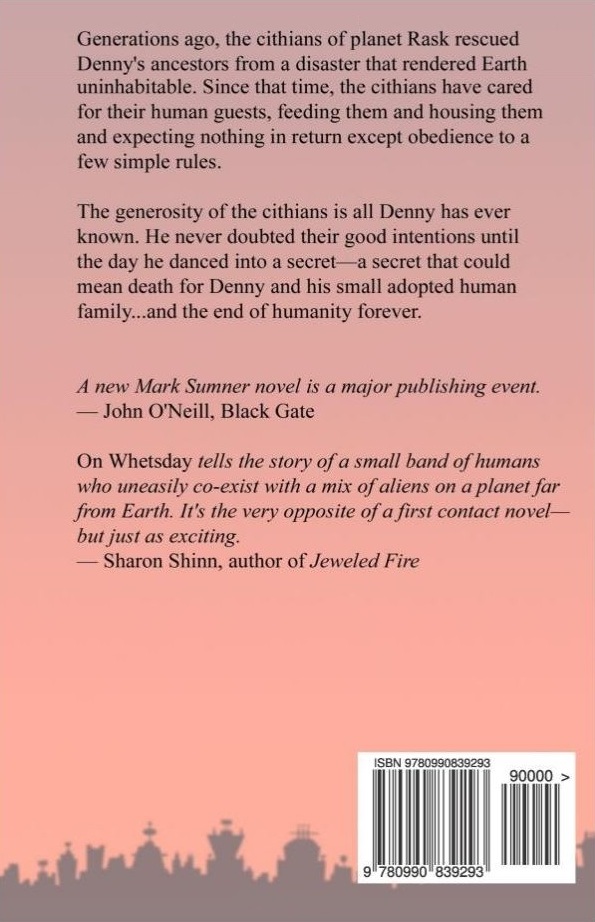
on-whetsday-small on-whetsday-back-small

Mark Sumner produced some of the most acclaimed fiction ever published in Black Gate. The Internet Review of Science Fiction called his story “Leather Doll” (from BG 7) “Absolutely riveting…. A masterpiece of contemporary science fiction,” and Tangent Online called his serialized novel The Naturalist (in BG 10, 11, and 13) “Absorbing and thoroughly enjoyable… it recalls the “lost world” tales of H. Rider Haggard and Sir Arthur Conan Doyle… Fraught with danger and excitement, and full of the mystery and color of a grand adventure.”

His newest book is On Whetsday, a far-future tale of a planet where the last remaining humans live in peaceful co-existence with an enigmatic alien race. Sharon Shinn calls it “The very opposite of a first contact novel… but just as exciting.” It was originally serialized at Daily Kos, where Mark has been a writer for several years. Here’s the enticing first paragraph.

On Whetsday, Denny danced at the spaceport. It was a good place to dance, if you didn’t mind the heat that boiled off the acres of asphalt or the noise of the rising shuttles. You could meet a dozen races in single morning: lithe little skynx, scarlet klickiks, and sluggish chugs with their curtains of eyes brushing the ground. Most of the passing visitors had never seen a human, and fewer still understood what Denny was doing. Dancing was a rare thing among the races of the galaxy. But they understood enough to toss shiny credit chips or small bits of scrip into the box by his feet. They understood begging. Begging was universal.

You can read the complete first chapter at Daily Kos here.

Read More Read More

Barnes & Noble Sci-Fi & Fantasy Blog Selects the Best Novels of 2016

Barnes & Noble Sci-Fi & Fantasy Blog Selects the Best Novels of 2016

too-like-the-lightning-small deaths-end-small the-obelisk-gate-small

It’s the end of the year, the time when companies, magazines, and bloggers flood the airwaves with Year’s Best lists. Why do they bother? Because we love them! Lists, lists, lists. They’re the best.

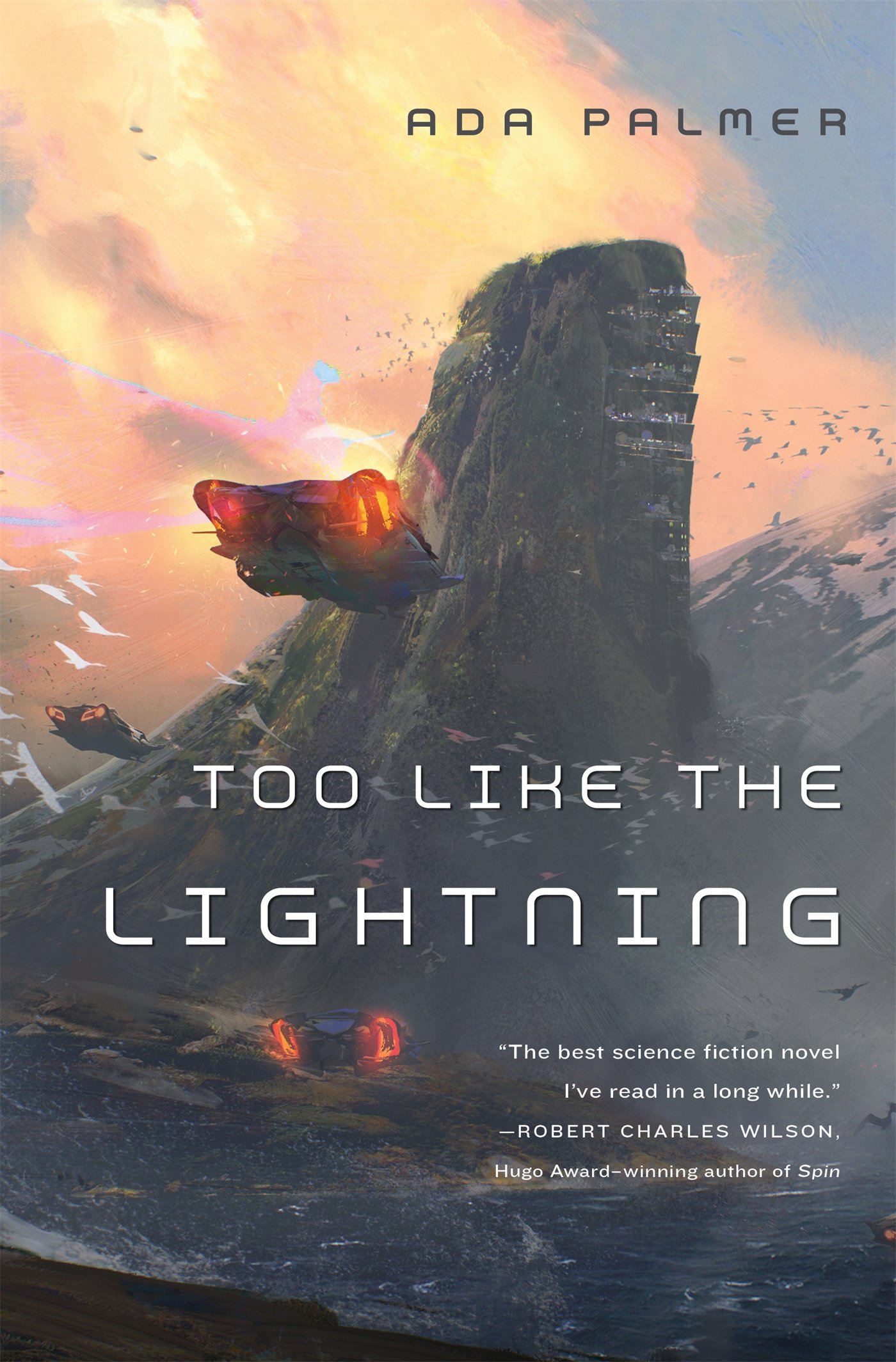
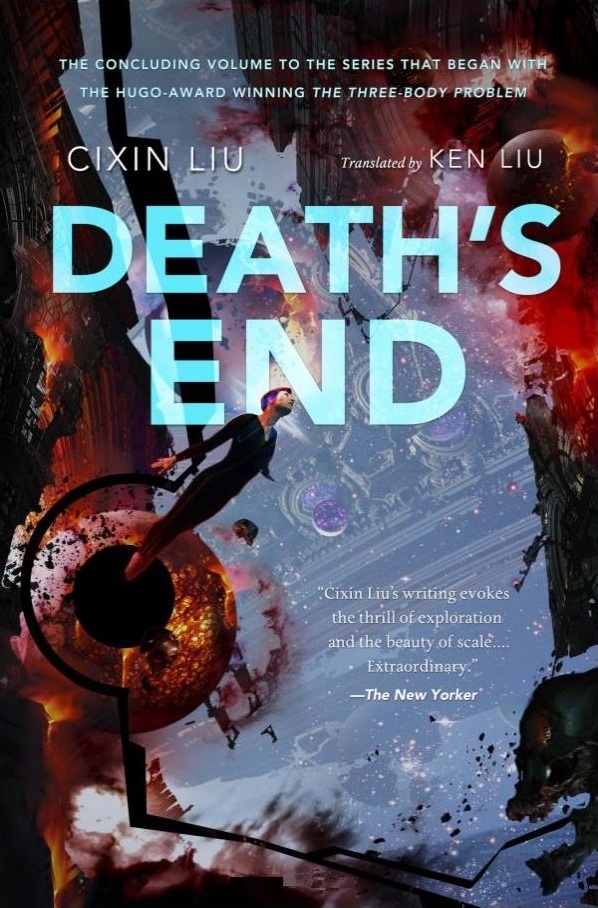
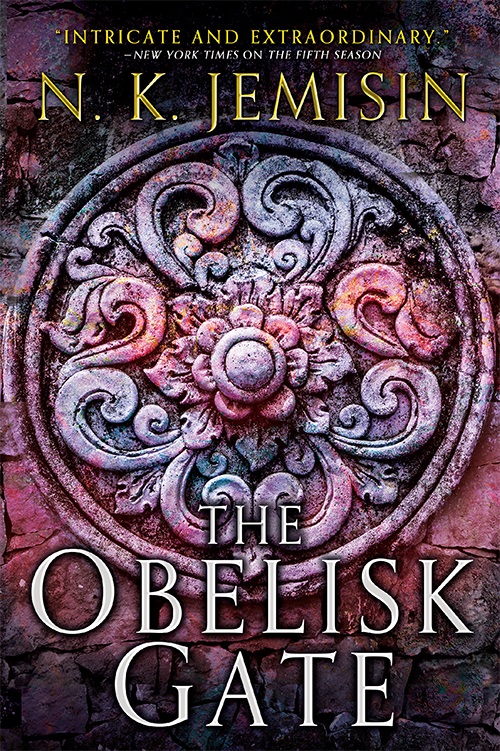
One of my favorite genre sites, the Barnes & Noble Sci-Fi and Fantasy Blog, is out with their annual Editor’s Picks for the Best Science Fiction & Fantasy of 2016, including Cixin Liu’s Death’s End, N.K. Jemisin’s The Obelisk Gate, and a debut novel, Too Like the Lightning by Ada Palmer.

Palmer’s long-in-coming debut crafts a distinctly unique vision of a future world — a 25th century where technology has created abundance, where religion is outlawed but personal spirituality is encouraged, where criminals are sentenced to wander the world making themselves useful. It’s an imagined outcome rooted in threads visible all around us even today. The story involves an unlikely meeting between a convict serving a family named Mycroft Canner; a “sensayer,” or spiritual guide, named Carlyle Foster; and Bridger, a young boy who seems to possess the power to make his every wish come true — a power that could completely destabilize a world that is the very definition of stability. With lush prose that recreates the feel of a period novel, this is one of the year’s most striking debuts. Read our review..

The list also includes several novels we’ve recently covered at Black Gate. Here’s a partial list.

Read More Read More

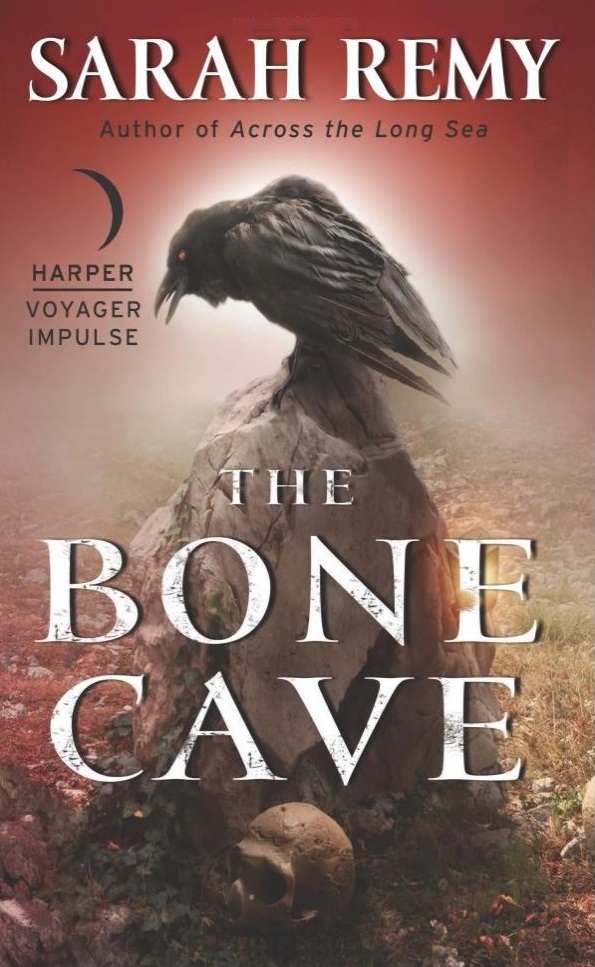
A Tale of Two Covers: Alan Baxter’s Crow Shine and Sarah Remy’s The Bone Cave

A Tale of Two Covers: Alan Baxter’s Crow Shine and Sarah Remy’s The Bone Cave

crow-shine-alan-baxter-small the-bone-cave-sarah-remy-small

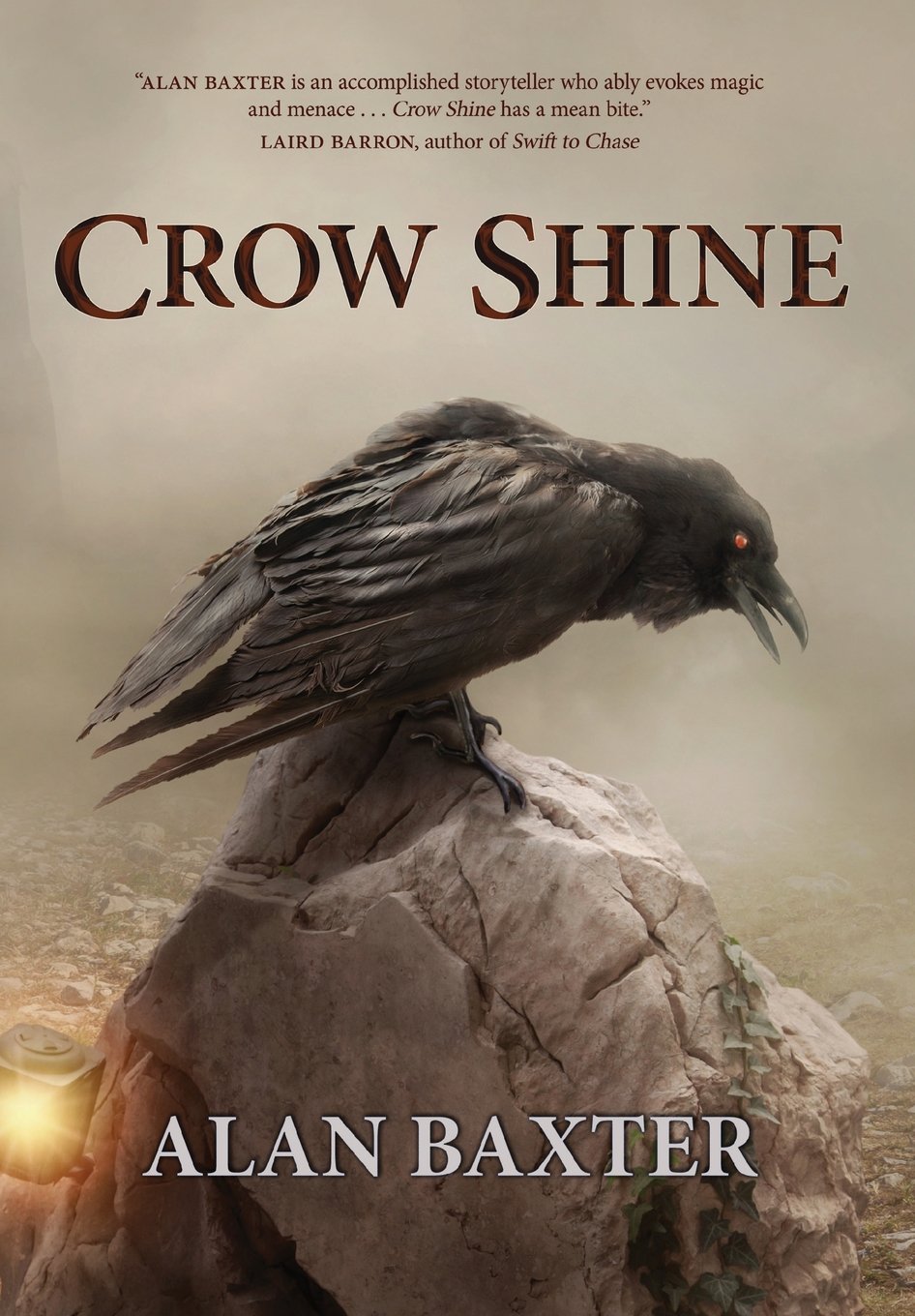
This week’s Tale of Two Covers looks at two very similar covers, released a month apart late this year. (Click the images above for bigger versions.)

The first is Crow Shine, published by the Australian independent publisher Ticonderoga Publications on November 11, 2016. Crow Shine is the debut horror collection from Australian dark fantasy writer Alan Baxter, and it gathers stories from F&SF, Beneath Ceaseless Skies, Postscripts, and multiple anthologies. You can read more about it at the Ticonderoga website, but unfortunately it doesn’t identity the cover artist.

The second is The Bone Cave, published in paperback yesterday by Harper Voyager Impulse. It’s the third volume in Sarah Remy’s Bone Magic series, following Stonehill Downs (2014) and Across the Long Sea (2015). See all the details at the publisher’s website here. Like Crow Shine, the cover artist is uncredited.

While both books clearly make use of the same base image, there are also interesting design differences. Note the lamp affixed to the rock in the cover on the left (missing on the right), and the skull at the base of the rock on the right. They’ve also gone with different color schemes — Crow Shine is a pale white, almost green, and The Bone Cave has colored the entire background red.

Read More Read More

December 2016 Lightspeed Magazine Now Available

December 2016 Lightspeed Magazine Now Available

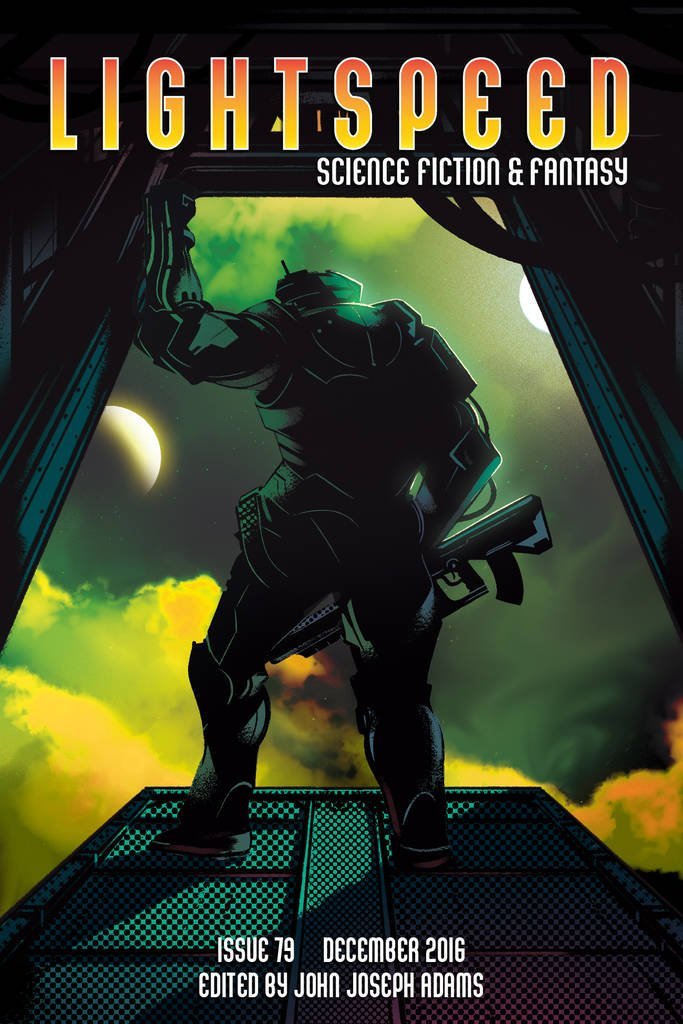
lightspeed-december-2016-smallMark Watson’s Best SF blog has been reviewing SF short stories since April 2000. The reviews are sometimes short, but that doesn’t mean they’re not on point. Here’s Mark on Rich Larson’s story “The Cyborg, the Tinman, the Merchant of Death” in the December 2016 issue of Lightspeed.

Military SF although with a more human bent. The titular character is a cyborgised marine, also known as ‘The Petty Officer’, very much in the Halo Master Chief mould. The protagonist is a private who is transferred to the Petty Officer’s squad, who is very much aware that whilst it is a recognition of his own skills, it is essentially a short term posting in his military career, and indeed, it will be his final posting – life expectancy of squad members is little more than a couple of missions.

And this is where the story gets interesting, as the private finds out more about The Petty Officer over a number of missions, and then it gets very queer….

This month’s Lightspeed offers up original science fiction by Rich Larson and Joseph Allen Hill, and SF reprints by Margo Lanagan and Christie Yant, plus original fantasy by Carlie St. George and fantasy reprints by William Alexander and Shweta Narayan.

I was also very pleased to see an original fantasy from Quick Sips reviewer Charles Payseur “The Death of Paul Bunyan.” Charles works tirelessly every month to promote dozens of stories from other writers on his blog; I’ll be curious to see how many return the favor.

This month’s Lightspeed includes an editorial from JJA, author spotlights, a review of Arrival by Carrie Vaughn, Book Reviews by Amal El-Mohtar, and an interview with Nancy Kress. The exclusive content in the ebook version this month is Michael Bishop’s novella “Twenty Lights to ‘The Land of Snow,’” and an excerpt from Seth Dickinson’s novel The Traitor Baru Cormorant.

Read More Read More

Richard Adams, May 9, 1920 – December 24, 2016

Richard Adams, May 9, 1920 – December 24, 2016

richard-adams-smallRichard Adams, one of the finest fantasy authors of the 20th Century, died on Christmas Eve.

In his review of Adams’ masterpiece Watership Down, published here at Black Gate yesterday, Mark Rigney wrote, “It was and is a fantasy with wide crossover appeal, a mythic adventure with rabbits… 1972 did indeed mark the appearance of a great story. Nor has it lost its power, not one whit.” According to the BBC, Adams created the story to keep his two daughters entertained on a long car ride.

The event that changed Richard Adams’ life occurred on a car journey with his family to see Twelfth Night at Stratford-upon-Avon.

His bored children asked for a story and he began telling them a tale about a group of rabbits attempting to escape from their threatened warren.

Adams was persuaded to write it all down, a process that took him more than two years, but he was, at first, unable to find a publisher. Many of his rejection letters complained that the book was too long and his characters did not fit the common perception of cuddly bunnies. Eventually, in 1972, after 14 rejections, the publisher Rex Collings saw the potential and agreed to take it on with an initial print run of 2,500 copies.

Watership Down was his first novel. It was published in 1972 — without an advance — when Adams was 52 years old. It won the Carnegie Medal and the Guardian Prize, and has sold tens of millions of copies.

Adams became a full time writer in 1974, producing over a dozen fiction and non-fiction books, including several worldwide bestsellers such as Shardik (1974), The Plague Dogs (1977), The Girl in a Swing (1980), Maia (1984) and Tales from Watership Down (1996). He died on December 24, 2016, at age 96.

Future Treasures: The Mammoth Book of the Mummy, edited by Paula Guran

Future Treasures: The Mammoth Book of the Mummy, edited by Paula Guran

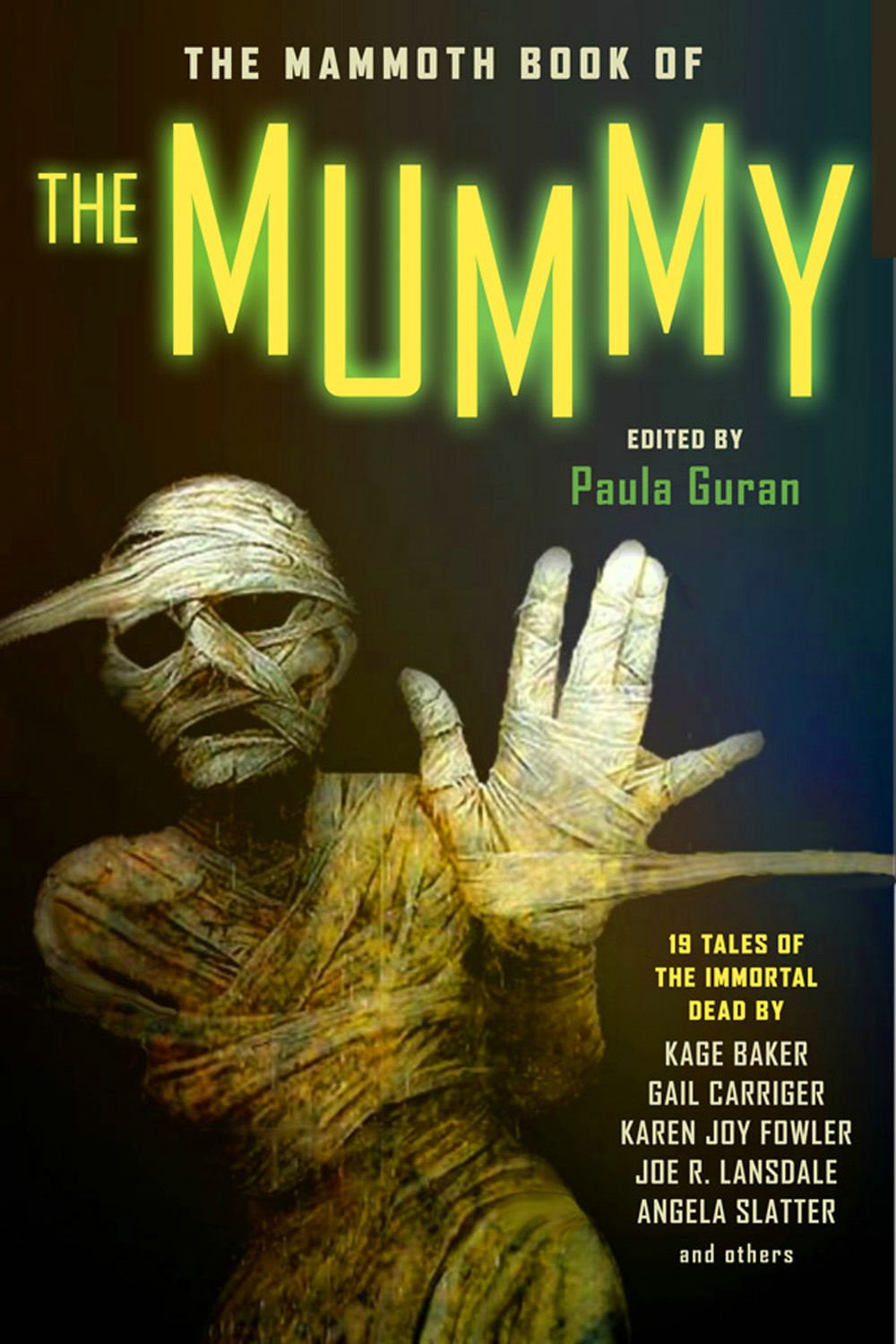
the-mammoth-book-of-the-mummy-smallPaula Guran does interesting anthologies. She tends to focus on modern (21st Century) writers, which means she’s plowing a different field than all those vintage anthologies I love — and introducing me to a host of new writers.

Her newest is The Mammoth Book of the Mummy, containing 25 new and reprint tales “that explore, subvert, and reinvent the mummy mythos” from Joe R. Lansdale, Kage Baker, Paul Cornell, Terry Dowling, Karen Joy Fowler, John Langan, Helen Marshall, Keith Taylor, and many others. It arrives from Prime Books in trade paperback next month.

Human mummies, preserved by both accident and intent, have been found on every continent except Antarctica. These enigmatic remains of humanity have fascinated people for centuries. Shrouded in history they have acquired meaning and symbolism quite separate from their value as a source of historic knowledge, inspiring tales of reanimation, reincarnation, loves that outlive death, and curses that bring vengeance from the past.

As a figure of the supernatural the mummy has attained iconic status in the popular imagination. The Mammoth Book of the Mummy presents a collection of tales written for the twenty-first century ― including four brand-new stories ― that explore, subvert, and reinvent the mummy mythos. Some delve into the past, others explore alternative histories, and some bring mummies into our own world. Within these covers lie stories of revenge, romance, monsters, and mayhem, ranging freely across time periods, genres, and styles sure to please both mummy-lovers and those less wrapped up in mummy lore.

I published one Mummy story in Black Gate, Dan Brodribb’s hilarious “The Girl Who Feared Lightning” in BG 14 (“Nobody really talks about what mummies can and can’t do. They never really caught on like some monsters did. Poor branding.”) Here’ hoping Paula’s latest anthology will help mummies with that branding problem.

Here’s the complete Table of Contents.

Read More Read More

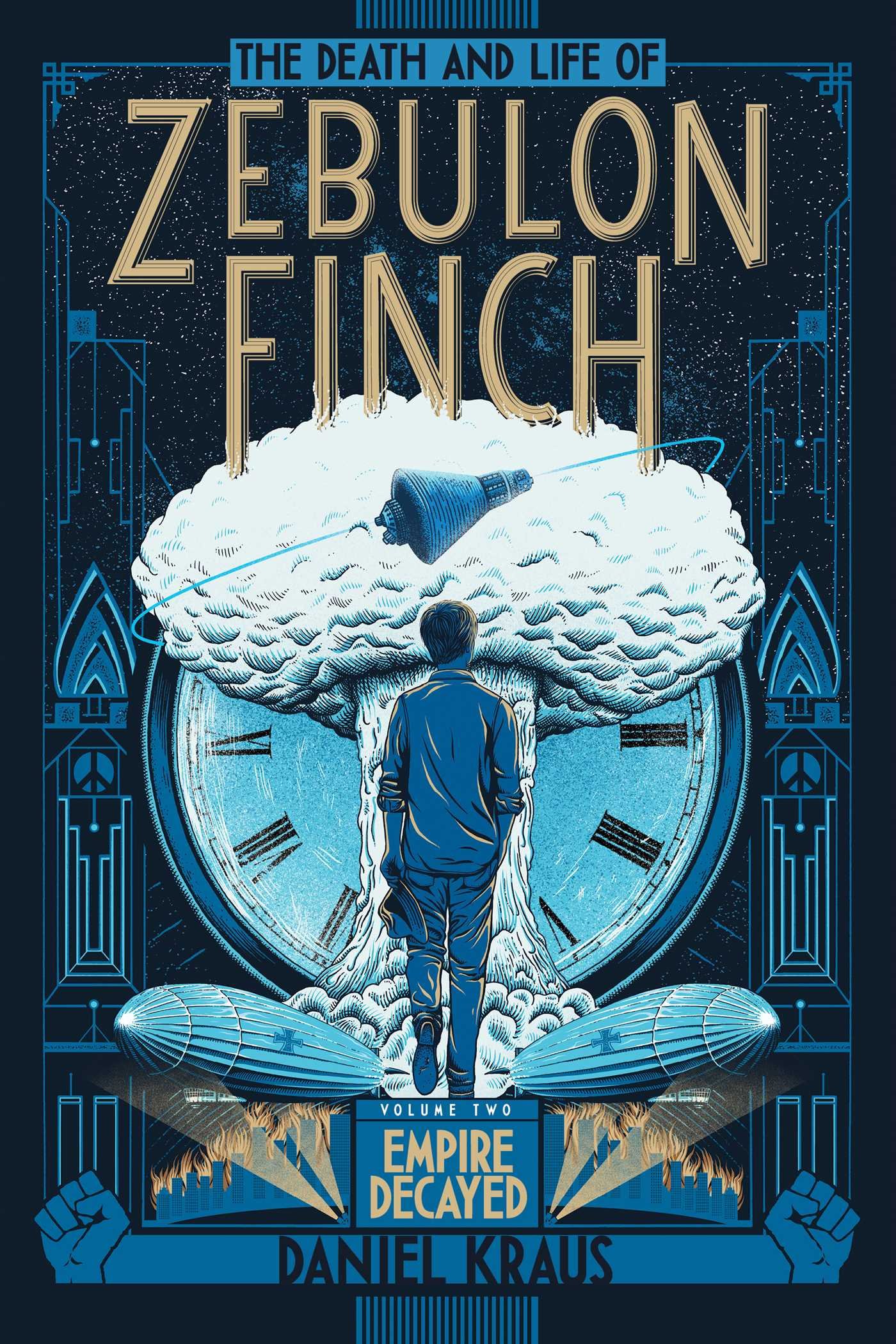
New Treasures: The Death and Life of Zebulon Finch by Daniel Kraus

New Treasures: The Death and Life of Zebulon Finch by Daniel Kraus

the-death-and-life-of-zebulon-finch-volume-one-at-the-edge-of-empire-small the-death-and-life-of-zebulon-finch-volume-two-empire-decayed-small

Daniel Kraus co-wrote Trollhunters with Guillermo del Toro, the basis for the Netflix animated series of the same name. He’s also the author of the horror novels Rotters and Scowler.

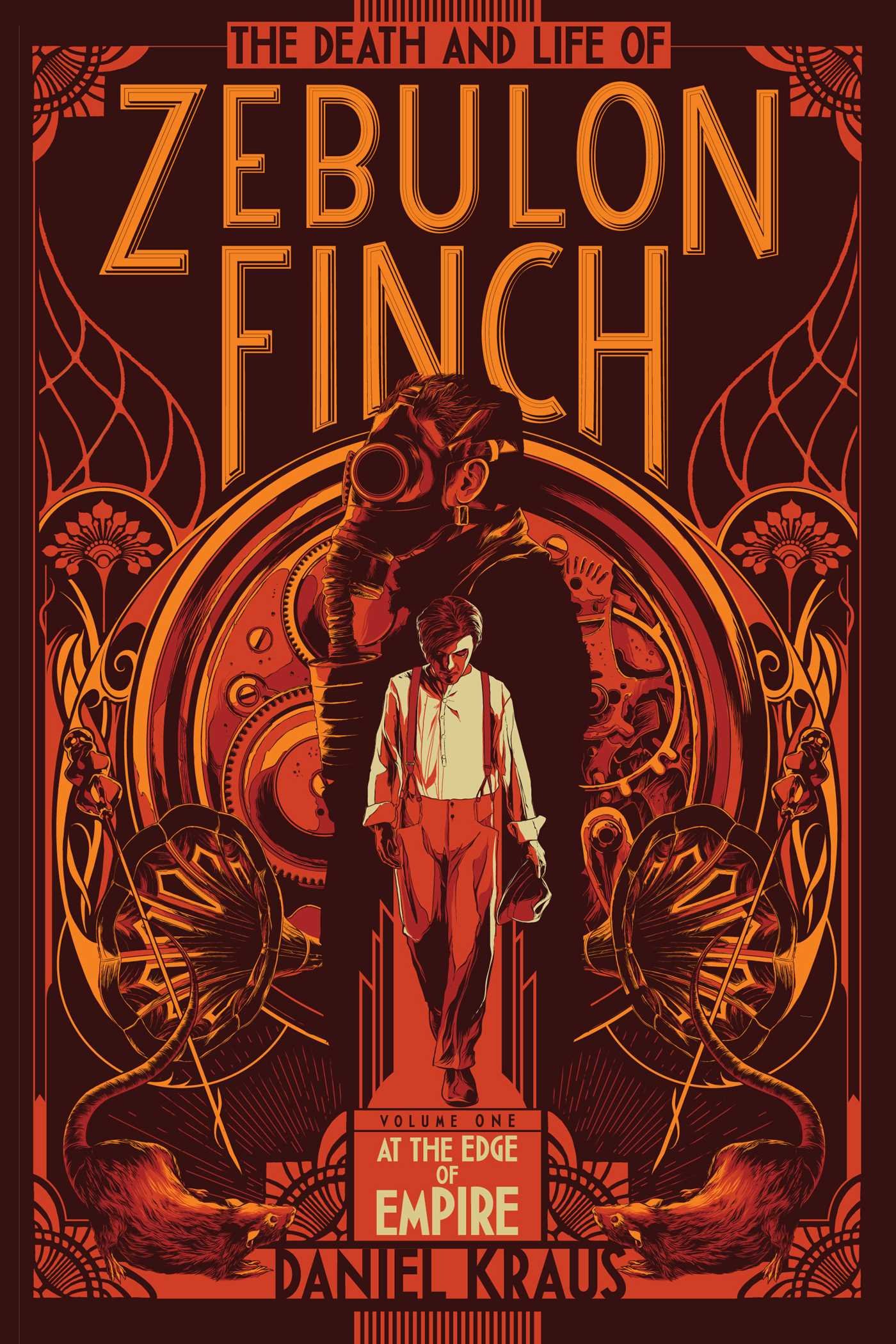
His latest project is a two-volume epic about an undead seventeen year old on a secret mission to assassinate Hitler. It began with The Death and Life of Zebulon Finch: At the Edge of Empire (October 2015), and concludes with The Death and Life of Zebulon Finch: Empire Decayed (October 2016).

Entertainment Weekly named the first volume one of the Top Ten Books of 2015, saying “Kraus’s globe-trotting dead kid is by turns cavalier, playful, and thoughtful, and his singular voice — a debonair turn-of-the-century murderer-turned-victim — is utterly riveting,” and Booklist called it “a giant-size epic [that] skillfully blends historical fiction, dark humor, and horror to push readers right to the brink.” There’s a definite YA feel to these books, although there’s also a macabre horror angle, so proceed with caution if you’re a little on the squeamish side.

Here’s the description for the first volume.

Read More Read More