New Treasures: The Year’s Best Science Fiction & Fantasy 2014, edited by Rich Horton
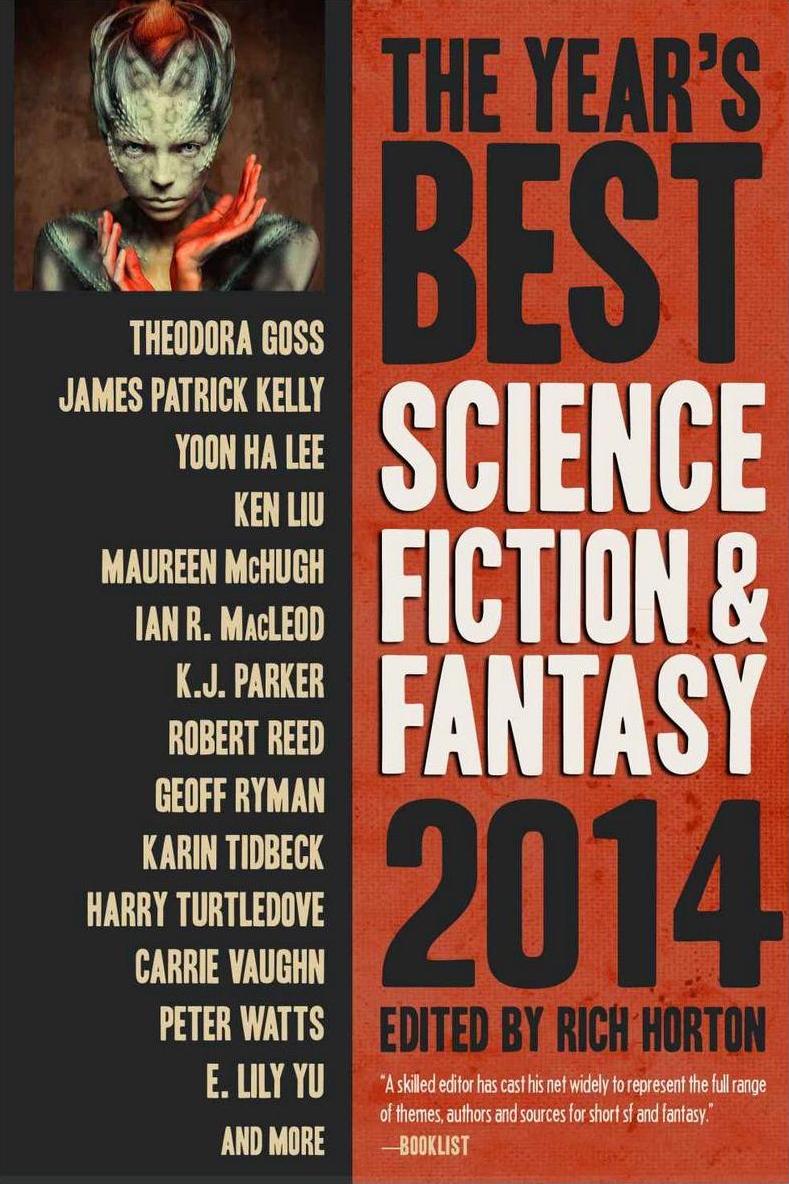 It’s been so busy around here for the past few months that I haven’t had time to read my favorite Year’s Best book — Rich Horton’s The Year’s Best Science Fiction & Fantasy 2014.
This is the sixth volume and it collects a whopping 35 stories, including C. S. E. Cooney’s “Martyr’s Gem” (originally published in Giganotosaurus) and fiction from Alex Dally MacFarlane, Howard Waldrop, James Patrick Kelly, Ken Liu, Robert Reed, Lavie Tidhar, Carrie Vaughn, and many others. Rich has collected stories from a wide range of top-notch publications, including Asimov’s, Clarkesworld, F&SF, Lightspeed, and Beneath Ceaseless Skies, and anthologies like Fearsome Journeys and Old Mars.
Here’s the complete table of contents.
“Social Services” by Madeline Ash (An Aura of Familiarity)
“Out in the Dark” by Linda Nagata (Analog)
“The End of the World as We Know It, and We Feel Fine” by Harry Turtledove (Analog)
“The Oracle” by Lavie Tidhar (Analog)
“Call Girl” by Tang Fei (Apex)
“Ilse, Who Saw Clearly” by E. Lily Yu (Apex)
“They Shall Salt the Earth With Seeds of Glass” by Alaya Dawn Johnson (Asimov’s)
“The Wildfires of Antarctica” by Alan De Niro (Asimov’s)
“The Discovered Country” by Ian R. MacLeod (Asimov’s)
“A Stranger from a Foreign Ship” by Tom Purdom (Asimov’s)
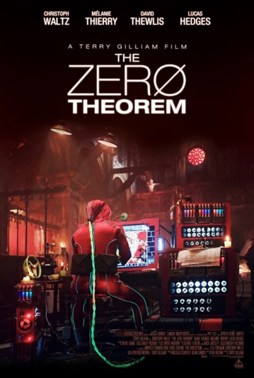 Before continuing my Fantasia diary with a look at the movies I saw last Sunday, I want to focus in on one specific film that struck me as an utterly brilliant piece of science-fiction satire. I think it divided the audience; I’ve heard and seen reactions from people who were left cold by it as well as from people who loved it as much as I did. Perhaps that’s not surprising. The movie is The Zero Theorem, directed by Terry Gilliam from a script by Pat Rushin, and it is as idiosyncratic and persistently individual as you’d expect from Gilliam.
 To my mind, if you’re a critic of any integrity, sooner or later the criticism you write will lead you to challenge your views of yourself as well as your views of the art you experience. That’s the nature of much truly effective art: it makes you look at yourself and think about yourself in new ways. If you’re trying to articulate your reaction and assessment of such a work, honesty will compel some self-examination as well. Powerful art requires an acknowledgement of one’s subjective response.
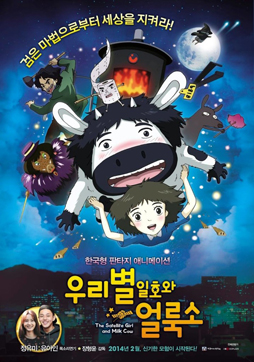 Saturday was my first really big day at Fantasia. On weekdays, the festival usually starts its screenings at 5 or 6, with the occasional matinée at 3. Weekend days kick off around noon, meaning many more movies are on offer. Which also incidentally increases the risk of losing track of the need for a meal. I ended up seeing five movies last Saturday, with a dinner break after the first three. So this post will cover those first three films and I’ll have another up shortly looking at the next two. (In general it seems like I’m going to have more Fantasia posts than I’d thought, as I try to keep up with the films I’ve watched.)