Sylvia Townsend Warner and Lolly Willowes
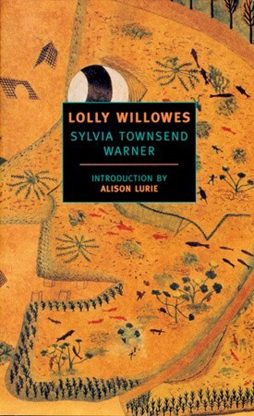 Sylvia Townsend Warner is probably best known in fantasy circles for The Kingdoms of Elfin, her collection of linked short stories from 1977. I’ve been looking for a copy of that book, but have yet to locate one (using the Internet, I firmly feel, is cheating). But I did recently come across her debut novel, 1926’s Lolly Willowes, or the Loving Huntsman. It’s been described as a deal-with-the-devil story in which a middle-aged Englishwoman makes a Satanic pact and becomes a witch. That’s accurate, but not necessarily the best description.
It’s a story about an upper-class woman in 1920s England, Laura Willowes, and in wry third-person narration describes the outward details of her life and her search for imaginative freedom. Laura, or ‘Lolly’ to her family, is a vivid character who grows more fascinating as the book goes along. The first third of the book tells us about her childhood and family and how she lived with her father until he died and then moved in with her older brother to help him and his wife look after their children; the second part follows her in her late 40s, when she (seemingly) abruptly chooses to leave her brother’s London home to live on her own in a small town in South East England; the third sees her newfound independence threatened when her loving nephew comes to live in the same small town. At which time she turns to Satan — or thinks she does.
Is it a fantasy? Well, it’s a lovely book, filled not only with a dry and reserved wit, but also fine descriptions of nature and of dreams. It’s a gentle but devastating satire of gender roles, as well as a statement about love and freedom. It’s a leisurely-paced character study in elegant language. And then there’s also some stuff in it about witches and Satan. It’s possible to read it as a realistic novel in which the supernatural is hallucinated, but perhaps easier to read as a fantasy. Still, to say it’s a book ‘about’ witchcraft or Satan is untrue. The fantastic elements come in late and grow out of the mimetic elements. The book is ‘about’ Laura Willowes. Fantasy’s just a part of who she is.
 There was an extended period of time in the 1990s and the first decade of this century when I didn’t read much science fiction or genre fantasy. I started reacquainting myself with these fields a few years ago and I’m still in the process of learning what I missed. It’s not uncommon for me to only now find out about an author who established themselves during those years. Which brings me around to Pat Murphy.