Vintage Treasures: Pavane by Keith Roberts
 |
 |
 |
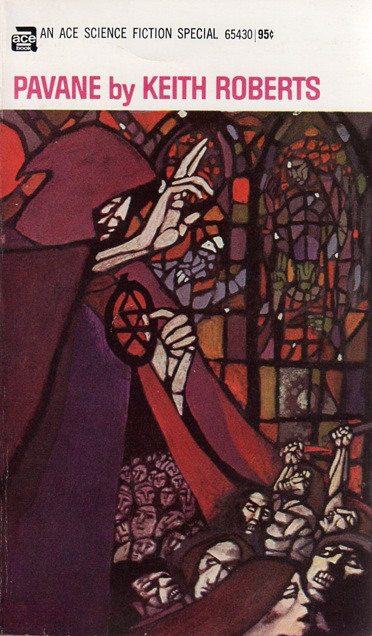
I think I first took notice of Keith Roberts’s classic alternate history Pavane because it was part of the famed Ace Science Fiction Special line. The Ace specials, edited by Terry Carr, were a legendary line of (mostly) original paperbacks that included some of the most acclaimed SF and fantasy ever published, such as R. A. Lafferty’s Past Master (1968), Ursula K. Le Guin’s The Left Hand of Darkness (1969), Alexei Panshin’s Rite of Passage (1969), John Brunner’s The Traveler in Black (1971), and William Gibson’s Neuromancer (1984). Pavane was one of the rare reprints; it first appeared in hardcover in 1968, and the Ace paperback came along a year later, with a cover by Leo Dillon and Diane Dillon (above left).
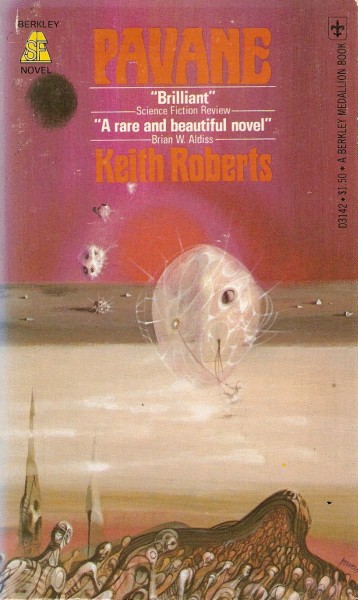
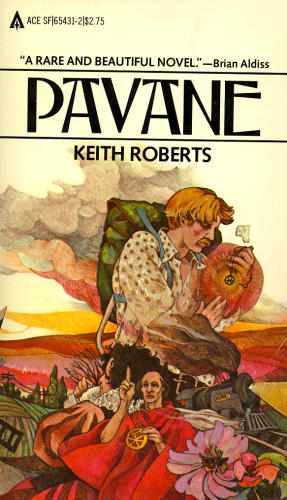
Pavane has been reprinted many, many times in the past four decades — at least 20 times, by my count. Frankly, I’d be surprised if it’s been out of print for more than a year or two over the past forty years. Trust me, that’s evidence of an exceptional book, with the kind of appeal that crosses generations. Berkley put a very purple Richard Powers on their 1976 paperback edition (above, middle), but I think my favorite cover may be Chuck Minichiello’s, for the 1982 Ace reprint (right).
What’s Pavane all about, then? It’s a collection of nine linked short stories, most of them published in the British SF magazine Impulse in 1966. Roberts imagines a complex and well-realized alternate world where England fell to the Spanish Armada in the 16th Century, and the 20th Century sees the all-powerful hegemony of the Church of Rome, which has ruthlessly smothered scientific progress through the terror of the Inquisition. But knowledge cannot be suppressed indefinitely and the world is beginning to inexorably change…