A Gateway to Fantasy for Young Readers: Amulet by Kazu Kibuishi
 With the height of the “Harry Potter phenomenon” nearly a decade past, we now have a new generation of seven- and eight-year-olds who were born after the final book in that series came out. A perennial question comes up: What will be the next “gateway” work that ushers young readers into a lifelong love of fantasy and speculative fiction?
Well, some may rightly ask, why can’t it be Harry Potter? Or A Wrinkle in Time, or The Dark is Rising sequence, or The Chronicles of Prydain, or The Chronicles of Narnia, or The Hobbit, or The Wonderful Wizard of Oz, or…?
Many do still find their first taste of enchantment in books that are decades or even a century old, but there is no denying that — at least in the publishing and bookselling world — there has to be a “latest model.” Librarians still push those beloved older books faithfully, but their sales pitch is a lot stronger when it comes as a follow-up to a young reader who, having just read something that is currently “all the rage,” asks, “What else out there is like this?”
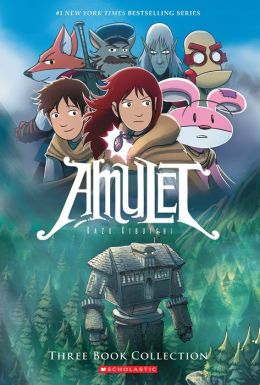
I’m here today to suggest that if you want a contemporary work that will introduce 3rd to 7th graders to the pleasures of epic fantasy, steampunk, people with animal heads, and wise-cracking robots, you could do a lot worse than hand them the graphic novel Amulet Book One: The Stonekeeper (2008) by Kazu Kibuishi. But be prepared: odds are good that they will immediately be demanding books 2 through 6. And then they will be waiting with bated breath for book 7 and cursing that there is now a two-year interval between volumes (welcome, Young Reader, to the Pains of Following a Series that is Ongoing. To better understand what you are in for, see any conversations referencing George R.R. Martin or Patrick Rothfuss).
But I’m also here to recommend them to anyone who likes this sort of stuff, regardless your age. I mentioned “3rd to 7th graders” in the last paragraph because those are the perimeters the publisher, Scholastic, says they are written toward. As someone who does not fit that demographic, I can vouch for them being worthwhile reads even if you are middle-aged.





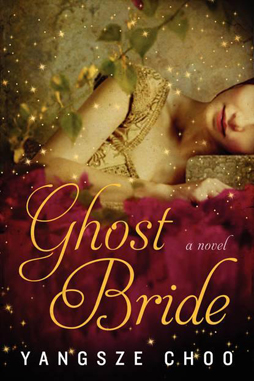 Yangsze Choo’s 2013 book The Ghost Bride starts out very much like a gothic novel. Li Lan, the beautiful young daughter of an impoverished scholar in the Chinese community of Malacca in the year 1893, draws a sinister marriage proposal from the rich and powerful Lim family: a ceremonial spirit marriage to Lim Tian Ching, the recently-deceased heir to the Lim wealth. But Li Lan finds herself drawn to Tian Ching’s cousin, Lim Tian Bai — and then Tian Ching begins to appear in her dreams, eager for their upcoming nuptials. She tries to exorcise him, and then what started as a gothic becomes broader and stranger. Li Lan enters a world of ghosts where she uncovers hints of corruption among the judges of hell, and then must undertake a quest into a further and yet more fantastical world, a Campbellian hero(ine)’s journey of dangers and guardian allies and magic items.