Goth Chick News: A Decomposing Neverland — an interview with Douglas Clegg
 Imagine the family vacation from hell.
I know you can do that because you’ve had one, and I know you’ve had one because everybody has. Usually the “from hell” part has to do with long-term forced exposure to family members in an environment you have no hope of escaping for the duration of your tortured imprisonment (known as the “vacation”).
For me it was a remote cabin in the Canadian woods; go north, turn left at anything that looks like fun, and drive for another four hours. The location alone was the perfect setting for a knife-wielding maniac to off a few sinful teenagers including at least one cheerleader; which is probably what got me to where I am today. But enough about me…
What if your personal family vacation from hell, contained a real Hell? I mean a dictionary-definition Hell complete with a soul-eating demon? It is under this premise that we follow author Douglas Clegg into the no-Tinker-Bell, Peter Pan-less nightmare called Neverland.
Beau Jackson is destined to spend another summer with his extended family in their run-down “summer home” on Gull Island. Isolated and remote, the island is privy to even more nasty little secrets than the ones the adults spill out each evening during their alcohol-induced arguing, and Beau’s cousin Sumter is up to no good at all in that broken down shed at the back of the property.
Sumter has always been a little off, maybe even a little evil. But what he’s got hiding in a box back there is about to rip the fabric between reality and Sumter’s sadistic imagination, taking Beau and the rest of the Jackson family along for the ride.
 The Spider Revival: Part III
 “So it will be when we are dead that perhaps our lives will stand for something.”
 I don’t know whether the third edition of Best American Fantasy, which has found a new home with
 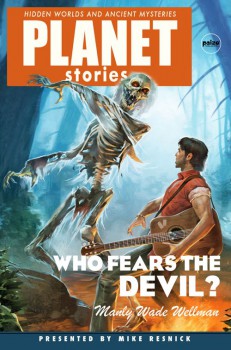 Who Fears the Devil?
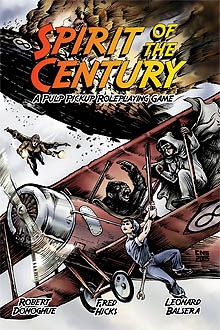 One of the most promising new game systems I reviewed in Black Gate 14 was used for the pulp role-playing game
 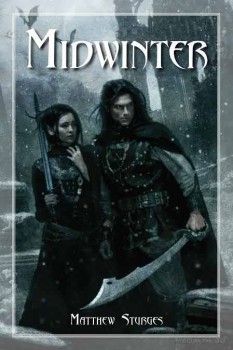 Midwinter
 How to Train Your Dragon (2010)
 Most pulp writers of the 1930s were itching to break into the hardcover book market. Since reprints of pulp stories in book form were rare at the time, these writers did not expect that their work for the newsstands would survive past an issue’s sell-date. They felt comfortable re-working and expanding on them to create novels. Raymond Chandler famously called his process of novelizing his already published work as “cannibalizing.” He welded together different short stories, often keeping large sections of text intact with only slight alterations. Other authors took ideas that they liked, or else felt they could do more justice to in the novel format, and enlarged them into books without text carry-over. Robert E. Howard used “The Scarlet Citadel” as a guide for The Hour of the Dragon. And Cornell Woolrich turned many of his short stories into novels. “Face Work” became The Black Angel. “Call Me Patrice” became I Married a Dead Man. “The Street of Jungle Death” became Black Alibi. And “Speak to Me of Death” became Woolrich’s most depressing novel (which is really saying something), Night Has a Thousand Eyes.