Ye’d Best Start Believin’ in Ghost Stories
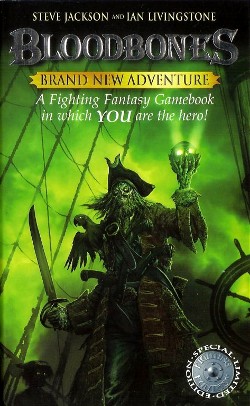 Bloodbones
Jonathan Green
Wizard Books (240 pp, ₤5.99, CAN$12.00, April 2010)
In 1982, Puffin Books unleashed The Warlock of Firetop Mountain, the first in the Fighting Fantasy line of gamebooks. The book was conceived and written by Steve Jackson (the British one) and Ian Livingstone, co-founders of Games Workshop. Although predated by solitaire RPG scenarios, Fighting Fantasy combined a choose-your-own-adventure decision-tree structure with a simple dice mechanic to mimic an RPG experience. The quick-start rules, brisk pacing, and art by New Wavey fantasists like Iain McCraig, Chris Achilleos, and Richard Corben, all bundled in a mass-market paperback retailing for $1.95, made Fighting Fantasy wildly successful. The series ran until 1995, along the way spawning ancillary media like novels, computer games, even a full-blown Fighting Fantasy RPG. Fan enthusiasm still burns bright today, with a downloadable fanzine and its own wiki.
Screw Narnia; had I ever discovered some magic wardrobe, I would have jumped with both feet into Titan. As it was, chores were done and allowances scraped together in anticipation of infrequent family expeditions to the mall bookstore. There I could pay to wade through the mire of the Scorpion Swamp, survive Baron Sukumvit’s Deathtrap Dungeon, rally freed slaves to overcome the sinister Gonchong on the Island of the Lizard King. Now I’ve been playing the books all over again, this time with my young sons, imparting to them the same vital life lessons I learned as a young boy: don’t trust strangers; never put your hand in someplace you can’t see; and if you kill someone, you might as well go ahead and take his wallet.

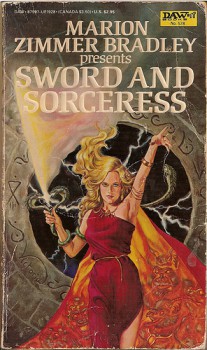 Sword and Sorceress I
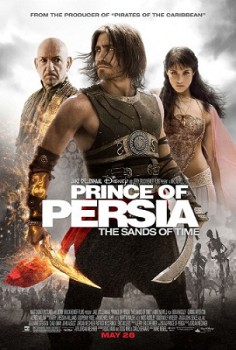 Prince of Persia: The Sands of Time (2010)
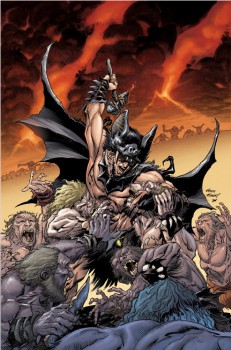 After reading the
  The Spring 2009 issue of
 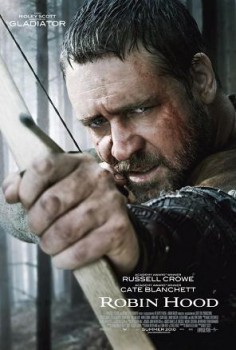 Robin Hood (2010)
 To call me a “gamer” would do a serious injustice to those hardcore cyber-warriors who are universally recognized for their pale complexion and calloused thumbs. But as someone who has spent many a windfall dollar at the local GameStop, foregone more than one sunny summer day hunched over a keyboard in a darkened room, and lives at least partially in a world where an
 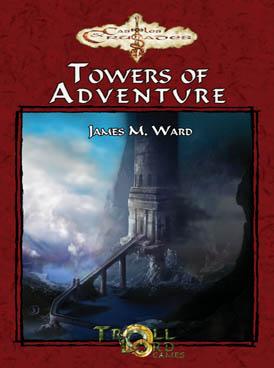 A while back I placed an order with one of my favorite online vendors,