The January/February Interzone features a very cool, magna-like cover by Warwick Fraser-Coombe; he’ll be doing the cover art for all six issues in 2010, which are intended to be put together to form a larger image. Collect them all and assemble the collage to see exactly what’s up with this. As far as I can tell, it has nothing to do with the contents of the magazine, which, by the way, has returned to a color interior; it’s a very attractive package, as you’d expect from the folks at TTA Press.
The retro-look does reflect the fiction, however, in the sense that, for the most, part the fiction could have been ripped right out of a 1950s/1960s pulp magazine. A swashbuckling fantasy, space adventure, post-nuclear holocaust dystopia. It’s déjà vu all over again.
A strange box covered with cryptic glyphs recently parachuted onto Black Gate‘s rooftop headquarters. It landed near Howard Andrew Jones, who was working on his next Dabir & Asim novel by candlelight in the restricted section of our pulp library.
Due to a small misunderstanding with Gordon van Gelder and the staff of Fantasy & Science Fiction over an unpaid lunch bill at Windycon, all unmarked mail here in the inner sanctum is routinely handed over to the Chicago bomb squad for immediate disposal. Doubtless due to the Zen-like focus on his novel (or perhaps because he’d just ordered pizza) Howard forgot, and pried open the box.
Inside, between shredded pages of the Necronomicon used as packing paper, were pristine copies of the 4th Edition Dungeons & Dragons Eberron Campaign Guide, compliments of Wizards of the Coast.
That explains the cryptic glyphs. In case the copies are laced with exotic contact poison, or otherwise booby-trapped (Gordon’s minions can be very creative), we’re doing the only logical thing: giving them away. To you.
How do you win? By writing a two-sentence review of your favorite Eberron product, and sending it us to eberron@blackgate.com.
The eight best reviews — as selected by Black Gate staff, and maybe whatever bill collectors happen to be in our offices at the time — will be published here on the BG website, and the authors will receive a copy of the Guide.
All entries become the property of New Epoch Press. No purchase necessary. Must be 12 or older. Decisions of the judges (capricious as they may be) are final. Not open to employees of Wizard of the Coast, or Gordon van Gelder. Not valid where prohibited by law. Or anywhere postage for a hefty hardcover is more than, like, 5 bucks. Seriously, we’re on a budget.
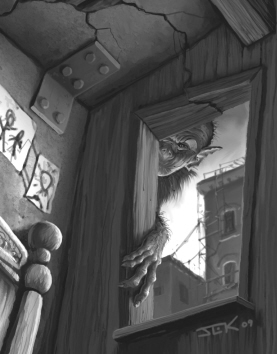
Something is crawling into Cresy’s bedroom each night… something not human.
The Thing was here, in her room again, shuffling softly by her bed. She could hear it, and it made her afraid. And more than anything, the fear made her angry.
I am the Hangman’s daughter, in her mind, her voice echoed from the walls. I am strong. I am not afraid of you!
After what seemed like an eternity, Cresy sat bolt upright in her bed, and the sounds of the city came back to her. But this time, this time she saw it. A black shadow by her window, curved, hunched over. It was built like a therian — small, like a child, but with long arms and huge hands, hands built for strangling. Its eyes glowed, featureless yellow orbs. And in the light from those eyes, she could see its face, and she could see that it had no lips. Just skin, stretched across its jaws, as it tried to scream, and couldn’t.
Chris Braak is a novelist and playwright from Philadelphia. His first novel is The Translated Man.
“The Hangman’s Daughter” appears in Black Gate 14, coming in February. You can read an excerpt here.
The complete Black Gate 14 Sneak Peek is available here.
Art by John Kaufmann.
Goth Chick News: How I Nearly Killed Myself Laughing…
I’m sure you’d never guess this, but my taste is a little left of center.
I have a full suit of armor I dubbed “Prince Vlad” which looms large over my comfy reading chair. For my last birthday, my amazingly normal friends Mr. and Mrs. Disney presented me with a picture of Tippi Hedren from Alfred Hitchcock’s The Birds, which was autographed by Tippi herself. I was nearly brought to tears I was so touched. I have a full-on voodoo shelf with authentic trinkets from Africa and the Caribbean, which Madam Laveaux herself would envy.
Tippi Hedren
I think I should mention here that the Catholic cleaning lady will not go near my office.
As it would naturally follow, my sense of humor is a tad off too; as in I got a nearly fatal fit of giggles during a relative’s funeral. Though I admit this was entirely improper and uncalled for, I take heart in the idea that the deceased would probably have found the cause as hilarious as I did.
My parents continue to pull me aside and give me “the talk” about not embarrassing them before important family events, something Mr. Goth Chick finds especially amusing, but I think you see my point.
It is because of these unfortunate traits that I find myself drawn to the strange and unusual gems of the literary macabre; often those items tucked into back shelves at the book store or better yet, at the flea market.
In my defense, the written material which occupies the place closest to my blackish, goth chick heart wasn’t written for me specifically and did find its way to a publisher and into the general marketplace.
Therefore, I conclude I must share this morbid sense of humor with others, closeted though you may be.
Which is why it my pleasure this week to share some my favorites with you. Their titles speak to their literal subject matters so I’ve just included a couple of succulent tidbits from each. Ironically, most of this advice would be just as easily at home in the latest “How to Succeed in Business” publication, but there you go.
It might surprise regular readers of this website that Edgar Rice Burroughs and Robert E. Howard are not my favorite pulp writers. They rank among the authors who have influenced and inspired me the most—and they provide endless material to discuss and analyze. But my favorite pulper, perhaps my favorite writer of all time, is Cornell Woolrich.
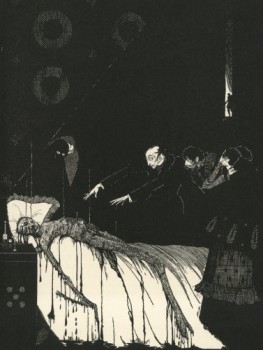
I haven’t written anything about Woolrich on Black Gate before because his genre doesn’t intersect with the dominant focus of the magazine, except maybe in the broad way that Black Gate readers are usually interested in the pulps in general. Woolrich wrote suspense and mystery stories, and the majority of his work appeared in crime magazines like Dime Detective, Detective Fiction Weekly, and the legendary Black Mask. His specialty was the “emotional thriller,” harrowing trips into fear and paranoia with suspense set pieces that no author has equaled. Often called by admirers and critics “the literary Hitchcock” and “the twentieth-century Edgar Allan Poe,” Woolrich could wring more palpitating dread out of everyday life than any writer I’ve encountered. His style is defining of noir, the existential crime tale. Eventually, Hitchcock and Woolrich did merge, when Hitchcock turned Woolrich’s short story “Rear Window” (originally published as “It Had to Be Murder”) into a film that you might have heard of.
But there is one part of Woolrich’s oeuvre that falls into the compass of Black Gate: he made occasional forays into stories of the fantastic. He was actually ideally suited for the horror story, but the market for such tales was not as strong as the crime fiction market (just ask anybody to whom Weird Tales owed money). Woolrich had a personally dismal view of existence—universe and fate are essentially hostile to humanity, and the inevitability of death made life pointless—that could transfer perfectly to the supernatural, where those malign forces of the universe manifest in the unnatural occurrences. The idea that the world doesn’t care for you is one also found in H. P. Lovecraft, although visualized in a different way. If the two men had ever met, there would have been a strange, strange discussion. (Woolrich, however, could rarely be budged from his hotel room in Manhattan. H. P. Lovecraft was a partying socialite in comparison.)
I’m supposed to be putting the finishing touches on BG 14, figuring out how to use Google Ad words, and about a million other things tonight. But man, I am beat.
Besides, the copy of Rich Horton’s The Year’s Best Science Fiction & Fantasy 2009 I ordered finally arrived a few weeks ago, and it’s been sitting there on my desk, unopened. That’s just criminal. So I packed it in early tonight, and curled up with it in the big green chair.
As we’ve established here already, Rich Horton is some kind of crazy person. It all started with his newsgroup at SFF Net, where he was reviewing every single magazine in the entire universe. Or as close as damn is to swearing, as they used to tell me while growing up in Nova Scotia.
Then he began compiling lists of his selections of the best short fiction of the year, and we started reprinting them on the BG website (in 2005, 2006 and 2007.)
Now he’s turned his talents to something closer to home: making books. He’s become an anthologist of note, with over half a dozen Best SF and Best Fantasy volumes to his credit, chiefly from Prime Books. This year Prime has re-launched the series, with a snappy new cover design and a big bump in size and page count (to 540 pages). This is a hefty volume, with 37 short stories, detailed author biographies, and Honorable Mentions.
There are a great many Best of the Year books in the genre, but so far this is my favorite. More later as I make my way through the book.
Black Gate 14 Sneak Peek, Part II: “Dark of the Year” by Diana Sherman
We kick off Part II of the Black Gate 14 Sneak Peek with an excerpt from the issue’s lead story, Diana Sherman’s “Dark of the Year.”
“Dark of the Year” is the tale of a man wandering through a landscape ravaged by sorcerous war, desperately searching for a dying man or war-mage who can read his granddaughter’s true name, in the last few days before the Shadows come… before the Dark of the Year.
Diana Sherman has been published in Talebones and Polyphony, and a has sold a play to The Exquisite Corpuscle anthology from Fairwood Press.
Matai’s grandaughter doesn’t have a name, and soon, she will be susceptible to the Shadows when moondark comes. Less than a fortnight distant, when the year turns on the longest night. The Shadows and their darklings will come creeping through towns and cities, calling for children to come. Most will be safe, their ears cottoned against those whispers by the knowledge of their own true names.
But the orphans with no womb names, they’ll be gone of a morning. No sight nor sound of their passing. But someday, some other dark night, you might spy a lost child creeping through the village, a darkling servant now, whispering and beckoning. You know them by their black lips, burnt by the Shadow that stole the souls out of their mouths. That, and their angry eyes.
The complete version of “Dark of the Year” appears in Black Gate 14, on sale in February.
Stay tuned over the next few weeks, as we post excerpts from each of the stories coming in BG 14.
I just stumbled upon this spin on a subscription plan to support Clarkesworld Magazine, which has been providing its content online for the past three years. For a $10 or more donation, you can become a citizen; although the privileges of citizenship are still being defined, the folks at Clarkesworld suggest it might include discounts on their print publications, as well as the satisfaction of supporting an endeavor that publishes authors such as, in the current January issue, Peter Watts and Megan Arkenberg. Clarkesworld hopes to naturalize 400 citizens out of the 10,000 or so it counts as regular readers to reach its financial goals.
I just saw some news via SFSignal and SciFi Squad about plans to create and animated version of Harlan Ellison’s A Boy and His Dog, with a tentative 2012 ETA. As a fan of the Hugo-winning 1975 film with Don Johnson (yes really, Don Johnson) and the original Nebula-winning Ellison novella, I think this could be a terrific project. For those of you unfamiliar with the story, it’s a post-apocalyptic tale featuring a misogynist young man and his super-intelligent telepathic dog, with a skewed, satirical edge that one expects from the best Ellison.
It isn’t really clear if the film, to be helmed by David Lee Miller, is taking the original 1975 script as its starting point, or planning a fresh adaptation of the Ellison novella. Either way my rule of thumb has always been that the more post-apocalyptic films, and the more movies based on works of the giants of the field, the better off we as a society are. Plus it just looks cool.
 The January/February Interzone features a very cool, magna-like cover by Warwick Fraser-Coombe; he’ll be doing the cover art for all six issues in 2010, which are intended to be put together to form a larger image. Collect them all and assemble the collage to see exactly what’s up with this. As far as I can tell, it has nothing to do with the contents of the magazine, which, by the way, has returned to a color interior; it’s a very attractive package, as you’d expect from the folks at TTA Press.
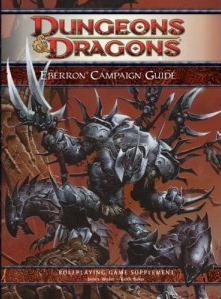 A strange box covered with cryptic glyphs recently parachuted onto Black Gate‘s rooftop headquarters. It landed near Howard Andrew Jones, who was working on his next Dabir & Asim novel by candlelight in the restricted section of our pulp library.
 Something is crawling into Cresy’s bedroom each night… something not human.
 I’m sure you’d never guess this, but my taste is a little left of center.
 It might surprise regular readers of this website that Edgar Rice Burroughs and Robert E. Howard are not my favorite pulp writers. They rank among the authors who have influenced and inspired me the most—and they provide endless material to discuss and analyze. But my favorite pulper, perhaps my favorite writer of all time, is Cornell Woolrich.
 I’m supposed to be putting the finishing touches on BG 14, figuring out how to use Google Ad words, and about a million other things tonight. But man, I am beat.
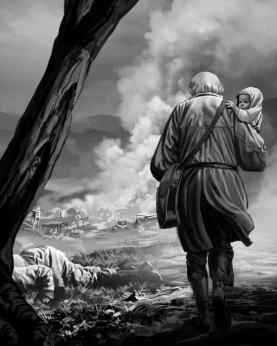 We kick off Part II of the
  I just stumbled upon this spin on a subscription plan to support
  I just saw some news via SFSignal and SciFi Squad about