Rich Horton Reviews The Long Look
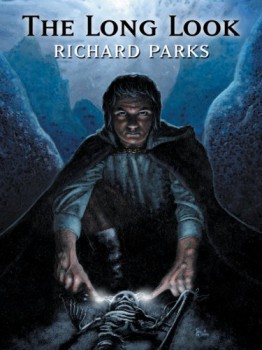 The Long Look
Richard Parks
Five Star (297 pages, $25.95, September 2008)
Reviewed by Rich Horton
I am tempted to propose a new subgenre of fantasy that I might call domestic fantasy, or ordinary-people fantasy, or anyway something that suggests stories set in secondary worlds, complete with magic, and for that matter complete with kingdoms and magicians and all the other Tough Guide to Fantasyland markers (even stew!), but populated by sensible (mostly) people, fairly typical of your neighbors in general attitudes (but not anachronistically so).
I’ve noted in multiple reviews of Lawrence Watt-Evans’s novels that they seem often to take a very common sense approach to grand fantastical tropes like dragons. So his work might fit. And a novel like Sherwood Smith’s A Posse of Princesses, about a bunch of pretty basic teenagers who happen to be princes and princesses in a fantasy world, seems to fit as well. You might even argue that aspects of the great model for so much contemporary fantasy, The Lord of the Rings, have this ring* of domesticity – that is to say, the hobbits – but really it is The Lord of the Rings, with its stark good versus evil theme, and with characters like the impossibly noble Aragorn and the angel-like Gandalf and the ethereally beautiful Galadriel and the disembodied evil of Sauron, that I see my domestic fantasies as reacting against. (In a respectful way – I love The Lord of the Rings, and so, I suspect, do most of these writers.)

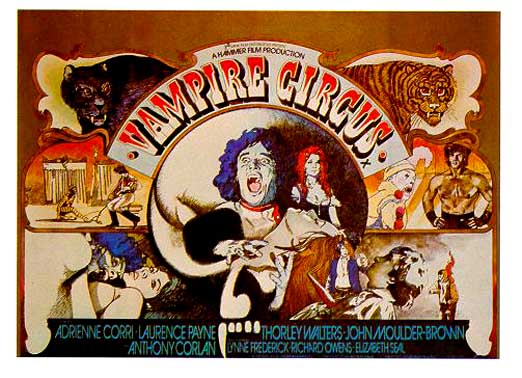 Vampire Circus (1972)
 Last week, I discussed my
 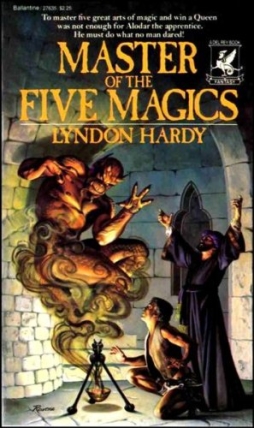 I’ve been thinking lately about fantasy in the 1980s. More specifically, about the wave of fantasy fiction that began to be published in the late 70s, in the wake of The Sword of Shannara and the first Thomas Covenant books, and which over the following years developed into fantasy as we know it now. So far as I can learn, it seems that this was when fantasy really took root as a novel category — that is, when fantasy novels stopped being relatively rare events and began to flourish as a genre. As a result, I think, it was a time when the idea of fantasy broadened; new ideas and forms and voices were tried, even if certain assumptions (like a quasi-medieval-European setting) were often unquestioned. What I wonder is whether certain things tried then and since almost forgotten are in fact worth revisiting.
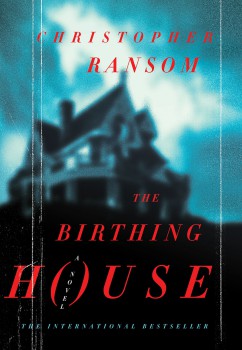 The Birthing House
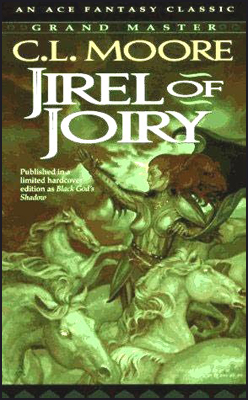 Due to an unfortunate (or perhaps I should say, “fortuitous”) comment I let slip in an email, Howard Andrew Jones discovered I had no idea who C.L. Moore was.