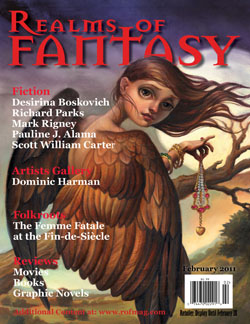
 The first Realms of Fantasy resurrected under new publishers, Damnation Books, for February 2011 features the fiction of Desirina Bokovich, Richard Parks, Mark Rigney, Pauline J. Alms and Scott William Carter. The last has a story entitled “The Time of His Life” which is described as:
It’s so difficult to find time for yourself amid the demands of family and work. Wouldn’t it be great if you could just carve some out? Maybe, maybe not.
Realms of Fantasy tends to favor a wee bit too much of fairy land for my tastes (an unfair criticism, since that is, after all, a large part of its niche), but this sounded different and intriguing enough to get my immediate attention. Who after, all, hasn’t fantasized about having some private place to get away from it all?
In this case, the narrator discovers a room in which he can spend as much time as he wants on creative pursuits, but only minutes have gone by when he returns to the real life of kids and bitchy wife and work. A Twilight Zone kind of tale that’s ultimately about resisting the allures of temptation and self-gratification. The wife’s transformation from bitch to loving partner isn’t quite believable, though perhaps Williams is suggesting this has less to do with the wife’s actual attitude than the husband’s perception. And he does get right the marital tension between two equally tired (but for different reasons) partners with young children.
 However, I have to wonder what the editors do here at this magazine. Okay, maybe you can make an argument that intense cold could actually scorch, though I tend to associate it with extreme heat. But racing minds, chills going up a spine, the mere mention of a shudder should send off alarm bells to break out the red pencils and clean up clumsy phrasing that mars an otherwise decent story.
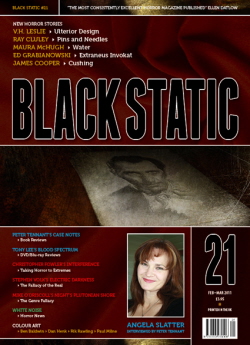
Horror magazine Black Static for February-March 2011 has new tales from V. H. Leslie, Ray Cluley, Maura McHugh, Ed Grabianowski and James Cooper. In the “first lines that hook you into the story” department, here’s the opening to McHugh’s “Water”:
“The pot lids hopped and fizzed when Mark’s mother laid the wooden spoon down calmly, opened the back door of the kitchen, disappeared into the overgrown garden, and drowned herself in the river that flowed past their house.”
True horror lies not in the stuff of sexy vampires or ghost stories or chainsaw massacres, but within the mundane context of ordinary existence.
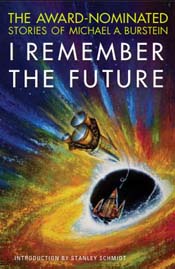 Jason Sizemore at Apex Book Company, publishers of Apex magazine and many fine Dark SF, Fantasy, and Horror books, tells us that to celebrate receiving two Nebula nominations and two Stoker nominations, Apex is having a sale on all books by authors who’ve received nominations.

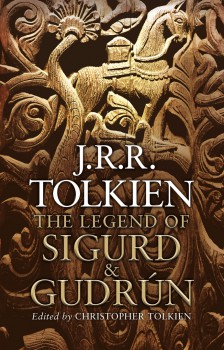 If you like the sound and rhythm of words — and if you’re a hopeless J.R.R. Tolkien junkie — you’ll like The Legend of Sigurd and Gudrun (2009, Houghton Mifflin Harcourt). Lacking either of these prerequisites, you probably won’t. And there’s not much more to say than that.