Alchemical Storytelling
I haven’t watched much anime in my time. Frankly I haven’t gotten a lot out of the shows I’ve seen, many of which seem to consist of posing in the midst of fights and shouting at opponents. But I chanced upon something a few weeks back that began with potential and then delivered on it episode after episode. I found fabulous world building and strong character arcs. I watched half hour after half hour the way I devour chapter after chapter in a great fantasy novel, poised on the edge of my seat wondering how things would resolve.
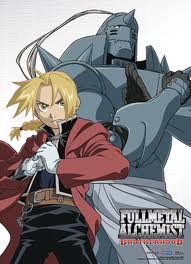 The show that so enthralled me is Fullmetal Alchemist: Brotherhood. The series is set in an alternate world in the 1900s, one very similar to our own, except that alchemy works. Those talented and diligent enough can transform matter from one state to another — fix a broken radio into one that works, or transform a metal bar into a sword. The story’s protagonists are a pair of young brothers of tremendous talent who used their powers to commit the ultimate alchemical taboo: they tried to bring their dead mother back to life. They paid a terrible price when the transmutation went horribly wrong, and spend much of the series trying to put things right.
As the young men search for solutions, they uncover hidden layers to the way alchemy, their country, and their world, truly work. As the mysteries deepen, so do the characters and the world. I really don’t want to say much more for fear of ruining the many unfolding surprises.
If, like me, you’re unused to anime, there are a few caveats. There are occasional odd tonal shifts. For instance, when characters feel a really strong emotion (like anger or sadness) they’re often briefly transformed into caricatures of themselves, with exaggerated features. Some of the humor doesn’t translate and comes off as a bit goofy, and characters do sometimes speak over dramatically or are too revealing of their motivations when they talk. I wasn’t sure what to make of it after the first one or two shows, but kept watching… and I was glad I did. Most of the time it works, and overall it works brilliantly. Male and female characters are given strong roles, and face difficult choices.
 I’ve been thinking over the past few days about last week’s post on
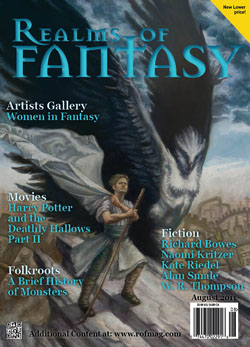 The August Realms of Fantasy is its 101st issue, the significance of which editor
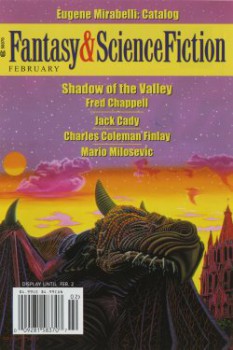 As I began the second story in the latest issue of Black Gate, I was forcefully (but not forcibly) reminded of a review I wrote some years ago for Tangent Online.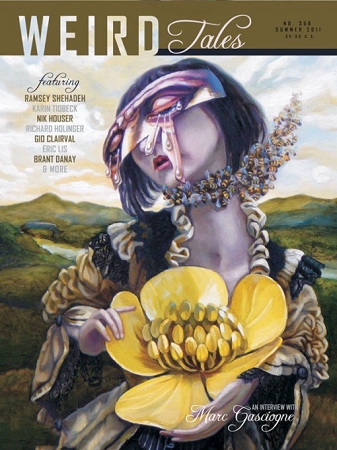
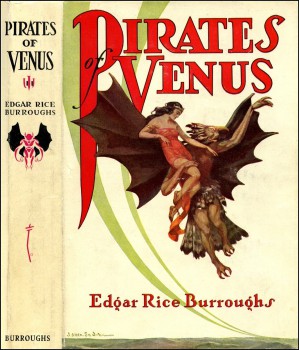 Next year brings the hundredth anniversary of Edgar Rice Burroughs’s first two published novels: