The Cornerstones of High Fantasy: E. R. Eddison, J.R.R. Tolkien, Stephen R. Donaldson, J. K. Rowling, and George R. R. Martin
I’ve defined Heroic Fantasy (HF) as a type of fiction in which a heroic (bigger than life) figures use a combination of physical strength and edged weapons (Swords, Axes, Spears) to face bigger than life foes. The hero may be either male or female, but the focus is primarily on personal conflict between the hero and various villains.
I divide Heroic Fantasy into four categories: Sword and Sorcery, Sword and Planet, High Fantasy, and Heroic Historical. I’ve previously discussed S&S, S&P, and Heroic Historical (HH). Today let’s check out High Fantasy.
[Click the images for heroic versions.]
 |
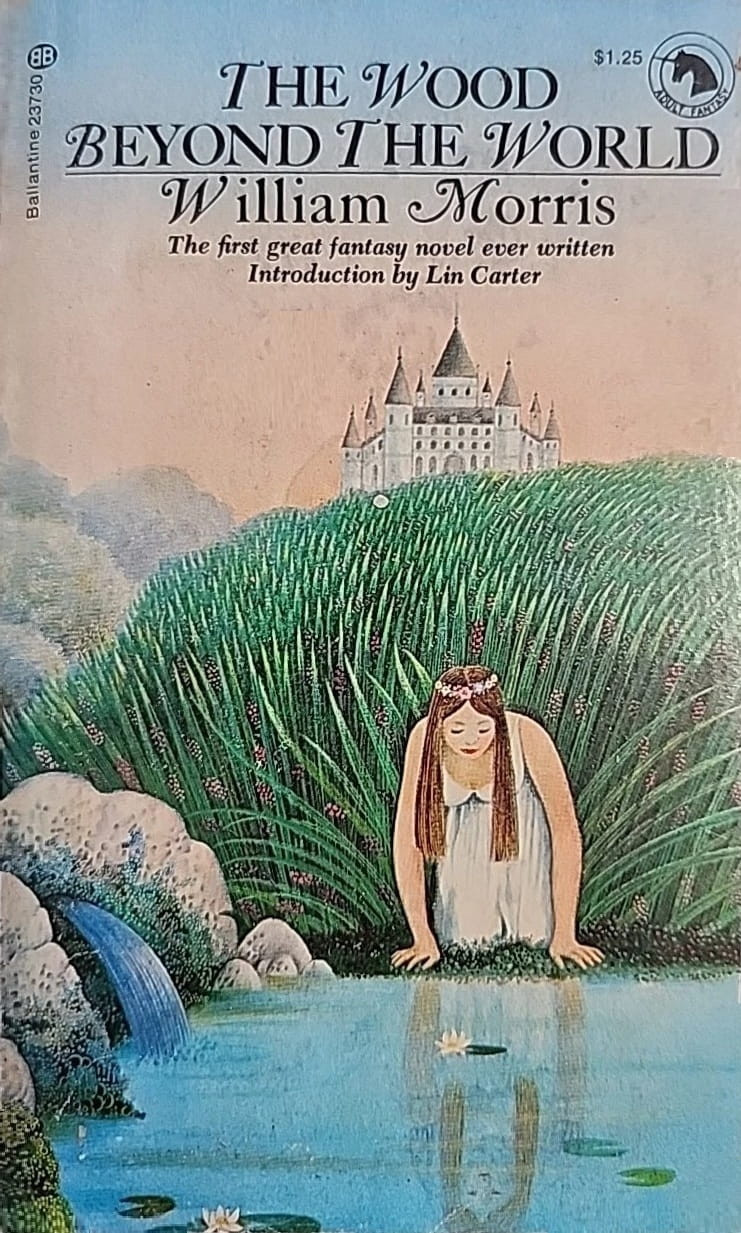 |
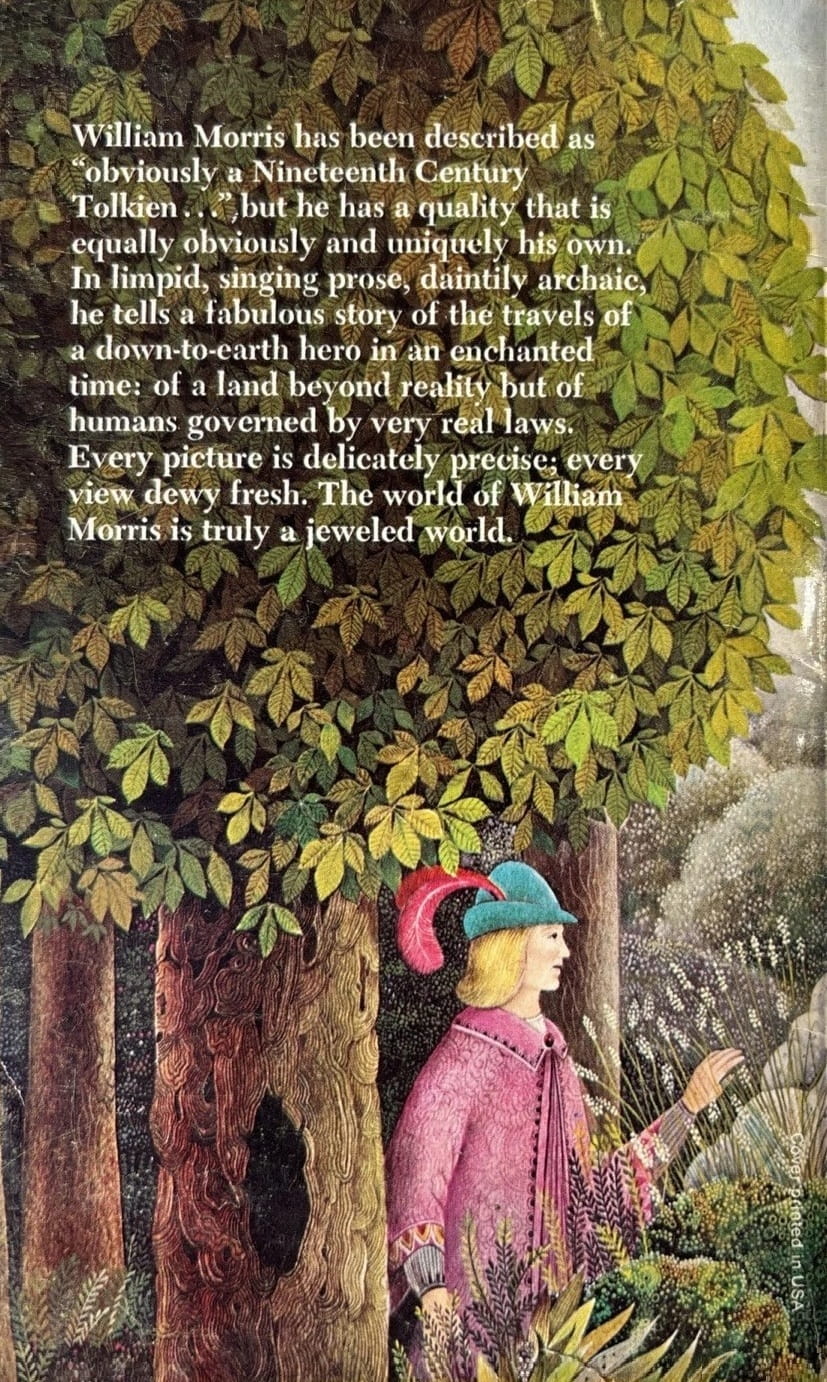
The Wood Beyond the World by William Morris (Ballantine Adult Fantasy #3, July 1969) Cover by Gervasio Gallardo
The emphasis in High Fantasy is on a Mythic adventure, either a quest or a large scale (often world spanning) conflict between the powers of Light and Dark. The hero is usually not bigger than life. In fact, he, or she, is often rather small and weak physically, though there is usually a tight knit band of followers or friends who help them.
The heroes are generally chosen for their role by some greater power and usually do not know how strong they really are at the beginning of the story. They grow into the role as the work progresses.
 |
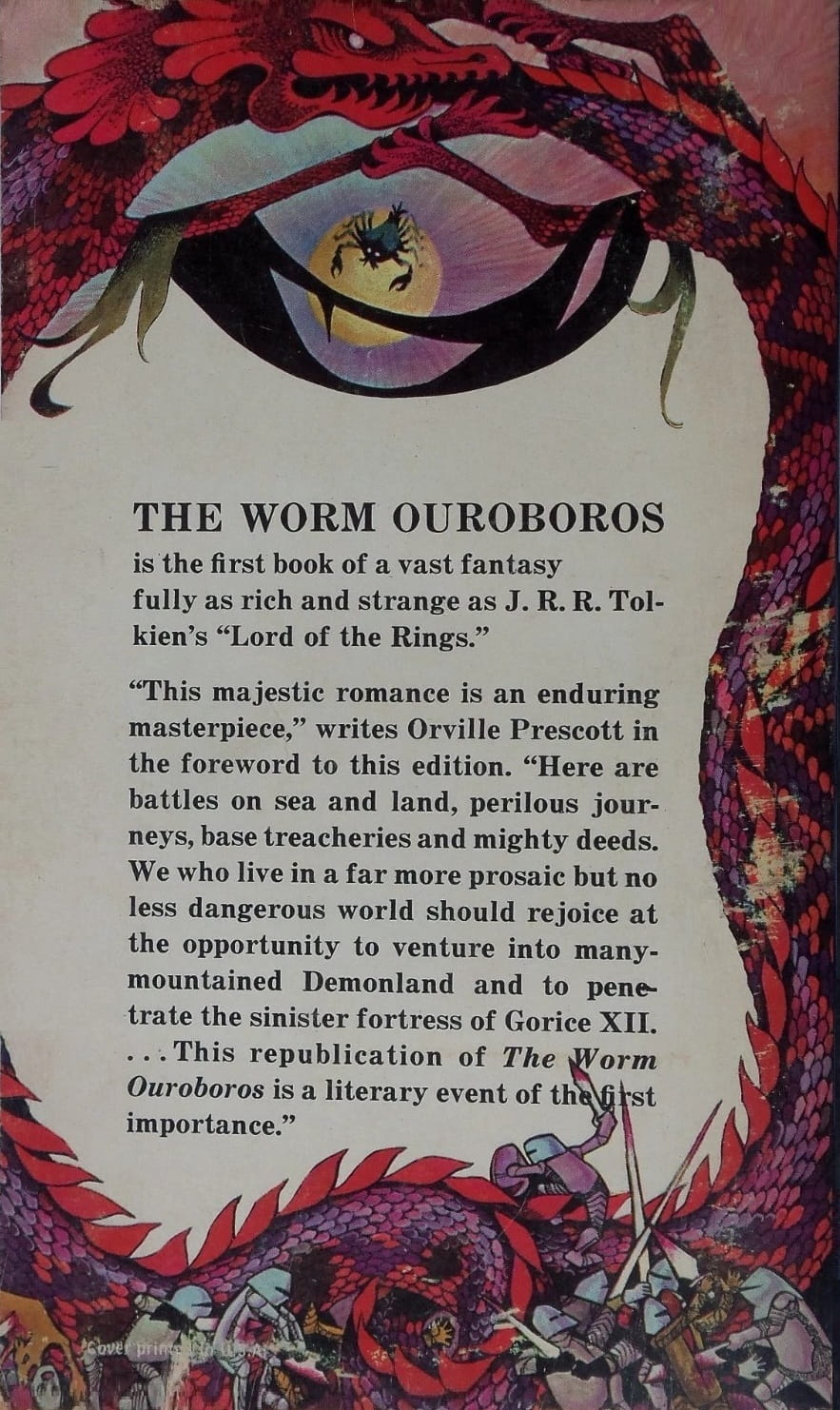 |
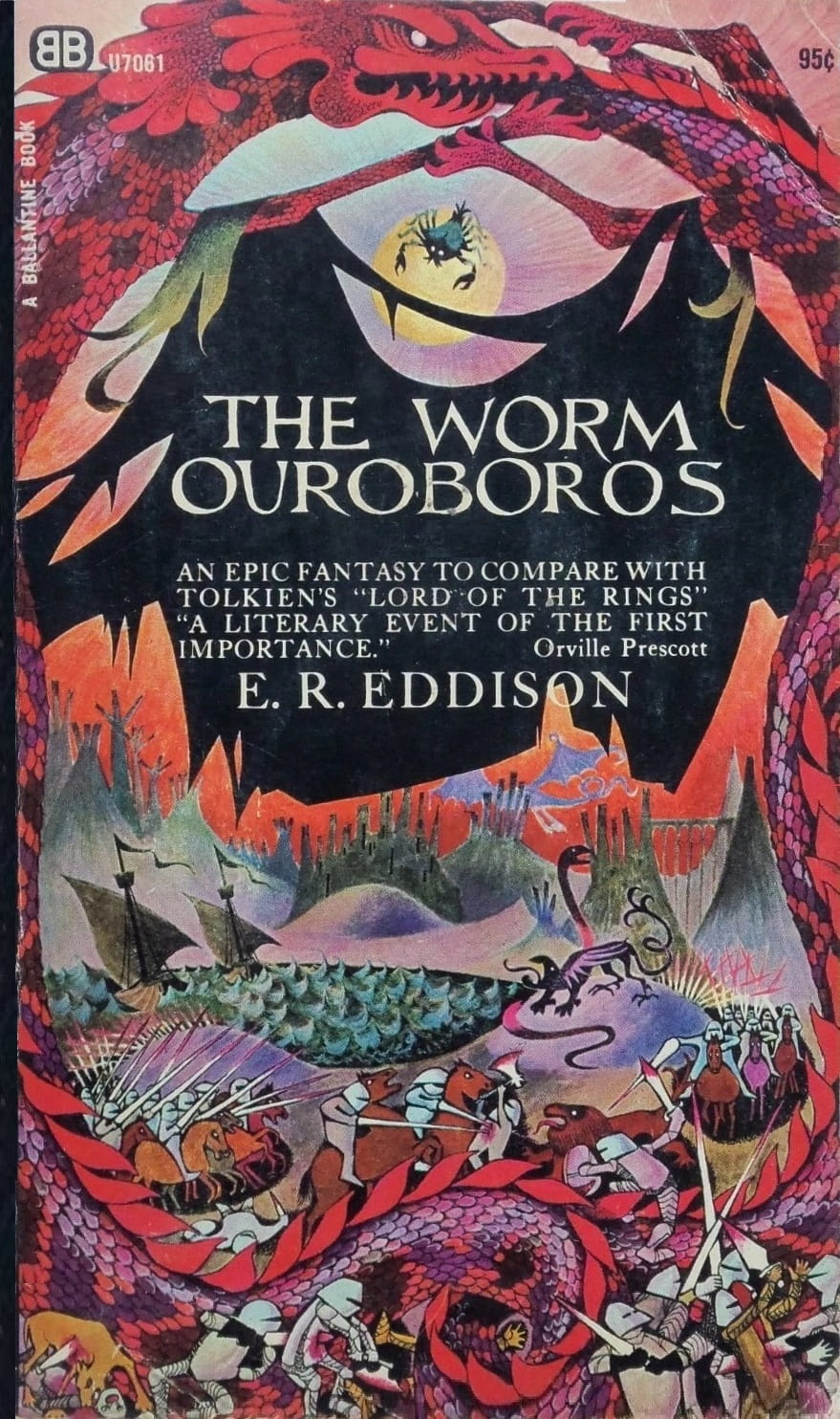
The Worm Ouroboros by E.R. Eddison (Ballantine Books, April 1967). Cover by Barbara Remington
Supernatural forces are integral to High Fantasy, and there are almost always magical items such as rings, or swords, or enchanted armor that can help or hinder the heroes in their quests. There is much less emphasis on individual physical combat than in S&S, S&P, or HH. The High Fantasy setting is a mythic world, usually an ancient Earth that is populated by elves, dwarves, dragons, goblins, or recognizable variants of these. Dragons seem particularly indispensable.
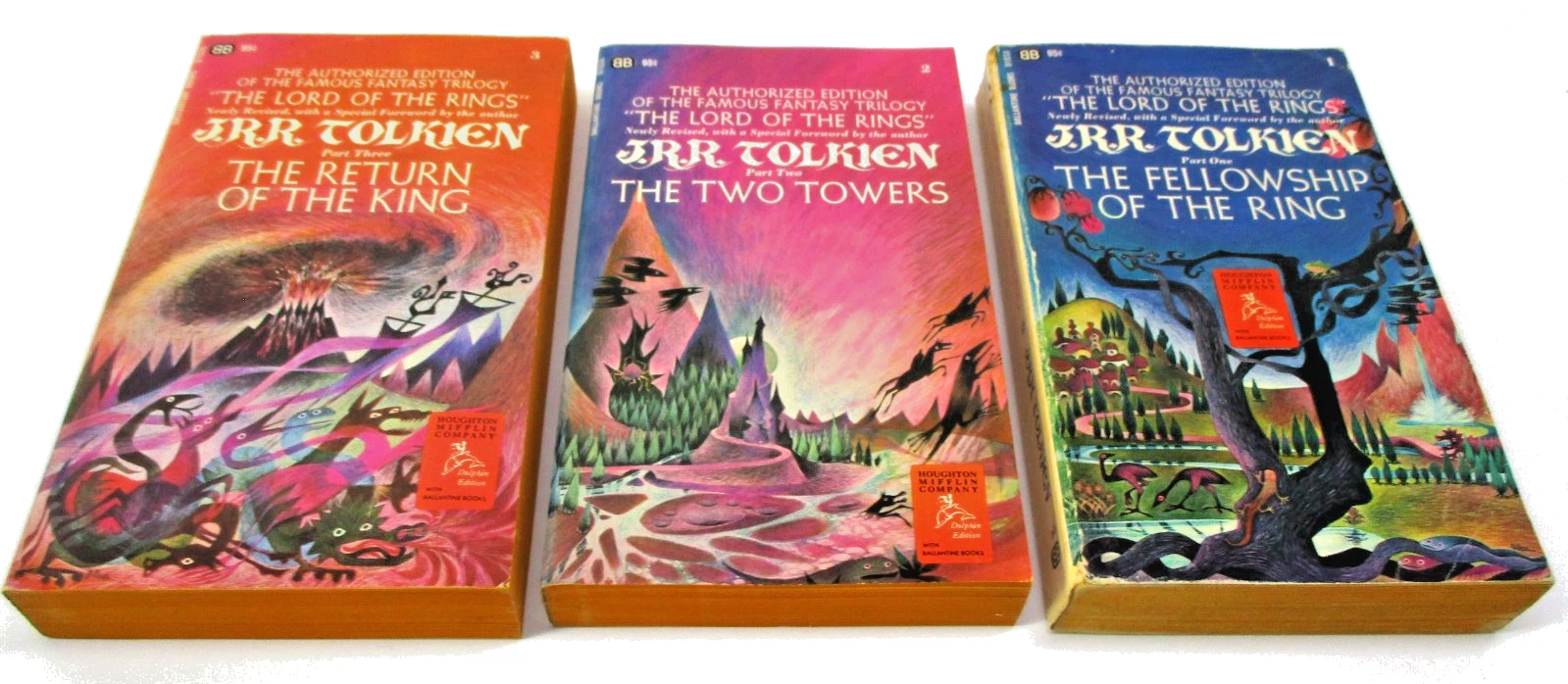
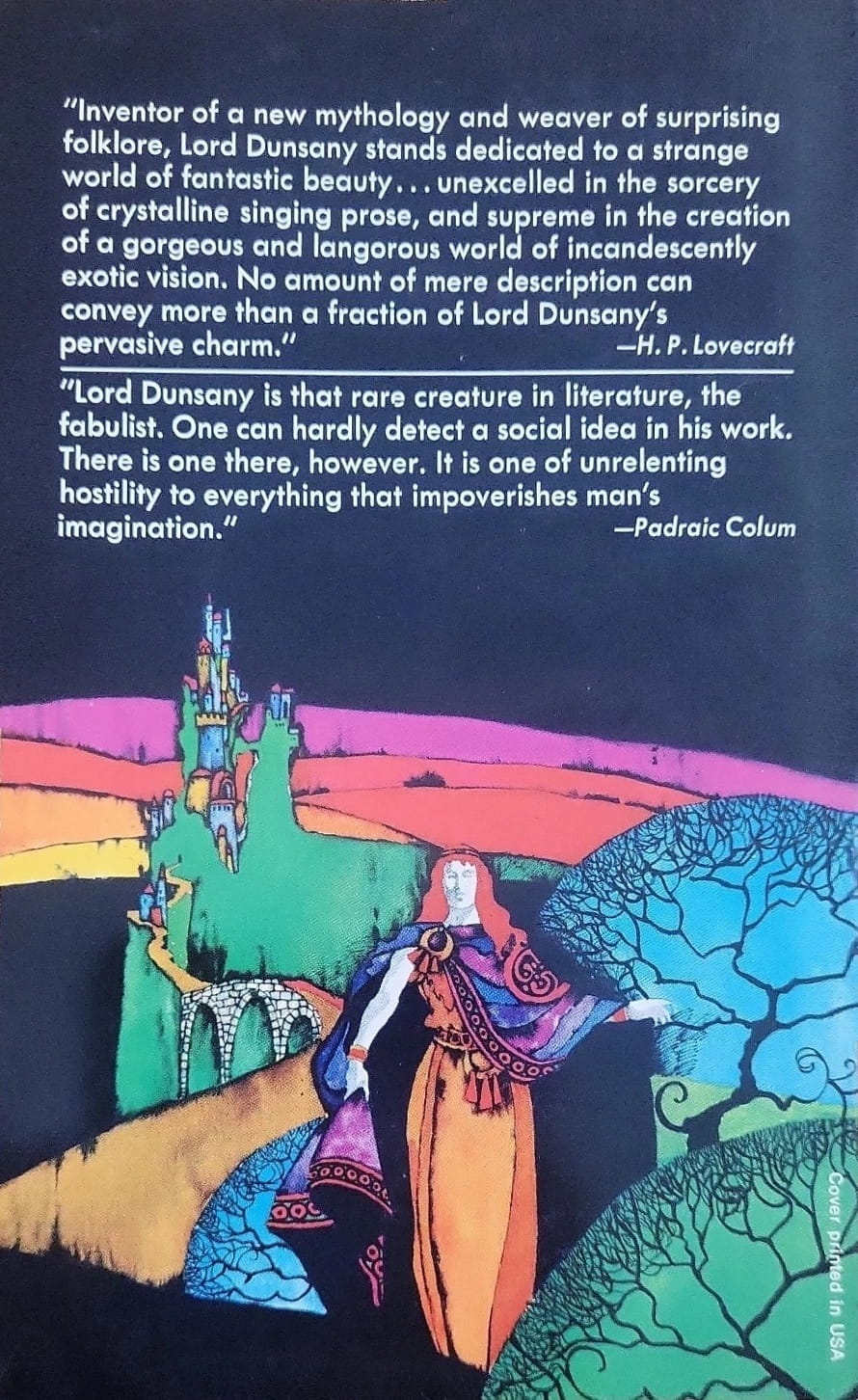
J. R. R. Tolkien (1892 – 1973) established the primary tropes of High Fantasy and his Lord of the Rings trilogy is still the best example, although William Morris’s (1834 – 1896) The Wood Beyond the World (1894), E. R. Eddison’s (1882 – 1945) The Worm Ouroboros (1922) and Lord Dunsany’s (1878 – 1957) The King of Elfland’s Daughter (1924) preceded Tolkien’s The Hobbit (1937) and The Lord of the Rings trilogy (1954-1955).
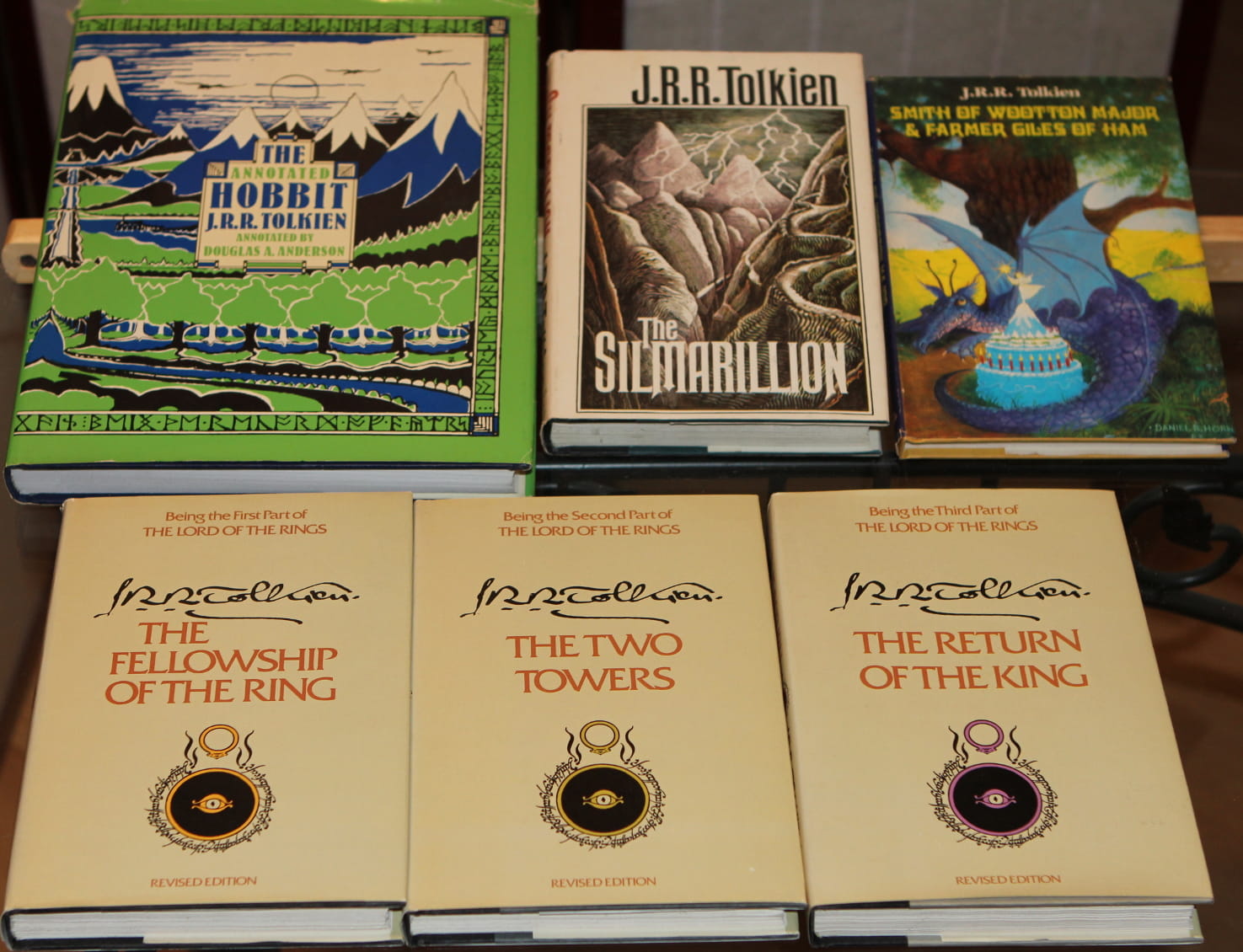
The sheer scale and detail of Tolkien’s Middle Earth has established him as the grandfather of the High Fantasy genre, and pretty much everything that came after owes him a debt. I don’t personally read a lot of High Fantasy and seldom write anything linked to the genre, but I have read some very good stuff in the field, including most of Tolkien’s work.
One difference between High Fantasy and the other three HF genres is the level of good versus evil that exists in them. In High Fantasy, we generally need to speak of EVIL in all caps because it is often a soul-destroying force that wants to bring darkness to the whole world. In S&S and S&P, the evil is not so all powerful, although it may be very nasty. In HH, the evil is human, as is the case in the real world.
 |
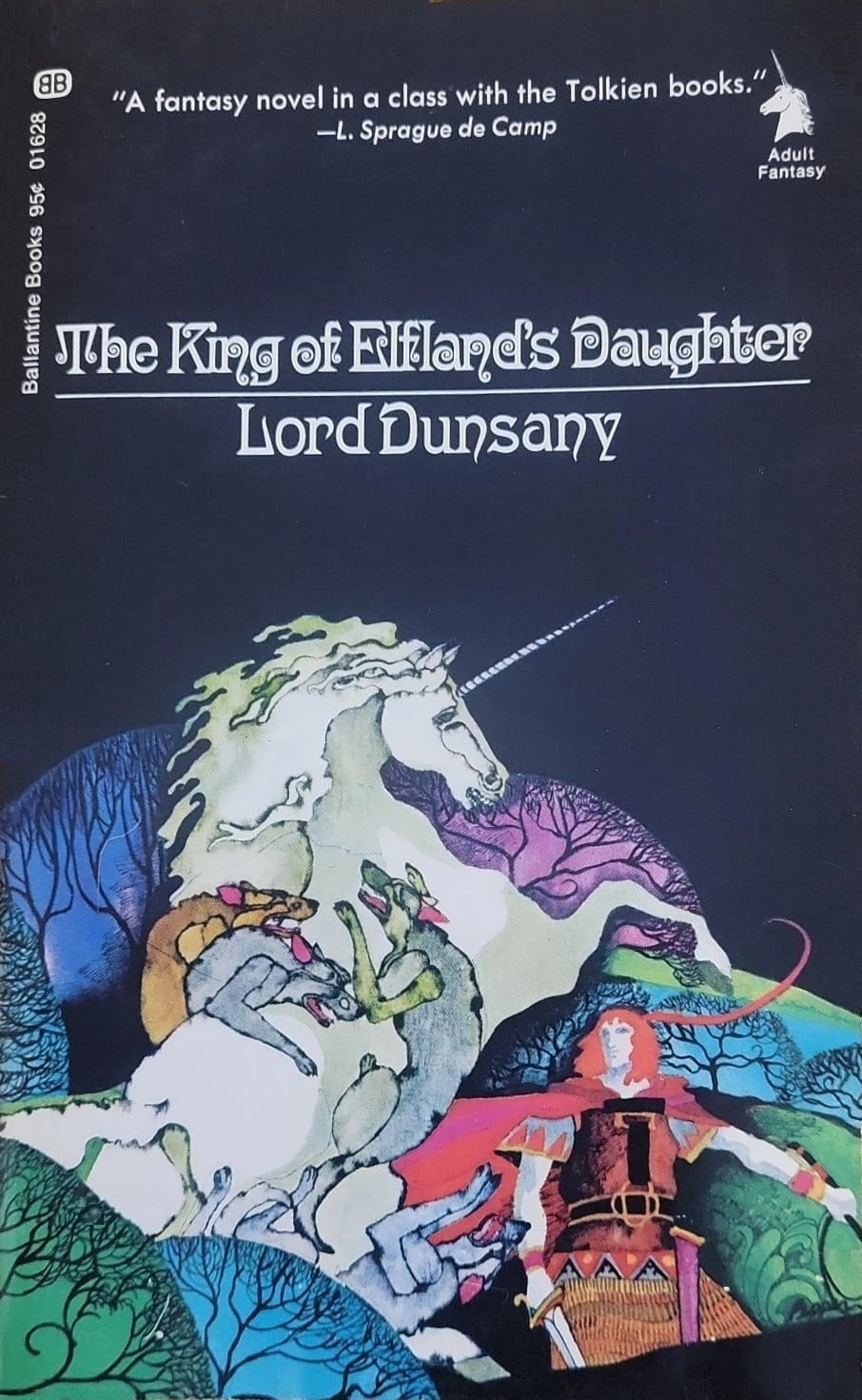 |
The King of Elfland’s Daughter by Lord Dunsany (Ballantine Adult Fantasy #2, June 1969). Cover by Robert Pepper
There are two more differences between the subgenres I’ll mention. First, S&S works best in short stories, S&P and HH in novellas or short novels, but High Fantasy needs a grand scope and lends itself to large novels and multi-book series.
Second, High Fantasy lends itself to humor better than the other types. Perhaps because of its length and its ensemble cast of characters, it provides a setting where more humor naturally occurs.
So, who writes High Fantasy since Tolkien?
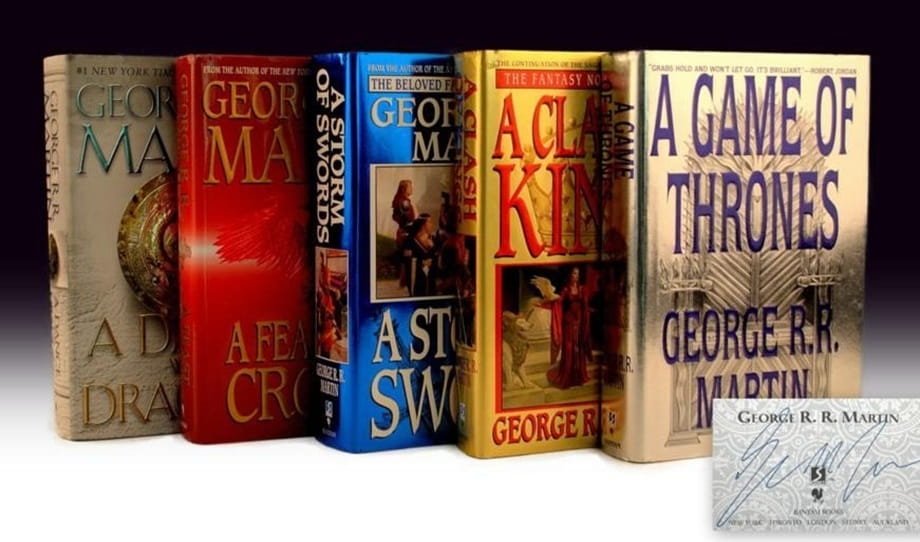
There’s been a bunch of it. It currently seems the most popular form of Heroic Fantasy published today and has been for a long time. George R. R. Martin’s Game of Thrones is a prominent example, as is Robert Jordan’s The Wheel of Time.
I haven’t read either of those but I saw the TV series based on them and enjoyed them. I haven’t read them because both are multi-volume works with each volume making a good doorstopper. I’m 65 and there’s a lot of books I want to read before I go; I don’t plan to spend a year or two of precious reading time on these kinds of series.
What have I read in the genre? I read Tolkien’s The Hobbit and The Lord of the Rings trilogy in my teens and early twenties, and greatly enjoyed them, although I didn’t have any urge to write such a series. A little later, I read Stephen R. Donaldson’s Chronicles of Thomas Covenant series of six books, and I read Dennis L. McKiernan “retelling” of Tolkien’s trilogy in his own trilogy, The Iron Tower.
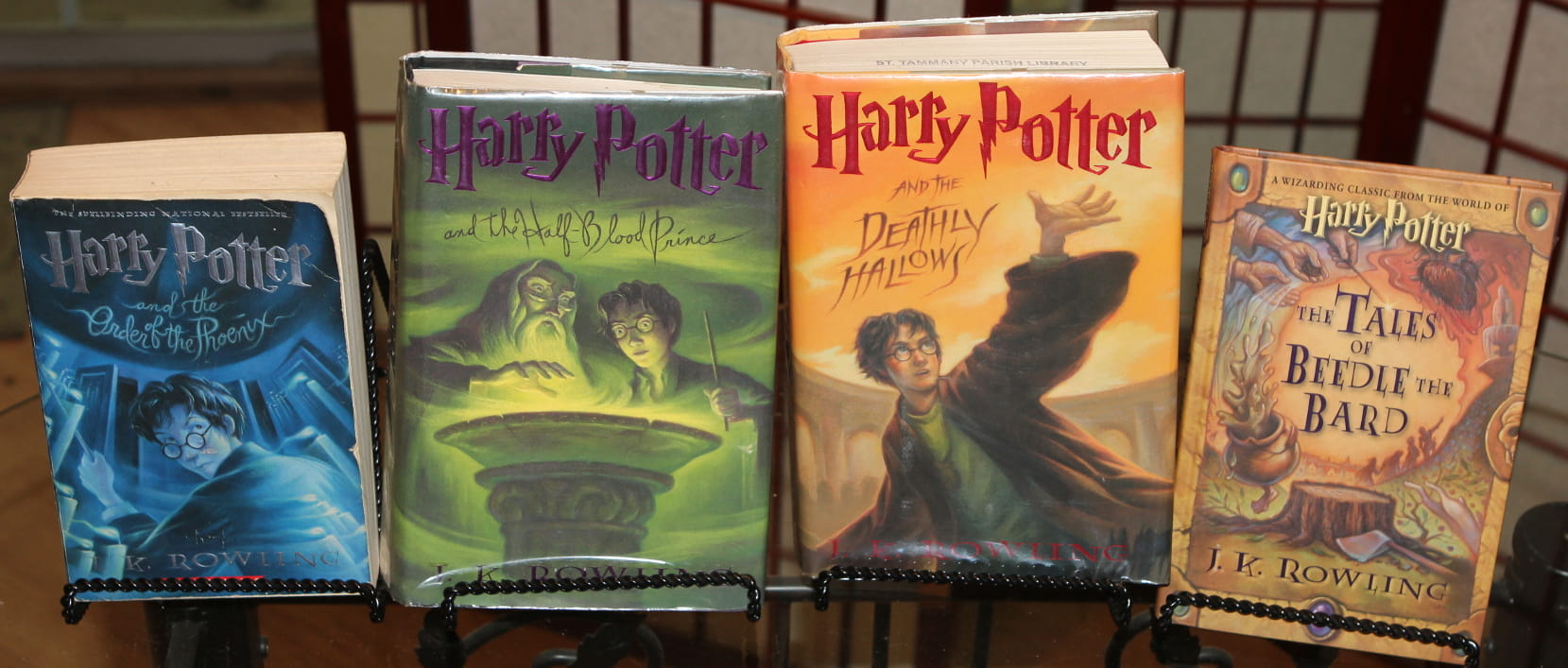
McKiernan’s work was a little too close for my tastes, and I hated the protagonist in Donaldson’s series. Thomas Covenant was a complete asshole, though I loved the world and many of the supporting characters. I read a couple in Bret Funk’s Path of Glory series. In my fifties I read the entire Harry Potter series by J. K. Rowling, which I would categorize as High Fantasy, although it pushes the boundaries with few edged weapons and a lot more modern setting.
Why has High Fantasy been so popular? I think there are various reasons.
First, the “growth” of the hero across the books is an attractive quality to many readers, who like to see a character gain strength and competence, perhaps because it offers hope that they, too, can grow. This is the classic “Hero’s Journey,” which can happen in the other genres of HF but often doesn’t, or at least not to the same extent.
Second, although there are plenty of exceptions, High Fantasy also seems to appeal more to the average woman reader than the other types and — quite simply — women buy more books than men, a big plus for publishers. This is illustrated, in part, by the number of women writers in the genre. Patricia McKillip, Anne McCaffrey, Mercedes Lackey, Joy Chant, Margaret Weis, and J. K. Rowling are just some of the many women writers who have enriched the genre.
Because of the ensemble cast of characters in high fantasy, the lesser focus on hack and slay, and the setting details, there would also seem to be more potential good roles for women in these books.
Charles Gramlich administers The Swords & Planet League group on Facebook, where this post first appeared. His last article for us was a look at the Sword & Sorcery of S. E. Lindberg. See all of his recent posts for Black Gate here.
Sword & Sorcery and Heroic Fantasy are classified as interchangeable on Wiki. While both often feature big guys with swords, I’d have to disagree – my take is that Heroic Fantasy’s mcs tend to be heroic in the conventional sense, whereas the characters in S&S are more morally ambivalent, but both have their origins in Conan, with Howard as the genre’s creator. By extension I’d categorise High Fantasy/Epic Fantasy etc as separate fantasy genres in their own right rather than subsets of Heroic Fantasy. Just sayin’!
I see people use S&S and HF interchangeably and I just shake my head. I ‘ve spent a lot of years and a lot of reading determining how to categorize them that makes the most sense to me. It’s an interesting aspect that you talk about the nature of the heroes (heroic or more morally ambivalent. I think that’s definitely true in S&S. In other posts I’ve talked about how the sword & planet protagonist is heroic in the traditional sense. No reason, of course, why anyone should accept my use of the terms, but this conception works the best for me and is how I shelve my books.
That’s entirely your prerogative (I’d definitely classify Sword & Planet as Heroic Fantasy).
Thumbs up
Any discussion of the origin of high or epic fantasy should probably also include Terry Brooks; he and Donaldson (with the help of Lester Del Rey) were the ones responsible for turning epic fantasy into a genre with recognizable tropes.
Certainly if I were writing a book on the subject, Brooks, and many others would have to be discussed at much greater length. Though he’s a fine writer, I don’t personally enjoy Brooks so I don’t have a lot of knowledge of his works.
Fair enough!
Cool
Thanks for another great article, Charles. I appreciate your insight. You’ve certainly done a lot of reading to back up your thoughts. When I hear a work called “high fantasy” I immediately compare it to LOTR which, as you said, is the work that defines the genre (or sub-genre). Always good to see the Donaldson books mentioned. The first trilogy was amazing in it’s world building (although no dragons). I know the character of Thomas Covenant is off-putting to many but the world Donaldson created is so sweeping and magical. I agree with you regarding McKiernan books following the Tolkien template a bit too closely and I also decided my time was better spent reading books other than the Game of Thrones books (I got through about 80 pages and found some characters so odious that I didn’t feel it was worth finishing the book). I may have asked you this before but where do you place the King Arthur stories? Historical? High? S&S? A blend of all 3, perhaps?
I know what you mean about the Donaldson stuff. I hated Covenant but the background was so lush and the supporting characters so magnificent I couldn’t stop. The Arthur stories are a real problem to categorize. I tend to shelve them as historical but they are not a perfect fit. I have trouble with the Odyssey and Iliad in the same way and generally go historical, but without being fully satisfied with it.
I would categorize such writings as King Arthur, Beowulf, The Iliad and The Odyssey as yet another subset of Heroic Fantasy that I would probably call Heroic Mythology. Myths and legends with heroic stories at their core (rather than something like a creation myth, etc.).
Heroic mythology is a good term. I’ve considered the phrase “Archaic Fantasy”, with the archaic not meaning anything bad but just “early.” I thought of prehistorical as a term but that would suggest more the stuff we call “spear and fang.” I need to give it some though by “Heroic Mythology” makes a good candidate. You should write up more thoughts on that concept.
Oddly enough, I thought that the Covenant character was one of the best Anti-heros I’ve ever seen. Someone who is hated (by myself also) but is drug into the hero role and finally accepting it with wonderous results. I’ve read all three trilogys several times, and they remain some of my favorite books. The anti-hero is the type of character that is hard to create, and even harder to redeem.
I certainly admire Donaldson’s creative abilities in bring Covenant to life. I’ve seldom disliked a character more but you have to admire the craft involved in creating him. I’m reminded of “Kai Wynn” in Deep space nine, a character I hated but I had to admire the actor for pulling it off, and the writers for creating her
At the risk of being a grump about this, I think Lord Dunsany is also utterly essential — and probably best fits in “High Fantasy”.
Terry Brooks is commercially important but there is no way he is a “cornerstone”.
In a book I’d certainly spend a lot more time on Dunsany. I’m going to add some more Dunsany stuff to my reading this summer when I’m off school so I make sure I understand him well enough. I really don’t know much about Brooks but on the timeline he is certainly a later representative of the genre
Dunsany can be little more than a confectioner. I think of him as being sometimes the anti-Tolkien, in that where Tolkien’s absorption in the secondary reality of his work is great, and enabled by his world-class scholarly knowledge, Dunsany could emphasize the unreality of his little soap-bubbles. See the end of “Thangobrind” for an example. I loved his work at age 15 and no can hardly read a lot of his short work. I reread The Charwoman’s Shadow a few years ago & found it good though not great. I think the ifluence of Dunsany has sometimes been overstated — taken up from Carter and de Camp’s remarks, a little too quickly.
I think it’s been understated. I think you can see it in Brackett, for example.
There is indeed a sense of “confection” to his works, sure: irony is never absent, and he didn’t “believe” in his worlds the way Tolkien did. In my view, neither was wrong. I do think the irony (and the confectionary nature) is something distinctive that Dunsany added to the mix.
As Dunsany and de Camp were both very tall slim men with an elegant mustache perhaps de Camp felt a connection with him for that reason! 🙂
It’s interesting that both served with honor in the Great War, and were clearly affected by it, but in different ways. I don’t know if Tolkien read Dunsany, who was 14 years older. Wouldn’t surprise me either way. I do think that Dunsany’s Irishness, and especially his being a peer, affected his attitudes a great deal.
I thought I’d heard that Tolkien had read some Dunsany but I don’t know the source at the moment.
One of is shorts, two bottles of relish is a favorite of mine. I’m going to read more of his longer stuff this summer.
The last season of “Game Of Thrones” was a disaster. It will be interesting to see how Martin recovers his magnum opus from that – if he ever does (still waiting for the wrap-up George…..).
You’re right there. My wife got me hooked on Game of Thrones and we devoured the early seasons but that last one left a bad taste in our mouths.
A late comment but maybe not too late. It seems to me that real high fantasy (I do not include Dunsany in this and doubt that Martin &c belong in the category either) is characterized by “rehabilitation.” The authors, again and again, are making something fresh and compelling. For Tolkien, this would include, notably, the Elves. For Le Guin, dragons. For Eddison, the high heroic romance and the language of the 16th-17th century. For William Morris, the flowing medieval romance (compare Malory of Perlesvaus/The High History of the Holy Graal). In each case the author’s imagination profoundly reworks “familiar” traditional material. For that matter, in Watership Down, Richard Adams rehabilitated the “animal story.” The stakes are always higher than just page-turning entertainment. High fantasy is not necessarily overly solemn but it is in earnest.
There’s little if any such purpose in sword and sorcery, or any fantasy that takes a basically ironic stance towards its milieu. Howard’s fiction and that of his imitators belongs in a category of weird pulp. I’ve enjoyed Conan, Kull, Kane, Bran (especially when I was a teenager), but I think there’s a difference of kind and not just of degree there.
Dunsany seems to me, in his short fiction, often an anti-rehabilitator, what with his ironic attitude towards his imaginings. I’m not saying “Don’t read Dunsany,” but I don’t think it’s useful to put him in the high fantasy category, if you see high fantasy as I do.
I’ve been thinking about these things off and on for 55 years or so and this is what I come up with.
High fantasy definitely has what seems to be “high stakes.” The fate of a world. I haven’t considered the Rehabilitative aspect. I’m not completely sure what you mean. Game of thrones is really a cross pollination of High fantasy, sword & sorcery, and (almost) historical fantasy. I might say that weird pulp is a very very large category. Howard wrote across many genres but his Kull, Conan, and Solomon Kane stories established for me the genre of sword & sorcery. I don’t think that Howard was being ironic in his work, although some of his imitators certainly were.
I see high fantasy as “conservative” — though the authors certainly might not be politically conservative. But they feel that there’s power in the tradition of elves, fairies, dragons, wizards, etc. and the medieval romances and folktales that told of them. They have plenty of respect for these and are not likely to use them ironically, but rather want to revive them (“rehabilitation”). This may mean re-imagining them. Tolkien writes about this sort of thing in “On Fairy-Stories,” indirectly. There he regrets the prettification of fairies as cute little creatures living in flowers and so on. Tolkien connected with the older tradition of fairies/elves as formidable, as in Sir Gawain and the Green Knight. You could say that, as regards imagination, Tolkien set himself to make fairies great again, and he did; the popular image of Elves today is, I have no doubt, different from what it was when I was a kid. He rehabilitated them. Le Guin rehabilitated dragons, re-imagining them as possessing knowledge almost unknown to human beings, in A Wizard of Earthsea and The Farthest Shore. So Tolkien and Le Guin conserved elves and dragons and made them real, vivid, and powerful again for our imaginations.
Or let’s take another High Fantasist, Mervyn Peake. He rehabilitates Gothic romance, especially the ancient, enormous castle. He was no conservative politically, I believe, but his imagination works “conservatively” in passing on the Gothic castle, in a newly compelling form. I think C. S. Lewis, a world-class scholar on Edmund Spenser’s long poem The Faerie Queene, and rehabilitated it. Spenser has legendary saints, giants, Greek gods, magicians, dark woods all together — and Tolkien didn’t like the “heterogeneous” elements — Santa Clause and a faun and so on. But Spenser did it, Lewis loved it, and he “proce4ssed” it for young readers. The best way to prepare a youngster for The Faerie Queene someday is reading the Narnian books; at least that is my experience.
High stakes? Depends on how you define it. The Gormenghast books are not about the saving of the “Gormenghast world” from a threat but about one person’s escape (Titus’s) from a kind of living death.
I don’t think anything like this is going on with sword and sorcery. That’s an adaptation of the Haggard-Mundy-Burroughs adventure story with a strong element of the weird — necromancers, giant apes a’plenty, dinosaurs, vampires, etc.; and also interchangeable Babes.
I should add that, in Gothic romance, the main character always has to escape from the old mansion/castle. Read J. Sheridan Le Fanu’s Uncle Silar, for example; then read or reread Titus Groan-Gormenghast. Titus has to escape it all, and he does.
I’ve read Le Fanu but not Titus Groan, though I have those books. I’d agree that High fantasy is generally conservative. I think there’s an element of that in S&P, which is of course a very small slice of the fantasy genre now.
Could you elaborate a bit on how S&S is conservative? Or do you mean sword-and planet?
I use S&P as an abbreviation for sword and planet, and it’s generally been written by such writers as Burroughs and Kline and Fox with heroes who are more supportive of the established order, maintaining it in the face of outside threats, rather than overthrowing an established order. in S&S, the “heroes” often have anti-hero aspects and are passing through the world without trying to support or rebel against the established order particularly. They are more mercenary in their outlook, I suppose. There are always exceptions of course
Where does John Stark by Brackett fit?
I Include Eric John Stark under the Sword & Planet subgenre of heroic fantasy. A descendent mostly from Edgar Rice Burroughs and his Martian tales.
“ The hero is usually not bigger than life. In fact, he, or she, is often rather small and weak physically,”
Then, clearly, TWO, does not qualify, since all three are studs.
And I have neither read nor watched any of TGoT, but have always seen it classified as “grimdark”. What is the humorous in it?
I don’t know what you mean by “Two” or “all three are studs.” GOT certainly mixes in many elements of sword & sorcery and is pretty grim. I only said that high fantasy “lends” itself more to humor, not that it is always there. The GOT series had some dark humor but nothing very light, for sure. I haven’t read those books either. Not categorization is likely to be perfect. I like to think about books and it provides food for thought for me.