Black Gate Interviews Nathan Long, Part Two
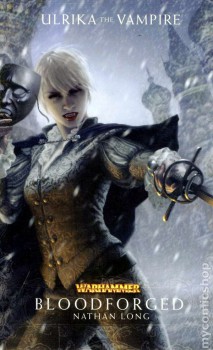 This week Black Gate picks up where we left off in Part One of our interview with fantasy and science fiction author Nathan Long.
Last week we talked about your latest novel, Jane Carver of Waar. But most readers are more familiar with the work you’ve done in the Warhammer world, where you’ve published 11 novels to date. How familiar were you with Warhammer and Games Workshop before you began writing for them?
I had worked in a game store in the 80s, just when the first Warhammer Fantasy Role Play rulebook came out, and I had read it cover to cover, though I never played it, so I was pretty familiar with the setting and the mood of the game and the world. I still had a lot of homework to do once they hired me, however. I ended up owning and reading all the army books, all the supplements, etc. Homework should always be that fun.
Tell us a bit about the differences between working in an existing world, versus one entirely of your own creation.
In one way, it’s easier, as all your world building has been done for you. It’s like being hired to write for a TV show or a long-running comic book. Quite a lot of the world and sometimes the characters have been established, so all you have to worry about is the plot and character. I never really found this limiting. There are an infinite number of stories that can be told in any world, and it was a fun challenge to come up with ideas that fit the feel of the Warhammer setting.
It can be harder when you’re asked to put specific bits of the world into specific novels. For instance, when I wrote Tainted Blood, the third Blackhearts novel, my editors wanted it set in a specific city, because they wanted it to tie into a gaming supplement that was coming out for that city. That took a little more work, but it was still fun. Every challenge is an excuse to come up with a cool solution, and I have always loved that kind of game.

 Literary traditions are useful things. They’re constructions of literary critics, sure, but useful constructions. A well-articulated tradition can show how different writers deal with the same idea or theme, demonstrating different approaches to a given problem or artistic ideal. It can show affinities between writers, sometimes bringing out resemblences between different figures in such a way as to cast new light on everyone involved. At the grandest level, the whole history of writing in a given language or from a given nation can be seen to be part of a tradition, showing the evolution of a language or the concerns of a people.
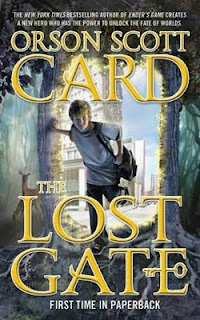 The Lost Gate