Fantastic Science Fiction Stories, December 1959: A Retro-Review
 As promised, a return to Cele Goldsmith’s years at Amazing and Fantastic. This issue comes from quite early in her term.
Last time I looked at Fantastic, I noted the subtitle “Stories of Imagination,” and I commented that much of the magazine remained Science Fiction, despite the Fantasy-leaning title and the ambiguous subtitle. This issue, by contrast, is subtitled “Science Fiction Stories” – an apparently deliberate rejection of the fantastical element. Turns out this subtitle had begun only with the September 1959 issue, and it lasted only through September of 1960, being supplanted by “Stories of Imagination” in October.
Interesting is a letter in this December issue from R. D. Miller, stating that with the September issue: “I took one look at the logo and the worst had happened: Fantastic Science Fiction Stories.” The letter in its whole praises the previous Fantastic for being a home to fiction in the Weird Tales tradition, and laments the apparent plan to discard that in favor of “the Science Fiction monster.”
The response from the editors (don’t know if Goldsmith or Editorial Director Norman M. Lobsenz wrote these) goes: “You want a magazine with 90% bad fantasy? Or one with 50% first-class fantasy and 50% first-class s-f?” (Logically, they should have been able to have a magazine with 50% first-class fantasy and 50% bad fantasy instead, right?)
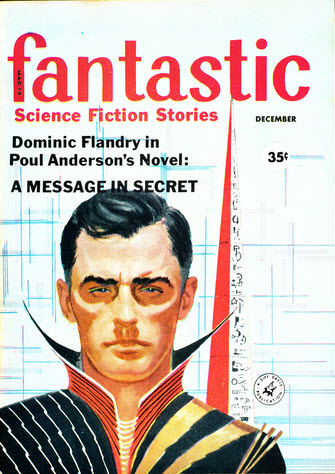
The cover is by Edward Valigursky, illustrating Poul Anderson’s Flandry story “A Message in Secret.” I must say the man on the cover looks nothing at all like my image of Flandry.
Interior illustrations are by Mel Varga and Leo Summers. Interestingly, the cover of the Ace Double edition of “A Message in Secret,” retitled Mayday Orbit, is also by Valigursky – not as good, Flandry in a cold suit so not recognizable, but noticeably the same depiction of the “Prophet’s Tower” on each cover.
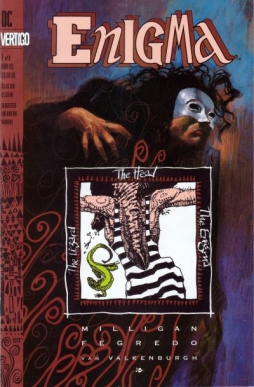 In 1990, the Walt Disney Company launched a new comics imprint, Disney Comics, to publish titles starring their cartoon characters; they’d previously licensed their characters to other comics companies, but the new imprint represented their own entry into the field. The venture met with some initial success and Disney began to plan further imprints, including one under former DC Comics assistant editor Art Young, which would be called Touchmark and feature creator-owned books for ‘mature readers.’ In this context, that meant something like ‘literary fantasy.’ At the time, DC had a number of books labeled for ‘mature readers’ which had gathered critical attention and good sales — among them, Neil Gaiman’s Sandman, Grant Morrison’s Doom Patrol and Animal Man, Jamie Delano’s Hellblazer, and Peter Milligan’s Shade the Changing Man. Young brought some of these writers over to the projected Touchmark line. Announced titles included a book written by Morrison with art by Steve Yeowell, Sebastian O, one by Milligan and artist Duncan Fegredo, The Enigma, and J.M. Dematteis and Paul Johnson’s Mercy.