 Last week I promised that today’s post would touch on the topic of sexuality in comics and culture. The jumping-off point for that discussion is Arak, Son of Thunder issue #11, which I mislaid and still have not located. So, in lieu of a detailed plot synopsis of that issue (still forthcoming, as soon as I figure out where it absconded to), I will instead delve right into the broader memories that this comic brings back, demonstrating how different my preadolescent experience was in the 1980s from the media culture of youth today.
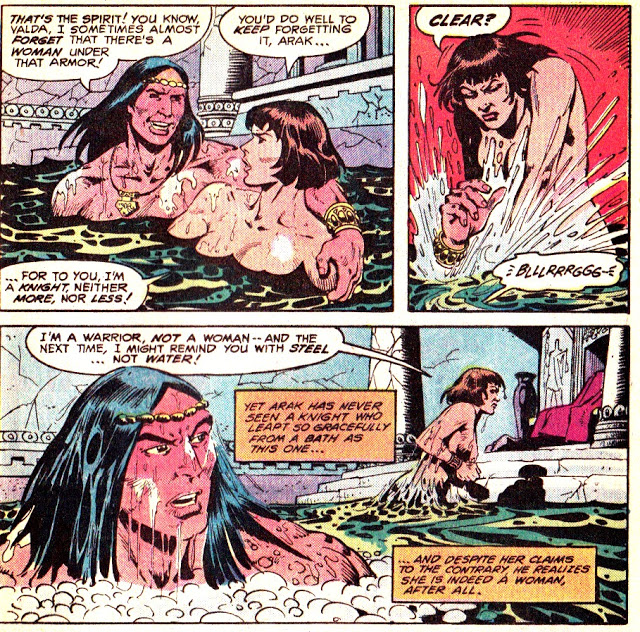
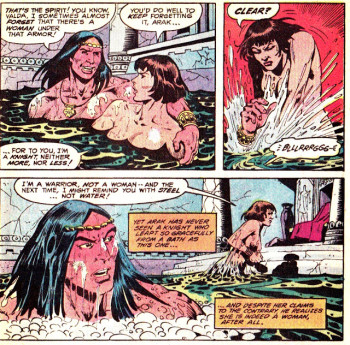
I can remember opening the pages of Arak, Son of Thunder issue #11 — the first issue of Arak I ever bought — and being shocked (and thrilled) by the scene in which Valda, the Iron Maiden sheds her armor. She has been moved by the pipes of the satyr to embrace her femininity, her freedom, and to dance. Somehow, though, she realizes what the satyr is up to; the spell is broken, and her carefree visage turns to rage. Then she’s standing there, fists clenched, looking like she’s about to rip a certain satyr’s horns off, but still naked. This was a comic approved by the “Comic Code Authority,” so she’s mostly bathed in shadow. Still, standing there in silhouette, she was naked!
When I saw that comic again, thirty years later, I couldn’t help but smile at the innocence and naiveté of that ten-year-old boy, straining his eyes to see if he could make out anything more through that shadow of black ink. I mean, Ernie Colon draws Valda beautifully, but for all the impression it made on me then, there’s not much on the actual page to titillate — far more is concealed than revealed.
No doubt it is nearly universal that when one’s age reaches the double digits, a new curiosity begins to dawn about the opposite sex, about the physical differences, and what those physical differences signify (you know, just what do adults do when they get alone together and take their clothes off? To put it bluntly). What varies greatly is how youth of different cultures and different generations manage to satisfy that inquisitive curiosity. And, of course, what might be titillating or even scandalous for one generation might not even warrant the batting of an eye for the next.
I want to steer clear of ranging too far on that last point: one could write a whole book about changing mores and stimuli, spanning from a Victorian era when a woman’s exposed ankle could cause heart palpitations, to contemporary times when a woman can turn up at nearly any beach in nothing but a G-string bikini without fear of getting arrested for indecent exposure. Indeed, whole books have been written on that subject. Instead, I’m going to narrow in on one preadolescent boy in the early ‘80s, and talk about how the culture was right then, in that little snapshot of pop-culture history.
…
Read More Read More
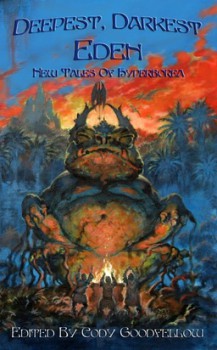 Clark Ashton Smith, one third of the Weird Tales triumvirate along with H. P. Lovecraft and Robert E. Howard, has been a favorite of mine ever since I bought a copy of the Lin Carter-edited collection Hyperborea. I was thirteen or fourteen and Smith’s archly told stories of the titular prehistoric land and its impending doom before an encroaching wall of ice, stunned me. I was long familiar with Lovecraft’s purple prose, yet nothing had really prepared me for Smith’s cynical, lush, and utterly weird writing. The stories were stunning and I was a fan.