A History of Godzilla on Film, Part 1: Origins (1954–1962)
 Other Installments
Part 2: The Golden Age (1963–1968)
Part 3: Down and Out in Osaka (1969–1983)
Part 4: The Heisei Era (1984–1997)
Part 5: The Travesty and the Millennium Era (1996–2004)
Addendum: The 2014 Godzilla
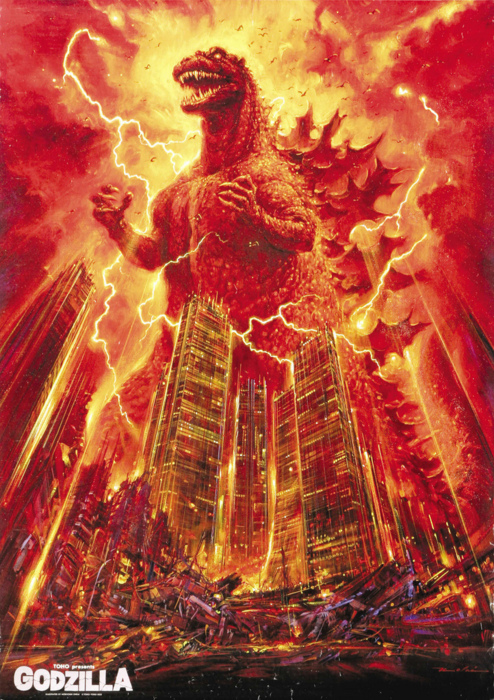
With the release of the teaser trailer for the upcoming Godzilla from Warner Bros. and Legendary Pictures, a decade of cinematic silence has come to an end. Godzilla last appeared in 2004 in the Japanese movie Godzilla: Final Wars, which Toho Studios intended as the monster’s final bow before going on sabbatical. It’s the longest break in the iconic monster’s career, and regardless of what happens next, the forthcoming Godzilla ’14 is a reason for G-fans to celebrate. Maybe stomp a few cities. The trailer makes San Francisco look particularly stomp-able.
At this point, we only know as much about Godzilla ’14 as we’ve seen in the teaser. But it was an exciting glimpse that at least assured fans the new movie would not repeat the horrible mistakes of the first American attempt at a stateside Godzilla, the 1998 Roland Emmerich disaster.
This is the first of five (projected) installments covering the history of Godzilla on film, written and condensed for a broad audience. I hope these articles will help readers who have only a passing relationship with Godzilla — the general knowledge from pop culture osmosis — see the unusual variety of one of the longest and most durable film franchises in history. Many Black Gate readers are probably familiar with much of the information I’ll provide in these articles, but since I’ll also sling around my own opinions about the movies mixed in with the history, Godzilla fans may find parts of this worthwhile … if perhaps only to ignite arguments.
 There’s a certain kind of structure I’ve lately begun to notice in certain novels. These books read like puzzles, telling one story directly and overtly while implying a second story, or highly variant reading of the first story, through carefully-placed gaps, contradictions, and seemingly-irrelevant details. Throwaway references in highly-disparate points of the book might imply a completely different way to read at least the plot and often the tone or theme. It’s something Gene Wolfe does a lot; other examples I’ve noticed lately are
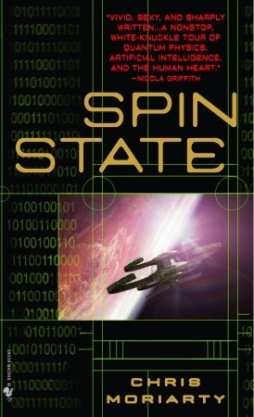 My reading’s defined, largely, by sheer chance. I stumble across something at a used-book sale, buy it along with a box of other books, put it on my shelf and forget about it, then finally years later take it down and read it and, often, realise I should have started in on it long before. Which is a long way around to explaining how I just now came to read Chris Moriarty’s debut novel Spin State, which was published in 2003. And why I’m only now writing about the best work of 21st-century science fiction I personally have read.