My Favorite Martian
Has any writer of science fiction or fantasy ever had a more fertile imagination than Edgar Rice Burroughs? Anyone acquainted with his work will have no trouble reeling off the names of exotic and outlandish planets, continents, oceans, cities, animals, plants, races, gods, kings, princesses, heroes, and villains, ad infinitum. Perhaps his most fecund setting was the first one he created — Barsoom (or Mars, as it’s even now called by the unenlightened), the site of eleven books written between 1912 and 1943. Filled with startling and memorable creations, Burroughs’ Barsoom is one of the most captivating places in the Atlas of the Imagination, and none of ERB’s “children” have taken a firmer hold on readers than John Carter’s enemies and allies, the great Green Martians that roam the deserts and dry sea-bottoms of that dying world.
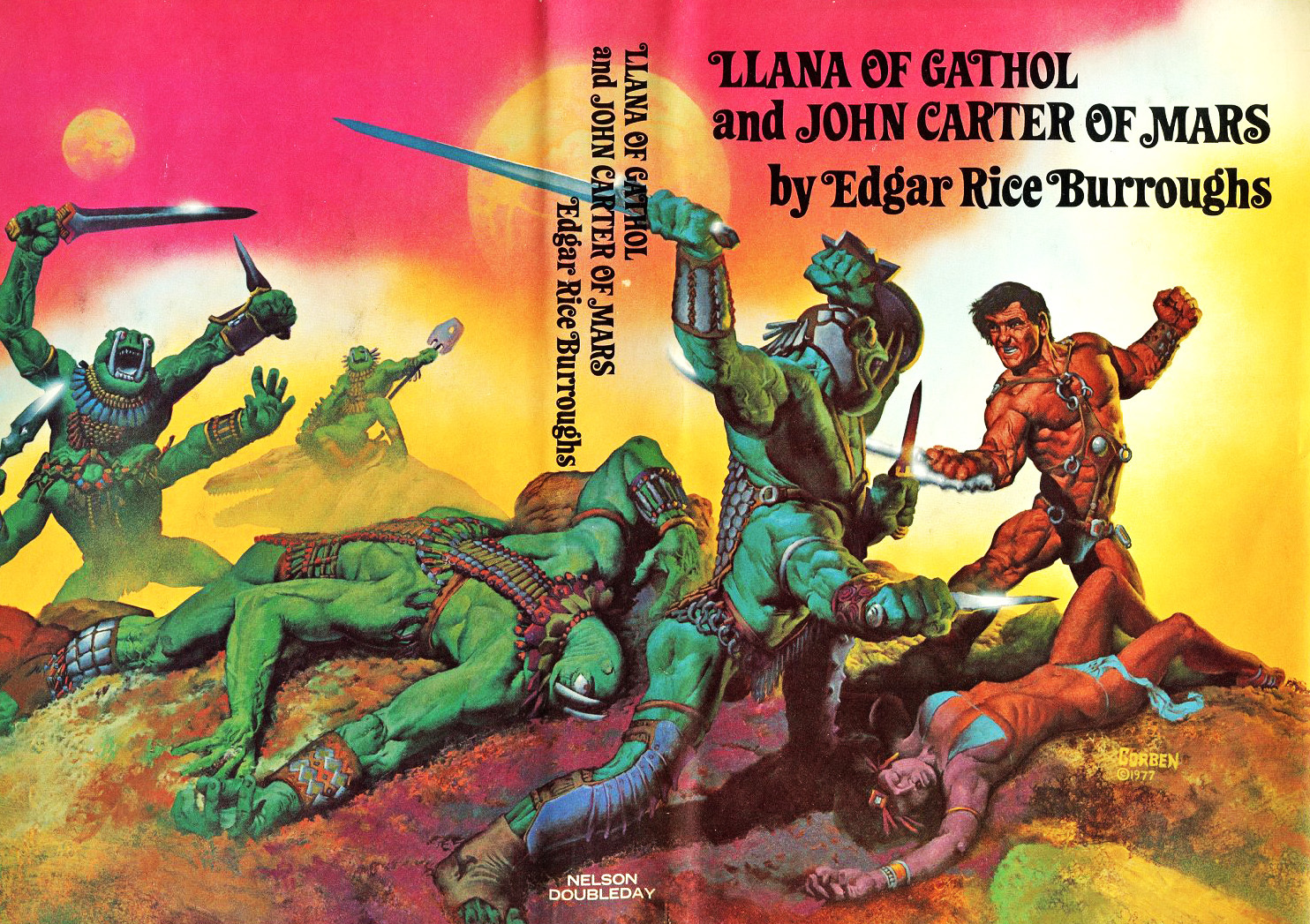
The other day while I was wandering aimlessly around the internet, I came across a 1977 Richard Corben book cover for an omnibus edition of Burroughs’ Llana of Gathol and John Carter of Mars, the tenth and eleventh volumes in the Martian saga. I had never seen the Corben painting before, and not surprisingly, his take on John Carter battling the Green Martians is vigorous and arresting, and it got me thinking about all the different versions of Burroughs’ warlike aliens that artists have offered us over the one hundred and fourteen years since A Princess of Mars was published in 1912. A few more minutes of wandering — now with a purpose — easily yielded up over a dozen images.
Before examining them (and of course this is just a small sample of the countless Green Martians rampaging out there in the ether), perhaps we should see how Burroughs himself described these extraordinary beings. In chapter three of A Princess of Mars, “My Advent on Mars,” as he wanders aimlessly around the surface of the Red Planet (just like me!), the metaphysically-teleported John Carter comes across a Green Martian hatchery (the race is oviparous, if you didn’t know, and if you don’t know what oviparous means, you’re in big trouble with your high school biology teacher), where he gets a good look at them as they come out of the shell:
Five or six had already hatched and the grotesque creatures which sat blinking in the sunlight were enough to make me doubt my sanity. They seemed mostly head, with little scrawny bodies, long necks and six legs, or as I afterward learned, two legs and two arms, with an intermediary pair of limbs which could be used at will either as arms or legs. Their eyes were set at the extreme sides of their heads a trifle above the center and protruded in such a manner that they could be directed either forward or back and also independently of each other, thus permitting this queer animal to look in any direction, or in two directions at once, without the necessity of turning the head.
The ears, which were slightly above the eyes and closer together, were small, cup-shaped antennae, protruding not more than an inch on these young specimens. Their noses were but longitudinal slits in the center of their faces, midway between their mouths and ears.
There was no hair on their bodies, which were of a very light yellowish-green color. In the adults, as I was to learn quite soon, this color deepens to an olive green and is darker in the male than in the female. Further, the heads of the adults are not so out of proportion to their bodies as in the case of the young.
The iris of the eyes is blood red, as in Albinos, while the pupil is dark. The eyeball itself is very white, as are the teeth. These latter add a most ferocious appearance to an otherwise fearsome and terrible countenance, as the lower tusks curve upward to sharp points which end about where the eyes of earthly human beings are located. The whiteness of the teeth is not that of ivory, but of the snowiest and most gleaming of china. Against the dark background of their olive skins their tusks stand out in a most striking manner, making these weapons present a singularly formidable appearance.
A few minutes later, Carter is confronted with an adult specimen of this species, and adds the (green) cherry on top of this painstaking description by telling us that “the man himself, for such I may call him, was fully fifteen feet in height and, on Earth, would have weighed some four hundred pounds.”
As Jack Nicholson said in Mars Attacks, “yikes!”
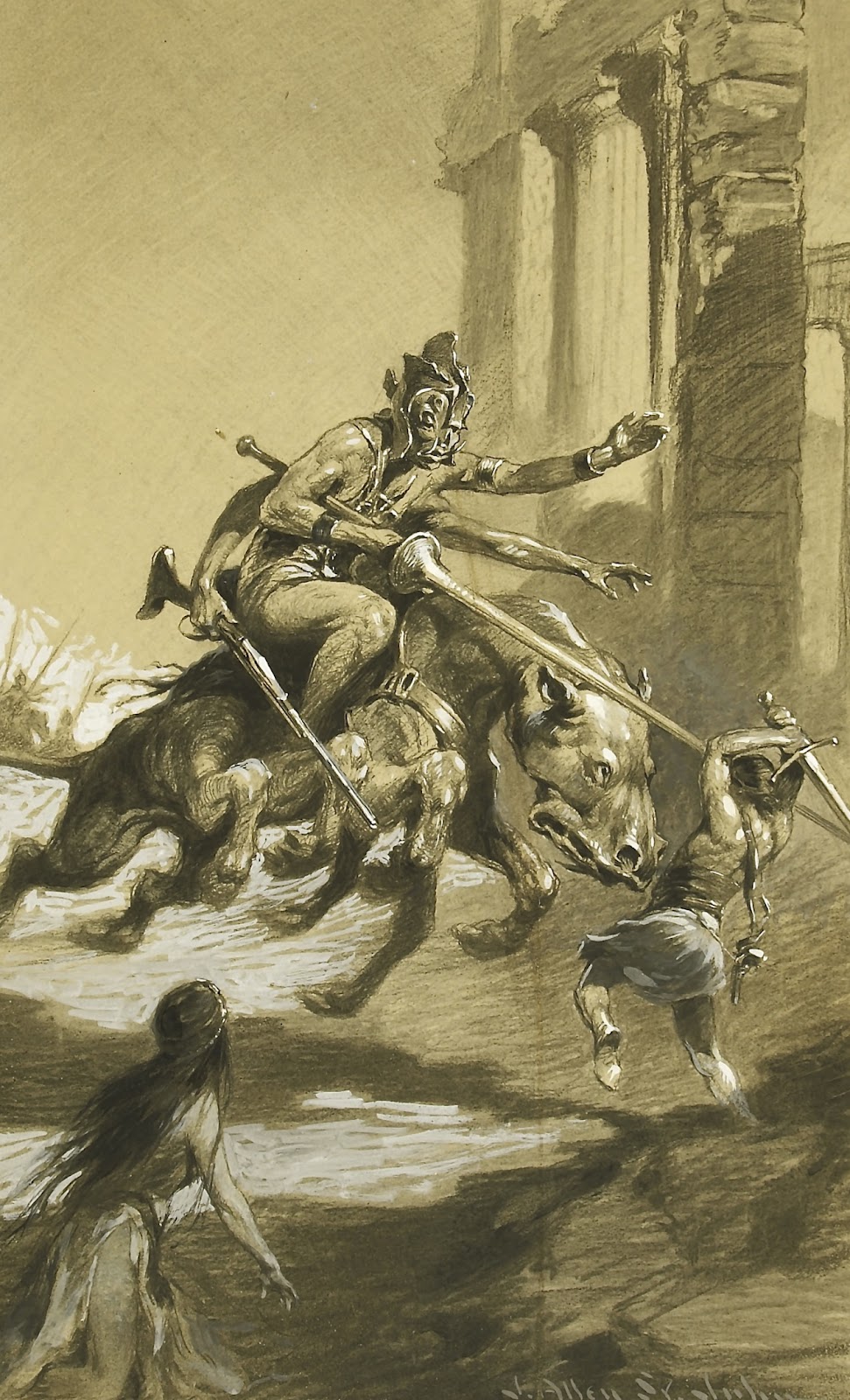
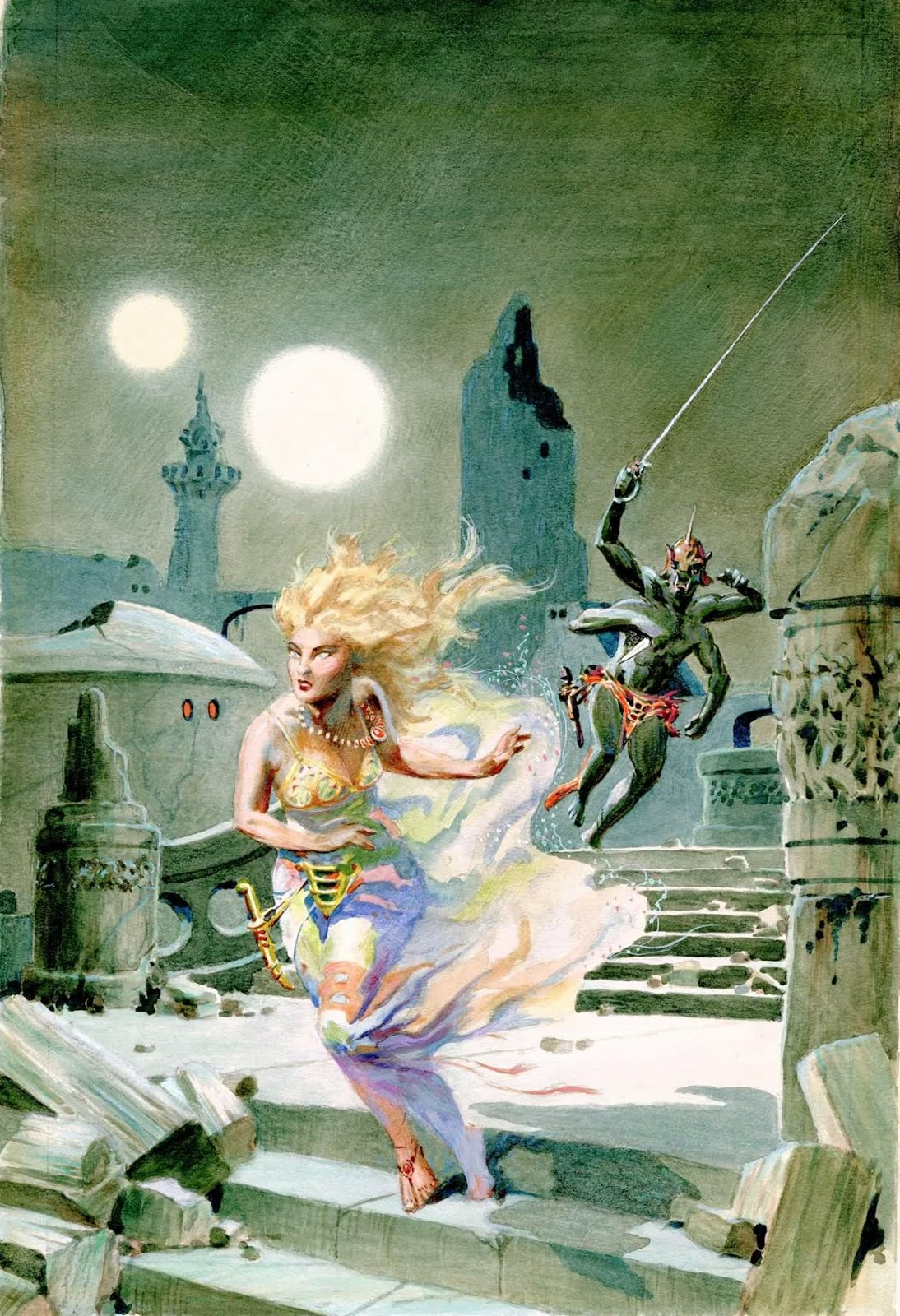
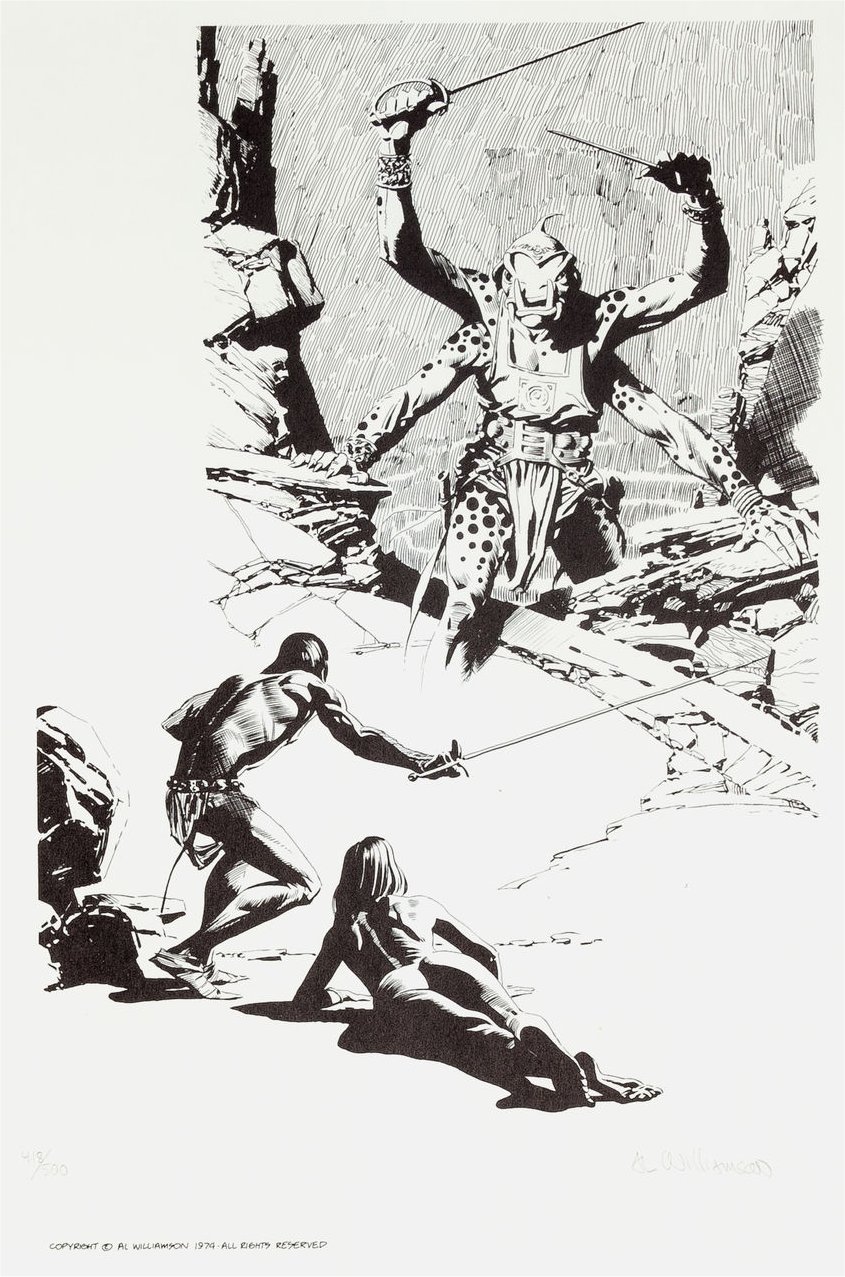
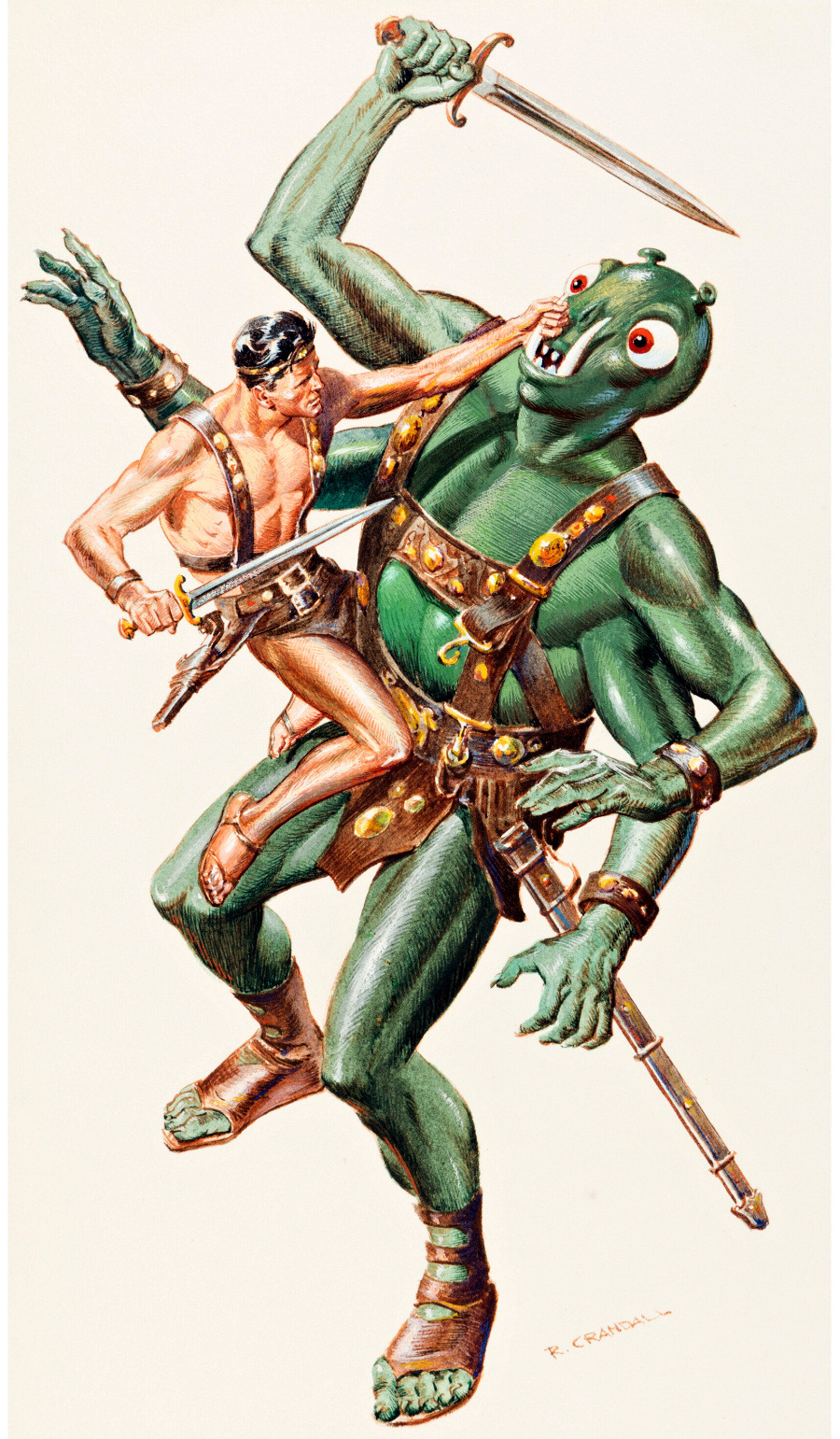
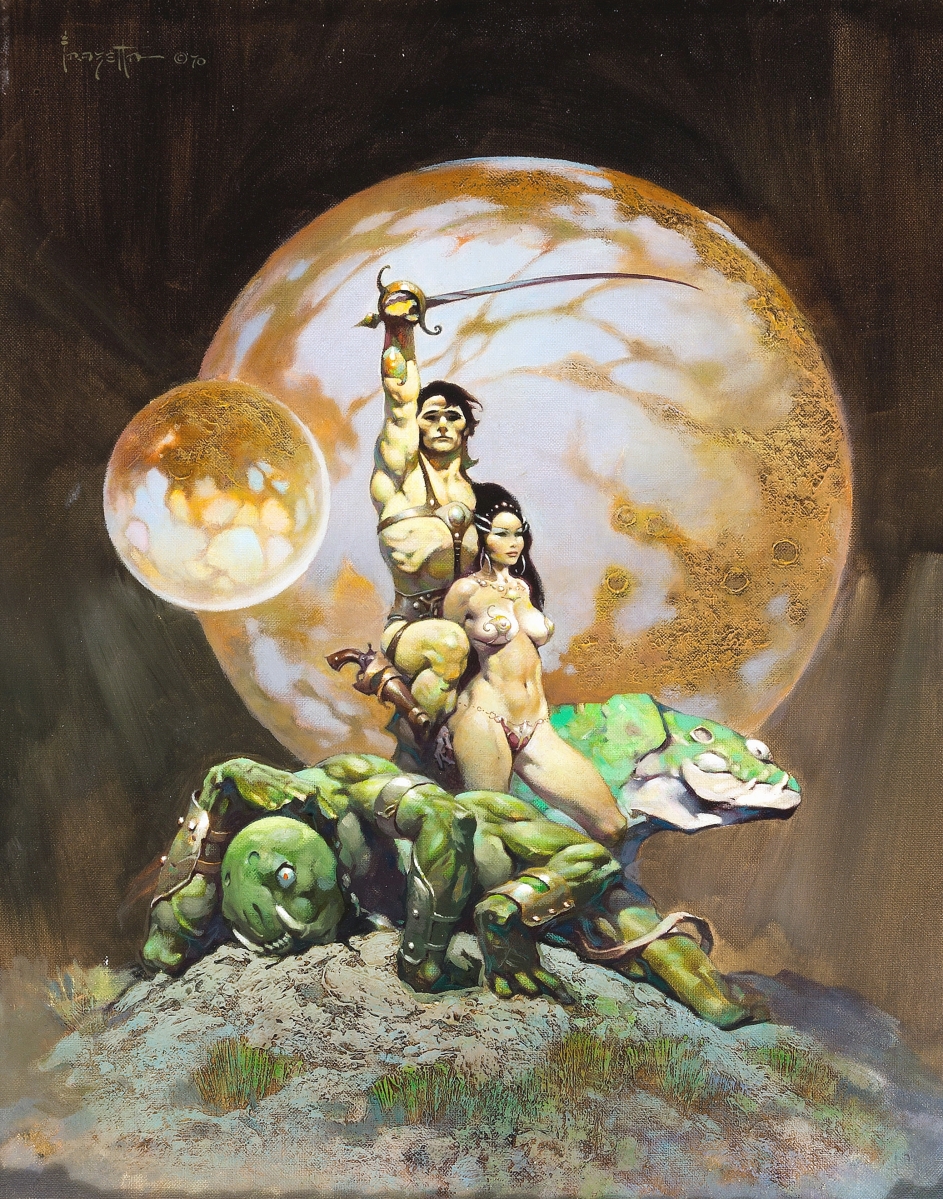
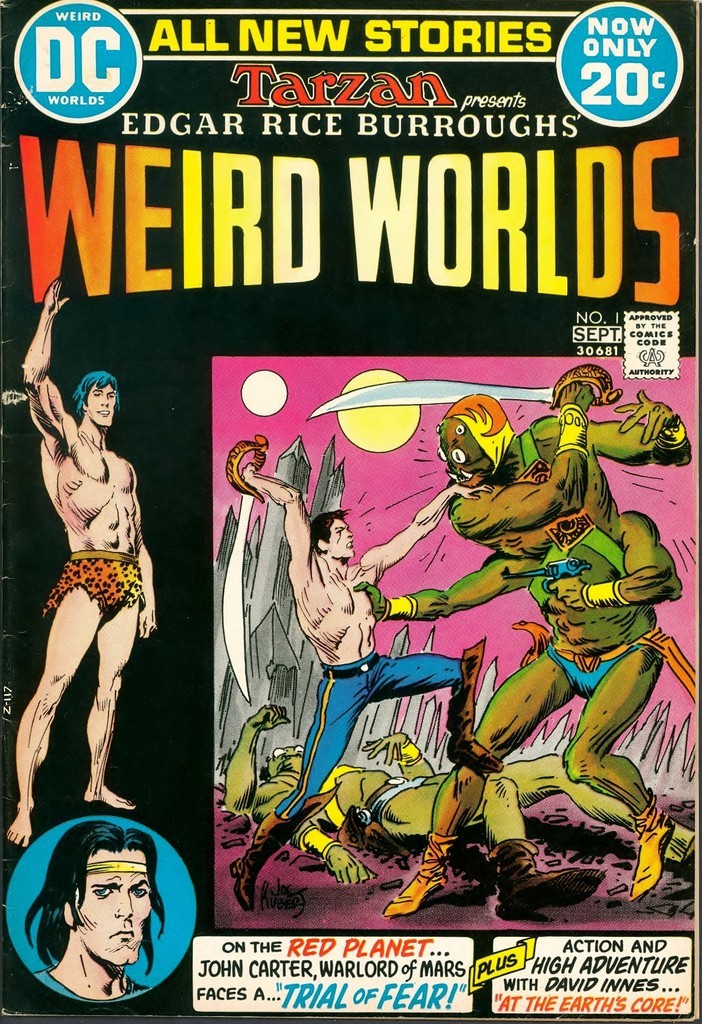
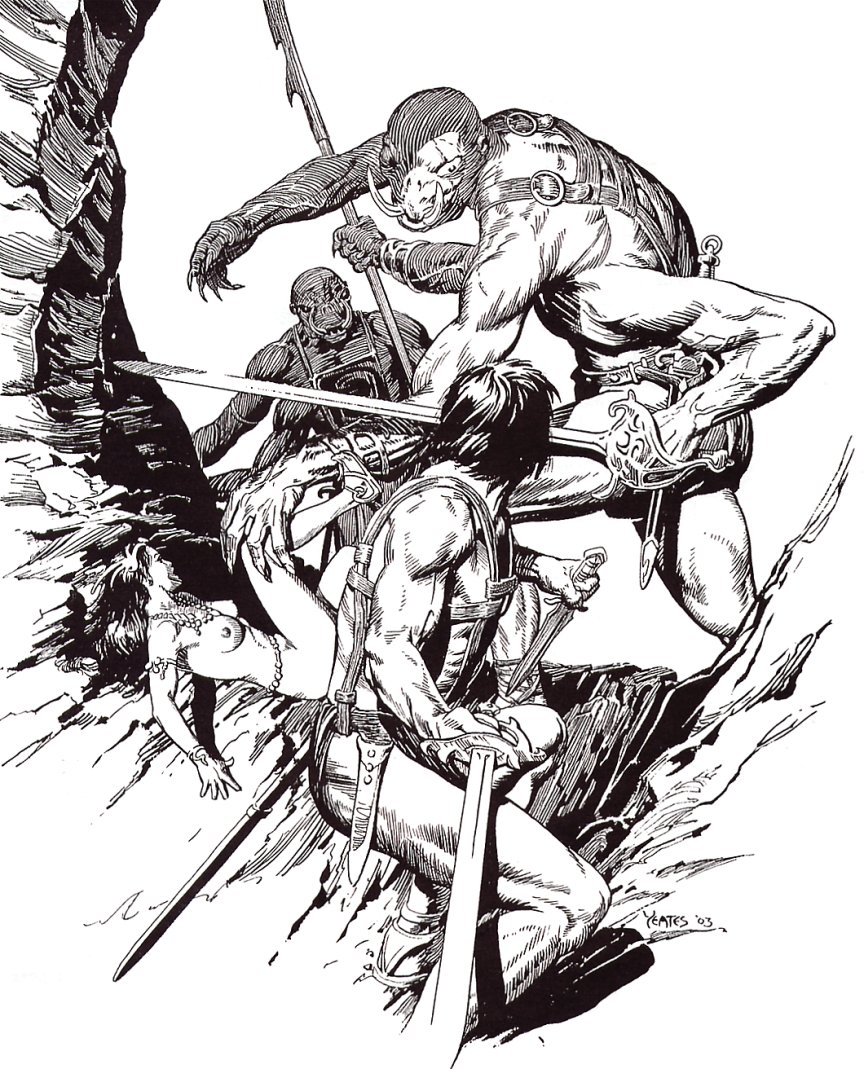
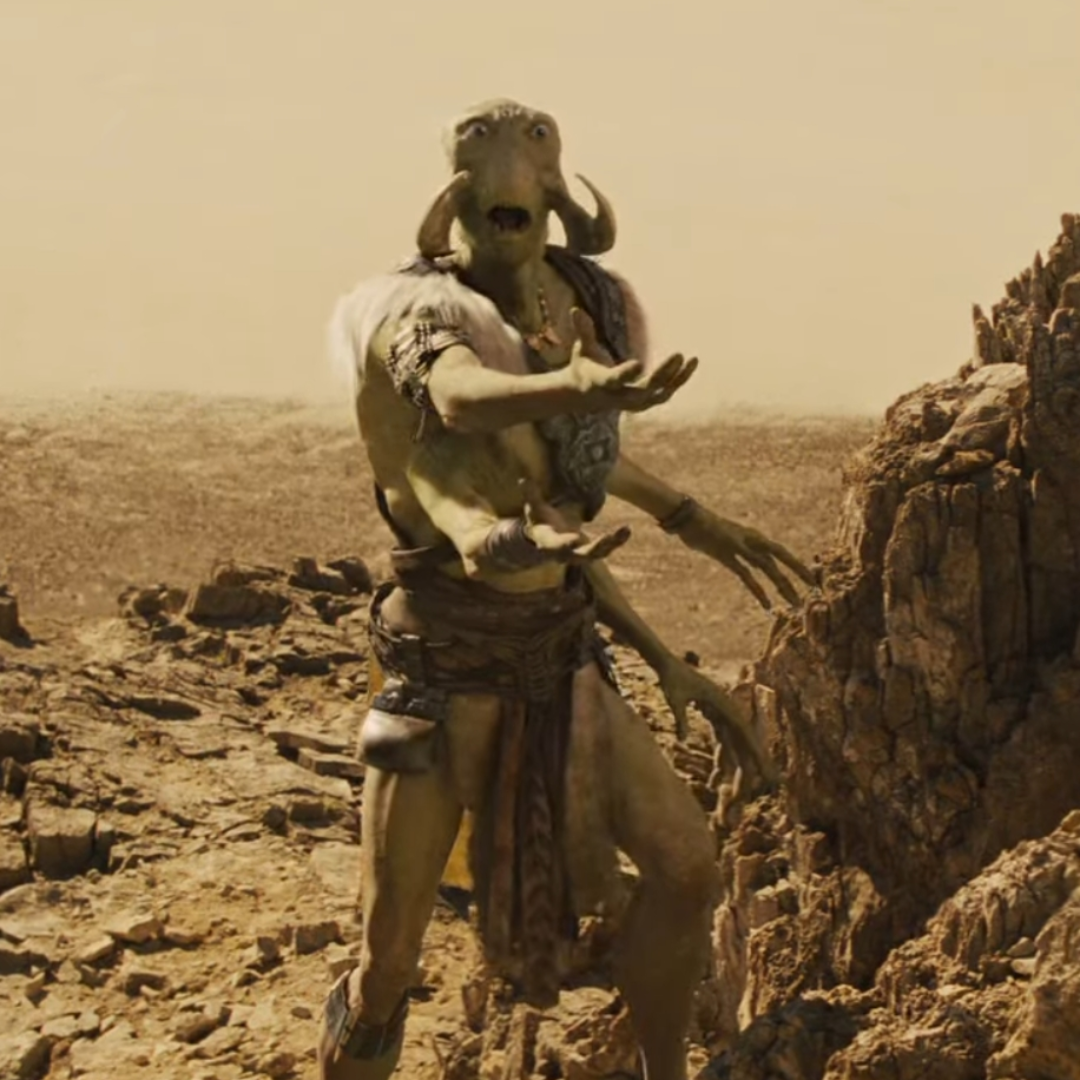
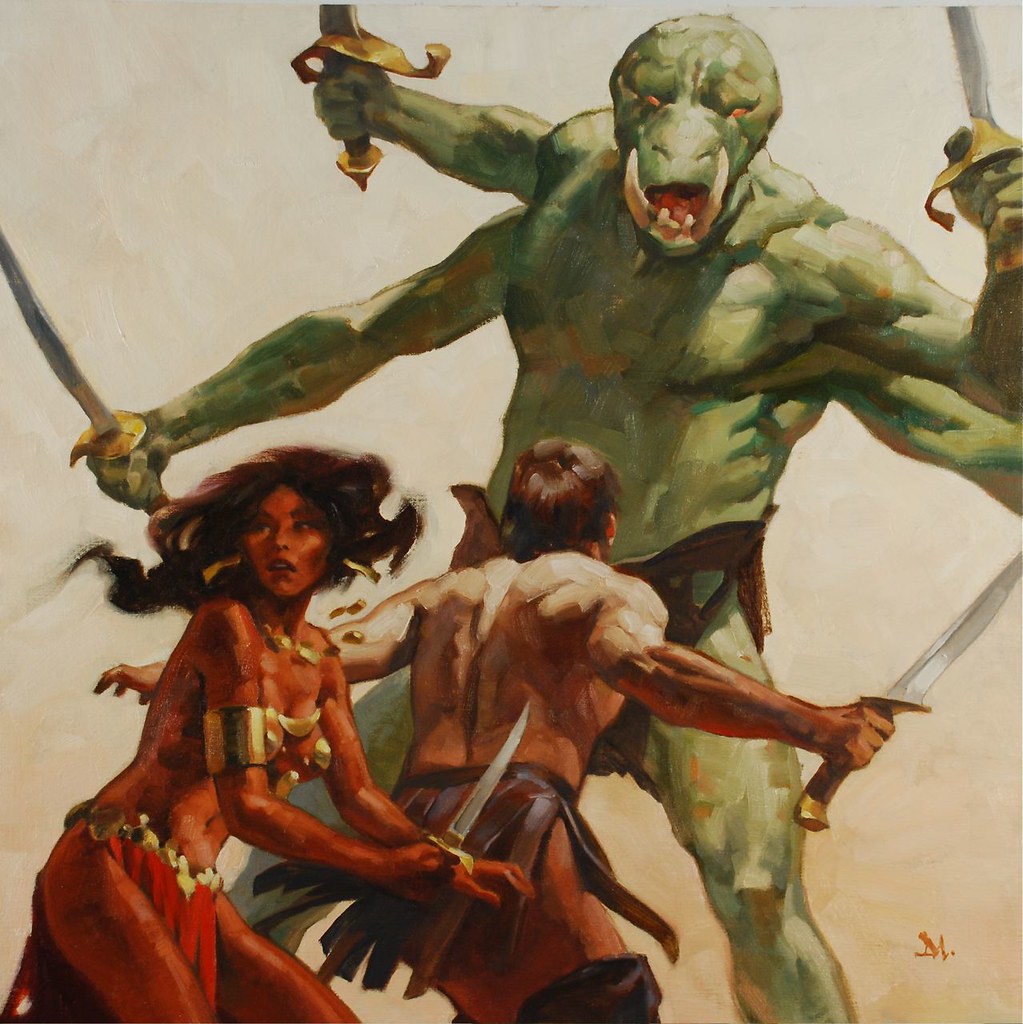
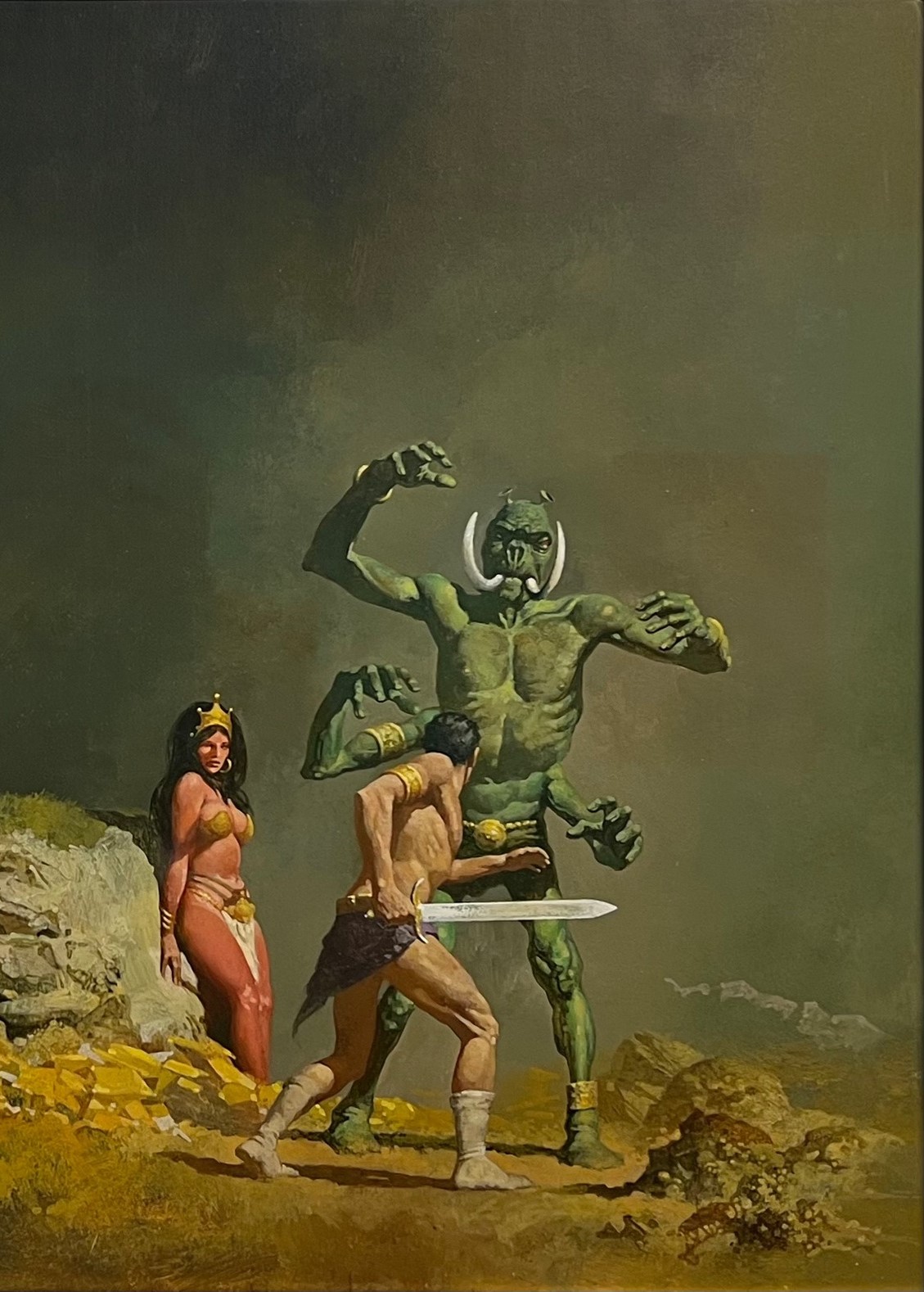
As you peruse this gallery of Green Martians (Thark or Warhoon? You tell me), there are a couple of things to note. First, you’ll see that I have included the Green Martians from the 2012 John Carter movie — which I rather liked — and an action figure from the 1995 Tarzan: the Epic Adventures line. Then, it’s obvious that only Al Williamson, Michael Whelan, Reed Crandall and Frank Frazetta (and the Epic Adventures figure) even attempt to depict the eyes as Burroughs described them, as being on the sides rather than the front of the head, though with Williamson, Frazetta and Whelan, the size isn’t right. I think Crandall comes the closest.
The “small, cup-shaped antennae” of the ears are hit or miss, being present in about half of these Green Martians (those that aren’t wearing helmets that is, and how painful would it be to have ears like that squashed under a heavy metal helmet? No wonder the race is cruel and taciturn.)
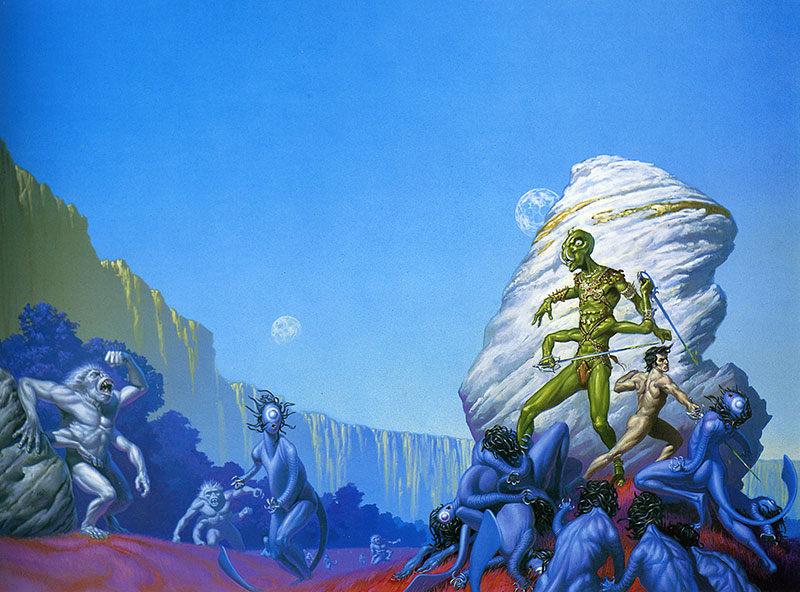
Also, none of these artists make even a gesture towards ERB’s description of the “intermediary pair of limbs which could be used at will either as arms or legs.” It’s a striking idea, but what would such “arm and leg” limbs even look like? And though I wouldn’t bet my life on it, I don’t ever remember a Green Martian in any of the books actually using the middle limbs as legs. In any case, for all of our artists, the middle limbs are just another pair of arms, indistinguishable from the pair above. I can’t say I blame them.
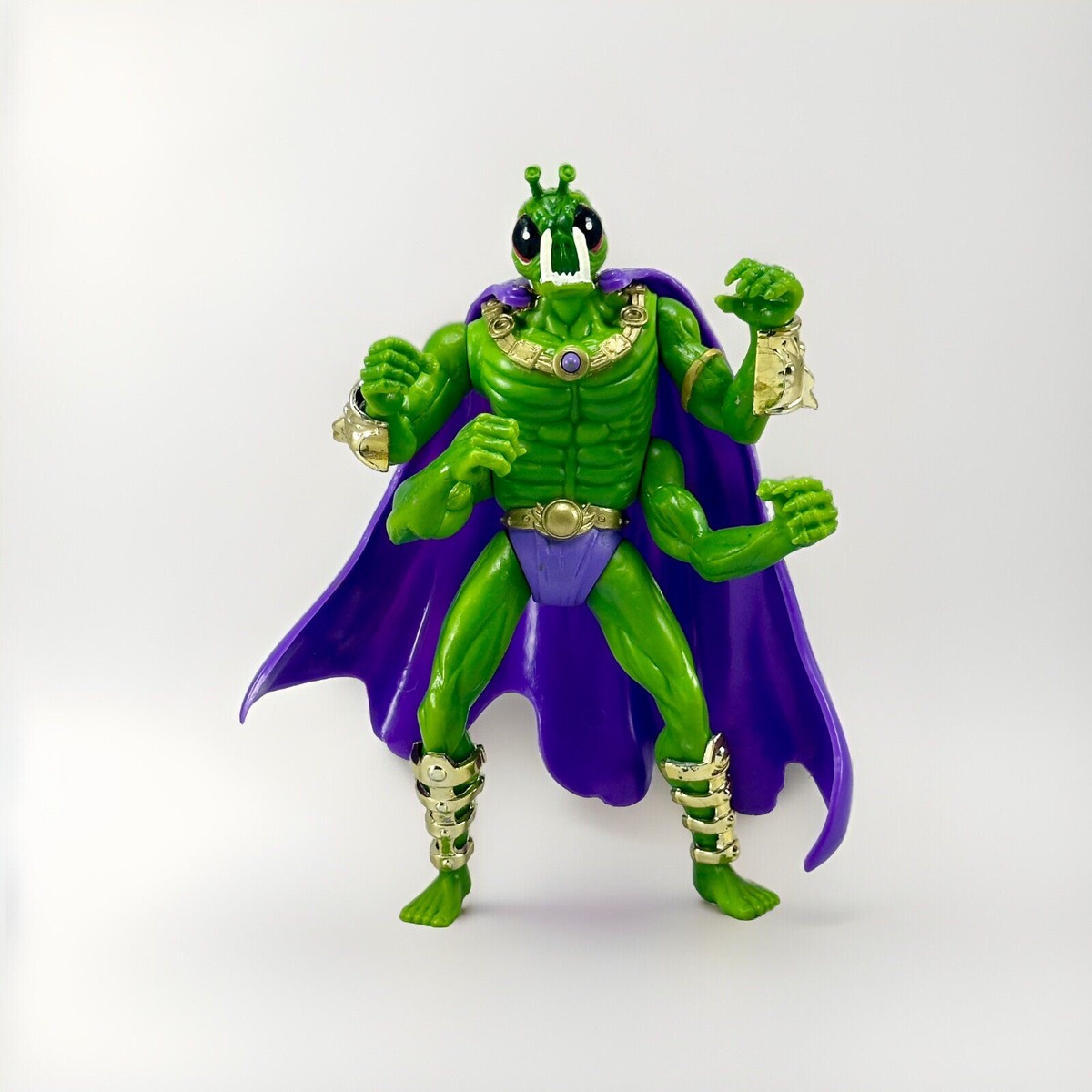
Of course, each rendition has its accuracies and inaccuracies, areas of greater and lesser fidelity to the vision of Edgar Rice Burroughs. I don’t know where Al Williamson got the idea that the creatures are spotted like a leopard, Richard Corben’s are nowhere near as tall as they should be, and while I unhesitatingly join my voice with all the others acclaiming Frank Frazetta as one of the greatest fantasy artists ever (maybe the greatest of them all), I can’t help thinking that his Green Martian looks an awful lot like a potato bug.
Which of these is the “best” or most “accurate” version of ERB’s creations? I’ll leave that for you to decide. What I can tell you is which one is my favorite, and that’s something I don’t even have to think about. Not surprisingly, it’s the first one I ever laid eyes on, the Green Martian in the Gino d’Achille painting that graced the cover of the Ballantine paperback edition of A Princess of Mars that I plucked off the spinner rack at my local Ben Franklin dime store sometime in the early 70’s. I had never heard of Edgar Rice Burroughs, and I bought the book entirely because of that great image.
I took that paperback (cover price, a buck and a quarter) home, opened it, and immediately fell headlong into a realm of excitement and adventure, vivid and colorful and thrilling as real life rarely is. I fell farther in with every new Burroughs I read, and I haven’t yet climbed out. I hope I never do.
I’ve had many great reading experiences in my life, most of them more “mature” than any you can get from the pages of a Barsoom or Pellucidar or Tarzan yarn by Edgar Rice Burroughs, but few have been as literally wonderful as when I raptly stood with Captain John Carter of Virginia on the Martian sward and confronted a grim, fifteen-foot tall Green Martian warrior… that looked just like this one, as he and his six-limbed compatriots always will, in my mind’s eye.
Thomas Parker is a native Southern Californian and a lifelong science fiction, fantasy, and mystery fan. When not corrupting the next generation as a fourth grade teacher, he collects Roger Corman movies, Silver Age comic books, Ace doubles, and despairing looks from his wife. His last article for us was Uh-oh: The Bride!
I’ll bet ERB had seen a human baby being born—they can be pretty icky too! I saw the movie and I was grabbed more by the he scenes on Earth. I mean, a man who can will himself to travel to Mars? Wow! Oh, and I loved your title!
Ahem, “Lieut. Gullivar Jones: His Vacation” by Edwin Lester Arnold…? Aka “Gullivar of Mars”…? The second volume of League of Extraordinary Gentlemen had him with John Carter in a neat crossover first issue.
A novel less impactful, published 7 years earlier and later the Burroughs “Estate” or ERB himself (?) purchased the RIGHTS to it to avoid anyone else buying it up and waging lawfare on them… I won’t say anything bad like the “P” word, but the “Sword and Planet” was a form of escapism fiction that was crucial to Adventure Scifi and also bridges into Science Fantasy. That novel itself was allegedly ripping a bit from “The Time Machine” by Wells published a bit before. (ancient decaying races on much older world which ERB does with Barsoom) There’s also some neat obvious idea using of the classic Armageddon 2419 AD (Buck Rogers) with Wells’s ideas in “The Sleeper Awakens” about what we’d call Streaming Internet Media/Netflix today…! So this really stems from Wells…!
I love ERB and read most of his work in grade school – the Whelan covers – and the Tarzan ones with the Neal Adams covers. He was a big inspiration to many and one of the foundational though it’s adventure vs ‘hard’ science fiction. But as far as “Wild” “The Most” – uh… HG Wells, William Hope Hodgeson, Lord Dunsany, Hal Lindsey, Clark Ashton Smith, HPL, REH – many before and after had more wild ideas more far reaching and original. But he was one of the first and best for making thrilling adventure stories. Also he was a “Slick” writer which was a grade or so above “Pulp”.
I agree that the D’Achille version is my favorite as well, even if he does cheat the scale. (And that edition of Princess of Mars was also my first exposure to Barsoom, although by that point I’d already read more than my share of Tarzan.)
I’m honestly not sure if ANY of them got the scale right, although Crandall is closer than most. The problem is that it’s one of those things that work fine in writing but can look kind of silly if you picture it literally and have Carter’s head only coming up to the Thark’s mid-thigh or thereabouts.
I did enjoy the movie but wasn’t keen on their design of the Green Men, who felt a little too … gormless. Partially because they changed the tusks to some kind of cheek-horns, presumably to make it easier to lip-sync the dialog.
And while I love Whelan in general, I admit I’m less of a fan of his Green Men in particular — they seem a bit willowy.
Since the original description didn’t say anything about the form factor or number of joints on the legs, arms, and intermediate leg-arms, is it a bad thing that I’m now picturing the intermediate limbs as parrot-like zygodactyl affairs, with extra knees and ankle-wrists? Since the Martians are oviparous, other convergent features might exist. Especially since the description of the overly-large heads of the young, the arrangement of facial features, and the yellowish complexion sounds like ERB was staring at a nest full of fresh-hatched robins, or maybe some new chickens, before he wrote that whole passage.
I’ve sometimes thought that what ERB was doing before he wrote a lot of stuff was sampling some of the peyote of his beloved Southwest…
Always possible.
Dark Horse published a very nice, 3-issue miniseries in the 1990s, teaming up John Carter and Tarzan. The artwork by Bret Blevins was cartoony but it suited the subject pretty well, I thought.
One thing people never seem to mention is that Burroughs states early on that Carter was functionally an immortal– a Highlander or a Prince of Amber or Eternal Warrior type–who had played many roles over a very long lifetime. I always wanted more of that, as opposed to just the Martian business.
I vaguely remember that aspect of the character, now that you mention it – a sort of eternal champion idea. In Edgar Rice Burroughs, Master of Adventure, Richard Lupoff talks a bit about some of the “theosophist” ideas that influenced ERB early on.
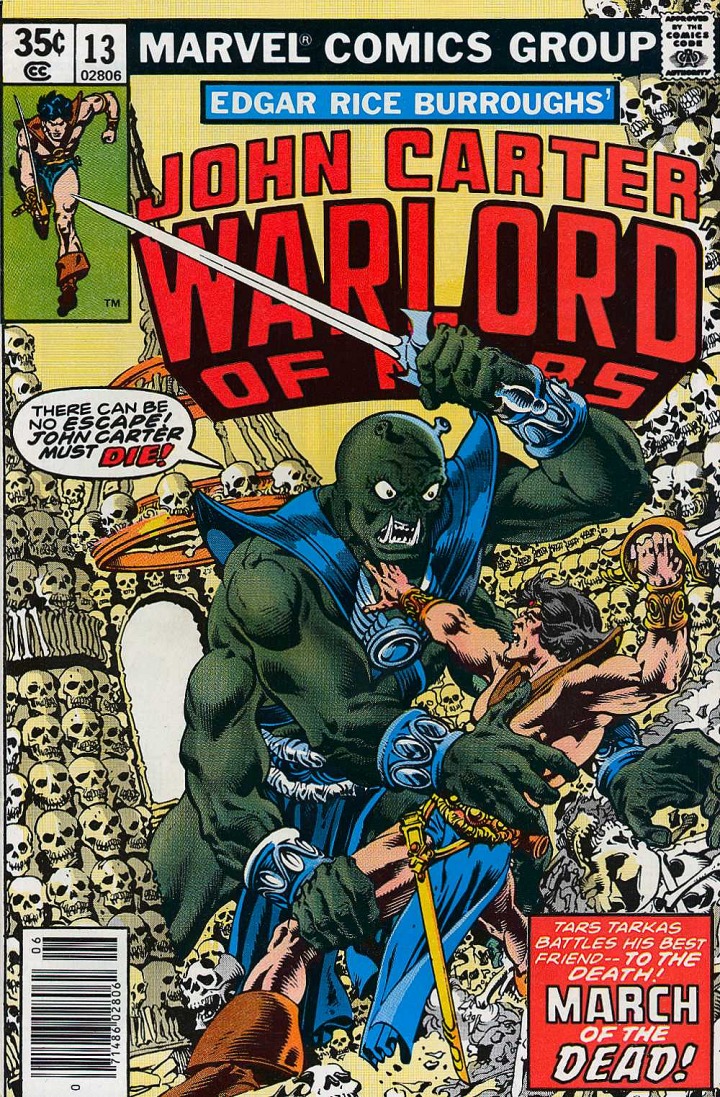
I always loved the artwork of the Marvel Comics John Carter of Mars but for some reason, the grocery store where I bought my comics didn’t get the issues very regular -that or someone else was buying them before I got the chance. So I only have a few issues. Marvel’s Tarzan run was great too.
I was a DC guy, so Weird Worlds was my mag. Michael Kaluta (the Shadow) did some ravishing Carson of Venus stories in it, and I also loved the Joe Kubert Tarzan and Korak comic books.