Uh-oh: The Bride!
Sue Granquist, Black Gate’s own incomparable Goth Chick, died not quite seven months ago, and the hole she left here is impossible to fill. I don’t know about you, but my Thursdays just haven’t been the same.
Sue’s beat was horror in all of its manifestations (well, maybe not all of them — I never remember her saying anything about politics), and she was especially keen on horror movies and television shows. Next to her husband Terry, the genre was the great love of her life.
Sue was always up to date; the avant-garde held no surprises for her, but she was really passionate about the good old stuff. Karloff and Lugosi, Jekyll and Hyde, the Mummy and the Wolfman, all those late-night or Saturday afternoon, black and white television terrors that begin with the little airplane circling the Universal globe — those classics put her in her happy place, if a fog-shrouded moor or cobwebbed crypt are places that foster happiness. For Sue, they were.
The Goth Chick was especially attentive to any new versions of those old stories and characters; any new Mummy or Dracula or Wolfman movie drew her instant attention, and her attitude was always a finely-balanced blend of hope and skepticism, at once generous and jaded. She was prepared to like anything if it was good, but she always had a torch and pitchfork at hand to storm the castle of the shoddy or slapdash.
Which brings us to the most recent “updating” or “reimagining” of one of the Universal Studios classics, The Bride!, writer-director Maggie Gyllenhaall’s take on the 1935 Boris Karloff-Elsa Lanchester Bride of Frankenstein.
It premiered on March 6th of this year and started streaming a couple of months ago on HBO, where I finally caught it Thursday night. It’s a movie Sue never got to see, but I know she would have been on it like stink on a monkey. I don’t know what she would have thought of it, though I can make a fair guess. In any case, as soon as I saw the trailer (my reaction? “Uh-oh”), I knew that someone around here should write about the film out of respect for the Goth Chick. Needless to say, what follows is (entirely) my own reaction. As always, your mileage may vary.
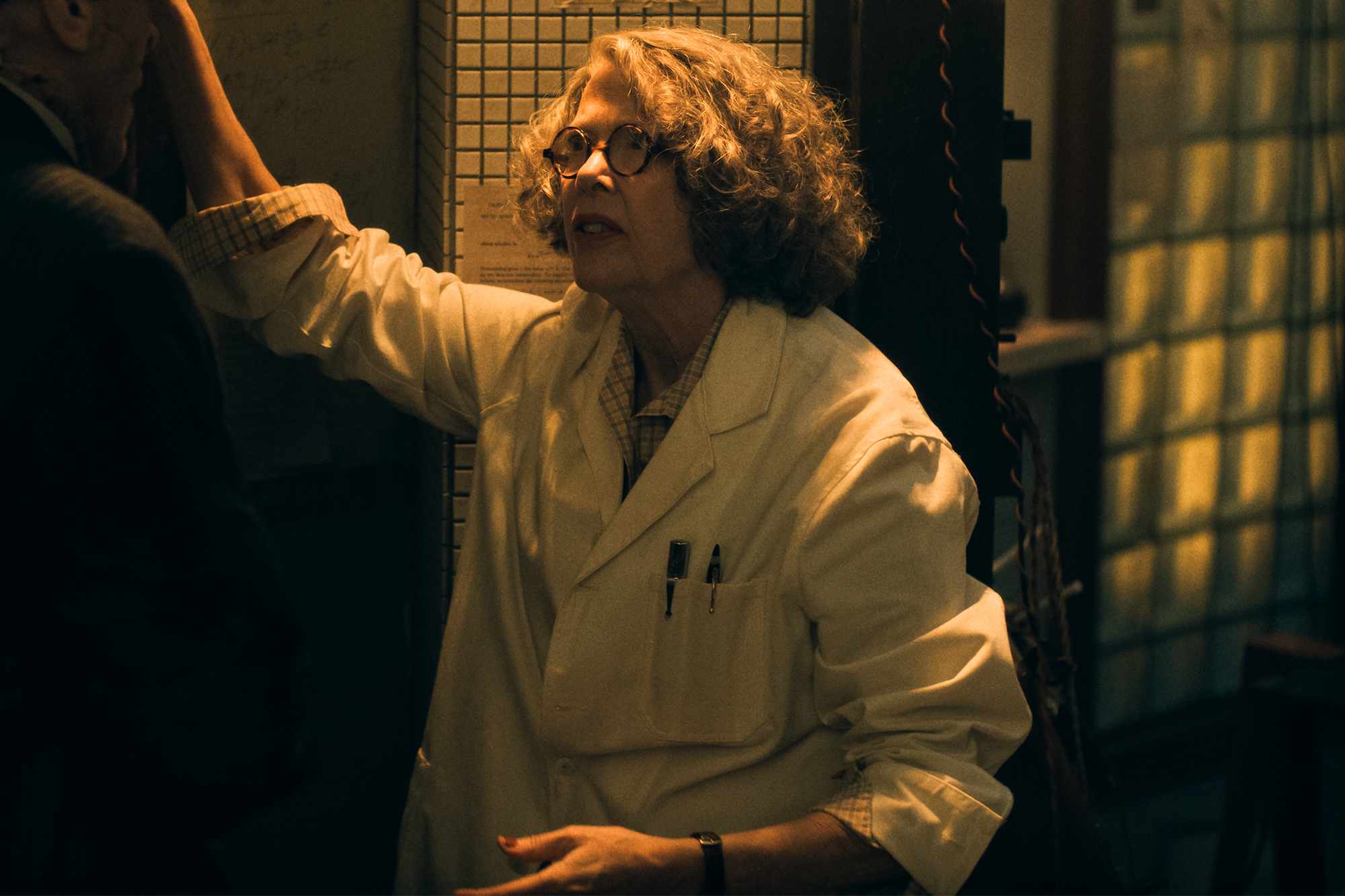
Summary will only make the movie sound even nuttier than it actually is, which is nutty enough, so I’ll be brief. Doctor Frankenstein’s monster (Christian Bale) shows up in 1936 Chicago to seek out the famous Doctor Euphronious (Annette Benning). He’s lonely, you see, and having read Euphronious’s books he knows that she’s the only one who can help him — by making a mate for him. After some dickering, they settle on the lovely corpse of Ida (Jessie Buckley), a speakeasy girl who was killed while working in the establishment of the city’s top gangster, Boss Lupino.
How did she get killed? She was possessed by the pissed-off spirit of Mary Shelley — also played by Buckley — who wants to use Ida to tell the story she really wanted to tell back in 1818. Why did she wait a hundred and eighteen years? Look, if you’re going to ask questions like that, we’re never going to get through this. Anyway, while thrashing around and spewing Shelley-prompted profanity (who knew that Mary had such a potty mouth?), Ida fell down some stairs and broke her neck.
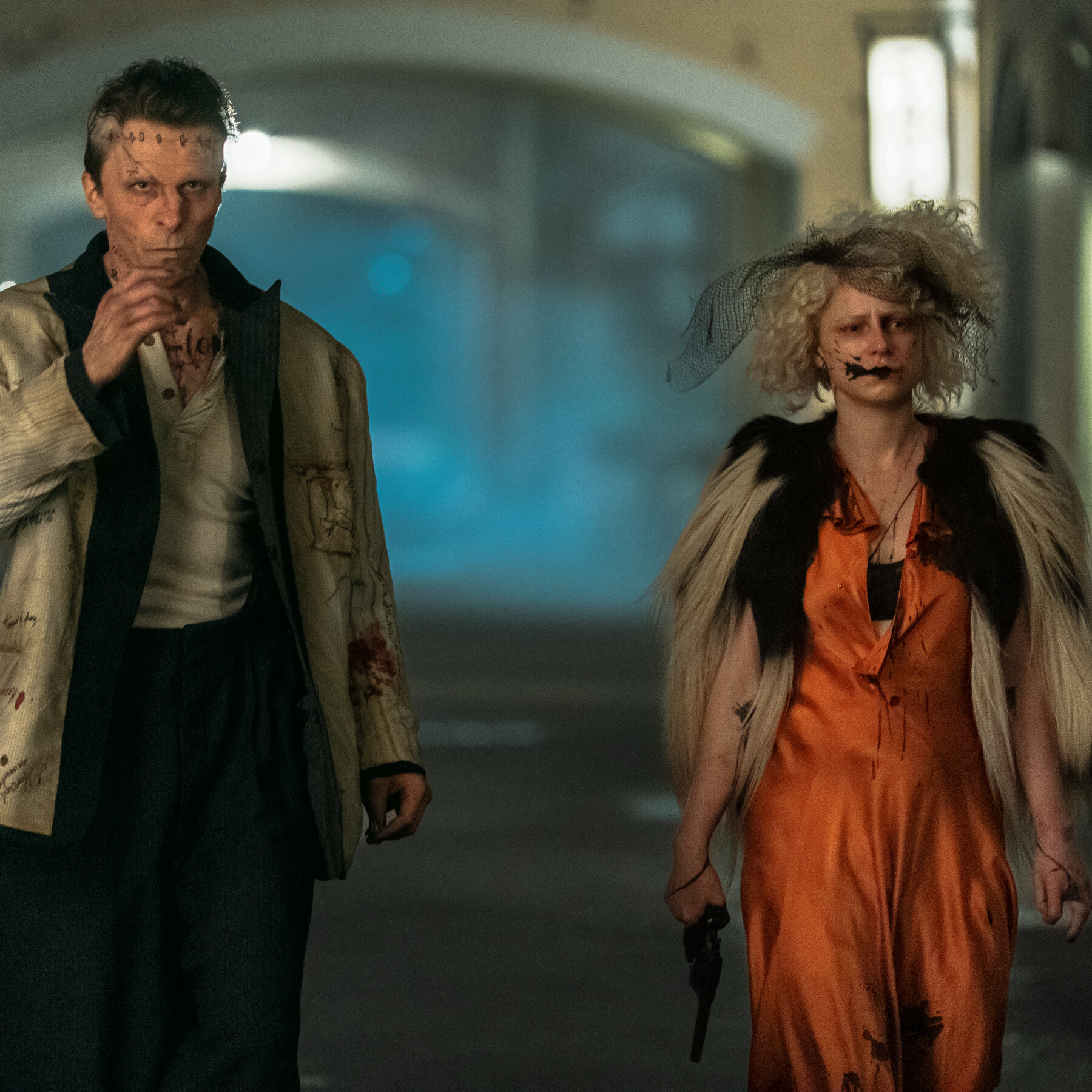
Once reanimated, Ida and Frank (yep, that’s what they call him) go through a brief but bumpy courtship and become a couple, and after a few killings that of course are in no way their fault, they go on what used to be called a tri-state crime spree (though I’m really not sure how many states are actually involved; I do know they wind up in New York, where reanimated corpse sex is nothing that the Big Apple can’t handle). All the while, cops, gangsters, and reporters are all hot on their trail, and it ends as such things always do, with the misunderstood lovers riddled with bullets. Of course, Doctor Euphronious knows what kind of movie she’s stuck in and exactly what’s expected of her, and the last thing we see (the dead hands of Frank and the Bride twitching and reaching for each other) suggests that they’ll be baaaack!
They won’t be back. The last accounting indicated that The Bride! was well on its way to losing a hundred million dollars. That’s the kind of dead that there’s no coming back from.
The actors are all talented people who try hard; your heart especially goes out to Buckley and Bale as they strain to animate these puppets (Annette Benning just seems eager to cash her check and get the hell out of town, which is perfectly reasonable), but with the obstacles in their way, all their efforts go for nothing. You can’t blame them, though (or Peter Sarsgaard or Penelope Cruz, who also give it their best); the grindingly tendentious and yet disjointed story and flashy, meretricious direction would defeat anyone.
The main problem is that the movie’s writer-director neglected the first step in creation — you have to decide what it is that you want to create. (Victor Frankenstein could have told her that.) Is The Bride! a horror story? A gangster story? A satire? A comedy? A feminist polemic? A romance? An absurdist fable? An homage? I don’t know because Gyllenhaal doesn’t seem to know; any of them would have been fine with me, but it’s all of them at once, which means that finally it’s none of them. It’s just a shapeless, self-indulgent, pretentious, incoherent, contradictory mess, a film abounding in ideas but without any of the discipline that could give those ideas shape and force. The result is a movie that’s seemingly in the grip of Tourette’s Syndrome, as scene by scene (and minute by minute within each scene) the mood wildly lurches from comic to tragic to satiric and back, without ever resting on one long enough for you to discern the filmmaker’s intentions.
It’s a movie with no center that wants to be given credit for peripheral winks and nudges and “wit” that rarely rises above the sophomoric. In a film with supposedly serious ambitions, what are we expected to make of the “scientific” gobbeldygook spouted by Euphronious that literally sounds like the sort of thing you used to hear on Dexter’s Lab? And two thirds of the way through the movie I suddenly realized that Gyllenhaal wants us to recognize and applaud the conjunction between the names of the heroine and the main villain — Ida and Lupino. Ida Lupino. Get it? Yes, Ida Lupino is a feminist icon, a great actor who was also a pioneering director in an era when very few women got the opportunity to direct movies. Fine… but Ida Lupino’s films are invariably sharp and incisive, efficiently organized and without an ounce of fat. I’m not sure she would be all that pleased to see her name appropriated for use in an incompetent, scatter-shot disaster like The Bride!
I know I might justly be accused of piling on, but honestly, there are so many things wrong with this movie, one of the biggest being the risible dialogue, which is the worst I’ve heard since Harlan Ellison’s The Oscar. The setting is also a problem — is this really 1936 Chicago or not? Twenty minutes in, I was exhausted from dodging the nonstop anachronisms, and I could never determine whether their presence was part of some obscure design or just the result of ignorance or laziness.
And you should be very careful when filling your film with references to earlier works like Young Frankenstein (believe it or not, there’s a “Putting on the Ritz” sequence in The Bride!), Bonnie and Clyde, and the Fred Astaire-Ginger Rogers musicals. (Inexplicably, Frank loves the movies of song-and-dance man “Ronnie Reed,” played by Jake Gyllenhaal, and we get to see scenes from several of them, giving us a look at Maggie’s idea of what old Hollywood movies were like, if that’s your idea of a good time.) Too often the effect is just to remind viewers of how much better those movies are than this one is, to say nothing of prompting thoughts of what Louis B. Mayer would have done to the director of a turkey that lost this kind of money. (Would he have just run Gyllenhaal out of town, or would he have put out a contract on her? Hmmm…)
The most pertinent comparison is of course to James Whale’s immortal The Bride of Frankenstein, a ninety-one-year-old movie that’s riskier, funnier, scarier, more daring and subversive and moving than this product from the cutting edge of 2026, which is too restless to be involving, too frenetic to be exciting, too confused to be illuminating and too filled with unearned self-regard to be worthy of even the respect due to an ambitious failure.
Maybe Sue would have found more virtues in The Bride! than I have been able to; I don’t know. (I almost hope she would have; I don’t like to think of her wasting two hours of precious time the way I did.) But I do know that she would have seen something in the movie that I also saw, the one good thing about it: a hint of the hold these old stories have on us, a hold so strong that Frankenstein and Dracula and the rest are constantly being recreated anew, sometimes successfully and sometimes not — but the desire and the act are always a testament to the power of the originals, and a reminder that they’re strong enough to survive any amount of manhandling… or womanhandling, in Ms. Gyllenhaal’s case. We can take some comfort from that, at least.

Honestly, at the end of the day, The Bride! is such an unqualified fiasco that it’s hardly worth talking about for its own sake; I really just wanted an excuse to see Sue’s name here one more time. I miss her.
Here’s looking at you, Goth Chick.
Thomas Parker is a native Southern Californian and a lifelong science fiction, fantasy, and mystery fan. When not corrupting the next generation as a fourth grade teacher, he collects Roger Corman movies, Silver Age comic books, Ace doubles, and despairing looks from his wife. His last article for us was A Boy Scout’s Handbook: The Mysterious Island
I read “Boss Lupino” and immediately hung my head in sorrow. I suspect Ms. GQ would have had a lot of … interesting … comments to make about “The Bride!” (That exclamation point is doing a lot of work, there.)
I miss Goth Chick, too.
Hollywood movie-musicals wrapped into a horror movie that *may* be trying to take itself seriously? …You wouldn’t happen to have noted the timecodes for a representative slice of that, would you? That’s such a thematic disconnect.
Definitely missing Goth Chick, too.
If I had written down the timecode for every incoherent moment in this movie, I’d have a document as thick as the Oxford Unabridged Dictionary. “Thematic disconnect” says it all – I wish the phrase had occurred to me when I was trying to think of a title for this piece. (Most of what I came up with, I couldn’t use; John wants to keep BG family friendly!)
Fair enough. I was asking as a long shot, so I wouldn’t have to watch the whole thing to get to that incredible bit of trainwreck. Will just have to scrub through.
X) The title you came up with says it all. (And stayed family friendly!)
Thanks for writing this. I was just thinking about Sue’s work here the other day. I was never enamored of the internet and the internet “community” of yesteryear but god it’s really gotten awful this past decade and this site and writers like Sue were my harbor in the storm. I still check in everyday and there’s always good reading (your post here is a nice example) but yeah, there’s still a hole.
I’d love to see this site remember her again from time to time. Perhaps a best-of piece or two around Halloween or anything unpublished Sue’s husband might like to share if he feels like it.
As for this film, yeah the writing was on the wall from day one. For starters, I abhor the conceit of mixing authors and their fictional characters as if they were real, it’s such a fundamentally stupid idea. The only time I’ve ever seen it work was in “Time After Time” and that was only because of the exceptional cast and really smart writing. This just sounded like half-baked pretentiousness topped with a fatal layer of self-congratulatory over indulgence. And the budget…yikes. I’d be far more forgiving of someting like this had it been a low budget affair but I can only think of the 5-10 small budget films we could have had instead.
Thanks again for the nice post. It was appreciated.
Byron, I think the idea of having some sort of Sue Granquist memorial post or posts every October is a great one.
I’m grateful for the warning. I really liked an earlier movie, The Bride, with Sting as Dr. Frankenstein and Jennifer Beale as the eponymous Bride, especially the scene where she corrects him on who wrote the literary work he’s quoting and in anger he throws “Prometheus Unbound” into the fireplace. But it was not so much horror as romance, with a touch of fairy tale.
While I didn’t think it was a great movie, I actually liked it for all the reasons you didn’t–jam packed with wink wink references one after the other in a, ahem, monster mash-up. I also thought Buckley’s Bride was a hoot. Again, not great, but fun nonetheless.
Well, as they say, there’s no accounting for taste – yours or mine! I did think Buckley and Bale were the best things in the movie, and part of what cheesed me so much was the feeling that they could have achieved something worthwhile if they had only had more help.
I feel like this movie is the directorial equivalent to the sort of acting Gyllenhaal does in movies like “Secretary” where she always wants you to understand she’s part of an inside joke. (For those who haven’t seen the movie, she uses a not-quite over the top youthful voice, over-exaggerated but not entirely hammed up visual expressions, etc.) It’s like she can’t decide is it “serious feminist story” or “campy send-up” or “just deconstructionist revisionism because someone in a lit class told me that is cool.”
Whatever the case, it’s amazing how bad this movie is, and how inane its plot, which is like a mash-up of movies Gyllenhaal thought cool, only now with Frankenstein’s monster and his bride as the main characters.
So bad.