Browsed by
Category: Vintage Treasures

Birthday Reviews: Hal Clement’s “Critical Factor”

Birthday Reviews: Hal Clement’s “Critical Factor”

Cover by Richard Powers

Hal Clement was born Harry Stubbs on May 30, 1922 and died on October 29, 2003. In addition to being an author, Clement was an artist, using the name George Richard for his artwork.

Clement received the Ignotus Award for the translation of his novel Mission of Gravity and a Retro-Hugo Award for his short story “Uncommon Sense.” He received the Skylark Award from NESFA twice, in 1969 and in 1997. In 1989 I-Con presented him with the Gallun Award, and in 2001 they presented him with the Moskowitz Award. He received the Forry Award from LASFS in 1992 and was inducted into the First Fandom Hall of Fame in 1997 and the Science Fiction Hall of Fame in 1998. In 1999, the SFWA named him a Grand Master. He was the Guest of Honor at Chicon V, the 1991 Worldcon in Chicago.

“Critical Factor” was purchased by Frederik Pohl for the second volume of Star Science Fiction Stories, published in 1953. It was translated into German in 1977 for an appearance in Titan 4, edited by Pohl and Wolfgang Jeschke. James E. Gunn selected the story as representative of Clement’s work and hard science fiction for his historical anthology series The Road to Science Fiction: Volume 3: From Heinlein to Here.

Clement was one of the masters of rigorous hard science fiction, often exploring the extremes of physical science, as he did in Mission of Gravity, and once he introduces the oddity allows scientific plausibility to dictate the course of his story. In “Critical Factor,” he posits a race of amorphous beings who live within the layers of the earth, eating seams of rock, and to whom the atmosphere is deadly. Pentong has gone on a lengthy journey of discovery and found that there is a distant continent covered in a mile-thick sheet of frozen water. He postulates that melting that water would cause the ocean levels to rise, thereby increasing the area in which they can live since they can only live in earth that is covered by water (not exposed directly to air).

Read More Read More

The Final Battle Comes: The White Rose by Glen Cook

The Final Battle Comes: The White Rose by Glen Cook

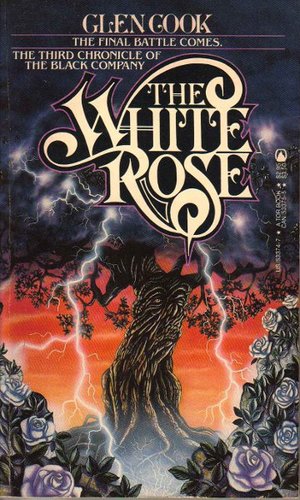
oie_2935357GGMS7DGhWith The White Rose (1985), Glen Cook brought the original Black Company trilogy to an end. Taking place six years after the escape of the Black Company’s survivors in Shadows LingerTWR contains three distinct stories. The foremost is Croaker’s account of the final days of the rebellion led by the White Rose against the Empire of the Lady. The second concerns the mysterious Corbie’s efforts to uncover what is happening in the Barrowlands where the Dominator, the North’s erstwhile Dark Lord and husband of the Lady, remains trapped. Finally, jumping back in time nearly a century, Cook presents the story of Bomanz, the wizard who released the Lady and her servitors from their shackles in the first place.

Under the leadership of Darling — revealed at the end of The Black Company to be the foretold champion, the White Rose — the rebellion consists mostly of spies scattered across the empire and a few dozen veterans holed up in caves in the middle of the Plain of Fear. The plain is an exotically magic-infused region where menhirs talk and move on their own and giant manta-like beasts fly from their roosts on the backs of thousand-foot-long windwhales. Those and lots of other strange things all bow down to the voiceless direction of Old Father Tree.

Sagey scents trickled across my nostrils. Air chuckled and whispered and murmured and whistled in the coral. From farther away came the wind-chimes tinkle of Old Father Tree.

He is unique. First or last of his kind, I do not know. There he stands, twenty feet tall and ten thick, brooding beside the creek, radiating something akin to dread, his roots planted on the geographical center of the Plain. Silent, Goblin, and One-Eye have all tried to unravel his significance. They have gotten nowhere. The scarce wild human tribesmen of the Plain worship him. They say he has been here since the dawn. He does have that timeless feel.

With the protection of the denizens of the Plain, the rebellion has survived. Now, though, even there its survival is in doubt. After two years of neglect, the Lady has ordered a massive assault on the Plain, surrounding it with five armies under the leadership of the Company’s greatest enemy, Limper. The only surviving member of the original Taken, victim of several plots led by the Company, and left for dead at the end of Shadows Linger, his hatred for them is boundless.

The only hope for the Company lies in discovering the Lady’s true name. Equipped with it, even the relatively minor wizards of the Black Company would be able to strip her of her powers. Long ago the Company captured — and lost — a cache of papers that might have contained that secret. Soon a race to recover those papers becomes central to any hope for the Company’s and the rebellion’s survival.

The account of Corbie’s detective work serves as the connector between the past and the present. Endeavoring to find out how the Dominator is attempting to free himself, Corbie must uncover the true nature of Bomanz’s own explorations. Secretly, he begins sending his findings to Croaker to help the Company.

Read More Read More

Announcing the Black Gate Book Club: Downbelow Station by C.J. Cherryh

Announcing the Black Gate Book Club: Downbelow Station by C.J. Cherryh

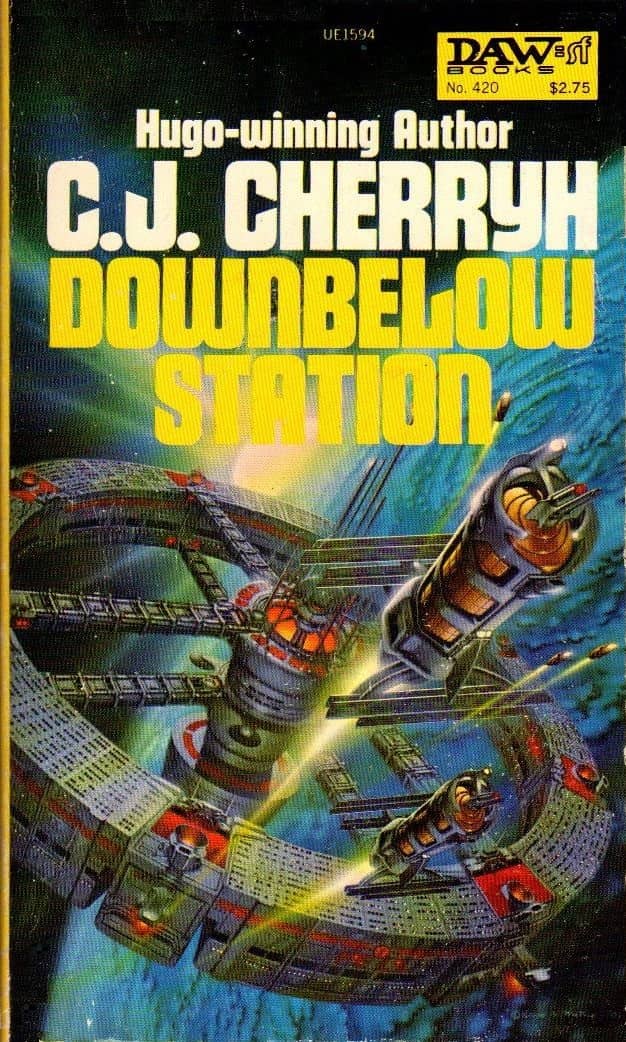
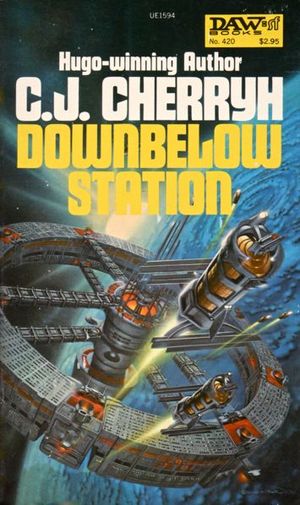
oie_2755519pv4ckfCiLast year, when I reviewed C.J. Cherryh’s The Pride of Chanur, Adrian Simmons mentioned he had been thwarted by her Hugo-winning Downbelow Station (1981). That led to him suggesting another go at it, but this time with the impetus of a reading group to spur him on and to discuss it. Thus the idea of the Black Gate Book Club was born. It’s taken a year to actually get around to getting this off the ground, but here we are.

For forty years, C.J. Cherryh has been a powerful voice in science fiction. Her work is noted for its “intense third person” style, where only things noticed by or of importance to the point of view character are included in the narration. Her science fiction is notable for its complex and detailed societies and its relative hardness.

Many of her books are set in the Alliance-Union universe. By the 24th century, humanity has spread to the stars. While Earth, overpopulated and culturally and economically stagnant, is ostensibly in charge of the merchant space stations and the few planetary colonies, that is not actually the case. Under the direction of a scientific elite, the planet Cyteen has declared its independence. In response, Earth has built a massive fleet of military vessels and sent them out to retake Cyteen.

Downbelow Station opens in the late days of the consequent war, when the forces of Earth are in retreat from the seemingly invincible fleets of Cyteen. Downbelow Station, a trading orbital above a planet in the Tau Ceti system, becomes the focal point of both military forces as well as a nascent third one: the independent merchants.

The plan is to read Downbelow Station over the month of June and post a discussion of it each Monday afternoon. This time around, the Book Club participants will include Adrian Simmons, Charlene Brusso, Chris Hocking, and me. We’d love it if you’d read along with us and join in the conversation.


A Classic Without the Quotation Marks: Rogue Moon by Algis Budrys

A Classic Without the Quotation Marks: Rogue Moon by Algis Budrys

Rogue Moon Gold Medal-small Rogue Moon Gold Medal-back-small

Fawcett Gold Medal paperback original, November 1960. Art by Richard Powers

There are just too many books out there to read, too many still to get to, (too many that you’ll never get to!) and sometimes when you finally do read one of those older “classics,” the inevitable allowances you have to make for the style, the ideas, and the attitudes of an earlier era can make you come away feeling dissatisfied. You feel guilty even asking the question, but really, what was all the fuss about? What the hell was so “classic” about The Moon Pool anyway? So many vintage books seem to require the qualifying quotation marks.

There’s probably no genre as vulnerable to this sort of thing as science fiction. SF was always supposed to be the cutting edge, but let’s be honest; some of its most famous books — through no fault of anyone but Father Time — feel old. When the “door to tomorrow” starts to creak so loudly that you can hear the sound all the way across the parking lot, it can be pretty embarrassing. This is why it’s such a great pleasure to come across a “classic” (especially a neglected one) that lives up to and even exceeds its reputation, an older book that still has a dangerous edge that time has yet to dull.

Algis Budrys’ 1960 story of exploration, mortality, and the mystery of identity, Rogue Moon, is, I think, one of the most brilliant science fiction novels ever written, employing as it does some dusty old “gosh-wow!” pulp science fiction props with a new ambition and a deeper, more serious purpose.

Read More Read More

Birthday Reviews: Caitlín R. Kiernan’s “Glass Coffin”

Birthday Reviews: Caitlín R. Kiernan’s “Glass Coffin”

Silver Bird Blood Moon-small Silver Bird Blood Moon-back-small

Cover by Tom Canty

Caitlín R. Kiernan was born on May 26, 1964.

Kiernan novel The Drowning Girl was nominated for the Nebula Award, the World Fantasy Award, the Bram Stoker Award, the British Fantasy Award, the James Tiptree, Jr. Award, the Shirly Jackson Award and the Mythopoeic Award. It received the Tiptree and Stoker Awards. Kiernan also won a Stoker Award for the graphic novel Alabaster: Wolves. She won two World Fantasy Awards in 2014 for her collection The Ape’s Wife and Other Stories and the short story “The Prayer of Ninety Cats.” Kiernan has won four International Horror Guild Awards for her novels Silk and Threshold and for her short fiction “Onion” and “Le Peau Verte.”

“Glass Coffin” was originally published in Ellen Datlow and Terri Windling’s 1999 fairy tale anthology Silver Birch, Blood Moon. It is part of her Salmagundi Desvernine series of short stories. It was reprinted, along with the other three stories in the sequence, in Kiernan’s 2000 collection Tales of Pain and Wonder, along with several other short stories.

Although part of a series of stories featuring Salmagundi Desvernine and Jimmy DeSade, “Glass Coffin” can be read and understood on its own, although that understanding may be quite different for readers familiar with Kiernan’s other stories. “Glass Coffin” itself is a retelling of Snow White and the Seven Dwarfs. Replacing the woodland cottage of the more familiar setting is a salvage yard that was formerly Salmagundi’s family’s shipyard. The Dwarfs are replaced by the foster children Salmagundi has taken in. Each of the six children described have their own personality and abilities, with the seventh off stage. While they all await Jimmy DeSade’s return, Salmagundi cuts herself and dies for all intents and purposes.

Read More Read More

Vintage Treasures: Razored Saddles, edited by Joe R. Lansdale and Pat LoBrutto

Vintage Treasures: Razored Saddles, edited by Joe R. Lansdale and Pat LoBrutto

Razored Saddles-small Razored Saddles-back-small

Razored Saddles is the first Weird Western anthology I can recall. It was published as a limited edition hardcover from Dark Harvest in September 1989; I don’t usually buy limited edition hardcovers, but for this I made an exception.

I wasn’t even aware there was a paperback edition until I came across a copy three years ago at the Windy City Pulp and Paper Show. I loved the spooky new Avon cover by Lee MacLeod, but that copy was priced at $25 — more than I paid for the hardcover! I’m pretty good at tracking down paperbacks though, and now that I knew it existed, I figured I could find one at a reasonable price. And sure enough, I did, although it took longer than I expected. With the help of an eBay Saved Search, I finally found the unread copy above in March… priced at $7, less than a brand new paperback.

Razored Saddles had two co-editors. Joe R. Lansdale needs no introduction; these days he’s best known as the author of the Hap and Leonard series, crime novels made into the highly regarded series on SundanceTV. But he’s also the author of over 50 novels and 26 collections, including The Nightrunners (1987), By Bizarre Hands (1989), and The Bottoms (2000). He has won ten Bram Stoker Awards. Pat LoBrutto began working with a summer job in the mailroom of Ace Books, and soon graduated to editing the US editions of Perry Rhodan with Forrest J. Ackerman in 1974. He won the World Fantasy Award for editing in 1986, and co-edited Full Spectrum 2 (1989). He is currently an acquiring editor for Tor Books.

Read More Read More

A Pair of Gonzo Mysteries from a Fantasy Master: Rich Horton on Pink Vodka Blues and Skinny Annie Blues by Neal Barrett, Jr.

A Pair of Gonzo Mysteries from a Fantasy Master: Rich Horton on Pink Vodka Blues and Skinny Annie Blues by Neal Barrett, Jr.

Pink Vodka Blues-small Skinny Annie Blues-small

Neal Barrett, Jr. received a Hugo and Nebula Award nomination for his 1988 story “Ginny Sweethips’ Flying Circus,” and in 2010 he was named Author Emeritus by the Science Fiction and Fantasy Writers of America. A discussion of his four Aldair novels — which Fletcher Vredenburgh called “a blast of strangeness and adventure” — broke out in the comments section of my 2013 post about Mark Frost’s The List of 7. And in his 2014 review of The Prophecy Machine, Fletcher wrote:

The late Neal Barrett Jr. wrote around thirty novels and seventy short stories. I’ve only read a little bit from his works, which include sci-fi and fantasy as well as crime fiction and magic realism. He seems to have slipped under the radar of most genre readers. On the other hand, everything I’ve read about the man marks him as one of those special authors held in high esteem by other writers.

As usual, Fletcher is bang on in his assessment. I haven’t read any of Barrett’s crime fiction either, and I’ve always been very curious about it.

But that’s why we have Rich Horton. Over at his website Strange at Ecbatan Rich reviews two of Barrett’s mid-90s mystery novels, Pink Vodka Blues (1992) and Skinny Annie Blues (1996), calling them ‘funny’ and ‘wild.’ That qualifies them for a closer look in my book.

Read More Read More

Into the Grimness: Shadows Linger by Glen Cook

Into the Grimness: Shadows Linger by Glen Cook

SHDWSLN1984Let me start off with a warning: there will be spoilers galore in this and all future Black Company posts. There’s just no way to avoid them at this point. So if you haven’t read the books, do us all a favor and read them.

Shadows Linger (1984) amps up the proto-grimness of Cook’s seminal epic fantasy series, at the same time taking much of the focus away from the titular Black Company and the previous book’s narrator, Croaker. It’s a surprising approach when so much of the initial book’s story was about the company itself as an almost living thing, complete with its own complicated history and traditions. It works though, due to Cook’s jaundiced view of human nature, and skill at crafting a harsh, noir atmosphere and setting.

At the end of The Black Company, ex-nobleman and all-around badass Raven realized that Darling, the nine year-old girl the Company rescued, was the White Rose. It was prophesied that the White Rose, who in centuries past had defeated and imprisoned the Dominator and the Lady, would be reincarnated when the need for her again arose. Now is that time.

Shadows Linger begins nine years after the close of The Black Company. The Company has become the Lady’s fire brigade, marching back and forth across her vast empire, forever extinguishing any signs of rebellion. Resistance leaders are hunted down and killed and the peace of iron-fisted repression is enforced. Still, the Company holds on to a sliver of its members’ humanity.

The Lady’s service has not been bad. Though we get the toughest missions, we never have to do the dirty stuff. The regulars get those jobs. Preemptive strikes sometimes, sure. The occasional massacre. But all in the line of business. Militarily necessary. We’d never gotten involved in atrocities. The Captain wouldn’t permit that.

The Dominator, the Lady’s husband and once the the North’s resident Dark Lord, remains imprisoned in the Barrowlands, held in place by spells, soldiers, and a dragon. Something, though, is stirring and it seems as if he is preparing to somehow escape his bonds. An investigation leads members of the Company and two of the Taken, the Lady’s own ringwraith sort of wizards, to Juniper. Juniper exists in the most remote part of the North on a bay that is free from ice only half the year. There, a strange black castle has been growing year by year. Somehow it is connected to the Barrowlands and the Dominator.

Read More Read More

Birthday Reviews: Adam-Troy Castro’s “MS Found Paper-Clipped to a Box of Jujubes”

Birthday Reviews: Adam-Troy Castro’s “MS Found Paper-Clipped to a Box of Jujubes”

Cover by Amy Sterling

Adam-Troy Castro was born on May 20, 1960.

Castro has been nominated for the Nebula Award 8 times in the three short fiction categories, beginning with a Best Novella nomination for “The Funeral March of the Marionettes” and most recently for the novella “With Unclean Hands.” “The Funeral March of the Marionettes” was also nominated for the Hugo Award, and Castro later shared a Hugo nomination with Jerry Oltion for “The Astronaut from Wyoming.” Castro and Oltion would go on to win the Seiun Award for “The Astronaut from Wyoming” in 2007. He won the Philip K. Dick Award for the novel Emissaries from the Dead in 2009. Four of his stories have topped the Analog Readers Poll, including “The Astronaut from Wyoming,” “Sunday Night Yams at Minnie and Earl’s,” “With Unclean Hands,” and “The Coward’s Option.”

“MS. Found Paper-Clipped to a Box of Jujubes” was an original story included in Castro’s 2000 collection An Alien Darkness. It is the only time it has been published and was one of three stories first published in that collection.

It is only natural to look at a Ferris wheel and think about what would happen if it broke loose from its moorings. Of course, the reality of the situation would be deadly and horrific, but Castro paints a more surrealistic scene in “MS Found Paper-Clipped to a Box of Jujubes.”

Joe and Mary Sue are riding on a Ferris wheel, ignoring pretty much everything except for each other, when the wheel jumps from its holder and begins to roll down the midway and eventually out of the fairgrounds, gaining speed as its goes and causing Mary Sue to fall out of the wheel (unharmed). Joe just goes along for the ride as police try to stop the runaway wheel, treating it more like a speeding driver than anything else. Eventually, the wheel goes on to achieve cross-dimensional status and the wheel’s riders begin to work to regain control of the ride.

Read More Read More

Birthday Reviews: Wendy Rathbone’s “The Beautiful People”

Birthday Reviews: Wendy Rathbone’s “The Beautiful People”

Cover by J.K. Potter

Wendy Rathbone was born on May 19, 1960.

Although Rathbone has published several short stories and some novels, she may be best known for her poetry, which has been collected in Moon Canoes: The Selected Poetry of Wendy Rathbone, Autumn Phantom, Turn Left at November, Dead Starships, and Unearthly: The Collected Poetry of Wendy Rathbone. Rathbone’s poetry has been on the Rhysling ballot three times.

The only publication of “The Beautiful People” was in the 1998 anthology Bending the Landscape: Science Fiction, edited by Nicola Griffith and Stephen Pagel.

Rathbone’s story looks at the relationship between Noah, a plain bartender, and Tam, the talented and attractive singer in a band. Both characters are outliers in a world in which people can undergo treatment to improve their looks and gain the appearance of perpetual youth. Noah refrains because he blames the treatments for his sister’s suicide and Tam avoids the treatment because he feels he doesn’t need them to look good.

As their relationship progresses, including marriage, Noah remains steadfast in his belief that the treatment is wrong and takes something out of people, while Tam seems to be increasingly concerned about his own imperfections, which Noah describes as extremely minor. However, Tam is a performer and feels the need to keep up with his competition and his bandmates, all of whom have undergone the treatment and are “naturally” impeccable, while he needs to groom himself to achieve even a semblance of a perfection he doesn’t feel.

Read More Read More