Browsed by
Category: Vintage Treasures

Thinking about the Evolution of Marvel Comics’ Star-Lord

Thinking about the Evolution of Marvel Comics’ Star-Lord

Marvel_Preview_Vol_1_4
Marvel’s conception of Star-Lord for the 1970s and 80s.

I’ve been doing a bit of thinking lately about puzzling characters in comics and how they change over time. In the last couple of weeks, I decided to reread they comics I’ve got around with the Marvel Universe’ Peter Quill, also known as the Star-Lord.

Now, for those who’ve been living in a hole for the last decade, or for those who only know Peter Quill from the Guardians of the Galaxy movie, Peter Quill made his first appearance in 1976 in Marvel Preview #4 (a black and white magazine), under the creators Steve Englehart and Steve Gan, who envisioned him as an unpleasant, introverted jerk who would go on to grow into a cosmic hero.

I love that arc, and wonder how much it was kicking around then. Around the same time, Jim Starlin wanted to do something similar with Captain Marvel, but Marvel didn’t give him the character, so he did it with Adam Warlock (see my thoughts on that in my series on Adam Warlock I, II, III).

Star-Lord didn’t reappear until Marvel Preview #11, this time under Chris Claremont, John Byrne and Terry Austin (the team that would later moved over to Uncanny X-Men from #108 to #143, famously creating the Hellfire Club, the Phoenix Saga, and the Days of Future Past).

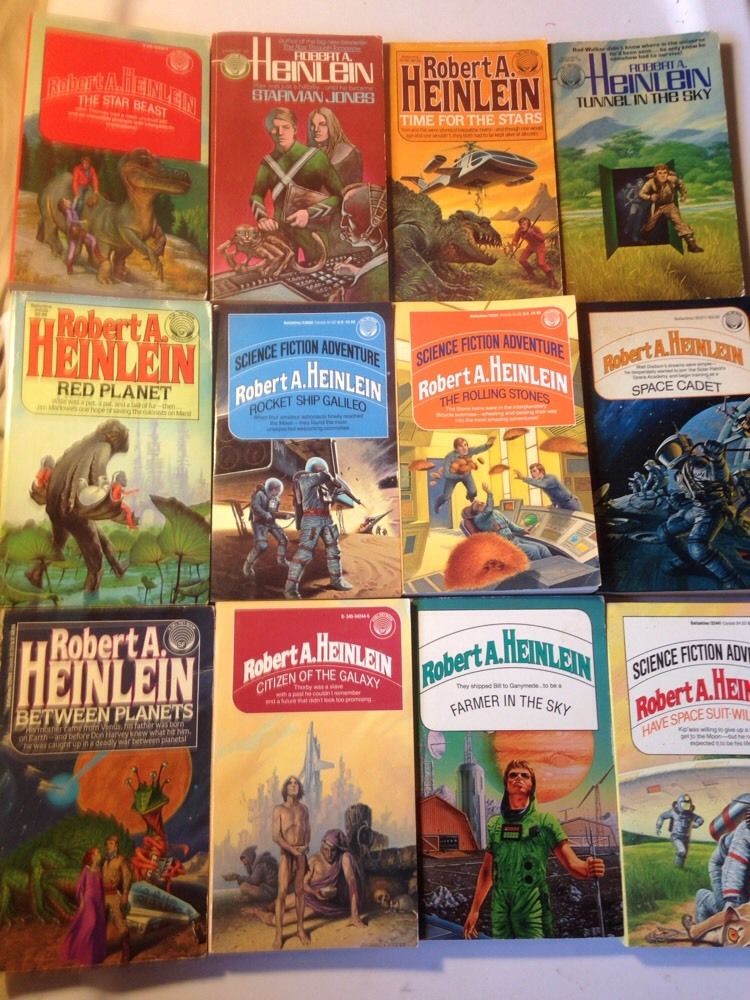
Under Claremont, he wasn’t the introverted jerk, but a straight-faced loner, traveling the space-ways. I haven’t read the Heinlein juveniles, but it sounds like Claremont was aiming for that kind of bland square-jawed adventurer, and that persona stuck in Star-Lord’s appearances through the 70s and 80s.

Read More Read More

Dorsai and Secret Psi Powers: Rich Horton on The Genetic General/Time to Teleport by Gordon R. Dickson

Dorsai and Secret Psi Powers: Rich Horton on The Genetic General/Time to Teleport by Gordon R. Dickson

The Genetic General-small Time to Teleport-small

Over at Strange at Ecbatan, Rich Horton turns his attention to an author who’s rapidly being forgotten in the 21st Century: Gordon R. Dickson.

So this time an Ace Double featuring a pretty significant novel in SF history, by a pretty significant writer. The Genetic General is much better known as Dorsai!, the title under which it was serialized in Astounding in 1959… Dorsai! was the first major story in Dickson’s central series, called The Childe Cycle… The Genetic General is about a young man of the Dorsai people, from the planet called Dorsai, orbiting Fomalhaut. The Dorsai are mercenaries, and Donal Graeme, as the book opens, is a very young man just ready to go out into the wider human civilization and take on his first assignment. Immediately he encounters a beautiful but scared woman, Anea, the Select of Kultis, one of the Exotic worlds. She has taken a contract to be an escort for the powerful merchant William of Ceta, and wants Donal to get rid of it. He of course realizes that would be a crime and a mistake, and so refuses, but he is set on a collision course with William…

It’s early Dickson, not as well done as some of his later work. But it is quite exciting, and Donal’s military feats make good stories. And Dickson’s ambition is quite apparent — he is interested in deeper themes than just good adventure. I quite enjoyed the book.

Dorsai! was a major installment in a highly popular multi-novel sequence from Dickson, and it remained in print for decades. As Rich noted, it originally appeared in Astounding, serialized across three issues (May, June, and July) in 1959.

Read More Read More

The Strange and Happy Life of The Astounding Science Fiction Anthology

The Strange and Happy Life of The Astounding Science Fiction Anthology

The Astounding Science Fiction Anthology Berkley 1967-small Astounding Tales of Space and Time Berkley 1967-small

The lifecycle of a modern anthology ain’t that complicated. It comes out in hardcover or trade paperback from a small press, stays in print for 5-6 years or so — or until the small press suffers a horrible death, whichever comes first — and then vanishes, popping up thereafter only on eBay and at SF conventions, like a Star Trek action figure.

It didn’t always used to be this way. Used to be that anthologies would appear originally in hardcover, just like real books, and then get reprinted in paperback (also, just like real books). And sometimes those paperbacks would get multiple editions over the decades. (No, I’m not joking. And yes, I know we’re talking about anthologies.)

But go back father than that, to the beginnings of American publishing itself — scholars of this dark and mysterious period are conflicted about actual dates, but in general we’re talking about the 1940s and 50s — and we enter a time when paperbacks had a fixed upper page limit. So how did these primitive cave-dwelling publishers reprint popular volumes, like for example John Campbell’s 600-page beast The Astounding Science Fiction Anthology (Simon & Schuster, 1952), when the typical paperback of the era contained barely 100 pages?

No easy task, but our intrepid publishing forefathers found a way. They broke the book up into two volumes and, because giving them similar names would have been just too easy, gave the paperback editions completely different titles. Thus the groundbreaking hardcover edition of The Astounding Science Fiction Anthology spawned two paperbacks: The Astounding Science Fiction Anthology  and Astounding Tales of Space and Time, both of which remained in print in various editions for years, confusing collectors like yours truly for decades. Let’s have a closer look, because I ended up buying all seven of the damn things before I figured out they were all the same book, and they might as well be useful for something.

Read More Read More

Teaching History through Wargaming: Strategy & Tactics #280: Soldiers 1918

Teaching History through Wargaming: Strategy & Tactics #280: Soldiers 1918

ST280-2I’ve been a history buff all my life, and this interest led me to a career as an archaeologist before becoming a writer specializing in history and historical fiction. Thus it’s not surprising that I want my ten-year-old son to have a firm grounding of history, even though he takes more after his astronomer mother and will almost certainly go into one of the STEM fields.

One of my main interests is World War One, so when I visited Belgium a couple of years ago for the centenary I brought him back some Belgian comics on the conflict. Now we’re watching the excellent Channel Four series The First World War. I’m also vocally hoping he’ll read my Trench Raiders series, so far with no luck! I’ve been pushing this particular era of history because we live in Madrid. Since Spain wisely stayed out of the war, I don’t think the Spanish educational system will teach him as much about WWI as I think he should know.

So why not add a little extra knowledge through wargaming? He’s been expressing an interest in it lately since his favorite comics shop has some wargaming tables, so I invested in issue #280 of Strategy & Tactics, a classic wargaming magazine that’s older than I am. This issue comes with the game Soldiers 1918: Decision in the Trenches, which one BoardGameGeek labeled as “medium light” in difficulty.

Read More Read More

To Ride a Rathorn by P. C. Hodgell

To Ride a Rathorn by P. C. Hodgell

oie_11225225XvvToolIt’s taken me two years, but I’ve finally returned to P. C. Hodgell’s Kencyrath Cycle, with the fourth book, To Ride a Rathorn. A rathorn is a deadly, carnivorous, horned, horse-like animal covered in heavy plates of ivory. For the Kencyrath, to ride a rathorn is to try to do something insane, and our heroine Jame is about to do just that. She has accepted her destiny as a crucial element of the final showdown with Perimal Darkling, a world-devouring force of chaos and evil. At the same time, several forces are arrayed against her: the enemies of her family, the weight of millennia of traditions, and terrible agents of utter darkness. Instead of just crawling away and hiding, Jame has decided to take on all comers, and figuratively — and perhaps literally — ride a rathorn.

Four books in, to say the series is complicated is like saying the sun is hot or the oceans wet. Hodgell has created one of the densest and tremendously detailed fantasy settings, and to even look at this book without having read its predecessors just might make a reader’s brain explode. But as I often ask: have you taken my advice and read the other books yet? Because you should have by now. To get a better understanding of what’s gone on before, you can read my reviews of the first three — God Stalk, Dark of the Moon, and Seeker’s Mask — right here at Black Gate. If you don’t have time, though, here’s a relatively brief synopsis:

Thirty thousand years ago, Perimal Darkling began to devour the series of parallel universes called the Chain of Creation. To fight against it, the Three-Faced God forged three separate races into one; feline-like Arrin-Ken to serve as judges, the heavily muscled Kendar to serve as soldiers and craftsmen, and the fine-featured humanoid Highborn to rule them. For 27,000 years, the Kencyrath fought a losing battle, one universe after another falling to the darkness. Three thousand years ago, the High Lord Gerridon, fearful of death, betrayed his people to Perimal Darkling in exchange for immortality. Fleeing yet again, the Kencyrath landed on the world of Rathilien. Since then, they haven’t heard from their god, and Perimal Darkling has seemed satisfied to lurk at the edges of their new home. Monotheists trapped on an alien world with many gods, the Kencyrath have had to struggle to find their own place and survive on Rathilien.

Read More Read More

Kurt Busiek’s Astro City. Also Joyce, Hemingway, Faulkner, and a Tangent on Modernism

Kurt Busiek’s Astro City. Also Joyce, Hemingway, Faulkner, and a Tangent on Modernism

Astro_City_A_Visitors_Guide_Vol_1_1This is mostly an homage to Kurt Busiek and Astro City, and to one story in particular, but buckle in because we’re going to cover a lot of rambling ground getting there in a sort of stream-of-consciousness way, taking in stuff by random association — sort of like the streets of Astro City itself…

Kurt Busiek’s Astro City is one of my favorite superhero comics. It consistently delivers brilliant, funny, poignant, human stories in a colorful, wonderfully idiosyncratic comic-book world. It is Busiek’s magnum opus — like Bendis’s Powers, it towers above his other work for the big publishers using their branded characters. He brings the sensibilities he honed in the groundbreaking Marvel miniseries Marvels to his own universe and, beneath all the ZAP! BANG! POW!, weaves tales you will never forget.

What Marvels did that was so fresh in 1994 is it “lowered the camera” from the god-like supers knocking each other through buildings and focused in on the ordinary humans down here at street level, wide-eyed and slack-jawed, watching it happen. What impact did the existence of such powers have on their day-to-day lives?

In Astro City the camera is completely unfettered, ranging to the heights to reveal very human dramas among people who have the power to level cities and then zooming down to the alleys to follow a day in the life of a two-bit petty thief who is really a pretty ordinary, decent human being (with the exception that his skin is covered with a steel alloy). Through the course of following Carl Donewicz, aka Steeljack — in the classic story “The Tarnished Angel” — we come to sympathize with and like him, and even find ourselves rooting for him: just once, could one of his heists go off without a hitch and not be foiled by The Jack-in-the-Box? And in Astro City, where narratives don’t always follow the comic-book formula, he does have his day. A fun, feel-good story, that one.

And then there are Astro City stories that rip your heart out. “The Nearness of You,” I contend, is among the great American short stories of the late twentieth century, and I think it could be anthologized as such. (Wizard Magazine does rank it number 6 on their list of “100 Greatest Single Issue Comic Books Since You Were Born.”) Publishers these days would have no problem formatting a four-color comic story into their prose collections. But should they? It is, after all, a comic book.

Read More Read More

Noise About Xignals

Noise About Xignals

Xignals September 1988-smallI took a break from cutting the grass around the house. It was a hot day, and the chore always took a while. “Look what I found,” my aunt greeted me, as I went indoors and dropped into a chair. She’d been cleaning up, preparing to move into the cottage, and she’d been discovering things tucked away and forgotten long before, as one does. She handed me a copy of Xignals.

Years ago, back in the twentieth century, Xignals had been the in-house newsletter of Waldenbooks’ Otherworlds Club, a buyers’ club program for science fiction and fantasy readers. I was never a member, but I’d pick up a copy of Xignals when I’d go with my aunt and grandparents over the border from their summer cottage in Philipsburg, Quebec, to have dinner in Burlington, Vermont. There was a Waldenbooks in one of the shopping malls in Burlington, where we’d stop after eating, and I’d take an inexcusably long time browsing the science fiction section before buying a book to take back to Philipsburg. And, often, grab a copy of Xignals with it.

In 2016 I sat and read this copy of Xignals for perhaps the first time in over twenty-five years. It was dated August/September 1988, which means it had come out as I was turning 15. It was a 16-page booklet, 8 sheets of 11-by-17-inch paper folded over, black and white with greyscale images and green lines and fills. I was fascinated by the thing, its edges nibbled by field mice seeking a home during some winter between 1988 and 2016. It brought to my mind not a rush of Proustian reminiscence, but a sense of significance in difference. I was made conscious of the way the future was conceived then, based on the way the world then operated, and the way the world operates differently now.

Read More Read More

The Conclusion to a Grand Adventure: Hobgoblin Night by Teresa Edgerton

The Conclusion to a Grand Adventure: Hobgoblin Night by Teresa Edgerton

oie_433623CB5VCFSUHobgoblin Night (2015) is an e-book rerelease (and revision, and repackaging, along with three previously published short stories) of The Gnome’s Engine (1991), Teresa Edgerton’s charming follow-up to Goblin Moon (1991). In it, the adventures of brave Sera Vorder and dashing Francis Skelbrooke, and the evil machinations of the faerie-human hybrid, the Duchess of Zar-Wildungen, continue.

In my Black Gate review of Goblin Moon, I wrote,

Goblin Moon is a model of what light entertainment can be. It’s not going to change your world, but it will definitely bring a smile to the face of anyone with a taste for some swashbuckling and Gothic mystery. This tale, smelling just a little of lavender and gunpowder, is a fun respite from all the bloody, cynical “realism” permeating much of modern fantasy — come to think of it, much of modern life.

Those words hold true for Hobgoblin Night, as well. There’s a little less swashbuckling and a little more Gothic mystery in this volume, but it’s just as much outright fun as its predecessor. If you have any desire to visit a world suspiciously like Europe during the Enlightenment, but with Gnomes, Fairies, Trolls, magic, and alchemy, these two books are for you.

At the end of Goblin Moon Sera, her cousin Elsie, and Jed Braun were headed off over the Alantick Ocean to the hoped-for safety of the New World. Though they had thwarted the Duchess’ evil plan to wreak dire harm on Elsie as revenge for a slight perpetrated by Elsie’s mother, they hadn’t stifled her desire for satisfaction. By stealing an ancient, mysterious parchment from the Duchess before fleeing, they had, in fact, only enraged her more.

Read More Read More

Thrilling Wonder Stories, April 1951: A Retro-Review

Thrilling Wonder Stories, April 1951: A Retro-Review

Thrilling Wonder Stories April 1951-smallI felt like looking at a classic pulp from the great late stages of the true SF pulps.

A moment of definition is in order here: I consider a true pulp magazine to have been printed on pulp paper, in approximately the traditional pulp size (7″ by 10″), during the heyday of the SF pulps (say, 1926-1955). This is meant to exclude digests (like Astounding after about 1943; and most SF magazines after 1955), and of course slicks. The great pulps (in my opinion) of the early 1950s were the Standard Magazines companion pair, Thrilling Wonder Stories and Startling Stories, and Planet Stories (published by Love Romances).

So this is Thrilling Wonder Stories for April of 1951. Thrilling began publication in 1936, though it was essentially a direct descendant of Wonder Stories, which was founded by Hugo Gernsback after he lost control of Amazing, first as two magazines, Air Wonder Stories and Science Wonder Stories, that soon merged into one. The editor is uncredited but at this time was surely Sam Merwin, Jr., who took over the magazine in 1945, and who left at the end of 1951, Sam Mines taking over. Sam Merwin, little enough celebrated at the time, was actually a quite effective editor, raising the quality of Thrilling Wonder Stories and Startling Stories to at least shooting distance of Astounding – perhaps the quality at the top wasn’t as good, but the vibe was a bit more entertaining, less didactic.

Indeed, I discussed this premise – that Thrilling Wonder and Startling were nearly the equal of Astounding – with a few other folks who know the magazines of that time as well or better than I do, and we came to the conclusion (some holding this view more strongly than others) that in about 1948-1950 that was a very defensible statement, but that by 1951 they were falling behind. And the reason seemed obvious once suggested: the appearance in late 1950 of Galaxy (not to mention the appearance slightly earlier of F&SF) provided a new market that quickly attracted most of the best stories that Campbell didn’t or couldn’t buy.

Read More Read More

Your Dreams are on You: The Throme of the Erril of Sherril by Patricia A. McKillip

Your Dreams are on You: The Throme of the Erril of Sherril by Patricia A. McKillip

The Throme of the Erril of Sherill-small The Throme of the Erril of Sherill-back-small

The Throme of the Erril of Sherril
by Patricia A. McKillip
Tempo/Berkley (165 pages, $2.25, January 1984)
Cover by Stephen Hickman; interior illustrations by Judith Mitchell

The Throme of the Erril of Sherril by Patricia A. McKillip reads like a running brook in a quiet forest on a peaceful summer afternoon. You can read it in a trance and still retain its message.

What McKillip means to tell her readers comes down to this: If you want your dreams to come true, you have to make them so. Don’t leave it to an omniscient being. It’s all on you, buddy.

This brings us to Caerles, a Cnite of the possessive King of Everywhere. The King’s daughter, Damsen, weeps within the sepulchral darkness of her father’s castle. Caerles intends to wed her and end her misery. The King, however, demands the Throme before their dreams can come true. But it is the stuff of fantasy. Then surely the Cnite cannot save his lady love from her boundless misery?

Read More Read More