Browsed by
Category: Vintage Treasures

Beau Geste: Myth vs. Reality

Beau Geste: Myth vs. Reality

Beau_Geste_novelOn my last trip to Tangier I purchased a 1925 edition of Beau Geste, one of those classic novels that I’ve always intended on reading but never had. It’s a swashbuckling tale of three brothers who join the French Foreign Legion a few years before the start of the First World War.

The novel opens with a mystery. Mild spoilers follow. A French officer in the Legion leads his troops to an isolated fort, responding to a call for help. Once there, he finds all the legionnaires dead inside, apparently shot by the warlike Tuareg. The commanding officer, however, has a French bayonet sticking out of his chest and the private beside him, although shot, has been carefully laid out with his hands across his chest. The private’s hat rests nearby, torn open. In the hands of the dead officer is a mysterious letter in English that contains a confession. . .

From that tantalizing beginning we cut to England, where three rich brothers have to flee home and end up in the French Foreign Legion. Add a cruel officer, hordes of Tuaregs, and some boon companions and you have the recipe for adventure. Author P.C. Wren writes in a breezy, wry style halfway between pulp pulse pounders and more highbrow literature. The style never feels dated although Wren’s worldview certainly does. There’s a definite hierarchy in this book, with the aristocratic Englishmen firmly at the top, the various Europeans and Americans they meet ranged further down depending on their social class, and the Arabs and Tuaregs right at the bottom. Women hardly figure in this book at all which, considering how agonizingly maudlin the one love scene comes off, is probably for the best.

Read More Read More

Blogging Marvel’s Master of Kung Fu, Part Two

Blogging Marvel’s Master of Kung Fu, Part Two

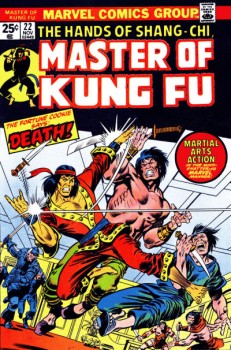
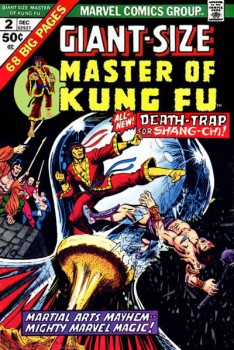
MOKF19Master of Kung Fu #19 was the final issue scripted by Shang-Chi’s creator, Steve Englehart. While the idea of a guest appearance from Marvel’s swamp creature, Man-Thing was an offbeat idea, the issue is more notable for the influence of the television series, Kung Fu. This influence is felt strongest in the philosophical discourse on pacifism conducted throughout the issue by Shang-Chi and his fellow Chinese visitor to  the Everglades, Lu Sun (a character clearly based on Kwai Chang Caine from Kung Fu). Shang-Chi admires the pacifist philosophy but the unremitting pursuit of a pair of Si-Fan assassins, (an Asian and Arab double act known as Jekin and Dahar) make it impossible to put it into practice.

Shang-Chi’s memories are colored by the realization of his father’s immorality. The childhood flashback (a familiar conceit from the Kung Fu television series) employed here serves to underscore the point that as the pieces of the puzzle come together for Shang-Chi, he is left more fragmented than before. This conundrum is one that Steve Englehart was leaving for future issues to build upon.

An intriguing sub-plot sees Sir Denis Nayland Smith and Black Jack Tarr launch an assault on Fu Manchu’s convoy of trucks as he abandons Florida following Shang-Chi’s successful sabotage of his operations in the preceding issue. While the casualties on the side of the Si-Fan are heavy, the mastermind makes his escape in the Everglades leaving Sir Denis facing another hollow victory. The Man-Thing is almost superfluous to the plot, but his position as an unwitting pawn in others’ games mirrors Shang-Chi’s own place as a man who strives for peace on a battleground.

Read More Read More

A Tremendously Disappointing Re-Read: The Soaked-in Misogyny of Piers Anthony’s Xanth

A Tremendously Disappointing Re-Read: The Soaked-in Misogyny of Piers Anthony’s Xanth

Xanth Piers Anthony-small

When my life is super-busy, I tend to reread books that won’t invite my brain to start analyzing to see what I could learn. I reread Edgar Rice Burroughs’ biography, and recently, I thought I’d reread Piers Anthony’s Xanth series.

I first read the first novel, A Spell for Chameleon, in grade six and reread it maybe later in my teens. I remember it being charming and punny, but my memories were pretty dim. I was also wondering if I could recommend it to my 11-year old son after he finished with the Percy Jackson opus.

A Spell for Chameleon is about Bink, a person who lives in the North Village of the land of Xanth, where every plant and animal is magical and every person has a single magical talent, everyone except for Bink. If he doesn’t find out his magical talent, he’ll get kicked out of Xanth upon turning 25.

Read More Read More

Galaxy Science Fiction, June 1953: A Retro-Review

Galaxy Science Fiction, June 1953: A Retro-Review

Galaxy June 1953-smallThe June, 1953 issue of Galaxy didn’t include any serial fiction. If you’re looking for a good issue to read just to get a flavor of Galaxy without any commitment, I’d suggest this one.

“Tangle Hold” by F. L. Wallace — Jadiver’s autobath malfunctions, burning him with steam to the point that he nearly dies. A doctor replaces his skin with a synthetic version, and he’s eventually released from care to continue with his life.

Jadiver used to be a robot designer on Earth, but Earth was too crowded. He moved to Venus two years ago, but his skills aren’t as useful to society — except criminal society. He can design body costumes to change people’s appearances to help them go wherever they want without restriction.

When Jadiver becomes aware that his entire body has been redesigned as a type of surveillance unit for the police, he tries to understand its limitations and how he might be able to escape from the planet.

Wallace’s story has great pacing. There are enough questions to keep readers interested and engaged, and the answers come at the right moments, without being obvious.

“The Water Eater” by Win Marks — The narrator fixes his oil stove and dumps the excess oil into a roaster. To clean the roaster, he combines multiple cleaners together with hot water.

After dinner, he finds that the combination of oil and cleaners has become gelatinous. And it expands when water is added. Not only does it expand, but it tries to reach out toward the source of water to consume more.

The narration of the story works really well. He had a strong voice.

Read More Read More

Adventure in The Old Kingdom: The Minikins of Yam by Thomas Burnett Swann

Adventure in The Old Kingdom: The Minikins of Yam by Thomas Burnett Swann

Minikins_DAW-Small
DAW edition

I am on holiday and, while taking a break from work, am also taking a short break from my ongoing retro review of Jane Gaskell’s Atlan Saga. My growing Books to Read shelf produced two volumes that spoke to me: The Minikins of Yam by Thomas Burnett Swann, and Swords Against Death by Fritz Leiber. The latter has been well reviewed and discussed on the Black Gate blog, but Swann has received a lot less attention.

Thomas Burnett Swann (1928 to 1976) wrote a number of books, essays and short stories during his career, but seems to have been most prolific during his later years. He is an author I have never read before, and I picked up the DAW copy of The Minikins of Yam at a second hand book shop for the huge sum of ZAR12 (about 80 cents).

The cover and age intrigued me and when I glanced at the first three lines: “Egypt. Chemmis. The palace of Pharaoh,” I was hooked. I have always been fascinated with ancient Egypt, and this book spoke to me. While Mr Swann was not familiar to me, he has appeared before in Black Gate, in blog posts about his novels The Weirwoods and Wolfwinter by John O’Neill.

The volume I read is a slim 156 pages and was published by DAW books in 1976, so it may be one of the last books the author saw published in his lifetime. The only later edition appears to have been from Wildside Press in 2013. The DAW edition includes a few internal illustrations by the prolific George Barr, who also did the cover, featuring a near-naked satyr like creature (a minikin) riding an ostrich.

The story commences with the juvenile Pharaoh, Pepy II, in Old Kingdom Egypt, where the lonely young Pharaoh sneaks out each night in disguise to help the poor. Next wee meet the Pharaoh’s father-like friend Harkhuf, an accomplished soldier and adventurer, who has traveled beyond Nubia into the land of Yam in search of a black dwarf, whom the Pharaoh would be pleased to see dance in his court.

Read More Read More

Dark Sleeper by Jeffrey E. Barlough

Dark Sleeper by Jeffrey E. Barlough

oie_265522dm2u1J6BLooking back, I’m not exactly sure what made me buy Dark Sleeper (1998), the first volume of Jeffrey E. Barlough’s ongoing Western Lights series. Perhaps it was the Tim Powers blurb on the front cover, but I’m thinking it was more the Jeff Barson painting of woolly mammoths pulling a coach across a dark, snow swept landscape. Whatever the reason, I’m happy I did, as the book turned out to be a very strange and often funny trip through a weird and fantastical post-apocalyptic alternate reality.

In Barlough’s fictional world the Ice Age never fully ended. With much of its north covered by ice and snow, medieval England sent its ships out around the world looking for new lands. Some of the most successful colonies were planted on the west coast of what we call North America. Devoid of people, it is instead home to great megafauna such as smilodons, megatheres, teratorns, and mammoths.

With great cities such as Salthead and Foghampton (located around the same places as Seattle and San Francisco), the western colonies flourished and expanded. Then, in 1839, terror struck from the heavens: “Then it was a great disaster struck, a tragedy of near-incomprehensible proportions.” Something crashed into the Earth, and almost instantly, all life except in the western colonies, was obliterated and the Ice Age intensified. Now, one hundred and fifty years later, the “the sole place on earth where lights still shine at night is in the west.” For a fuller, more detailed explanation, just go here.

Dark Sleeper opens on a very foggy night; a deliberate homage, I suspect, to the equally mist-shrouded opening of Bleak House.

Fog, everywhere.

Fog adrift in the night air above the river, creeping in through the estuary where the river glides to the sea. Fog curling and puffing about the headlands and high places, the lofty crags and wild soaring pinnacles, fog smothering the old university town in cold gray smoke. Fog squeezing itself into the steep narrow streets and byways, the roads and cart-tracks, into the gutters and shadowy back-alleys. Fog groping at the ancient timbered walls of the houses — the wondrous, secret, familiar old houses — and at their darkened doors and windows, filling the chinks and cracks in the masonry and coaxing the tightly fastened surfaces to open, open.

Not your common ordinary fog but a genuine Salthead fog, drippy and louring…

Read More Read More

Chaosium’s Borderlands: Can Playing RPGs Really Make You a Billionaire?

Chaosium’s Borderlands: Can Playing RPGs Really Make You a Billionaire?

Chaosium Borderlands-small Chaosium Borderlands-back-small

Some of the most treasured possessions in my games library are the boxed adventure supplements published by Chaosium between 1981 – 1986. They include some of the finest adventure gaming products ever made, such as the classic Thieves’ World (1981), Michael Moorcock’s Stormbringer (1981), the brilliant Masks of Nyarlathotep (1984), the Arkham Horror board game (1984), Larry Niven’s Ringworld (1984), the revolutionary King Arthur Pendragon RPG (1985), and H.P. Lovecraft’s Dreamlands (1986).

I bought each as it was released, and over the last 30 years I’ve made a concerted effort to pick up spare (i.e non shrink-wrapped) copies whenever I can find them. I had to give that up about a decade ago, as prices have skyrocketed… copies of many of Chasoium’s early boxed sets in good condition sell for $200 and up these days. A few years back I was lucky enough to find a decent condition copy of Borderlands, an epic campaign for RuneQuest published in 1982, for 40 bucks — a bargain! — and snatched it up. It’s been sitting next to the big green chair where I write all my BG posts ever since, waiting until I have the time to say a few words about it.

Coincidentally, yesterday I stumbled upon a fascinating tidbit at Geek & Sundry that reports that LinkedIn co-founder Reid Hoffman — who recently sold his company to Microsoft, becoming a billionaire in the process — was one of the writers of Borderlands, and in fact was a contributor to Chaosium at a very early age. Here’s the relevant part of the article, written by Ben Riggs and titled “Playing RPGs Can Totally Make You a Billionaire, You Guys.”

Read More Read More

Vintage Treasures: The Collections of Zenna Henderson: The Anything Box and Holding Wonder

Vintage Treasures: The Collections of Zenna Henderson: The Anything Box and Holding Wonder

The Anything Box Zenna Henderson-small Holding Wonder Zenna Henderson-small

I’m not intimately familiar with the work of Zenna Henderson…. but I know she is extremely highly regarded by those who are familiar with her, and that’s pretty telling.

She’s remembered today primarily for her stories of The People, an spacefaring alien race with strange metal powers that covertly settles in the American southwest after the destruction of their home planet. The stories appeared, like most of her short fiction, chiefly in The Magazine of Fantasy & Science Fiction; they were collected Pilgrimage: The Book Of The People (1961), People: No Different Flesh (1966), and in two omnibus volumes, The People Collection (1991) and the NESFA Press book Ingathering: The Complete People Stories (1995).

Much of her other short fiction was gathered in two handsome paperback collections: The Anything Box (1965) and Holding Wonder (1971). Her first published story was “Come On, Wagon!” in the December 1951 issue of The Magazine of Fantasy and Science Fiction, dozens more appeared over the next 30 years, until her death in 1983. Henderson was an elementary school teacher in rural Arizona for much of her adult life, in places as diverse as a “semi-ghost mining town” in Fort Huachuca, and a Japanese internment camp in Sacaton, Arizona, and many of her stories are narrated by elementary teachers. She was a member of The Church of Jesus Christ of Latter-day Saints, although later in life she described herself as Methodist. She never published a novel, which perhaps is why she’s virtually forgotten today.

Read More Read More

Nathan Ballingrud on Robert Marasco’s Burnt Offerings

Nathan Ballingrud on Robert Marasco’s Burnt Offerings

Burnt Offerings-small Burnt Offerings-back-small

A few days ago, I came across this concise review by Nathan Ballingrud, author of North American Lake Monsters and The Visible Filth.

I just finished reading Burnt Offerings, by Robert Marasco. Forty-three years after its publication, it still packs a wallop. Second only to Jackson’s The Haunting of Hill House in my personal pantheon of haunted house novels. Respect to Valancourt Books for bringing it, along with so many other forgotten horror novels, back into print. (Also, check out that beautiful art by Pye Parr, who also did the art for The Visible Filth.)

I wasn’t even aware that Valancourt Books had done a reprint of Marasco’s classic horror novel — but I was very glad to hear it! Two years ago, when I returned from the World Fantasy Convention in Washington, D.C, I wrote about my delight in discovering their magnificent back catalog in the Dealer’s Room, saying:

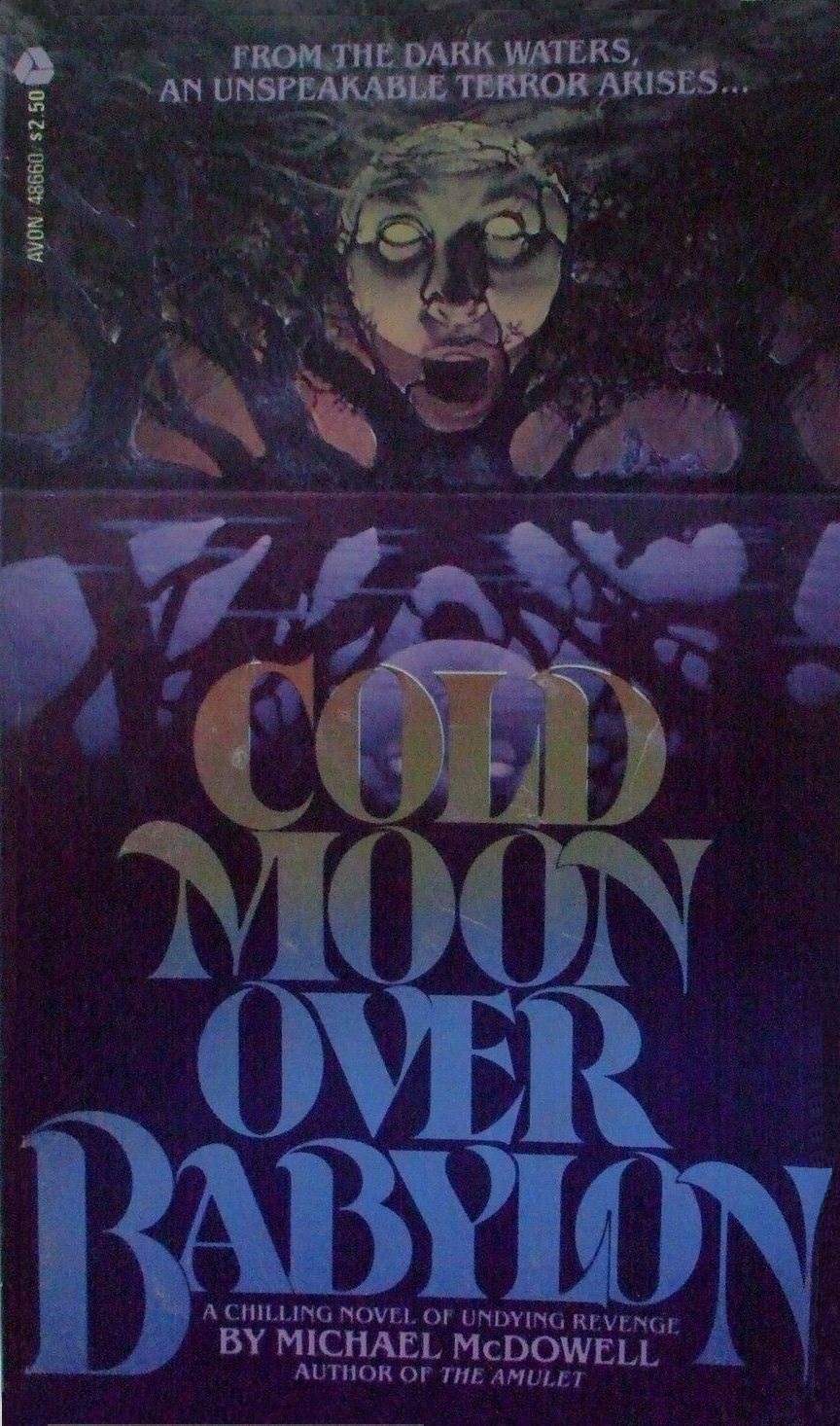
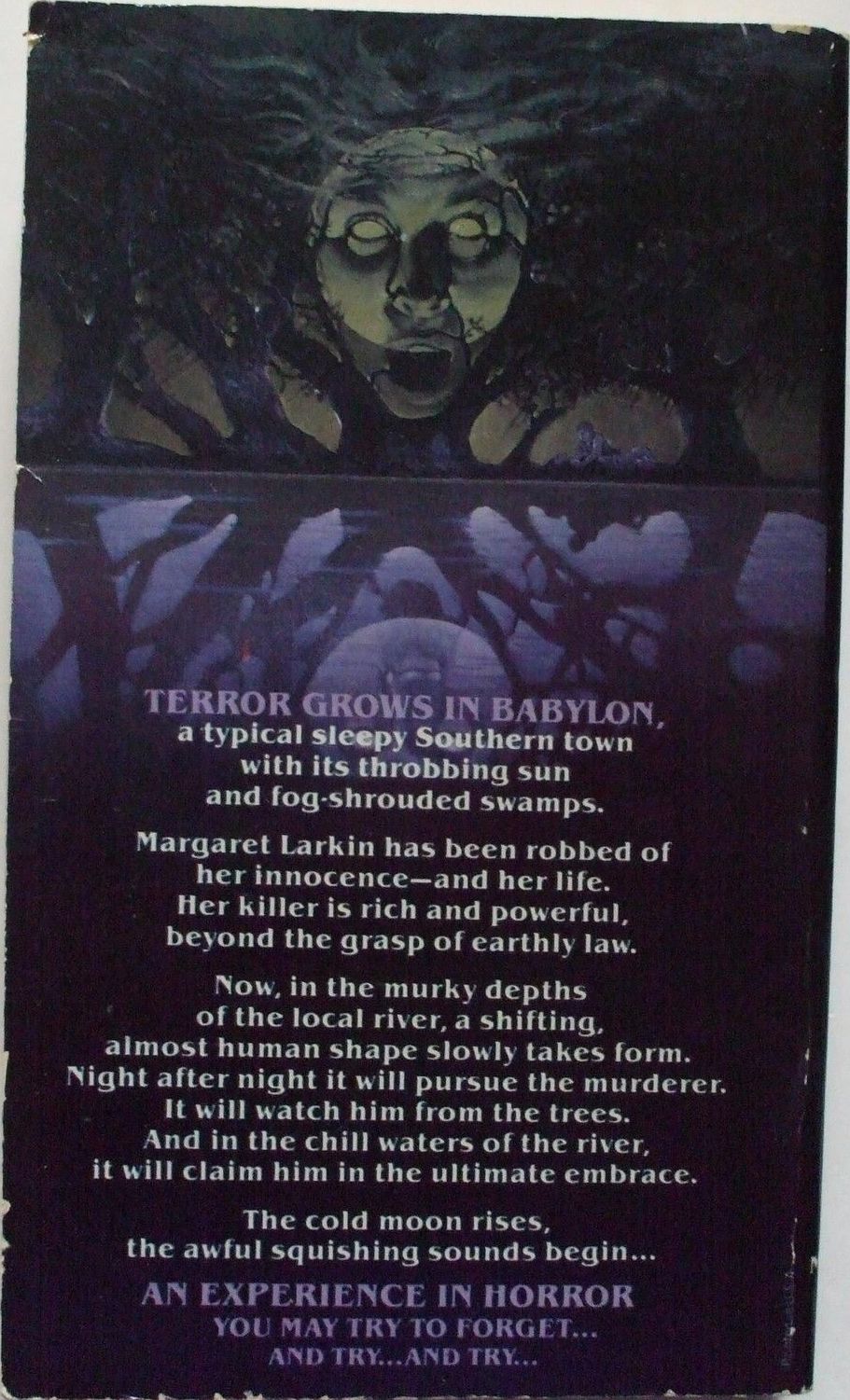
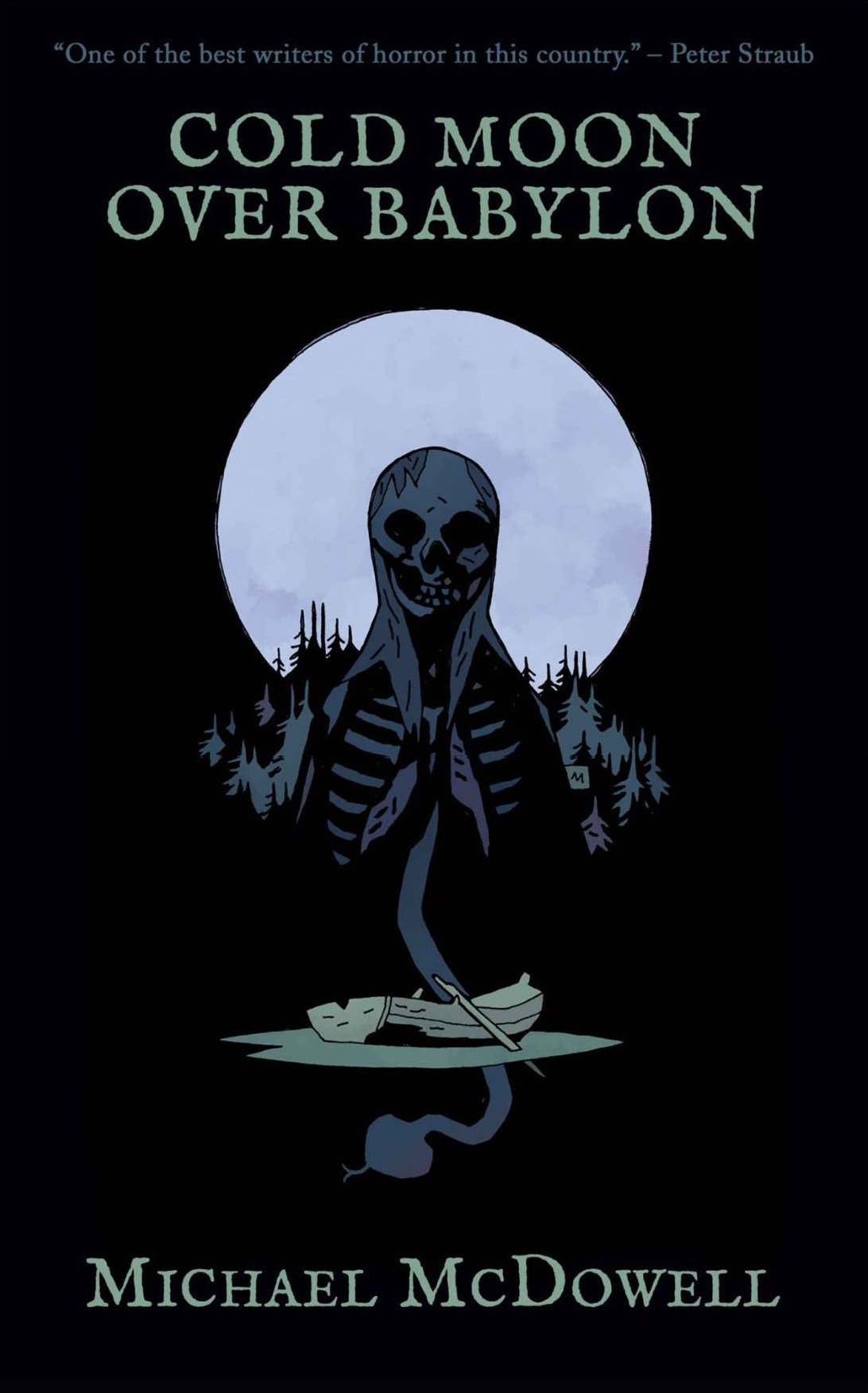
As they proclaim proudly on their website, Valancourt Books is an independent small press specializing in the rediscovery of rare, neglected, and out-of-print fiction… their small table was piled high with dozens of beautifully designed trade paperbacks reprinting long-out-of-print horror paperbacks, chiefly from the 70s and 80s. All it took was one glance to see that Valancourt Books has two significant strengths. First, their editorial team has excellent taste. They have reprinted work by Stephen Gregory, R. Chetwynd-Hayes, Hugh Walpole, Charles Birkin, Jack Cady, Basil Copper, Russell Thorndike, John Blackburn, Michael McDowell, Bram Stoker, and many, many others. And second, their design team is absolutely top-notch. Their books are gorgeous, with beautiful cover art and striking visual design.

Burnt Offerings was originally published in 1973 by Delacorte Press. I ordered the new edition two days ago; it is 230 pages, priced at $14.99 in trade paperback. See the complete details at the Valancourt website.

Who Still Reads 1950s Science Fiction?

Who Still Reads 1950s Science Fiction?

The Heinlein Juveniles-small

Over at his blog Auxiliary Memory, James Wallace Harris has posted a heartfelt and clear-eyed tribute to the science fiction of the 1950s, and asks the question: Is there more to classic SF than mere nostalgia?

Personally, I believe the best science fiction books written in the last twenty-five years are better crafted than the best science fiction written in the 1950s. Now I’m talking about writing, storytelling, characterization, plotting, and all the mechanics of creating a book… So, why bother reading old science fiction at all?… The 1960s seems to be the oldest science fiction that many modern readers discover, with books like Slaughterhouse Five, Dune, A Wrinkle in Time, Stranger in a Strange Land, The Left Hand of Darkness and The Man in the High Castle.

Time is hard on science fiction. It doesn’t age well… The real question is: Are these old science fiction books still readable, still lovable, by later generations who have no nostalgic ties to the past? Who still reads 1950s science fiction?…

The 1950s were strange in that people thought civilization was coming to an end and hoped to expand civilization across the galaxy. What a schizoid dichotomy. And I grasped that as a kid. Maybe that’s the trip that got laid on me that I’m trying to understand. To me, the absolutely best inheritance I received from the 1950s were the Heinlein juveniles I first discovered in 1964, when I was still twelve (the Golden Age of Science Fiction). In fact, all my reading of science fiction feels like it’s been downhill ever since I first read Have Space Suit-Will Travel, Tunnel in the Sky, Time for the Stars, The Rolling Stones, Red Planet, Starman Jones, Farmer in the Sky, Between Planets, Space Cadet, Citizen of the Galaxy, The Star Beast and Rocketship Galileo. There were other young adult SF from the 1950s that I loved; books by Andre Norton, Isaac Asimov, Donald Wollheim, and the whole series from Winston Science Fiction. But the Heinlein twelve were always the pinnacle of SF for me.

Read the complete article (with plenty of gorgeous cover scans) here.