Fantasia 2018, Day 16: The Witch in the Window and Ajin: Demi-Human
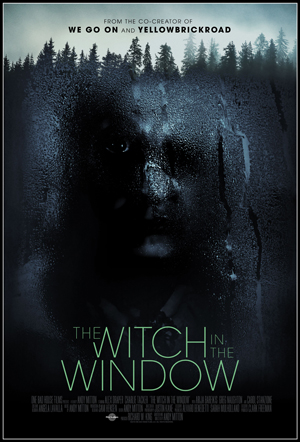 I had two movies to see on Friday, July 29. The first, perfectly fitting the small De Sève Theatre, was The Witch in the Window, a quiet character-centred horror film. The second was another live-action manga adaptation, Ajin: Demi-Human, a fast-paced explosion-oriented semi-super-hero story which fit the larger Hall Theatre as well as The Witch in the Window suited the De Sève. I had certain hopes for both, and in both cases those hopes were wildly exceeded. These are two excellent movies, of very different kinds.
The Witch in the Window is written and directed by Andy Mitton, whose very fine film We Go On I saw two years ago at Fantasia. Like that movie, this is a humanistic and even warm horror film, a personal meditation on fear and death. The Witch In the Window follows Simon (Alex Draper), a divorced father who has bought a house in the Vermont countryside; he plans to fix it up and flip it for a profit. To help him make over the house he brings along his son, 12-year-old Finn (Charlie Tacker). Finn recently slipped his mother’s control online and saw something deeply disturbing, so Simon hopes to bond with him as they work on the house. Finn’s less interested in this, but in any case Simon’s plans have an unexpected complication: the house is, allegedly, haunted, by an old woman who was a previous occupant and died staring out an upper window. As the two work on the house, the presence in the house becomes impossible to ignore. Can either escape the witchery of the spirit?
This is very much a classic haunted house movie, with a definite old-fashioned (but intensely effective) approach. There are no jump scares. There is no gore whatsoever. We are frightened for these characters because we are frightened for these characters. We know them, we care about them, we don’t want to see horror-movie things happen to them. It takes a certain kind of self-assuredness to try to make that sort of horror film, I think, and here it pays off. This is a movie that dares to bring the traditional haunted-house story into the modern day. It doesn’t shy away from cell phones and the internet — in fact, a cell phone’s central to one of the film’s spookiest moments. The movie’s not afraid of the modern world, which is something it embraces in its story, something resonant with its themes: the refurbishing of the old, the evocation and transformation of a spirit.
Note that the cinematography’s accordingly excellent, as it must be: atmospheric yet precise, establishing both age and technology as needed, old wood and power tools and portable lights. There’s a sense of the architecture of the house, of its layout, of its narrowness and shadows. There’s a sense of the forested grounds around it, warm and green yet isolating. The sunlight of Vermont, its moods and angles, is captured so well as to almost be another character. The framing’s unobtrusively correct; the film grammar here is as knowing in its tones as the prose of an M. R. James story. This is a movie confident enough to let some of its most frightening moments (especially early on) happen without drawing attention to them. If you’re observant, you’ll notice certain things in the frame that the characters do not, and as they play out the scene oblivious to the horror watching them the tension grows, and you can only wait, and wait, and wait.
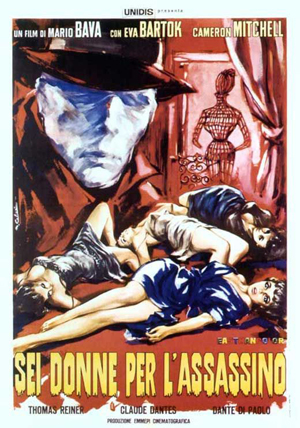 On the evening of Thursday, July 26, I made my way to the Cinémathèque Québécois, well east of the main Fantasia theatres, for a screening of a film classic. Fantasia was presenting Mario Bava’s classic 1964 horror-mystery film Blood and Black Lace (Sei donne per l’assassino). It’s one of the first giallo films, a genre of surreal thriller particularly identified with Italian directors. This was the original 88-minute Italian version, restored by Arrow Films for their recent blu-ray edition of the film.
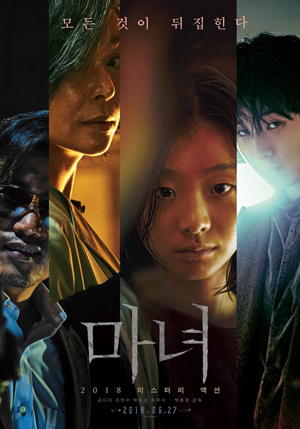 I had two movies on my schedule for Wednesday, July 25. The first was The Witch: Part 1. The Subversion, a Korean action movie with super-hero elements. The second was a German-language Swiss movie called Blue My Mind, about a teenager moving to a new school and finding herself undergoing a strange metamorphosis. Both films were about young women, and both leads had elements of the inhuman to them. But these things were expressed in very different ways.
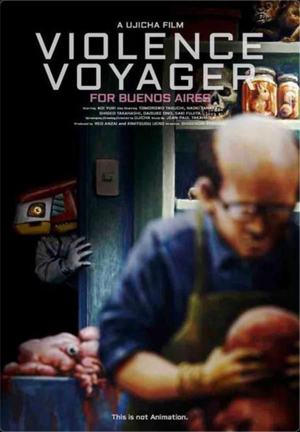 Late in the evening of Tuesday, July 24, I made my way to the J.A. De Sève Theatre for my one film of the day: Violence Voyager, an 83-minute animated feature by Japanese writer-director Ujicha. We follow an American schoolboy in Japan, Bobby (Aoi Yuki), as he and his friend explore some hills near his home. They find a strange, nearly-abandoned amusement park, but upon entering find themselves caught up in a terrible scheme. They and other children are captured, mutilated, mutated, and (in many cases) killed. Can Bobby free himself and others, and destroy the horrible place called Violence Voyager?
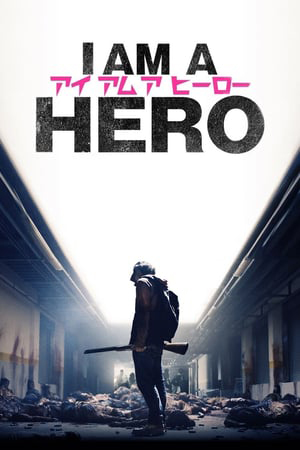
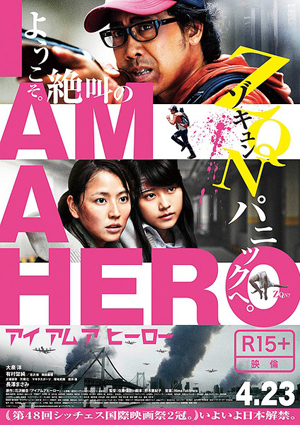 I had three consecutive movies I wanted to watch on July 23. All three came from director Shinsuke Sato, all three were live-action manga adaptations, and all three were followed by question-and-answer sessions with Sato (the first at the De Sève Theatre, the second two at the larger Hall). I’ll write up what he had to say about his films in a separate post tomorrow. Today, my impressions of the movies themselves: the zombie apocalypse thriller I Am a Hero, the supernatural epic Bleach, and the science-fictional super-hero movie Inuyashiki. Note that I have read precisely none of the original works these movies were based on, and can speak only to the films I saw.
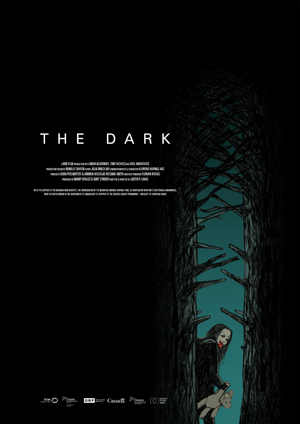 I had four movies on my schedule for Monday, July 23. Three of them were the work of one director. But before I got to those, I had an intriguing horror film at the J.A. De Sève Theatre to watch first: The Dark.