Browsed by
Category: Movies and TV

Art of the Genre: Art of the Iconic Female #5: Princess Leia

Art of the Genre: Art of the Iconic Female #5: Princess Leia

fa832e1c671c8fb5638dadc8425630da-d5lc2cf-industry-reacts-to-star-wars-episode-vii-s-lack-of-womenToday continues the Art of the Genre series on the Iconic Female.  If you’ve missed any of the others, click on the hotlinks to find #1, #2, #3, and #4, and now on to the good stuff!

I was six when Star Wars was initially released.  I did get to see it in the theater, but I more remember the feel of the venue and the oddity of the aliens rather than if I had an emotional attachment to Princess Leia.  I know I must have enjoyed the film because my house quickly filled up with Star Wars figures, posters, and memorabilia, but none of this led to a particular ‘love’ of Leia.  Honestly, the only true memory of Leia I had in those early days was that her very thin and small laser pistol was lost when I tried to put her in Luke’s landspeeder.  To this day, I swear it is still ingeniously stuck inside that toy even though the odds are that it was devoured by my mother’s two inch shag carpeting where the incident occurred.

Nonetheless, Leia didn’t ‘blossom’ for me until the release of Empire Strikes Back, where, like Han Solo himself, I became smitten with her.  By this point, in 1980, I was a precocious nine year-old who was just beginning to truly understand that girls had more to offer than all my friends had previously surmised.  I well remember my Cloud City play-set, and the outstanding Han Solo figure with blue jacket that could stand proudly beside the intricately woven hair of Cloud City Leia.  I’m also pretty sure this was the first time I ever saw a kiss onscreen that didn’t make me look away, so certainly some things were readily changing in my view of this iconic character.
Read More Read More

The Public Life of Sherlock Holmes: The Great Profile (Barrymore) Plays the Great Profile

The Public Life of Sherlock Holmes: The Great Profile (Barrymore) Plays the Great Profile

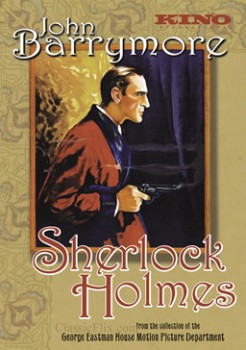
Barrymore_RestoredBack in May, I wrote about Eille Norwood’s turn as the silent film era’s finest Holmes. Now, just about any discussion concerning who the greatest actor of the silent era was will involve the name John Barrymore, who was known as “The Great Profile.”

So, it’s natural that he would make a film about a character that over a hundred years after his creation can still be readily identified by his profile.

By 1922, John Barrymore was an established star in both the US and Great Britain and had made a hugely successful version of Dr. Jekyll and Mr. Hyde just two years before. Actor/director Albert Parker was determined to make a Holmes film with the forty year-old Barrymore in the lead role.

Of course, there was a minor snag, as Stoll Pictures (starring Norwood) had locked up the rights to Doyle’s original stories, with Sir Arthur’s own assistance. So Parker had an actor and an idea, but no script. The man was certainly energetic, and he rushed to Chicago and met with the great William Gillette, who was touring with his own play, Sherlock Holmes (subject of a future post).

Parker bought the rights to film the play (which had already been done in 1916 starring Gillette himself: sadly, no known print exists of that one) and arranged a deal with Samuel Goldwyn. This would easily be the most lavish and well-financed Holmes film to date.

Read More Read More

Hell to Pay: The Devil and Daniel Webster in Print and on Film

Hell to Pay: The Devil and Daniel Webster in Print and on Film

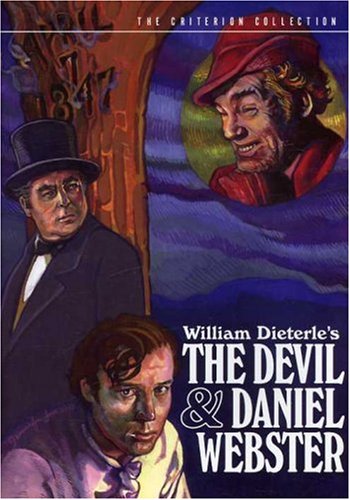
The Devil and Daniel Webster Criterion DVD-smallIs there any place more melancholy than the graveyard of forgotten writers? While the reputations of even major literary figures can wax and wane, for genuinely innovative or influential authors, critical rebounds, if not assured, are at least possible. (Hemingway, anyone?)

But permanent eclipse seems to be the fate of the facile, ambitious middlebrow who was highly popular and overpraised during his or her prime. Once this kind of writer is no longer around to hold the stage with new work, a spell seems to be broken and often a speedy and ruthless (if not embarrassed) re-evaluation occurs, resulting in a quick trip to oblivion and a complete disappearance from the public consciousness. John O’Hara, Dorothy Parker, Irwin Shaw — where are you now? Often it’s not even a matter of an “official” verdict by the critical establishment  — it’s simply that a few years pass and no one reads the writer anymore.

One victim of this kind of reaction was Stephen Vincent Benét. A prolific producer of poetry and fiction from the 1920’s up until his death from a heart attack in 1943, Benét was both highly regarded by critics and popular with the wider public. His epic narrative poem of the American Civil War, John Brown’s Body, won the Pulitzer Prize in 1929, and there was a time when countless readers were familiar with his widely-anthologized story “The Devil and Daniel Webster,” a bit of nostalgic, patriotic Americana that blends history, the tall tale, and the supernatural into a fluent and beguiling concoction.

Published in 1936, “The Devil and Daniel Webster” tells the story of one Jabez Stone, a hard-working but struggling New Hampshire farmer. “He wasn’t a bad man to start with, but he was an unlucky man. If he planted corn, he got borers; if he planted potatoes, he got blight. He had good-enough land, but it didn’t prosper him; he had a decent wife and children, but the more children he had, the less there was to feed them.”

Read More Read More

What Did That Say? Or, When is a Subtitle not a Subtitle?

What Did That Say? Or, When is a Subtitle not a Subtitle?

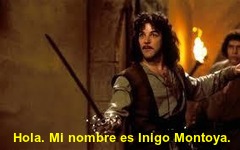
InigoLately I’ve had some experiences with subtitles that worry me a little. Here’s my problem: just what is it that’s being subtitled, and is there any way for us to know whether we’re missing something?

Usually when I’m watching a movie with subtitles, it’s in a language I have some grip on, like French or Italian. The subtitles are there to help me when the dialogue is too fast, or perhaps too colloquial, for me to follow it directly (though that in itself might be one of the problems, as we’ll see in a minute).  There’s only one thing I watch where I don’t have any real clue on the language, and that’s Japanese anime.

The thing is, I’ve always been a big fan of subtitles over dubbing. I prefer to hear the actors’ own voices – I know how important voice can be, and I figure actors are cast for that as much as for any other quality. Tone is also something it’s virtually impossible to translate. But now, having seen some of the stuff I’ve seen, I’m not so sure I wouldn’t be better off watching a dubbed version.

The only dubbed films or TV shows I regularly watch are dubbed in Spanish, and I do that so my ear doesn’t lose its facility with the language through long periods of disuse. I never use the English subtitles, first, because the whole point is for me to concentrate and follow the Spanish; and second, because, as a reader, my eye is always drawn first to the written word, and I’d be wasting my practice time reading the subtitles instead of listening. Though, I might cheat a bit by watching a movie or an episode first in English, so I can concentrate on the vocabulary rather than on the plot.

Read More Read More

Adventure On Film: Invasion Of the Body Snatchers

Adventure On Film: Invasion Of the Body Snatchers

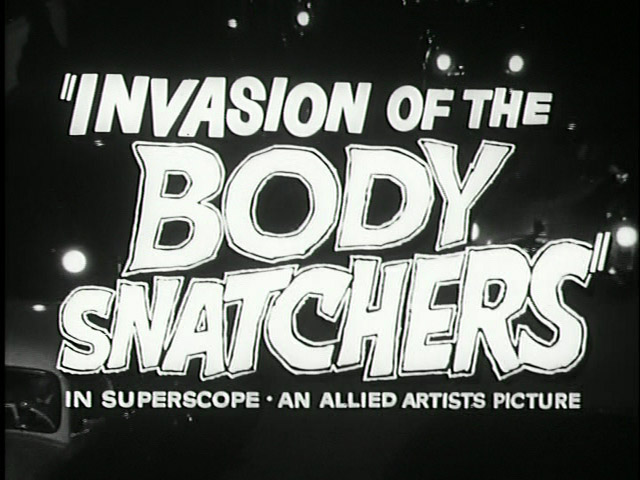
They’re here already! You’re next!snatchers

Now that’s the voice of paranoia if ever I heard it, but those final lines from the original Invasion Of the Body Snatchers (1956) still ring true today. In this increasingly digitized, on-camera, drone-filled world, how could they not?

Having already seen the atmospheric 1979 remake (directed by Phillip Kaufman), I fully expected the original Invasion to be clunky, loaded with lousy actors, and filmed by some dim-witted amateur with no understanding of cinematic composition. Imagine my surprise: Invasion is genuinely unsettling, well acted, and maintains a taut, fearless pace throughout.

The aces up its sleeve? Director Don Siegel, for one, and screenwriter Daniel Mainwaring, whose take-no-prisoners script delves deeply into the twin human terrors of identity and sleep.

Read More Read More

Take A Walk Among the Tombstones

Take A Walk Among the Tombstones

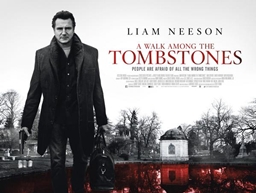
WalkTombstonesOn September 19, Liam Neeson’s latest blockbuster, A Walk Among the Tombstones, opens in theaters nationwide. Neeson plays Matthew Scudder, an ex-cop who is an off-the-book private investigator and a recovering alcoholic.

Scudder has starred in seventeen novels dating back to 1976 and a bunch of short stories, all written by Lawrence Block. Tombstones is actually the tenth book in the series, so they’re starting well into things.

Jeff Bridges had played Scudder in Eight Million Ways to Die (the fifth book), moving the story to California(!) and making him a sheriff’s deputy (Hollywood!)

Block, who I mentioned in this post, is a fantastic writer. Along with Scudder, he has written series starring an adventurer who can’t sleep (Tanner), a bookstore owning burglar (Bernie Rhodenbarr), a lawyer who will do anything to win a case (Martin Ehrengraf), a likeable hit man (Keller), and a humorous Nero Wolfe/Archie Goodwin-esque pair (Leo Haig and Chip Harrison). And he’s one of the finest short story writers I’ve run across. Enough Rope is a superb collection of his short fiction.

Read More Read More

Goth Chick News: The Zombie Apocalypse Spreads to a $100K Kickstarter Campaign

Goth Chick News: The Zombie Apocalypse Spreads to a $100K Kickstarter Campaign

image006Here in the underground offices of Goth Chick News, the only thing we appreciate more than a blended, adult beverage is an independent film; more specifically, an independent horror film.

So guys like Wyatt Weed from Pirate Pictures and Roze (who like all icons goes by one name only) are serious heroes around here.  And though the whole Pirate Pictures crew have been Black Gate regulars for some time, Roze wasn’t slated to make an appearance until early next year.

If you aren’t familiar with his work, Roze is an Arizona-based writer/director with a passion for the macabre. Roze and his wife Candace co-founded the independent production company Gas Mask Films, which made its debut in 2006 with Denial, a short film screened at the Cannes Film Market Short Film Corner. In 2008, the feature-length film Deadfall Trail was shot and produced entirely in Arizona for less than $80,000. After the success of Deadfall Trail, Gas Mask Films went on to produce the feature horror film, Speak No Evil, slated for wide release by Lions Gate in 2015.

And 2015 is when we expected to tell you about Roze — that is until he floated over an idea that was just too perfect not to pass along.

Read More Read More

The Public Life of Sherlock Holmes: The Mystery Holmes

The Public Life of Sherlock Holmes: The Mystery Holmes

Bragington_JI mentioned in my post on silent film Sherlock Eille Norwood that all of his films are preserved on safety stock at the British Film Institute (BFI). I’m sure that some of my British Holmesian friends have viewed a few of these. I have a couple of terrible quality episodes on VHS.

Unfortunately, there are no known surviving copies of several Holmes films and television episodes. This includes Arthur Wontner’s The Missing Rembrandt from 1932 and episodes of the sixties BBC tv series starring both Douglas Wilmer and Peter Cushing.

Number nine on the BFI’s ’75 Most Wanted List’ of missing films is A Study in Scarlet, from 1914.

Last week, the BFI started an international hunt for this missing piece of Sherlock history with an essay titled, “Who Can Solve the Mystery of the Missing Sherlock Holmes Film?”

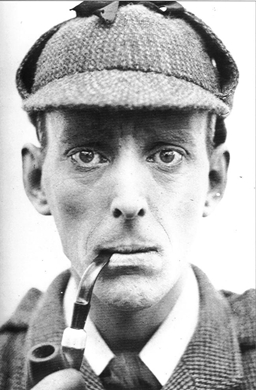
Peter Haining’s The Sherlock Holmes Scrapbook reprints a story from the June 12, 1965 Evening Mail with the title, “The Case of the Unknown Sherlock.It was accompanied by this picture.

Read More Read More

My Fantasia Festival Wrap-up

My Fantasia Festival Wrap-up

Fantasia 2014As I write this, I’m preparing for a vacation in the country. It’s an odd thing, in that the past three weeks have been a kind of vacation in themselves, as thanks to John O’Neill here at Black Gate and to the Fantasia staff, I was able to cover this year’s edition of the Fantasia International Film Festival. Still, watching (by my count) thirty-nine movies and writing about all of them was quite a project. Fun, though. I thought I’d take a quick post to wrap up my coverage by talking about what I’ve learned from the experience.

First, an observation: the other day, Montreal’s venerable Festival des Films du Monde put up a press release on their site which, so far as I can see, states that they’ll be showing 160 features and about 190 shorts in this year’s edition of their festival. The Fantasia festival that I’ve been covering also had 160 features this year, along with 300 shorts. Fantasia, established 1996, is at least for this year larger than the Festival des Films du Monde, making it the largest film festival in Montreal. I have no idea how the audience figures break down between the two festivals, but I know people at Fantasia were pleased to announce that they’d had an attendance of over 128,000 by Tuesday. All of which is just to say that this festival is vigorous and growing, a testament to the strength of genre filmmaking around the world.

And another observation: about a dozen years ago, I taught a college-level film course. I already knew a certain amount about film, but I educated myself a fair bit more, learning about film history and technique. Now, like I said, that was a dozen years ago. And I haven’t made an especial effort to keep up. But here’s the thing about film: it’s a young medium and changes fast. I spend a lot of my time, here and elsewhere, engaged with literature — which, in the West, has over 3000 years behind it. Film has about 120. Which is to say that when I say I studied film a dozen years ago, that’s a tenth of the total time that the medium’s been around. And I suspect there’s a disproportion in the amount of activity in the medium during that dozen years: digital cameras have made filmmaking easier, and more countries have developed film industries of their own. In a way, these past weeks at Fantasia have re-educated me about film, bringing me face-to-face with the reality of where cinema is now.

Read More Read More

My Fantasia Festival, Days 21 and 22: Kundo: Age of the Rampant and The Midnight Swim

My Fantasia Festival, Days 21 and 22: Kundo: Age of the Rampant and The Midnight Swim

KundoI closed out this year’s Fantasia film festival with a movie on Wednesday and another on Thursday. Together they seemed to say something about the festival, in that they had virtually nothing in common. They’re from different countries, they’re different genres of film, they have wildly different budgets — and yet somehow they both seem to belong at Fantasia. Unsurprisingly, one played the big Hall Theater, while the other screened at the small De Sève.

The first was Kundo: Age of the Rampant, a Korean period adventure movie set in the late Joseon Dynasty. It’s a box-office sensation in Korea, where it outdrew the opening of Guardians of the Galaxy. Then last night I saw my last Fantasia film of the year, The Midnight Swim. It has touches of horror, but I think is really an artful fantasy about three sisters coping with their mother’s death. It was a very strong work, and a great note on which to end Fantasia.

But let’s first look at Kundo. Directed by Yoon Jong-bin, it was written by Yoon and Jeon Cheol-hung. In the late nineteenth century, crops are failing and starvation looms, exacerbated by corrupt officials and greedy nobles. But a group of outlaws give hope to the people as they rob from the rich and give to the poor (and indeed among those outlaws there is a very strong man, one woman, and a monk; so for some of us this is not entirely unfamiliar narrative territory). A young butcher, Dolmuchi (Ha Jung-woo) joins up with the bandits when he refuses to take part in a political intrigue, resulting in agents of a nobleman’s bastard (Jo-Yoon, played by Kang Dong-won) killing his family. There’s a nation to be saved and revenge to be had.

Read More Read More