Browsed by
Category: Pulp

Selling Philip K. Dick

Selling Philip K. Dick

the-simulacra-philip-k-dickAlmost exactly a year ago this weekend I was in downtown Chicago, selling books and Black Gate magazines at the Printer’s Row book fair. It was hot and I got sunstroke, and I had to cancel dinner plans with the charming and beautiful Patty Templeton. Stupid, stupid sunstroke.

But I learned something fascinating. Well, two fascinating things. The second was that no one wants print fiction magazines anymore. I can’t tell you how many people picked up copies of Black Gate 15, dazzled by the look and heft of the thing, asking “What is this?” The moment they learned it was a magazine, they put it down and wandered over to the booth selling travel books.

But the first fascinating thing I learned is that vintage Philip K. Dick paperbacks sell at almost any price.

I learned this mostly by accident. I had a few hundred recently-acquired vintage paperbacks bagged up, but didn’t have time to price them. The night before the show they were spread out in stacks on our bed, all with cheerful blank price stickers, and Alice was threatening to sleep on the couch.

So I just priced them at random. Most I listed at 2 – 3 bucks, occasionally as high as 10. When I got to the more valuable stuff, like the Philip K. Dick , I wrote “$35” on most of ’em, even the stuff I’d only paid a buck or two for. I figured I’d do my homework and re-price everything that didn’t sell later.

Instead, I sold all the Philip K. Dick in less than two days.

Obviously, this was an unusual test case. For one thing, this wasn’t an SF convention and my buyers generally weren’t science fiction readers. They were book collectors who knew just enough about Philip K. Dick to know he’s in demand. There was a lot of impulse buying, and hardened rare book collectors are maybe less reluctant to fork over $30 – $40 on impulse than a typical SF reader.

Still, it was very educational. Dick was one of the only authors browsing customers frequently asked about (the others were Samuel R. Delaney and Ursula K. LeGuin), and if I could put a book in their hands, it was a short step to a sale. It didn’t hurt that many of his paperbacks look terrific, like the Emsh cover on the 1964 Ace edition of The Simulacra, above.

I don’t sell much anymore, but I do have two tables reserved for Chicon 7, the World Science Fiction convention coming up this Labor Day here in Chicago. In preparation, I’ve been accumulating as many Philip K. Dick titles — and other vintage SF paperbacks — as I can find. eBay is one fertile hunting ground, especially if you’re willing to buy larger lots. Last week I purchased lots containing The Simulacra and Dr. Bloodmoney (plus 10 other mixed SF paperbacks) for $6.05 each. I’m pretty sure I can re-sell the Dick titles alone for a lot more than that.

Just how much more remains to be seen. I’ll let you know after Chicon.

Vintage Treasures: TSR’s Amazing Science Fiction Anthologies

Vintage Treasures: TSR’s Amazing Science Fiction Anthologies

amazing-the-wonder-yearsD&D publisher TSR generally gets a bad rap for their brief venture into science fiction in the 1980s. Much of their D&D related fiction — especially the Weis and Hickman DragonLance novels, which launched their entire publishing line — is still remembered fondly today. But does anybody remember Martin Caidin’s Buck Rogers novel, or Martin H. Greenberg’s Starfall anthology?

Nope.

Which is a shame. At one point — riding high on the success of the DragonLance books — TSR claimed it was the largest publisher of SF and fantasy titles in the nation, and it sure looked that way whenever I walked into a bookstore. There were literally racks of the stuff: DragonLance books, Forgotten Realms books, Dark Sun novels, Birthright novels, SpellJammer novels, Greyhawk books, Ravenloft novels, Planescape novels… and on and on and on.

If you were a serious genre reader in the late 80s, you gradually trained your eyes to ignore it all as you scanned the shelves for anything new and original.

What many of us never knew — because they were hidden alongside all their gaming fiction — was that TSR published dozens of new and original SF and fantasy novels, unconnected to any of their gaming fiction, including bestselling author Sharyn McCrumb’s famous science fiction pastiche Bimbos of the Death Sun (1987), Paul B. Thompson and Tonya C. Cook’s Red Sands (1988), Ardath Mayhar and Ron Fortier’s Monkey Station (1989), Robin Wayne Bailey’s Nightwatch (1990), and many others.

They also discovered several major authors, publishing Nancy Varian Berberick’s first novel The Jewels of Elvish (1989), Nick Pollotta’s first novel Illegal Aliens (written with Phil Foglio, 1989), and first novels from L. Dean James, Chrys Cymri, K.B. Bogen, and others.

But my favorite books published by TSR during this period weren’t novels at all. They were five anthologies collecting stories from the pulp days of Amazing Stories, edited by Martin H. Greenberg.

Read More Read More

Christopher Paul Carey on Gods of Opar: Tales of Lost Khokarsa

Christopher Paul Carey on Gods of Opar: Tales of Lost Khokarsa

gods-of-opar2In July 2005, I was alerted to an amazing find: the partial manuscript and detailed outline to Philip José Farmer’s third Khokarsa novel had been located among the author’s files.

At the time, I was serving as editor of Farmerphile, an authorized, digest-sized magazine devoted to bringing into print rarities and previously unpublished material by Farmer, and so naturally I had been contacted by the magazine’s publisher, Michael Croteau, when the new Khokarsa material turned up.

I was a huge fan of the original two books in the cycle — Hadon of Ancient Opar (1974) and Flight to Opar (1976) — considering them to be at the highest tier of Farmer’s adventure fiction, and it was with quivering fingers that I typed a reply to Mike’s email and requested a copy of the pages. When the photocopies promptly arrived, I was astounded. Here on an epic scale was the entire arc of what Farmer had planned for the third novel of the series, minus a few finishing touches where he had speculated on alternate courses for the story’s finale.

What’s more, the novel didn’t star Hadon, the duty-bound protagonist of the first two installments, but rather Hadon’s giant cousin Kwasin in all his larger-than-life stature — the wild, unrestrained antihero of the series, who was last seen on stage in Hadon of Ancient Opar, swinging his massive ax of meteoritic iron against impossible odds to give Hadon and his companions a chance to escape the forces of the power-hungry King Minruth.

It was a story that I instantly knew needed to be told — the conclusion to a trilogy for which Farmer’s fans had been waiting almost thirty years.

Read More Read More

New Treasures: The Sword & Sorcery Anthology

New Treasures: The Sword & Sorcery Anthology

the-sword-sorcery-anthology2We announced The Sword & Sorcery Anthology was shipping last week, but I’m glad to report that I now have it in my hot little hands.

And it looks gorgeous. It’s 480 pages in thick, oversize paperback, and sits nicely in my lap as I recline in my big green chair. Where it will remain for much of the rest of the weekend, I think.

In fact, I have two copies, courtesy of co-editor and publisher Jacob Weisman. I was going to add it to the list of titles that go out regularly to our dedicated team of freelance reviewers, but maybe I’ll just give it to the first one that asks for it. Or maybe I’ll encase it in plastic and carefully bury it in a time capsule in my back yard. Future generations with thank me (assuming they can figure out what a book is).

David Drake’s introduction notes that while two stories in this book originated in Weird Tales — the magazine that gave birth to Sword & Sorcery — three come from the legendary small press magazine Whispers, edited by Stuart David Schiff from 1973 to 1987. Drake was the assistant editor for Whispers starting with the second issue; his musings on the authors and fiction included in this volume are fascinating.

Other sources include Swords Against Darkness, Science Fantasy, Fantastic and Asimov’s SF magazines, Marion Zimmer Bradley’s Sword & Sorceress anthologies, Orbit 2, and such recent books as Eclipse Three (2009), edited by Jonathan Strahan, and Strahan and Lou Anders 2010 anthology Swords & Dark Magic.

Two pieces — Michael Shea’s new Nift the Lean story “Epistle from Lebanoi,” and Michael Swanwick’s “The Year of the the Three Monarchs” — are original to this volume.

The Sword & Sorcery Anthology was edited by David G. Hartwell and Jacob Weisman. The cover is is by Jean Sebastien Rossbach. It is published by Tachyon Publications, and priced at $15.95 for the print version and $10.95 in digital format. More complete details are here, and the complete Tables of Contents is here.

One Week Left to Win a copy of Thunder in the Void from Haffner Press!

One Week Left to Win a copy of Thunder in the Void from Haffner Press!

thunder-in-the-voidWe’ve received some great entries in our Thunder in the Void giveaway, which we announced last week. Here are some that came in today:

  • Midnight in the Robot Graveyard
  • The Cult of the Broken Sun
  • Message from the Haunted Asteroid

Doesn’t that sound like fun? You could be part of it — all you have to do is submit the title of an imaginary Space Opera story.

What’s at stake is the latest archival quality hardcover from Haffner Press, Thunder in the Void, a massive collection of 16 Space Opera tales by Henry Kuttner. The most compelling title — as selected by a crack team of Black Gate judges, renowned experts in quality pulp fiction all — will receive a free copy, complements of Haffner Press and Black Gate magazine.

Thunder in the Void gathers classic pulp fiction from Planet Stories, Weird Tales, Super Science Stories, and even rarer sources, including “War-Gods of the Void,” “Raider of the Spaceways,” “We Guard the Black Planet,” “Crypt-City of the Deathless Ones,” and the previously unpublished “The Interplanetary Limited.”  Most appear here in book form for the first time.

One submission per person, please. Submissions must be received by May 31st, 2012. Winner will be contacted by e-mail, so use a real e-mail address maybe. All submissions must be sent to john@blackgate.com, with the subject line Thunder in the Void, or something obvious like that so I don’t randomly delete it.

All entries become the property of New Epoch Press. No purchase necessary. Must be 12 or older. Decisions of the judges (capricious as they may be) are final. Employees of New Epoch Press are ineligible to enter. Not valid where prohibited by law. Or anywhere postage for a hefty hardcover is more than, like, 10 bucks. Seriously, this book is heavy and we’re on a budget.

Thunder in the Void is 612 pages in high-quality hardcover format, with an introduction by Mike Resnick and a cover price of $40. Cover art is by Norman Saunders. It is available directly from Haffner Press.

The Sword & Sorcery Anthology Now on Sale

The Sword & Sorcery Anthology Now on Sale

sword-and-sorcery-anthologyOne of the year’s most anticipated books has arrived — a few days ahead of its official June 1 publication date.

The Sword & Sorcery Anthology, edited by David G. Hartwell and Jacob Weisman, is now on sale. This massive 480-page tome contains classic S&S tales from the writers who created the genre — including C. L. Moore, Fritz Leiber, Robert E. Howard, Poul Anderson, Karl Edward Wagner and Michael Moorcock — as well as modern masters such as Charles R. Saunders, Glen Cook, George R. R. Martin, Jeffrey Ford, and Caitlín R. Kiernan.

It also includes “Epistle from Lebanoi,” an original tale by Michael Shea, author of the classic Nifft the Lean, and “The Year of the Three Monarchs,” a new story by Michael Swanwick.

The early reviews have already been filled with praise, including this one from Publishers Weekly:

Hartwell and Weisman have selected some of the best short-form work in the genre… This is an unbeatable selection from classic to modern, and each story brings its A game.

With an introduction by David Drake, “Storytellers: A Guided Ramble into Sword and Sorcery Fiction” and a tantalizing assortment of stories I’m unfamiliar with — including “Gimmile’s Song” by Charles R. Saunders, “Soldier of an Empire Unacquainted with Defeat” by Glen Cook, “Six from Atlantis” by Gene Wolfe, and “Path of the Dragon” by George R. R. Martin — this ones leaps right to the top of my want list.

The Sword & Sorcery Anthology is published by Tachyon Publications, and priced at $15.95 for the print version and $10.95 in digital format. More complete details are here, and the complete Tables of Contents is here.

Blogging Austin Briggs’ Flash Gordon, Part Two – “Freeland”

Blogging Austin Briggs’ Flash Gordon, Part Two – “Freeland”

9665211flash-gordon-volume-2“Freeland” was the second installment of Austin Briggs’ Flash Gordon daily comic strip serial for King Features Syndicate. Originally published between February 24 and August 21, 1941, “Freeland” was the second story in the daily companion to Alex Raymond’s celebrated Sunday strip. It is the second of two Briggs strips available in a reprint collection from Kitchen Sink Press.

“Freeland” gets underway with the ship bearing our motley crew making its way toward the Promised Land free from Ming. Flash and Dale set out in a rocketship to scout for a safe harbor and encounter a hostile tribe of what appear to be Native Americans.

Once more, Austin Briggs demonstrates his version of Mongo is more attuned to contemporary American experience or American history than the prehistoric or Medieval Europe model chosen by Alex Raymond. Briggs may also be borrowing a page from Edgar Rice Burroughs (one of Raymond’s primary inspirations) in transplanting Native Americans to another world.

Read More Read More

The Nightmare Men: The Good Inspector

The Nightmare Men: The Good Inspector

jrlegrasseLike Van Helsing before him, Inspector John Raymond Legrasse has only had one canonical appearance: HP Lovecraft’s seminal “The Call of Cthulhu”. But like the Dutch professor, the Creole Inspector has continued on past the end of his own story, popping up here and there, stubbornly inserting himself into the arcane worlds of others, most notably those of CJ Henderson.

Described as a “commonplace looking middle-aged man”, Legrasse is a man devoted to duty and possessed of an unshakeable resolve, despite his unassuming appearance. This resolve pitches him into conflict with the servants of one of Lovecraft’s most enduring creations, Cthulhu. Legrasse’ part in “The Call of Cthulhu” is a minor one, but its reverberations reach far, especially when one considers how much a template ‘The Tale of Inspector Legrasse’ is for the modern occult detective story.

Read More Read More

William Patrick Maynard’s The Terror of Fu Manchu

William Patrick Maynard’s The Terror of Fu Manchu

the-terror-of-fu-manchu2We’re a talented group here at Black Gate. Every time I drop a pencil someone on staff publishes a book. Last week I spilled a pencil case, and Scott Taylor announced a nine-volume fantasy series.

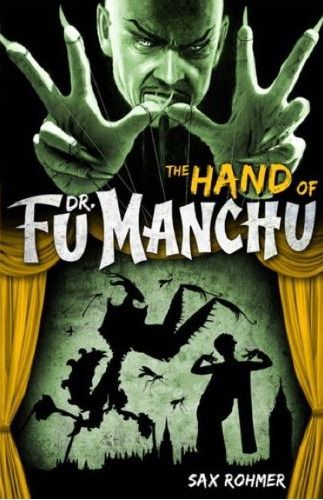
I was especially pleased to get my hands on the first novel by Friday blogger William Patrick Maynard, The Terror of Fu Manchu, published in 2009 by Black Coat Press. Bill was authorized to continue Sax Rohmer’s Fu Manchu thrillers and the second volume, The Destiny of Fu Manchu has just appeared, also from Black Coat Press.

I met Bill for the first time at the Windy City Pulp and Paper show two weeks ago here in Chicago, and found him to be an intelligent and entertaining conversationalist. I was fortunate to have the chance to ask him about his novels, and I was treated to an enthusiastic and fascinating lecture on the Boxer Rebellion, the psychology of Yellow Peril novels, and the uniquely global evil of Fu Manchu.

It was one of those moments when you wish you had a recorder. After listening to Bill I was more intrigued than ever to read his novels, and I wished I had a way to share his infectious enthusiasm with our readers.

Eventually I asked Bill to recreate what he told me as best he could in an e-mail message, to post here.

He graciously complied, and here’s what he sent me.

Read More Read More

Win a copy of Thunder in the Void from Haffner Press!

Win a copy of Thunder in the Void from Haffner Press!

thunder-in-the-voidContests! I love contests. It’s because we love to give away stuff, like Santa Claus.

In this case, it’s stuff you really, really want: the latest archival quality hardcover from Haffner Press, Thunder in the Void, a massive collection of 16 Space Opera tales by Henry Kuttner. It’s scarcely been on sale two weeks, and it’s already almost sold out, so act fast.

Thunder in the Void gathers classic pulp fiction from Planet Stories, Weird Tales, Super Science Stories, and even rarer sources, including “War-Gods of the Void,” “Raider of the Spaceways,” “We Guard the Black Planet,” “Crypt-City of the Deathless Ones,” and the previously unpublished “The Interplanetary Limited.”  Most appear here in book form for the first time.

How do you win? Now pay attention, this is the fun part. You must submit the title of an imaginary Space Opera story. The most compelling pulp title — as selected by a crack team of judges including Howard Andrew Jones, C.S.E. Cooney, and John O’Neill — will receive a free copy of Thunder in the Void in the mail, complements of Haffner Press and Black Gate magazine.

One submission per person, please. Submissions must be received by May 31st, 2012. Winner will be contacted by e-mail, so use a real e-mail address maybe. All submissions must be sent to john@blackgate.com, with the subject line Thunder in the Void, or something obvious like that so I don’t randomly delete it.

All entries become the property of New Epoch Press. No purchase necessary. Must be 12 or older. Decisions of the judges (capricious as they may be) are final. Employees of New Epoch Press are ineligible to enter (including the judges — sorry, Howard and C.S.E.) Not valid where prohibited by law. Or anywhere postage for a hefty hardcover is more than, like, 10 bucks. Seriously, this book is heavy and we’re on a budget.

Thunder in the Void is 612 pages in high-quality hardcover format, with an introduction by Mike Resnick and a cover price of $40. Cover art is by Norman Saunders. It is available directly from Haffner Press.