Browsed by
Category: New Treasures

Weird Sea Adventures: A Review of the Archipelago Kickstarter Reward Magazine
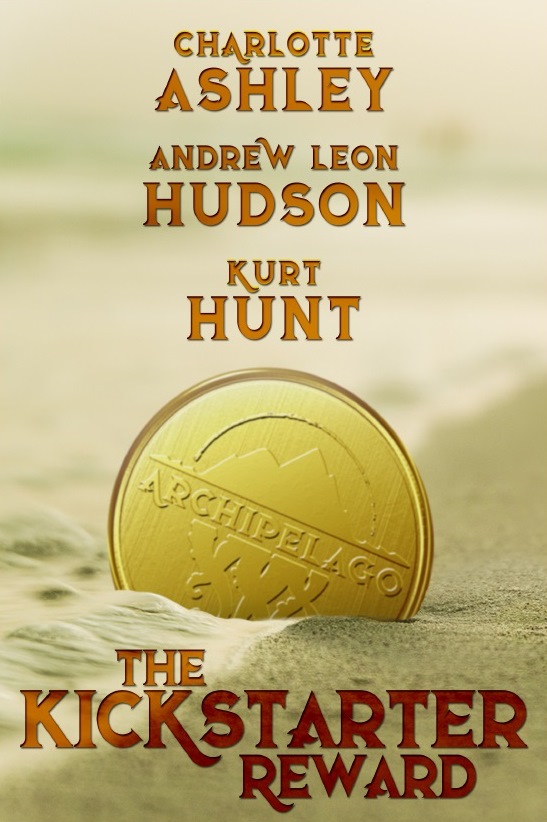
Weird Sea Adventures: A Review of the Archipelago Kickstarter Reward Magazine

ArchipelagoReward_small
Click image to enlarge

First there was the Weird Tale, which hit the mark. Then there was the Weird Western, which hit the mark for many, but not all. Now there is the Weird Sea…

The advent of Archipelago came to my attention on Black Gate via Brandon Crilly’s post post earlier this year, which included some cool art and a teaser story – “The Ur-Ring” by Charlotte Ashley.

As a longstanding fan of maritime literature, specifically the Richard Bolitho stories by Alexander Kent (pseudonym of Douglas Reeman) and C.S. Forrester’s Hornblower stories, my ears figuratively pricked up when I saw Brandon’s article. Maritime adventure combined with fantasy… what more could one ask? Hmm, a Cylon Base Star perhaps, but we won’t go there…

For those who haven’t read Brandon’s original post, the basic premise of Archipelago is that of a Shared World, where people from earth’s 17th century have come across various ocean based portals to another world. To quote the Kickstarter:

Four hundred years ago, when control of the world came to depend on naval power as never before, a courageous few set off on journeys of discovery and conquest that would alter the fates of nations in ways no-one could imagine.

But once they’d sailed the seven seas, what if they found another?

ARCHIPELAGO is a historical fantasy serial with multiple new episodes appearing every month. Imagine a blend of Moby Dick, Pirates of the Caribbean, Master & Commander and Game of Thrones — with Lovecraftian monsters lurking beneath the surface!

Looking at the Archipelago Kickstarter it became evident that they did not require a massive contribution, more just seed funding to get their project going. The rewards were interesting, insofar as one could — as was a common practice way back in the British military establishment — purchase a commission. The difference being that instead of buying a rank in the navy, one could purchase a custom mention in a future story, which I thought was pretty cool. As they state it:

Archipelago isn’t just about storytelling, though. Readers will have the opportunity to influence events as the adventure develops, sometimes in subtle ways, sometimes devastating.

I was hooked and proceeded to participate in the Kickstarter.
Read More Read More

Future Treasures: Ka by John Crowley

Future Treasures: Ka by John Crowley

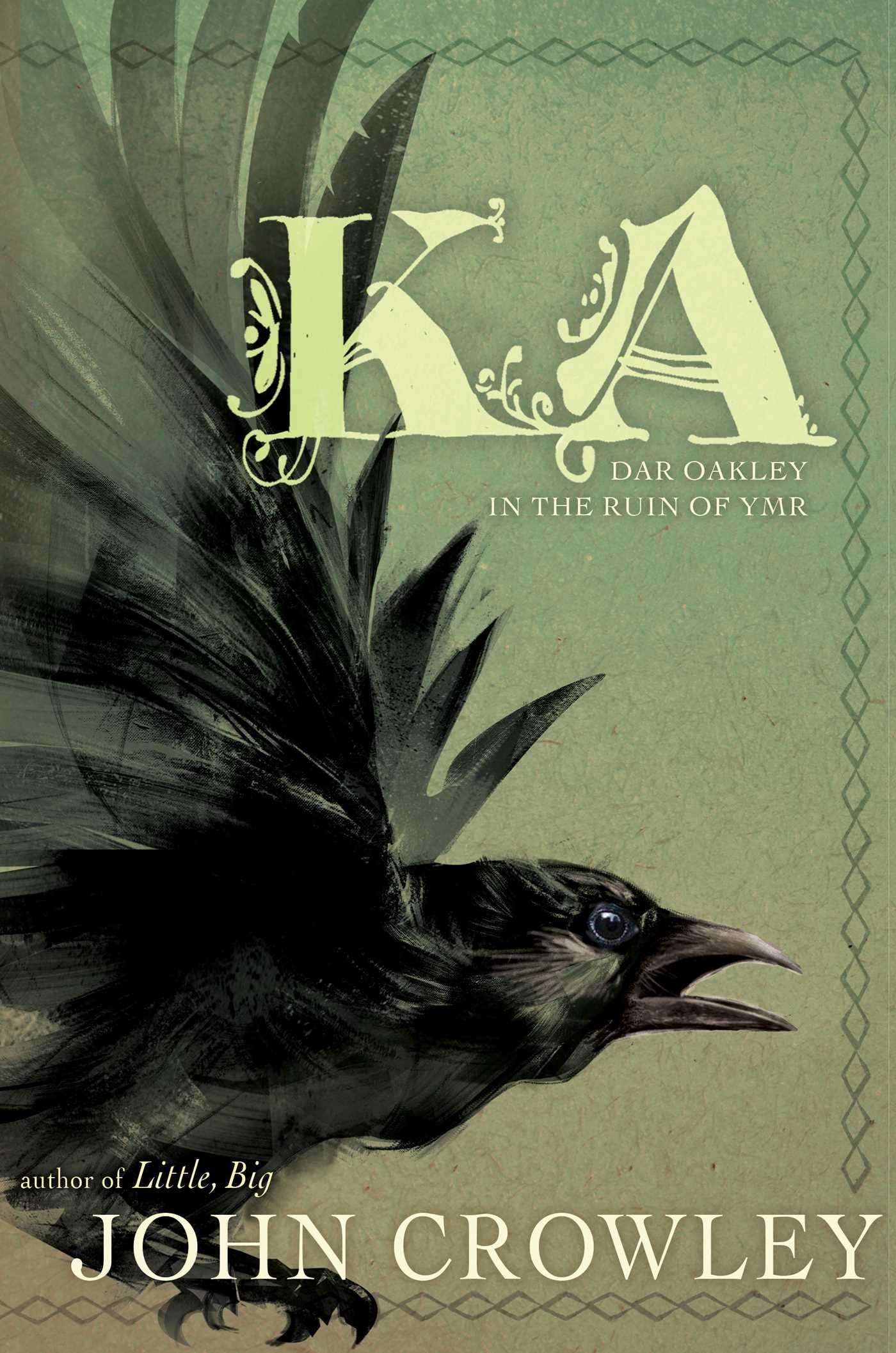
Ka John Crowley-smallMatthew David Surridge says John Crowley’s World Fantasy Award-winning Little, Big is “the best post-Tolkien novel of the fantastic I’ve read,” and Mark Rigney calls it “among the best and most endearing fantasy novels ever written… If there’s another book I’ve encountered in my adult life that calls louder to be re-read, and which reveals an even richer experience on doing so, I cannot imagine what it is.” Crowley’s thirteenth novel Ka, a fable about the first crow in history with a name of his own, arrives in hardcover from Saga Press next week.

A Crow alone is no Crow.

Dar Oakley — the first Crow in all of history with a name of his own — was born two thousand years ago. When a man learns his language, Dar finally gets the chance to tell his story. He begins his tale as a young man, and how he went down to the human underworld and got hold of the immortality meant for humans, long before Julius Caesar came into the Celtic lands; how he sailed West to America with the Irish monks searching for the Paradise of the Saints; and how he continuously went down into the land of the dead and returned. Through his adventures in Ka, the realm of Crows, and around the world, he found secrets that could change the humans’ entire way of life — and now may be the time to finally reveal them.

Our previous coverage of John Crowley includes:

In Praise of Little, Big by Mark Rigney
John Crowley’s Aegypt Cycle, Books One and Two by Mark Rigney
The Deep

Ka: Dar Oakley in the Ruin of Ymr will be published by Saga Press on October 24, 2017. It is 442 pages, priced at $28.99 in hardcover and $7.99 for the digital edition. The cover is by Melody Newcomb.

New Treasures: The Bone Mother by David Demchuk

New Treasures: The Bone Mother by David Demchuk

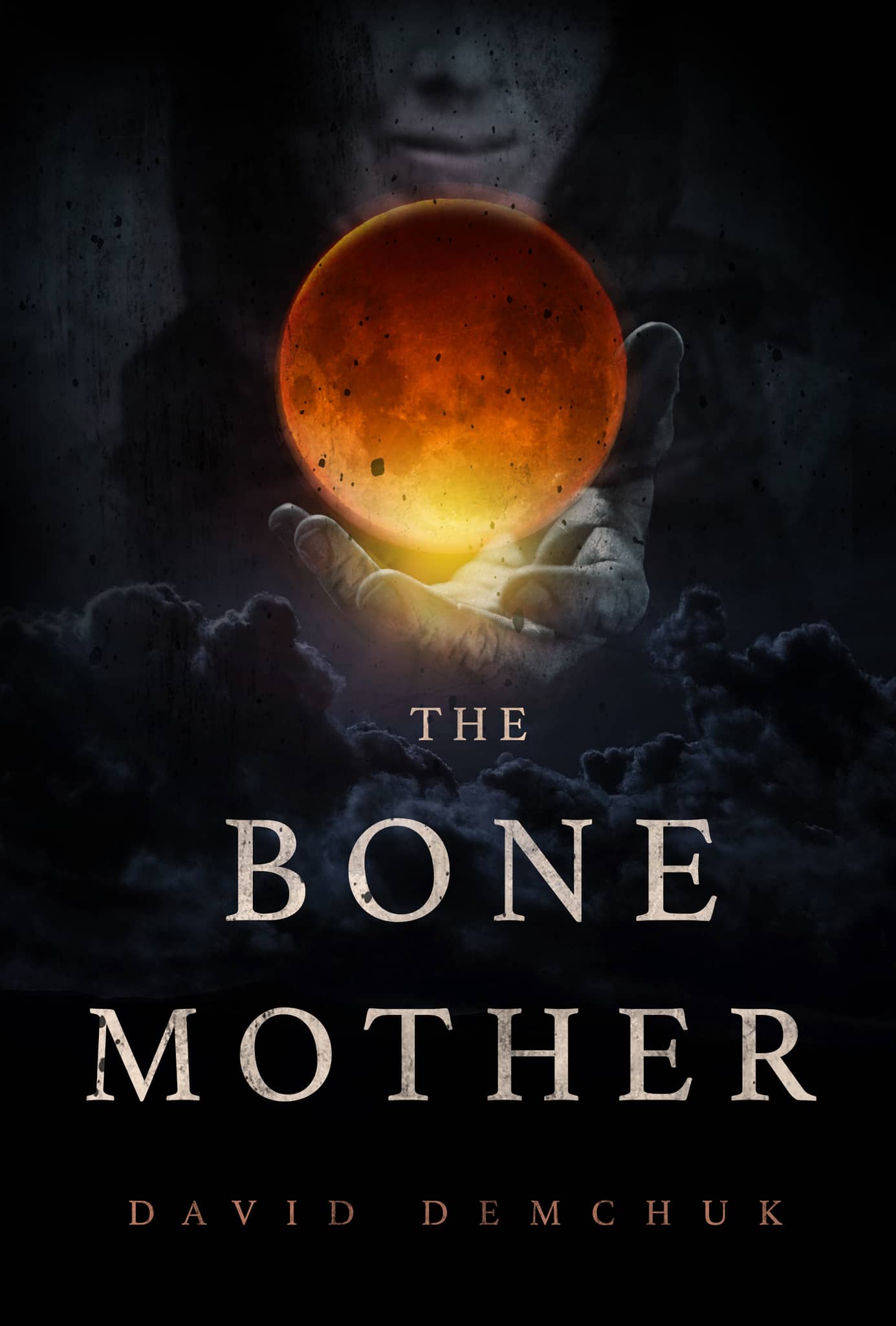
The Bone Mother-smallI haven’t paid enough attention to Canadian publisher ChiZine recently. A significant oversight, as they do superb work. They focus on “Dark Genre Fiction,” both novels and collections, which they produce in exquisitely designed trade paperbacks. A fine recent example is David Demchuk’s debut The Bone Mother, the first horror novel to be nominated for one of Canada’s most prestigious literary prizes, the Scotiabank Giller Award. Publishers Weekly said “Demchuk gracefully pieces together a dark and shining mosaic of a story with unforgettable imagery and elegant, evocative prose. These stories read like beautiful and brutal nightmares, sharply disquieting, and are made all the more terrifying by the history in which they’re grounded.” Here’s the description.

Three neighboring villages on the Ukrainian/Romanian border are the final refuge for the last of the mythical creatures of Eastern Europe. Now, on the eve of the war that may eradicate their kind — and with the ruthless Night Police descending upon their sanctuary — they tell their stories and confront their destinies:

  • The Rusalka, the beautiful vengeful water spirit who lives in lakes and ponds and lures men and children to their deaths;
  • The Vovkulaka, who changes from her human form into that of a wolf and hides with her kind deep in the densest forests;
  • The Strigoi, a revenant who feasts on blood and twists the minds of those who love, serve and shelter him;
  • The Dvoynik, an apparition that impersonates its victim and draws him into a web of evil in order to free itself;
  • And the Bone Mother, a skeletal crone with iron teeth who lurks in her house in the heart of the woods, and cooks and eats those who fail her vexing challenges.

Eerie and unsettling like the best fairy tales, these incisor-sharp portraits of ghosts, witches, sirens, and seers — and the mortals who live at their side and in their thrall — will chill your marrow and tear at your heart.

The Bone Mother was published by ChiZine Publications on July 18, 2017. It is 300 pages, priced at $17.99 in trade paperback and $7.99 in digital format. Our previous ChiZine coverage is here.

A Tale Most Gruesome and Bonkers: Dark Ventures by T.C. Rypel

A Tale Most Gruesome and Bonkers: Dark Ventures by T.C. Rypel

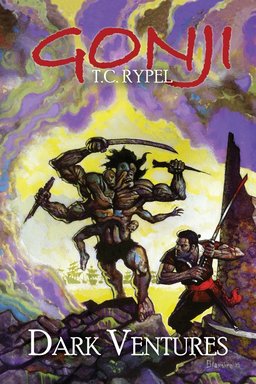
oie_1743327PKGNf2XuAside from his own terrific swords & sorcery tales, the thing I’m most grateful to Joe Bonadonna for is hipping me to the Gonji stories of T.C. Rypel. For those unfamiliar with him, Gonji is a half Viking, half Japanese warrior, cast out of Japan and in search of his destiny across a monster- and sorcery-ravaged Europe. His epic struggle against malign magical powers are told in a series of five novels: Red Blade from the East (2012), The Soul Within the Steel (2013), Deathwind of Vedun (2013), Fortress of Lost Worlds (2014), and A Hungering of Wolves (2014). The novels (reviewed by me at the links) are dense works of remarkable storytelling, filled with deeply memorable characters and complex worldbuilding. Now, appearing for the first time, is a collection of shorter works called Dark Ventures (2017).

Before I start telling you about the book, let me be up front: I consider Ted Rypel a friend, and I was privileged to read a pre-publication version of the new book’s central novella, “Dark Venture.” Ted loved my description of the story so much he used it as a blurb on the back cover:

People will not know what hit them when they read “Dark Venture.” It’s one of the most exciting (and gruesomely bonkers) swords & sorcery stories I’ve had the pleasure of reading.

I meant those words when I first wrote them a couple of years ago, and I stand by them today.

Dark Ventures opens with the short story “Reflections in Ice.” It’s an expanded and revised version of the first chapter of the novel Fortress of Lost Worlds. In it, Gonji and his companions, having survived the events of the first three books, are making their way across the Pyrenees Mountains in response to a summons for their aid. Slowly they are being killed, stalked by unseen and supernatural hunters:

The ghostly army comes again the next night, and the next, pursuing when we flee, retreating when we advance. Two more men are savagely slain by unerring bowshot, despite all caution and hastily fashioned defensive shielding. To wheel and engage them is to encounter mocking laughter from that effulgent bank of nothingness they inhabit. To run or take a stand is to be subjected to more casual slaughter, as if we are mere game; more sudden chilling eruptions of screaming and gouting blood, under the assassins’ uncanny aim.

As his party is whittled down to fewer and fewer members, Gonji is forced higher and higher into the mountains in search of refuge, but finding only more horrors. “Reflections” is a dark tale that is suffused with a sense of impending death, and becomes increasingly despair-filled and claustrophobic with each step forward.

Read More Read More

Check out the Table of Contents for The Year’s Best Weird Fiction, Volume Four, edited by Helen Marshall and Michael Kelly

Check out the Table of Contents for The Year’s Best Weird Fiction, Volume Four, edited by Helen Marshall and Michael Kelly

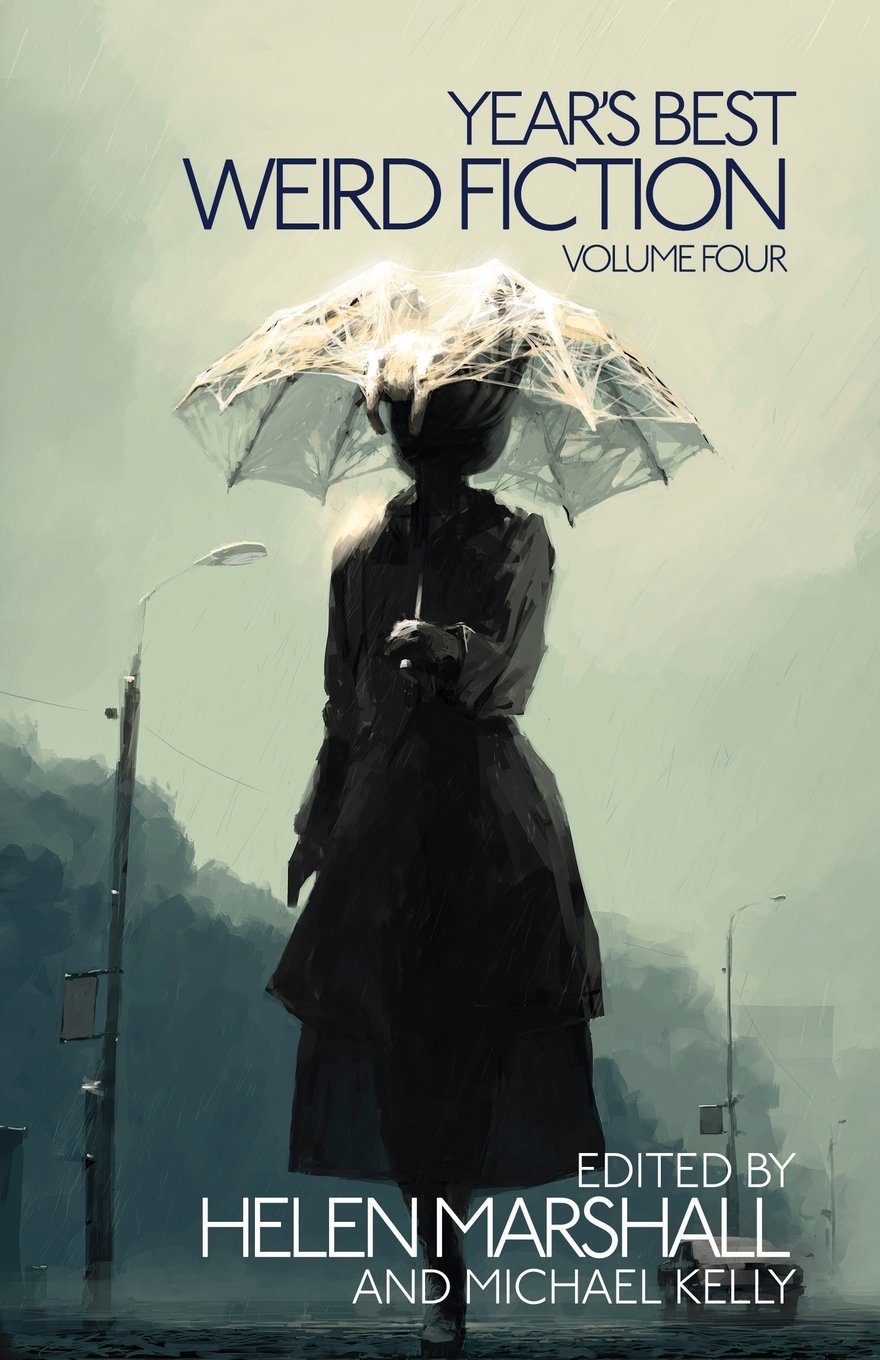
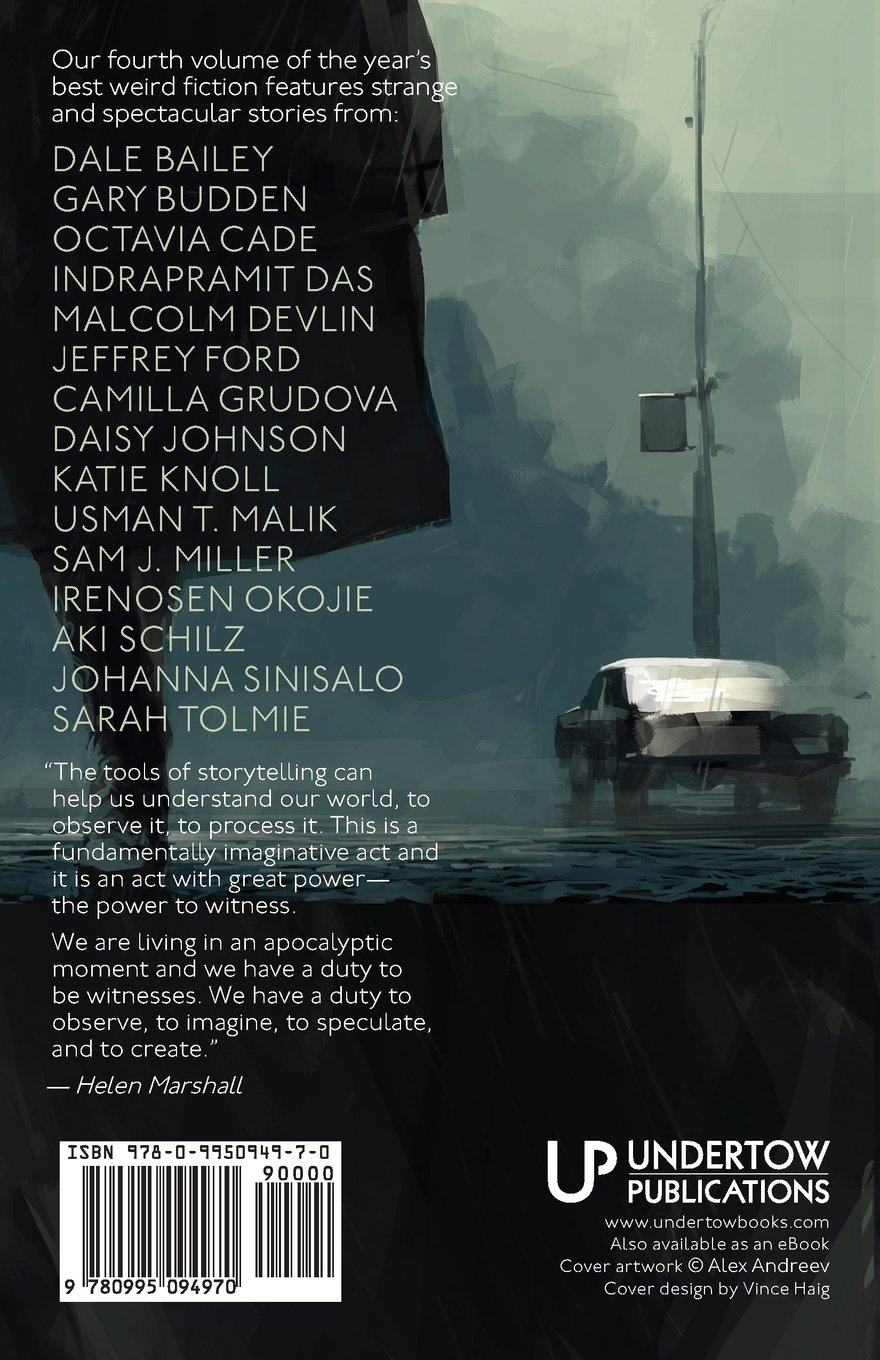
The Year's Best Weird Fiction Volume 4-small The Year's Best Weird Fiction Volume 4-back-small

It’s always a delight when The Year’s Best Weird Fiction arrives, as I consistently find it one of the most eclectic and eye-opening of the Year’s Best volumes. All of them introduce me to new writers and fiction venues, but I don’t think any do it with the same regularity as Year’s Best Weird Fiction.

The series is edited by a different guest editor every year; Canadian author Helen Marshall is at the reins for 2017. The series editor is Undertow’s distinguished publisher, Michael Kelly. This year’s volume includes stories from Jeffrey Ford, Dale Bailey, Usman T. Malik, Sam J. Miller, Sarah Tolmie, Indrapramit Das, and many others. It arrived in trade paperback from Undertow Publications earlier this month.

And while we’re talking about the book, I have to say a few words about Alex Andreev’s fantastically creepy cover, which may be my favorite cover art of 2017. I’ve seen it multiple times, but didn’t notice anything particularly unsettling about it until I tracked down a high-res version for this article. Once you see it, you can’t unsee it. Click the image above left to view a high-resolution version, and see what I mean. Warning: not for the squeamish. (Which in this case definitely includes me. Brrrr.)

Read More Read More

New Treasures: Blackwater: The Complete Saga by Michael McDowell

New Treasures: Blackwater: The Complete Saga by Michael McDowell

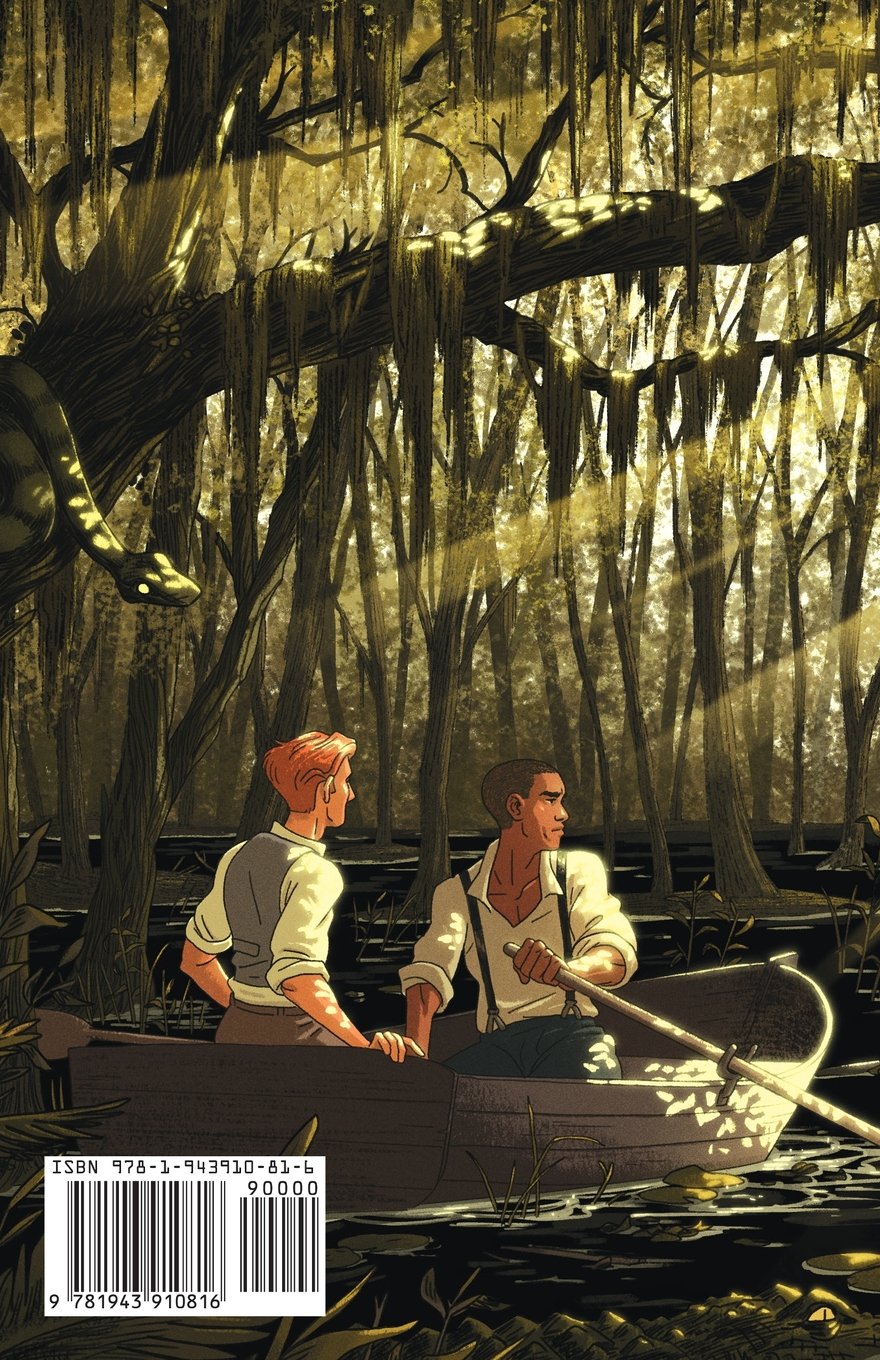
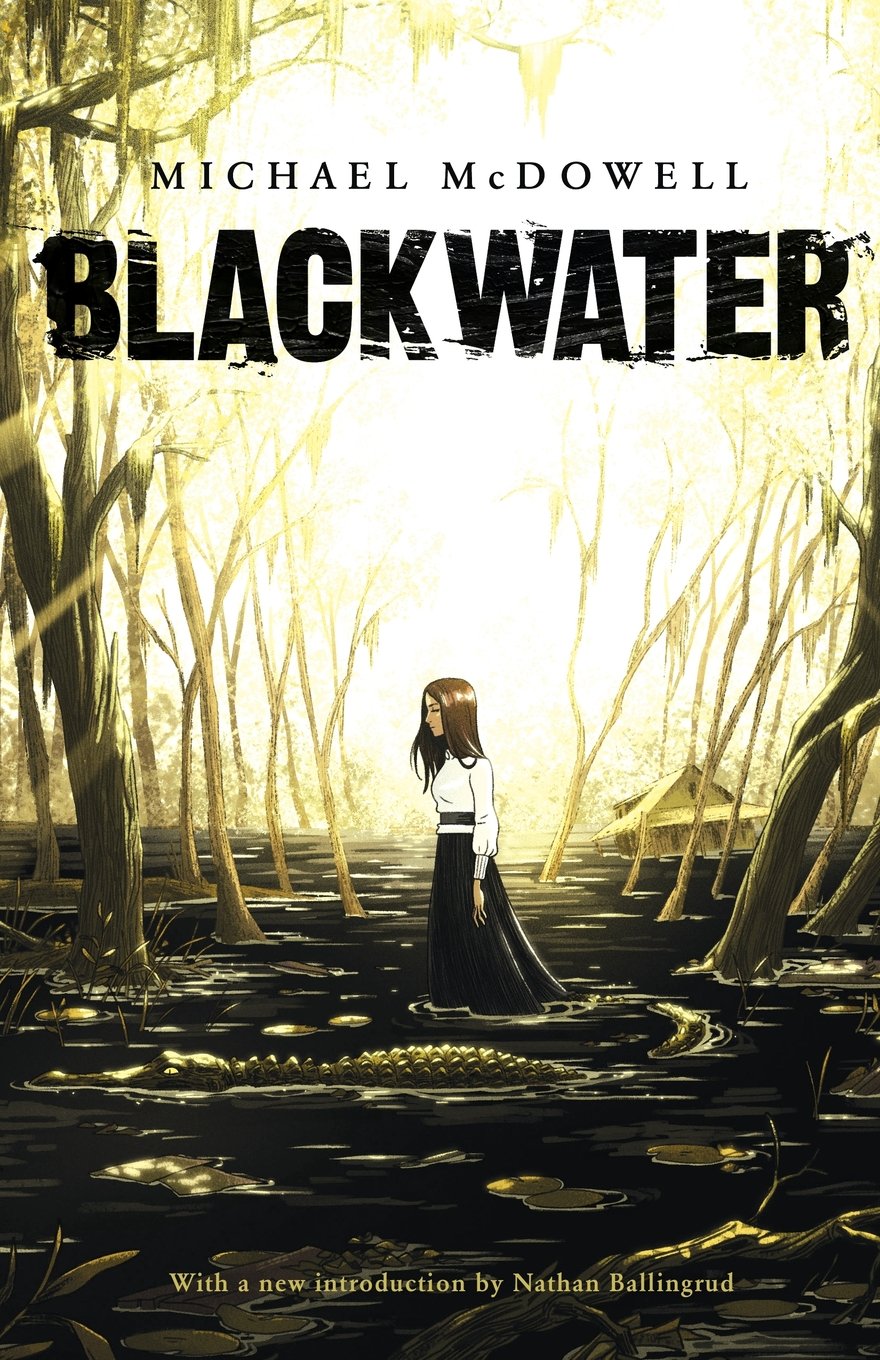
Blackwater The Complete Saga-back-small Blackwater The Complete Saga-small

Last year author Nathan Ballingrud dashed off a brief Facebook post about Michael McDowell’s 6-volume Blackwater series, originally published in paperback by Avon in 1983. Nathan said, in part:

I’m in the midst of reading Blackwater, by Michael McDowell. It is, you might say, as if The Shadow over Innsmouth was written as a generational family saga set in rural Alabama. It is strange, funny, warm, and frightening, and a true pleasure to read.

That triggered a lengthy quest for the books, which I chronicled here. I was never able to track down all six volumes, although I did manage to locate the Science Fiction omnibus collection of the first three. So I was very pleased to hear that the industrious folks at Valancourt Books have published a massive one-volume edition of the entire series. It was released in hardcover and trade paperback earlier this month; both editions feature a full wraparound cover by MS Corley.

Read More Read More

New Treasures: Zero Repeat Forever by G. S. Prendergast

New Treasures: Zero Repeat Forever by G. S. Prendergast

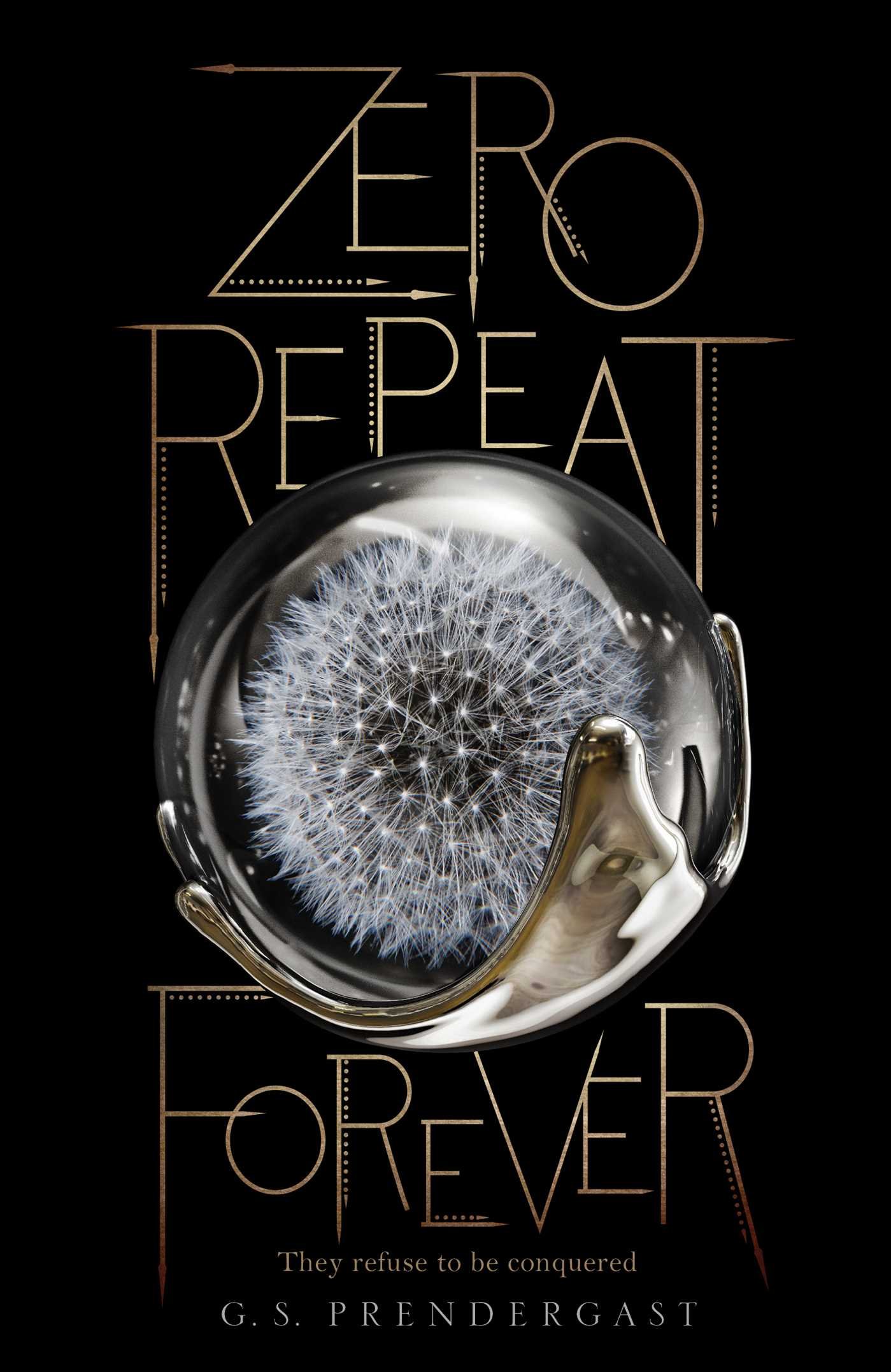
Zero Repeat Forever-smallThe flood of YA fantasy that washes up at the foot of my big green chair every week is starting to all sound alike. The covers look alike too, all these big fonts on stark, sculptured backgrounds.

It was the strikingly different cover to Zero Repeat Forever that first drew my attention. Enigmatic and beautiful, it stood out from all the other YA books I’ve seen this month. In fact, it doesn’t look like any book I’ve ever seen. The title, nearly as enigmatic as the cover, intrigued me too, and I flipped it open to read the inside jacket flap with real curiosity. It’s the tale of the end of the world, an invasion of deadly creatures… and a sixteen year old girl who doesn’t intend to take things lying down. I like it already.

He has no voice or name, only a rank, Eighth. He doesn’t know the details of the mission, only the directives that hum in his mind.
Dart the humans. Leave them where they fall.
His job is to protect his Offside. Let her do the shooting.
Until a human kills her…

Sixteen-year-old Raven is at summer camp when the terrifying armored Nahx invade. Isolated in the wilderness, Raven and her fellow campers can only stay put. Await rescue. Raven doesn’t like feeling helpless, but what choice does she have?

Then a Nahx kills her boyfriend.

Thrown together in a violent, unfamiliar world, Eighth and Raven should feel only hate and fear. But when Raven is injured, and Eighth deserts his unit, their survival comes to depend on trusting each other…

G. S. Prendergast is the Canadian author of two novels in verse, Audacious and Capricious. This is her first prose novel.

Zero Repeat Forever was published by Simon & Schuster on August 29, 2017. It is 487 pages, priced at $17.99 in hardcover and $10.99 for the digital edition. The marvelous cover was designed by Lizzy Bromley. Read an excerpt at Hypable.

New Treasures: The Core by Peter Brett

New Treasures: The Core by Peter Brett

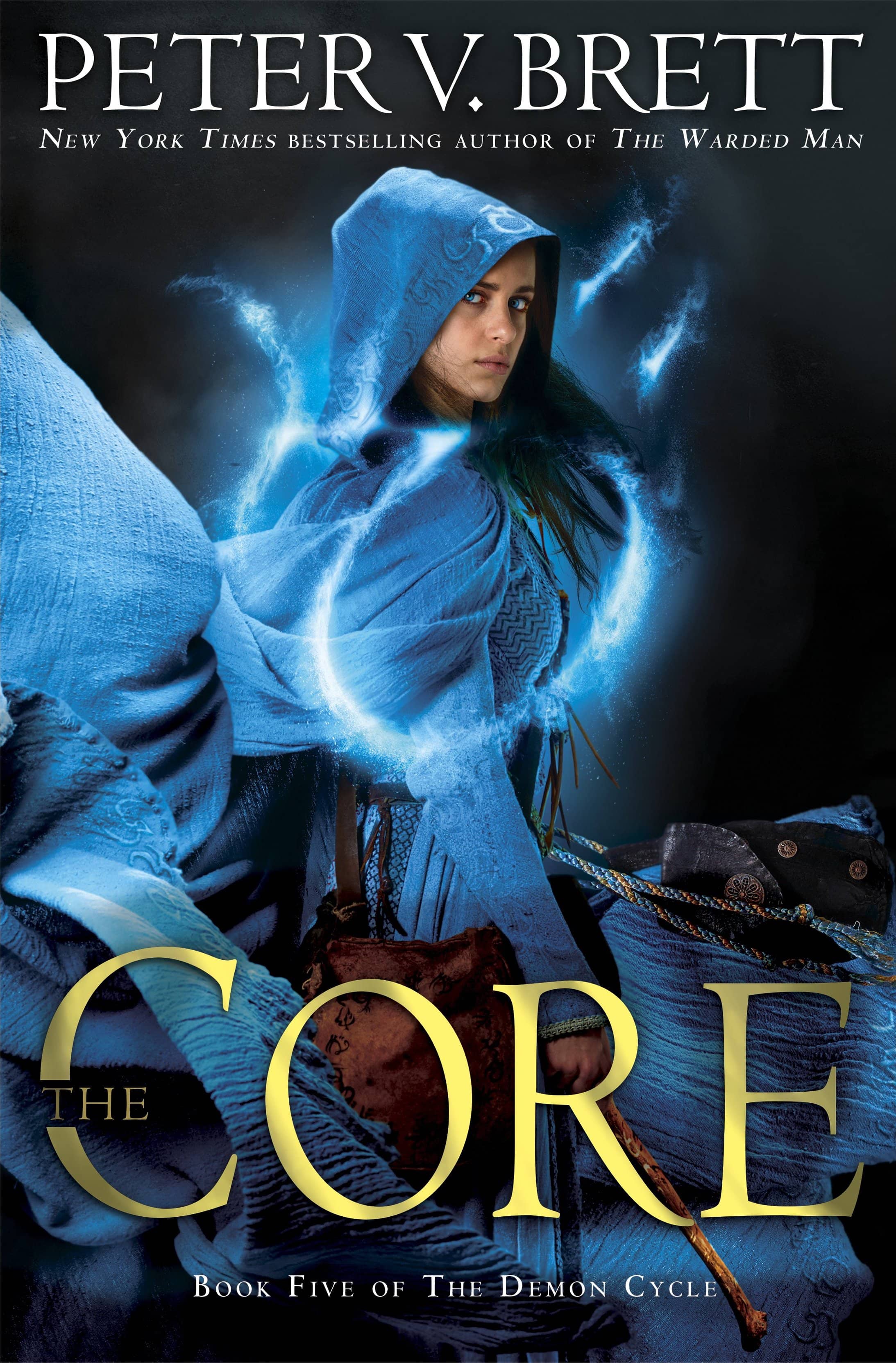
The Core Peter Brett-smallThe second book in Peter Brett’s Demon Cycle series, The Desert Spear, became an international bestseller, and the next two volumes catapulted him to the top tier in the industry. That’s a meteoric rise for someone with a single series to their name.

Anticipation for the final book, The Core, has been running high for two years, and it finally arrived  in hardcover from Del Rey this week. Here’s the description.

For time out of mind, bloodthirsty demons have stalked the night, culling the human race to scattered remnants dependent on half-forgotten magics to protect them. Then two heroes arose — men as close as brothers, yet divided by bitter betrayal. Arlen Bales became known as the Warded Man, tattooed head to toe with powerful magic symbols that enable him to fight demons in hand-to-hand combat — and emerge victorious. Jardir, armed with magically warded weapons, called himself the Deliverer, a figure prophesied to unite humanity and lead them to triumph in Sharak Ka — the final war against demonkind.

But in their efforts to bring the war to the demons, Arlen and Jardir have set something in motion that may prove the end of everything they hold dear — a swarm. Now the war is at hand, and humanity cannot hope to win it unless Arlen and Jardir, with the help of Arlen’s wife, Renna, can bend a captured demon prince to their will and force the devious creature to lead them to the Core, where the Mother of Demons breeds an inexhaustible army.

Trusting their closest confidantes, Leesha, Inevera, Ragen, and Elissa, to rally the fractious people of the Free Cities and lead them against the swarm, Arlen, Renna, and Jardir set out on a desperate quest into the darkest depths of evil — from which none of them expects to return alive.

At 800 pages, The Core brings the page count for the entire 5-volume series to an impressive 3,250 pages. This is an epic you can sink your teeth into, and no mistake. It began with The Warded Man, still available in paperback. Those of you looking for a new fantasy series, and who hate to start reading before it’s complete — your ship has finally come in.

Read More Read More

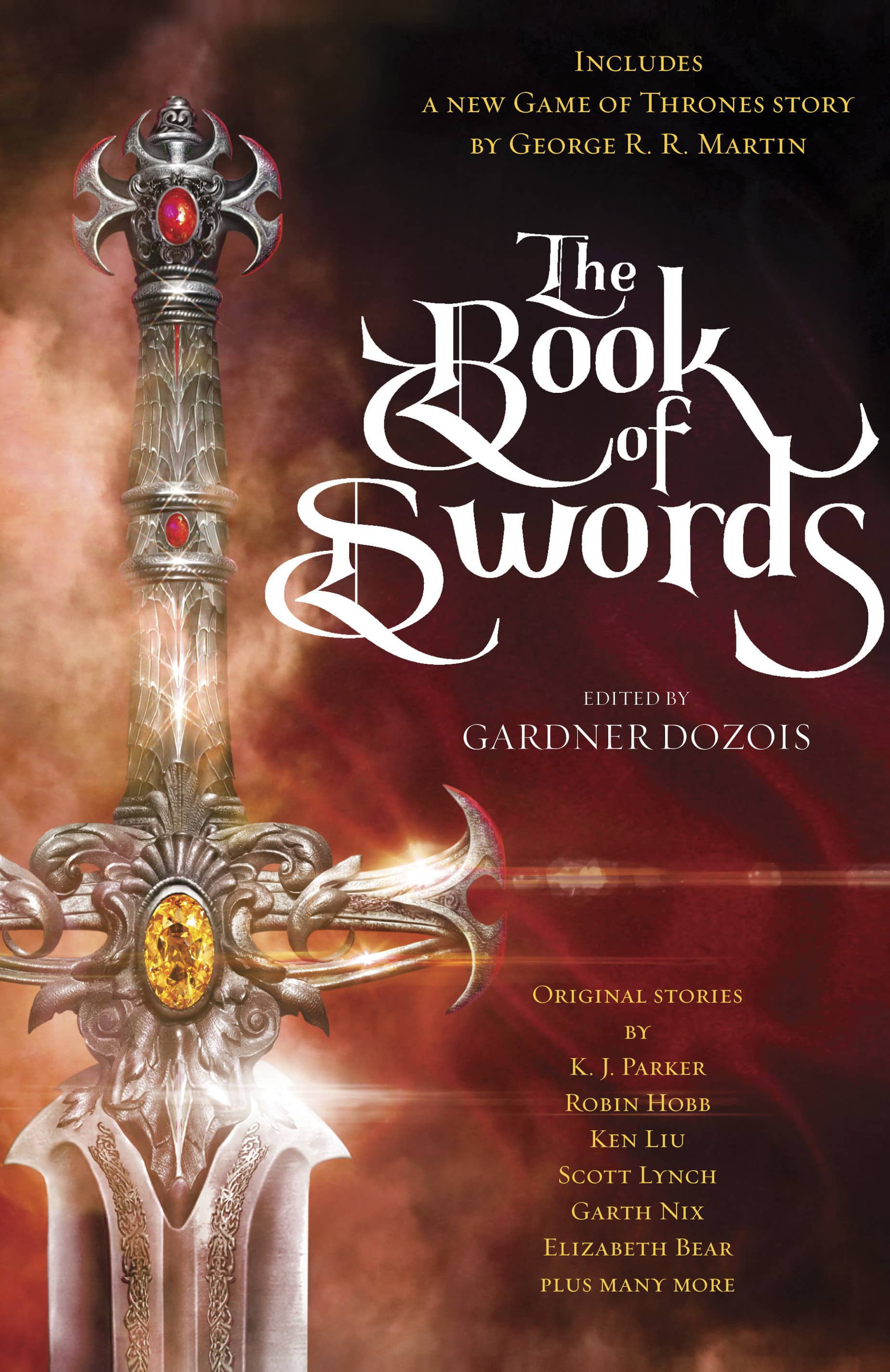
Future Treasures: The Book of Swords, edited by Gardner Dozois

Future Treasures: The Book of Swords, edited by Gardner Dozois

The Book of Swords-smallA while back Gardner Dozois asked if I wanted a review copy of his upcoming “Sword & Sorcery” anthology, The Book of Swords.

Now, Gardner does not do small anthologies — neither in the physical sense, nor in the sense of their impact on the field. If the premier anthologist in the SF community was putting his time and energy into a collection of original sword & sorcery tales, then clearly the genre still has some life in it.

It wasn’t that long ago that I thought the era of big-budget (or even modest-budget) S&S anthologies was long over. What’s changed? The global phenomena that is GRRM’s Game of Thrones, that’s what’s changed. I don’t consider GoT to be sword & sorcery… but there’s no denying that publishers (and film producers) are a lot more interested in adventure fantasy all of a sudden. If the results are anything like The Book of Swords, I’m all for it.

The Book of Swords arrives next week in hardcover from Martin’s Song of Ice and Fire publisher Bantam Books, with sixteen brand new stories by Lavie Tidhar, Robin Hobb, Ken Liu, Matthew Hughes, Walter Jon Williams, C. J. Cherryh, Garth Nix, Ellen Kushner, Scott Lynch — and, yes, a brand new Song of Ice and Fire story from George R. R. Martin.

Fantasy fiction has produced some of the most unforgettable heroes ever conjured onto the page: Robert E. Howard’s Conan the Barbarian, Michael Moorcock’s Elric of Melniboné, Fritz Leiber’s Fafhrd and the Gray Mouser. Classic characters like these made sword and sorcery a storytelling sensation, a cornerstone of fantasy fiction — and an inspiration for a new generation of writers, spinning their own outsize tales of magic and swashbuckling adventure.

Now, in The Book of Swords, acclaimed editor and bestselling author Gardner Dozois presents an all-new anthology of original epic tales by a stellar cast of award-winning modern masters — many of them set in their authors’ best-loved worlds. Join today’s finest tellers of fantastic tales, including George R. R. Martin, K. J. Parker, Robin Hobb, Scott Lynch, Ken Liu, C. J. Cherryh, Daniel Abraham, Lavie Tidhar, Ellen Kushner, and more on action-packed journeys into the outer realms of dark enchantment and intrepid derring-do, featuring a stunning assortment of fearless swordsmen and warrior women who face down danger and death at every turn with courage, cunning, and cold steel.

Here’s the complete Table of Contents.

Read More Read More

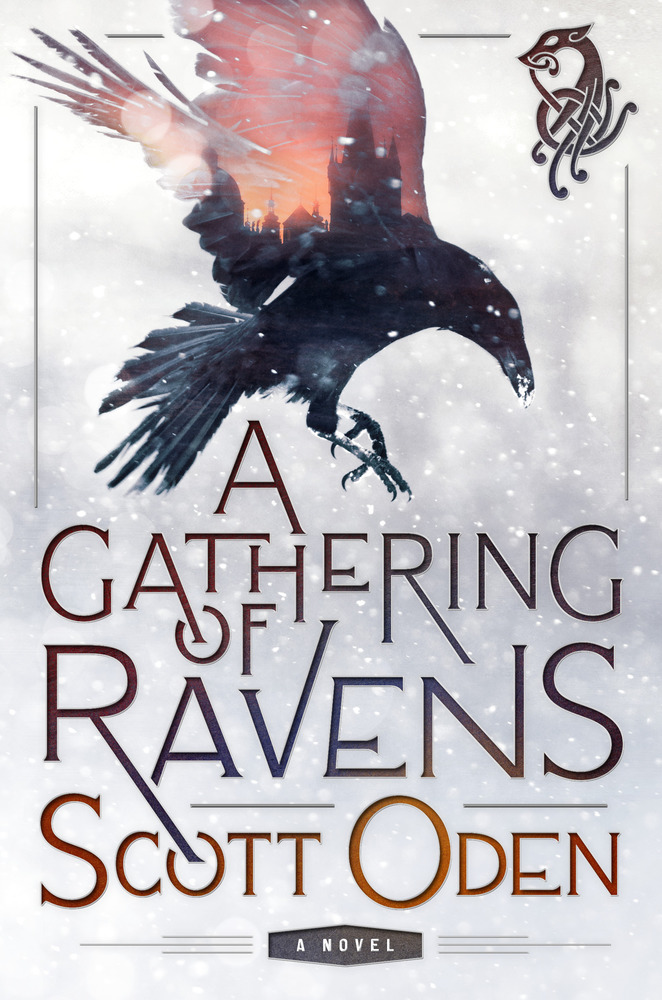
Another View: The Difficult Experiment of Scott Oden’s A Gathering of Ravens

Another View: The Difficult Experiment of Scott Oden’s A Gathering of Ravens

A-Gathering-of-Ravens-smallerI really wanted to like this book. With pleasure I listened to Oden speak on The Literary Wonder and Adventure Show. He talked at length about Tolkien (my own spiritual and literary master), and it seemed that Oden’s and my dials were approximately set. Oden’s book, like Tolkien’s most popular works, deals with “that northern thing” (though I just today learned that Tolkien objected, in part, to this characterization from W.H. Auden).

But Oden’s book is so grimdark that, while reading, I couldn’t find my feet. The work ostensibly is about an orc Hel-bent on revenge — and here is my first objection: the attitudes and actions of this orc, our “protagonist,” are indistinguishable from those of the larger majority of characters in the book. Grimnir, our orc, seems capable only of speaking and thinking in profanities. He murders even when there absolutely is no reason to. The only thing (in this book) we can’t accuse Grimnir of is the sin of rape. That assault remains to be committed by many of the other “human” characters you will find therein: your average male, in this portrayal, seems hardwired to enter rape mode the moment he lays eyes upon any “unprotected” female. Now, remember, Grimnir is supposed to be the “orc,” yet he doesn’t behave much differently from the novel’s many other human characters. Moreover, even when it doesn’t cost a character anything necessarily, few characters are liable to show any shred of kindness for one another. Oden’s narrator summarizes this world’s milieu thusly: “She [the character Etain] knew the score … and she knew sooner or later there would be a reckoning. Men did nothing — undertook no good deed, performed no kindness — without first attaching a price to it.” Oden’s characters, I suppose, are consummate Dark Age businesspersons.

“But that’s the Way It Was,” a number on Goodreads might say, defending Oden’s work from the very few negative reviews I can find there (here and here are two well-said assessments). What these apologists are claiming is that the worldview of the so-called Dark Ages is exactly this: murder whenever you can get away with it, rape whenever you like (for those who like it, I guess, who are all young pre-modern men). I don’t entirely agree with this representation. In the worst possible reading, this might represent the author’s views of the natural state of humankind freed from the fetters or checks thankfully supplied by modernity. In the best possible reading, this representation assumes that, at least in the area of moral development, humans who happened to live a mere millennia ago might be considered pre-human in these respects. Granted, the spread of more nation-building and socializing beliefs and philosophies such as Christianity might have a civilizing influence on a pre-modern worldview, might even be of some aid in the sense of an evolving moral consciousness. But this book barely acknowledges even this. It ostensibly presents two competing worldviews, that of northern paganism and that of Christianity, but, in this book, in practice adherents to either faith might as well be indistinguishable. They merely serve one team in a two-sided competition that is drawn as equal in every respect. Again, apologists should be quick to point to aspects of history that reveal a number of Christians as hypocritical and intolerant throughout their persecutions. Granted, but are you going to deny that there remain some fundamental differences and worldviews between the two perspectives, and therefore requisite actions and behaviors on behalf of the religion’s adherents? To this point Oden seems to relent, to some measure, in the second and much-preferred half of the book, in the figures of King Brian and his freed thrall Ragnar. But we’ll get to that in a moment.

Read More Read More