Browsed by
Category: Books

A Great Fantasy Poem: “Winter Solstice, Camelot Station” by John M. Ford
A Great Fantasy Poem: “Winter Solstice, Camelot Station” by John M. Ford

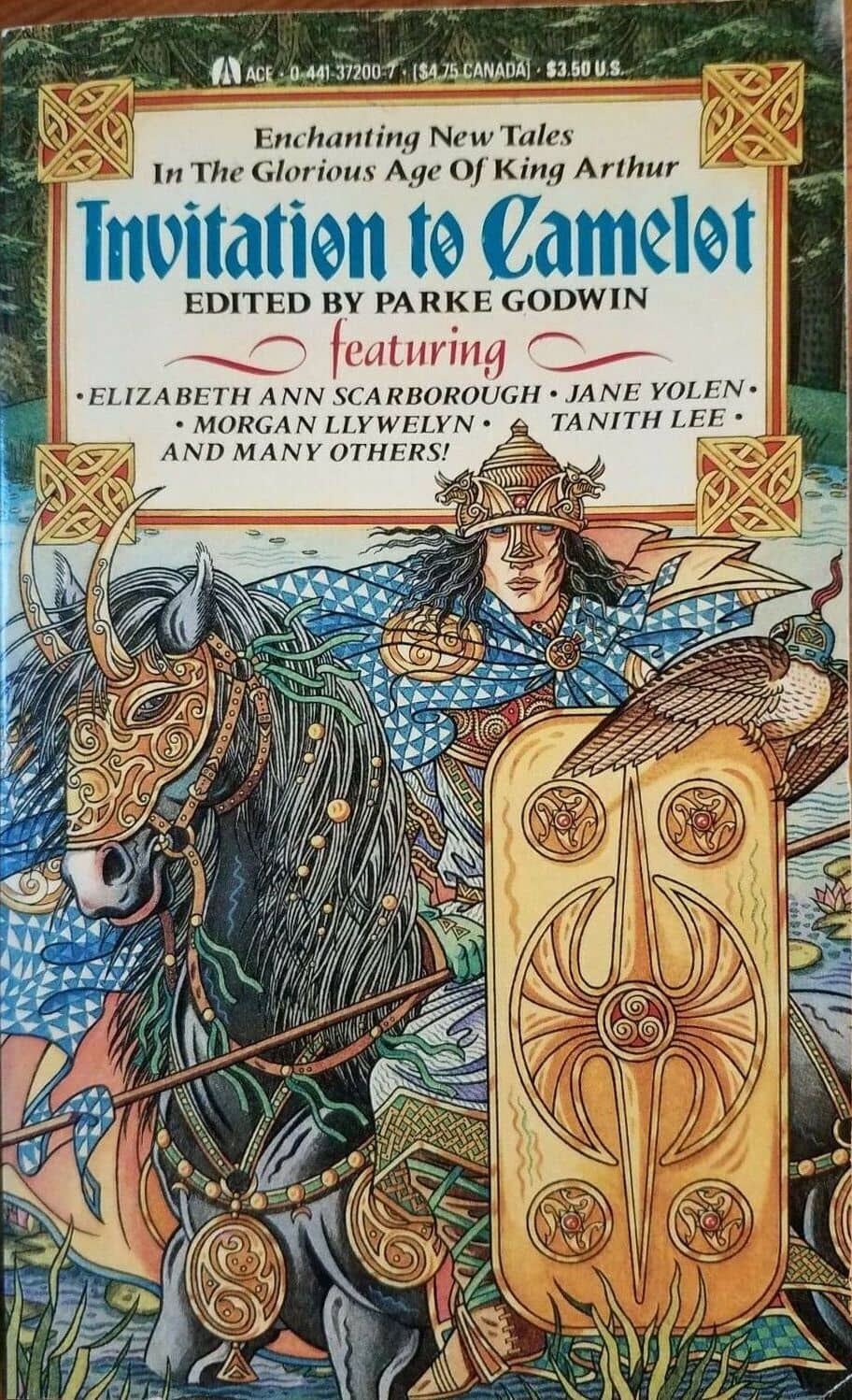
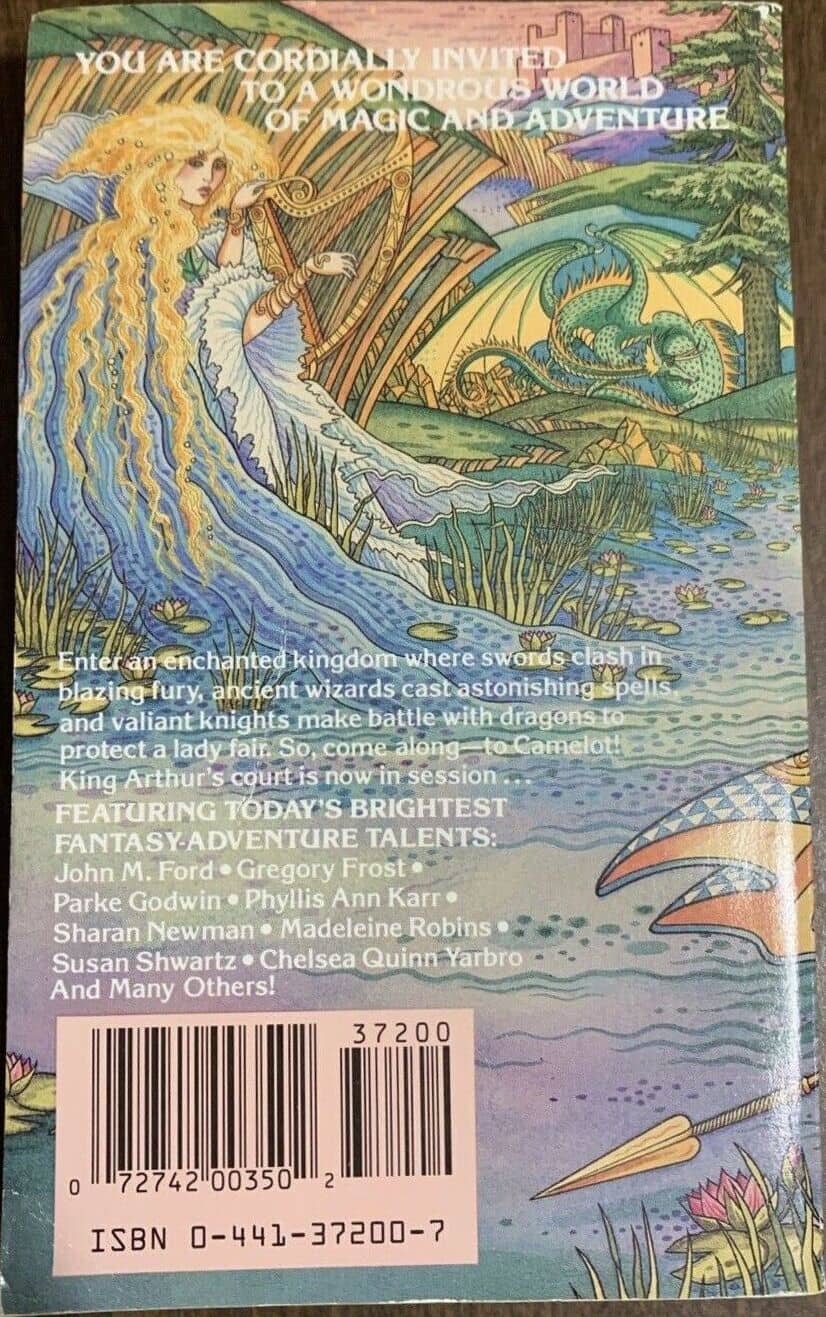
Invitation to Camelot, edited by Parke Godwin (Ace Books, 1988). Cover by Jill Karla Schwartz

This is the latest of a series of essays I’m doing to give an extended look at SF stories I consider particularly good, or particularly interesting, with some intent to try to tease out how they work, why they work. And this time I’ve decided to look not at a story, but a poem! But never fear – it’s an exceptional poem, and it’s also a no doubt work of Fantasy, traditional Fantasy, one of the most familiar Fantasy subjects – with also a descriptive veneer of Science, of Industry, of Engineering.

I am a devoted reader of poetry… favorite poets include Wallace Stevens, Philip Larkin, and W. B. Yeats; more recently, A. E. Stallings. But I have to confess general disappointment with most of the poetry published within the SF/Fantasy genres these days. There are exceptions, though: I’ll name Sonya Taaffe as a particular favorite just now (and I’ll recommend the small ‘zine Not One of Us, where Taaffe is a regular, as a particularly good source of contemporary SF/Fantasy poetry.) In a slightly earlier time, there was another master: John M. Ford. His-best known poem is probably “Winter Solstice, Camelot Station”, and it’s perhaps my favorite poem to have been published in a genre source.

I once understood that it originated as a Christmas card Ford sent to friends in 1988. But actually it was first widely published earlier in 1988, in the anthology Invitation to Camelot, edited by Parke Godwin. (I’ve asked for confirmation of the date of the Christmas cards, with the notion that perhaps they came out in 1987, but Chuck Rothman, who received one, is quite sure it was in 1988.)
…

Read More Read More

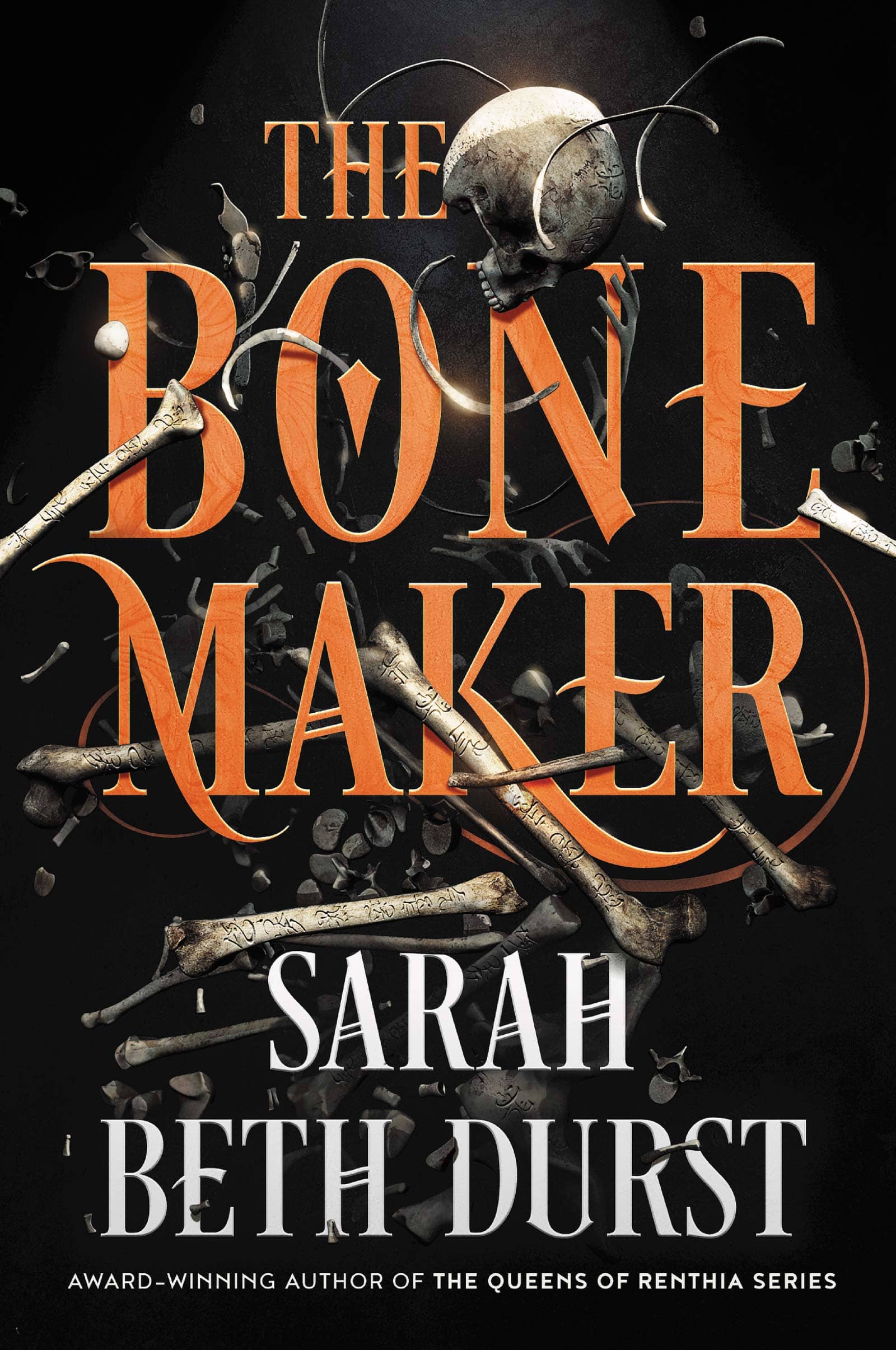
Future Treasures: The Bone Maker by Sarah Beth Durst

Future Treasures: The Bone Maker by Sarah Beth Durst

Sarah Beth Durst has been nominated three times for the Mythopoeic Fantasy Award and the Andre Norton Award. Her most recent work for adults is the 4-volume Queens of Renthia series, which opened with The Queen of Blood (2016).

Her latest, arriving from Harper Voyager next week, is a standalone epic fantasy in which a band of aging warriors have a second chance to defeat dark magic and avenge a haunting loss. This is one of my most highly-anticipated March releases, and I’m looking forward to finally having a copy in my hands.

Twenty-five years ago, five heroes risked their lives to defeat the bone maker Eklor — a corrupt magician who created an inhuman army using animal bones. But victory came at a tragic price. Only four of the heroes survived. 

Since then, Kreya, the group’s leader, has exiled herself to a remote tower and devoted herself to one purpose: resurrecting her dead husband. But such a task requires both a cache of human bones and a sacrifice — for each day he lives, she will live one less.

She’d rather live one year with her husband than a hundred without him, but using human bones for magic is illegal in Vos. The dead are burned — as are any bone workers who violate the law. Yet Kreya knows where she can find the bones she needs: the battlefield where her husband and countless others lost their lives.

But defying the laws of the land exposes a terrible possibility. Maybe the dead don’t rest in peace after all.  

Five warriors — one broken, one gone soft, one pursuing a simple life, one stuck in the past, and one who should dead. Their story should have been finished. But evil doesn’t stop just because someone once said, “the end.”

The Bone Maker will be published by Harper Voyager on March 9, 2021. It is 496 pages, priced at $17.99 in trade paperback, $10.99 digital, and $44.99 for the audio CD. 

See all our recent coverage of the best upcoming SF and fantasy here.

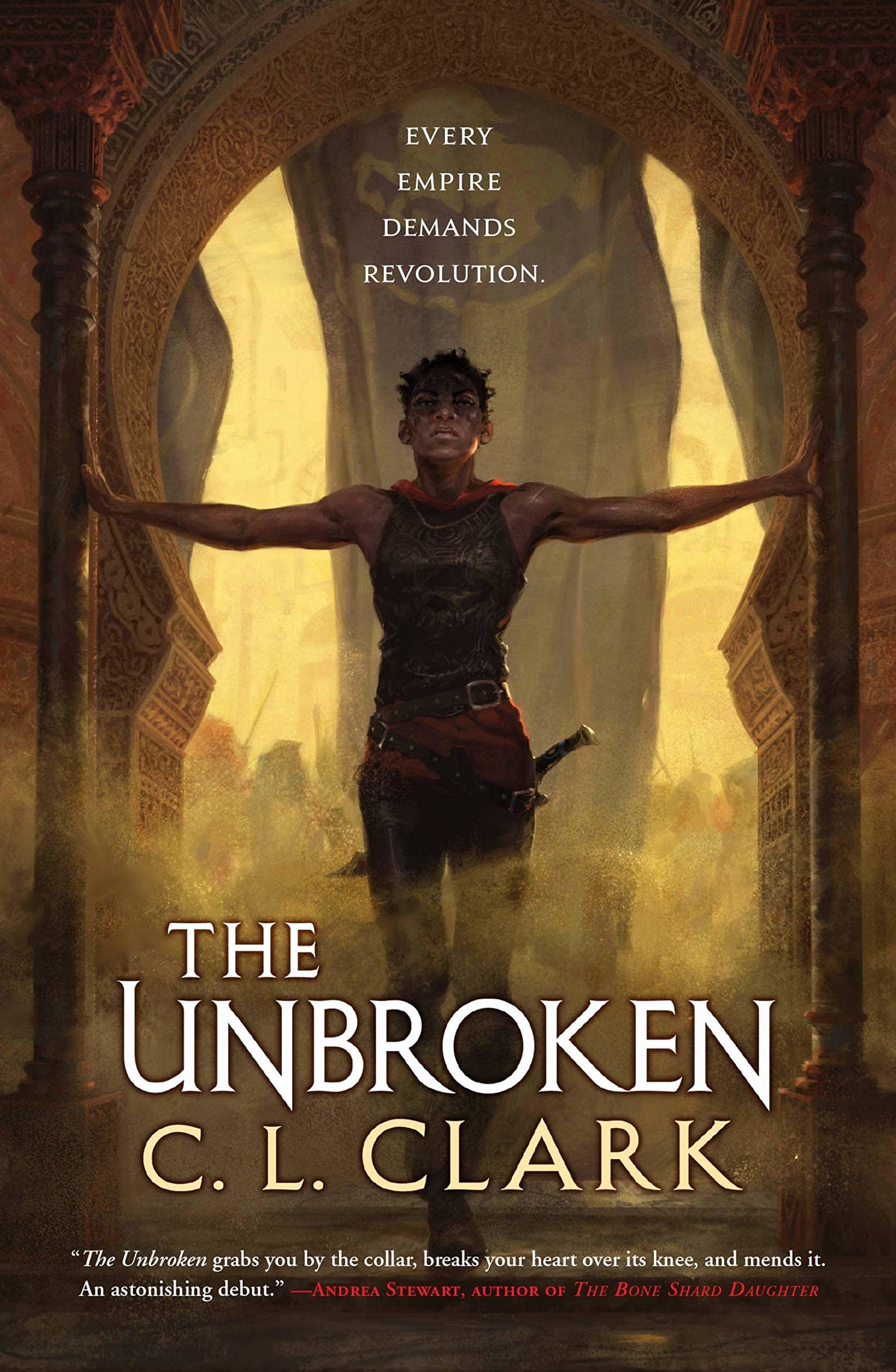
In 500 Words or Less: The Unbroken by C.L. Clark

In 500 Words or Less: The Unbroken by C.L. Clark

The Unbroken (Magic of the Lost #1)
By C.L. Clark
Orbit (544 pages, $16.99 paperback/$9.99 eBook, March 23, 2021)
Cover by Lauren Panepinto and Tommy Arnold

Typically when I read an ARC I’m definitely going to review, I take notes. Simple stuff like this is a cool moment to mention or I think the author is going for X that help frame my five hundred words when I sit down to write.

For The Unbroken, I wrote ABSOLUTELY NOTHING while reading because at no point did I want to break my journey through this narrative. Somehow I knew that as soon as I finished, I’d be at my computer typing. Which is what I’m doing right now.

One thing that sets an excellent fantasy novel apart for me these days is gut punches. You’re thrown into a world with a set of expectations for certain characters, and how quickly the author twists that around tells me the kind of ride I’m being taken on. In the first chapters of The Unbroken, Clark gives us a suite of amazing characters and a clear narrative trajectory – then suddenly one of those characters is gone, and another’s world is turned upside down, and the trajectory changes. And then halfway through it changes again, as the destination looming in the background turns out to be impossible, and you need to pivot alongside characters trying to navigate a changing, complex world.

There are no easy fixes or apologies between Clark’s characters, either. Decisions leave a permanent mark, much like in real life, and people need to navigate a new understanding of each other much like navigating the world. Touraine and Luca’s relationship is complex, and an example of what readers talk about when they say they want realistic, flawed, problematic women in their fiction. Wanting to root for them or keep shipping them almost feels wrong at times, as each makes decisions I can’t blame the other for not forgiving, no matter how badly they want to. Gut punches, like I said.

…

Read More Read More

Vintage Treasures: The Space Barbarians by Tom Godwin

Vintage Treasures: The Space Barbarians by Tom Godwin


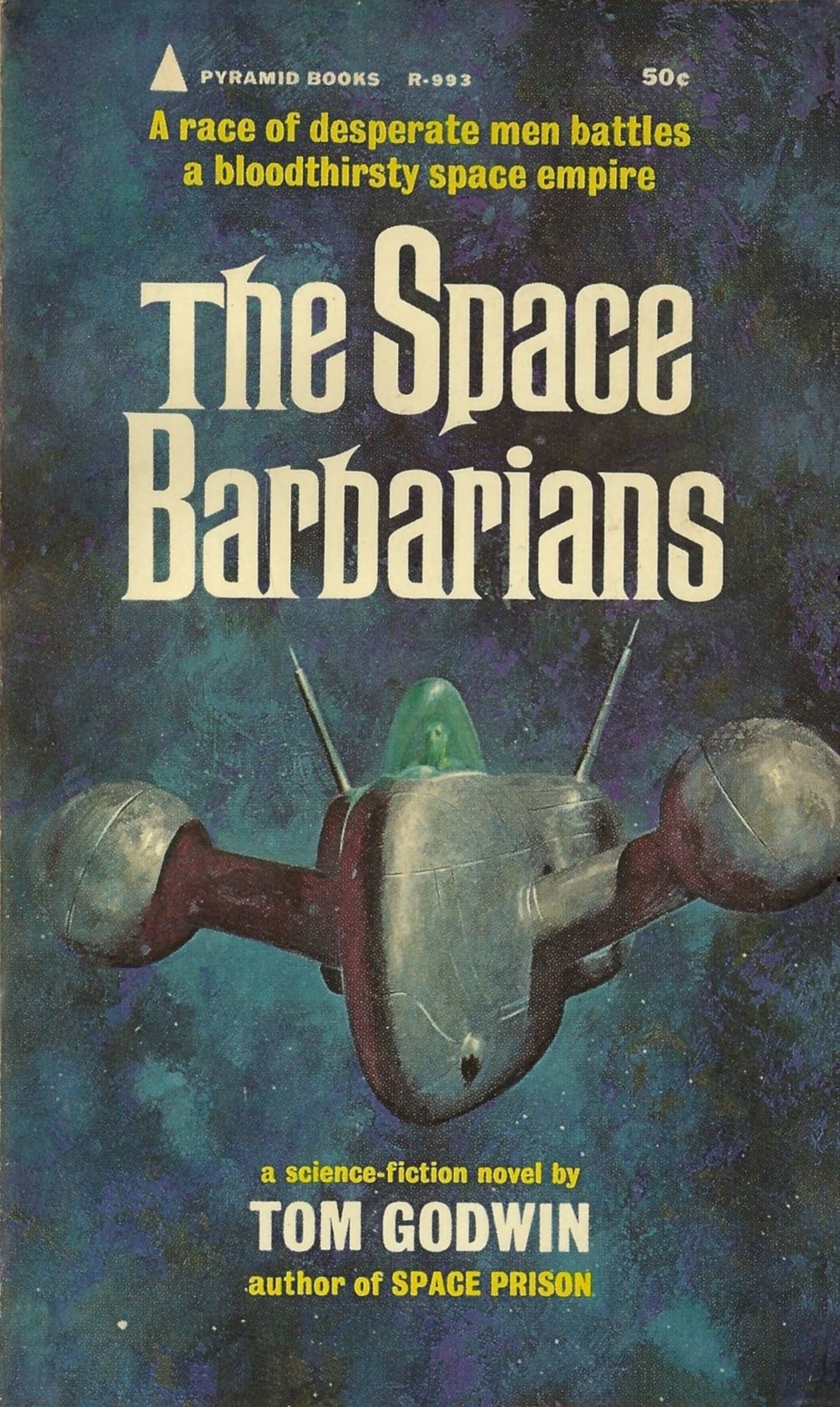
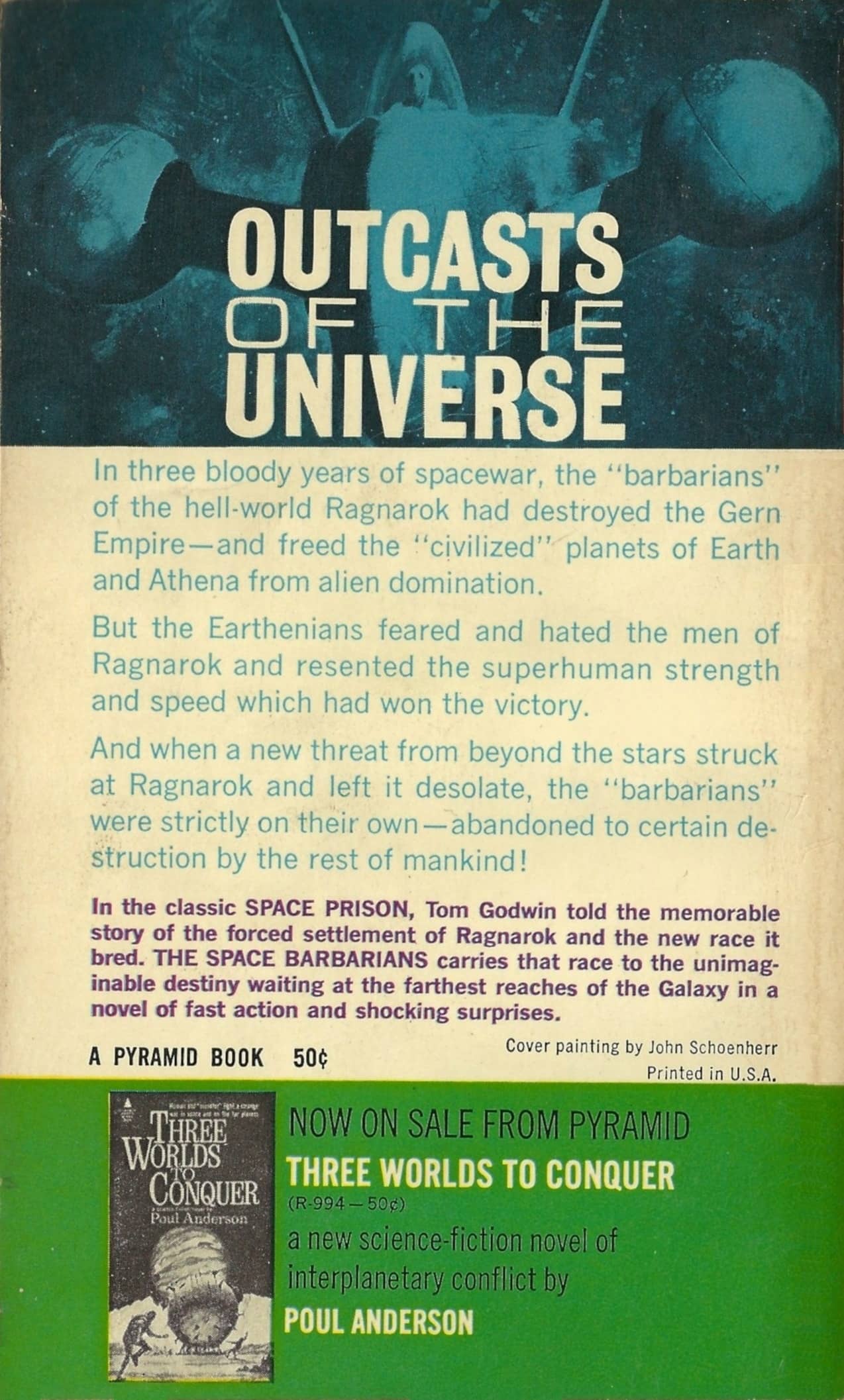
The Space Barbarians, by Tom Godwin (Pyramid, 1964). Cover by John Schoenherr

Tom Godwin is something of a tragic figure in SF. He’s remembered today for a single short story which remains hugely influential. Here’s the third and fourth sentence of his Wikipedia entry:

He is best known for his short story, “The Cold Equations.” Published in 1954… [its] controversial dark ending helped redefine the genre.

That’s not an exaggeration. “The Cold Equations” is still sparking conversations today, nearly 70 years after it was written. (I noticed Mark Kelly kicked off a lively discussion in Facebook’s Best Science Fiction and Fantasy Short Fiction group just last week by asking “Can anyone recall specific fictional responses to Tom Godwin’s “The Cold Equations”?” Last time I looked there were 35 responses from Rich Horton, Sheila Williams, Piet Niel, and many others).

Godwin wrote three novels, beginning with Space Prison (1958) and its sequel The Space Barbarians (1964). The former has a much better reputation with modern readers, although it’s the second book which interests me today.  Here’s another tidbit of history from Wikipedia:

Godwin had a spinal disorder known as Kyphosis, which results in a curvature of the spine, making him appear hunchbacked… In the early 1960s, Godwin was living in a remote area of northwestern Arizona with his father writing and making his own drywashers to sell. It was in the summer of 1961 that he met his future wife, Laureola Godwin, and then twelve-year-old step-daughter who he later adopted, Diane Godwin Sullivan, through the sale of one of his drywashers. He went on to base two of the main characters in his second novel, The Space Barbarians, after them.

After Laureola Godwin died, Tom Godwin lost his lifelong battle with alcohol. He died in a Las Vegas hospital in 1980 without any identification; Diane Godwin Sullivan eventually had to identify his body after it was held at a funeral home for a long period.

…

Read More Read More

New Treasures: City of the Uncommon Thief by Lynne Bertrand

New Treasures: City of the Uncommon Thief by Lynne Bertrand

You lot know how much I enjoy a good fantasy debut. The only thing that changes is how I go about finding them.

I use to browse bookstores, like a normal person. Then came the internet, and this blog. Gradually I grew to rely on review copies and contacts with publicists. Then came the pandemic, and I turned to the professional review sites I knew I could trust, like Locus Online, Tor.com, and Publishers Weekly.

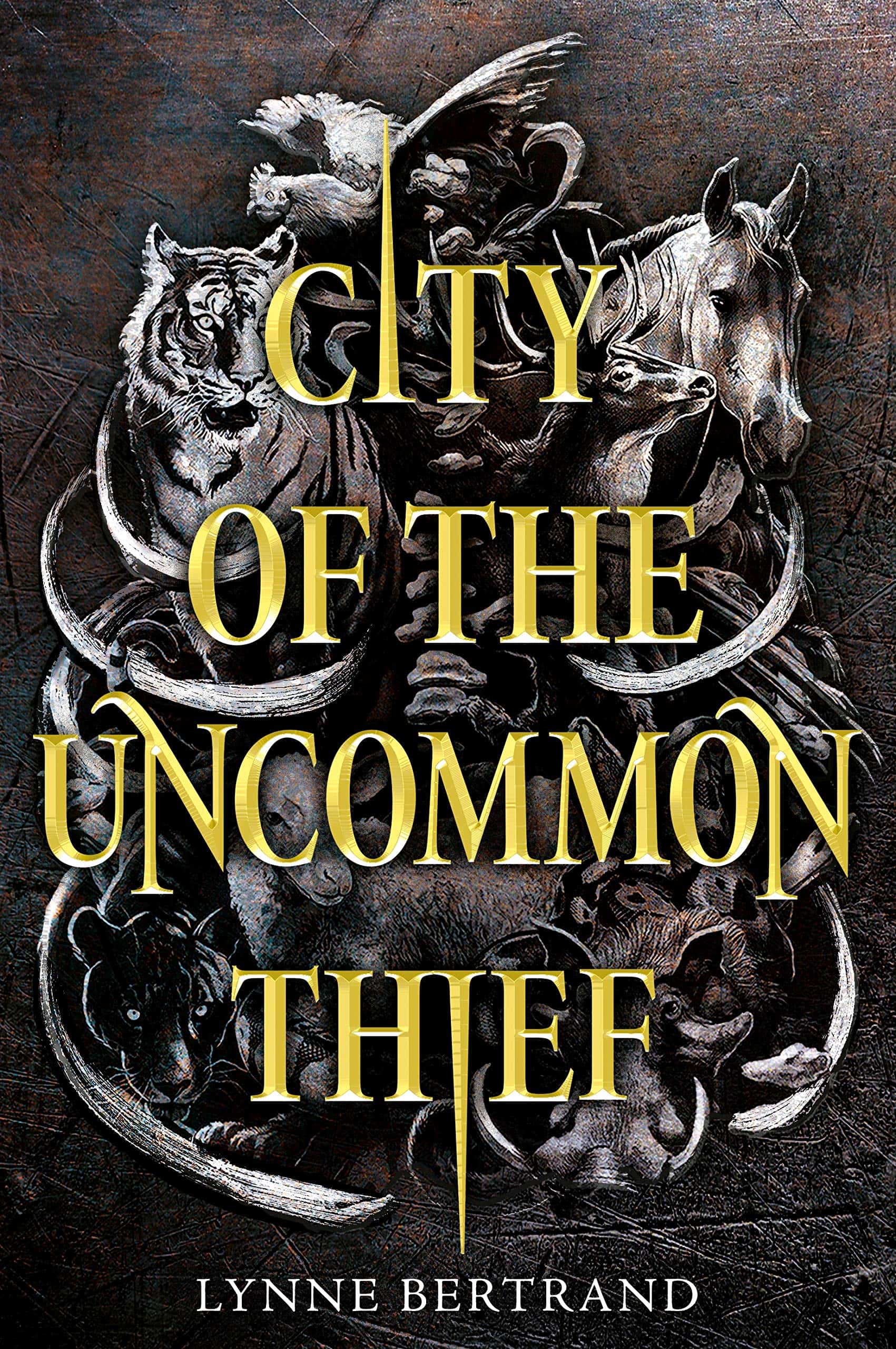
But lately I find that I’m being guided successfully by reader reviews, at places like Goodreads and Amazon. For example, the best review I’ve found for Lynne Bertrand’s debut YA novel City of the Uncommon Thief — and the one that made me want to track down a copy immediately — was this one by Melissa Mitchell at Amazon. Check it out:

In a quarantined city of mile-high buildings, the streets are full of monsters, and people pass their entire lives indoors. No one has ever seen this city on a map. There are no animals within the wall shielding it. And an entire year passes between supply deliveries from the outside world. In the prime of their lives, teenagers are chosen from each guild building as runners, where they dwell on the rooftops, zipping from roof to roof among the clouds, playing pranks on each other, delivering supplies between guilds. They are the only form of connection in a city that may as well consist of a hundred ships on the water. When Errol Thebes, well known hero among runners of all guilds, steals a powerful weapon, uncommon in ever way, he learns exactly what kind of darkness lurks beneath the city…

We all have tales to tell, especially Odd Thebes, and what a tale he weaves! The world building is fascinating, centered around the runners who fly from roof to roof, carrying messages, supplies, and bridging the connection between each building…

There’s something dark happening in the city. What starts as a very tight scope, broadens. Everyone who lives in the city accepts things for the way they are… They live in mystery. But Errol Thebes rips everything apart when he finds himself on the streets below. He becomes the hero the city needs.

City of the Uncommon Thief was published by Dutton Books on February 9, 2021. It is 400 pages, priced at $19.99 in hardcover, $10.99 digital, and $34.99 for the audio edition. Read a 2-page excerpt at The Nerd Daily. See all our recent New Treasures here.

Up and Down Again: Robert Silverberg’s Up the Line

Up and Down Again: Robert Silverberg’s Up the Line

Up the Line by Robert Silverberg
First Edition: Ballantine, August 1969. Cover art Ron Walotsky.
Also shown: Fourth printing, June 1981. Cover art Murray Tinkelman.

Up the Line
by Robert Silverberg
Ballantine (250 pages, $0.75, Paperback, August 1969)
Cover art Ron Walotsky

Having discussed Isaac Asimov’s The End of Eternity last time, I thought to move forward a decade or so and look back at a similarly recomplicated tale of time travel and time paradoxes: Robert Silverberg’s 1969 novel Up the Line.

Silverberg has written numerous novels and stories concerning time travel (there are photos of some of them lower down on this page), but there are different kinds of time travel stories, and Silverberg has focused on only a couple. Some involve simple trips into the future (Wells’ The Time Machine) or past (Silverberg’s own “Hawksbill Station”) with or without return tickets; others involve interfering in history and creating, inadvertently or intentionally, alternate timelines; others involve preventing such alternate timelines; and so on. Of Silverberg’s time travel stories, Up the Line is an example of the most complex type, about the potential paradoxes inherent in time travel, how to avoid them or deal with them. And so it’s his one novel most directly comparable to Asimov’s The End of Eternity.

The book was published as a paperback original by Ballantine Books, during Silverberg’s prolific middle period, in 1969. So far as I can tell, it has never been reprinted on its own in hardcover. (Per isfdb, it’s included in a 2003 Book Club omnibus with three other novels, and a 2011 Subterranean press omnibus with two other different novels, both of these omnibuses hardcovers. The most recent individual reprint of this novel is an ibooks trade paperback in 2002. None of these three volumes are available in new condition except at exorbitant prices.) So page references here are to the original Ballantine edition, last reprinted in 1988.

…

Read More Read More

Space-faring Creatures and Ancient Secrets: The Escaping Exodus Series by Nicky Drayden

Space-faring Creatures and Ancient Secrets: The Escaping Exodus Series by Nicky Drayden

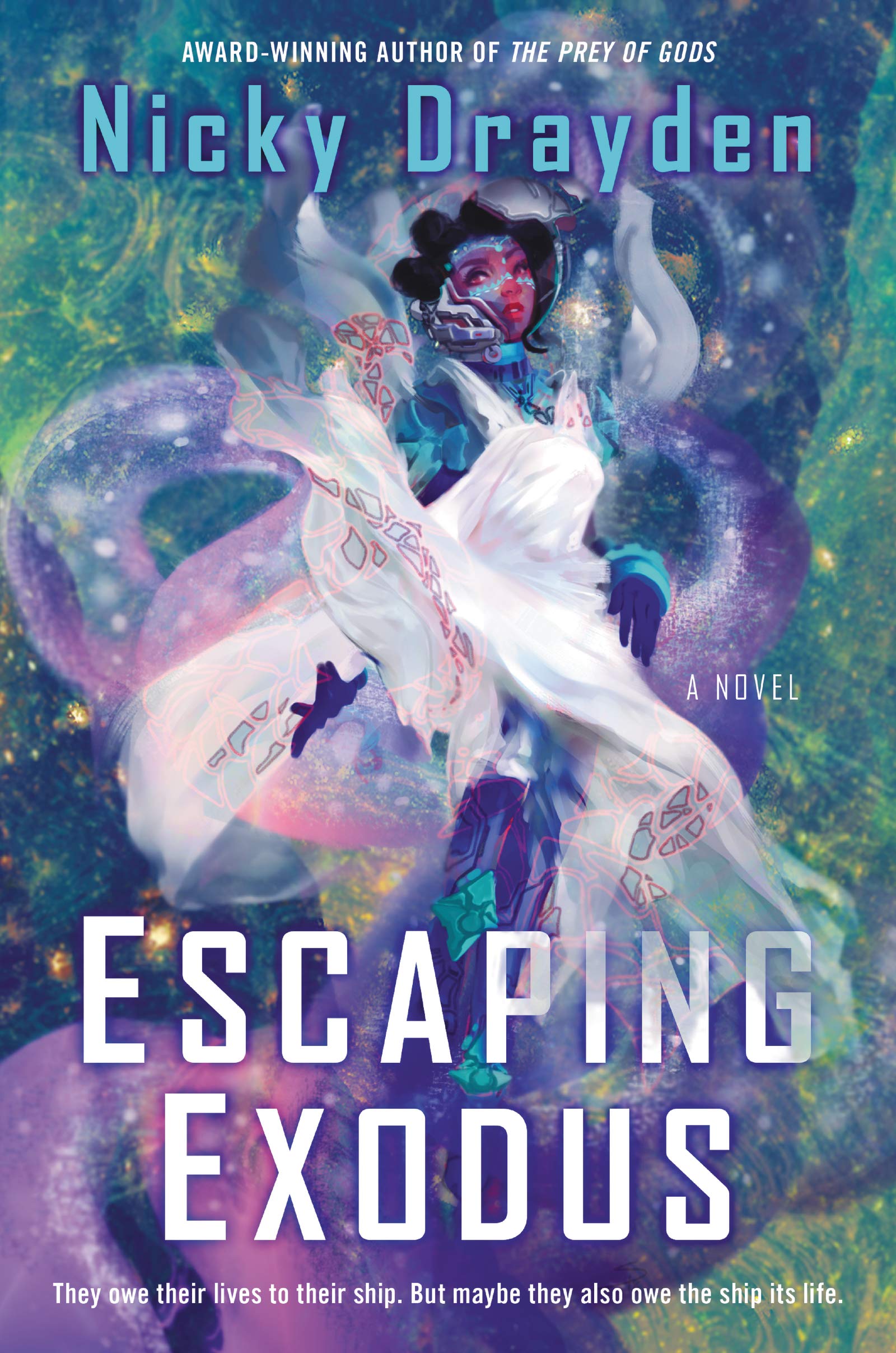
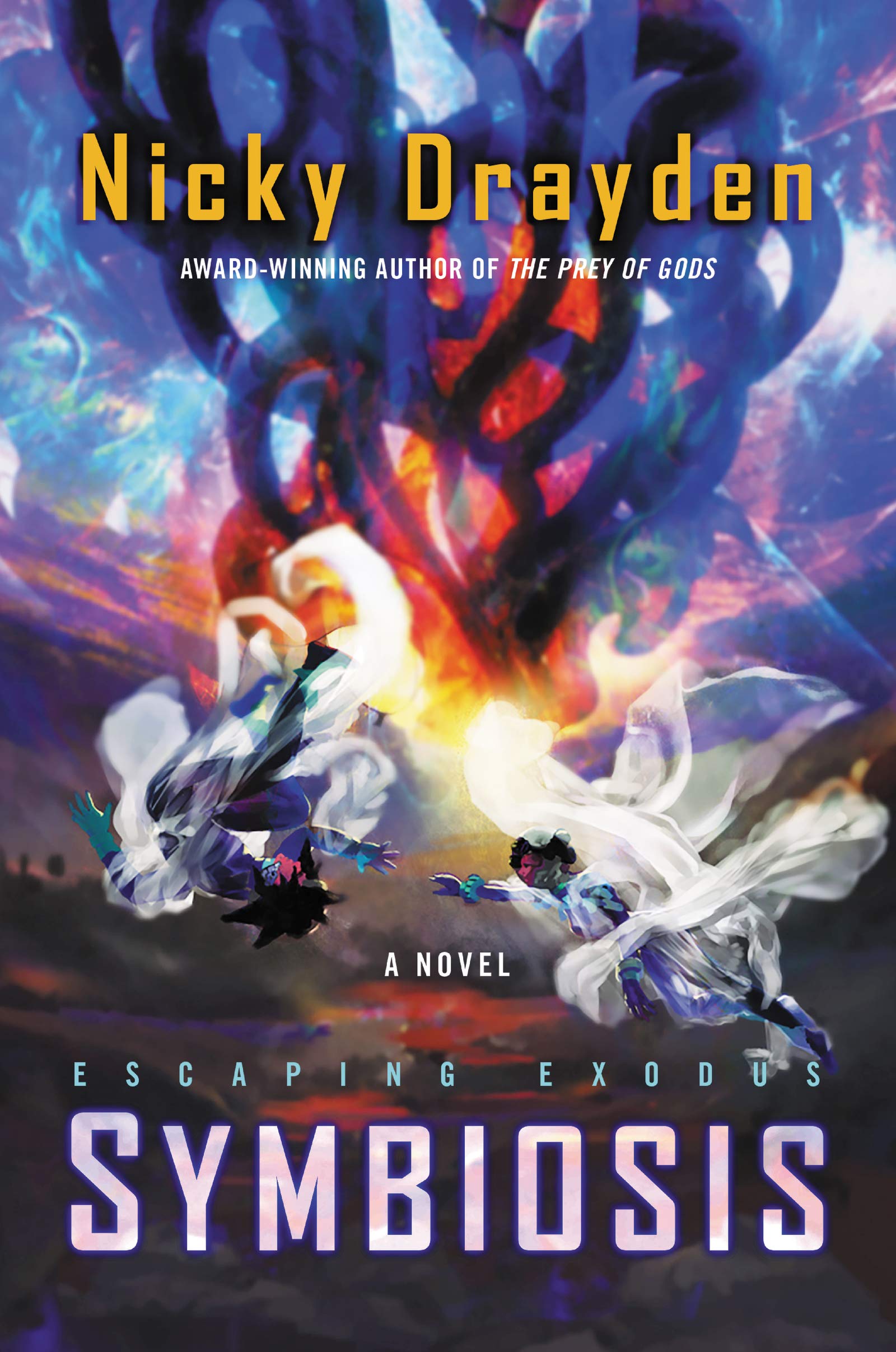
Escaping Exodus, Books 1 & 2, by Nicky Drayden (Harper Voyager, 2019 and 2021). Cover: Courtney ‘Seage’ Howlett, unknown

Nicky Drayden won the Compton Crook Award for her first novel The Prey of Gods. I was even more intrigued by Escaping Exodus, the opening volume in a far-future saga in which human society exists in the literal belly of a beast. In his enthusiastic review at Locus Online Tom Whitmore wrote “I don’t think I could have imagined such a book be­fore reading this one. This is something I’ve been missing.”

For a series as vast in scope and ambition as this one, the arrival of a sequel is something to celebrate. Escaping Exodus: Symbiosis was published by Harper Voyager yesterday; here’s the description.

Nearly a thousand years removed from Earth, the remnants of humanity cling to existence inside giant, space faring creatures known as the Zenzee. Abused and exploited by humans for generations, these majestic animals nearly went extinct, but under the command of its newly minted ruler, Doka Kaleigh, life in the Parados I has flourished. Thanks to careful oversight and sacrifice by all of its crew, they are now on the brink of utopia, and yet Doka’s rivals feel threatened by that success.
The Senate allowed Doka to lead their people believing he’d fail spectacularly — a disaster that would cement the legitimacy of their long-standing matriarchy. Despite vocal opposition and blatant attacks on his authority, Doka has continued to handle his position with grace and intelligence; he knows a single misstep means disaster. When a cataclysmic event on another Zenzee world forces Doka and his people to accept thousands of refugees, a culture clash erupts, revealing secrets from the past that could endanger their future. For Doka, the stakes are bigger and more personal than ever before — and could cost him his reign and his heart.

He has fallen for the one woman he is forbidden to love: his wife, Seske.

Doka and Seske must work closely together to sway the other Zenzee worlds to stop their cycles of destruction. But when they stumble upon a discovery that can transform their world, they know they must prepare to fight a battle where there can be no winners, only survivors.

Escaping Exodus: Symbiosis was published by Harper Voyager on February 23, 2021. It is 336 pages, priced at $16.99 in trade paperback, $11.99 in digital formats, and $26.99 in audio versions. No idea who did the cover, but I like it. Read an excerpt here.

See all our recent coverage of the best new SF and fantasy series here.

Future Treasures: Dead Space by Kali Wallace

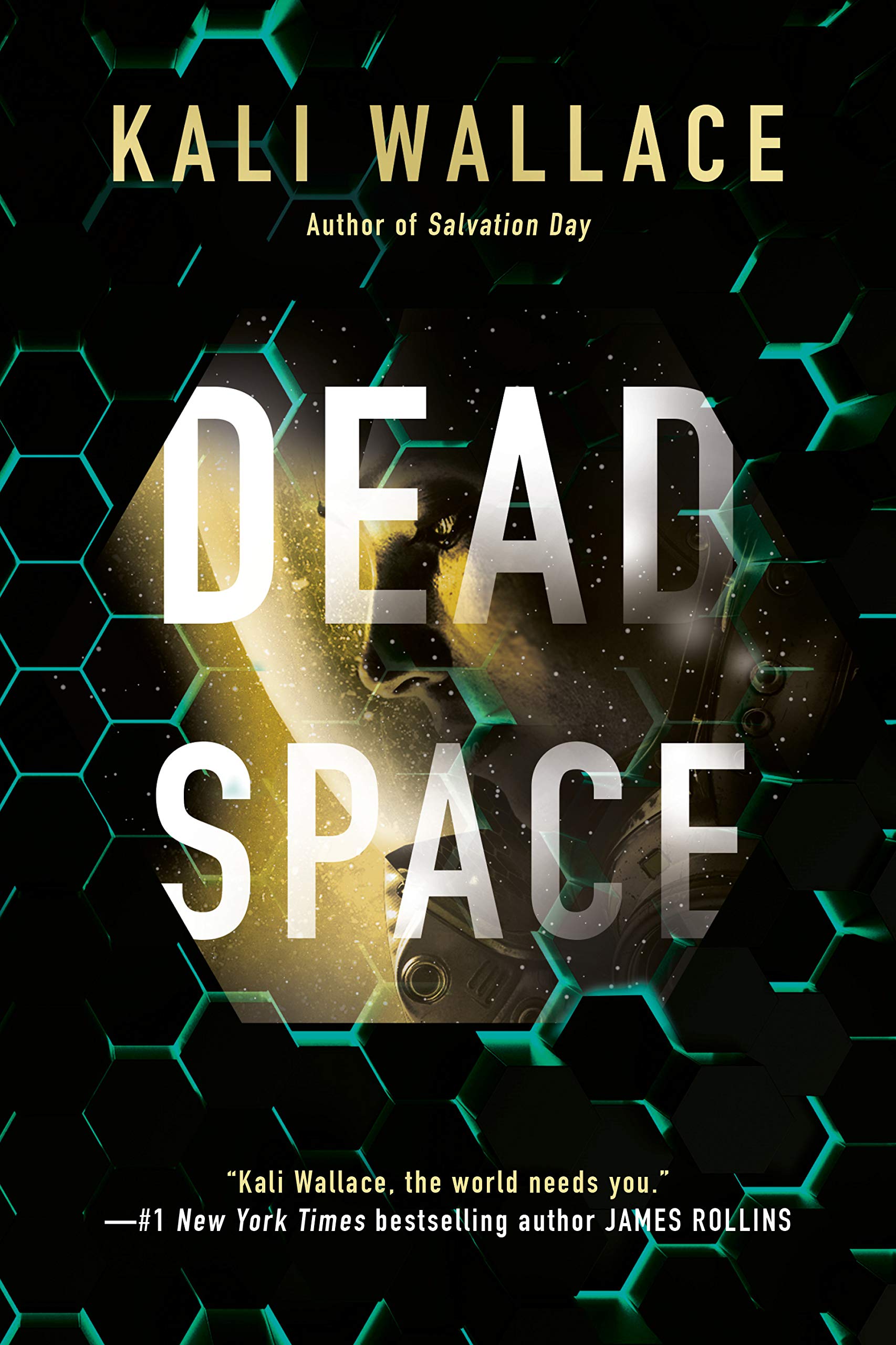
Future Treasures: Dead Space by Kali Wallace

Kali Wallace is the author of Salvation Day (July 2019), which Jeff Somers at the Barnes & Noble Sci-Fi & Fantasy Blog called a “sci-fi horror thriller [that] looks do outdo the scares of Alien, and comes damn close.”

Her new novel is Dead Space, and it got a rave from Publisher’s Weekly (“a locked-room mystery set on an asteroid mining colony… a gripping, cinematic sci-fi thriller that readers won’t want to put down.”) I’m liking these comparisons to Alien, and mysteries set on mining colonies. I’m thinking I need to check this one out. Here’s the publisher’s description.

An investigator must solve a brutal murder on a claustrophobic space station in this tense science fiction thriller from the author of Salvation Day.

Hester Marley used to have a plan for her life. But when a catastrophic attack left her injured, indebted, and stranded far from home, she was forced to take a dead-end security job with a powerful mining company in the asteroid belt. Now she spends her days investigating petty crimes to help her employer maximize its profits. She’s surprised to hear from an old friend and fellow victim of the terrorist attack that ruined her life — and that surprise quickly turns to suspicion when he claims to have discovered something shocking about their shared history and the tragedy that neither of them can leave behind.

Before Hester can learn more, her friend is violently murdered at a remote asteroid mine. Hester joins the investigation to find the truth, both about her friend’s death and the information he believed he had uncovered. But catching a killer is only the beginning of Hester’s worries, and she soon realizes that everything she learns about her friend, his fellow miners, and the outpost they call home brings her closer to revealing secrets that very powerful and very dangerous people would rather keep hidden in the depths of space.

Dead Space will be published by Berkley on March 2, 2021. It is 336 pages, priced at $17 in trade paperback, $11.99 in digital formats, and $24.50 for the audio version. Read a lengthy excerpt at the Penguin website.

See all our recent coverage of the best upcoming SF and fantasy releases here.

Science Fiction is a Small Community

Science Fiction is a Small Community

The Best Science Fiction Stories: 1953, edited by Everett F. Bleiler and T. E. Dikty (Frederick Fell, 1953). Cover art uncredited.

Two weeks ago I bought a handsome copy of The Best Science Fiction Stories: 1953, edited by Everett F. Bleiler and T. E. Dikty, from a seller on eBay. As I carefully opened the package, I noticed the return address said “Stephen E. Fabian.”

Huh. Like, Stephan Fabian, the artist? Naturally I did what any of you would have done. I dashed off a quick message to the seller, and in due course I received this friendly response:

Yes, I am Stephen E. Fabian, the artist, though I’ve been semi-retired since way back in 1992. Thanks for asking. Stay safe, Steve

Well, that was cool. Fabian, of course, is one of the most talented artists to ever work in the field of SF and fantasy. We’ve covered his work here many times, and you can see some of his gorgeous pen & ink work here.

But that brief exchange reminded me (as if I needed reminding) that the science fiction community is a small one, and you never know who you’re going to run into. It reminded me of that day I ran into Fred Pohl on the street in downtown Chicago, and the week I discovered that the Bill Johnson I’d been working with at Motorola for years was the same one who won a Hugo Award for “We Will Drink a Fish Together.”

…

Read More Read More

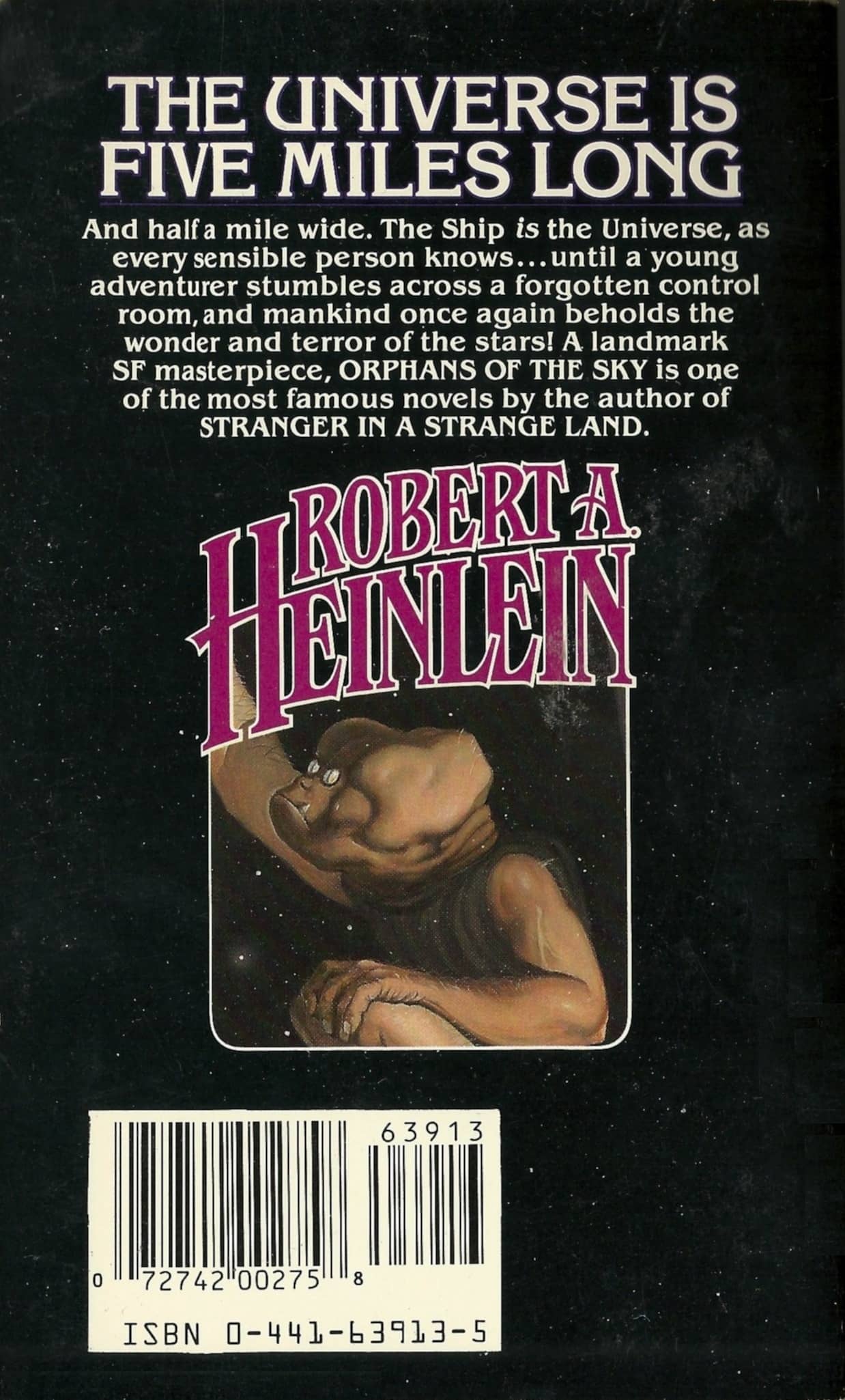
Vintage Treasures: Orphans of the Sky by Robert A. Heinlein

Vintage Treasures: Orphans of the Sky by Robert A. Heinlein

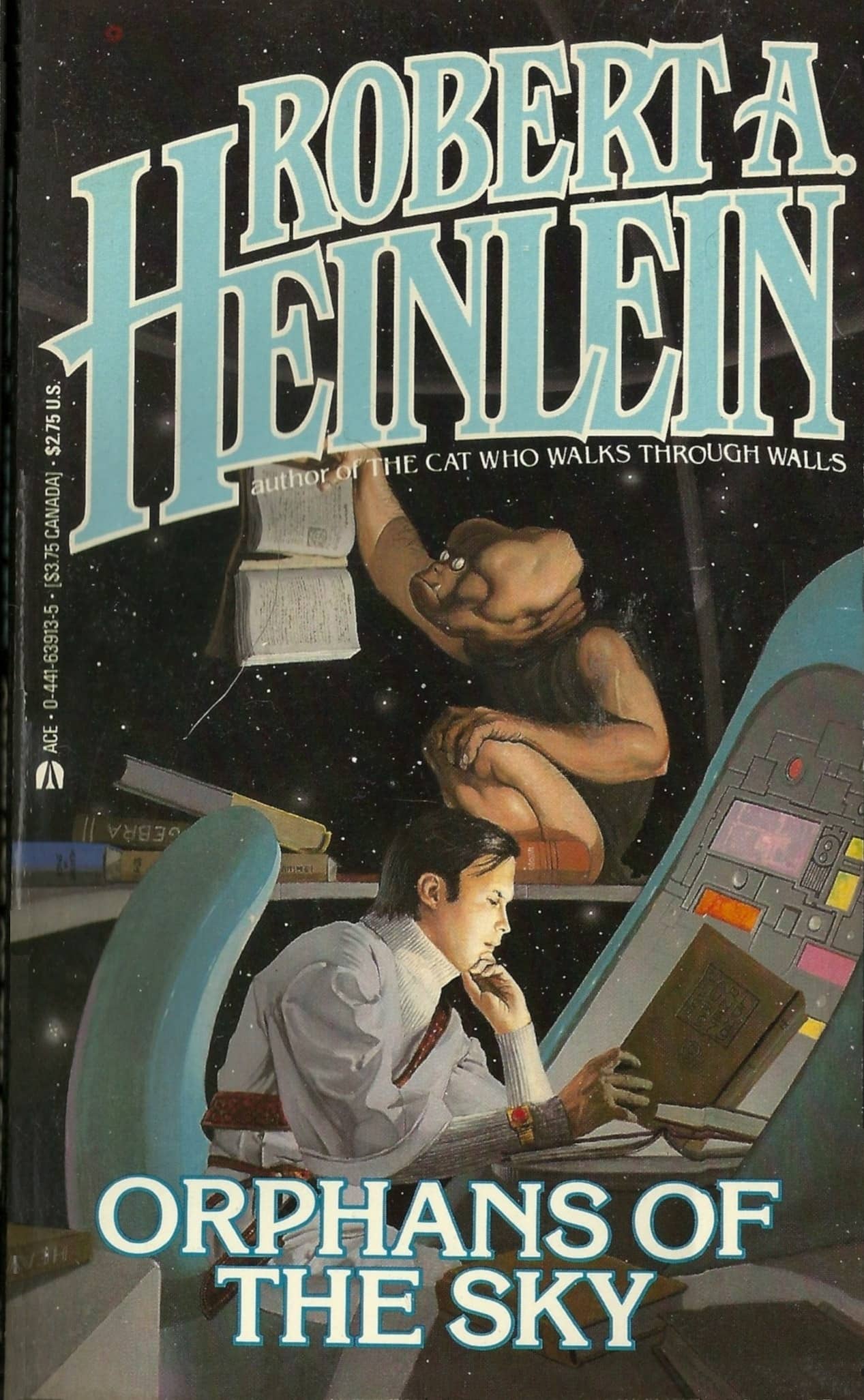
Orphans of the Sky (Ace Books, 1987). Cover by Carl Lundgren

Robert A. Heinlein never really did it for me. Even in my teens, when I was devouring any science fiction between covers, I didn’t get the appeal. I never read his juveniles, and I bounced hard off of Friday. I found Stranger in a Strange Land dull and unbelievable, and The Moon is a Harsh Mistress resisted every attempt I made to get past the first 20 pages.

Why’d I make so many attempts? Because the first Heinlein I ever read, the slender paperback novel titled Orphans of the Sky, was a slam-bang adventure tale set on a six mile-long spaceship that twisted my head around. It was packed full of interesting characters and genuine surprises, and fit in well with the pulp SF by Asimov, Charles R. Tanner, and Edmond Hamilton — and movies like Star Wars and Alien — that was filling my head up at the time.

Orphans of the Sky fit the mold of pulp SF because it was pulp SF. It was originally published (as two separate novelettes, “Universe” and “Common Sense”) in Astounding Science Fiction in 1941 and follows the adventures of Hugh Hoyland, a scientist’s apprentice on the enormous generation ship Vanguard, whose inhabitants have long since forgotten their origins. When Hugh is captured by mutants and begins to learn the true nature of the Vanguard, he leads an onboard mutiny that changes the fate of everyone.

…

Read More Read More