Browsed by
Category: Books

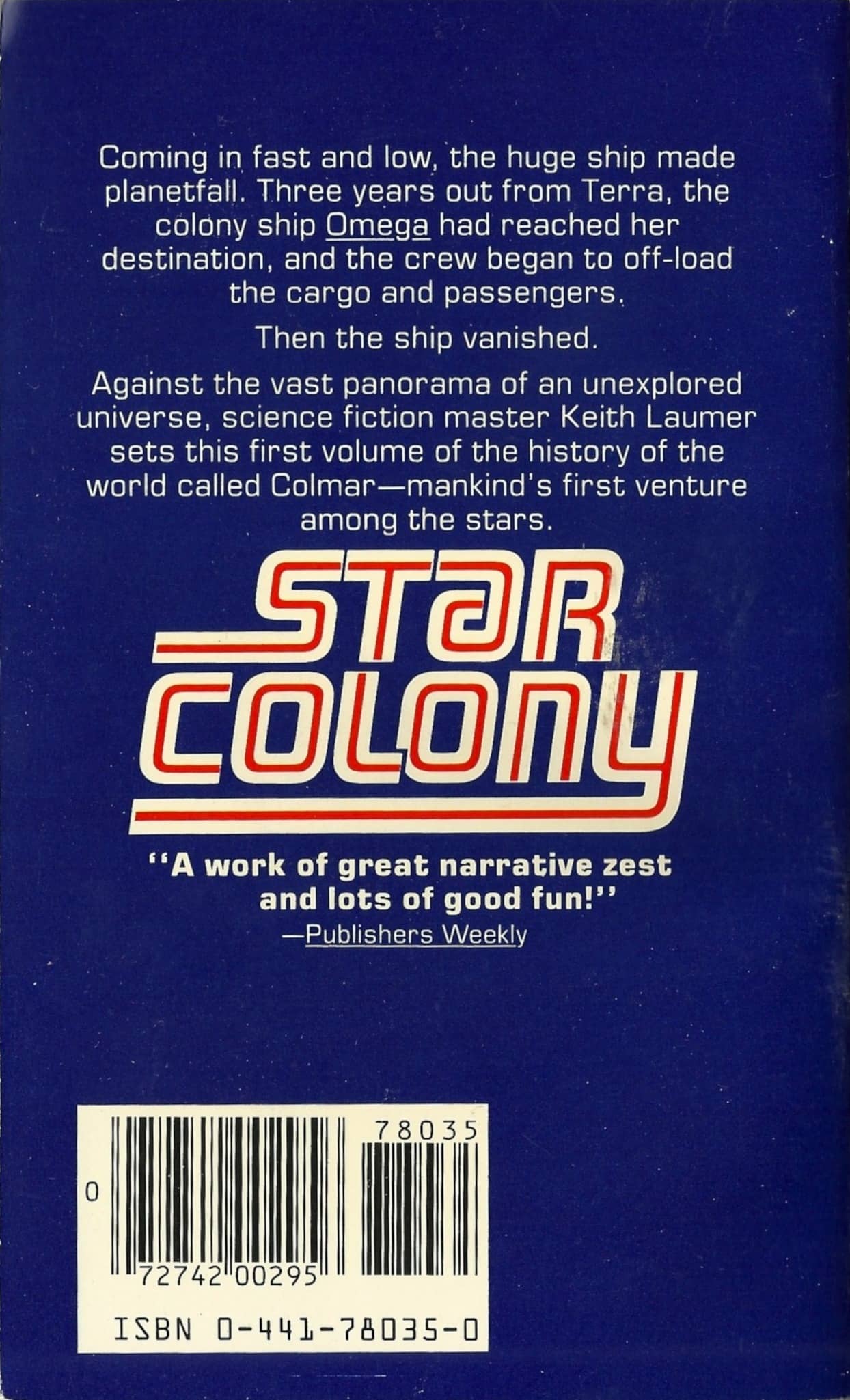
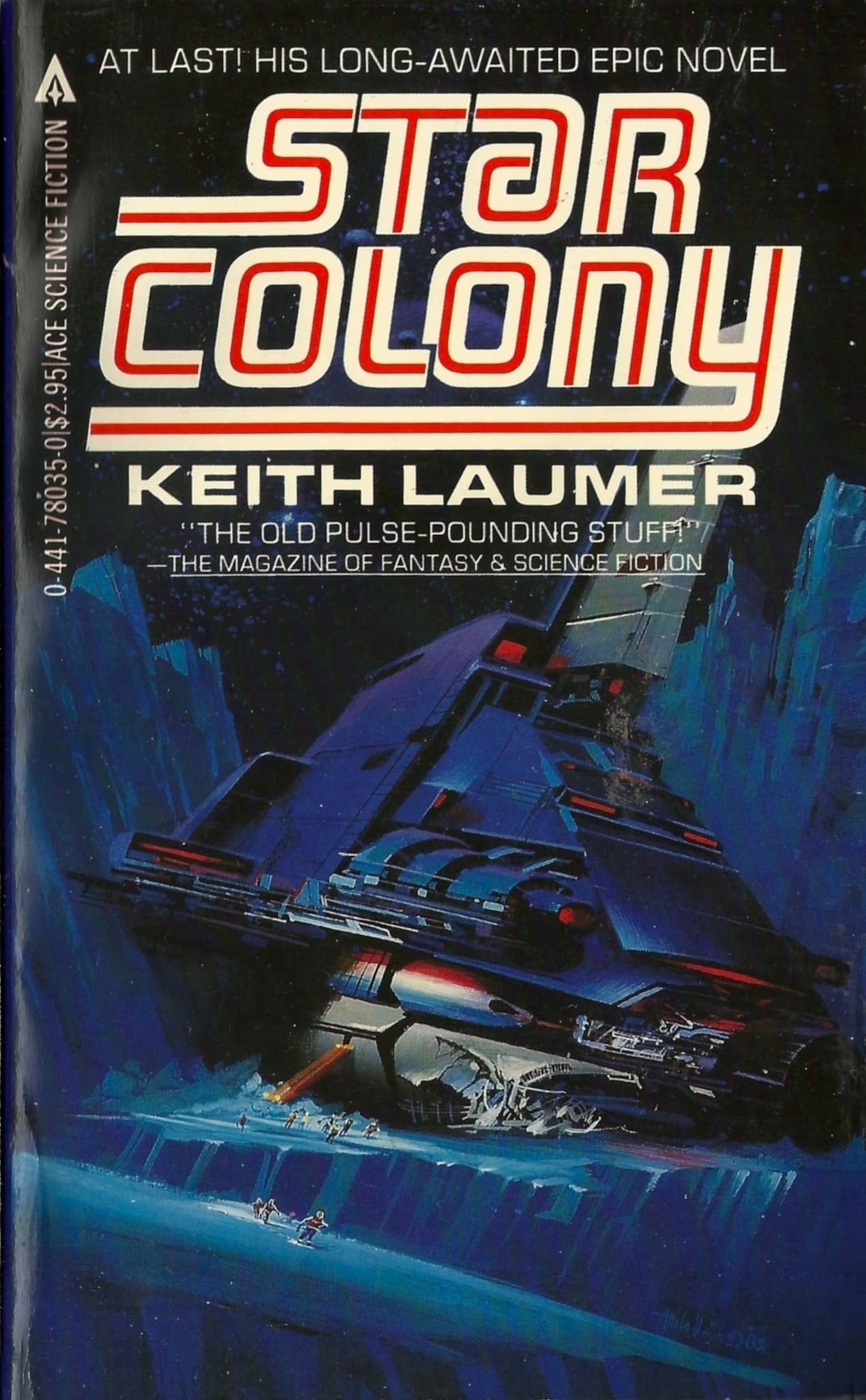
Vintage Treasures: Star Colony by Keith Laumer
Vintage Treasures: Star Colony by Keith Laumer


Star Colony (Ace Books, 1983). Cover by Attila Hejja

Keith Laumer was an Air Force officer and a diplomat in the United States Foreign Service before becoming a full-time SF writer in the late 50s. He was a familiar face in the digest SF mags, with four stories nominated for Hugo or Nebula Awards, and A Plague of Demons was nominated for the Nebula Award for Best Novel in 1966. His most famous series, the satirical adventures of the cool-headed galactic diplomat Retief, and the military future-history focused on Bolo super-tanks, were popular for many years.

Laumer famously suffered a stroke in 1971 that left him unable to write for many years; a long rehabilitation eventually enabled him to pick up a pen again, but his work suffered noticeably. As Wikipedia notes:

The quality of his work suffered, and his career declined. In later years, Laumer also re-used scenarios and characters from earlier works to create new books, which one critic felt limited their appeal: “Alas, Retief to the Rescue doesn’t seem so much like a new Retief novel, but a kind of Cuisinart mélange of past books.”

Laumer’s editors and publishers, and many of his readers, remained loyal for many years, publishing, promoting and reading many books that were markedly different from his earlier output. In 1983 Ace put substantial marketing dollars behind the 400-page space opera Star Colony, advertised as “His Long-Awaited Epic Novel.”

Reviews weren’t kind. Kirkus called it,

A disjointed pseudo-docudrama detailing the “”history”” of star colony Omega, with only a few flashes of the old Laumer wit… Less a novel than a set of intermittently amusing stories weakly cobbled together — with lots of comic-book action, silly dialogue and little overall coherence.

Modern readers haven’t been much more generous. Star Colony has a 3.06 rating at Goodreads; this review by James is fairly typical.

…

Read More Read More

New Treasures: 2034: A Novel of the Next World War by Elliot Ackerman and Admiral James Stavridis

New Treasures: 2034: A Novel of the Next World War by Elliot Ackerman and Admiral James Stavridis

I’m hearing a lot of buzz about this book.

I first heard about it in Andrew Liptak’s March newsletter (the “15 science fiction and fantasy books to check out this March” installment), in which he wrote:

I’m a big fan of military fiction, especially stuff that’s close to the horizon when it comes to predicting the future, like P.W. Singer and August Cole’s Ghost Fleet. This new novel comes from Elliot Ackerman and Admiral James Stavridis, and is set nearly a decade from now, chronicling how a world war between the US and China might occur.

I’ve been reading an advance copy of this, and it’s a chilling read, one that looks at the plausible future when it comes to cybersecurity, military hardware, and geopolitics.

Wired devoted an entire issue to an excerpt of the novel, which includes the first six chapters.

Wired in fact calls it “A rippingly good read… even cautionary tales can be exciting, when the future we’re most excited about is the one where they never come true.” Kirkus says it’s “A frightening look at how a major-power showdown might race out of control… This compelling thriller should be required reading for our national leaders.”

2034 is written by two former US military officers, and the publisher describes it as

A chillingly authentic geopolitical thriller that imagines a naval clash between the US and China in the South China Sea in 2034 — and the path from there to a nightmarish global conflagration.

2034: A Novel of the Next World War was published by Penguin on March 9, 2021. It is 320 pages, priced at $27 in hardcover, $14.99 digital, and $24.99 in audio formats.

See all our recent New Treasures here.

Mad Shadows, Book Three: The Heroes of Echo Gate by Joe Bonadonna

Mad Shadows, Book Three: The Heroes of Echo Gate by Joe Bonadonna

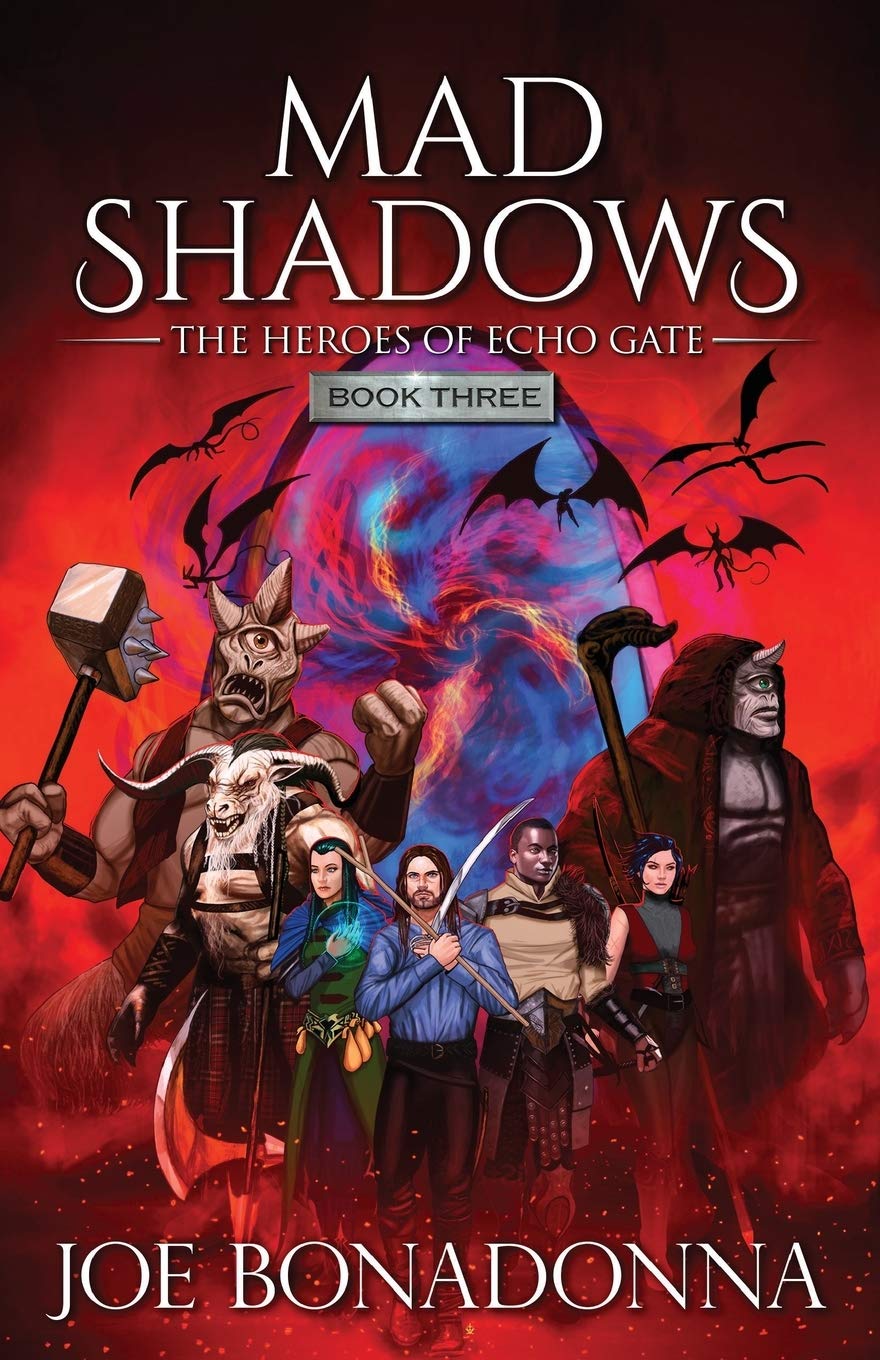
Mad Shadows, Book Three: The Heroes of Echo Gate (Pulp Hero Press, February 26, 2021). Cover artist unknown

Joe Bonadonna’s ‘Dorgo the Dowser’ emerges with new content in Mad Shadows Book Three: The Heroes of Echo Gate. It is available now in paperback ($17.95 for the 332-page paperback; $2.99 Kindle). Under the recent charge of Pulp Hero Press, the first two books have been reprinted in glorious style (Book One: Mad Shadows by Joe Bonadonna and Book Two: Dorgo the Dowser and the Order of the Serpent). The release of Book Three: The Heroes of Echo Gate marks the tenth year anniversary of the first book’s publication. The official book blurb clarifies what to expect in the latest installment:

Dorgo’s Greatest Challenge

During an arduous and dangerous trek through the Scarlet Desert in search of the fabled Well of Tears, Dorgo the Dowser and his companions accidentally uncover an ancient artifact buried for eons beneath the blood-colored sand. After a harrowing, action-packed journey through the desert they find the Well of Tears, the repository of God’s tears, and there encounter the ghosts of the Sisters of the Blue Light, the Guardians of the Well. The nuns tell them about the relic of antiquity they found: it is a thing of cosmic evil — a thing not of their world, a thing which must be destroyed. But the answer to destroying that artifact is a riddle Dorgo and his companions must discover for themselves.

When the Spirit trapped inside the artifact is set free by one of their companions, Dorgo and the others learn that the evil now threatens not only their world, but all the Otherworlds of the multi-dimensional Echoverse. The key to destroying this evil is somehow tied in with the demons seeking to control Echo Gate — the master portal that leads not only to every world in the Echoverse, but through Space and Time, as well. As a great battle erupts on the island of Thavarar, where Echo Gate is located, Dorgo and his companions must unravel the mystery of the thing they found in the desert, and discover the means by which it can be destroyed.

…

Read More Read More

Vintage Treasures: Invaders of Earth edited by Groff Conklin

Vintage Treasures: Invaders of Earth edited by Groff Conklin


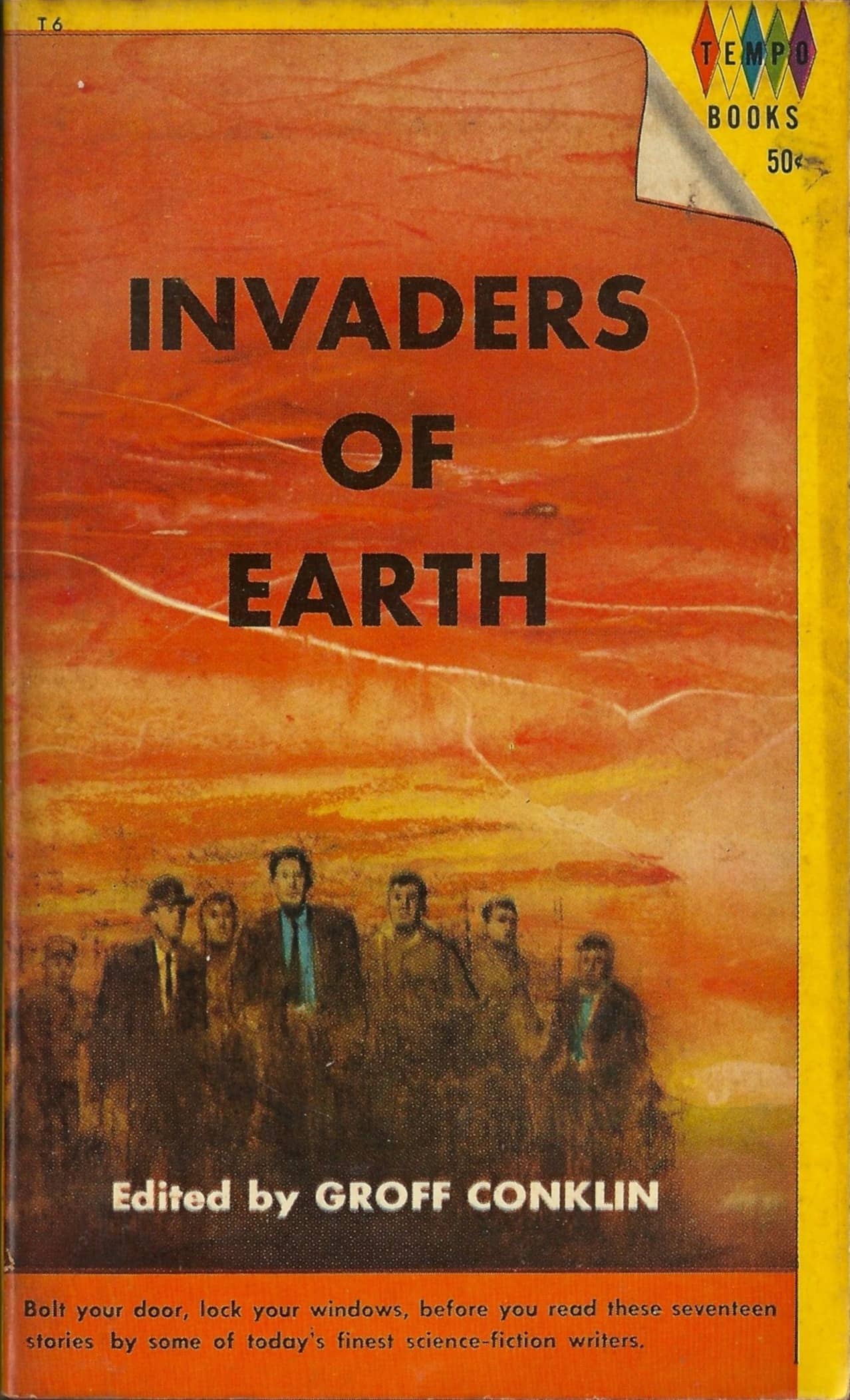
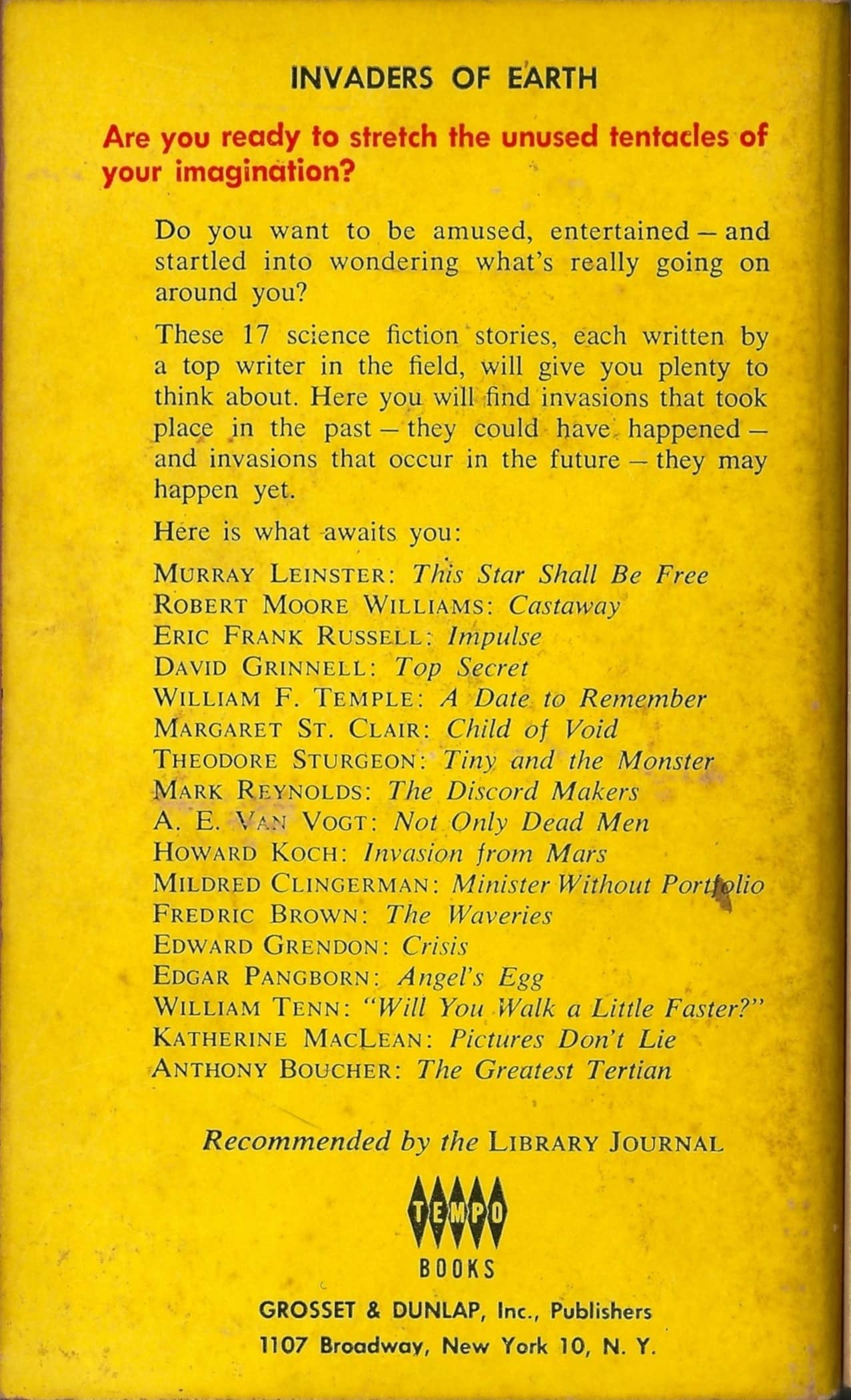
Invaders of Earth (Tempo, September 1962). Cover artist unknown

Before his untimely death in 2016, Bud Webster was Black Gate‘s poetry editor and one of our finest columnists. He wrote a number of Who? columns on forgotten SF writers for our print issues, and thoughtful pieces on selling books at conventions for our website. In his paean to the science fiction anthologies of his youth, Anthopology 101: Reflections, Inspections and Dissections of SF Anthologies, Bud wrote fondly about the great SF anthologies of the 40s, 50s and 60s. Here’s an excerpt from Above the Rest, the chapter dedicated to editor Groff Conklin.

I kept noticing that the stories I liked best, the ones I’d remember from one week to the next, the ones I thrust on my friends with the words “You GOTTA read THIS one!”, all seemed to come from the Conklin anthologies. So, I began pulling his books off the library shelves before I picked Bleiler’s, or Pohl’s, or the others, and when I found (joy of joys!) a dingy little shop near my school that sold ratty old paperbacks for a dime, Conklin’s were the ones I looked for first.

In a note to me about Conklin, Jack Williamson said, “His anthologies…. were landmarks, and I think they had a good deal to do with a wider acceptance of SF…”

In compiling this beast, I’ve read reviews, looked at web pages, and talked to long-time SF readers, fans and pros over and over. When anthologies are discussed, certain names are always mentioned: Pohl, Merril, Bleiler and Dikty, Healy and McComas…. and their relative merits discussed at length. But when Conklin’s name comes up, they invariably nod and say, “Oh, yeah, anything by Groff Conklin.”

Like Bud, my early exposure to adult science fiction was in SF anthologies I found in school libraries, in my case edited by Terry Carr, Robert Silverberg, and Isaac Asimov. But I discovered Conklin soon enough, and one of my favorites was his 1952 anthology of alien invasion tales, Invaders of Earth.

…

Read More Read More

Incredible, In More Ways than One: Richard Matheson’s The Shrinking Man

Incredible, In More Ways than One: Richard Matheson’s The Shrinking Man

The Shrinking Man by Richard Matheson
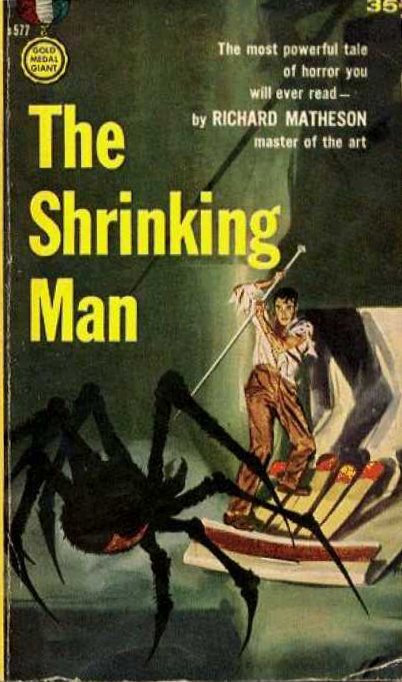
First Edition: Fawcett Gold Medal, May 1956. Cover art MH.

The Shrinking Man
by Richard Matheson
Fawcett Gold Medal (192 pages, $0.35, Paperback, May 1956)
Cover art MH

I think it safe to say that Richard Matheson is best remembered today for his novels and stories that were adapted into films and TV scripts, including the dozen plus scripts he himself wrote for Rod Serling’s The Twilight Zone TV series in the late 1950 to early ‘60s. (An ironic exception is Matheson’s first-published short story, “Born of Man and Woman” (1950), which remains in print in the first volume of The Science Fiction Hall of Fame.)

Matheson’s first six novels, at least, from I Am Legend (1954) to What Dreams May Come (1978), were all adapted into films. (Among short stories adapted into film was 1971’s “Duel,” which became a TV movie under Steven Spielberg’s direction). The earliest film adaptation came from his second novel, The Shrinking Man (1956), becoming the striking if dubiously plausible 1957 film dubbed, Hollywood-style, The Incredible Shrinking Man. I suspect more people have seen the film than have read Matheson’s novel. Yet while I’m reviewing the book here and not the film (which I last saw decades ago), I will compare the two on a few points, mainly because Matheson himself wrote the screenplay for the film. So the differences between novel and film may be instructive.
…

Read More Read More

Future Treasures: Skyward Inn by Aliya Whiteley

Future Treasures: Skyward Inn by Aliya Whiteley

Skyward Inn (Solaris, March 16, 2021)). Cover by Dominic Forbes

Aliya Whiteley is the author of The Beauty (which I described as “dystopian horror filled with cosmic weirdness, strange fungi, and terrifying tales told around post-apocalyptic campfires” three years ago), The Arrival of Missives, and Skein Island. If you’ve been paying attention, you’ve probably noticed that Whiteley is accumulating a rep for SF on the weird side.

Her newest certainly fits that mold. SFX calls Skyward Inn “A melancholy and compellingly weird tale of identity in crisis,” and Publisher’s Weekly says it’s a “deeply weird story of missed chances, invasion, and assimilation.” I don’t know about you, but those sound like compelling endorsements to me. Here’s the publisher’s description.

Drink down the brew and dream of a better Earth.

Skyward Inn, within the high walls of the Western Protectorate, is a place of safety, where people come together to tell stories of the time before the war with Qita.

But safety from what? Qita surrendered without complaint when Earth invaded; Innkeepers Jem and Isley, veterans from either side, have regrets but few scars.

Their peace is disturbed when a visitor known to Isley comes to the Inn asking for help, bringing reminders of an unnerving past and triggering an uncertain future.

Did humanity really win the war?

Skyward Inn will be published by Solaris on March 16, 2021. It is 336 pages, priced at $24.99 in hardcover, $6.99 in digital format, and $24.99 for the audiobook. Read an excerpt at SciFiNow.

See all our coverage of the best upcoming SF and fantasy here.

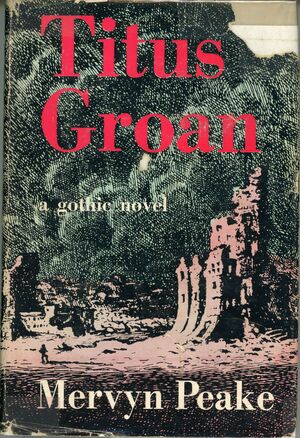
A Work of Pure, Violent, Self-Sufficient Imagination: Titus Groan by Mervyn Peake

A Work of Pure, Violent, Self-Sufficient Imagination: Titus Groan by Mervyn Peake

Mervyn Peake‘s 1946 novel, Titus Groan, was intended as the first in a series that would follow the life of Titus Groan, Seventy-seventh Earl of Gormenghast, a vast, city-like castle set in a land of indeterminate latitude and longitude. Unfortunately, Peake was afflicted with what is believed to have been Parkinson’s Disease, and so finished only two other volumes, Gormenghast (1950) and Titus Alone (1959), and a novella, Boy in Darkness (1956). He succumbed to his illness in 1968, leaving only a few paragraphs and ideas for proposed future volumes. From those elements, his wife, Maeve Gilmore, completed a final book, Titus Awakes, which wasn’t published until 2009. By his son Sebastian’s account, it isn’t really a continuation of the series, but an attempt by Gilmore to address the loss of Peake.

Graham Greene helped edit Titus Groan into publishable form. Elizabeth Bowen and Anthony Burgess both thought highly of the book and Harold Bloom considered the Gormenghast trilogy the most accomplished fantasy work of the twentieth century. Michael Moorcock, a friend of Peake’s, has written several times about Peake’s artistry, and his own novel, Glorianna, is dedicated to Peake. Despite the support of so many writers, the books weren’t published for a second time until the late sixties by Penguin, and then as part of Lin Carter’s Ballantine Adult Fantasy line.

A satire of manners and a critique of blind adherence to dead tradition, despite having few clear fantastic elements it is easily one of the great literary works of fantasy. It might not match the success of The Lord of the Rings, but in its richness of imagination it does, and outpaces it in the depth and human variety of its characters.

Titus Groan opens on the day of the birth of its titular character and ends a year later when he is made Earl of Gormenghast. The story, while it revolves around his birth and accession, is not his, but that of several other characters, primarily Steerpike, a kitchen boy intent on forcing his way upward to a position of power in the castle.

Steerpike by Peake

Escaping the horrid Great Kitchen ruled by the even more horrid cook, Abiatha Swelter, Steerpike quickly realizes that the weight of Gormenghast’s customs and codes cannot be overcome, but might be subverted to his aims. Slowly, by charisma, guile, and plotting, he begins to do so. Subversion, arson, and murder are all relentlessly and remorselessly employed toward his ends.

Simultaneous to Steerpike’s ascent, Mr. Flay, servant to the current Earl, Lord Sepulchrave, is engaged in a war of wills with the cook, Swelter. Though the conflict plays out outside of everyone else’s observation, its conclusion has great ramifications in the second book.

Like a Dickens novel, the book is filled with numerous digressions and tangential side plots as well as a large assortment of minor characters. On their own, each may seem to do little to further Titus Groan‘s larger story, but taken together they deepen and enrich everything else in the novel.

Titus Groan is one of the great achievements of literary worldbuilding. Peake spent his childhood in China, the son of British missionaries. The segregated community he grew up in, as well as the model of the Forbidden City of the Chinese emperor, itself ruled by tradition and ritual, must have informed his conception of Gormenghast. From those raw elements, Peake created a world that is vast yet strictly confined, and limited by more than just walls.

…

Read More Read More

Goth Chick News: Devolution Gets Picked Up by Legendary – Let’s Hope They Get It Right

Goth Chick News: Devolution Gets Picked Up by Legendary – Let’s Hope They Get It Right

First, let me apologize for not telling you about this last summer. Max Brooks, son of Mel and writer of one of my favorite zombie tales ever, World War Z, dropped another excellent story last year, called Devolution: A Firsthand Account of the Rainier Sasquatch Massacre. I was certain I had written about it until I just went to look for the article and found I did not.

So, let’s start there.

I didn’t grab Devolution the moment it hit the shelves. Why? Because when I read “sasquatch massacre” I pondered the likelihood I could take this book seriously. I mean, come on. Big foot, in most of his iterations, cannot help but evoke images of bad reality TV, insurance commercials and debunked mythos. I wasn’t sure I could set these images aside and willingly go with Brooks into a tale where the words “sasquatch” and “massacre” were used in the same sentence while keeping a straight face.

Having met Brooks on a couple of occasions, I know how seriously he researches his subject matter. We discussed how much of what he describes in World War Z is based in actual science, and how many scientists and doctors he interviewed to get everything just right. So, I should have known better than to think he wouldn’t do exactly the same thing with his topic in Devolution.

…

Read More Read More

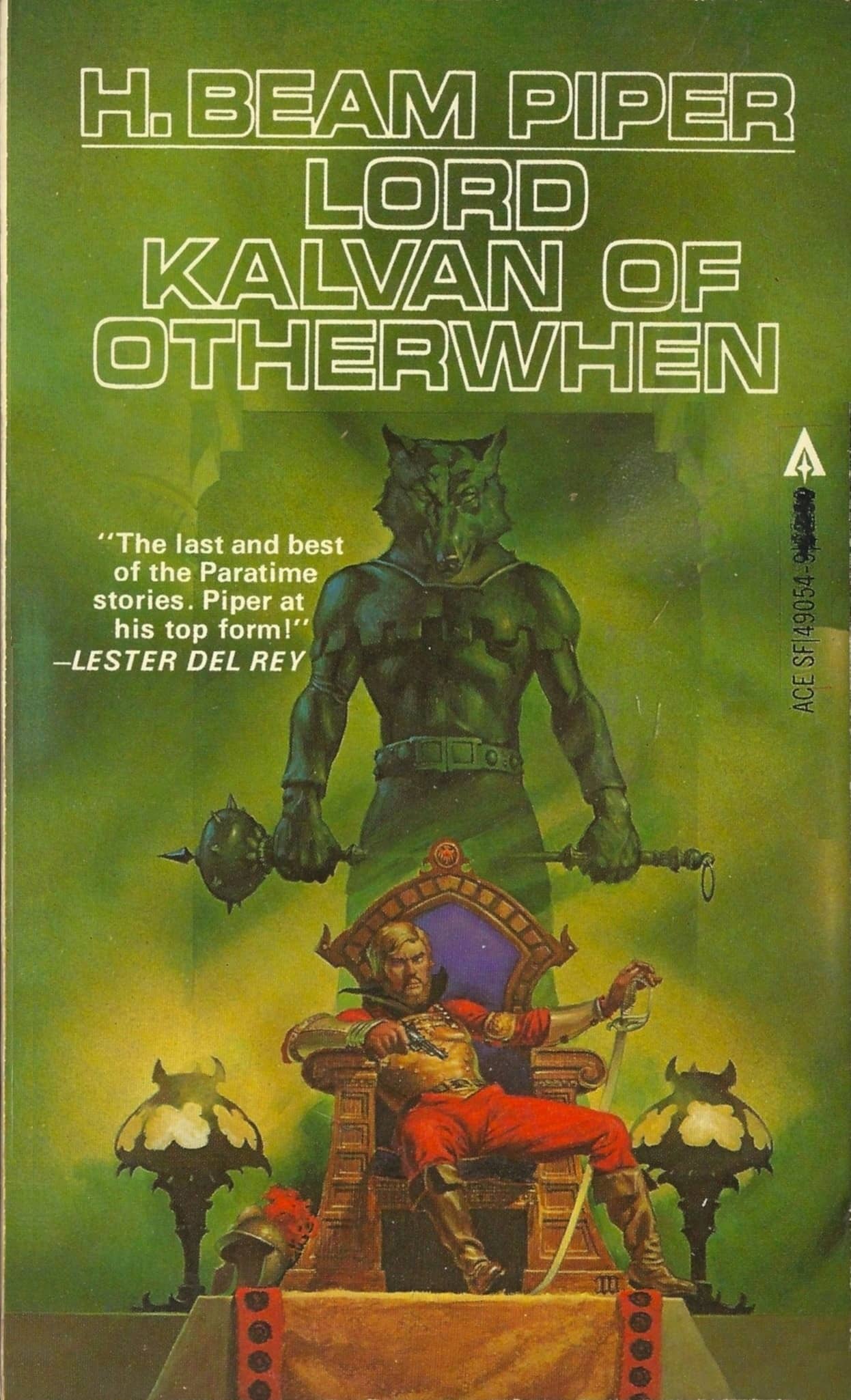
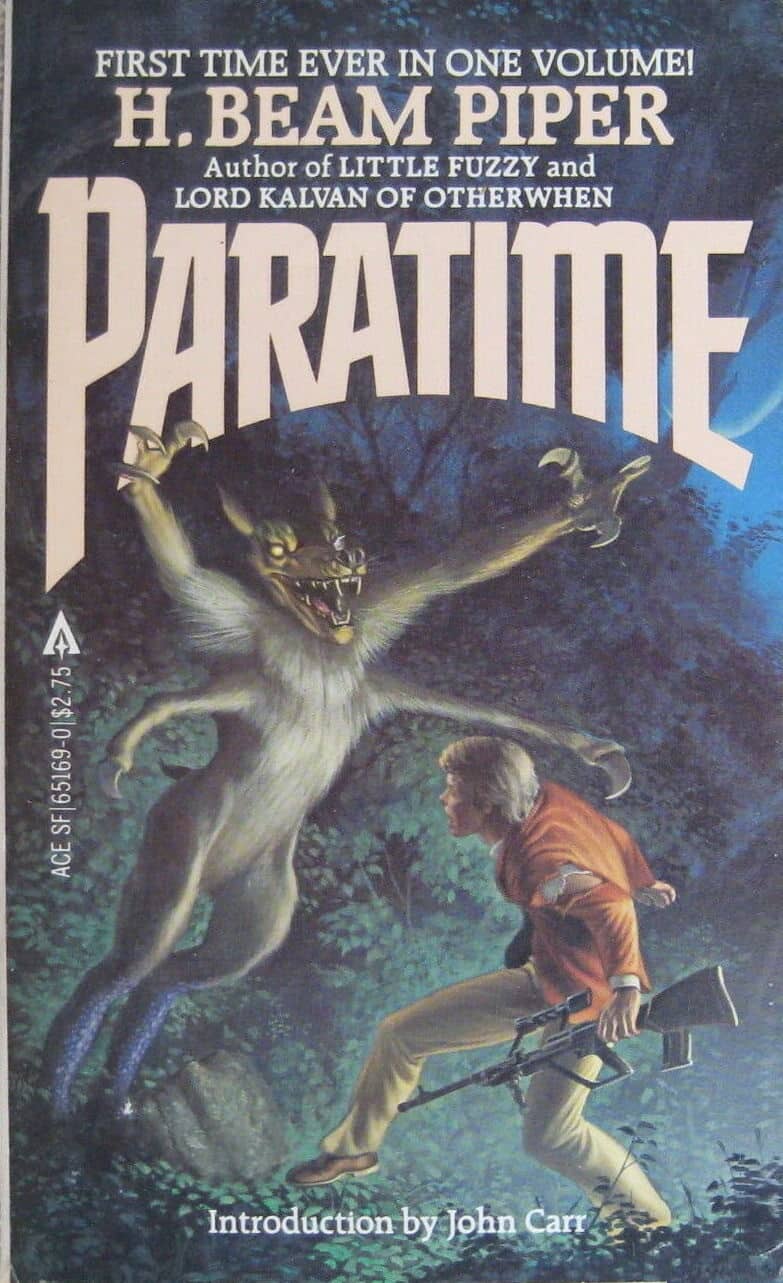
Vintage Treasures: H. Beam Piper’s Paratime Tales

Vintage Treasures: H. Beam Piper’s Paratime Tales

Lord Kalvan of Otherwhen (Ace, 1977) and Paratime (Ace Books, 1981). Covers by Michael Whelan

H. Beam Piper was one of my favorite science fiction writers in my formative years. I adored his Fuzzy novels — Little Fuzzy (1962), Fuzzy Sapiens (1964), and the “long lost” novel Fuzzies and Other People (1984), published twenty years after Piper died by suicide in 1964 — and they were one of the first science fiction novels I passed along to my children when they were old enough to read (they were a huge hit). Piper was also well known for his Federation/Empire future history stories, chiefly published in Astounding.

Piper was also a pioneering writer in the field we now call Alternate History, with his entertaining tales of the Paratime police, who patrol alternate timelines to both keep their existence secret and protect them from those who’d exploit or destroy them. They were collected in Lord Kalvan of Otherwhen, a fix-up novel composed of the long novella “Gunpowder God” and novelette “Down Styphon!”, and Paratime, which gathers five tales published in Astounding between 1948 and 1955.

The opening story “He Walked Around the Horses, originally published in 1948, offers an SF explanation for the centuries-old mystery surrounding the true-life disappearance of British diplomatic envoy Benjamin Bathurst during the Napoleonic Wars. Many of the tales are considered some of the finest to appear in Astounding, and have been anthologized numerous times, in The Best of Astounding (1978), Analog: The Best of Science Fiction (1985), Damon Knight’s Science Fiction Argosy (1972), and many other places. The 1950 novella “Last Enemy” was nominated for a retro-Hugo in 2001. (It lost out to “The Man Who Sold the Moon” by Robert Heinlein.)

Writing in The Encyclopedia of Science Fiction, John Clute claims, “Lord Kalvan of Otherwhen remains the most successful and enjoyable of all these tales.” It was published in 1965, just after Piper died. As Clute notes, “He died in his prime.”

…

Read More Read More

Revealing the Cover — and an Excerpt — from Robert V. S. Redick’s Sidewinders

Revealing the Cover — and an Excerpt — from Robert V. S. Redick’s Sidewinders

We’re big fans of Robert V. S. Redick here at Black Gate. I’ve lost count of how many of his books our staff has enthusiastically reviewed over the years but… whew, it’s a lot. That’s why we’re so excited at the impending release of Sidewinders, the second volume in The Fire Sacraments series (following Master Assassins, which we covered — you know it! — right here back in 2018).

As if we weren’t excited enough already, Black Gate website editor emeritus C.S.E. Cooney sent us this blurb for the book and I have to tell you, it wound us up pretty good. Have a look.

Sidewinders. I love this book, goddamnit. Robert V. S. Redick gives a fantasy reader everything her fiendish heart craves: plagues, prophets, demonic possessions, a desperate dash through desert dunes, giant spiders, giant cats, creepy children, plenty of vulgarity and sex, and an all-too-brief glimpse of paradise. So sure, if you like that kind of thing, go for it. Read this book. It’s for you. But wait, there’s more. For your not-so-average fantasy reader, your not-so-run-of-the-mill genre-lover, I beg you, look to Sidewinders. For it will give you ambiguity and delicacy. It will not spare you of its irony — and, oh, such irony! Its pages will impart so profound and aching an empathy that it just might leap off the page and follow you into your daily life. There is such courage in Robert V. S. Redick’s Sidewinders — such courage and fury and passion and hope. Truly a breathtaking work.

—C.S.E. Cooney, author of the forthcoming Saint Death’s Daughter, on Sidewinders

Talos Press will be publishing Sidewinders on July 6, 2021. Wunderkind PR were kind enough to send us a high-resolution sneak peek of the cover to share with you — and also a tasty excerpt from Chapter One of the book.

Without further ado — check out the gorgeous cover, featuring artwork by Mack Sztaba!

…

Read More Read More