Browsed by
Category: Books

Vintage Treasures: Year’s Finest Fantasy edited by Terry Carr
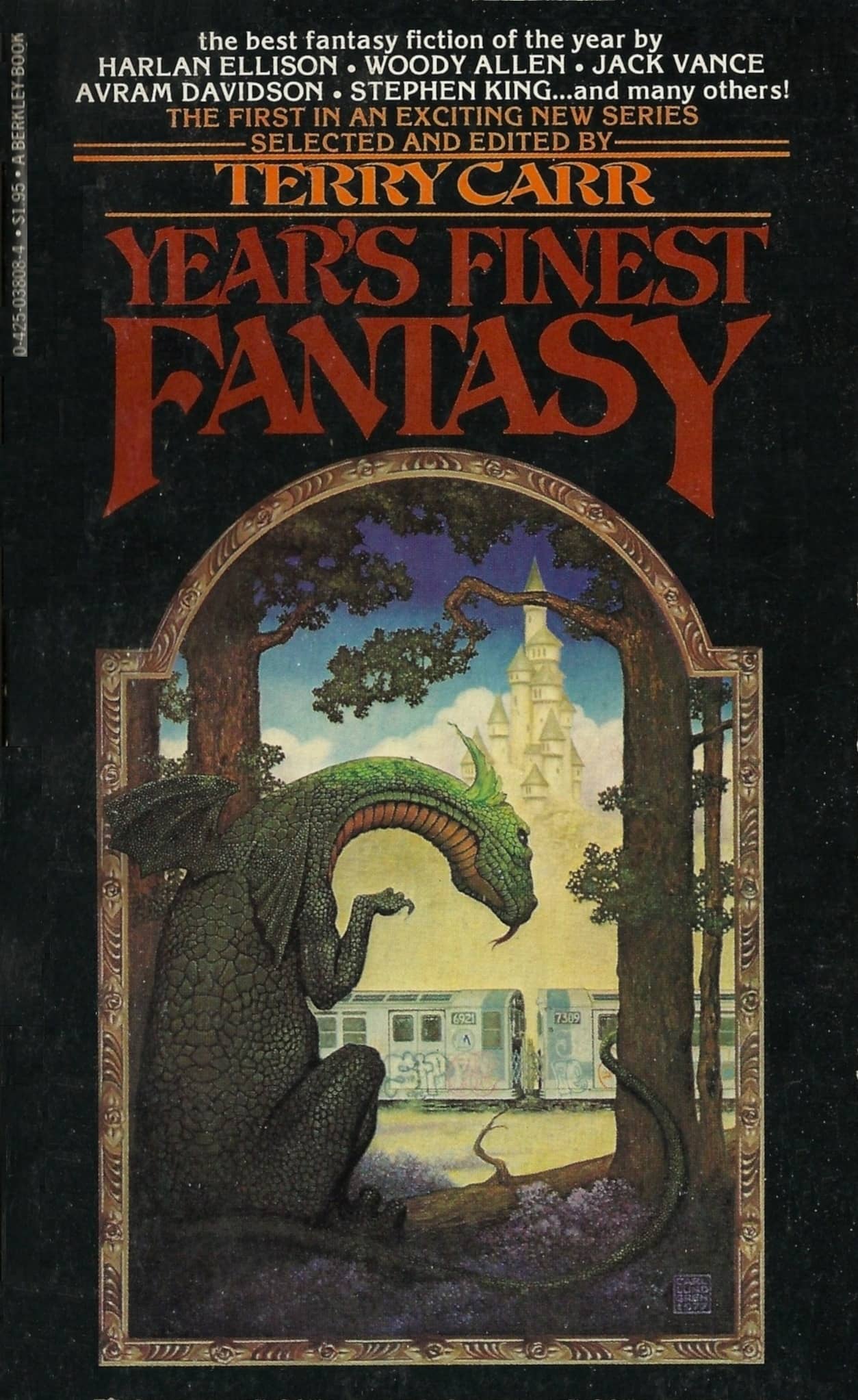
Vintage Treasures: Year’s Finest Fantasy edited by Terry Carr

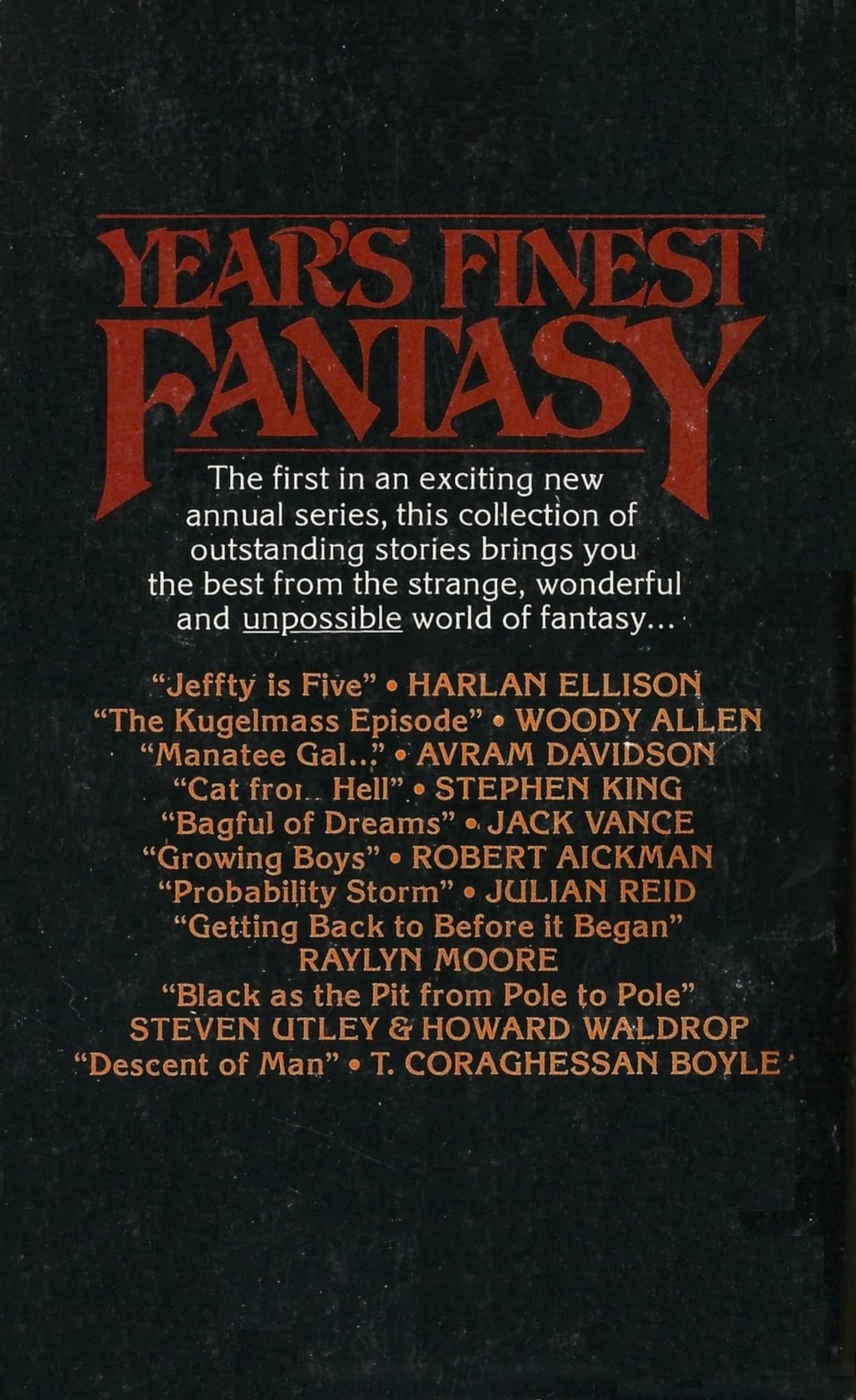
Year’s Finest Fantasy (Berkley Books, 1978). Cover by Carl Lundgren

The first Year Best volume I ever read was Terry Carr’s The Best Science Fiction of the Year #6, published in paperback by Del Rey in 1977 and filled with stories that blew my 13-year old mind, including the fascinating gadget tale “I See You” by Damon Knight,  John Varley’s futuristic murder mystery “The Phantom of Kansas,” the raunchy and bizarre “Meathouse Man” by George R. R. Martin, and Isaac Asimov’s classic “The Bicentennial Man.”

I kept an eye out for Terry Carr’s anthologies after that. The next one I spotted was Year’s Finest Fantasy, published by Berkley in July 1987. It was a fine demonstration of Carr’s far-ranging and discerning eye, for it included names both expected — Avram Davidson, Stephen King, a Dying Earth tale by Jack Vance, and Harlan Ellison with one of his finest stories, “Jeffty Is Five” — and unexpected, including T. Coraghessan Boyle, Woody Allen, and a horror novella by Robert Aickmanm. It also contained Steven Utley and Howard Waldrop’s Frankenstein story, “Black as the Pit, from Pole to Pole,” and an long novella from a virtual unknown, Julian Reid, his only known fantasy work, originally published in Universe 7.

Year’s Finest Fantasy was successful enough to kick off a series that lasted for five volumes, changing name to Fantasy Annual with #3. Terry Carr, a fine writer in his own right, provided a thoughtful introduction to the first volume, arguing convincingly that “contemporary fantasy tells us more truly of the nature of humanity than any collection of “realistic” stories could.” 43 years after I first read them, I find Carr’s words still resonate strongly.
…

Read More Read More

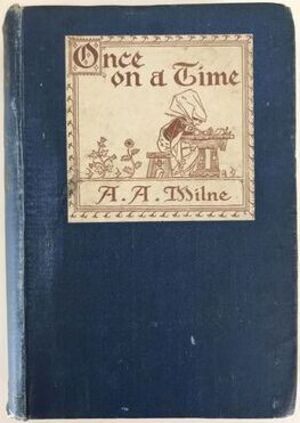
A Book Most Extraordinary: Once on a Time by A.A. Milne

A Book Most Extraordinary: Once on a Time by A.A. Milne

King Merriwig of Euralia sat at breakfast on his castle walls. He lifted the gold cover from the gold dish in front of him, selected a trout and conveyed it carefully to his gold plate. He was a man of simple tastes, but when you have an aunt with the newly acquired gift of turning anything she touches to gold, you must let her practise sometimes. In another age it might have been fretwork.

So begins Once on a Time (1917), A. A. Milne‘s charming and funny fairy tale sendup. In it, a war is started over one king leaping over another king’s land in his seven-league boots, a bad wish is wished (as well as a good one), lovers meet, and a slightly wicked countess plots to steal the kingdom’s wealth. It is a book that had me laughing aloud one minute and forcing my wife to listen to me read pages aloud the next.

Next to the gargantuan, multi-billion-dollar legacy that is Winnie-the-Pooh, it is quite easy to miss that Milne was an author of several adult novels, among them The Red House Mystery, a classic of Golden Age detective fiction. A graduate of Trinity College, Cambridge, he became a columnist for the satirical magazine, Punch, played cricket on teams with P.G. Wodehouse, J.M. Barrie, and Arthur Conan Doyle, and served in the army during WW I. He was wounded at the Somme and spent the last two years of the war writing propaganda. After the war, his son Christopher Robin was born, acquired some stuffed animals, and inspired Milne to write the two books that would be his greatest legacy: Winnie-the-Pooh (1926), and The House at Pooh Corner (1928).

…

Read More Read More

So, I Accidentally Wrote a Novella

So, I Accidentally Wrote a Novella

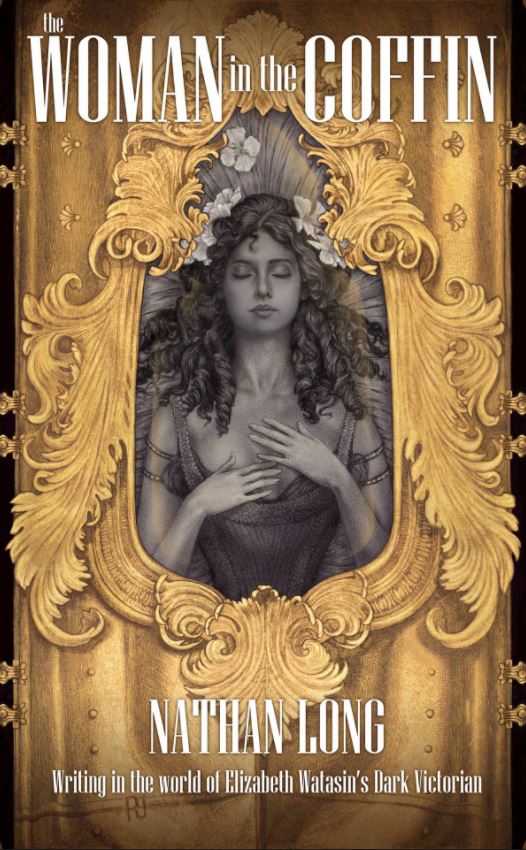
The Woman in the Coffin by Nathan Long (Oolong Books, February 18 2021)

So, I accidentally wrote a novella.

When I told him about it, John O’Neill congratulated me on my sagacity for following the current trend in novellas, but that was never my intention. I’m so out of the loop I didn’t even know there was such a trend. What I had set out to do was to entertain my friend Elizabeth Watasin by writing a serial adventure set in her Dark Victorian world and sending her a chapter every week. It just so happened when I put all the chapters together they turned out to be novella length and not too terrible, so there you go. And, yes, as you have already deduced, not only is it a novella, it’s a fan-fic novella. I so fell in love with the swooniness of Elizabeth’s world and characters that I was inspired to write a Watasin-adjacent story of my own. And, to add to its other sins, it’s very possible I won’t write a follow up.

Given all that (fan-fic, runtish length, no ‘long tail’) what the hell am I doing making The Woman in the Coffin the first thing I self-publish? Honestly, I don’t know. I have two finished full length novels in the trunk that would only require a copy-edit and a cover to put up on Amazon, but did I publish those? No. I picked the thing that requires half a page of mea culpa to explain, and which I had to ask Elizabeth’s permission to publish.

…

Read More Read More

Neverwhens, Where History and Fantasy Collide: Brilliance Gleams Beneath a Black Sun

Neverwhens, Where History and Fantasy Collide: Brilliance Gleams Beneath a Black Sun

Black Sun-small Black Sun-back-small

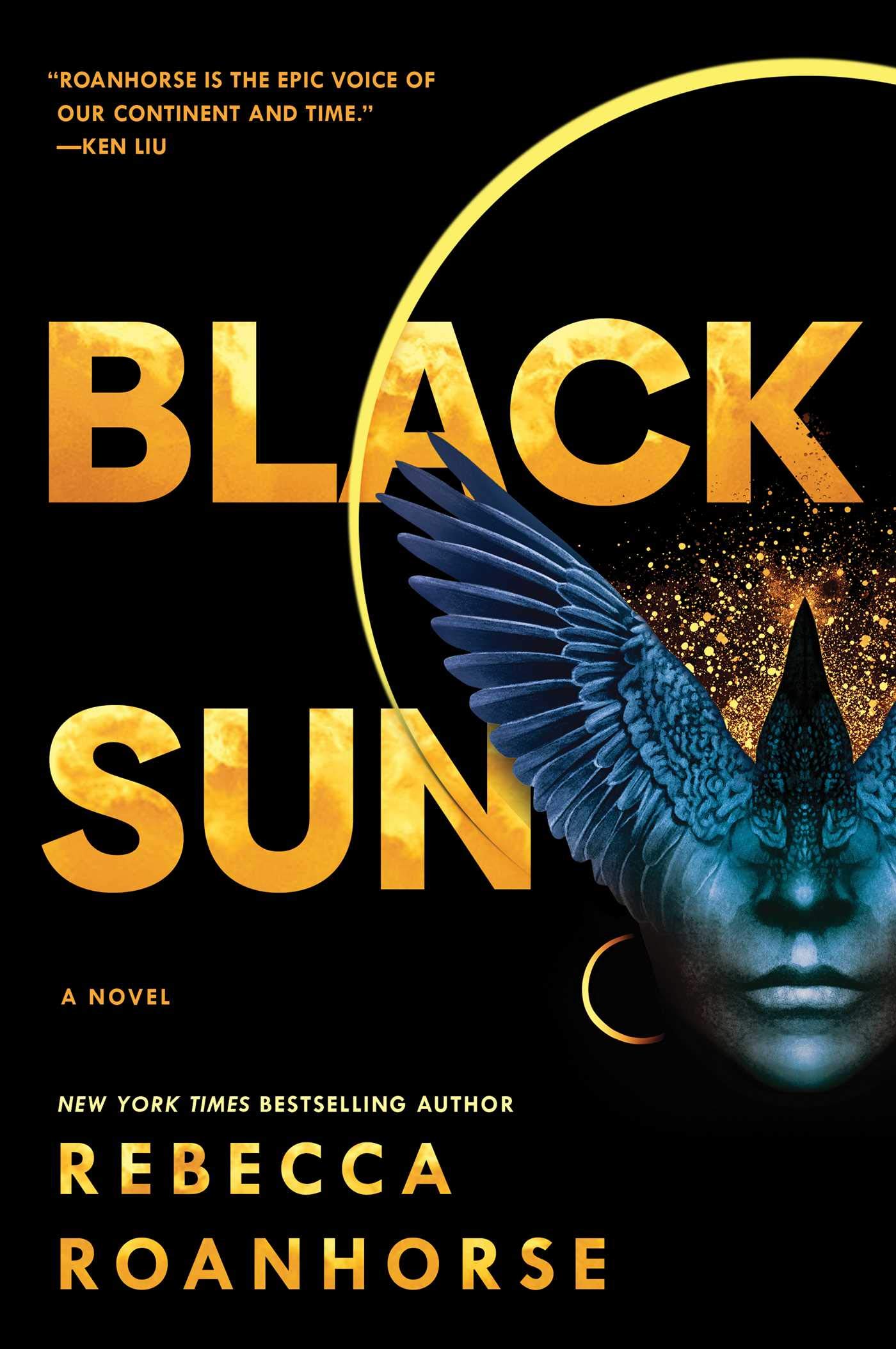
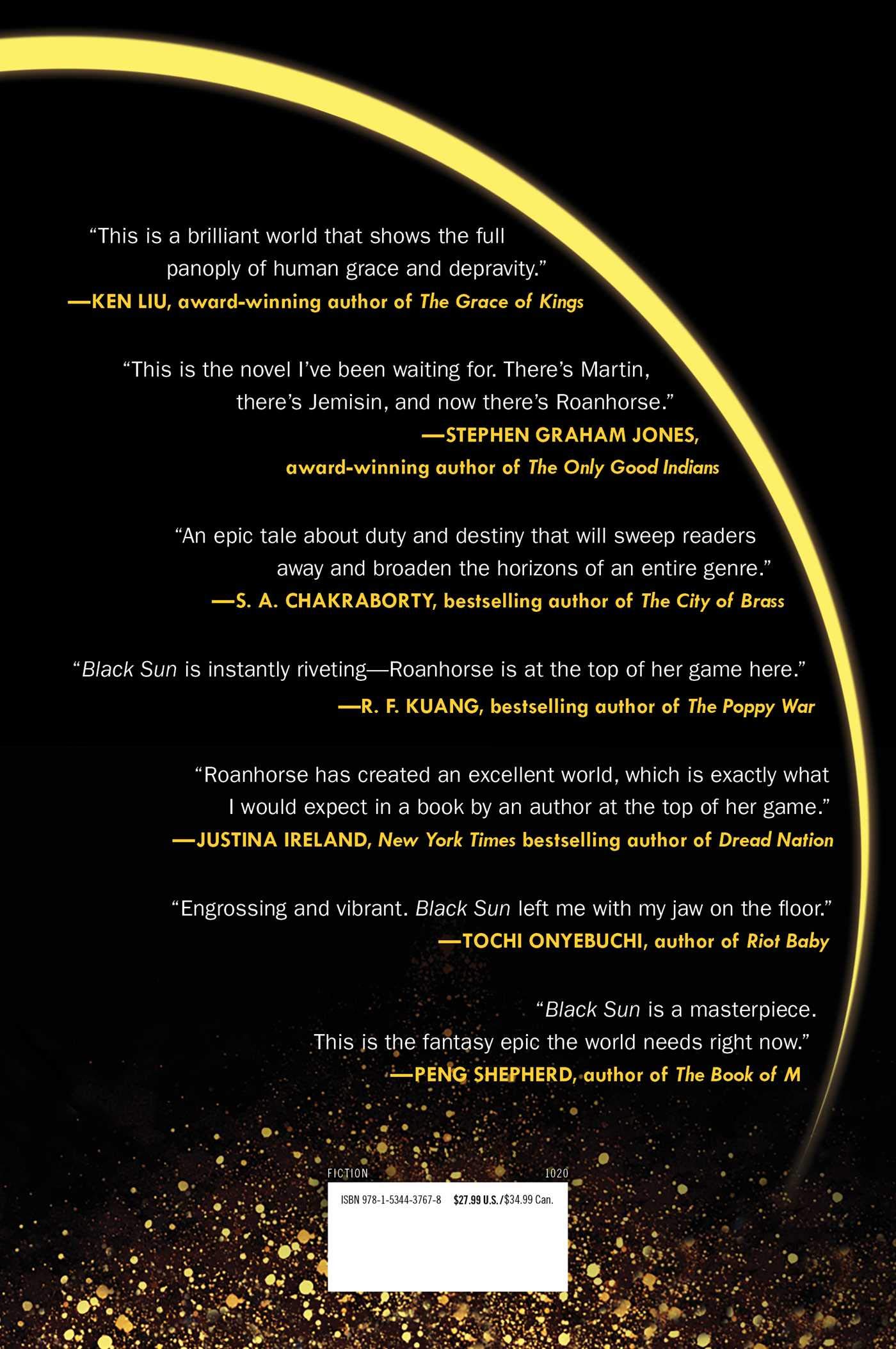
Black Sun by Rebecca Roanhorse (Saga Press, October 2020). Cover by John Picacio.

In the 14 months I have had this column, I’ve looked at “historicity and fantasy” from a variety of angles, one of which has been looking at current — and lauded — works by known authors, and assessing how well they weave the two together. Thus far, I haven’t been very kind. While I loved G. Willow Wilson’s The Bird King as a kind of modern fable, it creates its view of dying Al-Andalus by promoting a series of stereotypes about Christian Spain and the Inquisition that would be excoriated where the same treatment applied to the tale’s Muslim world. Conversely, Guy Gavriel Kay is the master of historical fiction masquerading at fantasy, essentially reinventing the earliest form of “Romantic fiction” with his post-Tigana work. Sadly, in Children of Earth and Sky rather than “jumping the shark,” Kay never gets up to speed, creating a tale that is so faithful to the history it is a thinly-veiled variant of, that nothing much ever happens.

So I thought it was time I praised something in this column — because I generally do like far more than I hate. And wow, what a gem I have to talk about with you today.

Over the winter holidays I read Rebecca Roanhorse’s debut entry into the world of epic fantasy: Black Sun. Billed as Volume 1 of Between Earth and Sky, this is clearly the start of an epic, yet just about works as a standalone tale in its own right.

Published last year, this is a departure for Roanhorse, whose work has mostly been contemporary fantasy, though again drawing on native themes. So what’s it about? Well, our official blurb actually does a pretty good job of teasing the plot. Here it is.

…

Read More Read More

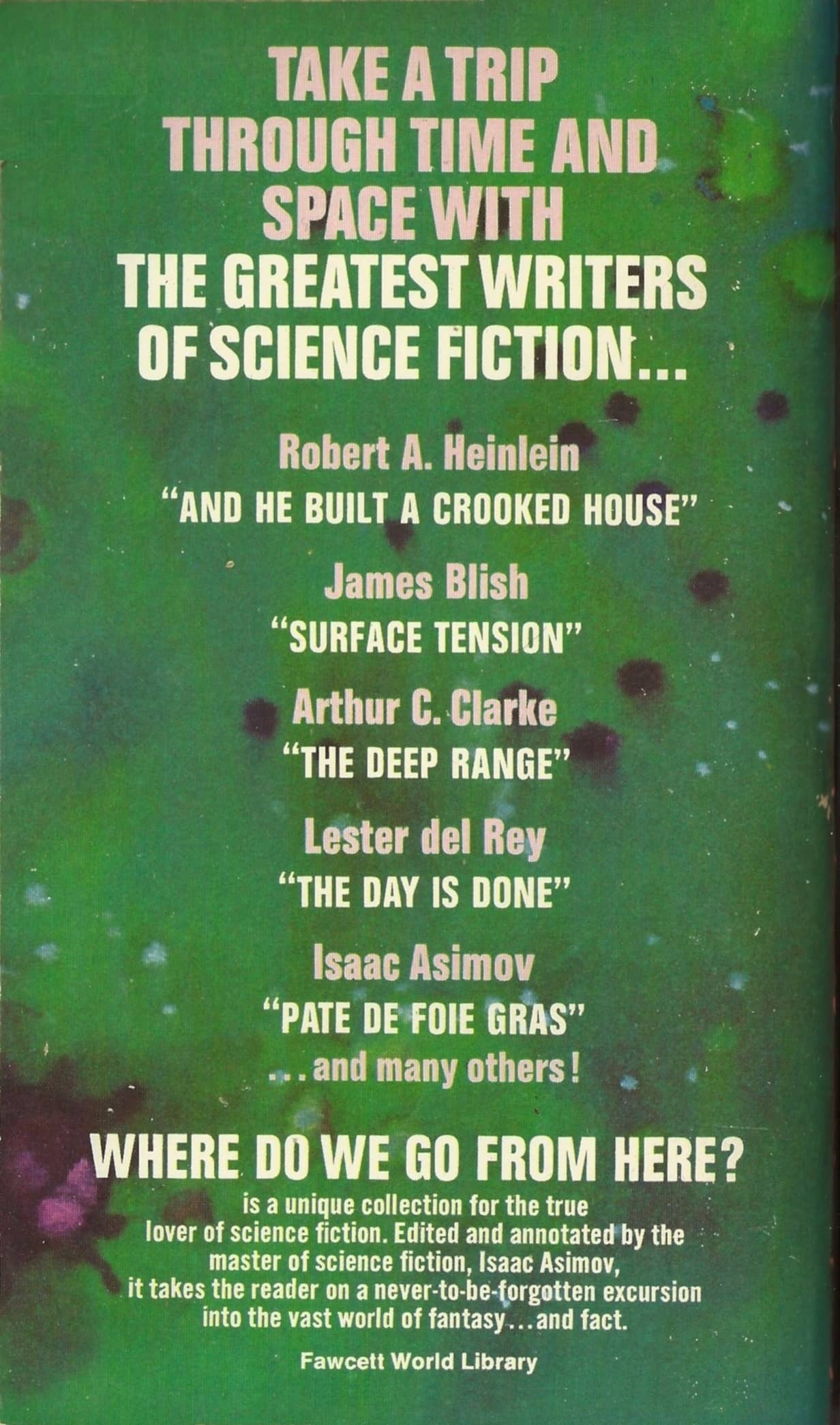
Vintage Treasures: Where Do We Go From Here? edited by Isaac Asimov

Vintage Treasures: Where Do We Go From Here? edited by Isaac Asimov

There are prolific anthologists, and there are very prolific anthologists, and there’s Isaac Asimov. The Internet Science Fiction database lists nearly 200 anthologies with his name on them, averaging around seven per year between 1963 and his death in 1992. (If you’re thinking, Geez that seems like a lot, let me clarify for you. Yes. It’s a lot.)

Of course, the vast majority of those were produced later in his career and in partnership with a team of editors, especially Martin H. Greenberg and Charles G. Waugh. In the early days Asimov compiled anthologies the old-fashioned way: by himself. It was the enduring, decades-long success of those books that paved the way for the massive literary-industrial complex to spring up around Asimov in the 80s and 90s. And he may have had no original anthology more successful or popular than Where Do We Go From Here?

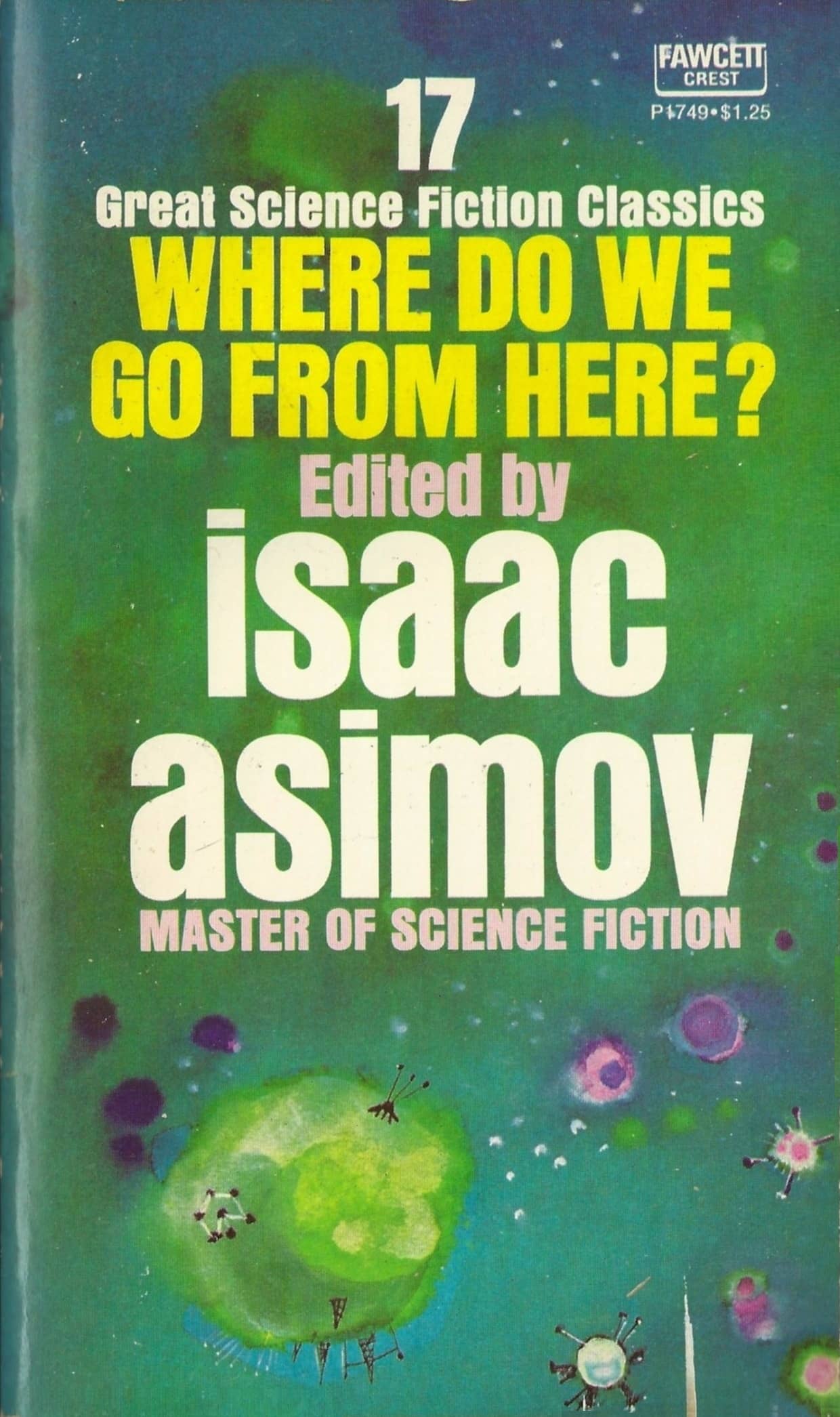
Where Do We Go From Here? was published in hardcover by Doubleday in 1971, reprinted by Fawcett Crest in 1972, and kept in print in paperback for nearly ten years. It was one of the most popular and discussed SF anthologies of the decade, by a wide margin, and cemented Asimov’s reputation for curating — and selling — top-notch short fiction collections. It gathers stories by Stanley G. Weinbaum, John W. Campbell, Jr., Lester del Rey, Robert A. Heinlein, Hal Clement, James Blish, Jerome Bixby, Arthur C. Clarke, James E. Gunn, H. Beam Piper, Walter Tevis, Larry Niven, and others. Here’s the complete Table of Contents.

…

Read More Read More

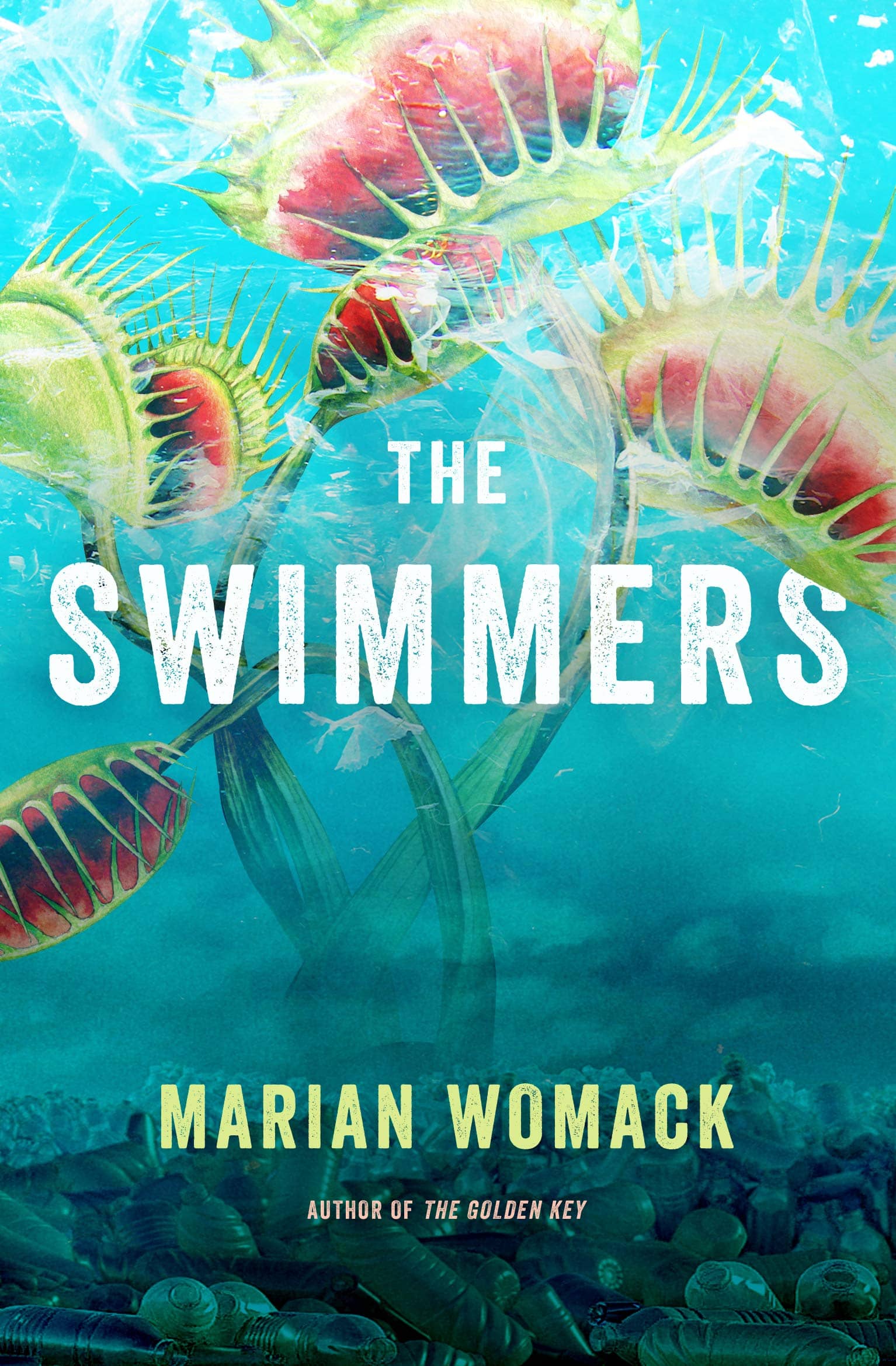
New Treasures: The Swimmers by Marian Womack

New Treasures: The Swimmers by Marian Womack

Marian Womack’s debut The Golden Key was published last year — bad year for a debut novel, I must say — but it still managed to get a lot of attention. Booklist called it a mix of “Spiritualism, the suffragette movement, and the fairy tales of Lewis Carroll and George MacDonald… an elegant sense of mystery and otherworldliness. This gothic fantasy will captive fans of historical fiction.”

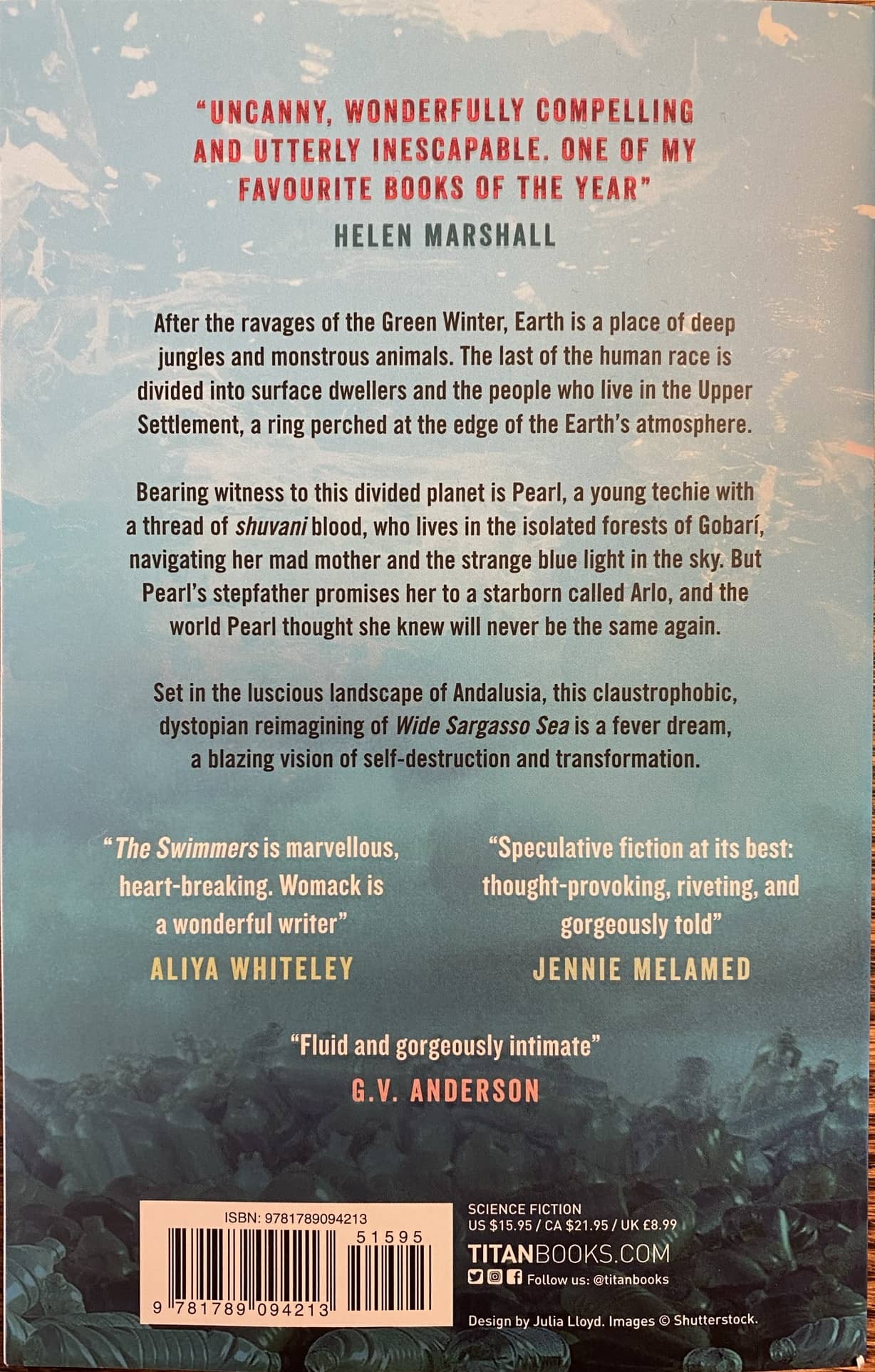
Her second novel The Swimmers, set in an Earth ravaged by climate change, imagines a world in which the rich live in the Upper Settlement rings high in orbit, and the rest of humanity struggles to survive in a dangerously transformed world, a place of deep jungles and monstrous animals. Publishers Weekly calls it a “meticulously detailed sophomore novel set in a vivid, believable eco-dystopia… Readers will be captivated.”

…

Read More Read More

Isaac Asimov’s Fantastic Voyage from Film to Novel

Isaac Asimov’s Fantastic Voyage from Film to Novel

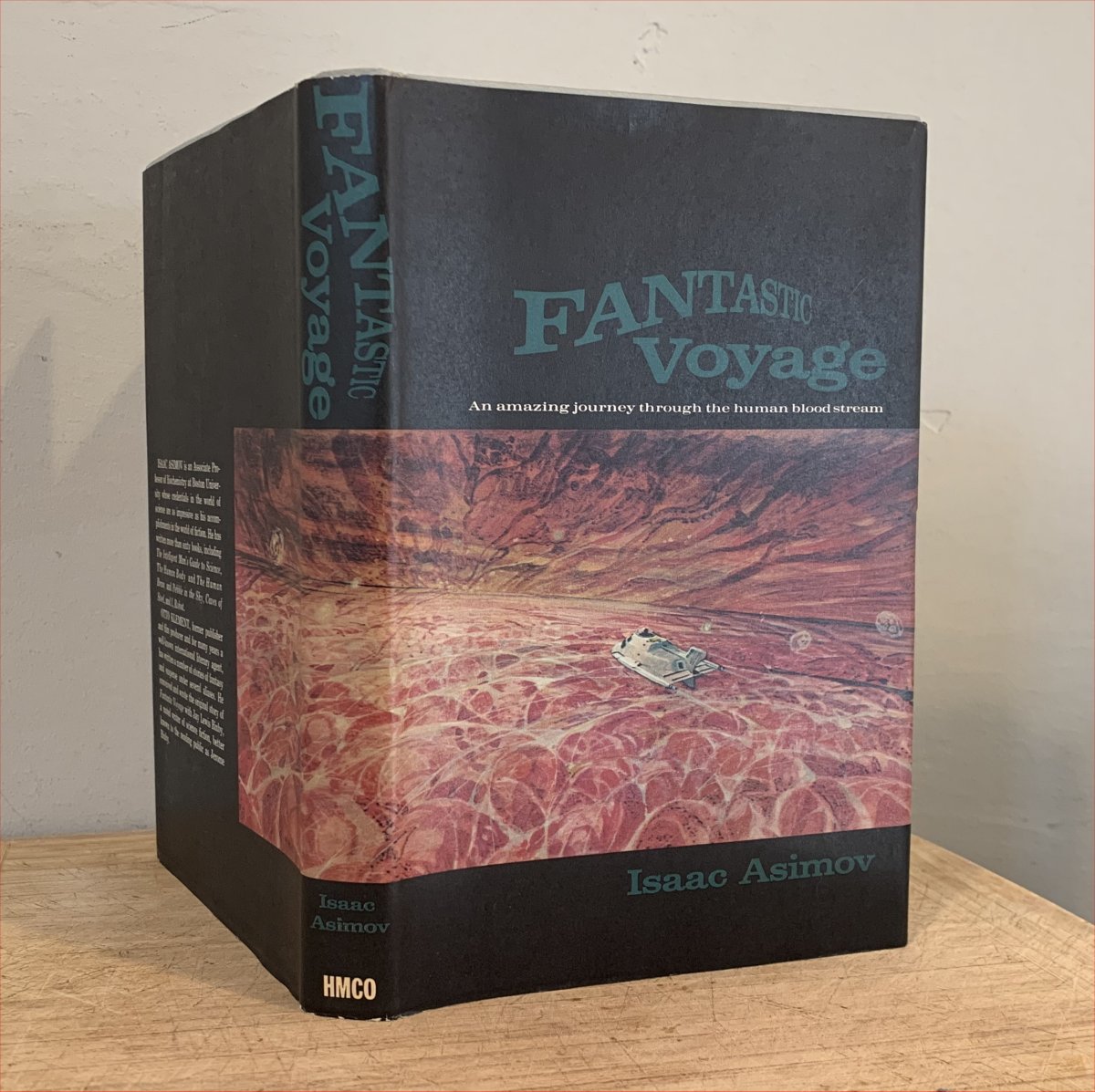
Fantastic Voyage by Isaac Asimov
First Edition: Houghton Mifflin, March 1966, Cover art Dale Hennesy
(Book Club edition shown)

Fantastic Voyage
by Isaac Asimov
Houghton Mifflin (239 pages, $3.95, Hardcover, March 1966)
Cover art Dale Hennesy

Isaac Asimov’s early novels were published over a period of just eight years, from Pebble In the Sky in 1950 to The Naked Sun in 1957, with linked collections like I, Robot and the Foundation “novels” along the way. Some of his early short stories, published in magazines as early as 1939, weren’t collected into books until the 1960s, but for the most part Asimov had stopped writing science fiction by the late 1950s, perhaps because of the collapse of the SF magazine market, or perhaps because he’d discovered that writing nonfiction books was more lucrative and easier. As Asimov fans were painfully aware of at the time, a spell of some 15 years went by before he published his next original novel, The Gods Themselves in 1972, to great acclaim and awards recognition. (And then yet another decade went by before Asimov returned to regular novel writing, with Foundation’s Edge and a string of following novels derived from his Foundation and Robot universes.)

—Except for a book called Fantastic Voyage, in 1966, which was a novelization of a movie script.
…

Read More Read More

Lin Carter’s Imaginary Worlds #2 World Building and Naming

Lin Carter’s Imaginary Worlds #2 World Building and Naming

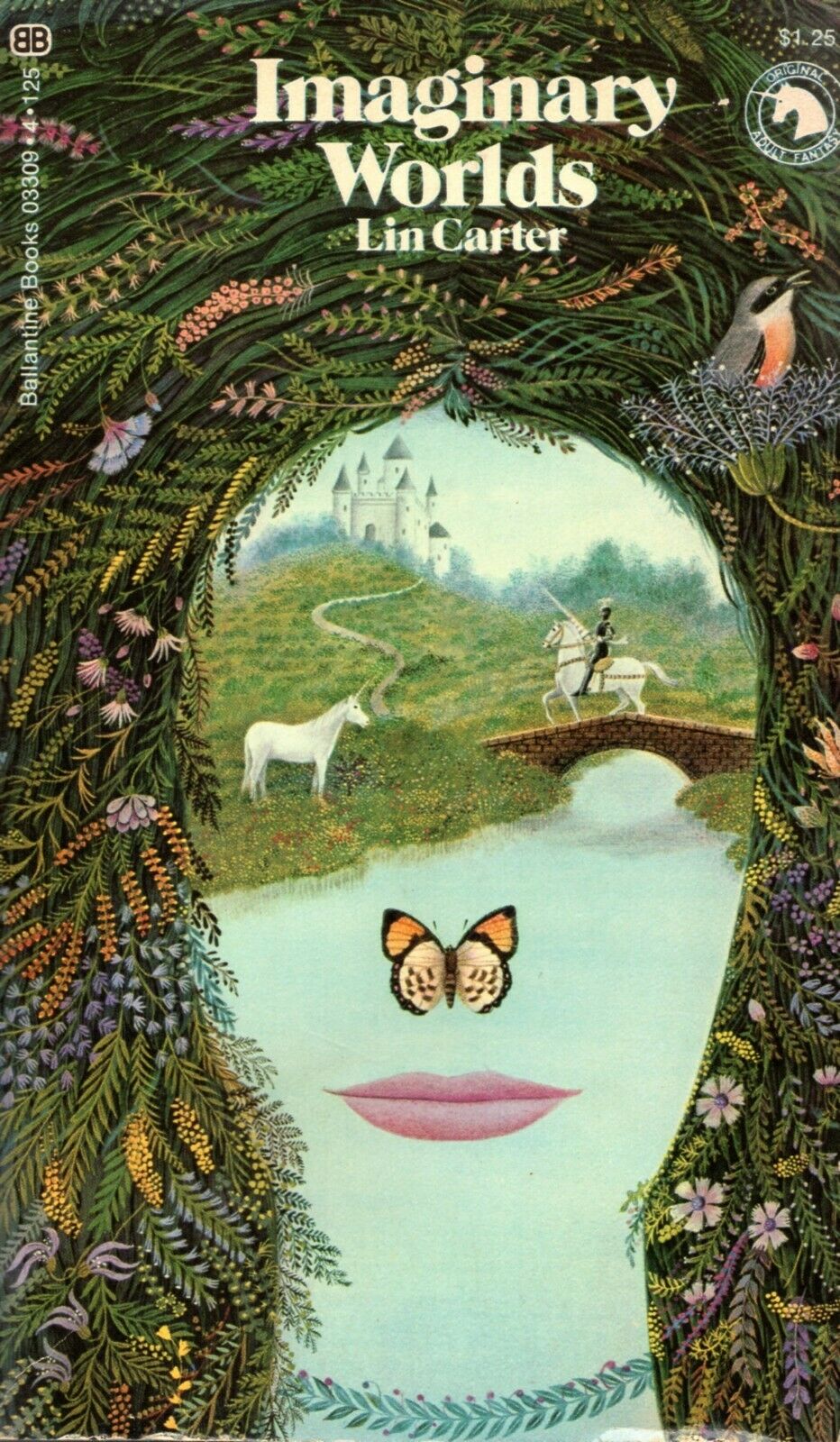
Imaginary Worlds (Ballantine Books, June 1973). Cover by Gervasio Gallardo

So I had great fun reading Carter’s snarky, anecdotal, history of the Fantasy genre, Imaginary Worlds (1973), but I had actually come to the book for his thoughts on writing the Fantasy, and in particular Sword and Sorcery.

In hindsight, perhaps this was more of by way of exorcism.

Carter was adamant that Sword and Sorcery should have no content whatsoever: “It is a tradition that aspires to do little more than entertain and stretch the imagination a little.“

We can certainly agree that Sword and Sorcery doesn’t handle topical themes well. The clue is in the name.  Though I myself know many people with swords on their wall and grimoires on their shelves, I will admit that I am not entirely typical in this regard. The secondary worlds of the Sacred Genre are too far removed from modernity to explore it directly.

…

Read More Read More

Underneath the Oversea by Marc Laidlaw

Underneath the Oversea by Marc Laidlaw

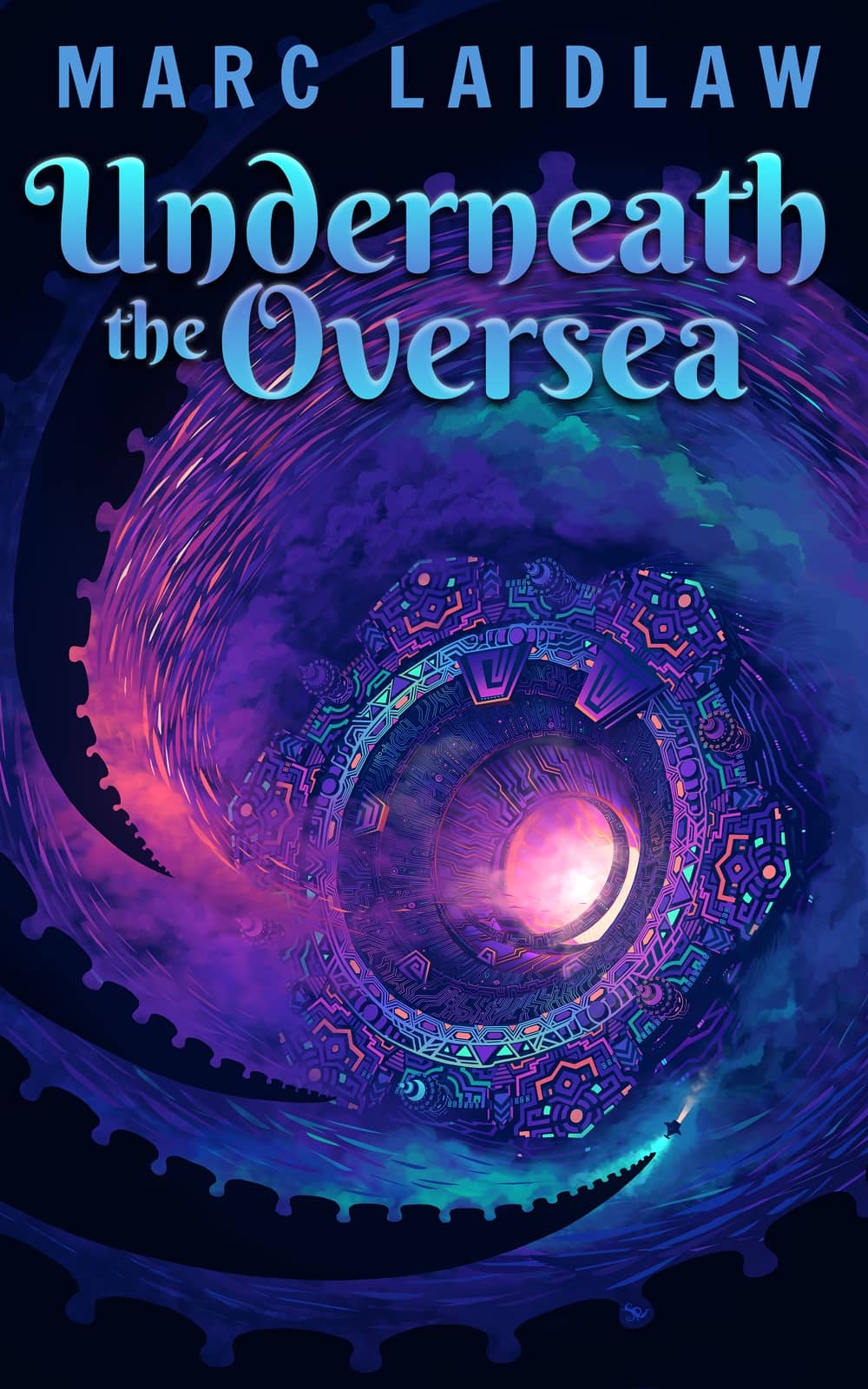
Cover art by Sylvia Ritter

Underneath the Oversea
by Marc Laidlaw
Freestyle Press (197 pages, $6.99 in digital formats, October 30, 2020)
Cover art by Sylvia Ritter

Marc Laidlaw has been publishing SF and Fantasy for over 40 years (his first story appeared when he was only 17!) His first novel appeared in 1985 (Dad’s Nuke), and by 1996 he had published a half-dozen. Then he turned to game design, especially with Half-Life, but his short fiction has continued to appear since then. Most notable, perhaps, have been two series of stories: a rather mathematically gonzo set of novelettes about two surfers named Delbert and Zeb (co-written with Rudy Rucker), and a set of fantasies concerning the bard Gorlen and a living gargoyle named Spar, who are linked in a quest to find the magician who switched their hands, so that Gorlen has a stone hand and Spar a living hand.

These last stories, all published in F&SF, were great fun, template stories of a sort but with a through plot. By the end both characters were married … or perhaps its better to say that they made a conjoined family: Gorlen wedded to another bard, Plenth; and Spar to Sprit, a singing tree, or Songwood, but all composing one family.

…

Read More Read More

Future Treasures: The Helm of Midnight by Marina Lostetter

Future Treasures: The Helm of Midnight by Marina Lostetter

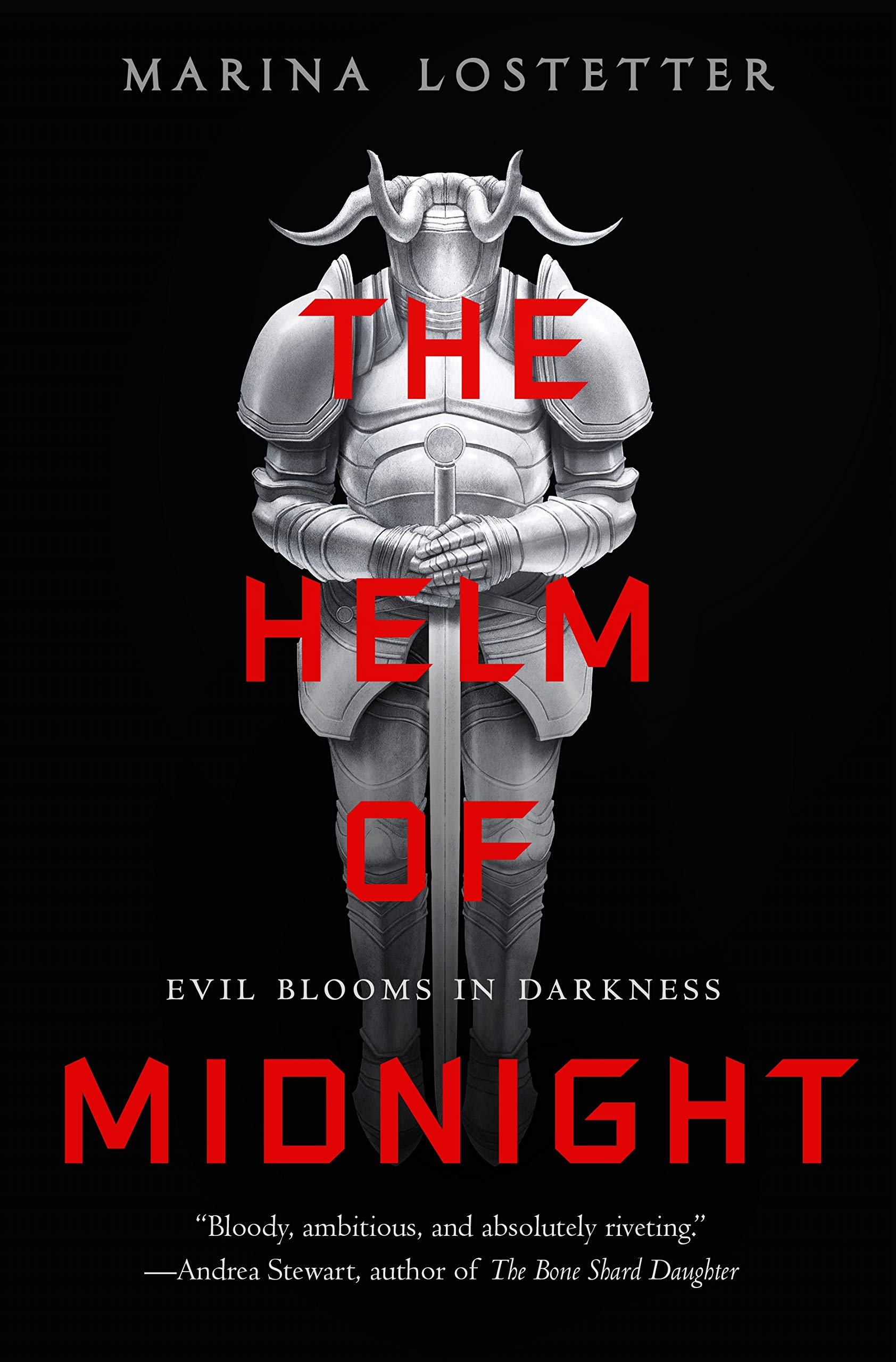
The Helm of Midnight (Tor Books, April 13, 2021)

There’s something about a well-rendered fantasy city that speaks to me of adventure. Maybe it’s the classic tales of Leiber’s Lankhmar, or Gygax’s Greyhawk, Ellen Kushner’s Riverside, Pratchett’s Ankh-Morpork, or so many others. When I see a procedural detective novel in a fantastical city, I look forward to a tale of intrigue, action and surprises.

That’s what I’m expecting from The Helm of Midnight, the first novel in a new trilogy from Marina Lostetter, author of the popular Noumenon space opera series that wrapped up last year. It arrives in hardcover from Tor in three weeks. Here’s the description.

In a daring and deadly heist, thieves have made away with an artifact of terrible power—the death mask of Louis Charbon. Made by a master craftsman, it is imbued with the spirit of a monster from history, a serial murderer who terrorized the city.

Now Charbon is loose once more, killing from beyond the grave. But these murders are different from before, not simply random but the work of a deliberate mind probing for answers to a sinister question.

It is up to Krona Hirvath and her fellow Regulators to enter the mind of madness to stop this insatiable killer while facing the terrible truths left in his wake.

K. B. Wagers, author of the Farian War trilogy, calls it “An utterly enthralling mystery of magic, masks, and murder. Marina Lostetter weaves together three stories to a stunning conclusion.” Maybe that’s just a couple of space opera writers sticking together, but I’m willing to take the chance.

The Helm of Midnight will be published by Tor Books on April 13, 2021. It is 456 pages, priced at $26.99 in hardcover, $13.99 digital, and $27.99 in audio formats. Read a generous excerpt at Tor.com.

See all our recent coverage of the best upcoming SF and fantasy here.