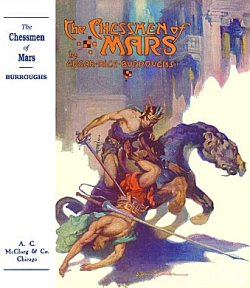
Edgar Rice Burroughs’s Mars, Part 5: The Chessmen of Mars
 “The squares shall be contested to the death. Just are the laws of Manator! I have spoken.”
After Edgar Rice Burroughs pulled the Martian novels in a different direction with Thuvia, Maid of Mars, he retreated from Barsoom for a spell to concentrate on other projects. Eight years passed between the writing of Thuvia and the publication of the next adventure, The Chessmen of Mars, which switched to yet another hero and heroine to hurl into the unknown regions of Mars. In the process, Burroughs gave science fiction a new board game to play.
Our Saga: The adventures of earthman John Carter, his progeny, and sundry other natives and visitors, on the planet Mars, known to its inhabitants as Barsoom. A dry and slowly dying world, Barsoom contains four different human civilizations, one non-human one, a scattering of science among swashbuckling, and a plethora of religions, mystery cities, and strange beasts. The series spans 1912 to 1964 with nine novels, one volume of linked novellas, and two unrelated novellas.
Today’s Installment: The Chessmen of Mars (1922)
Previous Installments: A Princess of Mars (1912), The Gods of Mars (1913), The Warlord of Mars (1913-14), Thuvia, Maid of Mars (1916)
The Backstory
Thuvia, Maid of Mars was a success, and it made sense that when Burroughs returned to Mars he would repeat the same formula of third-person narration and a different hero and heroine pair in a one-off adventure. Although John Carter’s son Carthoris seemed a natural to continue as the hero, Burroughs chose to use a full-blood Martian as his lead for the first time. The decision to change protagonists once before made it easy to do it a second time, and with Carthoris already paired with Thuvia, picking a new character meant ERB could start over with a fresh love interest. (He rarely let his heroes switch heroines once they dedicated themselves. Tarzan could get away with it with La of Opar, but only because of amnesia.) …

 When I resolved to publish the two novels in my
  After the Golden Age
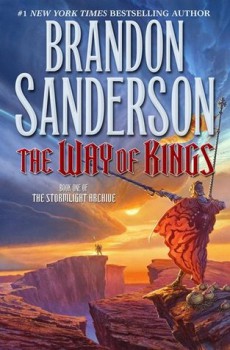 The Way of Kings
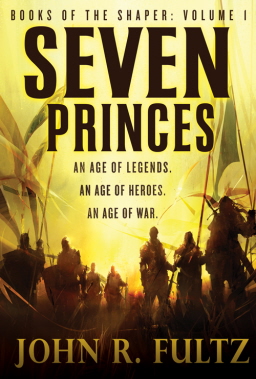 The accolades continue to come in for John Fultz’s debut novel Seven Princes, the first installment in the Books of the Shaper. Here’s Paul Goat Allen from Explorations, Barnes & Noble’s Science Fiction & Fantasy blog:
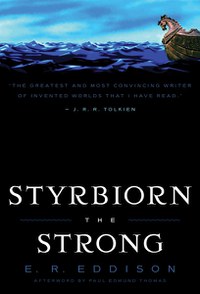 “There is but one way for a man, and that is to remember that none may avoid his fate. This is to a man as the due ballast to the ship, which maketh the vessel indeed loom somewhat deeper, but keepeth it from tossing too lightly upon the uncertain waters.”
 Shades of Milk and Honey