Browsed by
Category: Books

Crowdfunding Kaleidoscope: An Interview with Julia Rios

Crowdfunding Kaleidoscope: An Interview with Julia Rios

Herein we have Black Gate (or at least MOI, in my guise as doughty avatar) interviewing the inimitable Julia Rios, one of the editors for an upcoming YA fantasy anthology called Kaleidoscope.

Julia is straight-up The Right Stuff, in the humble opinion of this blogger, and everything she touches has a tendency to turn to rainbows.

I’m a product of the early eighties.

I like rainbows.

I am very excited for this anthology.

JuliaRiosBG: What is Kaleidoscope and how did the project come about?
Kaleidoscope is an anthology of diverse YA contemporary fantasy stories. I’m co-editing it with Alisa Krasnostein, the publisher at Twelfth Planet Press in Australia. Right now, we’re having a fundraiser on Pozible so we can afford to make the book and pay our authors the SFWA professional rate of $0.05 per word.

As for how this started, Kaleidoscope is a project born of podcasts! I host the Outer Alliance Podcast, which celebrates QUILTBAG content in SF/F. Alisa, my co-editor, is one of the members of Galactic Suburbia, which is an Australian feminist SF podcast. I love Galactic Suburbia, and apparently I’m not the only one, because they’ve racked up *two* Hugo nominations.

Read More Read More

Tales of the Wold Newton Universe, Part 1 of 4

Tales of the Wold Newton Universe, Part 1 of 4

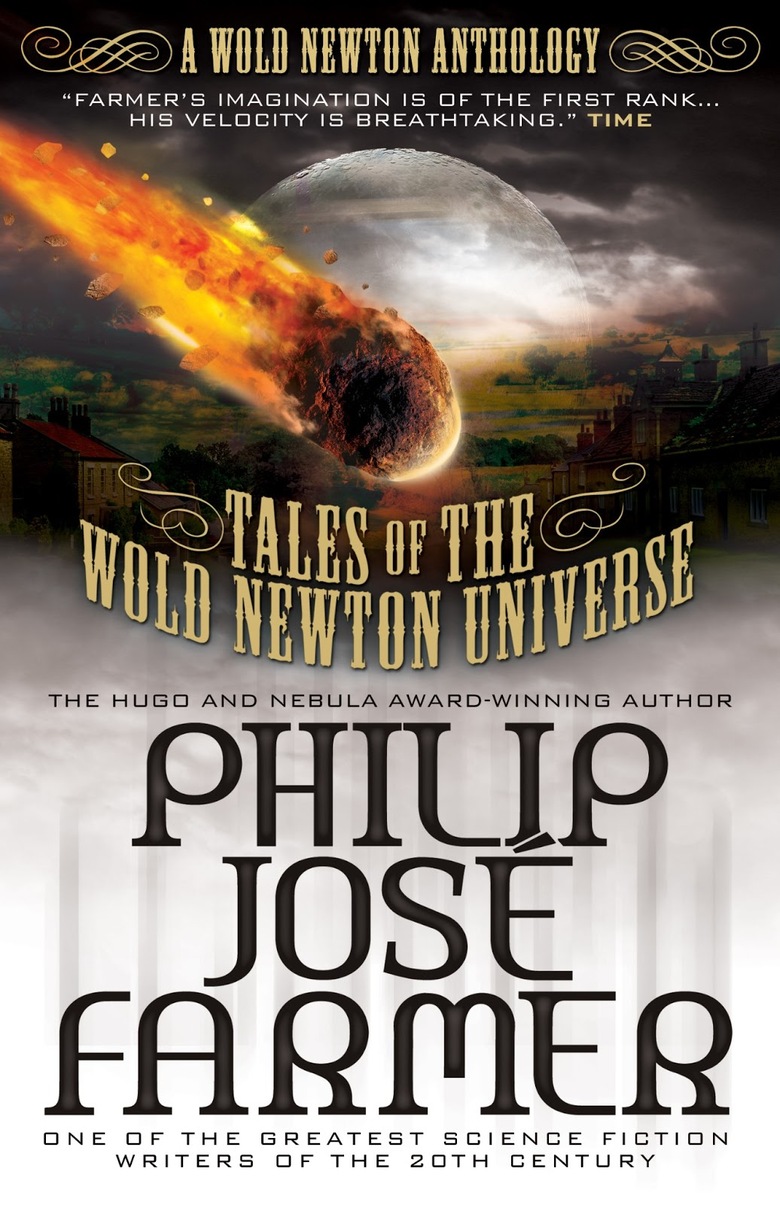
Tales of the Wold Newton Universe-smallThis month marks the release of Tales of the Wold Newton Universe, a new anthology from Titan Books that collects, for the first time ever in one volume, Philip José Farmer’s Wold Newton short fiction, as well as tales set in the mythos by other Farmerian authors.

The Wold Newton Family is a group of heroic and villainous literary figures that science fiction author Philip José Farmer postulated belonged to the same genetic family. Some of these characters are adventurers, some are detectives, some explorers and scientists, some espionage agents, and some are evil geniuses.

According to Mr. Farmer, the Wold Newton Family originated when a radioactive meteor landed in Wold Newton, England, in the year 1795. The radiation caused a genetic mutation in those present, which endowed many of their descendants with extremely high intelligence and strength, as well as an exceptional capacity and drive to perform good, or, as the case may be, evil deeds. The Wold Newton Universe is the larger world in which the Wold Newton Family exists and interacts with other characters from popular literature.

To celebrate the release of the new anthology, we’ve asked the contributors to discuss their interest in Philip José Farmer’s work and to tell us something about how their stories in the book specifically fit into the Wold Newton mythos.

For today’s installment, please join us in welcoming author John Small.

Win Scott Eckert and Christopher Paul Carey,
Editors, Tales of the Wold Newton Universe

Read More Read More

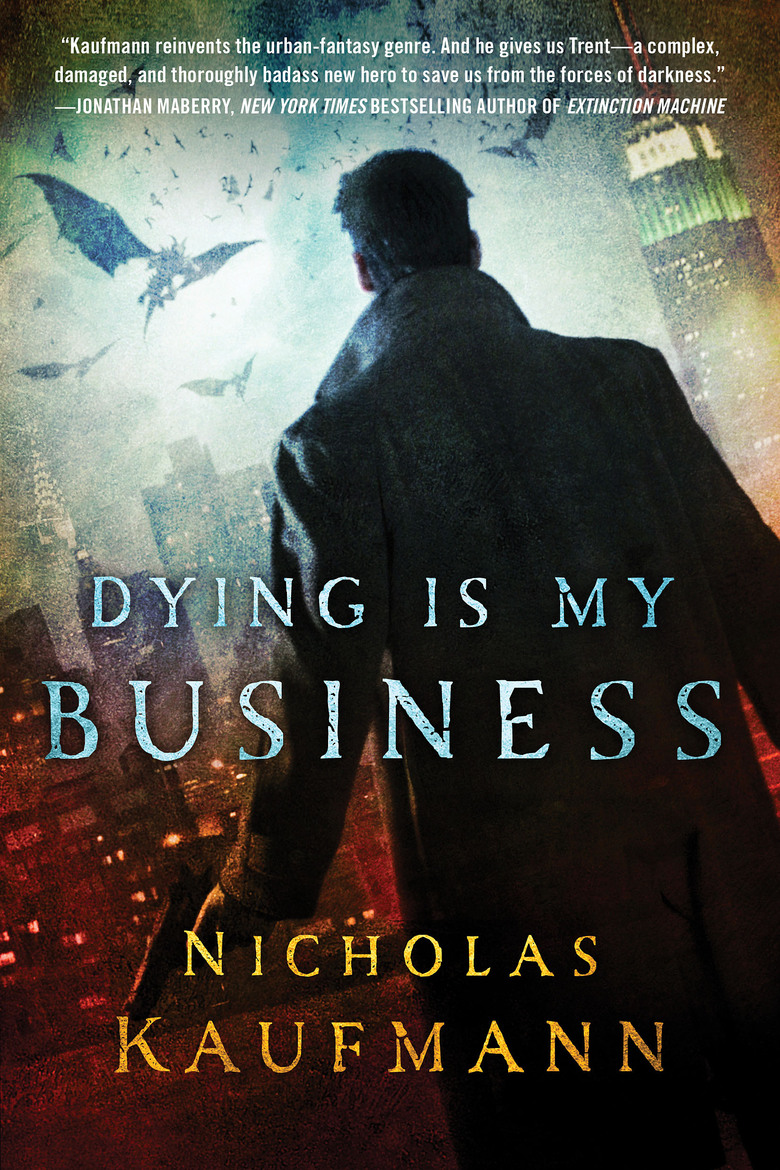
New Treasures: Dying is My Business by Nicholas Kaufmann

New Treasures: Dying is My Business by Nicholas Kaufmann

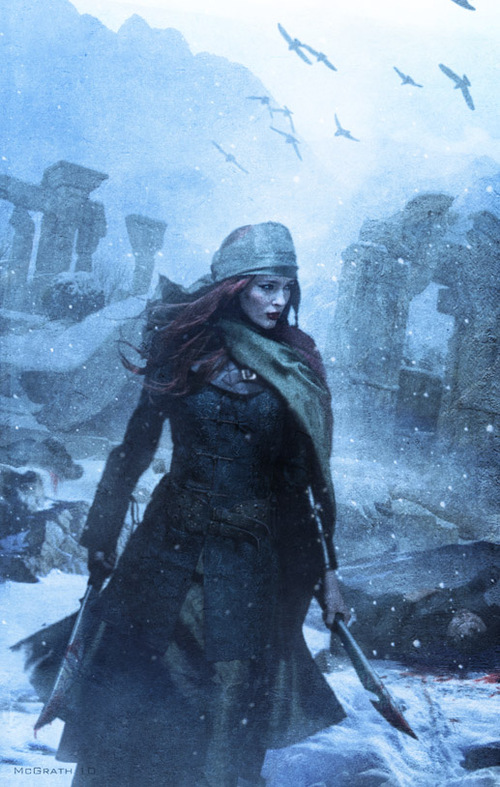
Dying is my Business-smallI love these Chris McGrath covers. He does terrific character portraits and unique things with light. His characters perpetually seem spotlighted by a fog-drenched glow and no artist today makes his heroes more stylish. Just check out his gorgeous covers for Ken Scholes’s Canticle or Max Gladstone’s Three Parts Dead (or see a more complete gallery at his website.)

Art directors choose artists primarily for two reasons: to create an eye-catching cover and to subconsciously remind buyers of other successful series they’ve enjoyed. McGrath is the cover artist for Jim Butcher’s bestselling Dresden Files, as well as Seanan McGuire’s October Daye novels, Kelly Gay’s Charlie Madigan books, Warren Hammond’s KOP novels, D. B. Jackson’s Thieftaker Chronicles, and many other well-loved series.

I think McGrath was an excellent choice for Nicholas Kaufmann’s dark urban fantasy, Dying Is My Business, the tale of a badass hero facing down the forces of darkness in modern-day Brooklyn.

Given his line of work in the employ of a psychotic Brooklyn crime boss, Trent finds himself on the wrong end of too many bullets. Yet each time he’s killed, he wakes a few minutes later completely healed of his wounds but with no memory of his past identity. What’s worse, each time he cheats death someone else dies in his place.

Sent to steal an antique box from some squatters in an abandoned warehouse near the West Side Highway, Trent soon finds himself stumbling into an age-old struggle between the forces of good and evil, revealing a secret world where dangerous magic turns people into inhuman monstrosities, where impossible creatures hide in plain sight, and where the line between the living and the dead is never quite clear. And when the mysterious box is opened, he discovers he has only twenty-four hours to save New York City from certain destruction.

Nicholas Kaufmann is the Bram Stoker Award-nominated author of General Slocum’s Gold and Chasing the Dragon. This is his second novel.

Dying is my Business was published by St. Martin’s Griffin on October 8. It is 369 pages, priced at $15.99 in trade paperback and $9.99 for the digital edition.

Look Over There, See the Pretty Castle?

Look Over There, See the Pretty Castle?

pretty blue castle-smallI have very little visual memory for places and possibly even less visual imagination. One time, I needed to know the type of paving in Madrid’s Plaza Mayor – you know, the stuff you walk on? Keep in mind that I’ve been walking on this stuff regularly since I was six. I drew a complete blank (no pun intended) and had to ask my husband, who, at the time, had been there exactly once. He was able to tell me that it’s cobblestones, by the way. Unless you’re under the arcade, where it’s flagstones.

Last week, I talked about describing characters and particularly the difficulties of describing point-of-view characters. But as writers, we’re far more often required to describe places and spaces, both interior and exterior. For fantasy writers, this often means versions of places that exist (or existed) historically in our own world. If you’re the kind of person who, like my husband, can call to mind the descriptive details of things you’ve seen, this will mean a certain degree of ease in your life as a writer.

If you’re my kind of person, alas, you’re not going to be able to tell your friends what colour their living room is painted, no matter how many times you’ve been to their house, let alone describe the halls of a castle or the streets of a town.

So, what do you do? Since that Plaza Mayor episode, I’ve tried to remedy my poor visual memory by taking and collecting photographs. Lots and lots of photographs. While I’m travelling, I take photos of anything and everything that I think might be useful in terms of exteriors or interiors. In The Sleeping God, I use the interior of a restaurant in Trujillo in western Spain, in The Soldier King, the punishment square and prison in Elvas, in Portugal, and the cistern system from another Portuguese town, Monserrat, in The Storm Witch. I also used the map of Elvas to lay out my characters’ escape route, but that’s not really the type of description I’m talking about here.

Read More Read More

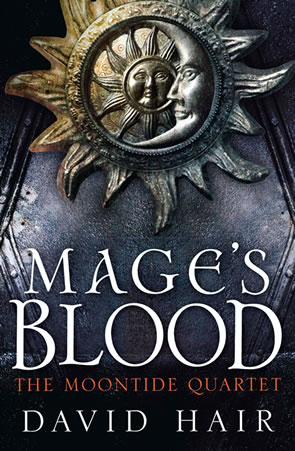
The Series Series: Mage’s Blood by David Hair

The Series Series: Mage’s Blood by David Hair

Sprawl is my favorite virtue of the novel. Not just this novel, Mage’s Blood, but novels generally, in all their varied glories. I may be the only person on Earth who is not at all perturbed by the ever-increasing length of George R. R. Martin’s Song of Ice and Fire books and I was probably the only reader of Harry Potter who wished J.K. Rowling had made her last volume about fifty pages longer, though this is not the time to say why. Sprawl may be a virtue in novels, but in blog posts, not so much. I picked up David Hair’s first volume of the new Moontide Quartet series because it promised a large ensemble cast arrayed in a family saga big enough to keep all those characters busy for years. The word “Quartet” in the title helps, too, with its suggestion that the author knows where he is going with the series. And if the first volume is anything to go by, I think he probably does.

The world of Mage’s Blood is a sort of fever dream of Europe and its Near East, if the Mediterranean and Black Seas were impassably vast and the Bosphorus were hundreds of miles wide. East is east and west is west, and the twain meet only for two years out of twelve, when the moon–which in this world is close enough to Earth to fill a third of the sky–causes a localized low tide. The greatest feat of magic and engineering in history, the Leviathan Bridge, rises from the waves during the Moontide. For centuries, the Moontide was a time of trade, cultural exchange, and celebration, but the last two cycles of the Leviathan Bridge’s rise have brought catastrophic war to the southern continent. Depending on whose mind the story inhabits, the war is about religious struggle between continents or class struggle within the aggressing empire or secret conspiracies among mage lineages for control of the world.

For the main characters, clustered into three main plotlines, the stakes are of course far more intimate than that.

Read More Read More

Religion in Fantasy Lit

Religion in Fantasy Lit

Linus Peanuts

“There are three things I have learned never to discuss with people… religion, politics, and the Great Pumpkin.”
– Linus, Peanuts

Linus may have been right, but I’ve never been one to follow sensible advice. So today, I’m going to talk about religion in fantasy.

Religion is a touchy subject for some people, but it’s long been a tradition in the genre to create fictional deities and use them in a variety of ways. From Tolkien’s Silmarillion to the extensive pantheon of Stephen Erikson’s The Malazan Book of the Fallen series, fantasy is rich with mythology.

Whenever I begin to brainstorm ideas for a new novel or series, one step of my world-building is to imagine what sorts of religions will be present and how they shaped their societies. I have to ask myself questions such as: do the gods actually exist? If so, do they personally intervene in the lives of the characters? Does prayer possess temporal power? What is the role of religion in the daily lives of the common people?

These questions have vast ramifications for the story world. Even if the deities are unable or unwilling to directly intervene in the lives of mortals, the mere presence of belief will shape (or appear to shape) events. And if the deities actually answer the prayers of their adherents, that opens up all kinds of possibilities, which in turn should alter the structure of faith organizations. Just look to the history of Europe during the Middle Ages, when religion affected the politics and practices of great nations, and then imagine how powerful those priesthoods would have been if they could perform regular miracles, like ensuring bountiful harvests for the faithful or restoring the dead to life.

And what if the gods can physically manifest in the story world? How does that alter humanity’s relationship to the supernatural?

Read More Read More

Vintage Treasures: The Pirates of Zan by Murray Leinster

Vintage Treasures: The Pirates of Zan by Murray Leinster

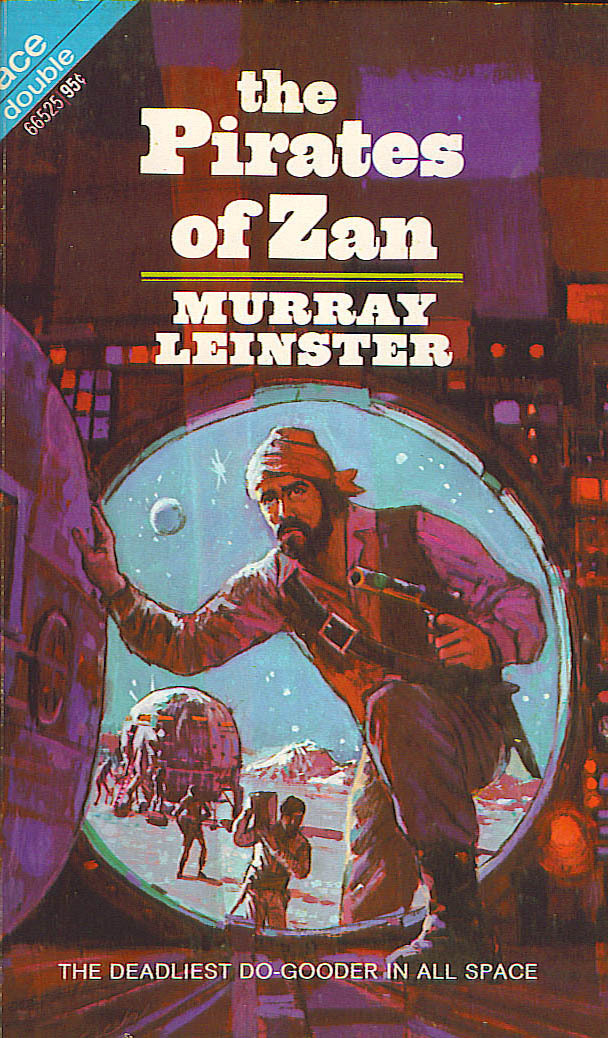
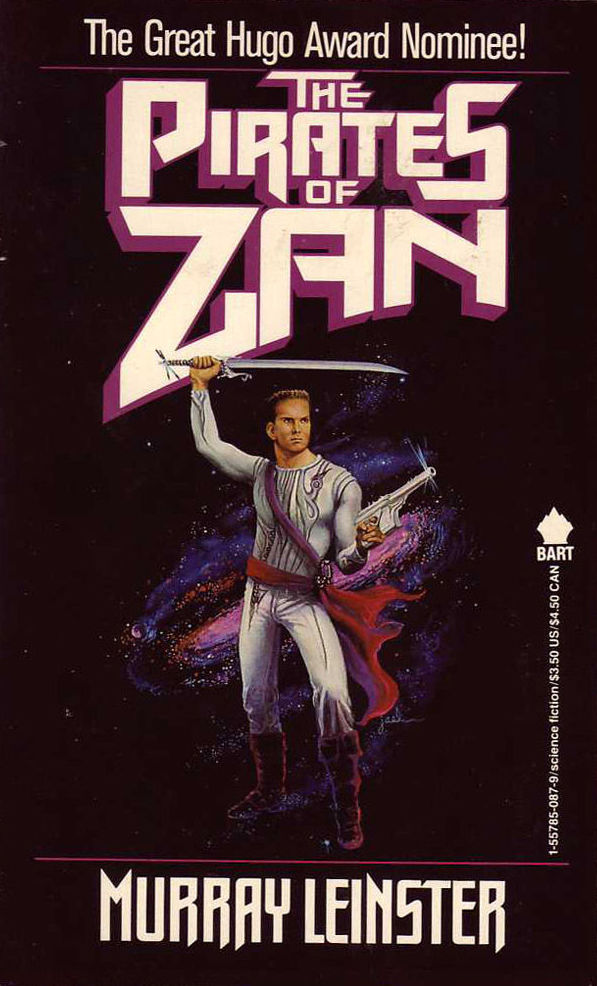
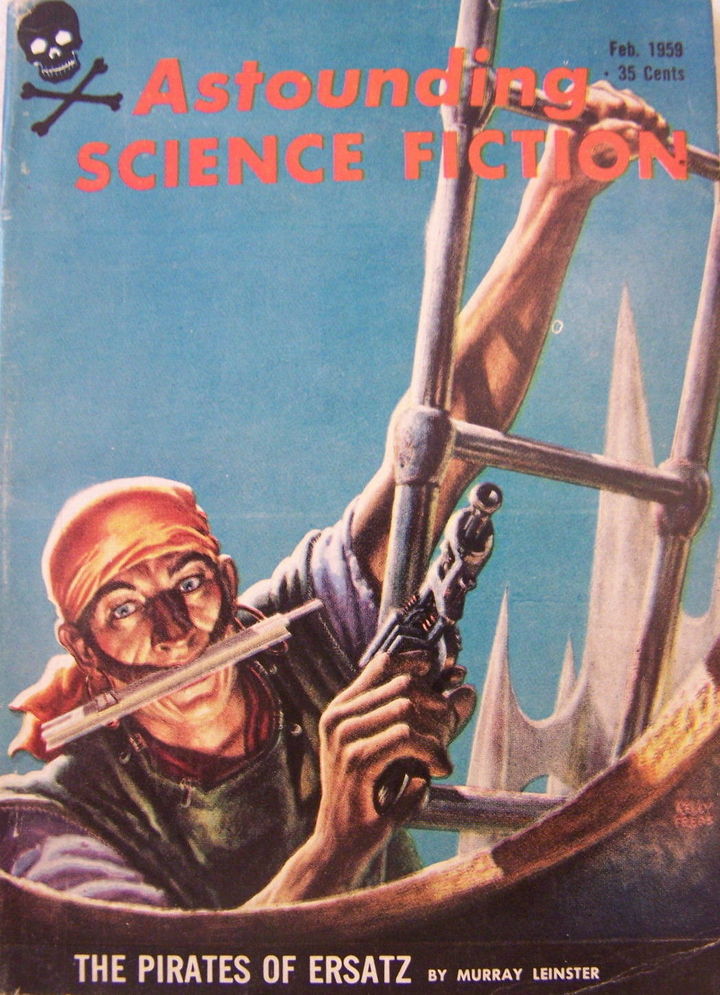
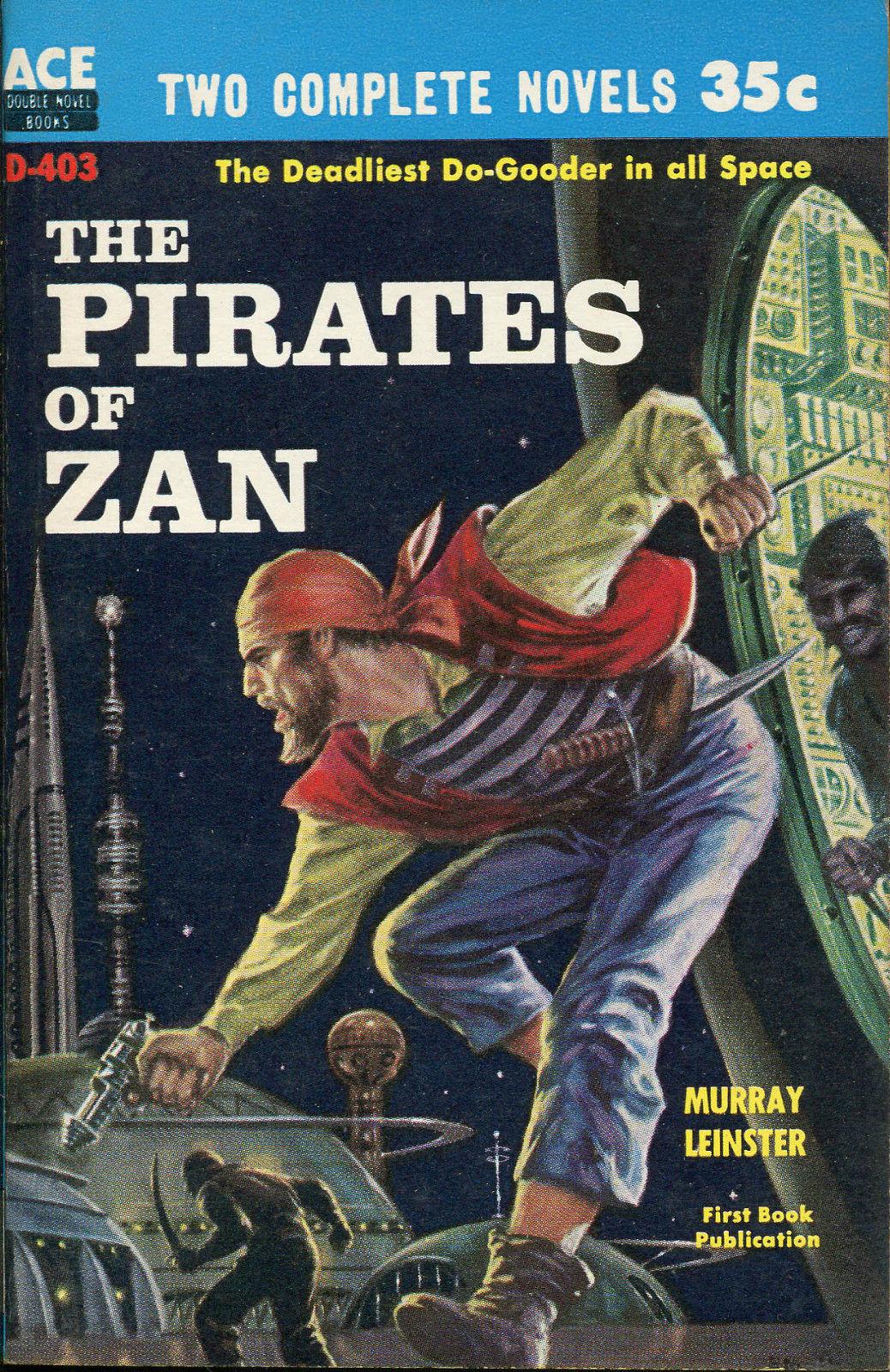
Astounding Science Fiction February 1959-small The Pirates of Zan Ace Double-small The Pirates of Zan Ace Double2-small The Pirates of Zan-small

[Click on any of the images above for bigger versions.]

Murray Leinster is one of my favorite pulp writers. I reprinted one of his earliest tales, “The Fifth-Dimension Catapult,” which first appeared in the January 1931 Astounding Stories of Super-Science, way back in Black Gate 9. Fittingly enough, when I kicked off my investigation of the Classics of Science Fiction line, I started with one of the finest volumes, The Best of Murray Leinster. More recently, I looked at his creepy pulp SF tale “Proxima Centauri” on August 15th.

But none of those is nearly as well known as his classic space fantasy The Pirates of Zan. Because, hello, space pirates. Also, it was blessed with a terrific series of covers over the three decades it was in print. So here we are with another fond look at the work of Murray Leinster.

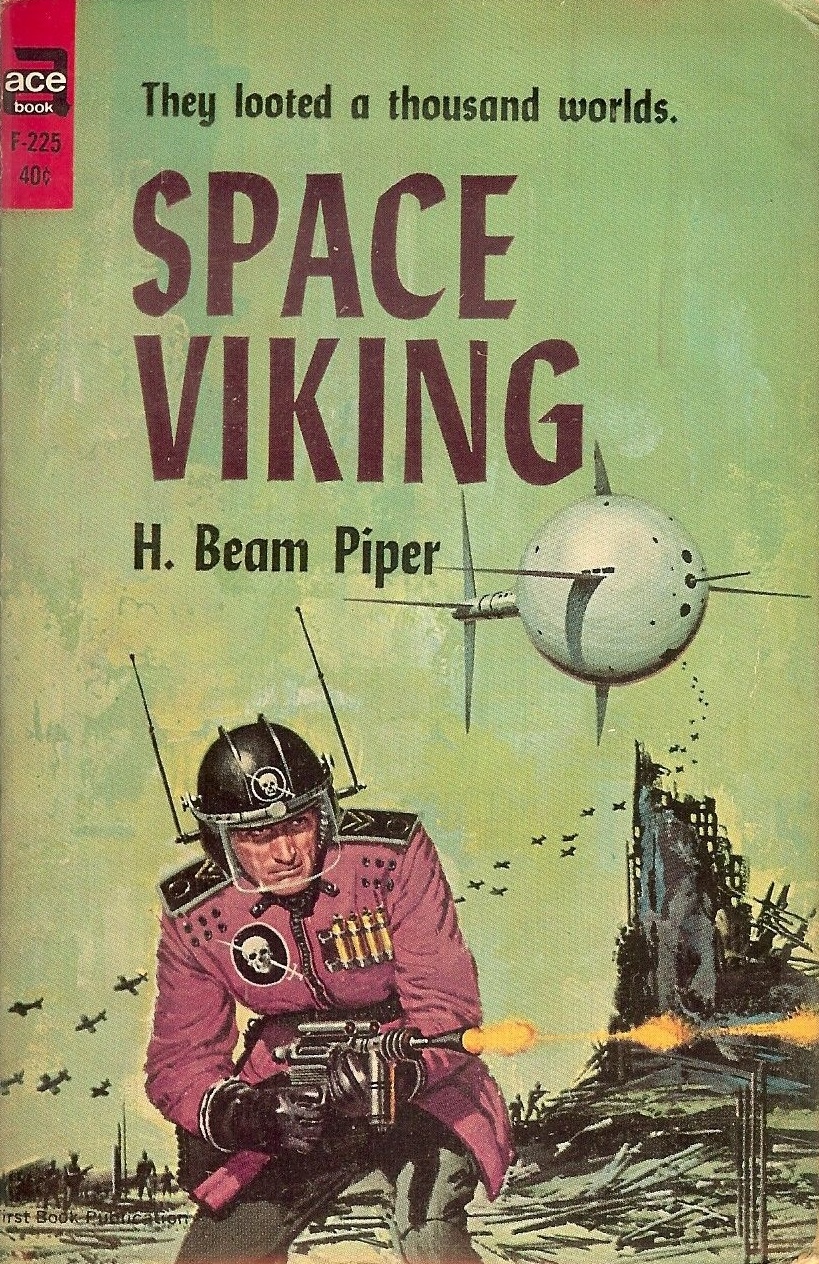
(While we’re on the topic, why aren’t there more novels of space pirates? The only other ones I can think of are H. Beam Piper’s Space Viking, CJ Cherryh’s Merchanter’s Luck, Piers Anthony’s Bio of a Space Tyrant, and maybe A. Bertram Chandler’s John Grimes novels, at least the ones featuring his recurring adversary Drongo Kane. That’s pretty sad. Seriously, if there are two things that go great together, it’s unexplored space and pirates. Get with it, science fiction.)

The Pirates of Zan was originally serialized (as “The Pirates of Ersatz”) in three parts in Astounding Science Fiction, starting with the February 1959 issue. The famous Kelly Freas cover, featuring a pirate with a slide rule between his teeth, is one of the most beloved Astounding covers of the era. It’s shown at left above.

Don’t ask what a slide rule is, you damn punk kids.

Read More Read More

God Stalk by P. C. Hodgell

God Stalk by P. C. Hodgell

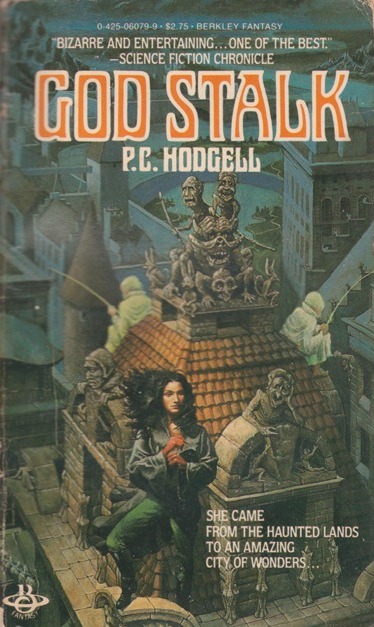
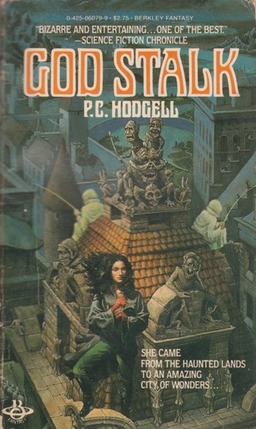
God Stalk P. C. Hodgell-smallOut of the haunted north comes Jame the Kencyr to Rathilien’s greatest city, Tai-Tastigon. From the hills above, the city appears strangely dark and silent. She arrives at its gates with large gaps in her memory and cat claws instead of fingernails. She’s carrying a pack full of strange artifacts, including a ring still on its owner’s finger… and she’s been bitten by a zombie. Wary, but in desperate need of a place to heal, Jame enters the city. So begins God Stalk, the first book in P.C. Hodgell’s Kencyrath series and one of my absolute, bar none, don’t-bother-me-if-you-see-me-reading-it, favorite fantasy novels.

When this book first came out in paperback in 1983, my friend Carl bought it at the original NYC Forbidden Planet on 13th Street. Raving about it, he tossed it to me. Then I passed it to someone else. By the time it finished its circuit through the rest of my friends and back to its original owner, its cover was bent, stained, and more than a little torn. I’ve gone through several copies myself over the years, having lost or upgraded it multiple times. When I reread it this past week, I was excited that I enjoyed it as much as, if not more than, I had in the past. I’m so grateful Carl gave me this book thirty years ago. P.C. Hodgell seems so far below the general fantasy radar, I don’t know if I would have ever heard of her at all, which is pretty darn shameful.

The Kencyr are a group of three races sworn to the service of the Three-Faced God and bound together by him to fight Perimal Darkness, a warping force of chaos and evil sweeping over the planes of existence. The rulers of the Kencyr are the human-looking High Born, of which Jame is one. The warriors and artisans are the Kendar, still human-looking but larger and longer-lived. Finally, there are the giant catlike Arrin-Ken, the judges.

As Jame remembers bits and pieces of her missing life, an eons-old struggle against the Darkness is revealed to the reader. The Kencyr fled to Rathilien three thousand years ago after betrayal at the highest level almost led to their extinction. Jame may have an important place in the war and among her people, though every answer leads to another question, some not answered until much later in the series.

The history of the Kencyr and their endless war are really only the background for God Stalk. This novel centers on Jame’s adventures during a year in Tai-Tastigon. From the night of her arrival during the Feast of the Dead Gods, her residency in the great city is one of constant action and intrigue.  She has entanglements with bandits, thieves, innkeepers, and deities. It’s a dangerous place, but also enticing.

Read More Read More

The Cold Edge of Forever, II: City

The Cold Edge of Forever, II: City

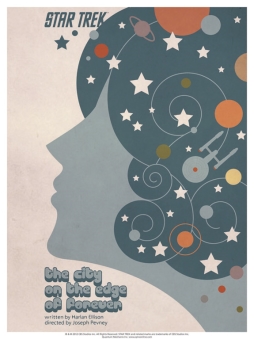
The City on the Edge of Forever, by Juan OrtizThis is the second part of my attempt to write about Star Trek, and specifically the episode “The City on the Edge of Forever.” For reasons which I hope will soon make sense I started off yesterday by writing about the 1954 short story “The Cold Equations.” What I’m about to try to do is tie that into a discussion of the Trek episode, and then go on to look at that episode in the context of the show overall. I am going to assume in what follows that you’re familiar with the episode (the plot synopsis is here; if it helps, it’s the one with the Guardian of Forever, where Kirk and Spock travel back to 1930), and that you know things like who Captain Kirk is, and who Mister Spock is, and so on and so forth. This I think is a fair assumption. Everybody knows these characters. Which is a part of why I want to talk about the episode, and its context. So before anything else, I want first to talk about the exercise of unknowing them. (And as an aside, the poster at right is by artist Juan Ortiz, who did an image for every episode of the original series. Worth taking a look at, and the whole run has been collected in a single book.)
Lately I’ve been watching the first season of Star Trek week by week, on a TV network that airs old shows from the 50s through 70s. Seeing the series in that context means seeing it as part of the fabric of its time. Some series, I`ve found, become very different: the original Twilight Zone, always a good show, becomes downright mind-bending. Watching Trek in that way I find myself caught up in the craft of the writing, direction, and (yes) acting; and I seem to forget everything I know about what happens outside of the show I’m seeing.

Read More Read More

The Cold Edge of Forever, I: Equations

The Cold Edge of Forever, I: Equations

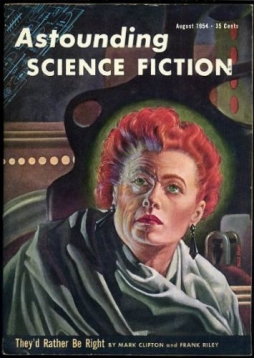
Astounding Science Fiction, August 1954I want to write about Star Trek. Specifically, about the episode “The City on the Edge of Forever.” But I’m not going to do that right now. I’ll get there, but I’m going to start off by writing about a well-known prose sf story that to me parallels “City” in some interesting ways. Then, in my next post, I’ll go on to write about the Trek episode and make a fuller comparison (edit to add: time having passed, you can find the post here). First up, though: “The Cold Equations.”
“The Cold Equations” was written in 1954 by Tom Godwin for editor John W. Campbell and published in Astounding. Some, including writers Kurt Busiek and Lawrence Watt-Evans, have stated that the story was largely borrowed from an EC Comics short story by Al Feldstein with art by Wally Wood, “A Weighty Decision,” itself perhaps copied from an E.C. Tubb story (“Precedent”). At any rate, Godwin’s tale is well-known, having been adapted for the screen and frequently anthologised; I read it in The Road to Science Fiction 3: From Heinlein to Here.

A man, Barton, piloting a small spaceship carrying medicine to an isolated colony, discovers an eighteen-year-old stowaway, Marilyn, who wanted to see her brother on the colony world. But Marilyn, from Earth, doesn’t understand the way things work out on the frontier of space: the ship had exactly as much fuel as it needed to get to the planet — before Marilyn’s unexpected weight was added. With Marilyn, it won’t be able to land safely. For the people on the colony world to live, she has to be ejected from the ship. Barton frantically tries to find some way out, some way to keep her alive, but cannot; and so, willingly, she goes into the airlock, and dies out in the void of space. Physics and mass and momentum cannot be argued with, the story tells us; the cold equations must balance.

Read More Read More