Browsed by
Category: Books

The Series Series: Irenicon by Aidan Harte
The Series Series: Irenicon by Aidan Harte

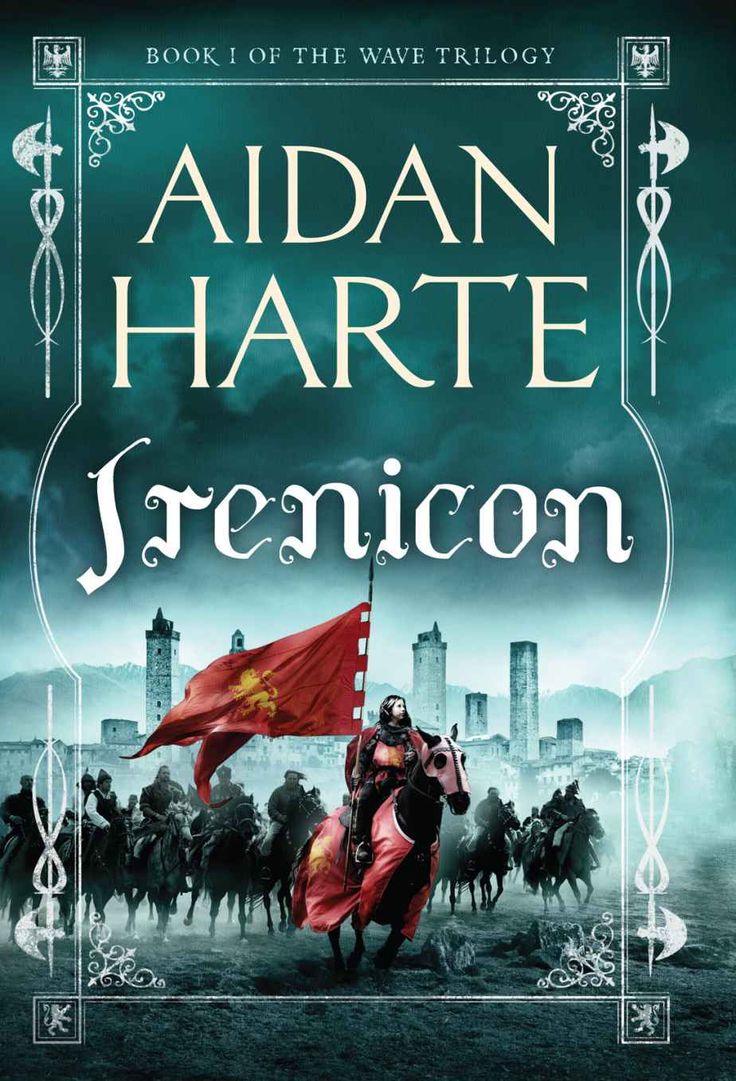
Irenicon by Aidan Harte-smallWelcome to Rasenna, a shining city-state turned failed state, where river spirits haunt the streets and mistake themselves for the citizens they’ve drowned. Rasenna’s people hide in their towers at night, and even by day fear the river their enemy wielded to cut their city in two. With the city’s legitimate ruling house reduced to one girl not yet of age, the closest thing it has to law is the twenty-year vendetta between the gang that rules north of the Irenicon and the gang that rules to its south. Both sides boast masters of a martial art perfectly organic to the world of this book, one that could arise in no other.

Can a city recover from two decades of grief, madness, and self-destruction? Can these people change in time to save themselves? They’d better, because the rival city of sorcerous Engineers that smashed them before may well do so again. The masters of Concord have striven to perfect their Wave technology. Any city they choose to strike now will be scoured from the soil of Etruria.

Meanwhile — what are the Concordians playing at? — the enemy sends Rasenna an Engineer to build a bridge over the hated river. It’s a bridge no Rasenneisi citizen wants. The Irenicon and its water spirits are not keen to be bridged, either.

Aidan Harte has been justly praised for his world-building in his debut novel. Irenicon is, almost, what we might get if Italo Calvino’s classic Invisible Cities had lingered for a few hundred pages in one of its gem-perfect vignettes. Almost, except that Harte’s stunning gift for setting does not yet extend to dialogue, characterization, or prose style. Irenicon will not be a classic, but it is a fine, fun read.
…

Read More Read More

The Fascination of Dragons

The Fascination of Dragons

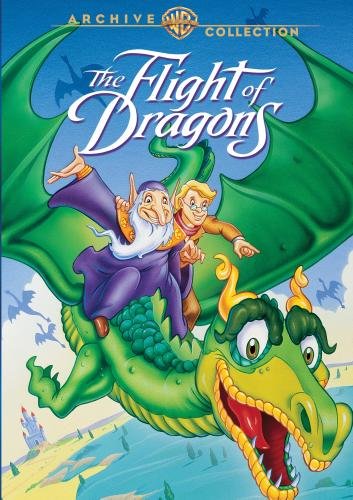
The Flight of Dragons DVD-smallI don’t remember when I learned about dragons, but I do remember the first time they took my breath away.

I was ten years old, helping to restack the shelves in my school library while a younger class watched a movie in the next room: a cartoon I’d never seen before, but which I eventually learned was called The Flight of Dragons. As it played in the background, I gleaned that there was a princess called Melisande and some sort of dark sorcerer trying to take over the land — and then, just as the bell was ringing, I saw the dragons: a sleeping field full of them, multicolored and wise, taking flight as the evil magic was lifted.

That image struck some chord within me I hadn’t known was there. Before then, with the saccharine exception of the colorfully coiffed dragons of Lady Lovely Locks, the only dragons I’d seen in stories were evil: the monster slain by St George, Disney villains Maleficent and Madame Mim in dragon form, the fearsome mountain dragon in Emily Rodda’s Rowan of Rin.

But with this single portrayal, I suddenly realized they could be more than that: that dragons could be awe-inspiring, noble, beautiful.

Soon after, I stumbled on Graeme Base’s newly released The Discovery of Dragons, a singularly gorgeous book that only affirmed my fascination; so much so that, nearly twenty years later, I still have my original copy, dust jacket and all. Then came Falcor, the beloved luck dragon of The NeverEnding Story.

But what really sealed the deal for me was a game: the original Spyro the Dragon. Despite the fact that I didn’t have a console, I played video games compulsively whenever I visited friends who did. Thus it was that, during one fateful trip to a neighbor’s house, I discovered the demo version of Spyro and became obsessed. I’d wanted a console before, but now, the idea of not having one — of not being able to play the full game — was intolerable.

I must have been pretty persistent, because sure enough, come Christmas morning, my parents revealed that they’d been paying attention: I received both a PS1 and Spyro and spent the rest of the day playing it. As, indeed, I still sometimes do, along with the first two sequels, Spyro: Gateway to Glimmer and Spyro: Year of the Dragon — not just for the nostalgia value, but because, despite the now woefully outdated graphics, they’re still good games, full of clever puzzles and fun environments, many of which had a similarly fundamental impact on how I envisage fantasy landscapes.

…

Read More Read More

Future Treasures: Skin Game by Jim Butcher

Future Treasures: Skin Game by Jim Butcher

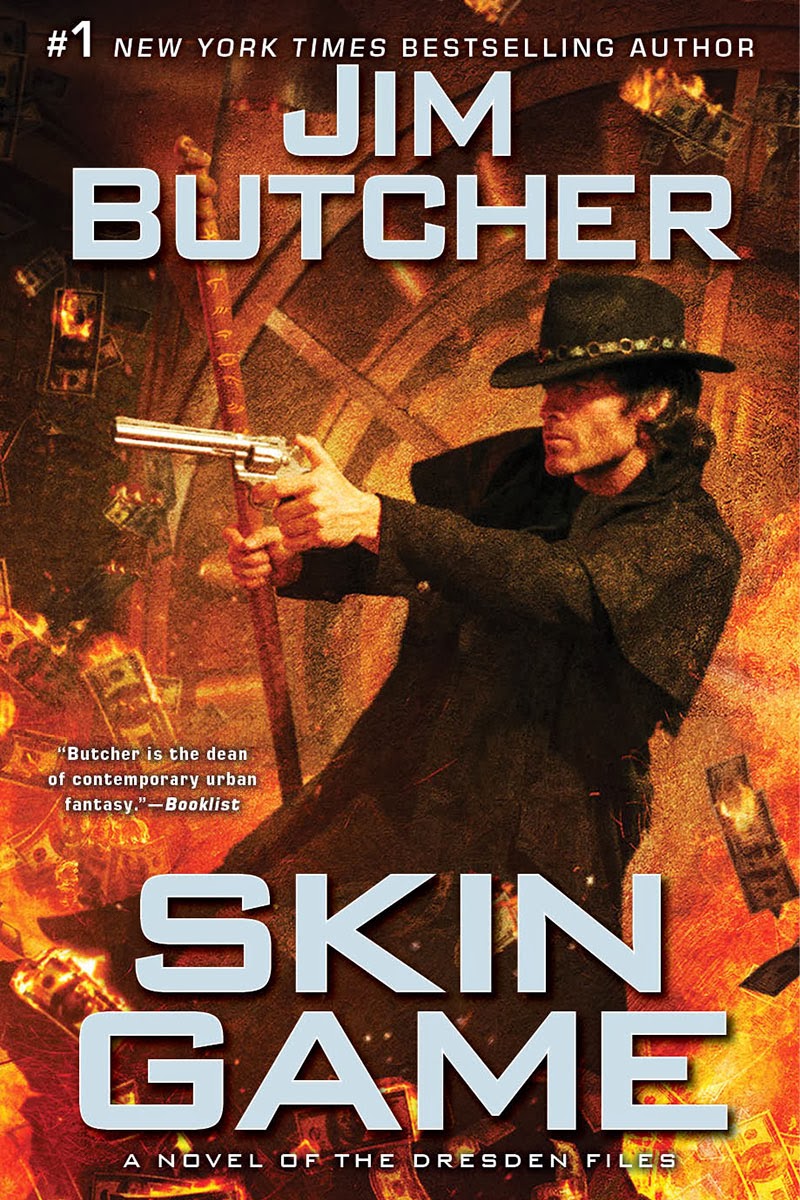
Skin Game Jim Butcher.-smallJim Butcher is something of an inspiration to modern fantasy writers.

Harry Dresden was not a hit when he first appeared, way back in the paperback original Storm Front (2000). Roc sent me a copy and I remember I couldn’t find anyone interested in reviewing it. Ditto with the next few, Fool Moon (2001) and Grave Peril (2001). Thomas Cunningham was the first to start reviewing them for us and he quickly became an unabashed fan.

Things happened fast after that. All my review copies were snapped up (except for my first edition of Summer Knight, which accidently ended up in a dollar bin at my booth at the 2010 World Fantasy Convention, where it was found by a lucky fan). I bought a complete set of the hardcover omnibus editions from the Science Fiction Book Club — and they were loaned out and never returned. I bought a second copy and it suffered the same fate.

Jim Butcher began to hit bestseller lists. I clearly remember the moment when I realized he’d crossed over to literary megastardom — it was at Dragon*Con 2010, when I glimpsed the size of the mob that showed up to get his autograph. The line wound around the room, out the door, and down several blocks.

Jim Butcher is proof positive that it’s still possible to achieve bestseller status starting with a midlist paperback series. That’s the dream of virtually every midlist fantasy writer, and for the greater part of the last decade, as publishing suffered one upheaval after another — the rise of Amazon, the collapse of Borders, and the shift to e-books, just to name a few — it was beginning to look like that dream may have suffered a hard death.

So there’s a lot of reasons to celebrate Jim Butcher’s success. But for most of us, it’s enough to know that the fifteenth volume of one of the most popular fantasy series on the market has finally arrived, breaking an 18-month drought since the last volume, Cold Days (November 2012).

…

Read More Read More

The Attenuated Hero: Vicious by V.E. Schwab

The Attenuated Hero: Vicious by V.E. Schwab

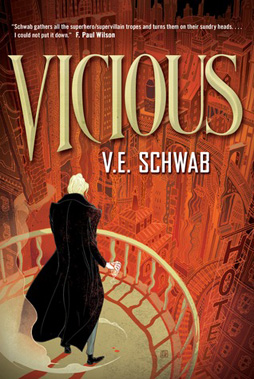
ViciousV.E. Schwab had written a number of YA novels when, in 2013, Tor published her book Vicious. Billed by some as a super-hero story, it had elements of that genre while also, to some extent, questioning its assumptions. Reading it, I found that the book seemed interested in questions of morality, heroism, and villainy, but that the super-hero aspects were so attenuated I doubt it would have occurred to me to consider it as a super-hero story without the claims of the book jacket. Its handling of ideas of heroism felt like a reiteration of themes comics (Marvel, DC, and independent) have been interrogating relentlessly (if not neurotically) for at least thirty years. In some ways, it’s best to simply ignore the ‘super-hero’ tag. If you do, you’re left with a well-paced and sharply-structured novel. And on its own terms, it’s an enjoyable tale.
The book alternates between present-day scenes and flashbacks, and a large part of the success of the novel rests in the fact that Schwab successfully pulls off this technical trick without blunting her momentum. Ten years ago, Victor Vale and Eli Cardale (later Eli Ever) are brilliant pre-med students who discover that near-death experiences can, under certain circumstances, grant survivors strange powers. They experiment, things go wrong, and while they both get powers, they end up as enemies. Now, in the present, Victor’s gotten out of prison, recruited some assistants, and is seeking out Eli — who himself has been up to some surprising things in the previous years, having come to hate the extraordinary people (or EOs) gifted with powers.

…

Read More Read More

Writers – Don’t Start at the Start…

Writers – Don’t Start at the Start…

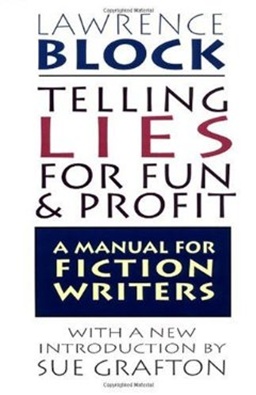
Block_TellingLiesChapter 25 of Lawrence Block’s Telling Lies for Fun and Profit (which should be on EVERY writer’s bookshelf) is titled, ‘First Things Second.’ As he succinctly summarizes (nice but unneeded alliteration there), “Don’t begin at the beginning.”

It’s a popular screenwriting maxim to enter the scene as late as you can. In other words, don’t begin at the beginning. I seem to recall William Goldman espousing this.

Block tells of being advised to switch the first two chapters of a detective novel he had written. Basically, this put the reader in the thick of the action from the outset, with some explanation following. Tension can be created at the outset and carried forward by not beginning at the beginning.

Sitting here at the keyboard, I can’t think offhand of a Sherlock Holmes or Solar Pons story that uses this technique. There’s a reason we’ve all got the image of Holmes and Watson sitting in their rooms at 221B Baker Street when a client or Inspector Lestrade comes to visit and we’re off on a case.

As I read this chapter, I thought of Will Thomas’s Barker and Llewlyn books (love them, but what’s with the two “L”s at the beginning of that name?). Barker has more than a passing resemblance to Sherlock Holmes (I suspect that Robert Downey Jr’s portrayal owes a debt to these books) and Llewellyn is his Watson (or Boswell). Mind you, they are excellent books and not simply Holmes copies.

…

Read More Read More

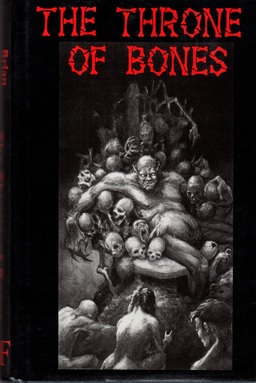
A World Mottled With Decay: The Throne of Bones by Brian McNaughton

A World Mottled With Decay: The Throne of Bones by Brian McNaughton

oie_27162551H2hCeV1C

For all their laughter, ghouls are a dull lot. Hunger is the fire in which they burn, and it burns hotter than the hunger for power over men or for the knowledge of the gods in a crazed mortal. It vaporizes delicacy and leaves behind a only a slag of anger and lust. They see their fellows as impediments to feeding, to be mauled and shrieked at when the mourners go home.
— from “Meryphillia”

The late Brian McNaughton’s 1997 collection The Throne of Bones is a book I want to on one hand praise and with the other hold it away from myself with a pair of iron tongs. It contains some of the best writing I have ever read in fantasy; by turns tense, dark, grimly funny, and occasionally majestic. And it’s set in a vivid world, parts of which will haunt me for a long time.

On the other hand, many of the characters are by far the most despicable I’ve ever met and their actions among the vilest put to paper. Lots of the characters’ actions are motivated by sexual appetites that are many things — mostly disturbing — but never even remotely erotic. So if this review leaves you curious about McNaughton’s work, be warned: while it’s not sadistic or very frightening, it is strong stuff.

The Throne of Bones contains nine short stories and the novella, “Throne of Bones” itself composed of six intricately intertwined stories. They are set within and on the edges of an old empire slipping into decay: crumbling cities, clashing religious sects, and feuding noble clans. The rich and powerful lead lives of luxury, while the poor live in squalor. Between them a small middle class live in dual fear of the nobility and of falling into poverty.

…

Read More Read More

OMG! Immortal Immodesty (Deities and Demigods, Part 3)

OMG! Immortal Immodesty (Deities and Demigods, Part 3)

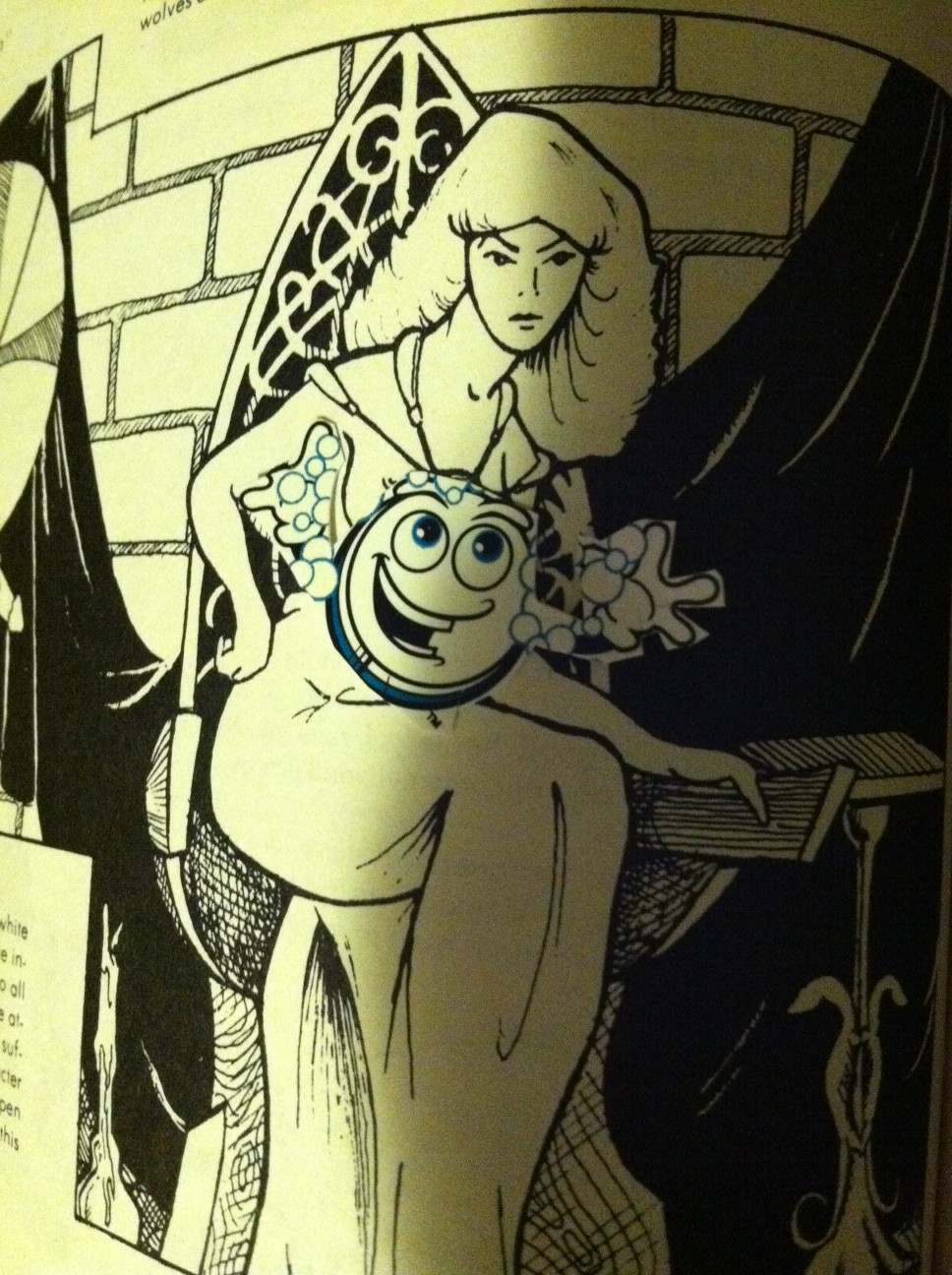
Whoops! The Goddess of Pain has had a wardrobe malfunction!
Whoops! The Maiden of Pain has had a wardrobe malfunction!

In my ongoing exploration of TSR’s first edition Deities and Demigods (1980), I must now confront the mammary in the room.

Did you ever notice there’s a fair amount of nudity in those first generation ADD books? I’m just, um, wondering if you guys did. I mean, I didn’t. I just noticed. Someone pointed it out to me — yeah! That’s the ticket! When I was twelve years old, I was much too pious to have had any impure thoughts toward Loviatar, aka Goddess of Hurt aka “Maiden of Pain.”

Okay, I may have noticed in passing that there was less modesty in those ‘70s and early ‘80s realms of fantasy, whereas with second edition on there is nary a nipple to be noticed. The cleaning up happened before the Wizards of the Coast buy-out and seems to track pretty closely with the culture in general (note many PG movies from the same era — say, the original Clash of the Titans — that couldn’t be shown on basic cable these days without heavy editing to assure that preteens aren’t sullied by viewing bare human breasts and buttocks, which they have never seen because who ever heard of the Internet?).

The interior illustrations are gorgeous. This is old-school RPG, so it’s all black-and-white line art by the likes of Erol Otus, David S. LaForce, Jim Roslof, and David C. Sutherland III.

To undress, er, address the tempestuous topic of topless deities in the temples, I must confess that, as an adolescent, I did appreciate the fact that goddesses by and large disdained mortal-kind’s prudery when it came to attire. It’s stunning, really, how many goddesses not only do not cover up their breastesses, but wear outfits that positively accentuate them.

…

Read More Read More

Doc Savage, The Shadow and The Avenger, Together Again: The Vril Agenda by Derrick Ferguson and Josh Reynolds

Doc Savage, The Shadow and The Avenger, Together Again: The Vril Agenda by Derrick Ferguson and Josh Reynolds

The Vril Agenda-smallOne of the first things I did when I landed at the Windy City Pulp and Paper show on Friday was make a beeline for the Airship 27 booth.

Time is finite and the Windy City Dealer’s room is vast, and to make sure you get the treasures you really want, it helps to be a little determined. The treasures I really wanted this year included B.C. Bell’s 1930’s pulp vigilante novel, Tales of the Bagman, which I wrote about enthusiastically in my report on last year’s show, and Jim Beard’s supernatural detective collection, Sgt. Janus, Spirit-Breaker — both of which are published by Airship 27. Plus, I wanted to make sure I had plenty of time to look over their whole table, since it’s always piled high with a tantalizing array of new titles.

As proprietor Ron Fortier happily sold me those two volumes, I casually mentioned that I’d first heard of Sgt. Janus via Josh Reynolds’s splendid Nightmare Men column, published at the fabulous Black Gate website… which, coincidentally, I happened to run, did I mention? Without missing a beat, Ron pointed out one of the many titles on his table, saying, “Josh is a terrific guy. That’s his latest book, a new pulp adventure, right there.”

I was suitably astounded. Here I was, trying to impress Ron by name-dropping Josh Reynolds, and he was able to produce a novel I didn’t even know existed! I know when I’ve been one-upped. Besides, I’ve known Josh as a terrific writer for years, so it was a thrill to discover he’d written a pulp adventure novel.

The Vril Agenda was co-written by Derrick Ferguson, author of Dillon and the Voice of Odin. Derrick does a terrific job of relating how the book came about on his blog and I think I’ll turn it over to him:

It got into my melon of a head a particular obsession to have Dillon be trained in various disciplines by the great pulp champions of the past. Since Dillon is a spiritual son of those heroes, I always thought it would be a gas for him to seek out some of these men and women to learn what they know…  Of course I knew I couldn’t use The Big Three by name. I’m talking about Doc Savage, The Shadow and The Avenger. But I could allude to them…

…

Read More Read More

Kelly McCullough’s Broken Blade is a Quick Summer Read

Kelly McCullough’s Broken Blade is a Quick Summer Read

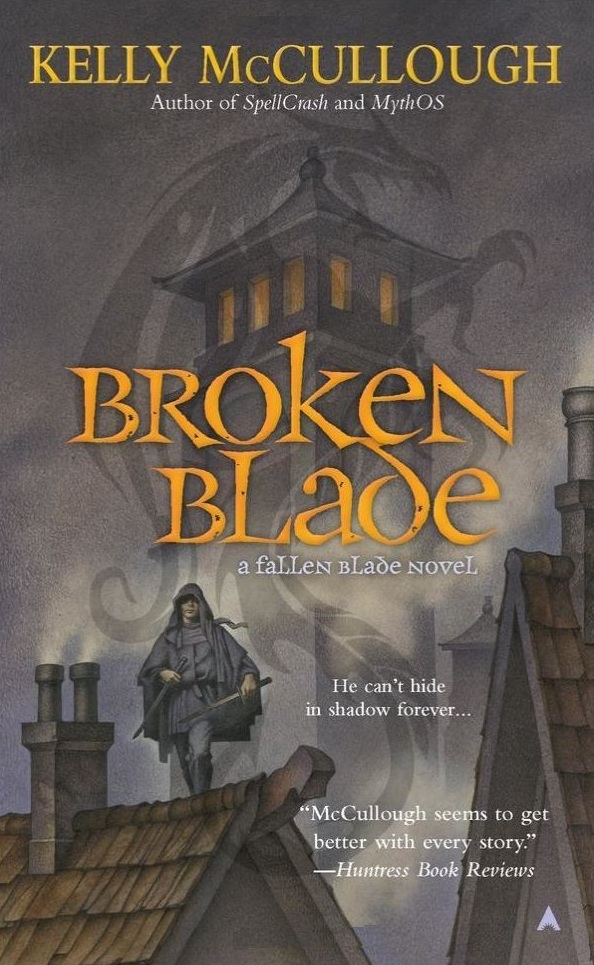
Broken Blade Kelly McCullough-smallBroken Blade
Kelly McCullough
Ace (304 pgs, November 2011, $1.50)

Aral Kingslayer used to be a legend. In another life, he wasa  hired blade for Namera, the goddess of divine justice, and while in that role earned his name. Now that his goddess is dead, his order disbanded, and his compatriots killed, he is a man without a purpose.

Well, unless taking odd jobs to keep his bar tab paid and dodging barbs from his shadow familiar Triss could be called having a purpose. That is, until a lady dressed in red walks into his life with a job offer: deliver a sealed message to a person waiting on a particular balcony at a specified time.

Aral believes this to be an easy job for a man with his unique skill set, and so he accepts. It’s not until he’s almost killed by a man whom he’d thought long dead that he discovers the job is much more than it seems.

Broken Blade is an enjoyable read, even as it doesn’t break any new ground. Assassin novels generally feature a man (check), who has gone rogue for reasonable and/or forgivable reasons (check), who comes to question everything he has known to be true (check). They also feature political intrigue, creative battle/death scenes, and a love interest (check, check, check).

However, one can’t just dump the elements onto the page and expect to get a coherent, entertaining story. An author needs to add a little from each trope and combine them until they make something new, and here McCullough succeeds — he mixes just the right amounts of just the right ingredients to produce a solid novel.

…

Read More Read More

Vintage Treasures: Charles de Lint’s Wolf Moon, and a Tale of Roving Booksellers

Vintage Treasures: Charles de Lint’s Wolf Moon, and a Tale of Roving Booksellers

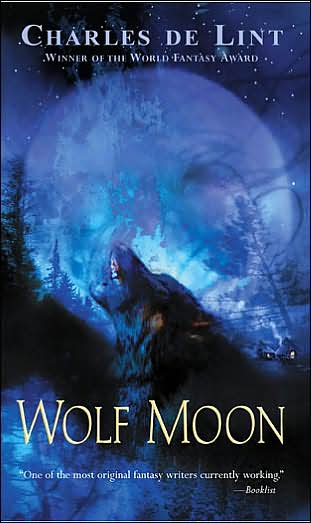
Wolf Moon Charles de Lint-smallIt pays to know excellent booksellers.

On Tuesday, Rich Warren, co-owner of Starfarer’s Despatch, posted a pic of Charles de Lint’s 1988 Signet paperback Wolf Moon on Facebook and later this brief review:

What a blast. Just finished this one this morning. A tale sympathetic to the Werewolf, and told from his point of view. I know there are De Lint fans who enjoy his urban fantasy (Newford) more but the great writing is still present in these older fantasies.

My comment was concise, but completely heartfelt: “I need this book! Rich, sell me one!”

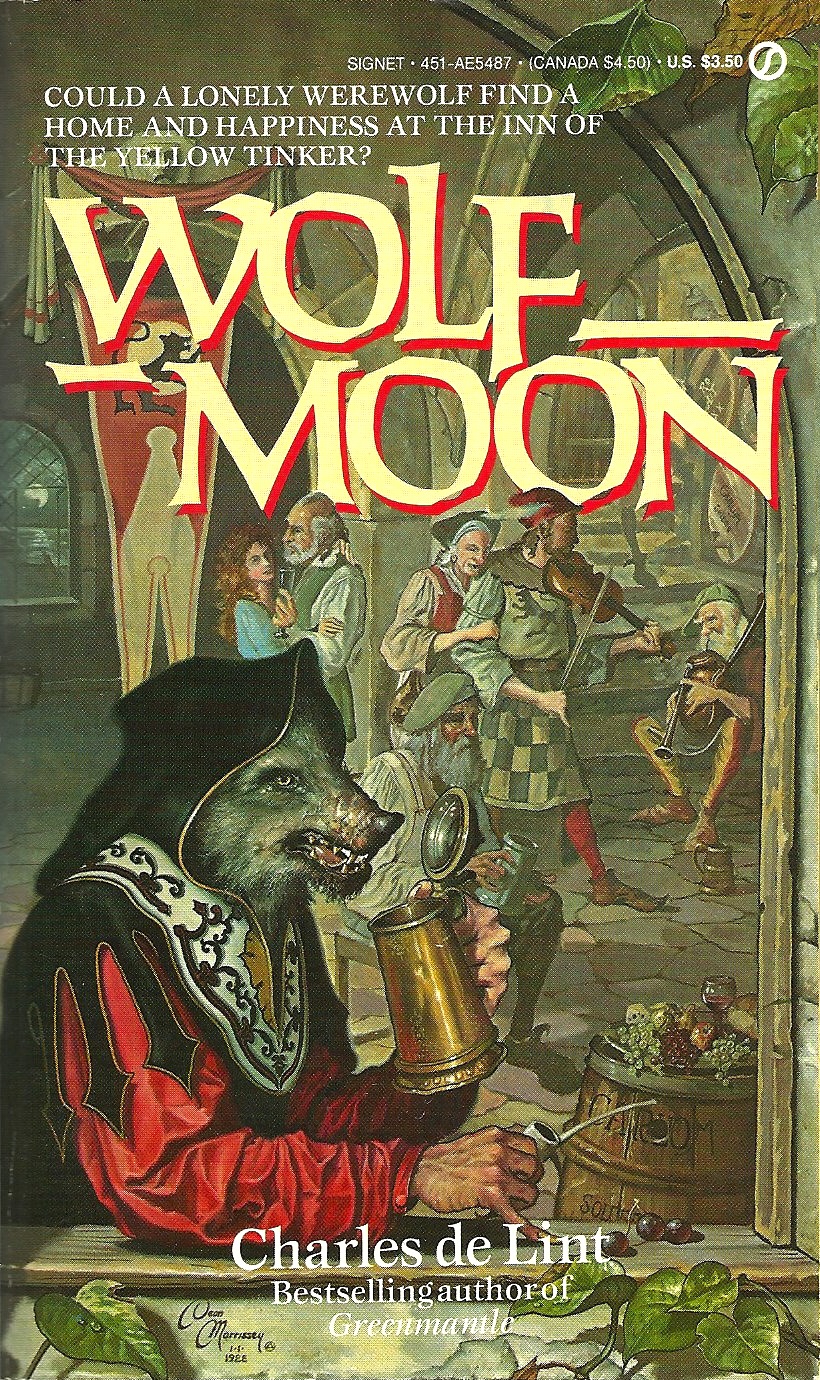
I meant it, too. Wolf Moon was reprinted in 2004, with a generic urban fantasy cover, but the 1988 paperback original, which boasts a fabulous cover by Dean Morrissey, showing a werewolf relaxing in The Inn of the Yellow Tinker, is much harder to come by.

Three days later, I returned from my business trip to Las Vegas. I drove straight from the airport to the Westin hotel in Lombard, Illinois, and arrived shortly before the Dealer’s Room closed at Windy City Pulp and Paper, one of my favorite local cons (the write-up I did on last year’s is here). I wasn’t in the room five minutes before I heard a friendly voice calling my name: Arin Komins, Rich’s wife and the other half of the splendid enterprise that is Starfarer’s Despatch.

“We have a book for you,” Arin said. We found Rich and, sure enough, he pulled a beautiful, unread copy of Wolf Moon out of his backpack.

…

Read More Read More