Browsed by
Category: Books

Self Published Book Review: The Book of Thoth by Paul Leone

Self Published Book Review: The Book of Thoth by Paul Leone

If you have a book you’d like me to review, please see the submission guidelines here.
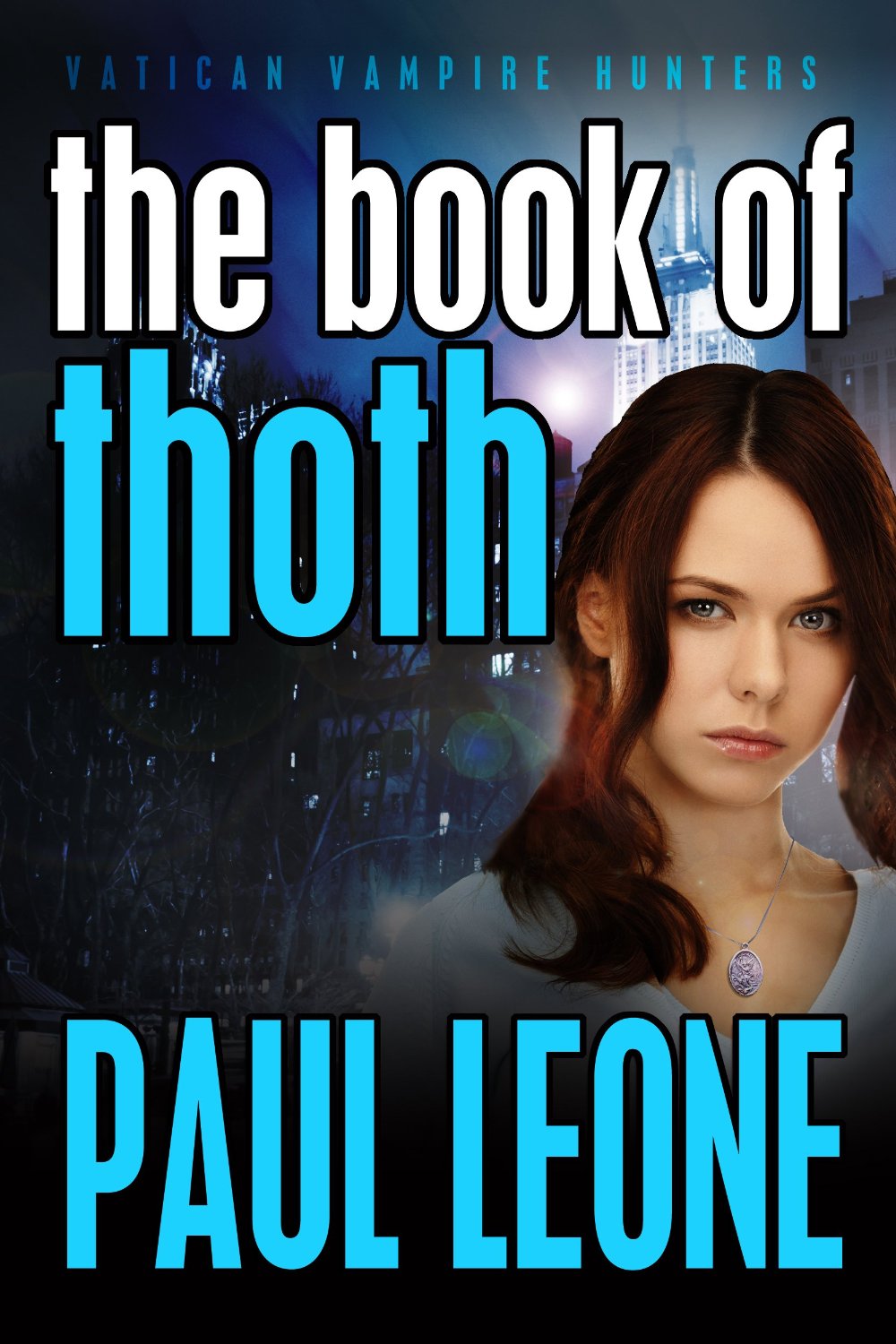
Book_of_ThothConsidering my dislike of vampires, I seem to review a lot of books about them. Either vampires are hard to avoid or I just can’t help myself. Paul Leone’s The Book of Thoth is part of his Vatican Vampire Hunters series. As you might guess by the name of the series, Mr. Leone does not shy away from religious themes. Or vampires. In his series, vampires are literally demons escaped from Hell, occupying the bodies of the dead. This explains why they so hate and fear anything sacred, whether it be holy water, crucifixes, churches, or even the blood of the righteous.

Nicole van Wyck is an heiress who has no interest in going into the family business and who is rapidly losing interest in the clubs and parties all her friends are involved in. Her life is threatening to become the aimless drifting of so many of the rich and irresponsible. That is, until she friends meets her first vampire. Fortunately for her, the vampire is being tracked by a group of church-sponsored hunters, who chase it away with no one the wiser. Except for Nicole, who suspects that there’s more going on than the friends who are with her realize. When she does track down the hunters, they make her an offer to join them and Nicole concludes that if vampires are real, then fighting them is not optional.

Nicole is certainly not another vapid heiress. She works hard, whether tracking down a mystery or training to fight vampires. She also has a strong moral center, which comes through both in how readily she leaps into the fight and in how she is willing to argue against her own team when they cross the line. Nicole is certainly a capable heroine, but she and her fellow hunters are not facing run of the mill vampires, but a veritable count of Hell, Count d’Aubert, and his very dangerous minion, Alice. The demons in dead flesh are after the titular Book of Thoth, which holds the secrets of Satan himself. To do that, they must gather three keys to open up the book’s hiding place.
Read More Read More

True Places: Jan Morris’ Hav

True Places: Jan Morris’ Hav

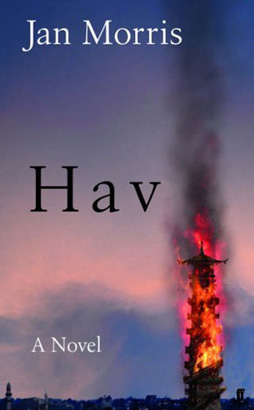
HavIn 1984, writer Jan Morris spent several months in Hav, an idiosyncratic city in the Eastern Mediterranean. She left it just ahead of a violent insurrection and collected her letters describing the city into a book, Last Letters From Hav. Twenty years later, she returned to Hav to document what had changed, in a piece called Hav of the Myrmidons. Both were collected together in one volume, called simply Hav.
Hav, of course, doesn’t really exist. It’s not on any map of this world; true places (to quote Melville) never are.

Morris created Hav, situating it in a specific place and imagining a history for it which she then proceeded to uncover as a tourist. Morris is an experienced travel writer and she brings Hav alive, its foods and dress and sights, its flora and fauna and geology. She has a fine eye for detail and a strong prose style, conveying much in a brief space. She’s also reflective, contemplating on the things she sees and her own perception of these things: one can certainly argue that that’s what the book’s about: What she knows of Hav, what she learns and how, and what will always remain mysterious.

The first book, Last Letters, takes the form of six letters written over as many months. We meet some of the people of Hav, learn about the odd mix of cultures that made the place what it is, and see many of its unusual sights and traditions. But we also see strange things happening, things that the natives gloss over, but which disconcert Morris. She penetrates deeply into the nature of the city, finally encountering a surprising secret society; and then she leaves, just moments before some kind of upheaval strikes the city. What’s happening? Who’s behind it? Much is left ambiguous, though there are hints.

Read More Read More

Future Treasures: Rogues edited by George R.R. Martin and Gardner Dozois

Future Treasures: Rogues edited by George R.R. Martin and Gardner Dozois

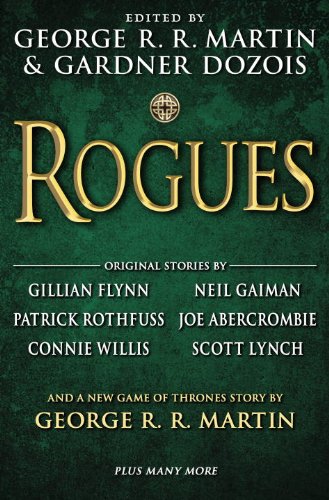
Rogues George R.R. Martin-smallGeorge R.R. Martin and Gardner Dozois have edited a number of major anthologies together over the last few years, including the massive heroic fantasy volume Warriors (2010), the star-crossed love story collection Songs of Love and Death (2010), urban fantasy-focused Down These Strange Streets (2011), Jack Vance tribute Songs of the Dying Earth (2010), the 800-page Dangerous Women (2013), and (my personal favorite) Old Mars. But now they’ve assembled what may be the most intriguing of the lot, a collection of 21 original stories (including a brand new A Game of Thrones tale by George R.R. Martin) showcasing thieves, villains, and ambiguous heroes of all sorts.

If you’re a fan of fiction that is more than just black and white, this latest story collection from #1 New York Times bestselling author George R. R. Martin and award-winning editor Gardner Dozois is filled with subtle shades of gray. Twenty-one all-original stories, by an all-star list of contributors, will delight and astonish you in equal measure with their cunning twists and dazzling reversals. And George R. R. Martin himself offers a brand-new A Game of Thrones tale chronicling one of the biggest rogues in the entire history of Ice and Fire.

Follow along with the likes of Gillian Flynn, Joe Abercrombie, Neil Gaiman, Patrick Rothfuss, Scott Lynch, Cherie Priest, Garth Nix, and Connie Willis, as well as other masters of literary sleight-of-hand, in this rogues gallery of stories that will plunder your heart — and yet leave you all the richer for it.

Featuring all-new stories by Joe Abercrombie, Daniel Abraham, David W. Ball, Paul Cornell, Bradley Denton, Phyllis Eisenstein, Gillian Flynn, Neil Gaiman, Matthew Hughes, Joe R. Lansdale, Scott Lynch, Garth Nix, Cherie Priest, Patrick Rothfuss, Steven Saylor, Michael Swanwick, Lisa Tuttle, Carrie Vaughn, Walter Jon Williams, and Connie Willis.

Rogues includes an introduction by George R.R. Martin and will be published by Bantam Books on June 17, 2014. It is a massive 832 pages, priced at $30 in hardcover and $14.99 for the digital edition. I’m underwhelmed by the cover, but I suppose it fits the theme of the earlier Warriors and Dangerous Women volumes.

The Hugo Ballot: Another View

The Hugo Ballot: Another View

Neptune's Brood-smallPeople will have heard that the Hugo nominations are out. I think the reactions to each ballot always break in two ways: the process and the content.

Lots of people have views on the process of constructing the ballot and the views are so diverse that I couldn’t do justice with a bunch of links here. If you’re interested in that crowd reaction, John O’Neill covered the tip of the iceberg in his post last week.

I suppose my only two cents is to point out that nobody likes 100% of any ballot and that, because they are based on a nomination process of voters who have different tastes and criteria, this is hardly surprising. On the content, I think there’s plenty on this ballot to make a strong showing at the Hugo Awards Ceremony over Labor Day Weekend.

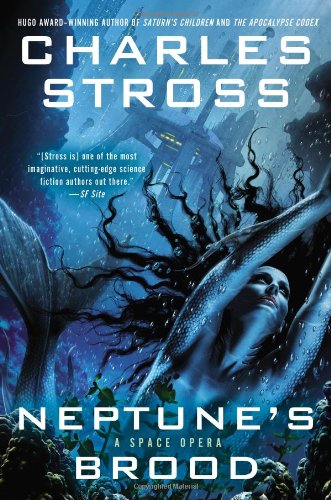
The novels ballot looks interesting. I’ve been told wonderful things about Leckie’s debut novel Ancillary Justice and now I want to read it even more. I love Charles Stross (an honor I share with Nobel in Economics Laureate Klugman), but I have to admit that Neptune’s Brood is neither exciting nor captivating literature so far (although I’m only a third of the way through).

I was discussing Stross with a friend yesterday. He’s got a dizzyingly varied corpus (the Laundry Files novels, “Rogue Farm,” Saturn’s Children and “Lobsters” stake out just a few examples of some of his creative way stations), but my friend and I noted that we sometimes have a harder time with his character work and plotting, much as we might with Perdido Street Station by Mieville. I’ll finish Neptune’s Brood and see what I think.

There are some intriguing entries on the novella ballot, including some Stross, but also Cat Valente and a Brad Torgerson story from Analog. Analog doesn’t seem to get a lot of Hugo attention, and at first, I thought this might be the sign of editorial changes at the magazine.

Read More Read More

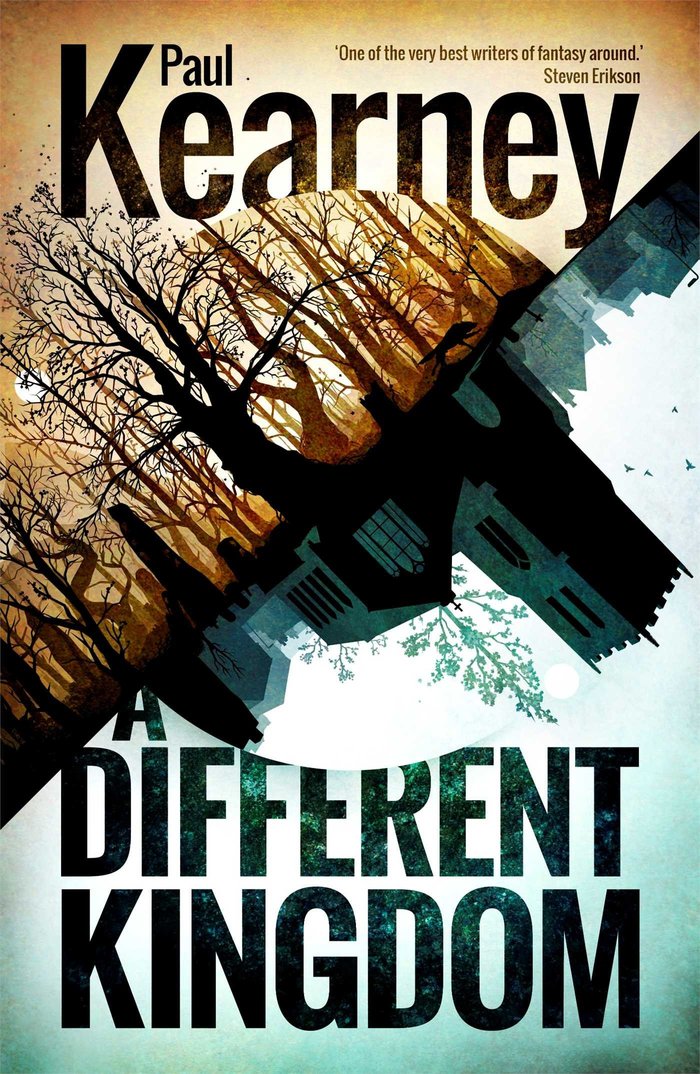
New Treasures: A Different Kingdom by Paul Kearney

New Treasures: A Different Kingdom by Paul Kearney

Paul Kearney A Different Kingdom-smallPaul Kearney’s first three novels, The Way to Babylon (1992), A Different Kingdom (1993) and Riding the Unicorn (1994), all appeared in the UK, but were never reprinted here in the US. That is, until both his five-volume Solaris series The Monarchies of God and The Macht trilogy (included in Locus Online’s Best Heroic Fantasy of 2010 list) became a success here.

Now Solaris is bringing his early novels into print in the US for the first time, starting with A Different Kingdom, which Interzone magazine called “An utterly splendid piece.”

Michael Fay is a normal boy, living with his grandparents on their family farm in rural Ireland. In the woods — once thought safe and well-explored — there are wolves; and other things, dangerous things. He doesn’t tell his family, not even his Aunt Rose, his closest friend. And then, as Michael wanders through the trees, he finds himself in the Other Place. There are strange people, and monsters, and a girl called Cat.

When the wolves follow him from the Other Place to his family’s doorstep, Michael must choose between locking the doors and looking away; or following Cat on an adventure that may take an entire lifetime in the Other Place. He will become a man, and a warrior, and confront the Devil himself: the terrible Dark Horseman…

Kearney’s first novel, The Way to Babylon, is scheduled to appear in paperback from Solaris later this month.

A Different Kingdom was published by Solaris on January 28, 2014. It is 427 pages. priced at $7.99 for the paperback and $6.99 for the digital edition. The cover is by Pye Parr.

The Series Series: Irenicon by Aidan Harte

The Series Series: Irenicon by Aidan Harte

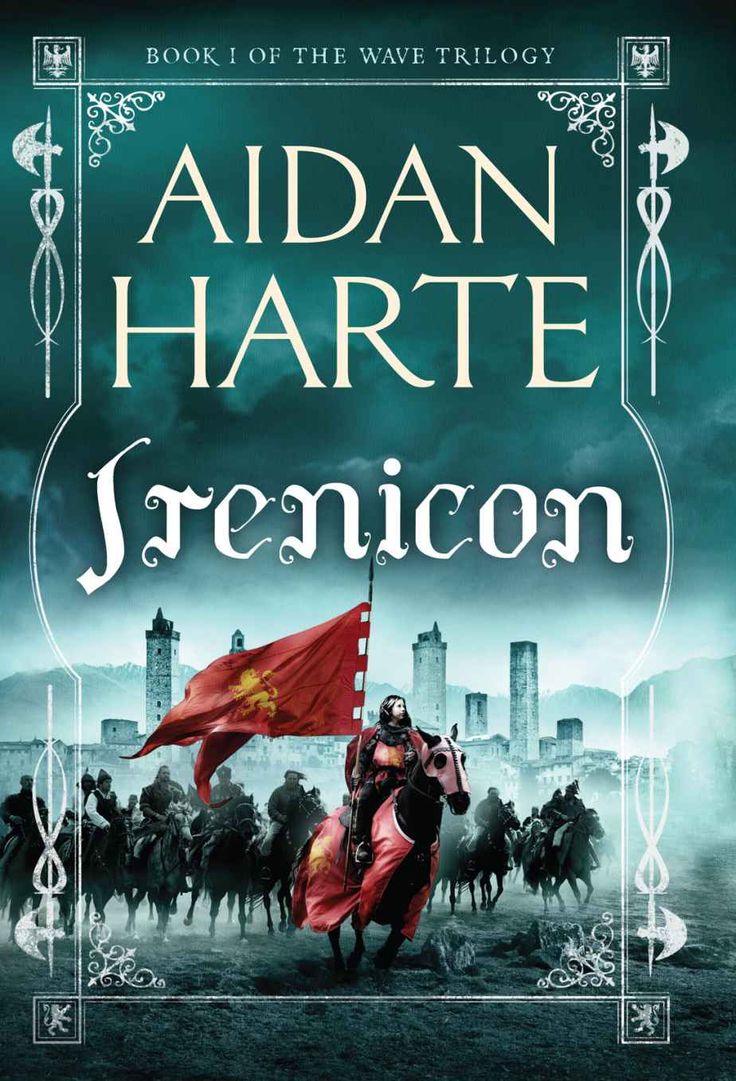
Irenicon by Aidan Harte-smallWelcome to Rasenna, a shining city-state turned failed state, where river spirits haunt the streets and mistake themselves for the citizens they’ve drowned. Rasenna’s people hide in their towers at night, and even by day fear the river their enemy wielded to cut their city in two. With the city’s legitimate ruling house reduced to one girl not yet of age, the closest thing it has to law is the twenty-year vendetta between the gang that rules north of the Irenicon and the gang that rules to its south. Both sides boast masters of a martial art perfectly organic to the world of this book, one that could arise in no other.

Can a city recover from two decades of grief, madness, and self-destruction? Can these people change in time to save themselves? They’d better, because the rival city of sorcerous Engineers that smashed them before may well do so again. The masters of Concord have striven to perfect their Wave technology. Any city they choose to strike now will be scoured from the soil of Etruria.

Meanwhile — what are the Concordians playing at? — the enemy sends Rasenna an Engineer to build a bridge over the hated river. It’s a bridge no Rasenneisi citizen wants. The Irenicon and its water spirits are not keen to be bridged, either.

Aidan Harte has been justly praised for his world-building in his debut novel. Irenicon is, almost, what we might get if Italo Calvino’s classic Invisible Cities had lingered for a few hundred pages in one of its gem-perfect vignettes. Almost, except that Harte’s stunning gift for setting does not yet extend to dialogue, characterization, or prose style. Irenicon will not be a classic, but it is a fine, fun read.

Read More Read More

The Fascination of Dragons

The Fascination of Dragons

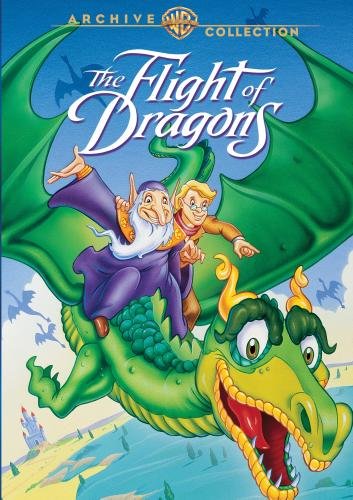
The Flight of Dragons DVD-smallI don’t remember when I learned about dragons, but I do remember the first time they took my breath away.

I was ten years old, helping to restack the shelves in my school library while a younger class watched a movie in the next room: a cartoon I’d never seen before, but which I eventually learned was called The Flight of Dragons. As it played in the background, I gleaned that there was a princess called Melisande and some sort of dark sorcerer trying to take over the land — and then, just as the bell was ringing, I saw the dragons: a sleeping field full of them, multicolored and wise, taking flight as the evil magic was lifted.

That image struck some chord within me I hadn’t known was there. Before then, with the saccharine exception of the colorfully coiffed dragons of Lady Lovely Locks, the only dragons I’d seen in stories were evil: the monster slain by St George, Disney villains Maleficent and Madame Mim in dragon form, the fearsome mountain dragon in Emily Rodda’s Rowan of Rin.

But with this single portrayal, I suddenly realized they could be more than that: that dragons could be awe-inspiring, noble, beautiful.

Soon after, I stumbled on Graeme Base’s newly released The Discovery of Dragons, a singularly gorgeous book that only affirmed my fascination; so much so that, nearly twenty years later, I still have my original copy, dust jacket and all. Then came Falcor, the beloved luck dragon of The NeverEnding Story.

But what really sealed the deal for me was a game: the original Spyro the Dragon. Despite the fact that I didn’t have a console, I played video games compulsively whenever I visited friends who did. Thus it was that, during one fateful trip to a neighbor’s house, I discovered the demo version of Spyro and became obsessed. I’d wanted a console before, but now, the idea of not having one — of not being able to play the full game — was intolerable.

I must have been pretty persistent, because sure enough, come Christmas morning, my parents revealed that they’d been paying attention: I received both a PS1 and Spyro and spent the rest of the day playing it. As, indeed, I still sometimes do, along with the first two sequels, Spyro: Gateway to Glimmer and Spyro: Year of the Dragon — not just for the nostalgia value, but because, despite the now woefully outdated graphics, they’re still good games, full of clever puzzles and fun environments, many of which had a similarly fundamental impact on how I envisage fantasy landscapes.

Read More Read More

Future Treasures: Skin Game by Jim Butcher

Future Treasures: Skin Game by Jim Butcher

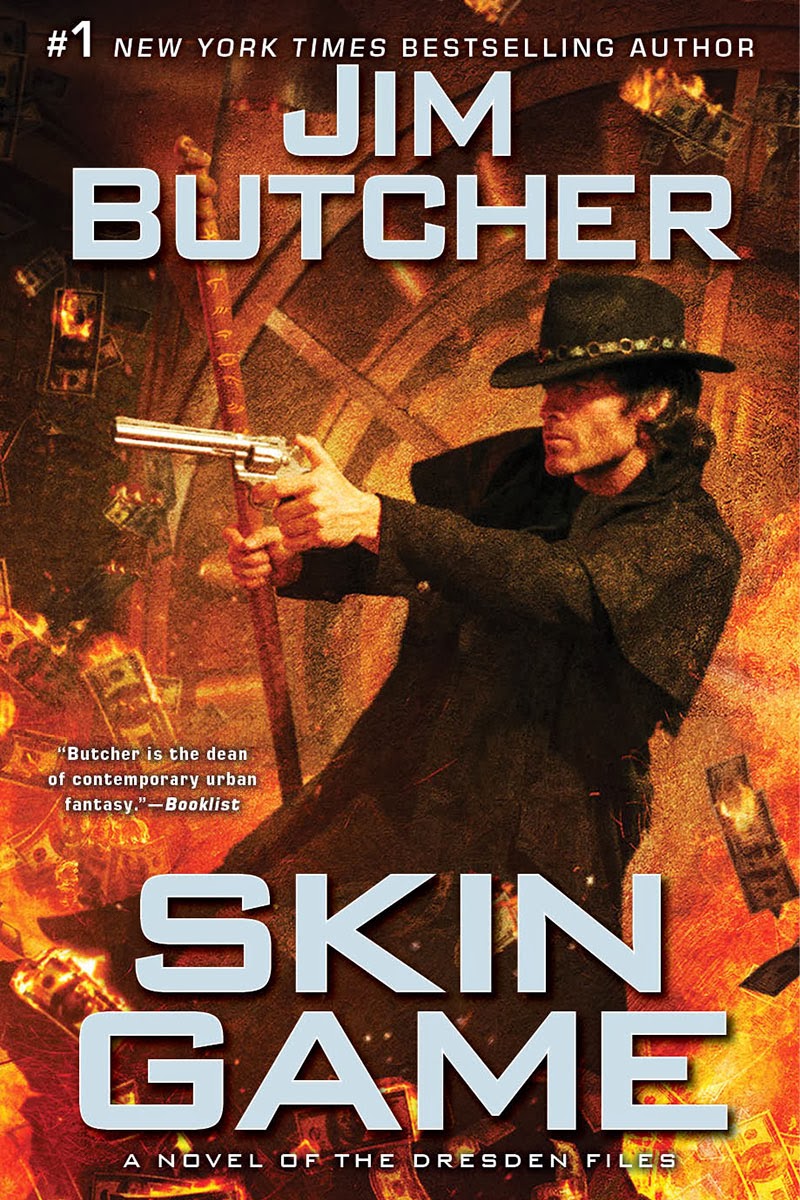
Skin Game Jim Butcher.-smallJim Butcher is something of an inspiration to modern fantasy writers.

Harry Dresden was not a hit when he first appeared, way back in the paperback original Storm Front (2000). Roc sent me a copy and I remember I couldn’t find anyone interested in reviewing it. Ditto with the next few, Fool Moon (2001) and Grave Peril (2001). Thomas Cunningham was the first to start reviewing them for us and he quickly became an unabashed fan.

Things happened fast after that. All my review copies were snapped up (except for my first edition of Summer Knight, which accidently ended up in a dollar bin at my booth at the 2010 World Fantasy Convention, where it was found by a lucky fan). I bought a complete set of the hardcover omnibus editions from the Science Fiction Book Club — and they were loaned out and never returned. I bought a second copy and it suffered the same fate.

Jim Butcher began to hit bestseller lists. I clearly remember the moment when I realized he’d crossed over to literary megastardom — it was at Dragon*Con 2010, when I glimpsed the size of the mob that showed up to get his autograph. The line wound around the room, out the door, and down several blocks.

Jim Butcher is proof positive that it’s still possible to achieve bestseller status starting with a midlist paperback series. That’s the dream of virtually every midlist fantasy writer, and for the greater part of the last decade, as publishing suffered one upheaval after another — the rise of Amazon, the collapse of Borders, and the shift to e-books, just to name a few — it was beginning to look like that dream may have suffered a hard death.

So there’s a lot of reasons to celebrate Jim Butcher’s success. But for most of us, it’s enough to know that the fifteenth volume of one of the most popular fantasy series on the market has finally arrived, breaking an 18-month drought since the last volume, Cold Days (November 2012).

Read More Read More

The Attenuated Hero: Vicious by V.E. Schwab

The Attenuated Hero: Vicious by V.E. Schwab

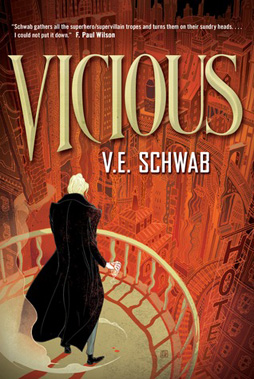
ViciousV.E. Schwab had written a number of YA novels when, in 2013, Tor published her book Vicious. Billed by some as a super-hero story, it had elements of that genre while also, to some extent, questioning its assumptions. Reading it, I found that the book seemed interested in questions of morality, heroism, and villainy, but that the super-hero aspects were so attenuated I doubt it would have occurred to me to consider it as a super-hero story without the claims of the book jacket. Its handling of ideas of heroism felt like a reiteration of themes comics (Marvel, DC, and independent) have been interrogating relentlessly (if not neurotically) for at least thirty years. In some ways, it’s best to simply ignore the ‘super-hero’ tag. If you do, you’re left with a well-paced and sharply-structured novel. And on its own terms, it’s an enjoyable tale.
The book alternates between present-day scenes and flashbacks, and a large part of the success of the novel rests in the fact that Schwab successfully pulls off this technical trick without blunting her momentum. Ten years ago, Victor Vale and Eli Cardale (later Eli Ever) are brilliant pre-med students who discover that near-death experiences can, under certain circumstances, grant survivors strange powers. They experiment, things go wrong, and while they both get powers, they end up as enemies. Now, in the present, Victor’s gotten out of prison, recruited some assistants, and is seeking out Eli — who himself has been up to some surprising things in the previous years, having come to hate the extraordinary people (or EOs) gifted with powers.

Read More Read More

Writers – Don’t Start at the Start…

Writers – Don’t Start at the Start…

Block_TellingLiesChapter 25 of Lawrence Block’s Telling Lies for Fun and Profit (which should be on EVERY writer’s bookshelf) is titled, ‘First Things Second.’ As he succinctly summarizes (nice but unneeded alliteration there), “Don’t begin at the beginning.”

It’s a popular screenwriting maxim to enter the scene as late as you can. In other words, don’t begin at the beginning. I seem to recall William Goldman espousing this.

Block tells of being advised to switch the first two chapters of a detective novel he had written. Basically, this put the reader in the thick of the action from the outset, with some explanation following. Tension can be created at the outset and carried forward by not beginning at the beginning.

Sitting here at the keyboard, I can’t think offhand of a Sherlock Holmes or Solar Pons story that uses this technique. There’s a reason we’ve all got the image of Holmes and Watson sitting in their rooms at 221B Baker Street when a client or Inspector Lestrade comes to visit and we’re off on a case.

As I read this chapter, I thought of Will Thomas’s Barker and Llewlyn books (love them, but what’s with the two “L”s at the beginning of that name?). Barker has more than a passing resemblance to Sherlock Holmes (I suspect that Robert Downey Jr’s portrayal owes a debt to these books) and Llewellyn is his Watson (or Boswell). Mind you, they are excellent books and not simply Holmes copies.

Read More Read More