Browsed by
Category: Books

Ghostbusters With More Swearing and Fewer Crappy Sequels: A Review of David Wong’s John Dies at The End
Ghostbusters With More Swearing and Fewer Crappy Sequels: A Review of David Wong’s John Dies at The End

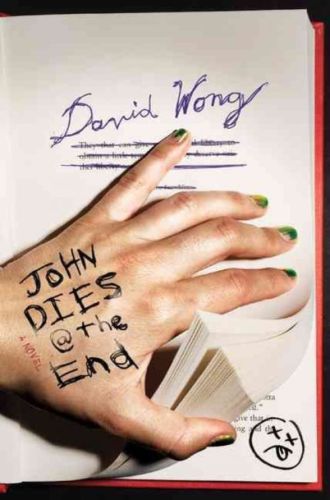
John Dies at the End-smallThis book is the strangest thing I’ve ever read.

Within the first hundred pages, you’re treated to a seven foot man made of meat, wig monsters from another dimension, a man with the ability to communicate through a bratwurst, a dude taken over by small glowing alien things with a penchant for punching people in the balls, a hamburger that screams as you eat it, and a weirdo with a pseudo-Jamaican accent who can tell everything about you at just a glance.

And it never lets up from there; Wong somehow manages to produce a steady stream of balls-to-the-wall crazy throughout. It’s delirious, insane, and stark raving mad. If this book were a person, he would charge into the street and head-butt the first person he sees, before flying away with David Bowie and a dragon. This book is John Dies at the End by David Wong.

John Dies at the End follows the somewhat delirious exploits of David and his best friend, John, who’s never given a last name. This is where anyone else would talk about the plot, but it’s the kind of thing you need to actually read yourself to really appreciate. But I’m going to try anyway, just for you.

Dave and John are kind of like Ghostbusters, except with more swearing and fewer crappy sequels. They deal with paranormal occurrences in their town and its surrounding area, and in doing so have attracted something of a cult following, which arouses the interest of a reporter, Arnie, who interviews Dave about his experiences and the events leading up to him becoming a kind of paranormal detective guy. The story Dave tells Arnie is the story he tells us.

In short, he and John stumble across a drug called “soy sauce,” which heightens the user’s senses to an extreme level and gives them a window into another plane of existence. From here, the two embark on an adventure of Moorcockian proportions: uncovering a dark conspiracy, going to other planes, alternate dimensions, fighting aliens with a flamethrower made from a squirt gun, and meeting a supreme being called Korrok.
Read More Read More

Come Into Callahan’s, Said the Spider

Come Into Callahan’s, Said the Spider

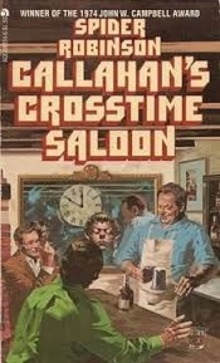
CallahansI first met Jake (the narrator), Fast Eddie (the piano player), Doc Webster, Long Drink McGonnigle, and Mike Callahan himself in the pages of Analog. All of Spider Robinson’s stories were eventually collected in three anthologies: Callahan’s Crosstime Saloon, Time Travelers Strictly Cash, and Callahan’s Secret.

Callahan’s is a place where the day after Monday is Punday, Wednesday is Tall Tales Night, there’s a Fireside Fillmore night, and a Riddles Night. And in the grand tradition of the bar story, we get told these tall tales, we’re given the lyrics of the songs, and we can even participate in the guessing of the riddles.

But unlike the traditional bar story, these are just window-dressing, Robinson’s homage to the conventions. The real stories are what happens around, during and after all this traditional bar story action. And these are anything but traditional – they are, after all, science fiction stories, and the characters who come into Callahan’s for help are time-travelers, aliens, humans suffering from strange mutations . . . and a talking dog.

Though the prefaces, intros, and afterwords establish the pretense that Callahan’s actually exists, it’s clearly in either an alternate universe or an alternate timeline. The second story in CCS, for example, “The Time Traveler,” was written, or at least appeared, in 1973 or ’74. Not too long after that, in “The Law of Conservation of Pain,” a time traveler appears from the year 1995, using the first time machine.

Read More Read More

Blogging Sapper’s Bulldog Drummond, Part One

Blogging Sapper’s Bulldog Drummond, Part One

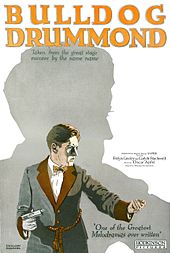
170px-Bulldog_Drummond_Poster2566515-bulldogdrummond2Bulldog Drummond is a peculiar case. The reputation of the original novels is more maligned than even Sax Rohmer’s Yellow Peril thrillers. To be sure, “Sapper” (the pseudonym of author H. C. McNeile) expressed views that stand out as offensive even among the common colonial prejudices of Edwardian England. The reason for this is easily understood. The author’s nationalistic fervor was predicated on the belief that the only good nation was Britain and every other nationality was inferior to varying degrees.

McNeile was a “True Blue” Brit in every way. A decorated veteran of the Great War, Sapper and his characters adore England and are intolerant of everyone else. Americans are castigated for their crudeness, the French are pompous, and Germans are a vile and irredeemable people. More bigoted views will follow, but that is the extent in the first quarter of the first book in the series.

Having covered the bad, what is it that makes the books still worth reading nearly a century later? Are they simply a document of more repressive times or do they offer value that makes one willing to overlook the reliance upon stereotypes and casual slurs? I would argue that anyone interested in the development of the thriller and pulp fiction should be exposed to at least the first four books in the long-running series. There is much that is light and entertaining in Sapper’s fiction, to the extent that they often read like drawing room comedies until thriller aspects interrupt the humor.

Read More Read More

A Hero Must Strive: My Favorite Fantasy Heroes

A Hero Must Strive: My Favorite Fantasy Heroes

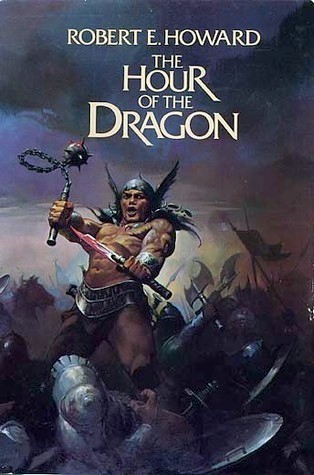
The Hour of the Dragon Robert E. Howard-smallFantasy and sci-fi literature are festooned with great heroes that inspire (and sometimes intimidate) us. Today I’d like to share some of my personal favorites with you.

Conan from Robert E. Howard’s series

I started reading the Conan books when I was in elementary school, and the subject matter felt so adult. I read the series several more times as I grew up and I find that I still love the principle character. Conan is often uncouth and, well, barbaric. But he’s a noble beast. In a world that has grown increasingly complex and ambiguous, getting inside the head of a character for whom all of life’s choices are balanced on the edge of a broadsword (or between the sheets) can be cathartic. On top of that, Conan is a paragon of freedom. The world is his oyster, the way we often wish it was for us.

Croaker from Glen Cook’s The Black Company

At turns both wry and insightful, Croaker is the perfect narrator for a story of fantasy warfare and dark sorcery. While he plays a central role as both a physician and a soldier, he is also able to get out of the story’s way when necessary, while still remaining poignant. Through his eyes we glimpse a world torn by strife, rivalries, and the domination of the weak, and yet Croaker never gives up all hope. He’s a friend, a brother, a comrade, and a hopeless romantic.

Sturm Brightblade from The Dragonlance Chronicles by Margaret Weis and Tracy Hickman

These books have a host of great characters, but my favorite hero of the bunch has to be Sturm. Honorable to a fault, he lives — and eventually dies — for his code. But Sturm never loses his humanity. He remains our good and stalwart friend through the dark times, and someone we miss dearly.

Read More Read More

John D. MacDonald: A Writer’s Writer

John D. MacDonald: A Writer’s Writer

MacDonald_Typewriter
That thing he’s using is called a ‘typewriter’

“With sufficient funds to cover four months’ living expenses, he set out and wrote at an incredible pace, providing eight hundred thousand words. Writing for a wide variety of magazines, he kept more than thirty stories in the mail constantly, not giving up on a story until it had been rejected by at least ten markets

In the process he accumulated almost a thousand rejection slips after five months of effort. During this period, MacDonald worked fourteen hours a day, seven days a week, literally learning his craft and gaining the experience of a decade as he went along, which was important for a man who made no serious attempt to write until he was thirty.”

– Martin H. Greenberg, in the introduction to Other Times, Other Worlds.

That is how John D. MacDonald, thirty years old, fresh out of the military in 1946 and with one published short story (which he actually sent to his wife in a letter: she submitted it to a magazine) learned the craft of fiction writing.

One of America’s finest writers (note: I didn’t qualify that with the word ‘fiction’) set himself upon a course that no sane person would have undertaken in that situation.

Read More Read More

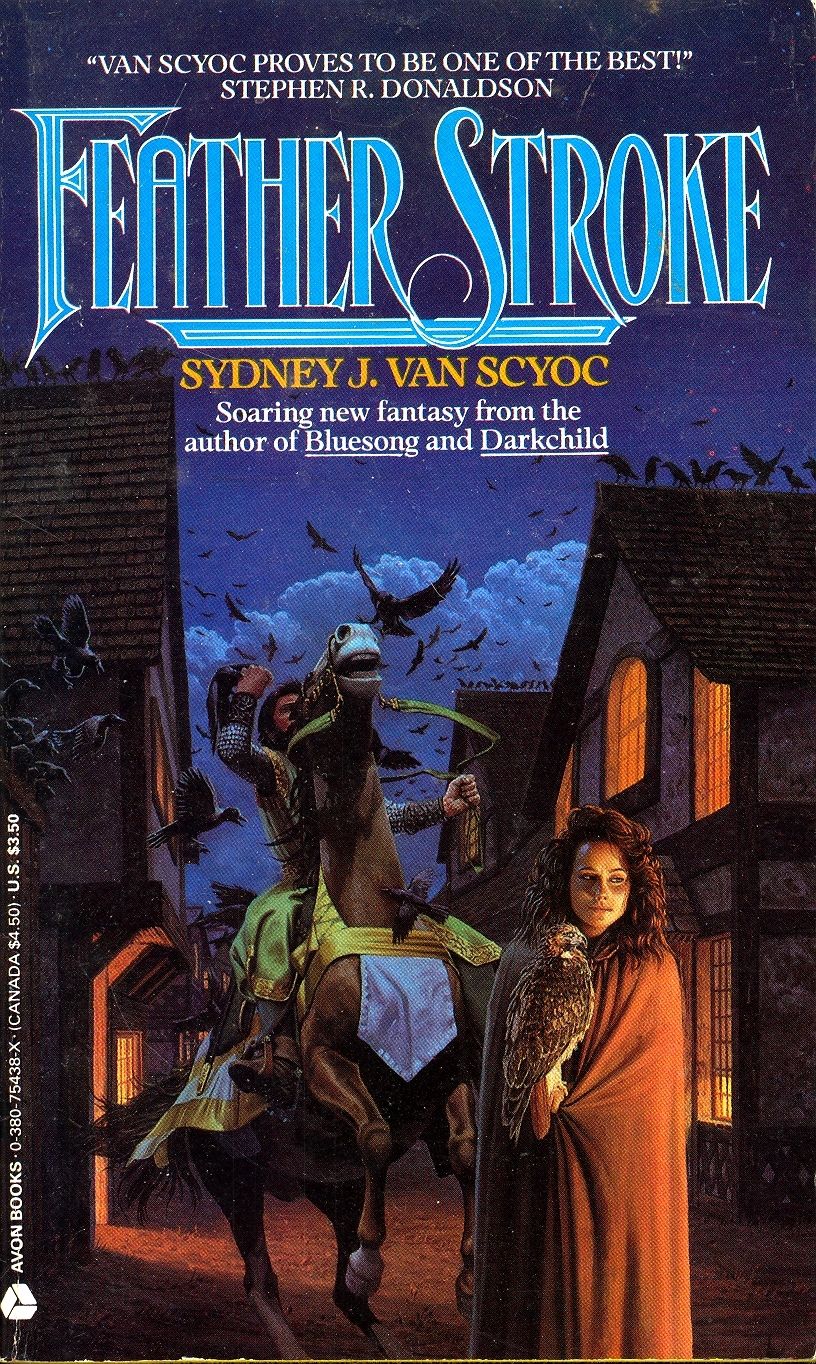
Vintage Treasures: Feather Stroke by Sydney J. Van Scyoc

Vintage Treasures: Feather Stroke by Sydney J. Van Scyoc

Feather Stroke Sydney Van Scyoc-smallMy sister-in-law Mary Dechene passed away unexpectedly two weeks ago. She was 52, never married, and lived alone in a small apartment in Madison, Wisconsin. She was also a Black Gate reader and I’ll miss the letters she used to send me after she read each issue cover to cover.

Her funeral was Saturday. Afterwards came the sad duty of parceling out her belongings to various siblings, nieces, and nephews as the family packed up and cleaned out her apartment. Mary was a dedicated fantasy fan — really, it was all she read — and she left behind thousands of fantasy paperbacks dating from the late 80s and on, packed in dozens of boxes. I think many folks assumed I would want them, but I’m already pretty well stocked in fantasy paperbacks from that era and thought it made more sense for them to go to her sister Marty, so I gallantly waved away any claim to them.

At least until I casually peeked in the first box. I discovered that Mary was surprisingly widely read, and in addition to a virtually complete collection of Terry Brooks, David Eddings, Mercedes Lackey, Robin Hobb, and other bestselling fantasy, she had several surprises. In fact, she had dozens of books I never even knew existed. And trust me when I tell you, that doesn’t happen to me very often.

In a matter of minutes, I was secluded in the garage, digging through box after box. While the rest of the family divided Mary’s jewelry and appliances, I was stacking hundreds of paperbacks in neat rows. In addition to being a completest, Mary was also a very careful reader — the books were in great shape. It really was a treasure trove, far more fantasy novels than I’d seen virtually anywhere. And I’ve been in some of the best book stores on the planet.

In the end, I made it through less than half the boxes. I felt a little guilty about pillaging Mary’s collection anyway, especially after her sister had already laid claim to it, but Marty didn’t seem to mind. I didn’t find anything really valuable, but I did fill a great many holes in my collection, and brought home one very nearly full box of Mary’s delightful collection. I settled back with the first one tonight —  Sydney J. Van Scyoc’s Feather Stroke, a standalone 1989 fantasy from Avon with a terrific Keith Parkinson cover.

Written on the first page, in her famously cramped script, are the words Mary Dechene. A reminder of where they came from. Thank you, Mary. We shared a passion for fantasy, and I’m glad fate brought us together for a short time. I’ll treasure these books, and they will always remind me of you. Rest in peace.

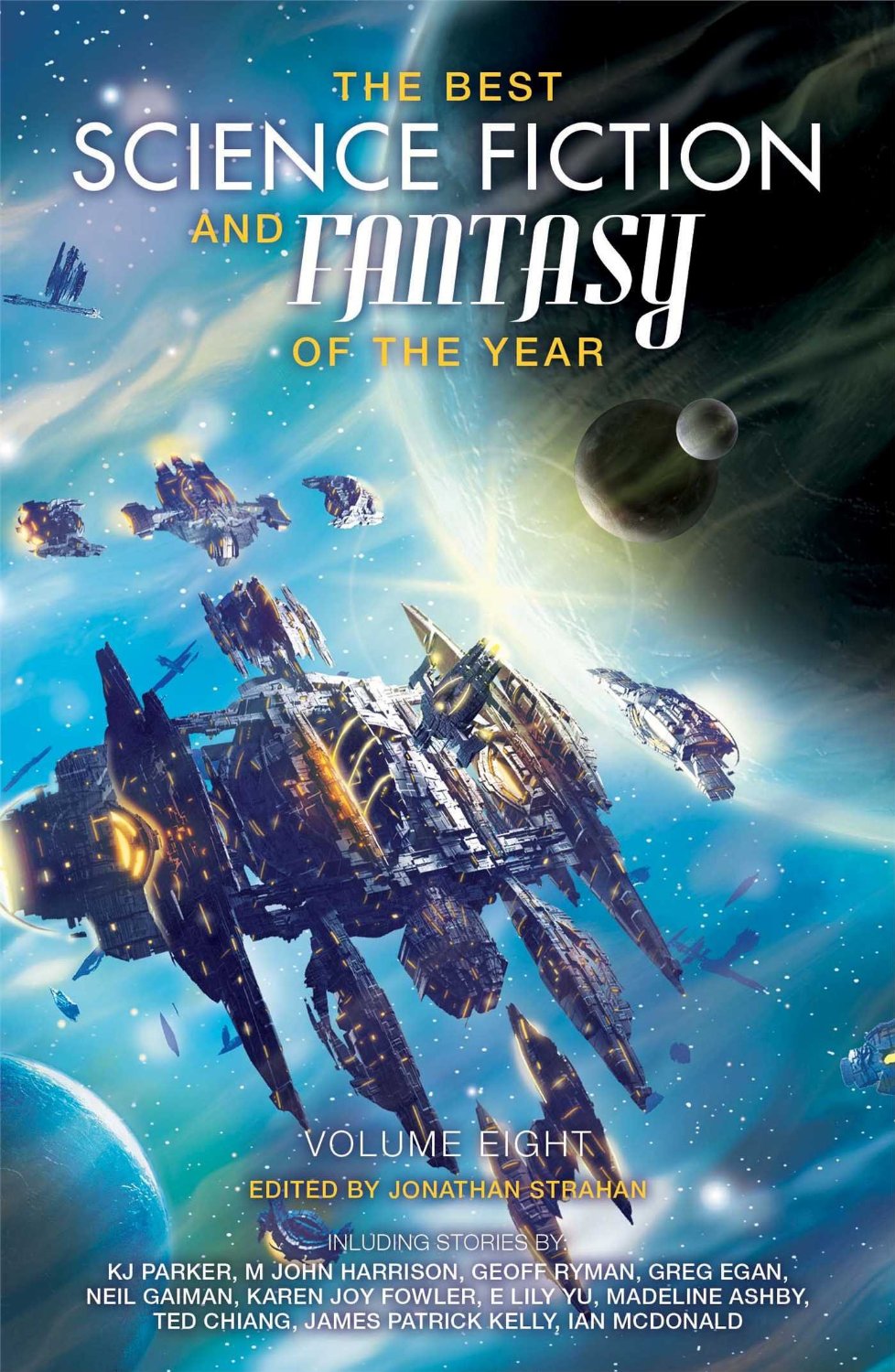
New Treasures: The Best Science Fiction and Fantasy of the Year Volume 8, edited by Jonathan Strahan

New Treasures: The Best Science Fiction and Fantasy of the Year Volume 8, edited by Jonathan Strahan

The Best Science Fiction and Fantasy of the Year Volume 8-smallHurrah!  The Best Science Fiction and Fantasy of the Year Volume 8 is in the house.

You’d think that after seven outstanding previous volumes, one more would be a slam dunk. But no. There was drama. The original publisher was in peril and no one knew if there would be an eighth. Well, maybe somebody knew, but it wasn’t me. And I’m the one with 9 column inches to fill every day.

At length, cooler heads prevailed and Volume 8 reappeared on the schedule from a new publisher, Solaris Books. It’s been redesigned so it looks slightly funky standing next to the uniform previous volumes, like a red-headed stepchild at a family reunion. But looks aren’t important to us here at Black Gatewhich explains our love for Paul Giamatti and five dollar haircuts.

Well, enough superficiality. What’s in the book?

28 stories by some of the best writers at work in the field today, including multiple Hugo and Nebula award nominees — such as “Selkie Stories are for Losers” by Sofia Samatar (Hugo and Nebula nominee), “The Truth of Fact, the Truth of Feeling,” by Ted Chiang (Hugo), and “The Ink Readers of Doi Saket,” by Thomas Olde Heuvelt (Hugo). See the complete table of contents in our previous article.

(And while we’re on the topic of Hugos, editor Strahan is on the ballot this year for Best Professional Editor, Short Form. You go, Jonathan! We’ve got ten bucks on you, buddy.)

Strahan’s Best of the Year volumes include both SF and fantasy, and year after year are some of the best values in the industry. If you’re not reading them, you’re missing out on some of the finest new writing in the field.

The Best Science Fiction and Fantasy of the Year Volume 8 was edited by Jonathan Strahan and published by Solaris on May 13, 2014. It is 614 pages, priced at $19.99 in paperback and $7.99 for the digital edition. We last covered Strahan’s The Best Science Fiction and Fantasy of the Year with Volume 7.

The Shout of a Young Man Who Finds the World a Complicated Place: The Eternal Champion by Michael Moorcock

The Shout of a Young Man Who Finds the World a Complicated Place: The Eternal Champion by Michael Moorcock

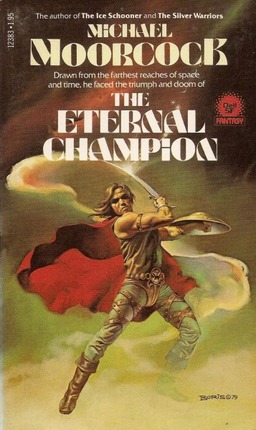
oie_272267fTHTh1HnWhen I was a kid, all my friends read Michael Moorcock’s sprawling Eternal Champion series. Endlessly resurrected and reincarnated, the Eternal Champion exists to right the balance between Law and Chaos. According to Moorcock in the introduction to the 1994 edition of the novel, The Eternal Champion:

I use the ideas of Law and Chaos precisely because I am suspicious of simplistic notions of good and evil. In my multiverse, Law and Chaos are both legitimate ways of interpreting and defining experience. Ideally, the Cosmic Balance keeps both sides in equilibrium. By playing “the Game of Time”… the various participants maintain that equilibrium. When the scales tip too far toward Law we move toward rigid orthodoxy and social sterility, a form of decadence. When Chaos is uppermost we move too far towards undisciplined and destructive creativity.

Seemingly deep stuff for teenagers to be reading, but I think it was part of the series’ appeal. Teenagers are constantly pushing boundaries and trying to get a grip on right and wrong. I think many of them are as suspicious of supposedly “simplistic notions of good and evil” as Moorcock was. It appeared to be presenting a more nuanced way of looking at the world.

Most of the guys (and it was all guys) I knew who read swords & sorcery back in the 1970s and early ’80s were SF/F geeks, potheads, or metalheads and there was a lot of overlap amongst those groups. In my experience, gaming had a lot to do with bringing those tribes together and we all loved Moorcock’s stories and heroes.

Most preferred the morose albino, Elric, of doomed Melniboné. Dressed in black armor, wielding the evil soul-drinking sword Stormbringer, and riding a dragon — I totally get it. A few liked Dorian Hawkmoon von Koln and his adventures across post-apocalyptic Europe and America better. Personally, I did and still do enjoy the two trilogies about Corum Jhaelen Irsei, last of the Vadhagh. Steeped in Irish myth and a gloomy Celtic miasma, I think they’re the most intense and beautiful books in the series.

Read More Read More

Compiling The Big Book of Swashbuckling Adventure

Compiling The Big Book of Swashbuckling Adventure

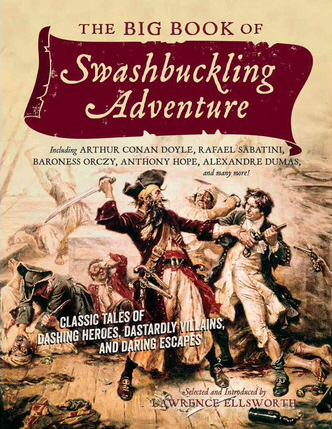
The Big Book of Swashbuckling Adventure-smallGreetings, Black Gate readers! You may be familiar with my work as the game designer Lawrence Schick – possibly from role-playing material like the White Plume Mountain D&D scenario, video games such as Sword of the Samurai, or my recent work as Loremaster for The Elder Scrolls Online.

But I also write, edit, and translate historical fiction as Lawrence Ellsworth, and in that capacity I have a new title coming out from Pegasus Books, an anthology called The Big Book of Swashbuckling Adventure. Our friends at Black Gate asked me to write an article about compiling that anthology, and here it is.

I’ve been reading and collecting swashbuckling adventure fiction for many years – my whole life, really. A couple years ago, while in the middle of a long (and still uncompleted) translation project, it occurred to me that I probably knew enough about the subject to be able to compile a pretty interesting anthology. The more I thought about the idea, the better I liked it, so I sat down and starting making notes.

I decided the anthology had to meet four criteria. First, it would need to catch the attention of contemporary readers, which meant including recognizable, marquee names, of both characters and authors. Second, it would have to be attractive to mainstream publishers, which meant inexpensive to produce (works in the public domain), and couched in a familiar, saleable format – in this case, a “Big Book,” a fat collection of at least 200,000 words. Third, for variety I wanted a good mix of pirates, cavaliers, and outlaws – and they all had to be cracking good stories that would hold the attention of modern readers. Fourth, not just any stories would do – I wanted carefully hand-picked works that weren’t overly familiar and would re-introduce some of my favorite forgotten authors to the 21st century.

Read More Read More

Event Report: The Last Unicorn Tour

Event Report: The Last Unicorn Tour

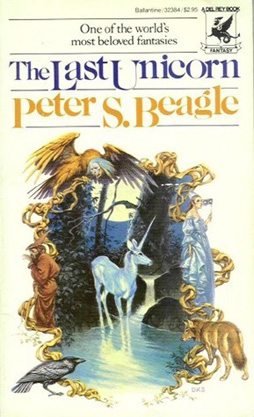
The Last UnicornIn 1962, Peter S. Beagle began writing a fantasy novel he called The Last Unicorn. Published in 1968, the book was both serious and whimsical, a kind of extended fable about a unicorn who found she was the last of her kind and adventured through a medieval fantasyland, possibly Irish and possibly not, in search of the wicked king holding all other unicorns captive. The tone embraced both the comic (one of the major characters is an incompetent magician named Schmendrick) and the dreamlike (as in the terrifying Red Bull who emerges as a crucial antagonist). The book’s a tremendous accomplishment, a vivid working-out of classic fantasy themes.

In 1982, Rankin/Bass Productions released a film version of the book, with a screenplay by Beagle. The designs had a nice touch of art nouveau, the voice cast was strong (including Mia Farrow, Angela Lansbury, Jeff Bridges, and Christopher Lee) and the plot was remarkably faithful to the book. That approach had its strengths and weaknesses: the fable-like quality of the original story was lost. On the other hand, the literalness of the adaptation gave the film a quality of strangeness of its own — by maintaining the shape of the book, it created a shape unlike most other movies.

Beagle is currently touring with a digital 2K print of the Last Unicorn movie, presenting it at showings with a question-and-answer period and an opportunity to buy Beagle’s books and Last Unicorn-related merchandise. The tour will go on through April 2016 and will visit Australia, New Zealand, Japan, Ireland, the UK, and Germany, as well as cities across North America. An extensive Canadian leg of the ongoing Last Unicorn tour has just wrapped up; I saw a showing of the film in Montreal, on Sunday, May 18, and took a few notes.

Read More Read More