Browsed by
Category: Books

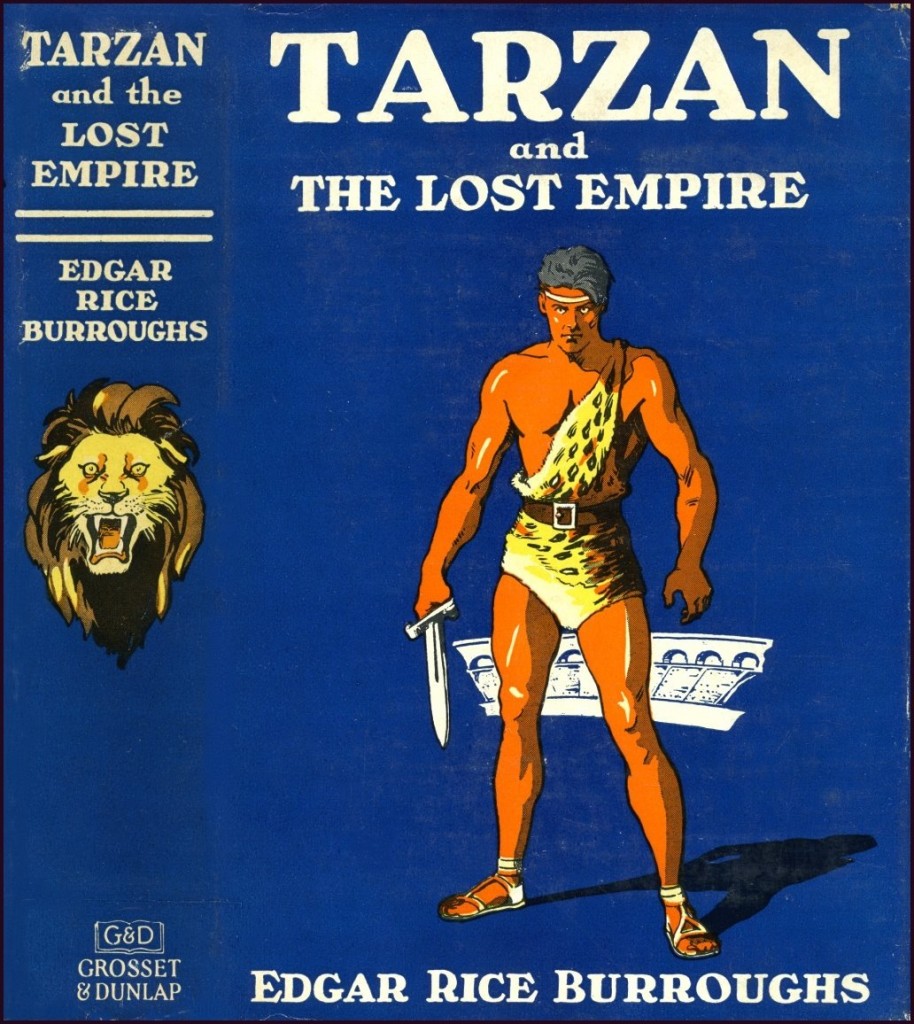
Tarzan Swing-By: Tarzan and the Lost Empire (1928–29)
Tarzan Swing-By: Tarzan and the Lost Empire (1928–29)

tarzan-and-lost-empire-grosset-dunlap-cover

Readers have asked me, but the answer is still no: I can’t tackle the entire Tarzan series the way I did Edgar Rice Burroughs’s other book series, Mars, Venus, and Pellucidar. There are twenty-four Tarzan books, not counting the juveniles, and I’d burn out long before the end if I tried to read them in sequence over a compressed time period.

But since I’m always glad to pick up a Tarzan volume here and there among my other Burroughs readings, I’ll negotiate. I’ll do an occasional Tarzan book “swing-by” to give spotlight time to ERB’s biggest contribution to popular culture. No particular order, just whatever Tarzan adventure grabs me at the moment.

So I’ll start with … let’s see … Book #12, Tarzan and the Lost Empire. Wherein the Lord of the Jungle finds yet another civilization lost in time in the heart of Africa: a remnant of the Roman Empire still living the ancient ways. Tarzan also gets a little monkey sidekick.

Tarzan and the Lost Empire falls into a period of the Tarzan novels that I think of as the “Filmation Era” because of how much the 1970s Filmation animated series Tarzan, Lord of the Jungle reflects it. After the tenth book, Tarzan and the Ant Men, Tarzan was distanced from the Greystoke legacy and his former supporting cast, and now has the companionship of both Nkima the monkey and Jad-bal-ja the golden lion. Jane vanished except for a single reappearance in Tarzan’s Quest (1936). The plots became standalone and repeated certain formulas, such as Tarzan discovering lost civilizations or facing a Tarzan imposter.

The writing quality of these books was still high in the late ‘20s and early ‘30s, and Burroughs hadn’t lost his skill at executing pulse-racing action set-pieces. But the plotting was often perfunctory as ERB became a bit fatigued with having to go back to the Tarzan well again and again. The story ideas and the prose popped, but the plots often meandered with overstuffed casts and too much incident that doesn’t go anywhere. Tarzan and the Lost Empire falls prey to these faults. But it also contains one of the most interesting hidden civilizations of the series and a setting that energized Burroughs.

Read More Read More

Future Treasures: The Poppy War by R. F Kuang

Future Treasures: The Poppy War by R. F Kuang

The Poppy War-smallThe Barnes & Noble Sci-Fi & Fantasy Blog is calling R.F. Kuang’s The Poppy War “the Buzziest Fantasy Debut of 2018.”

Last year, Harper Voyager introduced us to two exciting new voices in fantasy, Nicky Drayden (The Prey of Gods) and S.A. Chakraborty (City of Brass), so when David Pomerico, the imprint’s editorial director, R.F. Kuang, whose debut The Poppy War Harper Voyager will publish in May, “an incredible new talent in the speculative fiction industry,” we’ve got reason to trust his judgement (and track record). Certainly the book sounds like just the thing — a richly detailed epic born out of 20th century Chinese history, with an adult sensibility and a narrative hook that gives it the addictive appeal of the best young adult literature.

The official summary for this first-in-a-trilogy novel makes a compelling case… Pomerico, who acquired the book after a heated auction on what turned out to be the author’s 20th birthday, promises it blends military fantasy and a coming-of-age story, combining the author’s “cultural authenticity with personal creativity at a time when both qualities are very much demanded by readers.”

Hey, I’m as big a fan of writing prodigies as the next guy. But is a fat 544-page fantasy written by a teenager really what I’m looking for? Especially one that’s the start of a trilogy?

Well, maybe I’m just a grumpy old man. Certainly there’s been no shortage of praise from people less grumpy than I. Kameron Hurley calls it, “A blistering, powerful epic of war and revenge that will captivate you to the bitter end.” And Publishers Weekly praises it as “An ambitious fantasy reimagining of Asian history populated by martial artists, philosopher-generals, and gods… a strong and dramatic launch to Kuang’s career.”

You can decide for yourself when the book arrives in hardcover from Harper Voyager next week. Here’s the description.

Read More Read More

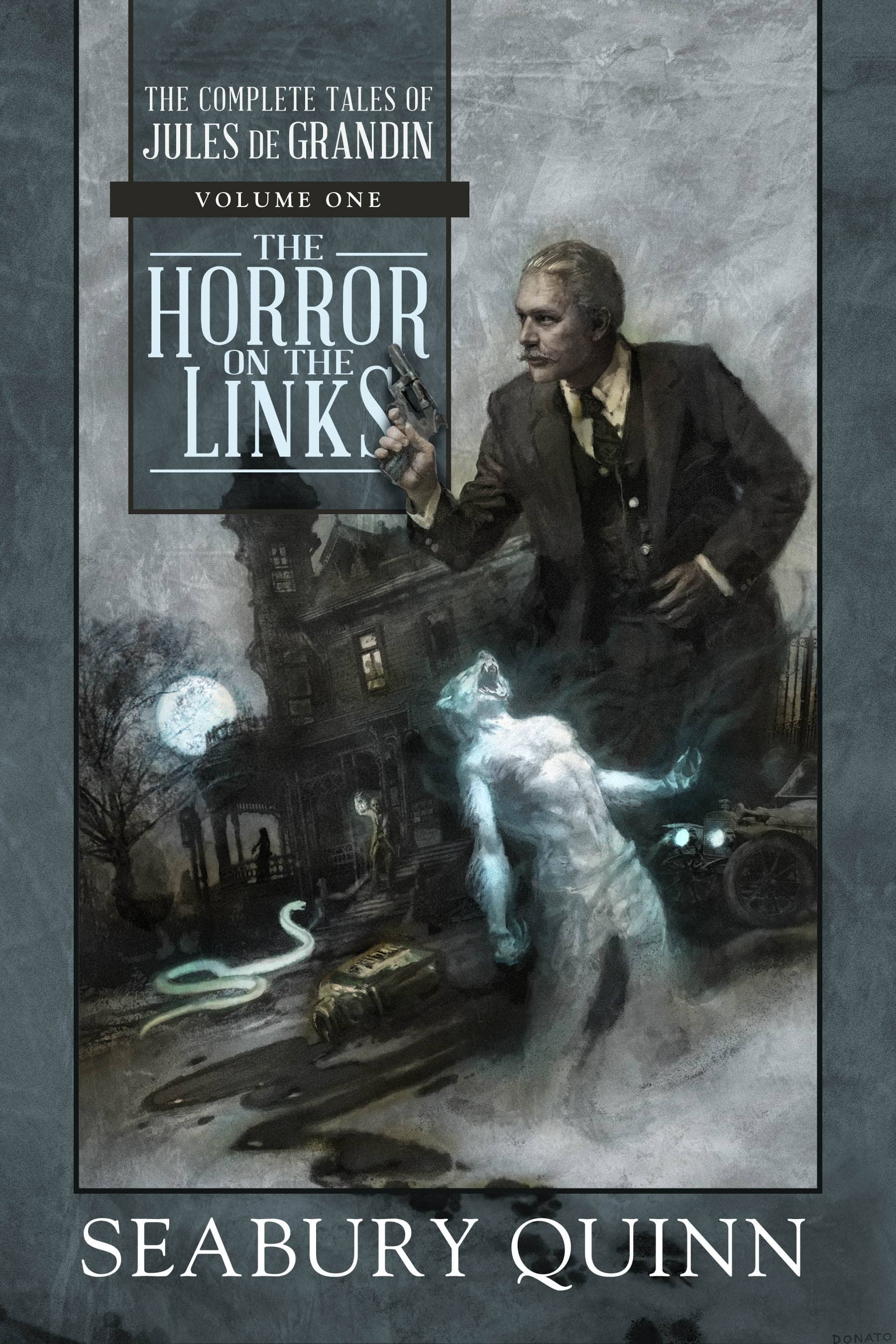
A Spooky Trip Back to the Golden Age of Weird: The Complete Tales of Jules de Grandin, by Seabury Quinn

A Spooky Trip Back to the Golden Age of Weird: The Complete Tales of Jules de Grandin, by Seabury Quinn

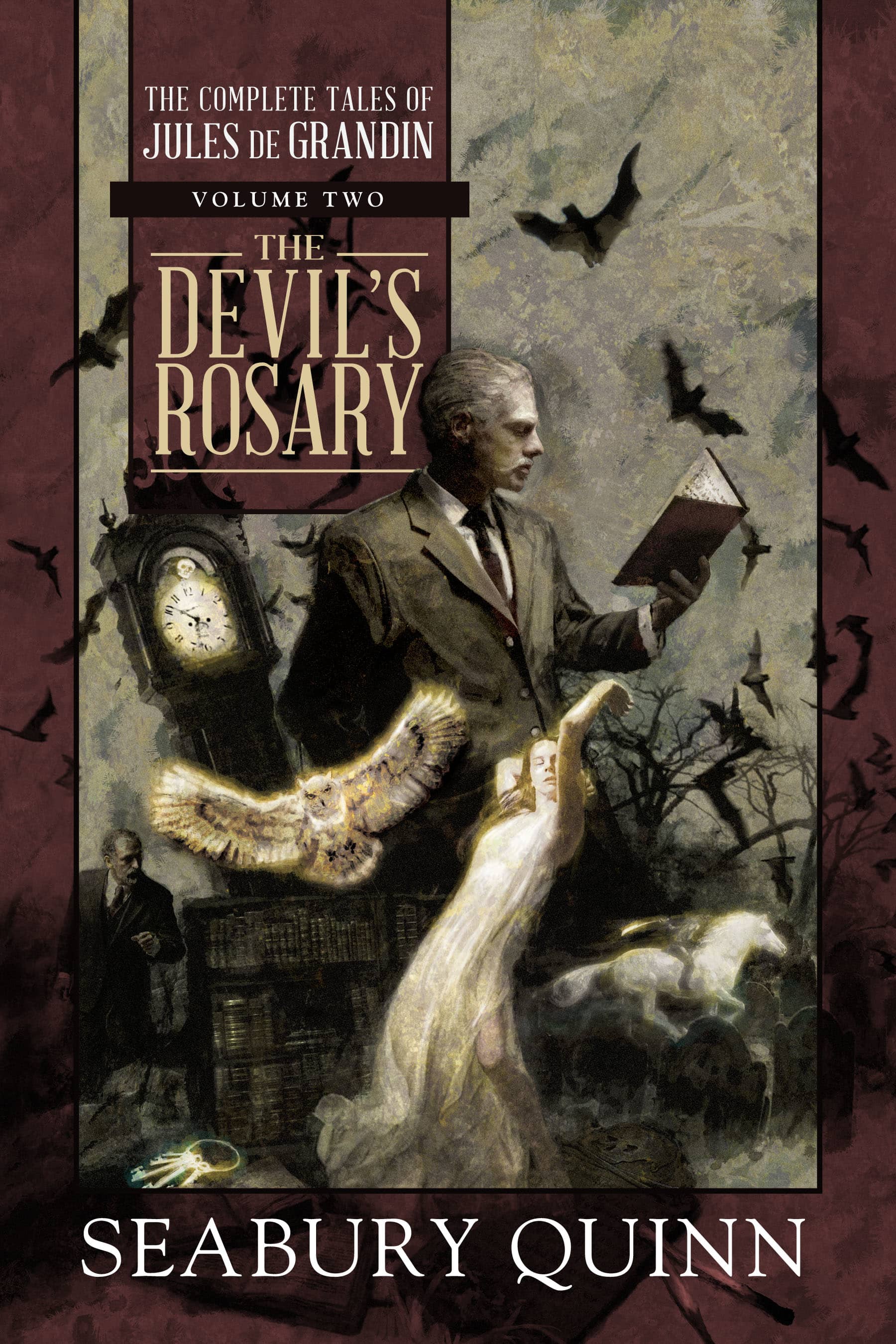
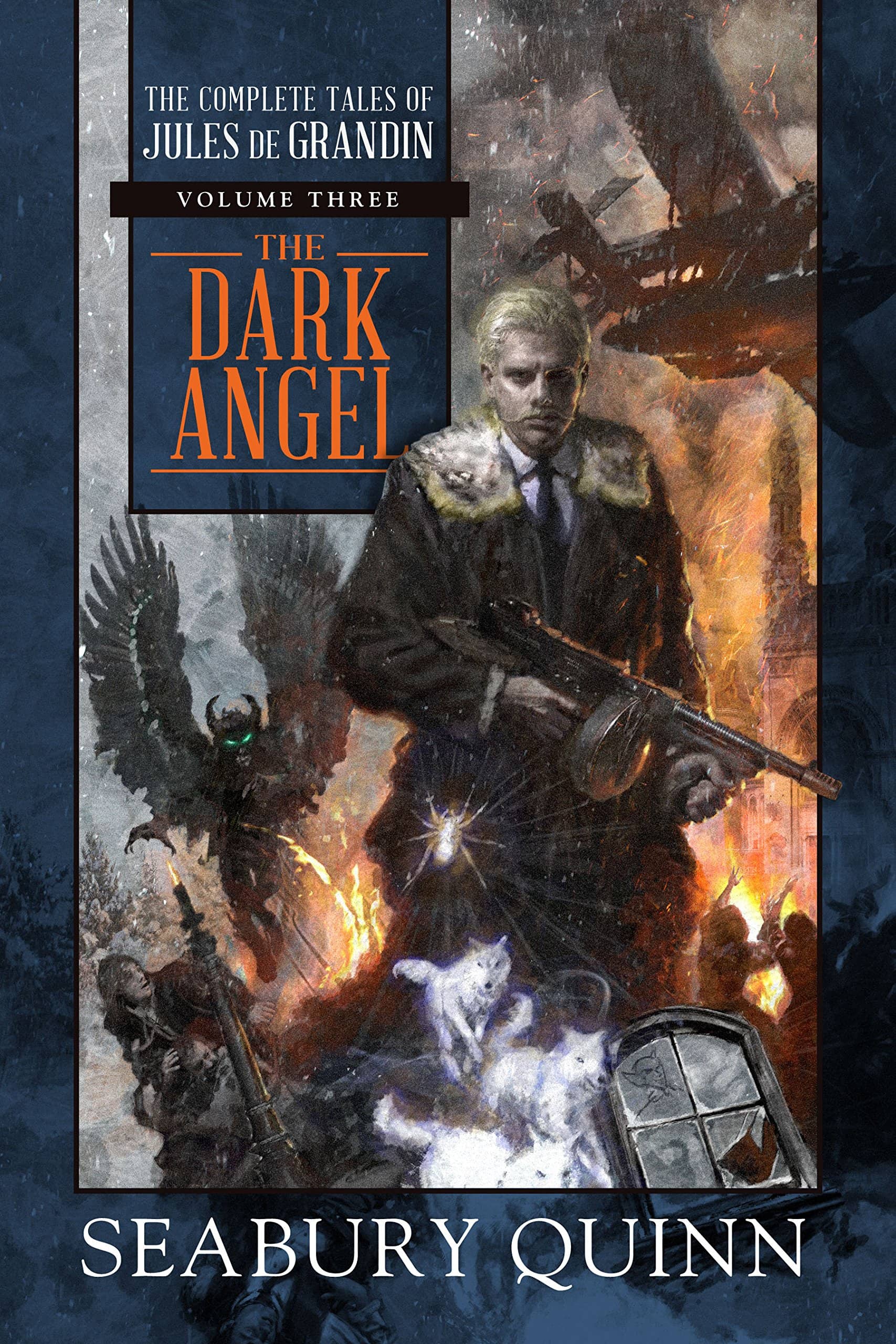
The Horror on the Links The Complete Tales of Jules de Grandin Volume One-small The Devil's Rosary The Complete Tales of Jules de Grandin Volume Two-small The Dark Angel The Complete Tales of Jules de Grandin Volume Three-small

Seabury Quinn’s occult detective Jules de Grandin first appeared in Weird Tales in 1925 and, in over 90 stories published over the next 26 years, he squared off against ghosts, werewolves, satanists, serial killers, and more sinister things. His adventures were among the most popular ever published in that venerable old pulp, surpassing even the legendary exploits of Robert E. Howard’s Conan and H.P. Lovecraft’s Cthulhu Mythos.

Publishers’s Weekly had this to say about the first installment of The Complete Tales of Jules de Grandin, The Horror on the Links, released by Night Shade Books in April 2017:

The first volume… is a fun, spooky trip back to the golden age of weird. Each story is narrated by de Grandin’s bemused and long-suffering friend Dr. Samuel Trowbridge, and most include de Grandin’s concluding explanation of the how and why of the events. Each story has its merits, but standouts include the shudder-worthy “The Isle of Missing Ships,” in which de Grandin and Trowbridge’s ship is overtaken by pirates; they end up stranded on an island where a strange man dwells in a lavish underwater cave and “long pork” is on the menu. “The Great God Pan” sees de Grandin and Trowbridge among a bevy of beauties in thrall to a strange guru. In other stories, the duo face werewolves, disembodied hands, and an evil scientist who keeps horrifying “pets” in his cellar. Seabury had a keen imagination and gift for atmosphere, and, even though modern readers may flinch a bit at some of the dated viewpoints and tropes, they’re likely to still have a grand time.

In the Jules de Grandin entry of The Nightmare Men, his long-running Black Gate series on occult detectives, Josh Reynolds offered his own thoughtful assessment of this great pulp hero. Here it is.

Read More Read More

New Treasures: The Long Sunset by Jack McDevitt

New Treasures: The Long Sunset by Jack McDevitt

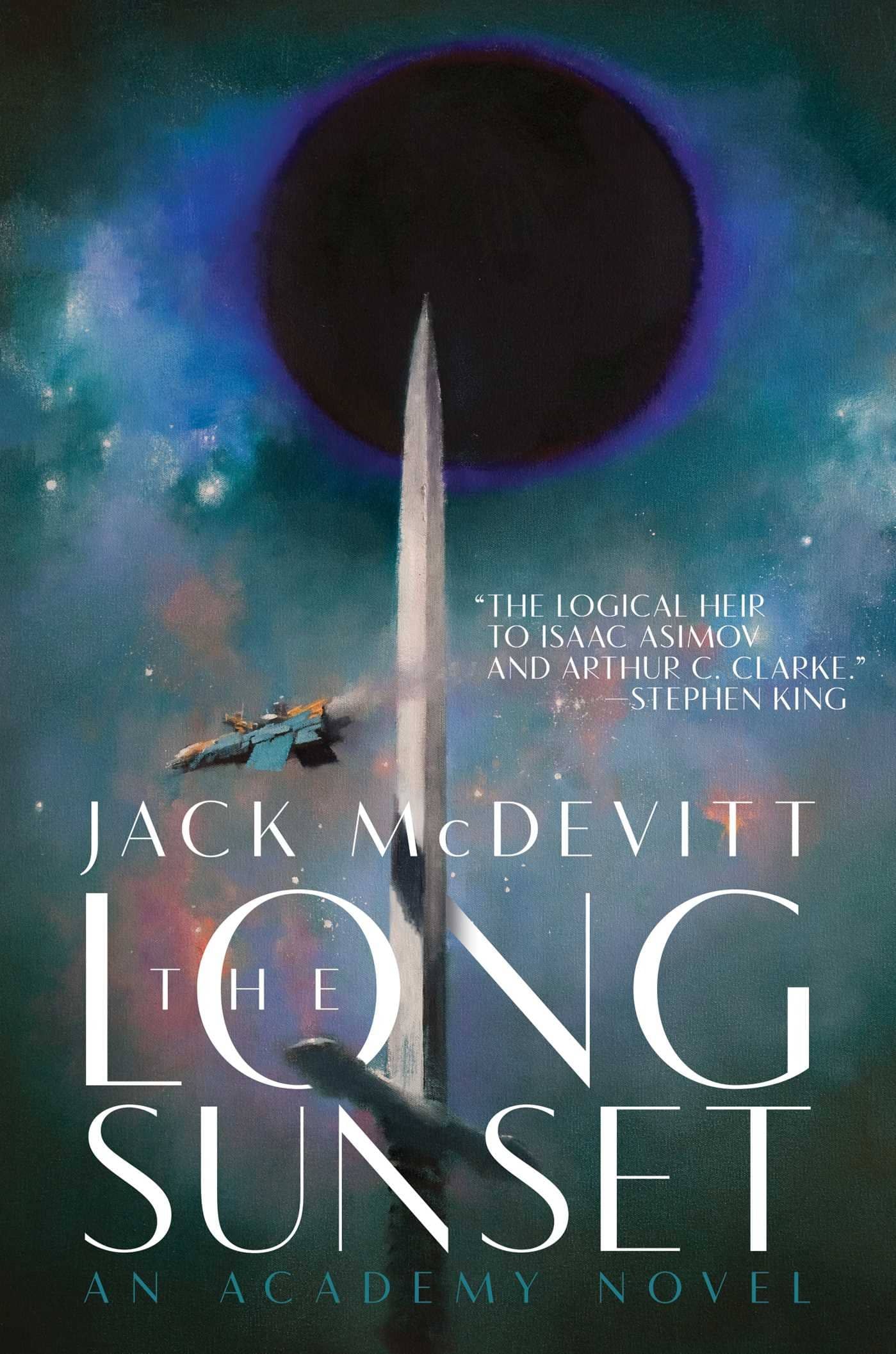
The Long Sunset Jack McDevitt-smallJack McDevitt’s Academy series began with The Engines of God in 1994. The series has garnered four Nebula nominations (for Chindi, Omega, Odyssey, and Cauldron) and one Campbell Memorial Award win (for Omega). It has become one of the most popular and acclaimed science fiction series on the market (see the complete list of books in the series in my previous post here).

In the eighth and latest installment, The Long Sunset, Priscilla “Hutch” Hutchins discovers an interstellar message from a highly advanced race that could be her last chance for a mission before the program is shut down for good. Jeff Somers at The Barnes & Noble Sci-Fi & Fantasy Blog calls it “Classic space adventure in the best sense of the term… McDevitt’s optimism and enthusiasm for the profound mysteries of the universe shines through, lending the increasingly fascinating investigation an air of excitement as the crew sifts through dead planets…”

It arrived in hardcover from Saga Press last week. Here’s the description.

Hutch has been the Academy’s best pilot for decades. She’s had numerous first contact encounters and even became a minor celebrity. But world politics have shifted from exploration to a growing fear that the program will run into an extraterrestrial race more advanced than humanity and war.

Despite taking part in the recent scientific breakthrough that rejuvenates the human body and expands one’s lifespan, Hutch finds herself as a famous interstellar pilot with little to do, until a message from an alien race arrives.

The message is a piece of music from an unexplored area. Despite the fact that this alien race could pose a great danger and that this message could have taken several thousand years to travel, the program prepares the last interstellar ship for the journey. As the paranoia grows, Hutch and her crew make an early escape — but what they find at the other end of the galaxy is completely unexpected.

The Long Sunset was published by Saga Press on April 17, 2018. It is 451 pages, priced at $27.99 in hardcover and $7.99 for the digital edition. The cover is by John Harris.

Birthday Reviews: Fletcher Pratt’s “Hormones”

Birthday Reviews: Fletcher Pratt’s “Hormones”

Cover by Richard Powers

Fletcher Pratt was born on April 25, 1897 and died on June 11, 1956.

Pratt was nominated for an International Fantasy Award in 1952 for his nonfiction book Rockets, Jets, Guided Missiles and Space Ships co-written with Jack Coggins. In 2016, Pratt was nominated for two Retro Hugo Awards for the novellas “The Roaring Trumpet” and “The Mathematics of Magic,” both co-written with L. Sprague de Camp and part of their Harold Shea series.

“Hormones” was published in the second volume of Frederik Pohl’s Star Science Fiction series in 1953. Although that book has been issued in multiple editions, the story has never appeared elsewhere.

Reading science fiction published over the span of the twentieth century, much of it can be seen to be representative of its time, culturally, technologically, and literarily. In “Hormones,” Pratt attempts to update the disappearing shop story and the love potion story, with limited success. His shop doesn’t actually disappear, but the individual Herbert Schofield needs to deal with does vanish before Schofield can return.

Schofield’s character is stuck in a lower position at work than he would like, which not only impacts his career, but also his chances of marrying the girl he is dating. When a clerk at an all-night pharmacy offers him hormonal potions that can resolve both of his issues, he jumps at the chance. Pratt’s decision to update the magic potion with a veneer of chemistry is a nice change of pace.

Naturally, things don’t turn out the way Schofield expected and while the use of a love potion can be seen as akin to a date rape drug, Schofield has the tables turned on him. “Hormones” is an example of a story which was very much of its time, but doesn’t stand up well to the changing societal mores, which make it more creepy than was intended by the author or tone.

Read More Read More

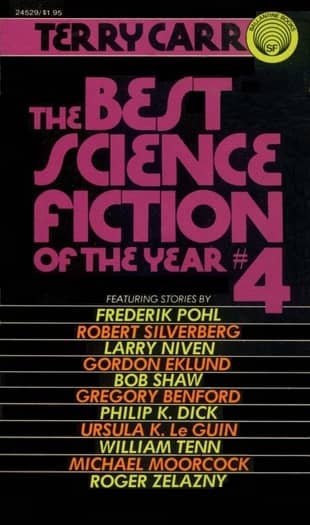
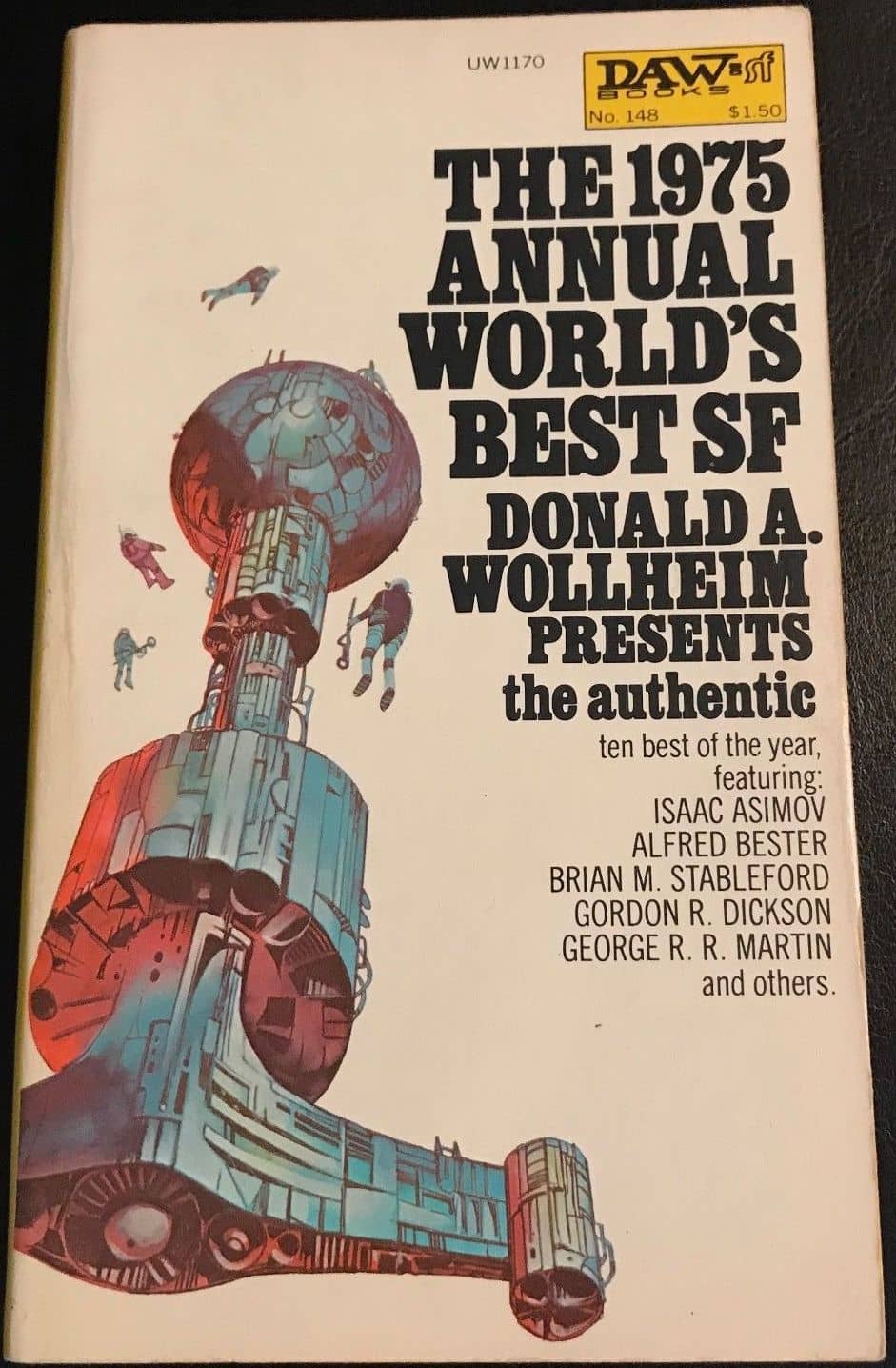
Vintage Treasures: The Best Science Fiction 1974, edited by Lester del Rey, Terry Carr, and Donald Wollheim

Vintage Treasures: The Best Science Fiction 1974, edited by Lester del Rey, Terry Carr, and Donald Wollheim

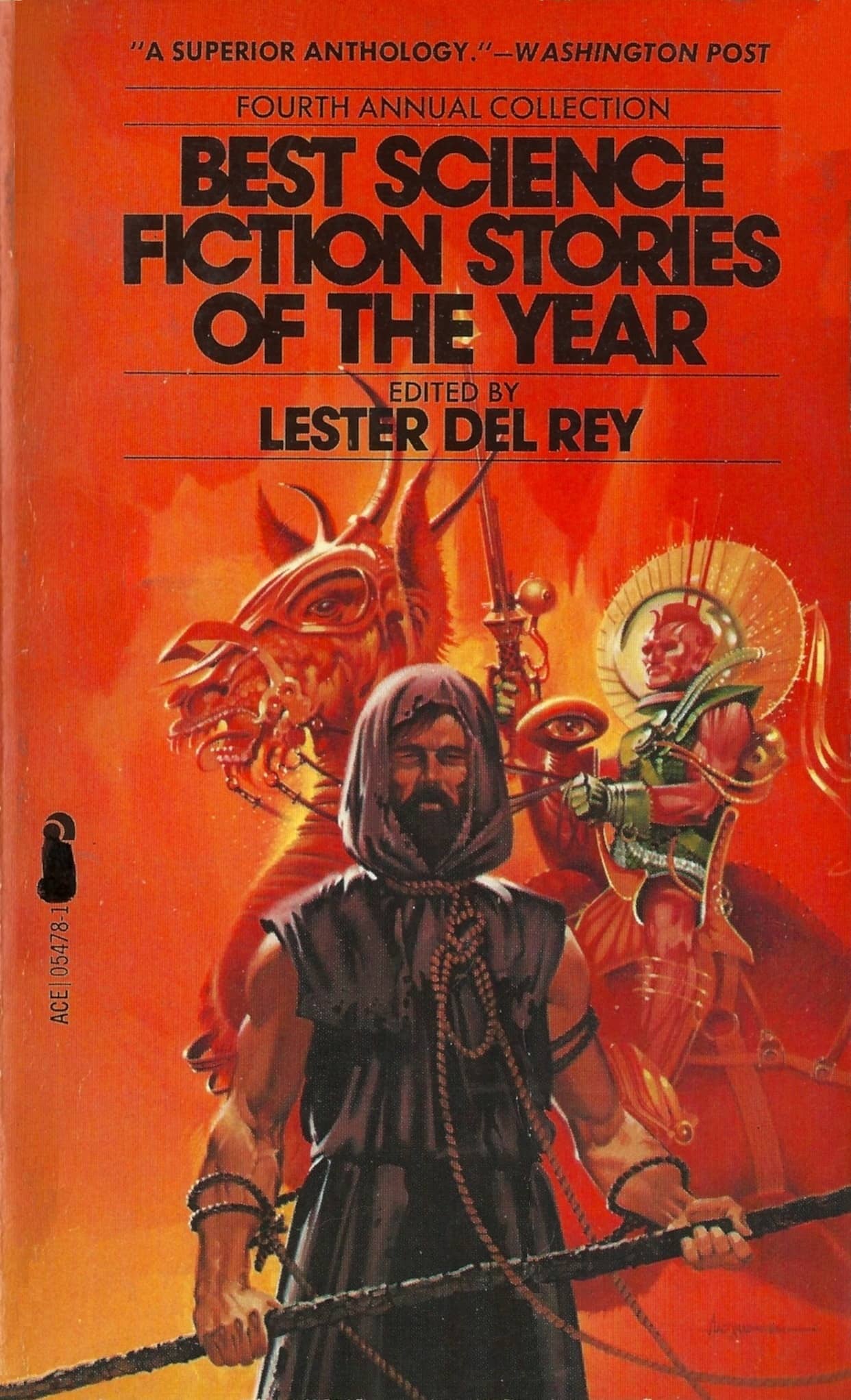
Best Science Fiction Stories of the Year 4-medium The-Best-Science-Fiction-of-the-Year-4-Terry-Carr-medium2 The 1975 Annual World's Best SF-medium

In his Foreword to his Fourth Annual Collection of Best Science Fiction Stories of the Year, which gathered stories published in 1974, Lester del Rey makes the case for Sense of Wonder as the core literary virtue of science fiction.

There is another element that must be present in every good science fiction story. It should excite a feeling of wonder, of something beyond the ordinary. It is the expectation of finding such wonders that makes the reader turn to science fiction rather than to more conventional tales of adventure.

There was a time, forty or fifty years ago, when what was then called “scientifiction” had little more than this sense of wonder to recommend it. Most of the writing was dreadful, the characters were little more than stick figures, and the plots were creakingly devoted to nothing but gadgetry. Yet, bad as they were, these stories opened the imagination to wonderful vistas of the future, of the triumph of mankind beyond normal limits, and to all things strange and alien.

Today, the situation has changed. The newer writers — and the older ones who have survived in the field — have learned their craft well. The writing is incredibly better. Gone are the horible cliches of the worst of pulp fiction: the trite mad scientists, and the banal heroines who are mere props for the hero to save from a fate worse than death. Gone are the spate of pseudo-science words and the plethora of meaningless adjectives.

Happily, in the best of science fiction the sense of wonder is still with us.

We need that feeling of wonder today, perhaps more than ever, when mainstream literature and our daily newspapers keep telling us that — in the words of Wordsworth — “The world is too much with us; late and soon;/Getting and spending, we lay waste our powers…” We need to be reminded that the future is still unexplored territory and that we can read to the end of the sonnet and “Have sight of Proteus rising from the sea;/Or hear old Triton blow his wreathed horn.”

I don’t often get to mix Wordsworth with my science fiction; allow me to celebrate a little when it happens organically.

Read More Read More

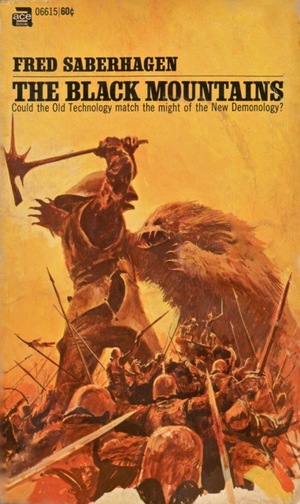
Demons and Monsters: The Black Mountains by Fred Saberhagen

Demons and Monsters: The Black Mountains by Fred Saberhagen

THBLCKMNTN1971I ended last week’s review of The Broken Lands (the first part of Fred Saberhagen’s The Empire of the East) by saying it felt like something big was coming. I was right! The second book, The Black Mountains (1971), is one great big splashy explosion of pulp majesty. Even though I liked The Broken Lands, I didn’t get why Gary Gygax included it in Appendix N, the list of books that inspired his initial vision of D&D. Now I get it, 100% and absolutely.

Following the defeat and death of the villain, Satrap Ekuman, the Free Folk of the West are preparing to bring the war directly to the Empire of the East. Som the Dead is one of the greatest lords of the Empire, and its viceroy in the Black Moutains. Each of the lords has given himself to the demonic powers that rule the Empire and in exchange received special abilities. Som’s is that any attacks on him are reflected back at his opponents, making him nigh invulnerable.

In addition, among his army is an elite guard who wear metal collars. When they are severely or mortally wounded near the mountains, they are carried off to a secret lake of healing elixir by flying metal devices called valkyries. Finally, living under the mountains Som rules over, is the mighty and powerful demon, Zapranoth. To face him unprotected by magic leads to madness. With him live several other, lesser demons. It would seem Som the Dead is impossible to overcome.

Against these enemies Thomas, commander of the Free Folk, plans to lead his army. Fortunately, he is aided by wizards of his own, Gray foremost among them. He has secured the services of a djinn that posessess an understanding of technology, something magic has difficulty overcoming. Thomas has also found and captured the essence of two of Som the Dead’s demons. Control of a demon’s essence allows the owner to command or even destroy the demon. Deprived of two major elements of his army, Som the Dead may just be vulnerable to defeat.

Read More Read More

A Dark and Eerie Journey: Melissa Albert’s The Hazel Tree

A Dark and Eerie Journey: Melissa Albert’s The Hazel Tree

The Hazel Wood Melissa Albert-small“My mother was raised on fairy tales, but I was raised on highways.”

Melissa Albert, via her narrator and protagonist Alice, opens The Hazel Wood with these words. The careful reader will latch on to that “but” right away, a particle suggesting that there is a great difference between the two — fairy tales and highways. Alice, raised by a single mother in a series of flights from bad luck, bad bosses and broken leases, believes there is. She is, at the book’s opening, a very typical protagonist in Young Adult fiction of the last sixty years. Outsider? Check. Troubled past? Check. Few or no friends? Check. Alice has recently undergone a drastic change in circumstances, as her mother has married a wealthy New York businessman. This has brought her a stable home, a stepfather who is at least trying to do right by her, and admission to an elite private school. There is a young man with a similar degree of wealth and a troubled past of his own.

And then things take a sharp turn off the well paved streets into new territory.

If you’re a fan of de Lint, Gaiman, McGuire or del Toro, the first line warned you. Alice has grown up on the run, not so much from mundane bill collectors but from her grandmother’s legacy. Althea Proserpine (again, a name that should set off alarm klaxons faster than a Klingon battle cruiser) was a reclusive author who wrote only one book, a set of “Tales from the Hinterlands.” Alice’s mother is dismissive of the book, loathes its cultish fans, and is insistent on forever staying far, far away from Althea’s home, The Hazel Wood.

And again, if you know fairy tales at all, you know what happens next.

No matter how hard a parent tries to keep a thing hidden from her child, it will come calling. So back onto the highway Alice goes, to find the truth of her own origins, of the mysterious book, of its legacy.

Read More Read More

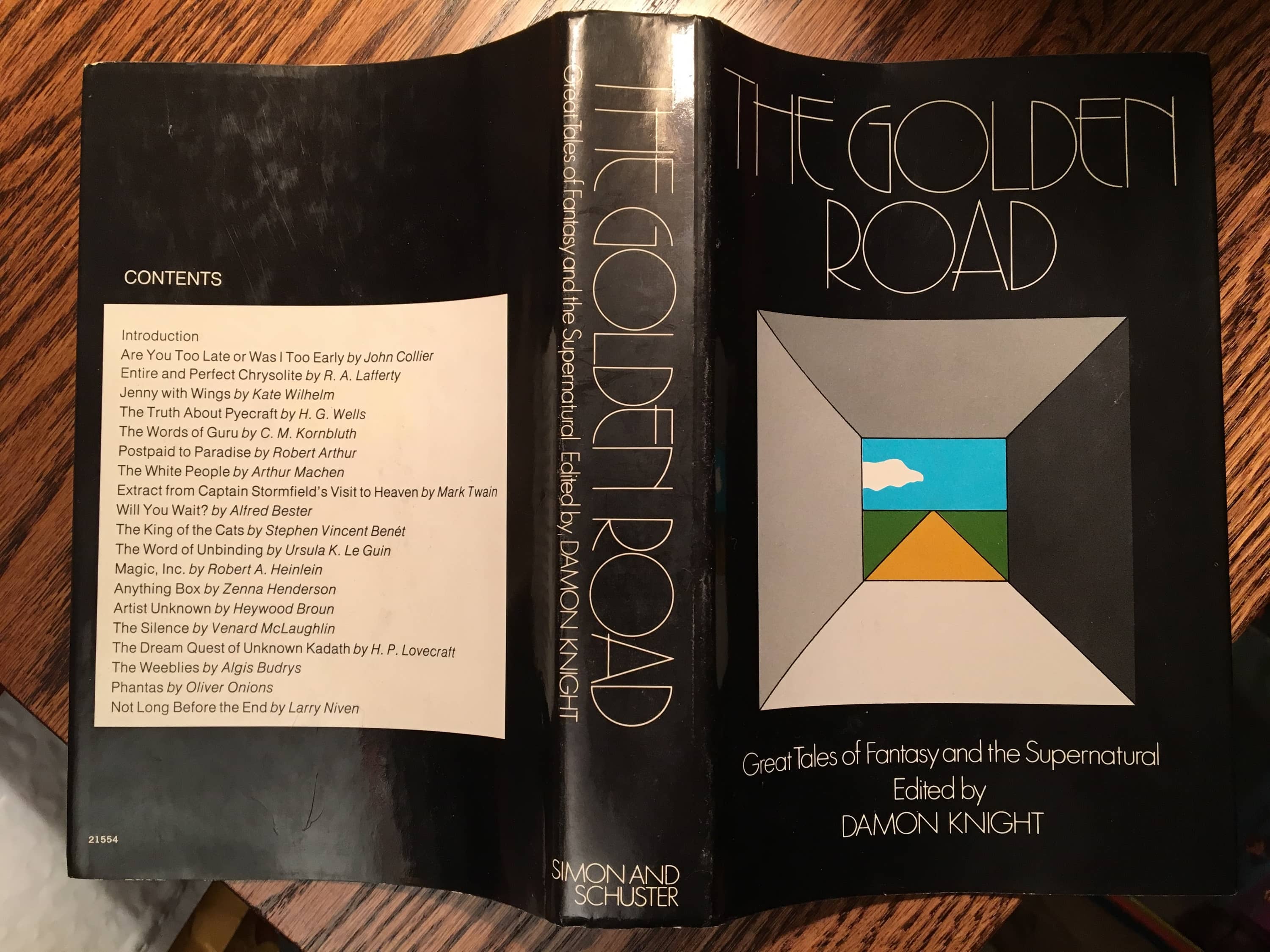
The Lonely Hardcover: The Golden Road, edited by Damon Knight

The Lonely Hardcover: The Golden Road, edited by Damon Knight

The Golden Road Damon Knight-small

I’ve heard it said many a time that online shopping will never replace a good bookstore, because you can’t make those delicious unexpected discoveries online.

Well, that certainly hasn’t been my experience. My most recent example? Damon Knight’s 1974 fantasy reprint anthology The Golden Road: Great Tales of Fantasy and the Supernatural, which I found on eBay while bidding on a small collection of British fantasy paperbacks from the same seller.

Now, I’ve never even heard of The Golden Road, and I most definitely stumbled on it while I wasn’t looking for it, so it certainly counts as a delicious and unexpected discovery. Plus, I won it for a measly five bucks plus shipping, so it’s sort of like making a delicious and unexpected discovery at a neighborhood garage sale, when your neighbor has no idea how to haggle.

Why’d I bid on a book I’d never heard of? Partly because of Damon Knight’s sterling rep, which he earned with numerous highly regarded anthologies, including 21 volumes of the legendary Orbit. But also because, wow, I really had never heard of this thing, and just look at it. It’s 44 years old and it looks brand new. Plus, it’s 447 pages long, and I bet it could keep me entertained for an entire weeklong cruise to Ecuador.

Read More Read More

The Barnes & Noble Sci-Fi & Fantasy Blog on the Best Science Fiction & Fantasy Books of April 2018

The Barnes & Noble Sci-Fi & Fantasy Blog on the Best Science Fiction & Fantasy Books of April 2018

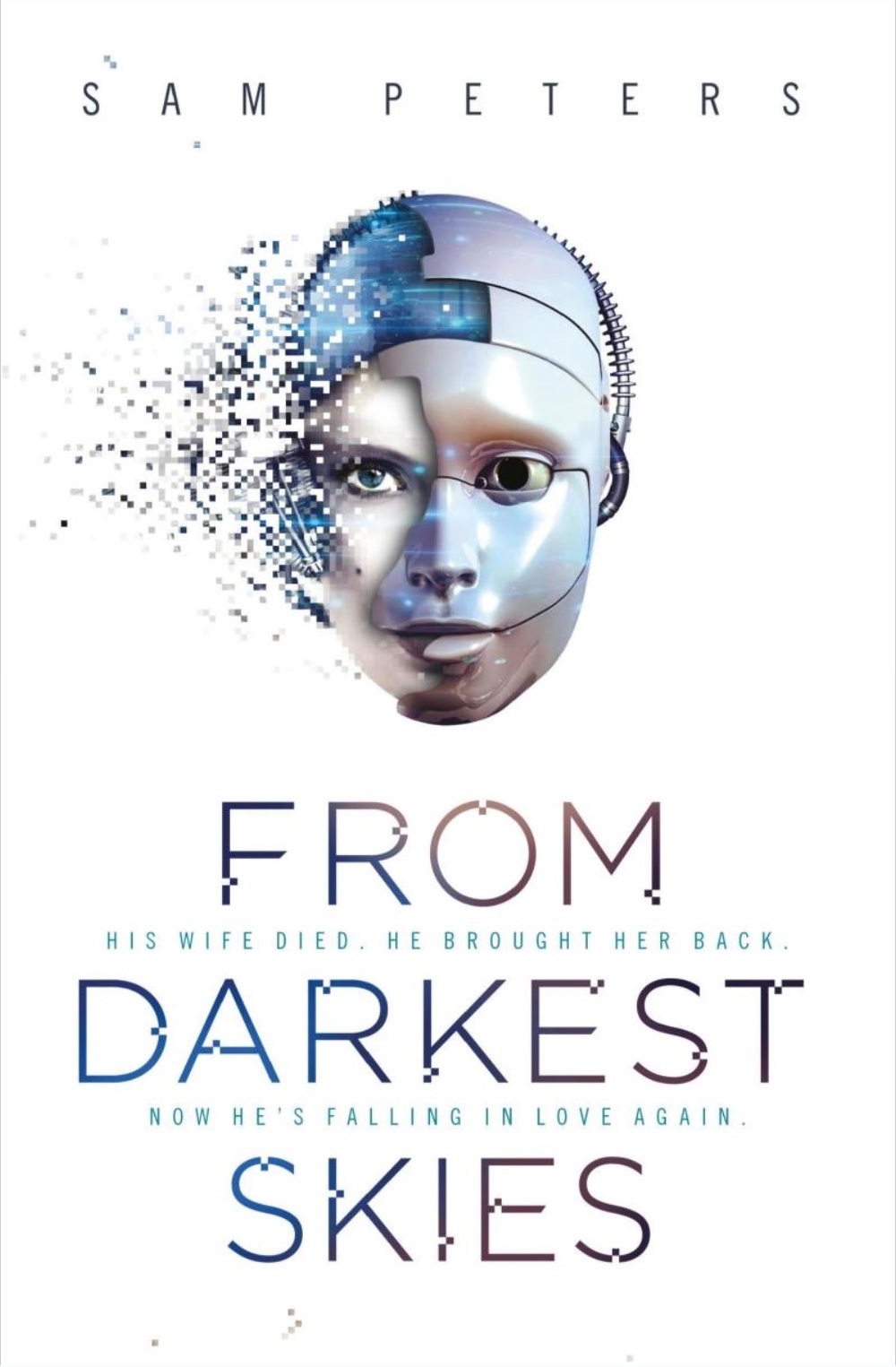
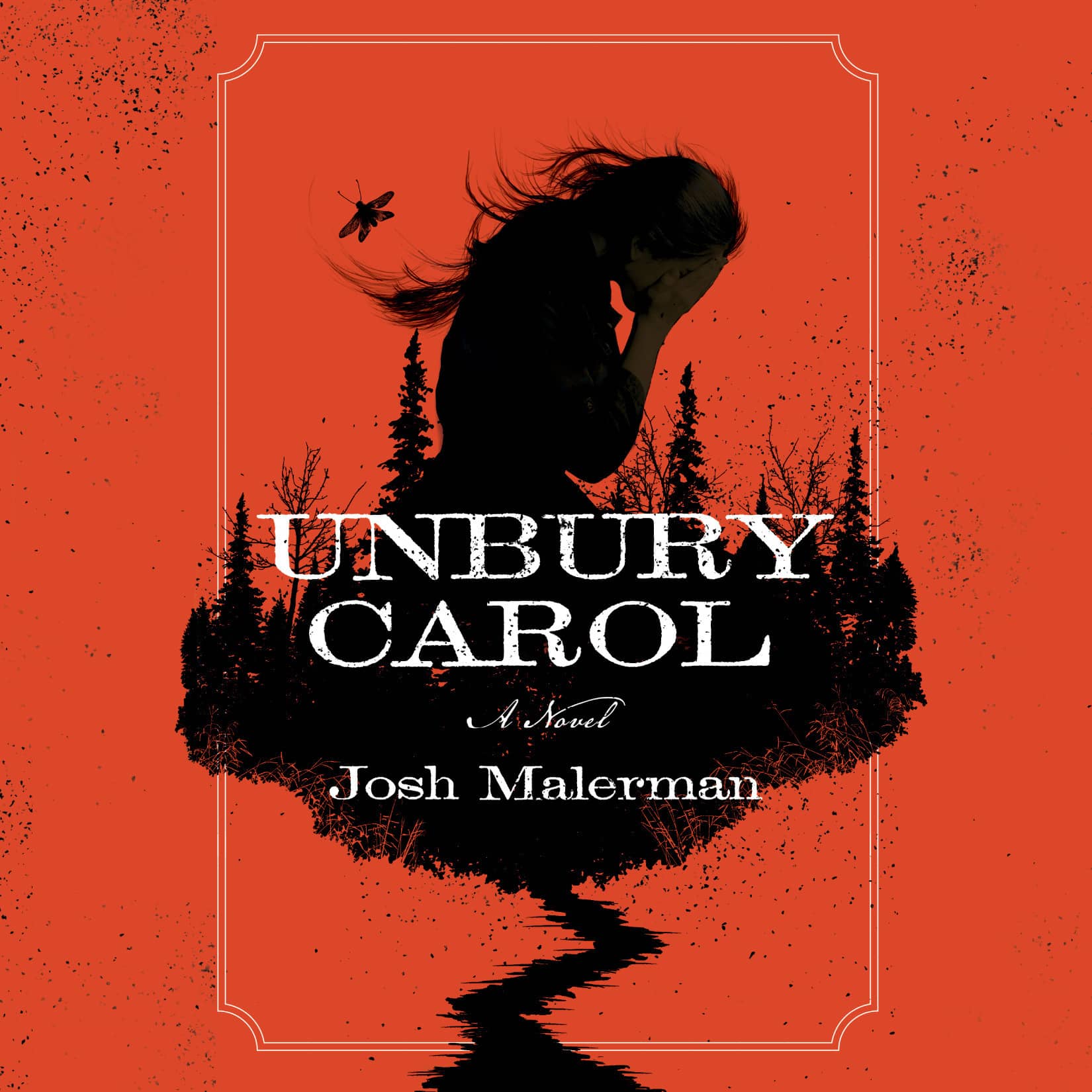
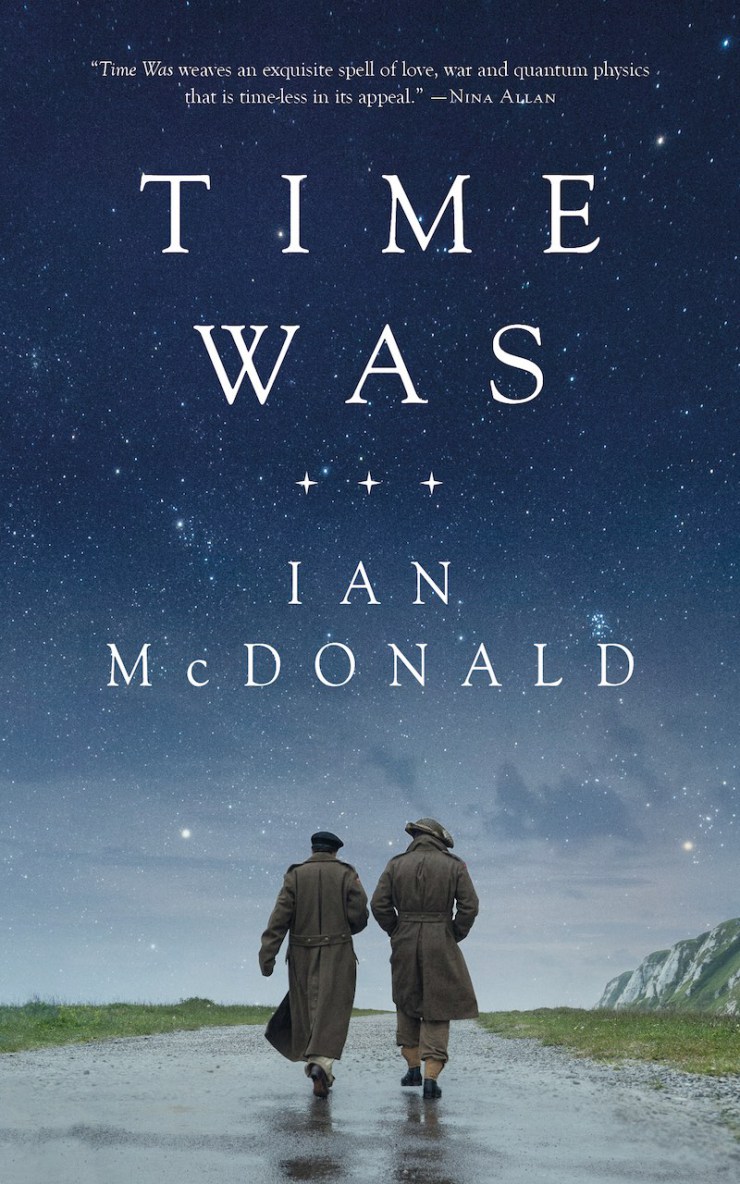
From Darkest Skies Sam Peters-small Unbury Carol Josh Malerman-small Time Was Ian McDonald-small

April is maybe the best month for new book releases so far in 2018. There’s a plethora of new titles I want to feature — and read — and I barely have time to keep tabs on them all. Jeff Somers at the Barnes & Noble Sci-Fi & Fantasy Blog isn’t helping the situation by highlighting over two dozen of the best new releases, including a fair number I was completely unaware of. Here’s a few of his more interesting selections.

From Darkest Skies by Sam Peters (Gollancz, 352 pages, $26.99 hardcover/$13.99 trade paperback, April 10)

Detective tropes are given a techno-philosophical twist in this sci-fi mystery. Two hundred years in the future, an alien race known as the Masters have terraformed Earth and spread humanity into the universe, settling us on dozens of colony worlds. Keon Rause is a government agent returning to service on the planet Magenta after a five year leave of absence while he mourned his wife, a fellow agent killed in a terrorist explosion while investigating an unknown lead. Rause isn’t alone; he’s come back with an AI version of his wife, a digital reconstruction crafted from every trace of data she left behind — and crafted with the purpose of helping him figure out how and why she really died. Cashing in every favor he has left from his previous life, he finds himself following in her footsteps even as he struggles with his feelings for the simulacrum he’s created. It all leads to an impossible choice when he and his team stumble onto a disaster in the making: save the planet and lose his wife forever, or let something terrible happen and solve the mystery?

From Darkest Skies is Sam Peters’ debut novel. The sequel, From Distant Stars, is already scheduled to arrive on August 21.

Read More Read More