Browsed by
Category: Blog Entry

Robert E. Howard, Exile of Cross Plains

Robert E. Howard, Exile of Cross Plains

NOTE: The following article was first published on March 21, 2010. Thank you to John O’Neill for agreeing to reprint these early articles, so they are archived at Black Gate which has been my home for over 5 years and 250 articles now. Thank you to Deuce Richardson without whom I never would have found my way. Minor editorial changes have been made in some cases to the original text.

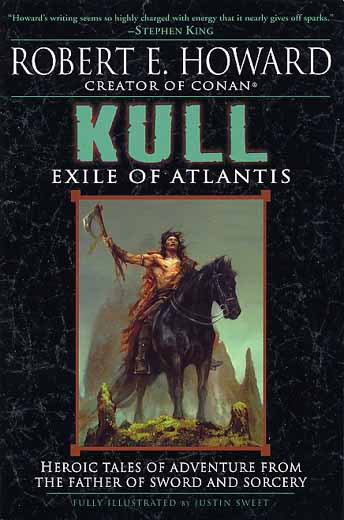
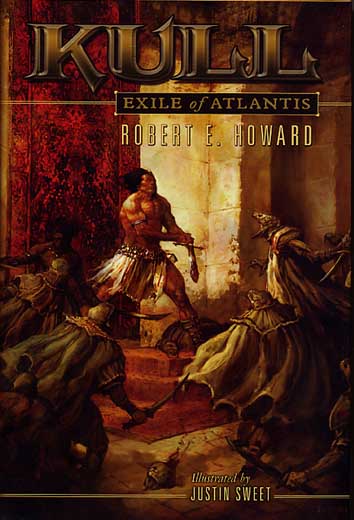
subterranean-kull-slipcasesubterranean-kull-limitedThe transformation of literary genres in the early twentieth century was marked by a series of intriguing parallels and recurrences. When Raymond Chandler, displaced as much in England as California, started down the mean streets of writing pulp fiction, he used an Erle Stanley Gardner story as his template. Chandler prepared a detailed synopsis of Gardner’s story and then re-wrote the story himself, comparing the results to the original.

Chandler’s first published pulp story, “Blackmailers Don’t Shoot” (1933) introduced the prototype for the hardboiled private eye who emerged six years later in Chandler’s landmark first novel, The Big Sleep in the form of Philip Marlowe. Likewise Chandler’s literary heir, Ross Macdonald, displaced as much in Canada as California, would use The Big Sleep as the template for his own first novel, The Moving Target (1949) and, in the process, introduced Marlowe’s successor, Lew Archer who would arguably represent the hardboiled detective realized to its full potential.

When Robert E. Howard, an outcast in his native Cross Plains, started down the path that would eventually give the world the genre now known as Sword & Sorcery, he used Paul L. Anderson’s story, “En-ro of the Ta-an” as the template for his various “Am-ra of the Ta-an” story drafts. Anderson would likely be a completely forgotten literary figure but for the efforts of Howard scholar, Rusty Burke. Even without Anderson as a reference point, Howard’s first attempts at creating a noble savage are instantly familiar to the modern reader as being works that are highly derivative of Edgar Rice Burroughs’ Tarzan, Pellucidar, and Caspak novels. Just as the seminal Black Mask writers took the western and successfully brought it to an urban setting creating modern detective fiction in the process, so Burroughs and those he influenced took Rudyard Kipling’s Mowgli tales and laid the foundation for modern myth-making by cross-breeding jungle adventures with the lost worlds tales of Jules Verne, Sir Arthur Conan Doyle, and H. Rider Haggard.

Read More Read More

The Top 50 Black Gate Posts in October

The Top 50 Black Gate Posts in October

Terra Incognito A Guide to Building the Worlds of Your Imagination-smallWith his very first article for Black Gate, Richard C. White shot right to the top of the charts with the most popular article for the month, “World Building 101: The Village.” Here’s a sample:

Just because you have water doesn’t mean you can put any number of people in an area. The Cahokia Mounds in Illinois were believed to have held up to 40,000 people which would have made it the biggest city in North America until the 18th century. However, archeologists now believe the reason that Cahokia was abandoned was not due to warfare but because they had so many people that the water became too polluted to support the population. Even pioneers in the 19th century soon learned you can only dig a well so deep before it doesn’t provide enough water. An overabundance of people/livestock/ irrigation can cause a drought as easily as Mother Nature. So, when planning your village for your story, think about how do your people get their water and how they deal with waste water.

Coming in second was Fletcher Vredenburgh’s look back at one of the most popular fantasy novels of the 20th Century, “You Can’t Go Home Again: The Annotated Sword of Shannara: 35th Anniversary Edition by Terry Brooks.” The third most popular article last month was Derek Kunsken’s interview with Christopher Golden, Co-Author of Joe Golem, Occult Detective.

Rounding out the Top Five for the month were Goth Chick, with her look at Sony Pictures’ Freaks of Nature, and M Harold Page’s catalog of tips for those trying to write a novel this month, “NaNoWriMo is coming!”

The complete list of Top Articles for September follows. Below that, I’ve also broken out the most popular overall articles and blog categories for the month.

Read More Read More

The Public Life of Sherlock Holmes: Edgar Smith’s ‘The Implicit Holmes’

The Public Life of Sherlock Holmes: Edgar Smith’s ‘The Implicit Holmes’

Implicit_GasLampBy sheer numbers, Sherlock Holmes is more popular than he has ever been. This is in large part due to the massive success of BBC television’s Sherlock, which is an international sensation. The Robert Downey Jr. movies also contributed to a revival of interest in Holmes before that.

Anecdotal evidence isn’t as good as objective, but it can still be valid. There are Holmes fans that have never actually read any of Sir Arthur Conan Doyle’s sixty stories (the Canon) about the great detective. This used to bother me, but I’ve gotten over it: they’re the ones missing out, and they’re the ones who don’t have real knowledge of the world’s first private consulting detective: just some parody on screen. So I’m good.

There is a VAST body of work that has been written about the Canon; including my own free, online newsletters, Baker Street Essays. As the great Sherlockian, Christopher Morley said, his tongue planted in its accustomed place in his cheek, “Never has so much been written by so many for so few.”

Read More Read More

Approbation and Obloquies for the Lord of Strange Deaths

Approbation and Obloquies for the Lord of Strange Deaths

LOSDWEBFuman_frontIt is not easy to be a fan of classic pulp fiction and a person of good conscience in the 21st Century. It is far easier to embrace steam punk and all that has followed in its wake which treats the past as if it had the mores and indeed the colloquialisms of the present. As it is, one never knows when the Thought Police, those self-appointed guardians of right thinking, will decide a Dashiell Hammett is no longer possessed of literary merit because he also threw around racial slurs that were common in his day and didn’t have the foresight to have an enlightened view of sexuality when it came to capturing the world he lived in and wrote about.

So what does this have to do with Sax Rohmer? Actually quite a lot. After a two year delay, Strange Attractor Press has finally published Lord of Strange Deaths, their impressive critical study of the man and his works. Such a tome was long overdue and very welcome indeed. Many of the individual essays are excellent and display the insight and level of research one expects from academics. Sadly, the book comes from the second decade of the current century which means one has to be reminded over and over that Sax Rohmer was a very bad person. He lived in colonial times and exploited the fears of the Boxer Uprising to create a criminal genius who heralded from China.

Read More Read More

The Great Savage Sword Re-Read: Vol. 1

The Great Savage Sword Re-Read: Vol. 1

SSvol1
The Savage Sword of Conan Vol. 1. Cover art by Boris Vallejo.

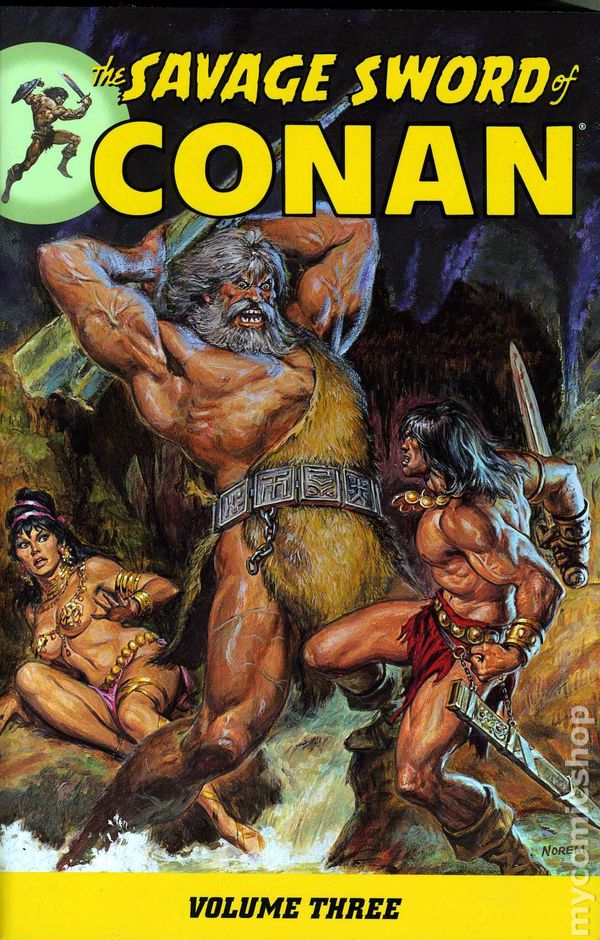
The Savage Sword of Conan is arguably the single greatest publication the Sword and Sorcery genre has ever seen. Spawned by the massive popularity of Marvel’s Conan the Barbarian color comic which launched in 1970, Savage Sword was a black-and-white Marvel Magazine whose first issue appeared in 1974.

The new format freed creators from the restrictions of the Comics Code Authority, which constrained Conan’s full-color adventures to all-ages entertainment. The violence, gore, and lurid themes of Robert E. Howard’s original Conan tales would no longer be censored by enforced comic-book morality. Now readers of the Cimmerian’s adventures would get to know the real Conan and the real Hyborian Age — in all their blood-spattered, head-lopping, breast-heaving glory.

I was 8 years old when I bought my first issue.

It was early 1978 and my family had just moved from Fort Knox to Elizabethtown, Kentucky. Moving to that neighborhood changed my life for many reasons, but one of the most significant was the presence of the Blue Bird Foodmart at the bottom of the hill. For the first 7 years of my life I was a small-town kid who only got exposed to comics when my parents/grandparents took me to a store somewhere. Now I could walk down the hill to a store that sold comics, magazines, and novels. The problem was that as an 8-year-old comics fan I had barely any money to spend on all those great books.

On that day in ’78, I could have chosen the latest issue of Creepy, Eerie, Heavy Metal, or any number of Marvel or DC comics. But it was Savage Sword of Conan #28 that caught my eye. Comics went for 35 cents apiece in those days, but here was an extra-thick “comic” with an amazing Earl Norem painted cover. For one whole dollar, it offered four times as many pages and featured the most realistic sword-fights and battles I had ever seen, complete with beheadings, guttings, and stabs in the back. The interior art was by John Buscema and Alfredo Alcala, a legendary penciller-inker team, and I had never seen anything like it.

Needless to say, it blew my little mind and left me hungry for more tales of Conan…

Read More Read More

Discovering Robert E. Howard: David C. Smith on Bran Mak Morn

Discovering Robert E. Howard: David C. Smith on Bran Mak Morn

BranMak_MistsI discovered Oron before I first read a Conan tale. It was pretty much my introduction to barbarians in the world of fantasy. Author David C. Smith co-wrote the Red Sonja and Bran Mak Morn books with Richard Tierney. It’s safe to say that he knows his Howard. And about barbarians. So it’s natural that our ‘Discovering Robert E. Howard’ series turned to Dave to talk about Bran Mak Morn. “Worms of the Earth” was one of the first non-Conan stories I read from REH. Wow. Read on for Dave’s take on yet another topic for the series.


I was around 14 or 15 years old when I discovered the Hyborian. So now what will become of us, without barbarians. Those men were one sort of resolution.

— “Waiting for the Barbarians” (1897-1908) Constantine Cavafy

Howard knew the truth of these lines by Cavafy, just as South African author J. M. Coetzee did in his acclaimed novel of the same title. What do the barbarians bring to societies that are past their glory, that are overripe, living softly, in decline? What do the barbarians bring to societies whose citizens exist with each day the same as the day before, overripe citizens living softly?

These citizens have become soft while standing on the backs of those they kept down, slaves and serfs, and those they have conquered or coerced — the barbarians. When at last the barbarians turn on the overripe soft ones who keep them down, it is indeed one sort of resolution.

Read More Read More

Seven Important Advantages of Brunettes in a Sword and Sorcery Setting (and Life in General)

Seven Important Advantages of Brunettes in a Sword and Sorcery Setting (and Life in General)

I’m a brunette. I love being a brunette. I believe it’s both an underestimated and a lifesaving hair color. I have, in fact, studied this in my thirty-some years of (mostly) brunette-dom and sword and sorcery fandom. Today, I share my important, non-scientific and non-criticially supported findings with all of you.

There are actually three brunettes in this picture. Can you spot them?

1 – Brown is the Color of Dirt

That is an advantage, trust me! Being a brunette is so common that people think you could be anybody. Your own parents, should they have golden or red locks, might not recognize you from the other brown-haired child next door. This is good! Be unnoticeable. I imagine, through no personal experience of my own, that it’s also helpful in getting away with crime. *shifty eyes*

2 – You Won’t be a Giant Beacon

My roommate is a redhead. I purposefully chose to live with a redhead for a simple reason: in any invading scenario, she’ll lead off the enemy troops with her beacon of a head while I make a good getaway. (I’m not so shallow that I just live with her because she’s a redhead. She also bakes bread.)

Read More Read More

Red Moon and Black Mountain by Joy Chant

Red Moon and Black Mountain by Joy Chant

oie_1024853Qhsh9stJoy Chant’s first novel, Red Moon and Black Mountain (1970), was published when she was only twenty-five years old. In the afterword to a later novel she explains how the world of her stories, Vandarei, grew out of fantasies she made up for herself as a child. At one point she made herself the great and majestic Queen of this world. The story of three siblings — Oliver, Penelope, and Nicholas — pulled out of England into the land of Vandarei, it reads a little like the Chronicles of Narnia crossed with The Lord of the Rings and wrung through Alan Garner’s darker fantasies.

The novel has often been dismissed as a mere clone of Tolkien’s work — most recently right here at Black Gate by Brian Murphy — but RMBM is a book that has also received tremendous praise over the decades. In his introduction to the first American edition, published as part of his Ballantine Adult Fantasy series, Lin Carter refers to it as a masterpiece. James Stoddard, author of The High House, calls it the best fantasy novel no one reads. It was the second recipient of the Mythopoeic Award back in 1972.

I first read RMBM about fifteen years ago, but retained only the dimmest memories of it. Rereading it, I will say it is one of the best works of epic high fantasy I’ve ever read. While not the toil of a lifetime, Chant draws on the same deep body of European mythology and archetypal characters as Tolkien with similar power and effect. Maybe due to its roots in her childhood imagination and definitely out of a deep well of talent, in Vanderei, its people, and its legends, Chant created a deeply heartfelt and fantastic world.

A mysterious figure lurking along the garden path sends the children out of this world and into Vandarei out of grave necessity. Penelope and Nicholas materialize along a path trod by the grave and steely princess In’serinna and her retinue. Oliver arrives among the nomadic Khentors and their single-horned horses. All the children have a part to play in an upcoming struggle for the future of Vandarei. Oliver, especially, will find himself tested to his limits.

Read More Read More

Of Necromancers & Frog Gods – Part One (The Public Life of Sherlock Holmes)

Of Necromancers & Frog Gods – Part One (The Public Life of Sherlock Holmes)

NECROMANCER GAMES

OGL and D20

Necro_LogoWhen Wizards of the Coast rolled out the Open Game License for 3rd Edition Dungeons and Dragons, a plethora of third party companies would produce products, leaving players with a seemingly unlimited number of options available for purchase. A few were great, more were terrible and most were in between.

That period was known as the d20 boom, which inevitably led to a d20 bust and is explained in depth in Shannon Appelcline’s tremendous, four-volume RPG history, Designers and Dragons. If you have any interest in role playing history, you will love those books (they are broken up into decades: The Seventies, Eighties, Nineties and Two Thousands).

Along the way, many new and existing companies entered the official Dungeons and Dragons world. One of the most popular and successful was Necromancer Games, founded by Clark Peterson and Bill Webb. Under a different name, Necromancer’s offspring is a major player in the RPG scene today.

The Open Gaming License (OGL) made the 3rd Edition Dungeons and Dragons mechanics permanently “open use” and the basis of a System Reference Document (SRD). The OGL was accompanied by the d20 license, which verified that third party products were compatible with 3rd Edition.

The OGL and d20 licenses had distinguishing characteristics and somebody more versed than I in the intricacies should write a post on that whole shebang. Suffice to say here, companies began rolling out d20 products from day one.

Read More Read More

Things Your Writing Teacher Never Told You: 1st Person and Tight Limited 3rd – A Closely Related Duo

Things Your Writing Teacher Never Told You: 1st Person and Tight Limited 3rd – A Closely Related Duo

water drop POV

This is Part 4 in the Choosing Your Narrative POV Series.

We’re continuing our examination of eight POV approaches commonly used in Fantasy. This week you’ll find our second and third POV forms – First Person and Tight Limited 3rd – are so similar they’re virtually identical twins. Think of the I vs. He or She pronouns as names: the equivalent to dubbing twins Mary and Carrie.

  1. 1st Person

This uses the I/Me/My pronouns. This can be a very powerful and intimate point of view.

But it can come across as self-indulgent and can slow the pacing of the story. It is more difficult than it first looks to do it successfully, though it’s not nearly as difficult as 2nd Person.

Read More Read More