Browsed by
Author: John ONeill

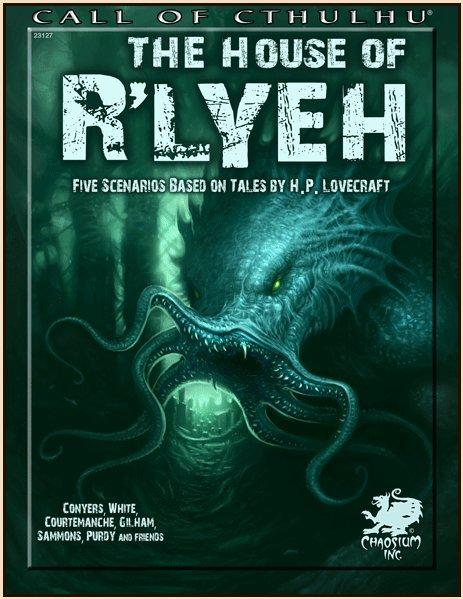
New Treasures: The House of R’lyeh: Five Scenarios Based on Tales by H.P. Lovecraft
New Treasures: The House of R’lyeh: Five Scenarios Based on Tales by H.P. Lovecraft

The House of R'lyeh-smallI feel like I’m in the middle of H.P. Lovecraft week.

On Sunday I talked extensively about Lovecraft, a propos of his inclusion in the latest round of Advanced Readings in D&D. This morning I invoked his name while discussing Robert Bloch’s Nightmares collection. Now here we are again, with the latest collection on adventures for one of my favorite role-playing games, Call of Cthulhu, based on the work of H.P. Lovecraft.

I bought my first CoC adventure — the classic Shadows of Yog-Sothoth — over 30 years ago (yes, I’m aware that’s longer than most of you have been alive. Shut up), and the most recent, Cthulhu By Gaslight, last April. I haven’t played CoC in years (decades, probably), but the adventures are marvelously inventive and always a pleasure to read for a veteran game master like me. But The House of R’lyeh has extra appeal for Lovecraft fans of all kinds, not just CoC players, I think: it draws directly from five of the Master’s short stories. I’m looking forward to digging in and seeing how successful it is.

The House of R’lyeh contains five Call of Cthulhu scenarios that follow or expand upon events in five of H.P. Lovecraft’s stories: “Pickman’s Model,” “The Haunter of the Dark,” “The Hound,” “Arthur Jermyn,” and “The Nameless City.” Set in Boston, Providence, the British Isles, continental Europe, and the Middle East, none of the scenarios need be played at set dates or in a set order, but they could be run in the order presented to form a loose campaign using optional link between scenarios to draw investigators from one to the other.

Alternatively, the scenarios may be used to supplement classic Call of Cthulhu campaigns such as The Shadows of Yog-Sothoth which suggests that its component scenarios should be interspersed with others.

Read More Read More

Vintage Treasures: Nightmares by Robert Bloch

Vintage Treasures: Nightmares by Robert Bloch

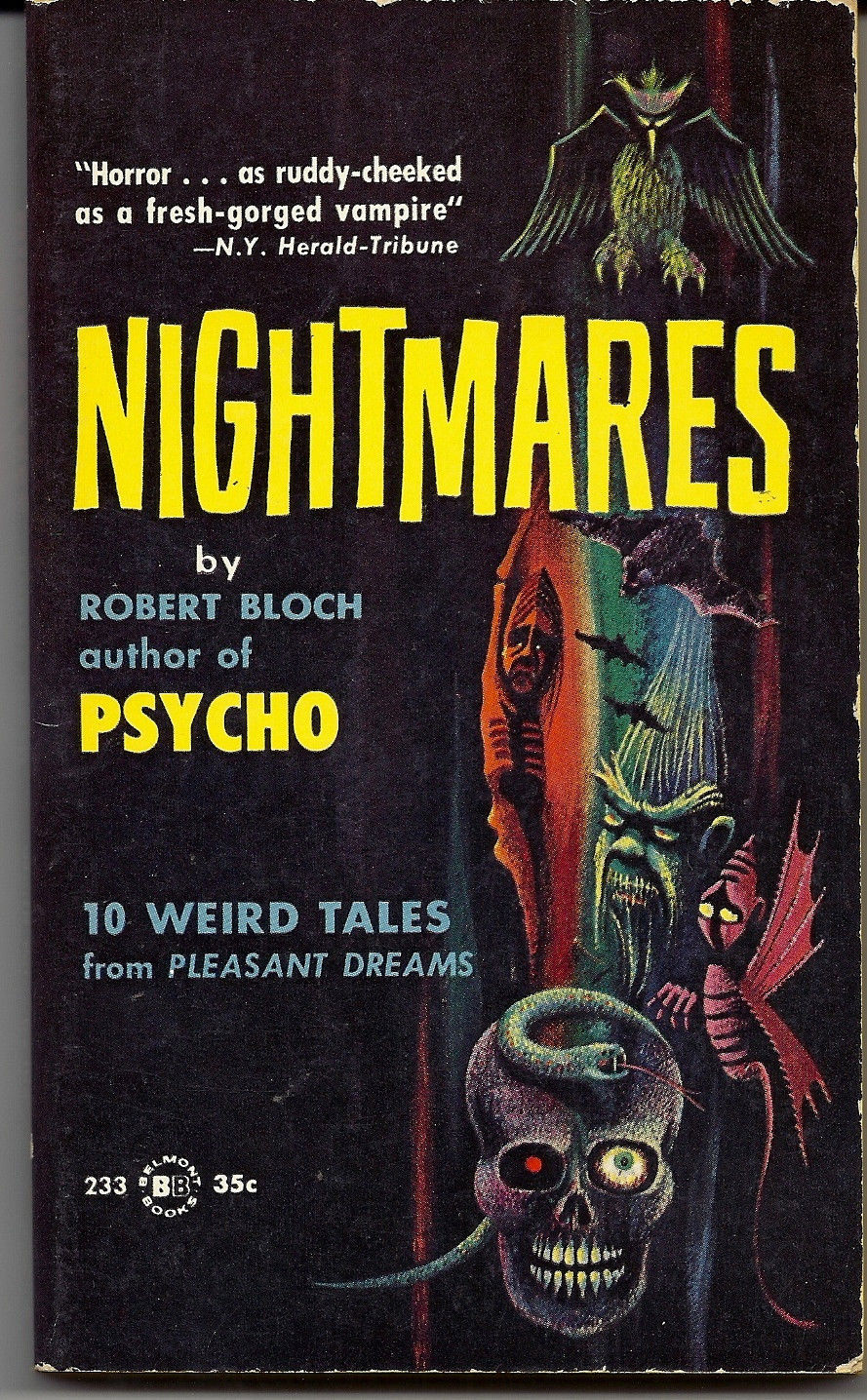
Nightmares Robert Bloch-smallI’ve been on something of a Robert Bloch kick recently.

It started with the Vintage Treasures article on The Best of Robert Bloch I wrote back in July, the second in my series on Lester Del Rey’s Classics of Science Fiction. That lead me to his Lovecraftian novel Strange Eons, first published in 1979, which I wrote about in October.

Strange Eons was fun, but honestly I think I prefer Bloch’s short stories. And he certainly has a lot of them, gathered in dozens of collections starting with The Opener of the Way, published in 1945 by Arkham House when he was just 28 years old, and ending the year he died with his final collection The Early Fears (1994, Fedogan & Bremer) — which won the Bram Stoker Award for Superior Achievement in a Fiction Collection.

As usual, I tend to gravitate towards the paperbacks. Last week I bought a copy of Nightmares, a slender 1961 paperback from Belmont which contains 10 short stories originally published in Weird Tales, Fantastic, The Magazine of Fantasy and Science Fiction, and other fine publications.

Nightmare is a selection of tales from Pleasant Dreams — Nightmares (1960), an Arkham House hardcover which contained 16 short stories and novelettes (and cost, according to a note on the copyright page, an outrageous $4). The paperback is dedicated to August Derleth, Fritz Lieber (sic), and Star Trek writer Samuel A. Peeples, author of “”Where No Man Has Gone Before” (one of my favorite episodes, incidentally, although doubtless he’s listed here for his horror work).

And yes, Fritz’s Leiber’s name was misspelled. Clearly the paperback editions were not edited as tightly as they could have been, or Fritz Leiber wasn’t yet a big name. Probably both.

Read More Read More

Experience the Joy of the Pulps With The Incredible Pulps

Experience the Joy of the Pulps With The Incredible Pulps

The Incredible Pulps-smallWe’ve been chatting a lot about pulp fantasy recently — for example, in our recent explorations of Appendix N, Unknown magazine, escaping our genre’s pulp roots, forgotten pulp villains, Clark Ashton Smith’s Martian pulp fiction, and much more.

I occasionally get asked what I mean by “pulp.” It’s not the most intuitive term, I’ll grant you that, especially for younger readers. For them, if it means anything it usually conjures up images of Tarantino’s Pulp Fiction, and perhaps vague echoes of noir detective stories.

“Pulp fiction” means the fast-paced genre stories written for the popular magazines of the 1920s, ’30s and ’40s, and modern fiction written in conscious emulation of that style. The most popular of the pulp magazines, including Argosy, Adventure, All-Story Weekly, and Detective Story, had reliable circulations in the hundreds of thousands. They cost a quarter or less, and were printed on cheap (pulp) paper, frequently with ragged, untrimmed edges.

The pulps are still discussed and collected today for a number of reasons. Several of the most important writers of the 20th century — including Edgar Rice Burroughs, Sax Rohmer, H.P. Lovecraft, Ralph Milne Farley, Raymond Chandler, Agatha Christie, Louis L’Amour, and Harold Lamb — got their start in the pulps. They featured some of the most famous heroes of the early 20th Century, including Doc Savage, The Shadow, Conan, Buck Rogers, Tarzan, Zorro, and many others.

But the best fiction from the pulps has been reprinted many times and — unless you’re Howard Andrew Jones, Stephen Haffner, or John C. Hocking, on the trail of an obscure or neglected author — you rarely dig through pulps for the fiction any more. No, there’s really only one reason most of us still collect pulps. And that’s the fabulous covers and artwork.

Read More Read More

H.P. Lovecraft, A. Merritt, and Appendix N: Advanced Readings in D&D

H.P. Lovecraft, A. Merritt, and Appendix N: Advanced Readings in D&D

The Lurking Fear HP Lovecraft-smallWe’re drawing closer to the end of Gygax’s famous Appendix N, the list of influences and recommended reading he included at the back of the D&D Dungeon Masters Guide.

Over at Tor.com, Tim Callahan and Mordicai Knode continue their tireless trek through the entire list, sampling a little bit of each writer and generously sharing their impressions with us, while here at Black Gate we continue to appreciate and critique their columns. Since that’s a heck of a lot easier than actually trying to read along with such a massive project. Makes me tired just to think about it. Seriously, I need a bit of a lie down.

In the last few weeks they covered one of the most popular fantasy writers of the 20th Century — indeed, one of the most popular writers to pick up a pen, period — and a relatively obscure short story writer who was ignored for virtually his entire life, until a tiny press in Sauk City, Wisconsin, decided to make it their mission to return all of his works to print shortly after his death. Yes, we’re here today to discuss A. Merritt and H.P. Lovecraft, respectively.

Let’s start with Lovecraft. Mordicai kicks things off in fine fashion:

The guy basically invented contemporary horror — besides splatter and slasher, I suppose — and you can’t really talk about him without a sort of gleeful enthusiasm. Or at least, I can’t.

Uncaring alien godthings and cults of fishpeople get all the attention, but the stories that stick with me are the ones that get a little more surreal. Don’t get me wrong: At the Mountains of MadnessCall of CthulhuThe Dunwich HorrorThe Shadow Over Innsmouth… there are a reason that these stories are at the forefront, as the juxtaposition of modern man with truly unknowable forces is a ripe category…the ensuing cosmic creepfest and insanity in response to a nihilistic and uncaring universe might be seen as Lovecraft’s thesis.

That said, for me it is the odder tales, like The Dream-Quest of Unknown Kadath, that kick it up a notch. Hordes of cats, friendly conversations with cannibal ghouls, trips to the moon, evil ticklers, and terrifying plateaus that only exist in dreams? Yes please! I’m going to go on a limb and say that I see a little Randolph Carter in some of my favorite protagonists. Dale Cooper from Twin Peaks, I’m looking at you…

While I’m a devoted fan of Lovecraft’s longer and most famous works — I consider “The Shadow out of Time” to be one of the finest pieces of fantastic fiction ever written — there’s no question that his Dream-Quest tales are equally worthy of attention. A tip of the hat to Mordicai for not taking the easy route.

Read More Read More

Win a Complete Autographed Set of John R. Fultz’s Books of the Shaper Trilogy!

Win a Complete Autographed Set of John R. Fultz’s Books of the Shaper Trilogy!

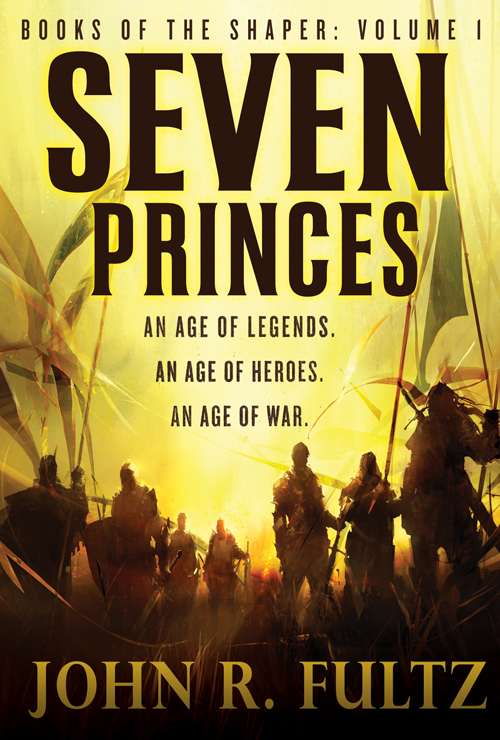
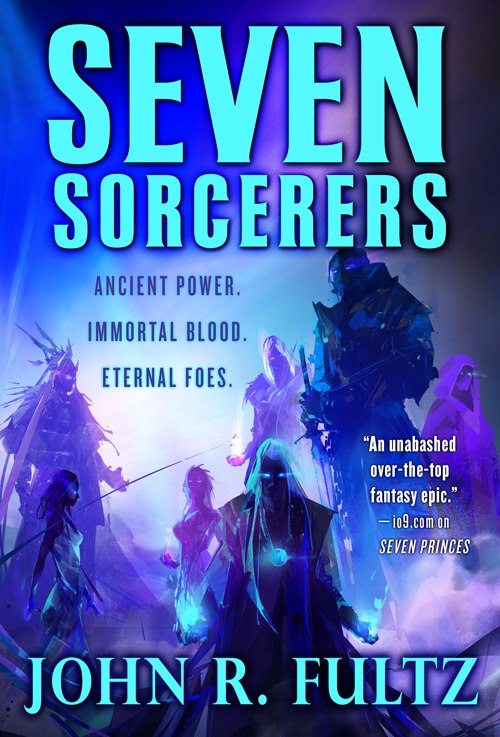
seven-princesLast week we celebrated the arrival of Seven Sorcerers, the third and highly-anticipated final volume in John R. Fultz’s Books of the Shaper trilogy.

The trilogy opened with Seven Princes (January 2012), which Barnes & Noble called “flawless epic fantasy,” and Seven Kings (January 2013), which thebookbag.co.uk called “wonderful stuff… Tarantino and Tolkien have a literary love child and his name is John R. Fultz.” Seven Sorcerers brings the sequence to a close with thundering climax that does not disappoint.

Now you have a chance to win a complete autographed set of all three volumes, compliments of Orbit Books and John R. Fultz.

How do you enter? Simple — just send an e-mail to john@blackgate.com with the title “Seven Sorcerers” before Friday, December 20, 2013, and we’ll enter you in the drawing. One lucky winner will win all three books.

Can’t wait for the contest? Try some of John’s exciting fiction right here at Black Gate, including “When the Glimmer Faire Came to the City of the Lonely Eye,” which appeared as part of the Black Gate Online Fiction line, or the three stories that appeared in our print version: “Oblivion Is the Sweetest Wine”(BG 12); “Return of the Quill” (BG 13); and “The Vintages of Dream” (BG 15). And you can read more about John’s philosophy of fantasy in his recent article, “One Man’s Trash…

All entries become the property of New Epoch Press. No purchase necessary. Must be 12 or older. Decisions of the judges (capricious as they may be) are final. Terms and conditions subject to change. Sorry, US and Canada entrants only. Not valid where prohibited by law. Eat your vegetables. And good luck!

New Treasures: Fiddlehead by Cherie Priest

New Treasures: Fiddlehead by Cherie Priest

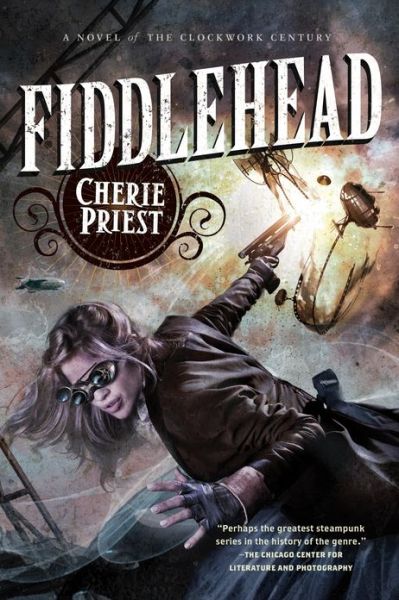
Fiddlehead Cherie Priest-smallI’m extremely intrigued by Cherie Priest’s The Clockwork Century series, and have been ever since the first volume, Boneshaker, appeared in 2009 and was nominate for both the Hugo and Nebula awards.

The only thing holding me back, of course, was the fact that it was incomplete. But now the fifth and final volume, Fiddlehead, has arrived, and by all accounts it brings the Priest’s ambitious steampunk series to a rousing conclusion.

The American Civil War has dragged on for two bloody decades as the South, aided by fantastic steam-powered machines and Texas technology, has avoided defeat again and again. Leviticus Blue’s incredible Bone-Shaking Drill Engine accidentally destroyed much of downtown Seattle, unearthing a subterranean vein of blight gas in the process, and a desperately-constructed wall around the city is the only that that keeps hordes of the living dead enclosed.

Now a deadly yellow drug from Washington has begun to circulate through the ravaged country… and genius Gideon Bardsley — who has constructed Fiddlehead, the first thinking machine — dares to ask his creation who is going to win the war…

Young ex-slave Gideon Bardsley is a brilliant inventor, but the job is less glamorous than one might think, especially since the assassination attempts started. Worse yet, they’re trying to destroy his greatest achievement: a calculating engine called Fiddlehead, which provides undeniable proof of something awful enough to destroy the world. Both man and machine are at risk from forces conspiring to keep the Civil War going and the money flowing.

Read More Read More

The Finest Sword & Sorcery: Announcing the Winners of the Stalking the Beast Contest

The Finest Sword & Sorcery: Announcing the Winners of the Stalking the Beast Contest

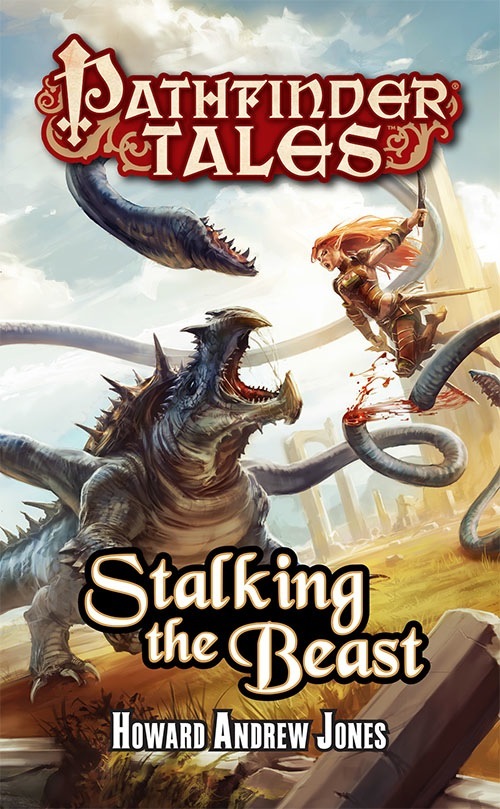
Pathfinder Tales Stalking the Beast-smallLast month we invited Black Gate readers to tell us about the best sword & sorcery tale they’d ever read, in one paragraph or less.

In return, we offered to award a copy of Howard Andrew Jones’ terrific new Pathfinder Tales book, Stalking the Beast, the follow-up to his hit Pathfinder release Plague of Shadows from Paizo Publishing, to five lucky winners.

Those five winners were randomly drawn from the list of all qualified entrants.

Before we announce the winners, let’s have a look at some of the story suggestions. As much as we’d like to, we can’t reprint all the entries we received, so we’ll limit it to the 10 we found most insightful, well written, or intriguing. In the interest of diversity, we’ll limit our sampling to one entry for each author or major work. (But fret not — all qualifying entries received before December 1st were included in the drawing.)

We’ll start with David Kahler, who kicks things off in excellent fashion with the tales of Fritz Leiber:

My favorite Sword and Sorcery book is Fritz Leiber’s Swords Against Wizardry, a Fafhrd and Grey Mouser tale. From the very beginning, when the pair consult an old hag ( because, according to Fafhrd, before embarking on any great enterprise, it’s customary to consult a warlock or witch”) to the Lords of Quarmall and the battles with Hasjarl’s wizards, Swords Against Wizardry is (IMHO) one of the best of Leiber’s tales. His prose is superb, and the action sequences just as good. Fafhrd and Grey Mouser epitomize the “Neutral-Good” actions of adventurers who (even while they seek to enrich themselves) strive to do the right thing even if the “wrong” course of action would have been easier and more convenient. Thanks for the opportunity to win HAJ’s latest book! I always enjoy finding new reads and authors on your site. Keep up the good work!

You’re most welcome, David. Thanks for the enthusiastic entry — and good luck!

Read More Read More

New Treasures: Darkwalker by E.L. Tettensor

New Treasures: Darkwalker by E.L. Tettensor

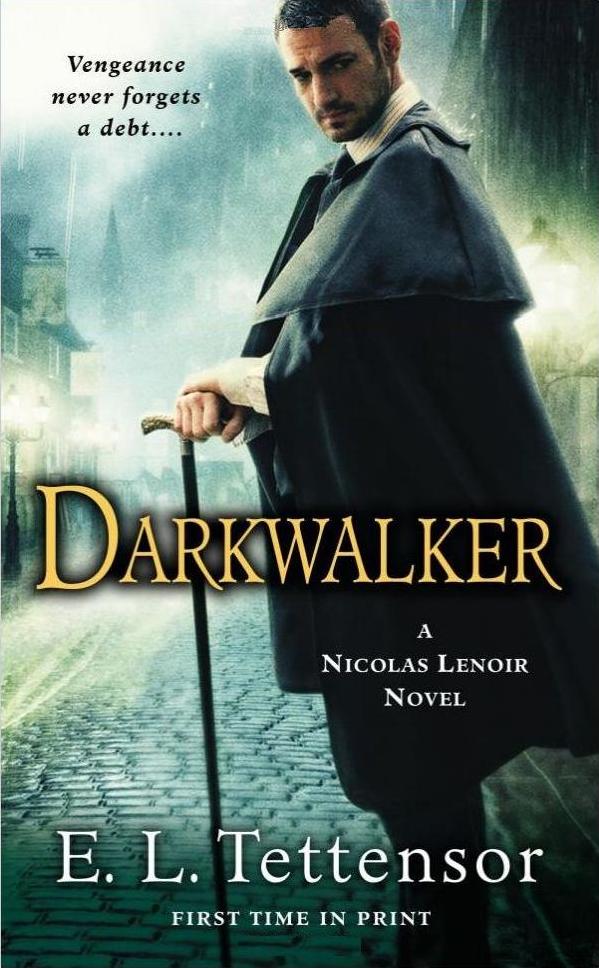
Darkwalker-smallDarkwalker is the debut fantasy novel from E.L. Tettensor and it offers an intriguing mix of both the familiar and the new — just what I’m looking for, I think.

The setting is Kennian, part of the backwater Five Villages, which seems a lot like 19th-century England if you squint. Stepping into the scene is Police Inspector Nicolas Lenoir, tasked with investigating a dark mystery. Folks here for the most part scoff at the supernatural — but don’t tell the thing hunting Inspector Lenoir. This one looks like a fine mix of fantasy and mystery in a fog-shrouded Victorian-era (ish) landscape, with plenty of original touches to keep things interesting.

He used to be the best detective on the job. Until he became the hunted…

Once a legendary police inspector, Nicolas Lenoir is now a disillusioned and broken man who spends his days going through the motions and his evenings drinking away the nightmares of his past. Ten years ago, Lenoir barely escaped the grasp of the Darkwalker, a vengeful spirit who demands a terrible toll on those who have offended the dead. But the Darkwalker does not give up on his prey so easily, and Lenoir has always known his debt would come due one day.

When Lenoir is assigned to a disturbing new case, he treats the job with his usual apathy — until his best informant, a street savvy orphan, is kidnapped. Desperate to find his young friend before the worst befalls him, Lenoir will do anything catch the monster responsible for the crimes, even if it means walking willingly into the arms of his own doom…

Darkwalker: A Nicholas Lenoir Novel was published by Roc Books on Dec 3, 2013. It is 368 pages, priced at $7.99 for the paperback and for the digital edition. Read an excerpt on the Penguin website here.

See all of our recent New Treasures here.

John R. Fultz’s Seven Sorcerers On Sale Today

John R. Fultz’s Seven Sorcerers On Sale Today

Seven SorcerersWe’re celebrating a major publishing event at the Black Gate rooftop headquarters today: the arrival of Seven Sorcerers, the third novel in John R. Fultz’s Books of the Shaper series.

When Seven Princes, the first book in the series, arrived in January 2012, it marked the debut of a major new fantasy talent. Seven Kings cemented that reputation, and over the next two years, John graduated from promising new novelist to full-fledged literary star. The critical acclaim for the first two books has been stellar — Barnes & Noble called them “flawless epic fantasy,” Library Journal praised Seven Princes as “A stand-out fantasy series from an author with an exceptional talent for characterization and world building,” and io9 labeled the same novel “Epic with a capital EPIC.”

John’s talent is too big to be contained just in novels — on June 3, 2013, 01Publishing published his first collection The Revelations of Zang, gathering his baroque and fascinating sword & sorcery Zang Cycle, featuring the tale of a revolt against the nine Sorcerer Kings whose power displaced the gods themselves.

We published three stories from John R. Fultz’s Zang Cycle in the print version of Black Gate: “Oblivion Is the Sweetest Wine,” that tale of Taizo the thief and his daring heist in spider-haunted Ghoth (BG 12); “Return of the Quill,” in which Artifice’s long-simmering plan to bring revolution to the city of Narr finally unfolds (BG 13); and the prequel story “The Vintages of Dream” (BG 15). Next, John took us back in time to Artifice’s first year as a member of the travelling Glimmer Faire in “When the Glimmer Faire Came to the City of the Lonely Eye,” which appeared as part of the Black Gate Online Fiction line here in January.

Somehow missed out on all the excitement? Read the excerpts and stories linked above or try the complete first chapter of Seven Kings for free. Get more details on Seven Sorcerers here.

Seven Sorcerers was published today by Orbit Books. It is 448 pages, priced at $17 in trade paperback and $9.99 for the digital edition. Look for it in bookstores everywhere — and stay tuned to Black Gate for a special opportunity to win a signed copy!

Colin Wilson, June 26, 1931 – December 5, 2013

Colin Wilson, June 26, 1931 – December 5, 2013

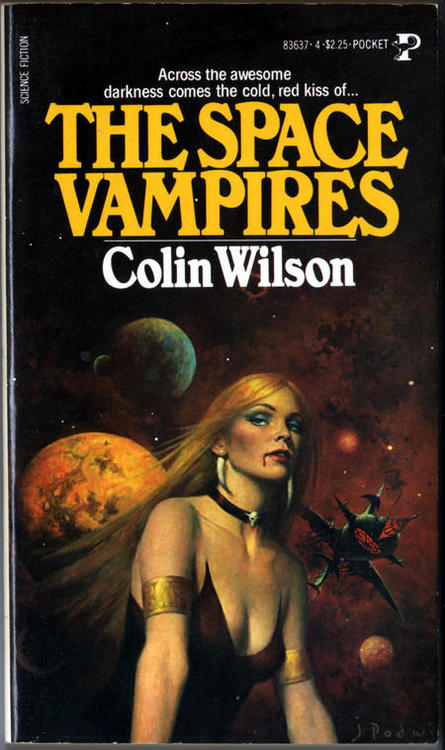
The Space VampiresBill Crider is reporting that Colin Wilson, the British author of over 110 books — including Ritual in the Dark (1960), The Mind Parasites (1967), The Space Vampires (1976), Science Fiction as Existentialism (1980), and the Spider World novels — passed away late last week.

Wilson debuted in 1956 with a bestselling work of non-fiction, The Outsider, when he was only 24 years old. Written mostly in the Reading Room of the British Museum, while he was living in a sleeping bag on Hampstead Heath, the book examined the psyche of the Outsider by looking at the lives of artists and writers including Ernest Hemingway, Franz Kafka, Jean-Paul Sartre, Friedrich Nietzsche, Vincent van Gogh, T. E. Lawrence, and others. (See “Now they will realise that I am a genius,” The Observer‘s entertaining piece on his autobiography, for more details)

Wilson was immediately celebrated as one of Britain’s leading intellectuals — a reputation “that sank as fast as it had rocketed” (as he later observed) after the publication of his second book, Religion and the Rebel (1957), which Time magazine reviewed under the headline “Scrambled Egghead.” By the 60s and early 70s, Wilson had left academic subjects behind to focus on the Occult, in books like The Occult: A History (1971), Aleister Crowley: The Nature of the Beast (1987), and biographies of other spiritualists. Wilson became an active member of the Ghost Club and began to seriously explore topics such as telepathy, life after death, and the existence of spirits in his later writing.

Wilson’s fiction includes several noted Cthulhu Mythos pieces. The hero of The Return of the Lloigor (1974) discovers the Voynich Manuscript is actually a medieval translation of the Necronomicon; and in the preface to his 1967 novel The Mind Parasites, Wilson wonders “what would have happened if Lovecraft had possessed a private income – enough, say, to allow him to spend his winters in Italy and his summers in Greece or Switzerland?… what he did produce would have been highly polished, without the pulp magazine cliches that disfigure so much of his work.”

In 1985, Poltergeist director Tobe Hooper filmed Wilson’s The Space Vampires as Lifeforce. Wilson hated the film version (so did a lot of people), but it’s cheesy fun, as Leonard Maltin happily reported in his review for Entertainment Tonight.

Colin Wilson was a tireless writer; his last two books, Super Consciousness and Existential Criticism: Selected Book Reviews, appeared in 2009. He suffered a stroke in June of last year, losing the ability to speak. He died on December 5th in Cornwall, at the age of 82.