Browsed by
Year: 2013

New Treasures: The Justice Trade
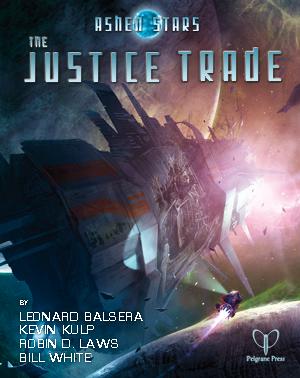
New Treasures: The Justice Trade

The Justice Trade-smallIt’s been a good couple of years for science fiction role players, especially if you like your settings dark and gritty.

Last month, Chronicle City released Cold & Dark, a game of horror in the depths of unexplored space, and last year Pelgrane Press’s Ashen Stars won the 2012 ENnie Award for Best Setting.

I have to admit that what usually attracts me to a new game is the setting and especially the adventures. I’m rarely lured in by elegant system design or the promise of new character feats or something similar. But show me a tantalizing mystery on the perimeter of known space, involving derelict spacecraft or the last desperate transmissions from a lonely mining outpost, and I’m ready to suit up.

That’s one reason I’ve been so drawn to Ashen Stars. I was much impressed by the first major campaign for the system, a 140-page book of linked adventures by Gareth Hanrahan, which I raved about in my August review, “Some Mysteries You Don’t Want to Solve: Exploring Dead Rock Seven.” Here’s what I said, in part:

Dead Rock Seven contains four stand-alone adventures that can be used independently to add variety to your campaign. And variety is the keyword here… players will be investigating mysterious deaths on an old asteroid mine, plunging into the underworld of the high-tech planet Andarta in search of a missing shareholder of the shady Loghos Corp, discovering the strange secrets behind a cooking contest on a space station, and more.

Dead Rock Seven left me impatiently waiting for additional adventures for Ashen Stars and Pelgrane Press finally accommodated me with the release of The Justice Trade, a brand new collection of intriguing scenarios written by Leonard Balsera, Robin D. Laws, Bill White, and Kevin Kulp.
Read More Read More

Plot, Plain and Simple

Plot, Plain and Simple

Writing the Novel From Plot to PrintI may have mentioned this before, but now that I’ve started talking about problems associated with plot, I’ll mention it again: There’s a lot of talk out there about plot-driven narratives versus character-driven narratives, where the former is “bad” and the latter is “good.”

Here’s the skinny: these are terms useful to the book reviewer or critic. They’re not useful to the writer and here’s why: There is no plot without character and there is no character without plot. Specifically, there’s no action without a character to perform it, and no characters without actions to define them. Nothing happens unless someone decides to do it, and unless someone does something, there’s no plot. In fact, there’s no story. This is true for every novel, every short story, every film, every TV show, and an awful lot of poetry. Regardless of genre.

There are things like allegories and satires, in which this might be debatable. Of course, the primary purpose of these is not to tell a story, but to get a particular point across, so screwing with the narrative is okay and even expected. But the best of these will at the very least pretend to include character and plot.

Last week, I talked about how badly-used plot devices often arise out of the writer ignoring character and “making” something happen, often to manipulate the reactions of readers and viewers. You can avoid this by asking yourself some simple questions right at the start. Many of us start writing with character in mind, so we ask ourselves, “Given this type of person, what kind of interesting things can happen to her?” Even if you start somewhere else, however, one of the first questions you’ll have to ask yourself is “Whose story is it?”

Read More Read More

Blogging Marvel Comics’ Dracula, Lord of the Undead

Blogging Marvel Comics’ Dracula, Lord of the Undead

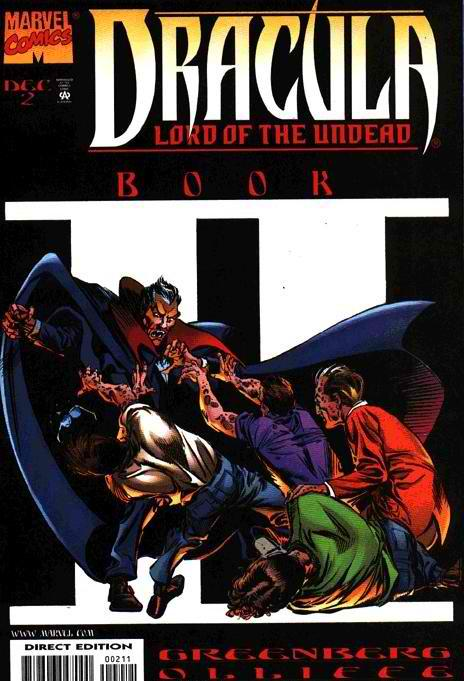
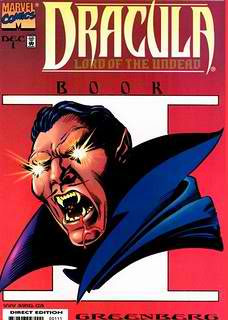
dracula-lord-og-the-undeaduntitledMarvel Comics quickly responded to the news that the creative team behind the legendary Tomb of Dracula series had moved over to Dark Horse to relaunch the property as Curse of Dracula. Marvel put together their own creative team to try to give fans of the original series what they wanted. Glenn Greenberg wrote the script for the three-part Dracula, Lord of the Undead limited series and Pat Olliffe provided artwork that recalled Gene Colan’s work. Colan’s original inker, Tom Palmer, was back on board as well and his contributions cannot be underestimated (and were very much lacking in the Dark Horse series).

The story opens in contemporary Transylvania, where Dracula still terrorizes the locals. The scene quickly shifts to London, where we meet Dr. Charles Seward, great grandson of Dr. John Seward, who fought alongside Abraham Van Helsing to combat Dracula in the late 19th Century. Young Seward is a research scientist whose marriage is falling apart due to his obsessive devotion to his work.

Seward’s mysterious and sinister employer has hired him to develop a cure for vampirism. To this end, his employer has recently ransacked Castle Dracula and successfully captured a vampire to serve as a guinea pig. Seward’s serum makes blood indigestible for vampires, dooming them to starvation, but it also unleashes a highly contagious blood disease that threatens to wipe out the human race. The action moves quickly. Greenberg’s story seems quite uncomplicated compared with Marv Wolfman’s highly complex plotting for the two 1990s Dracula limited series he scripted. Greenberg makes good use of flashbacks and references to earlier issues of Tomb of Dracula.

Read More Read More

Goth Chick News Wishes You a Frighteningly Wonderful Halloween

Goth Chick News Wishes You a Frighteningly Wonderful Halloween

image002From all of us in the underground offices of Black Gate, wishing you a wonderful “holiday” season and thank you for continuing to follow us into the dark.

And now for your reading enjoyment, what would Halloween be without a little Edgar…?

Thy soul shall find itself alone
‘Mid dark thoughts of the grey tomb-stone;
Not one, of all the crowd, to pry
Into thine hour of secrecy.

Be silent in that solitude,
Which is not loneliness — for then
The spirits of the dead, who stood
In life before thee, are again
In death around thee, and their will
Shall overshadow thee; be still.

Read More Read More

An Inkling of the Internal Life: The Novels of Charles Williams

An Inkling of the Internal Life: The Novels of Charles Williams

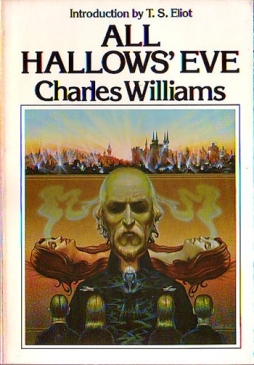
All Hallows' EveI observed the other day that the end of October’s a good time for reading classic weird fiction. This morning, as young ghosts and goblins of all sorts are preparing their evening’s depredations, I’m writing about a subject I’ve wanted to deal with for a while: the novels of Charles Williams. Williams was born in 1886, and died in 1945; a scholar, poet, editor, and theologian as well as a novelist, he’s probably the third-best-known of the informal group of Oxford Christians called the Inklings, behind C.S. Lewis and J.R.R. Tolkien. A Christian fascinated with the occult, his novels are tales of the supernatural and the numinous at play in the ‘real’ world. He wrote of ghosts, magi, and the Holy Grail, among other things, and his stories, laboured and profound, are some of the strangest fantasies I know.

I’ll start with some biographical detail (much of which I found in Humphrey Carpenter’s book The Inklings). Williams was hired by the Oxford University Press in 1908, and soon rose to become an editor. His first book of poems was published in 1912. In 1917 Williams was married, and in the same year was initiated into the Fellowship of the Rosy Cross, a successor organisation to the faction-ridden occult group called the Order of the Golden Dawn. He continued to write poetry through the 1920s, and in 1927 wrote two masques, a kind of ceremonial drama. He’d begun lecturing at local institutes, and soon after the masques wrote his first novel, Shadows of Ecstasy. He couldn’t find a publisher for it at first, but his second book, War in Heaven, made it to print in 1930. Three more novels followed: Many Dimensions in 1931, then The Place of the Lion and The Greater Trumps in 1932. Shadows of Ecstasy was finally published in 1933.

Read More Read More

Abbotsford: The House We’d All Like to Have

Abbotsford: The House We’d All Like to Have

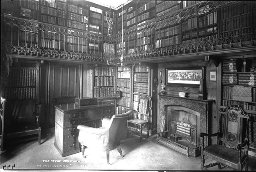
The study at Sir Walter Scott's Abbotsford House in Scotland. Postcard by James Valentine & Co published 1878. Photograph probably by James Valentine, who died in 1879. From the online collection of the University of St Andrews
…it takes a while to realize that it reminds me of my study.

(This week, I’m at World Fantasy Convention in Brighton, England. If you see me, please say hello – it’s my first convention in years!)

I feel so at home in this place, it takes a while to realize that it reminds me of my study.

320px-Abbotsford08
…is like my study, except it’s an entire house…

Weapons and armor roost on the walls, occult tomes jostle with classics and history books for shelf space, and History’s shrapnel — locks of hair, an ancient book, or a scrap of stone or pottery — remind us of a real and concrete past.

Yes, it’s like my study, except it’s an entire house…

Abbotsford House on the Tweed near Melrose, is the absolute archetype of a Fantasy writer’s perfect mansion, except that it was built by the grandfather of historical novelists, Sir Walter Scott, way back in the 19th century.

Sir Walter Scott is Scotland’s Robert E Howard. His Targe and Tartan yarns put Scotland on the 19th-century tourist map. If his text is past its sell-by date, his stories live on on the screen, big and small.

He was so famous in his day that both Blucher and Wellington were glad to meet up when he visited the field of Waterloo. When he fell ill, the government lent him a Royal Navy frigate so he could tour the Mediterranean. (Oh, and, Hail to the Chief? Guess who wrote the original verses?)

Read More Read More

Mind Meld: Worthy Media Tie-ins

Mind Meld: Worthy Media Tie-ins

Splinter of the Mind's Eye-smallI was honored to be invited to participate in a Mind Meld article at SF Signal earlier this month. The topic was “Worthy Media Tie-ins,” so of course I took the chance to expand on my love of James Blish’s Star Trek books — particularly Star Trek 2, one of the very first books I ever owned, which I first mentioned a few weeks back in my review of The Best of James Blish.

What made James Blish’s Star Trek tie-in books so great? They were fun, fast-paced, and most of all, familiar. Before I plucked Star Trek 2 off the rack, the adult section of the bookstores was a strange and unfriendly place, filled with covers of stiff, formally attired men and much less stiff, partially-attired women. In short, Blish’s books were a gateway drug to a much wider world. With phasers.

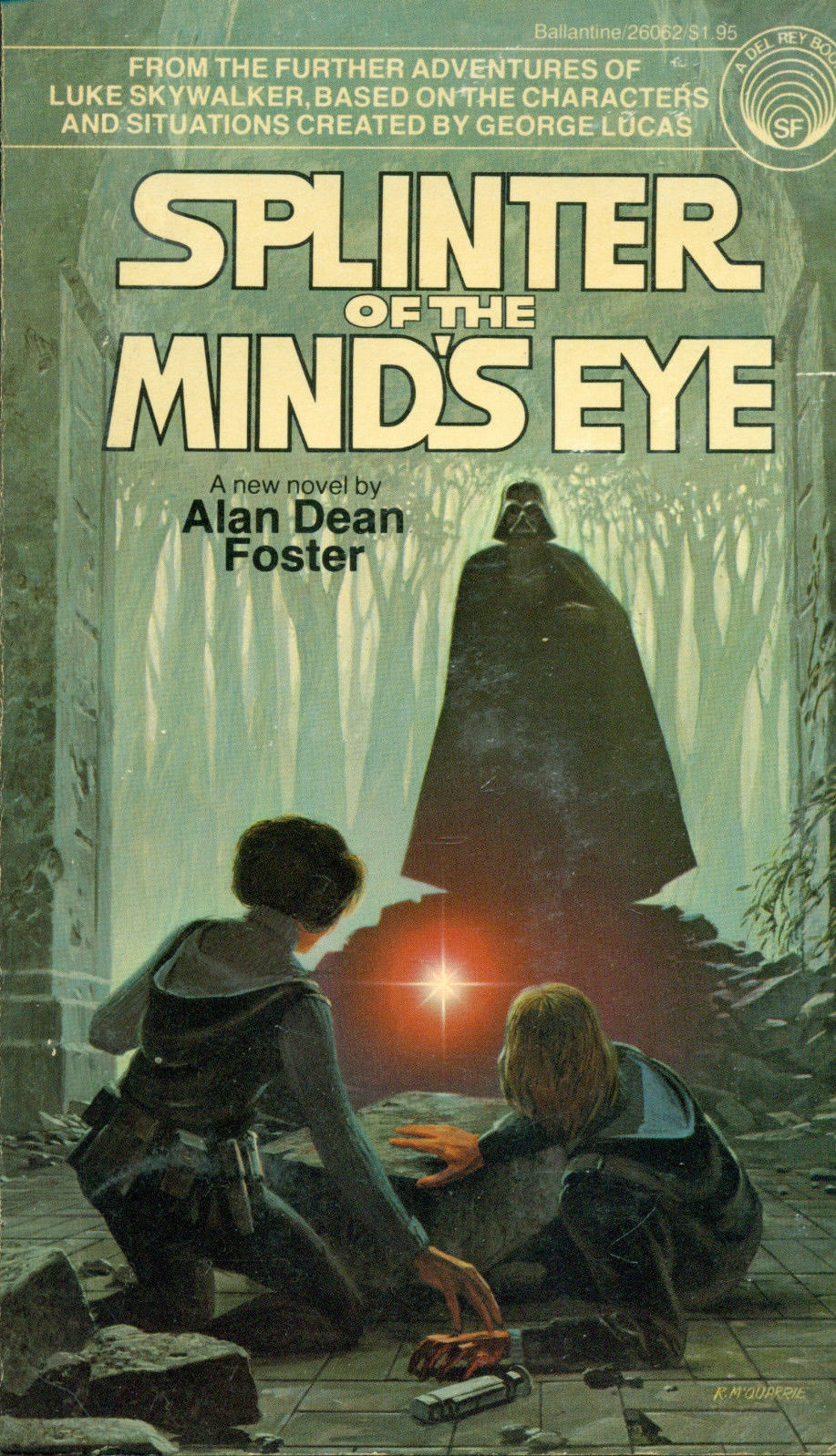
But the book I was really dying to talk about was Alan Dean Foster’s Splinter of the Mind’s Eye, the very first Star Wars tie-in novel and the book that launched an entire publishing empire:

Splinter Of The Mind’s Eye isn’t just a media tie-in novel. It’s sort of an alternate-world, parallel-universe media tie in novel. A tie-in novel for a Star Wars universe in some time-stream that has nothing at all to do with our universe.

This is because Splinter Of The Mind’s Eye was written well before the release of The Empire Strikes Back. Before we knew that Vader was Luke’s father, before Han and Leia started making goo-goo eyes at each other, and before Leia traded in her princess gowns for a blaster with a full clip.

So Luke and Leia get a little more frisky in this book than you would reasonably expect from long-lost siblings, and Leia is a bit more of a helpless princess than you would anticipate after seeing Empire. Also, Darth Vader is a total dick, and has no compunctions at all about carving Luke up with his glowy red light sabre. Clearly, the paternity results had not arrived yet.

It’s not all about me, of course. There are some excellent discussions of other classic media tie-ins. John Mierau — who also has fond memories of Splinter of the Mind’s Eye — talks about Eric Nylund’s much-loved Halo novel The Fall of Reach; Aaron Rosenberg highlights Max Allan Collins’s Dark Angel trilogy, which tied up the dangling storylines after the TV series was canceled; James L. Sutter explores Richard A. Knaak’s classic DragonLance series The Legend of Huma; and Chadwick Ginther celebrates David Annandale’s entry in the Warhammer 40,000 universe, Death of Antagonis — among many others.

Enjoy the entire article here. Thanks to Andrea Johnson at SF Signal for the invite — I had a blast doing this one.

New Treasures: Man Made Boy by Jon Skovron

New Treasures: Man Made Boy by Jon Skovron

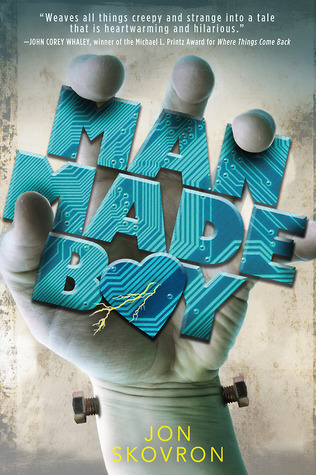
9780670786206_ManMadeBoy_JK.inddParanormal romance has been the biggest trend in modern fantasy in the last decade. As Eddie so succinctly put it in Knight of the Dinner Table: The Java Joint, “Publishing today is all about getting hot and heavy with the unholy.”

But while it certainly may seem that modern publishing has jettisoned all the old taboos and explored every conceivable relationship and forbidden love triangle with the monsters that once terrified us — sexy vampires, sultry demons, brooding werewolves, enigmatic fae, horny spirits, shy zombies, and on and on — one classic creature has been sorely neglected. One of the great cinematic monsters, who has unfairly been overlooked in this modern pageant of passion.

You know where I’m going with this.

Sure, maybe Frankenstein’s monster isn’t really leading man material. But let’s face it — he’s gotta be a cut above zombies and ghosts (and, depending on the quality of parts we’re talking, possibly well above werewolves and demons too). Thus, I was well pleased to see Man Made Boy cross my desk earlier this month, a major fantasy release that looks to rectify this cruel oversight.

Love can be a real monster.

Sixteen-year-old Boy’s never left home. When you’re the son of Frankenstein’s monster and the Bride, it’s tough to go out in public, unless you want to draw the attention of a torch-wielding mob. And since Boy and his family live in a secret enclave of monsters hidden under Times Square, it’s important they maintain a low profile.

Boy’s only interactions with the world are through the Internet, where he’s a hacker extraordinaire who can hide his hulking body and stitched-together face behind a layer of code. When conflict erupts at home, Boy runs away and embarks on a cross-country road trip with the granddaughters of Jekyll and Hyde, who introduce him to malls and diners, love and heartbreak. But no matter how far Boy runs, he can’t escape his demons—both literal and figurative — until he faces his family once more.

This hilarious, romantic, and wildly imaginative tale redefines what it means to be a monster — and a man.

Man Made Boy was written by Jon Skovron, published on October 3 by Viking. It is 368 pages, priced at $17.99 in hardcover and $10.99 in digital format.

The Art of Magic

The Art of Magic

Growing up, Halloween was my favorite holiday. Christmas is great for the presents and Thanksgiving for the feast, but Halloween has a connection with the supernatural that always enthralled me. Ghosts, demons, undead, witches — these were (and are) my meat and mead.

When it comes to fantasy stories, magic is what calls to me. In some stories, the magic is subtle. In others, it’s loud and proud. Here are some of my favorite uses of magic in fantasy.

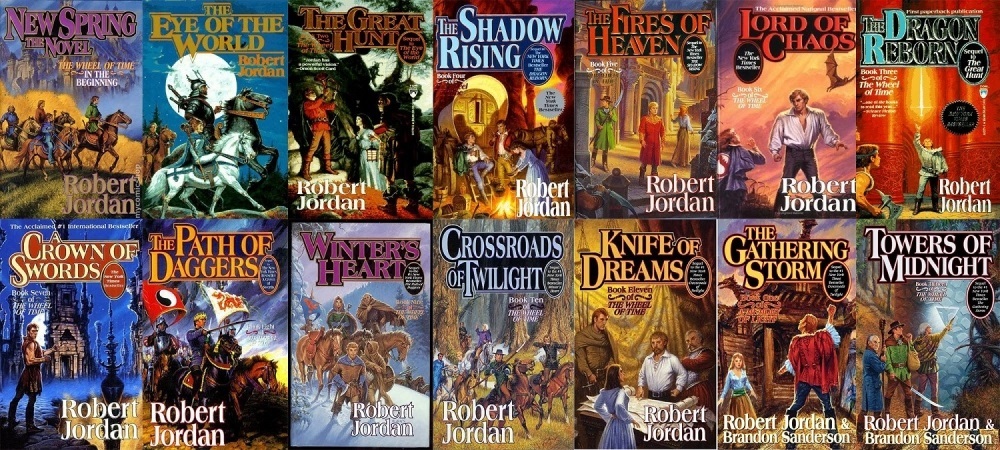
The Wheel of Time

The Wheel of Time by Robert Jordan: Jordan created one of the most detailed magical systems that I’ve ever read. The powers of the Aes Sedai are rich and varied, and they all originate from an elemental structure that feels both familiar and innovative. Especially in the early books, where the younger characters are learning how to access their power, the unfolding of this magic coincides very well with the physical exploration of Mr. Jordan’s story world. Also, it must be said that Jordan is adept at describing magical battles between wielders of massive power, something that trips up many other authors.

Read More Read More

Ancient Worlds: Remembering the Dead

Ancient Worlds: Remembering the Dead

tumblr_mfw9mqEDK01qhon40o1_500
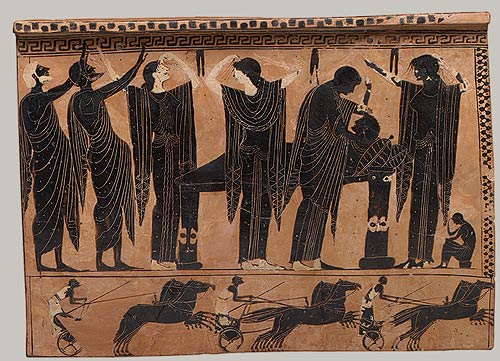
An ancient funeral. Weird thing #1: they would hire professional mourners, in case any of the deceased’s family members weren’t sufficiently upset for the required moaning, wailing, tearing of hair and gnashing of teeth.

Maybe it’s just where I live, but this seems like the perfect time of year to celebrate a holiday dedicated to spooky things. The days are short and cold, the trees are almost bare, and the nights are long and dark. And cold.

Did I mention I live in Wisconsin?

From here, it’s a slide into six months of winter and we all turn into Starks, wandering around looking darkly at the sky and muttering, “Winter is Coming.” So to us, it seems like this is the almost inevitable time to celebrate the memory of the dead. The popularity of Halloween has led many of us to see this as a natural and widespread association.

It may strike us as surprising then that this association is nowhere near universal. The origins of our Halloween are murky at best and probably syncretic, tying together British Isles traditions with Catholic veneration of the saints.

So when did the Greeks and Romans celebrate their dead?

Read More Read More