Caught Between Rebels and the Empire’s Blackest Magic: Beyond the Veil: The Revised and Expanded Author’s Cut by Janet Morris
 I continue with my review of the 5-star, Author’s Cut editions of Janet Morris’s classic of Homeric Heroic Fantasy, the Beyond Sanctuary Trilogy, of which Beyond the Veil is the second book. Once again, she does not disappoint in this stirring novel of political and religious intrigue, dark magic, gods and men, witches and mages, and the price of love and war.
This is a pivotal book in the trilogy, where foreshadowing and story threads begin to weave in and out to form a tapestry, telling a tale of friends who become foes, enemies who become allies, and what fate lies in store for certain demigods and mortals.
Now, after the battle to win Wizardwall that took place in book one, Beyond Sanctuary, Tempus, Niko, and the Sacred Band are caught between the local rebels and the empire of Mygdonia’s blackest magic. Once again, “War is coming, sending ahead its customary harbingers: fear and falsity and fools.”
It begins with the murder of a courier on his way to meet with Tempus, and the arrival of a young woman named Kama, of the 3rd Commandoes, (a unit of special rangers originally formed by Tempus) who seeks audience with Tempus, who is also known as Riddler. Her mission is to take 11-year old Shamshi, the young wizard-boy, back home to Mygdonia.
Shamshi, once a pawn in the game played by the late sorcerer Datan in the previous novel, is still under the spell of Roxane the witch, but is now being held as a guest-hostage by Tempus and the Sacred Band. Though he may be a child in the eyes of men, Shamshi is already plotting against Tempus and Niko.

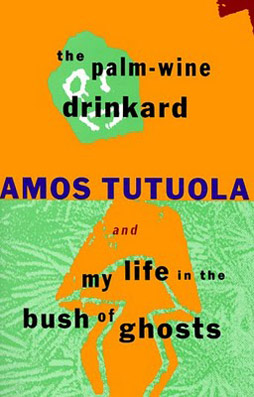 Amos Tutuola was born in Nigeria in 1920 to a Christian family. With six years of formal schooling, he served as a coppersmith with the Lagos-based arm of the Royal Air Force in World War Two, then worked at a number of of odd jobs. As he tells it, a government magazine he happened to read, with “very lovely portraits of the gods,” advertised books based on Yoruba legends. Tutuola remembered being praised as a storyteller in school and decided there was no reason he shouldn’t turn his hand to writing similar books. So he did. He completed his first book, The Palm-Wine Drinkard, in only a few days.