How to Properly Retreat

I don’t mean retreat from battle – I WOULD NEVER ADVOCATE FOR THAT! Fight until the end, my warrior friends!
I’m talking about a personal retreat to achieve certain goals, such as mastering a new weapon, learning a new fighting style or, for the cerebral among you, writing a book. Or a good chunk of one, anyway.
As I’m about to undertake a writing retreat myself, and have done quite a few successful ones in the past, I’ll focus on wordsmithing. But you may decide to apply some tricks to other types of retreats, as well.
1. Choose your Location
Can you achieve this at home? Or will there be a thousand interruptions? I’m an awesome procrasti-cleaner and procrasti-cooker, so I find home dangerous. I’m trying it this weekend, but usually I head to a place made for retreats: a convent. (A silent retreat where I don’t have to attend religious activities, as evidenced by the fact that I’ve not spontaneously combusted.) Wherever you go, make sure you have headspace and time. Make sure you’ll have a writing space all your own, and make sure that distractions are at a minimum (convents rarely have TVs or wi-fi. I’m weak-willed and know it.) Find your perfect spot.







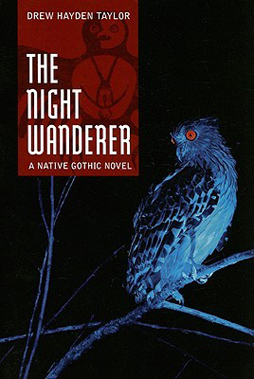 In 2007 Annick Press published a Young Adult tale called The Night Wanderer: A Native Gothic Novel by Drew Hayden Taylor, a veteran playwright, journalist, and essayist (as well as stand-up comic, TV writer, and documentary film-maker). The book follows a mysterious stranger who returns from Europe to the fictional Anishinabe (or Ojibway) Otter Lake Reserve in what is now Ontario, and a teenage girl whose life he ends up affecting. Taylor mentions in an afterword that the story began existence as a play which never quite satisfied him, until fifteen years later, while working with Annick Press on another project, he rewrote it as a prose novel. It’s since been adapted by Alison Kooistra into a graphic novel with art by Mike Wyatt.