In the Wake Of Sister Blue: Chapter Thirteen

In the Wake Of Sister Blue: Chapter Thirteen

In The Wake of Sister Blue Mark Rigney-medium

Linked below, you’ll find the thirteenth installment of a brand-new serialized novel, In the Wake Of Sister Blue. Urnua lives to see the secrets of the armory unveiled, Mother Coal instigates a disturbing extrication, and Maer escapes the Middle Isle. Chapter Fourteen will follow in two weeks’ time, so stay tuned –– and for those who fear I’m writing a doorstop, be reassured. This will be Book One of a pair (but no, not an ongoing, endless cycle), and the Great Divide between the two will be reached in Chapter Fifteen.

A number of you will already be familiar with my Tales Of Gemen (“The Trade,” “The Find,” and “The Keystone“), and if you enjoyed those titles (or perhaps my unexpectedly popular D&D-related post, “Youth In a Box,”) I think you’ll also find much to like in this latest venture. Oh, and if you’re only now discovering this portal, may I suggest you begin at the beginning? The Spur awaits…

Read the first installment of In the Wake Of Sister Blue here.

Read the thirteenth and latest installment of In the Wake Of Sister Blue here.
Read More Read More

Future Treasures: The Nameless City by Faith Erin Hicks

Future Treasures: The Nameless City by Faith Erin Hicks

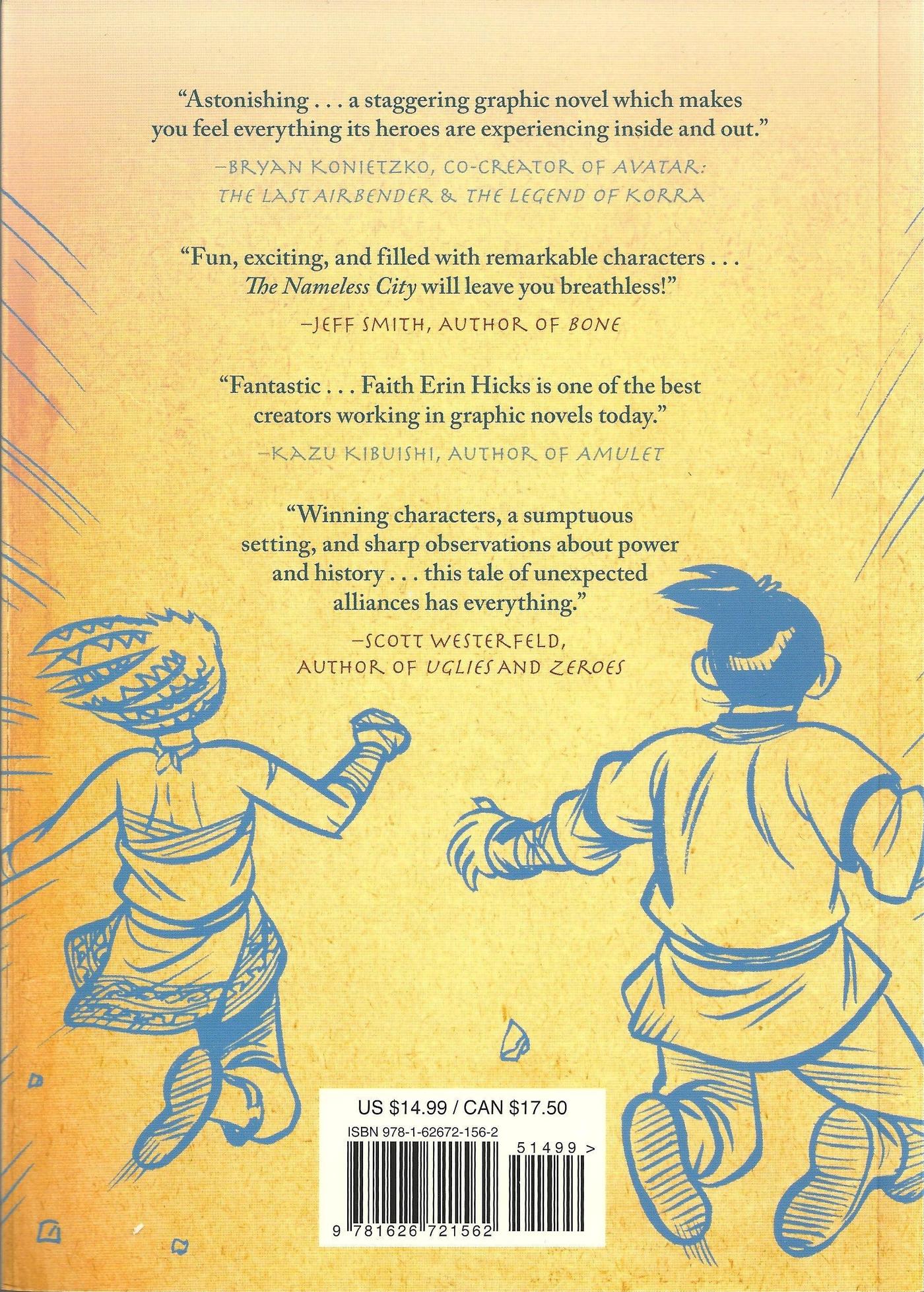
The Nameless City-small The Nameless City-back--small

Faith Erin Hicks has had a pretty enviable career in comics, as a writer for Lumberjanes, Buffy: The High School Years and The Last of Us: American Dreams, and as an artist for Nothing Can Possibly Go Wrong, and Brain Camp. On her own she’s created Friends with Boys, Zombies Calling!, and the Eisner-Award winning The Adventures of Superhero Girl.

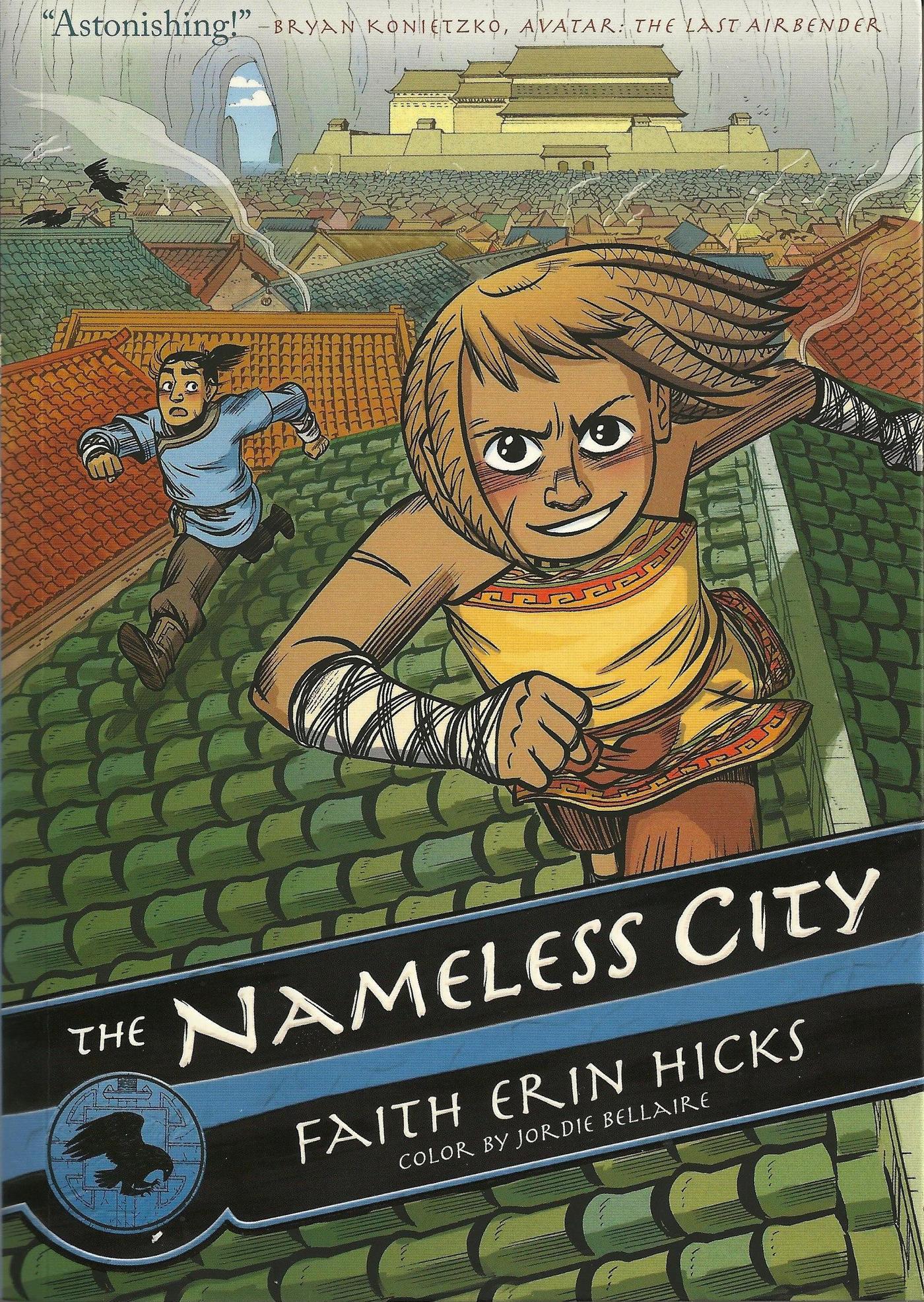
Her latest, The Nameless City, has the look and feel of epic fantasy. Built on an ancient mountain pass, cut through sheer rock by some long-lost technology, the Nameless City has been conquered so many times that its long-suffering inhabitants — a melting pot of an unknown number of previous civilizations — can’t even agree on what to call it. Thirteen year-old Kaidu, the privileged son of a tribal leader, comes to the city to meet his father, a general with the ruling Dao army, for the first time. General Andren is a kind man, but too busy to spend more than a few minutes a day with a son he’s never known.

Disappointed and lonely, Kaidu sneaks out of the protective enclave of the Palace each day to wander the city. There he meets Rat, a starving street urchin who steals his most precious possession: the ancient knife his father gave to him when they first met. Lost and humiliated, Kaidu chases Rat through the streets and across the rooftops of the city until he tackles Rat, retrieving his precious knife.

Read More Read More

The Refusal To Sprawl: Emily St. John Mandel’s Station Eleven

The Refusal To Sprawl: Emily St. John Mandel’s Station Eleven

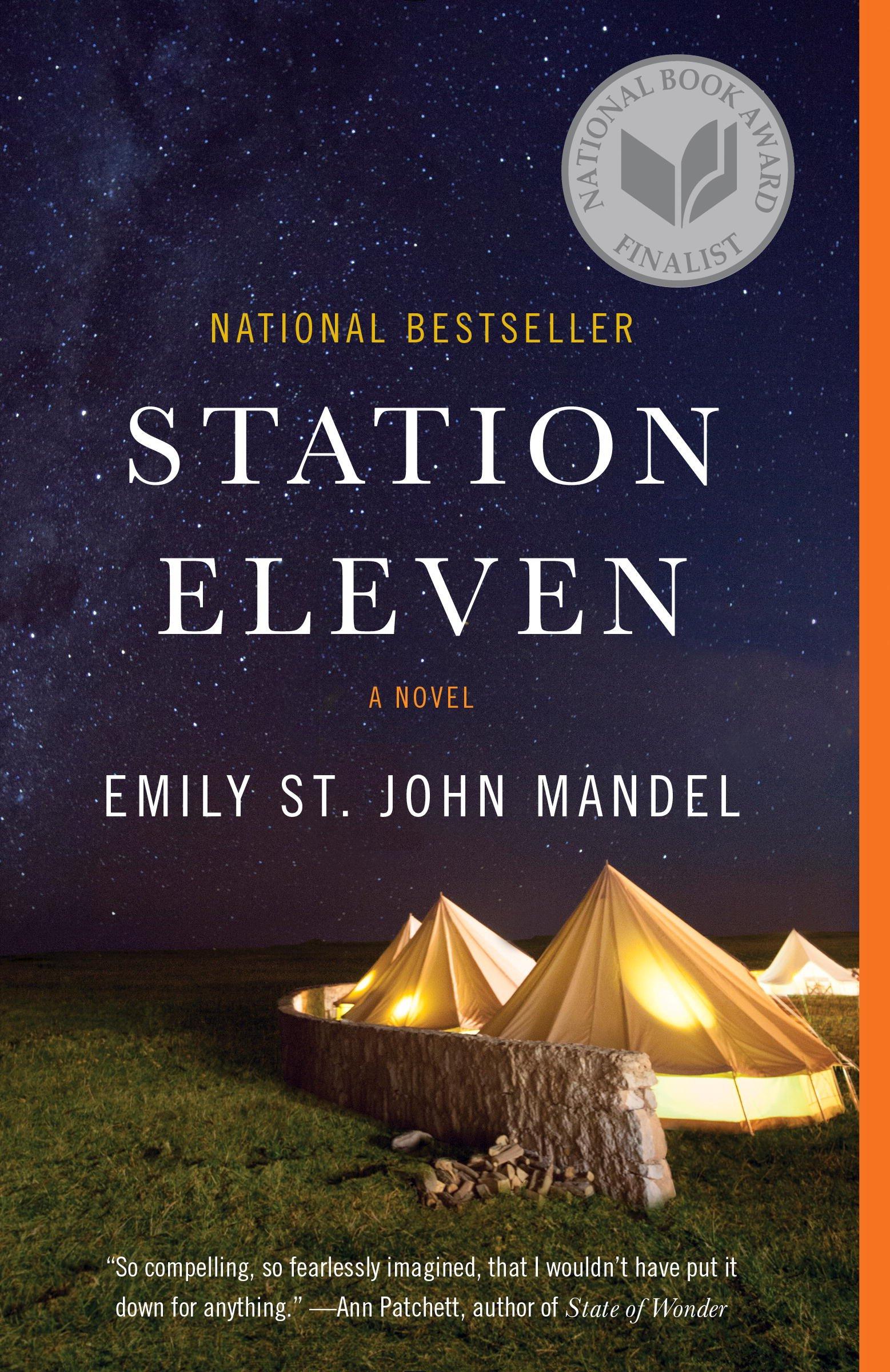
Station Eleven-smallTo peruse the book jacket of Station Eleven, one would think that this novel has a traditional main character (Kirsten). This, like the utterly misleading picture on the front –– the yellow tents and curving wall never crop up, so far as I can tell –– is a lie.

Station Eleven is akin in many ways to A Song Of Ice And Fire in that it positions a dozen main characters and asks us to follow them all, sometimes for moments, sometimes for chapters, in what amounts to a kind of prose chorale. The effort is largely successful, but it also suggests a grander canvas, one that Mandel, who surely thinks of herself as a writer of literary work, has no intention of pursuing.

Contrast with Mr. Martin: when he sets his dozen, then fifty, characters in motion, he follows every one, rabbit hole after rabbit hole. This is not to say that either approach is more valid than the other, but it’s telling; the one method begets only a single book, the other a series or even a cycle.

Once again, I find myself puzzled by the (apparently necessary) differences between genre and literary publishing tropes. I honestly don’t think Mandel even considered expanding her storylines, or following her characters farther afield. Expansion and long-form digressions are all but expected in fantasy and science fiction, and the short novel (say, Flowers For Algernon) is a rare bird these days, and getting rarer.

But in nominally literary work? One book, and you’re out. Covers closed, shelve the title. Move along, people. Nothing more to see here.

Read More Read More

The Public Life of Sherlock Holmes: More Playing Sherlock Holmes – 221B Baker Street

The Public Life of Sherlock Holmes: More Playing Sherlock Holmes – 221B Baker Street

221B_BoxLast week, I looked at the reissued Sherlock Holmes: Consulting Detective (SHCD), originally released in 1981. That game was undoubtedly influenced by 221B Baker Street: The Master Detective Game (221B), which had come out a few years earlier in 1975.

In 221B, two to six players take on the role of Sherlock Holmes, though there’s a reference in the rulebook to being “Watsons.” It makes no difference, but I’m gonna go with being the world’s first private consulting detective, myself.

The game comes with 20 Case cards, generic, colored plastic player pieces, Scotland Yard and Skeleton Key “cards,” a solution checklist pad and a slim booklet with all the rules, clues and case solutions.

Unlike SHCD, which included a map, 221B uses a board. Players start and finish at 221B Baker Street, moving to various locations on the board, such as the Apothecary, Hotel, Museum, Tobacconist, etc. Each location is assigned a number in each case. When the player moves to the location, they look up the corresponding number in the clue section of the rulebook. The clue, such as “Earl Longworth has constant headaches” is recorded on the solution checklist – kept secret from other players.

Read More Read More

Things Your Writing Teacher Never Told You: When the Form Is the Story

Things Your Writing Teacher Never Told You: When the Form Is the Story

Writing Team

(This article is a follow up to my blog post “Story In Its Many Forms“)

In a previous blog (linked above), I talked about my Exploring Fantasy Genre Writing class and how they’re required to try their hands at forms beyond the basic short story: including poetry, blues songs, plays or radio plays, comic books, and mock journalism (any of the print or broadcast forms). For other weeks, they can choose yet a different form, but they can’t work in the exact same form twice.

They adapt to some forms fairly easily, because they see the parallels and similarities to the form they’re most comfortable with. And though different parallels and similarities exist between any two forms, they just can’t see them sometimes.

Read More Read More

New Treasures: The Grimm Future, edited by Erin Underwood

New Treasures: The Grimm Future, edited by Erin Underwood

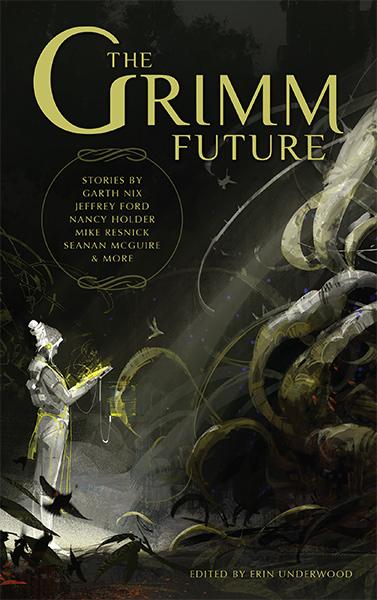
The Grimm Future-smallNESFA Press is one of my favorite small publishers. They’ve done some of the most essential collections of the past few decades, including From These Ashes: The Complete Short SF of Fredric Brown, the massive six-volume Collected Stories of Roger Zelazny, the two-volume Complete Science Fiction of William Tenn, the magnificent Major Ingredients: The Selected Short Stories of Eric Frank Russell, Transfinite: The Essential A. E. Van Vogt, and dozens more. They’ve been relatively quiet recently (except for releasing a new volume in The Collected Short Works of Poul Anderson every year or so, which admittedly is enough to keep anyone busy), and I admit that I was growing concerned that the once tireless NESFA machine was perhaps not as tireless as most of us thought.

So I was very pleased to see the release of The Grimm Future last month, an anthology collecting reimagined Grimm fairy tales by Garth Nix, Max Gladstone, Carlos Hernandez, Jeffrey Ford, Peadar Ó Guillín, John Langan, Seanan McGuire, and many others.

Blending fresh new science fiction with a futuristic dash of magic, The Grimm Future is a unique anthology of reimagined Grimm fairy tales from some of today’s most exciting authors — along with the original stories that inspired them. The Grimm Future examines our humanity and what that term might come to mean through the eyes of future generations as society advances into an age when technology consumes nearly every aspect of our lives or has ultimately changed life as we know it. How might these timeless stories evolve? Given the relentless onrush of technology, there is even greater need for fairy tales and Grimm magic in our future. Read on!

All the stories are new.

Read More Read More

Clarkesworld 114 Now Available

Clarkesworld 114 Now Available

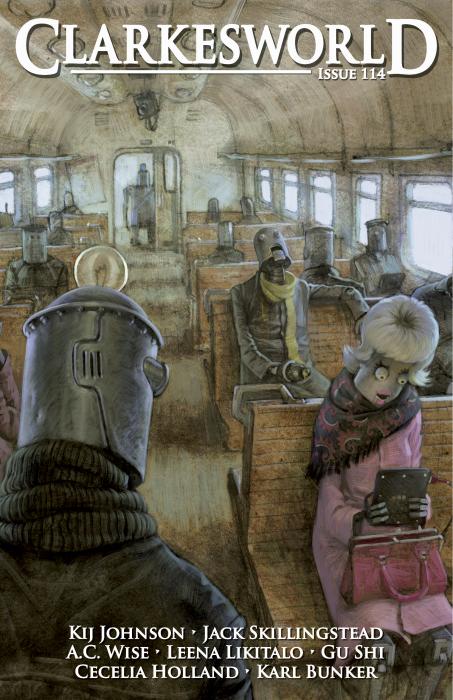
Clarkesworld 114-smallClarkesworld is one of the most-reviewed genre magazines out there. So if you’re too busy to read every issue, there are plenty of places that will point you towards the stories that might appeal to you most.

Take issue #114 for example. Just about everything in the TOC looks interesting, but I only have time for one story tonight. Enter Charles Payseur at Quick Sip Reviews, who’s done an admirable job of profiling the entire issue. Sixty seconds is all it takes to determine that the story for me is Leena Likitalo’s “The Governess with a Mechanical Womb.”

This is a rather bleak story about humans on the edge of extinction and a young woman and her sister facing it under the care of a governess, under the care of something that used to be human but… isn’t quite any longer. The story excels at building an isolated and strange atmosphere, which seems to be a theme in this month’s issue, here rendered in a post-apocalypse where aliens have come to Earth and destroyed everything for reasons unknown, then started guarding [people] from themselves. It’s an unsettling story, and one with a heavy sense of mystery… It’s tense and it’s effectively done, a story about sisters and about guardians and about control and love. It is incredibly dark, as well, and I will admit that the ending was rather difficult, a mix of love and change that left me a bit unsure what to think. But it’s a neat piece with a great weirdness to it, and it’s worth checking out.

Of course, your mileage will vary. Check out the complete review at Quick Sip Reviews here.

Read More Read More

Profound Enough to Hurt: Amal El-Mohtar on Ken Liu’s The Paper Menagerie and Other Stories

Profound Enough to Hurt: Amal El-Mohtar on Ken Liu’s The Paper Menagerie and Other Stories

The Paper Menagerie and Other Stories-smallI read a lot of reviews (no, seriously. A lot. Of reviews). But, like everyone else, I have favorite reviewers — those who’ve guided me towards books I might not have selected on my own, or whose taste aligns splendidly well with (or is a heckuva lot better than) mine.

These days one of my go-to reviewers is Amal El-Mohtar, occasional Black Gate blogger and author — whose own short story “Madeleine” is a 2016 Nebula finalist for Best Short Story. Earlier this week Amal reviewed Ken Liu’s new short story collection The Paper Menagerie for NPR… and had more to say about it on her website.

I have never been so moved by a collection of short fiction. I was at times afraid to read more. Every single story struck chords in me profound enough to hurt, whether about the love and cruelty of families; the melancholy of thermodynamics; the vicious unfairness of history and the humbling grace with which people endure its weight. Stories so often take us out of ourselves; Liu’s stories went deep into my marrow, laying bare painful truths, meticulously slicing through the layers of pearl to find the grain of sand at its heart.

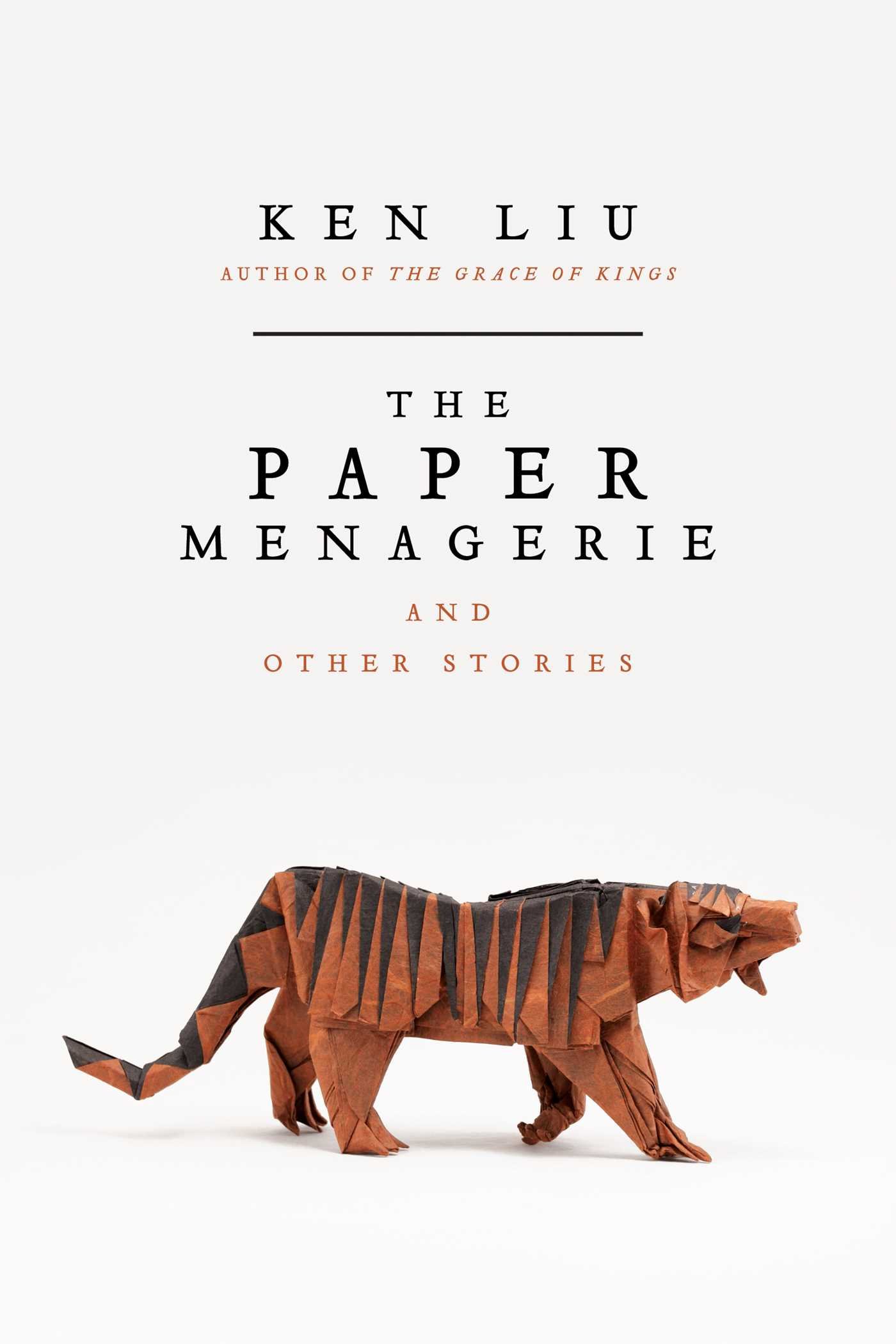
The Paper Menagerie and Other Stories was published by Saga Press on March 8, 2016. It is 464 pages, priced at $24.99 in hardcover and $7.99 for the digital version. That origami tiger on the cover was designed, folded and photographed by Quentin Trollip. We covered the complete contents here.

See all of our coverage of the best in new fantasy book here.

Vintage Treasures: The Silistra Quartet by Janet Morris

Vintage Treasures: The Silistra Quartet by Janet Morris

High Couch of Silistra-small The Golden Sword Janet Morris 1981-small

In the last few weeks I’ve touched on a few tales of modern writers who didn’t make it — or at least, fantasy series that never got off the ground, and died after one or two hardcover releases without even a paperback edition. To switch things up a bit, today I thought I’d look at one of the most successful fantasy debuts of all time, a series that became a huge international hit with its first release, launching the career of one of the most prolific fantasy writers of the late 20th Century: Janet Morris’ The Silistra Quartet.

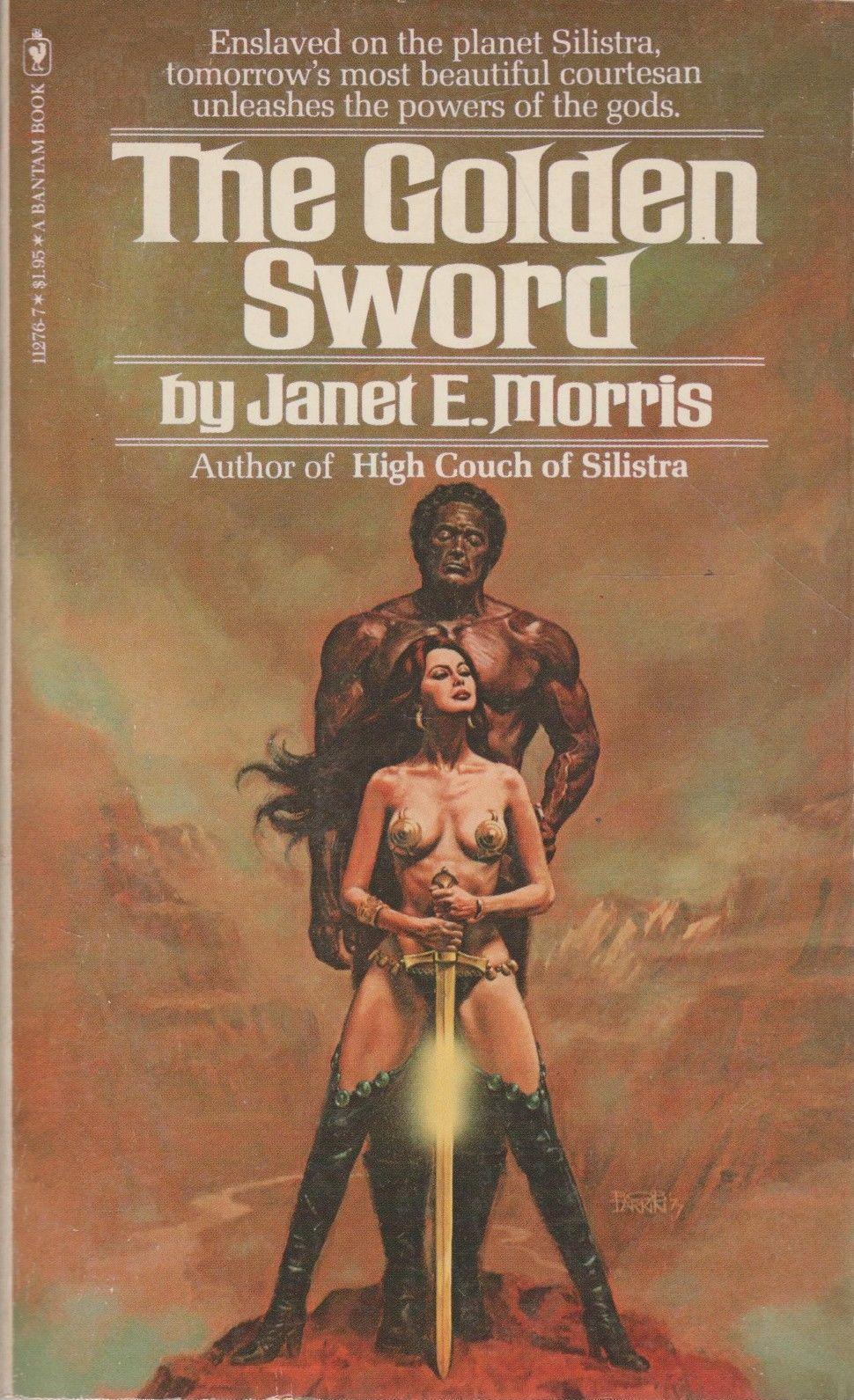
The Silistra Quartet began with Janet’s first novel, High Couch of Silistra, which appeared in paperback from Bantam Books in 1977 with a classic cover by Boris (above left). Although it was packaged as fantasy, High Couch was really science fiction, the far-future tale of the colony planet of Silistra, still recovering from an ancient war that left the planet scarred and much of the population infertile. With a dangerously low birth-rate, it’s not long before the human colonists of Silistra develop a new social order, with a hierarchy based on fertility and sexual prowess.

Read More Read More

Read A.M. Dellamonica’s “The Glass Galago” at Tor.com

Read A.M. Dellamonica’s “The Glass Galago” at Tor.com

The Glass Galago-smallI’ve been catching up on some of the online fiction at Tor.com recently. They’ve published some new great fantasy by Joe Abercrombie, Matt Wallace, David Nickle, Jennifer Fallon, Melissa Marr, Delia Sherman, and many others.

Child of a Hidden Sea, the first novel in A. M. Dellamonica’s trilogy The Hidden Sea Tales, was published in hardcover last June, and we covered it and its sequel, A Daughter of No Nation, in November. But that doesn’t mean I’ve had time to read it… and I probably won’t for many months. So I was delighted to see her 6,900-word story “The Glass Galago” available free at Tor.com. See? There are ways to keep tabs on all the hot new fantasy authors, if you look hard enough.

A.M. Dellamonica is at it again! The thrilling adventures of Gale Feliachild and Captain Parrish continue in a series of prequel stories that offers to take us deeper into the fascinating world of Stormwrack.

When Gale and the crew of the Nightjar are called back to the fleet to handle an issue involving a law regulating new patents and a missing magical inscription, they soon find themselves embroiled in a plot that is could potentially pit island against island. Now, they must discover the mystery of the glass galago before time runs out for both it and the fleet.

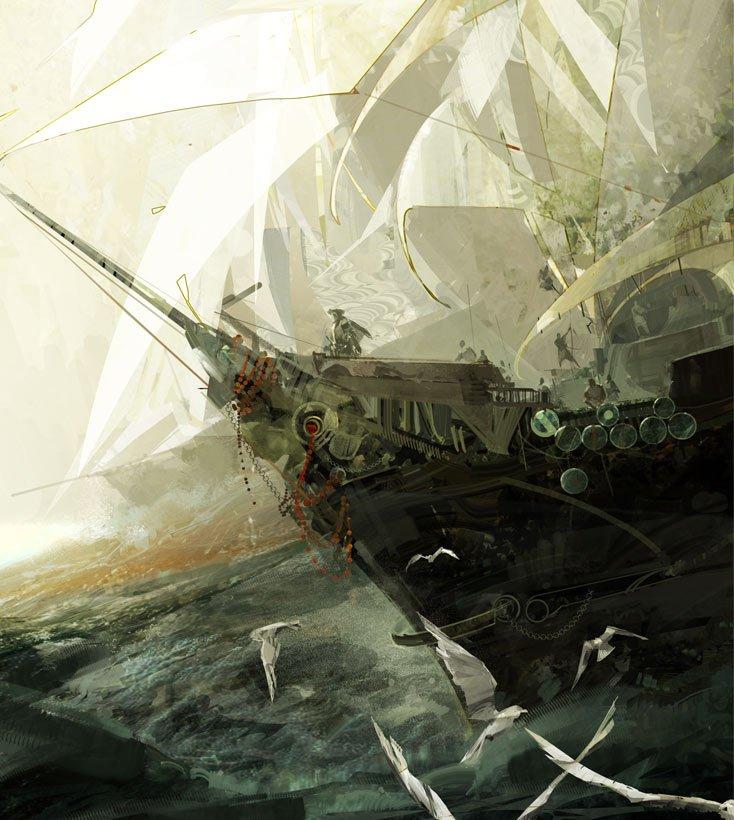
“The Glass Galago” was posted at Tor.com on Jan 26, and tagged as “Epic Fantasy.” It was edited by Stacy Hill, and illustrated by Richard Anderson. It’s available here.

We last covered Tor.com with Jennifer Fallon’s “First Kill.” For more free fiction, see all of our online magazine coverage here.