The Historian, or An Excuse Not to Read Dracula, the Un-Dead
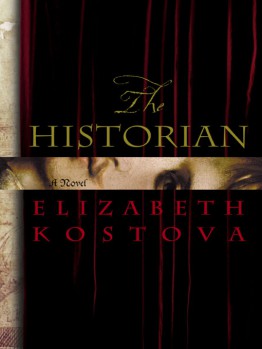 I don’t have a dislike for the vampire in general. I’ve repeatedly reminded myself about this even as I cringe at the saturation in our culture of mediocre work based on supernatural bloodsuckers. (Do I really have to name the book and movie series at the center of this creative blood drain? Of course I don’t.) Vampires are everywhere today, and this visibility has reduced their effectiveness for me, no matter what “new” spin the artists claim they’re putting on the legend. Exceptions are out there—for example the action-packed novels of certain contributor to Black Gate—but today I actively avoid horror and dark fantasy and especially parodies using vampires. I want more werewolves and phantasms and cosmic weirdness. Specifically werewolves. I love werewolves.
I wasn’t always this apathetic about vampires. I had a great interest in vampire legendry and literature when I was in college, right at the time that Bram Stoker’s Dracula was an enormous hit in theaters. I was always focused on Dracula, and not as interested in other vampires. This is still true today; while I shrug at most vampire offerings, I’ll still pick up something about the King of the Undead. Perhaps it’s the history major in me, or my love of the Victorian Gothic, that pulls me back to the vampiric Transylvanian noble. Literary Dracula excursions I’ve taken over the past few years include Fred Saberhagen’s The Dracula Tape (an intriguing piece of literary criticism, but his heroic and misunderstood Dracula isn’t my flavor of garlic seasoning), the anthology Dracula in London (answering the question, “So what else was the Count doing in London Town when not desanguinizing Lucy and Mina?”), the history volume Dracula: Prince of Many Faces, and Kim Newman’s wonderful “Anno-Dracula” series. If you haven’t read these three novels and wonder if there’s anything out there that might make you feel a bit better about vampires in general, seek out the nearest used book service posthaste.
 We are proud to present a complete work of fiction from Black Gate 14: Alex Kreis’s “The Renunciation of the Crimes of Gharad the Undying.”
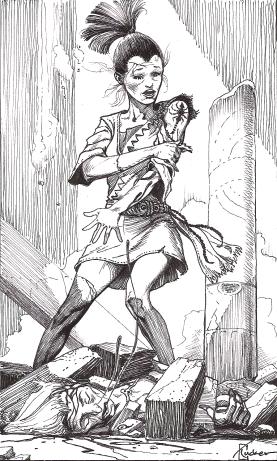 Naia was pinned under the rubble when the quake hit, trapped with the cruel sorcer, Cer Vassir. And then her nightmare truly began.
 If the constant litany of human suffering and human stupidity that is the 24 hour news cycle has got you down (gee, why would it?) then have a look at
  Though I am an unapologetic fan of the Harry Potter books and movies, not to mention the upcoming
 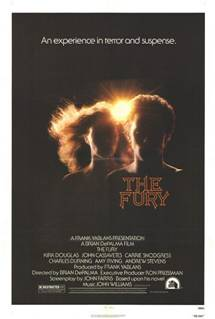 The story attracted the attention of Warner Brothers, who optioned the rights, but alas, the movie version descended into development hell where it continues to languish. But from that point on, tampering with a little practical magic became a bit of a hobby for me.
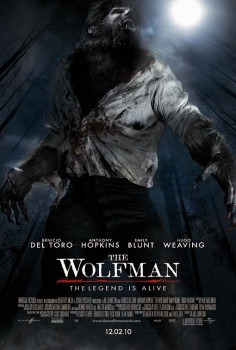 The Wolfman (2010)
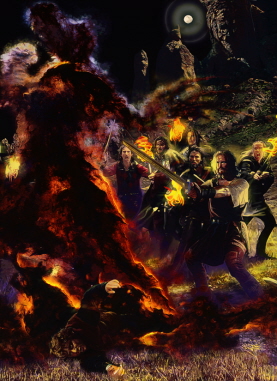 A band of desperate men pursue the slave traders who stole their families… across cold barrows where a dread thing sleeps.
 I work for a small software company in Champaign, Illinois. I live in St. Charles, about three hours away. I spend a lot of time in the car. I’ve learned to love audio books.