Sour Bill: The Issue at Hand and More Issues at Hand by William Atheling, Jr.
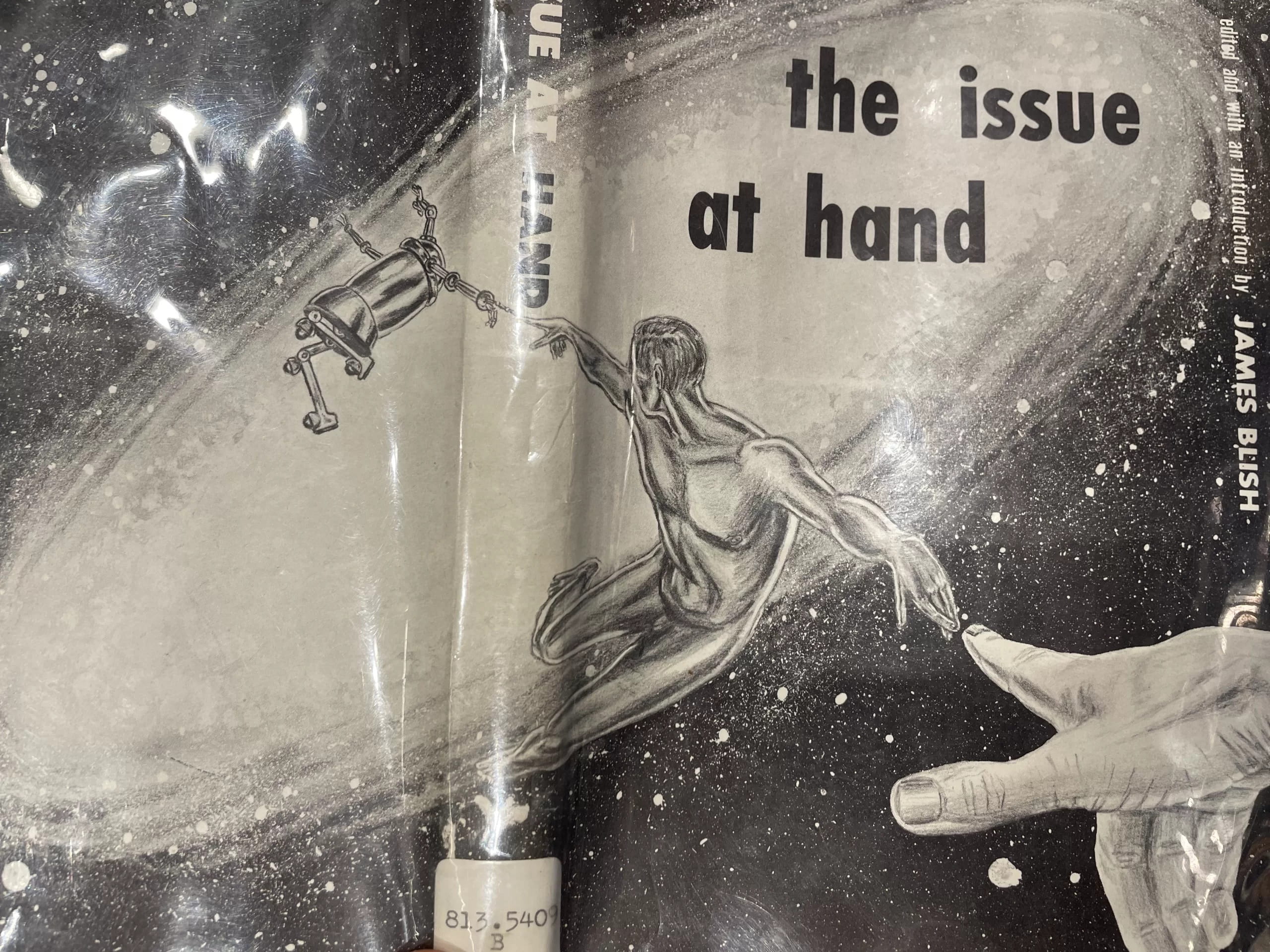
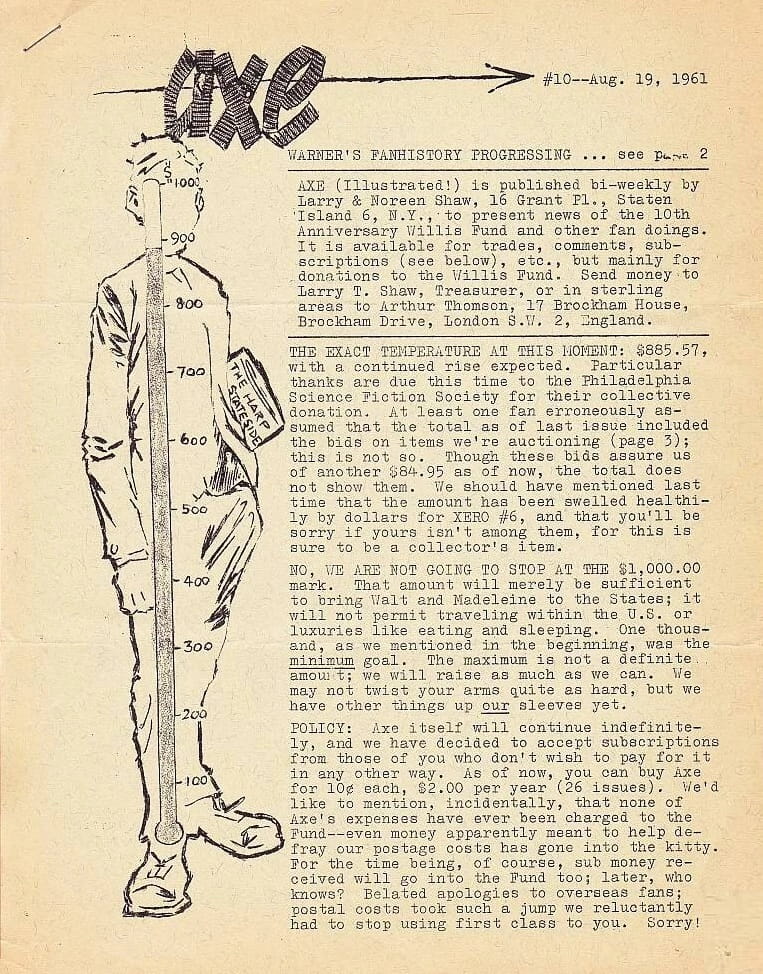
In 1952, a science fiction fanzine, Sky Hook, began publishing a series of critical essays by William Atheling, Jr. When its publisher, Redd Boggs, suspended publication, the science fiction writer James Blish publicly revealed that this was a pseudonym he had adopted. But a few years later, he revived “Atheling” for more criticism, published in another fanzine, Axe.
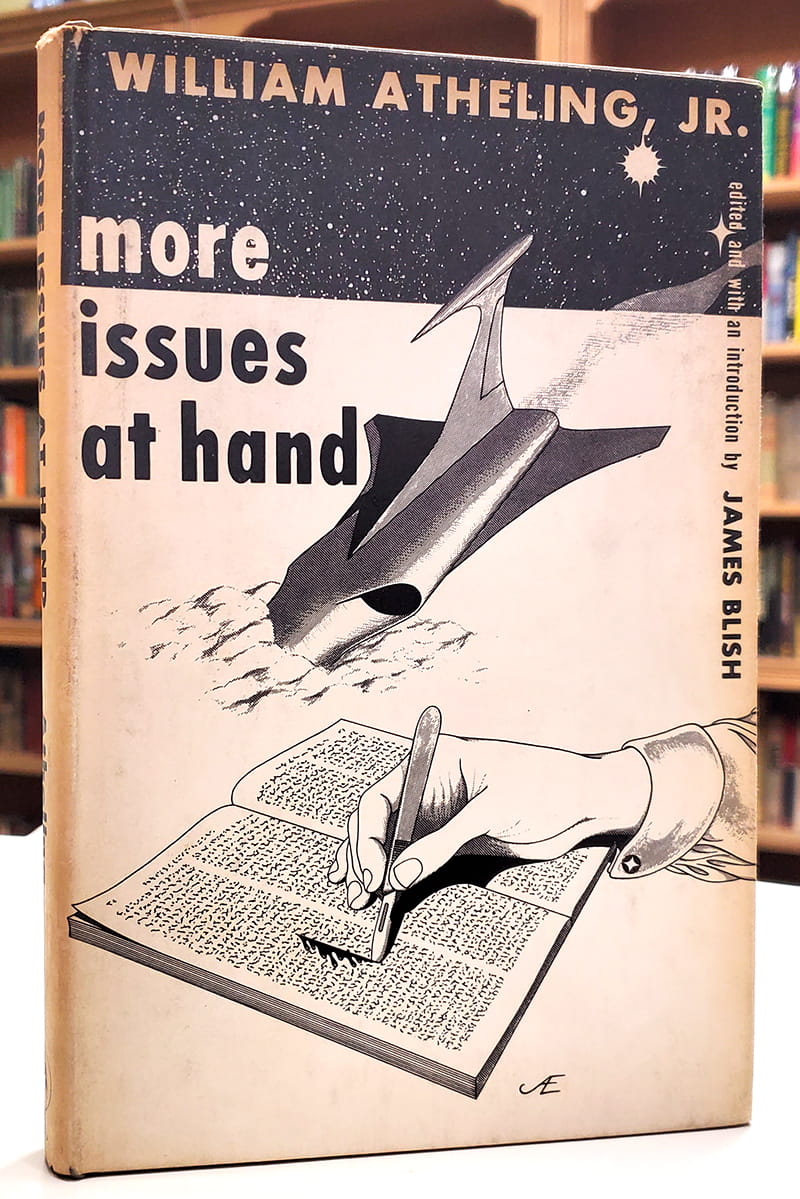
In 1964, Advent: Publishers collected his critical writings, including both fanzine articles and addresses given at science fiction conventions under his own name, as The Issue at Hand, credited to Atheling, “edited and with an introduction by James Blish,” though the book made no secret of the author’s identity. In 1970, a second collection appeared, More Issues at Hand.
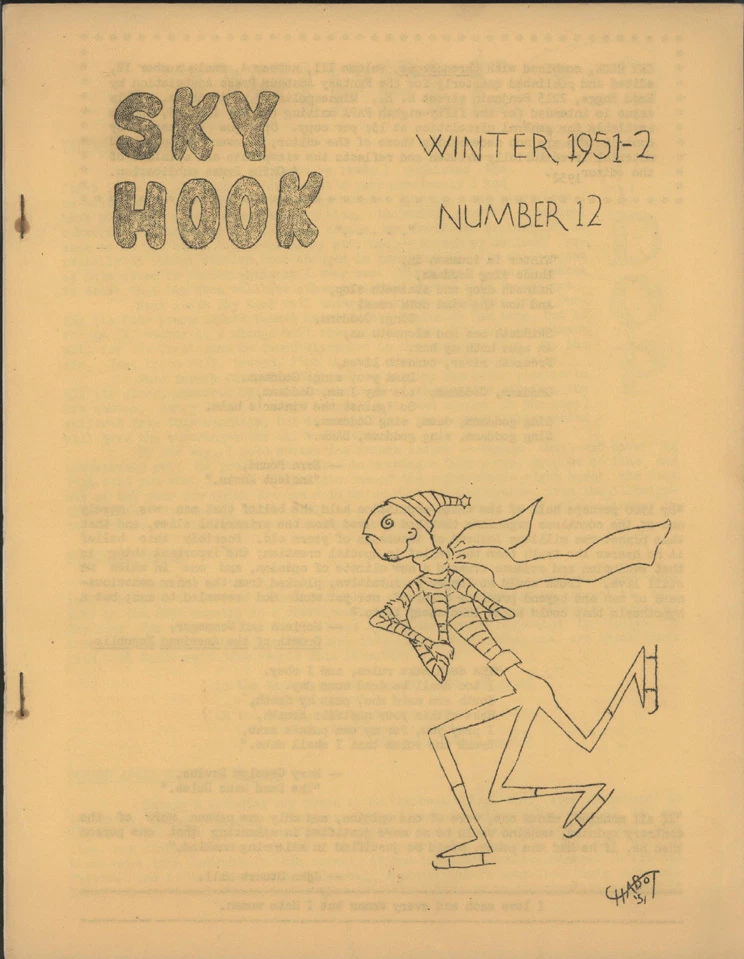
The original Atheling project had a distinctive method: reviewing science fiction magazines and commenting on their fictional content, good and bad. Hence the punning title of the first collection, which refers to the issues of various magazines as well as to the issues Atheling made of the need for improvement in the literary technique of the genre.
That need is still the theme of the second collection, which turns its attention to published books, reflecting the increasing dominance of novel-length fiction in the genre (a change that has only gone further since Atheling’s day). The health of science fiction as a whole is Blish’s real focus; the stories and authors he wrote about in the early essays were chosen less for their own merit or significance than as a gesture at scientific random sampling — though some of the authors must have felt personally targeted by the pointed criticism they received.
Blish’s pseudonym was a little literary joke: “William Atheling” was originally used as a pseudonym by the poet Ezra Pound for music reviews published in a literary magazine starting in 1917, though the reference was too obscure for most of Blish’s readers; he says that only two of them spotted it before he outed himself, one of them being Damon Knight, another of the early critical writers in the field.
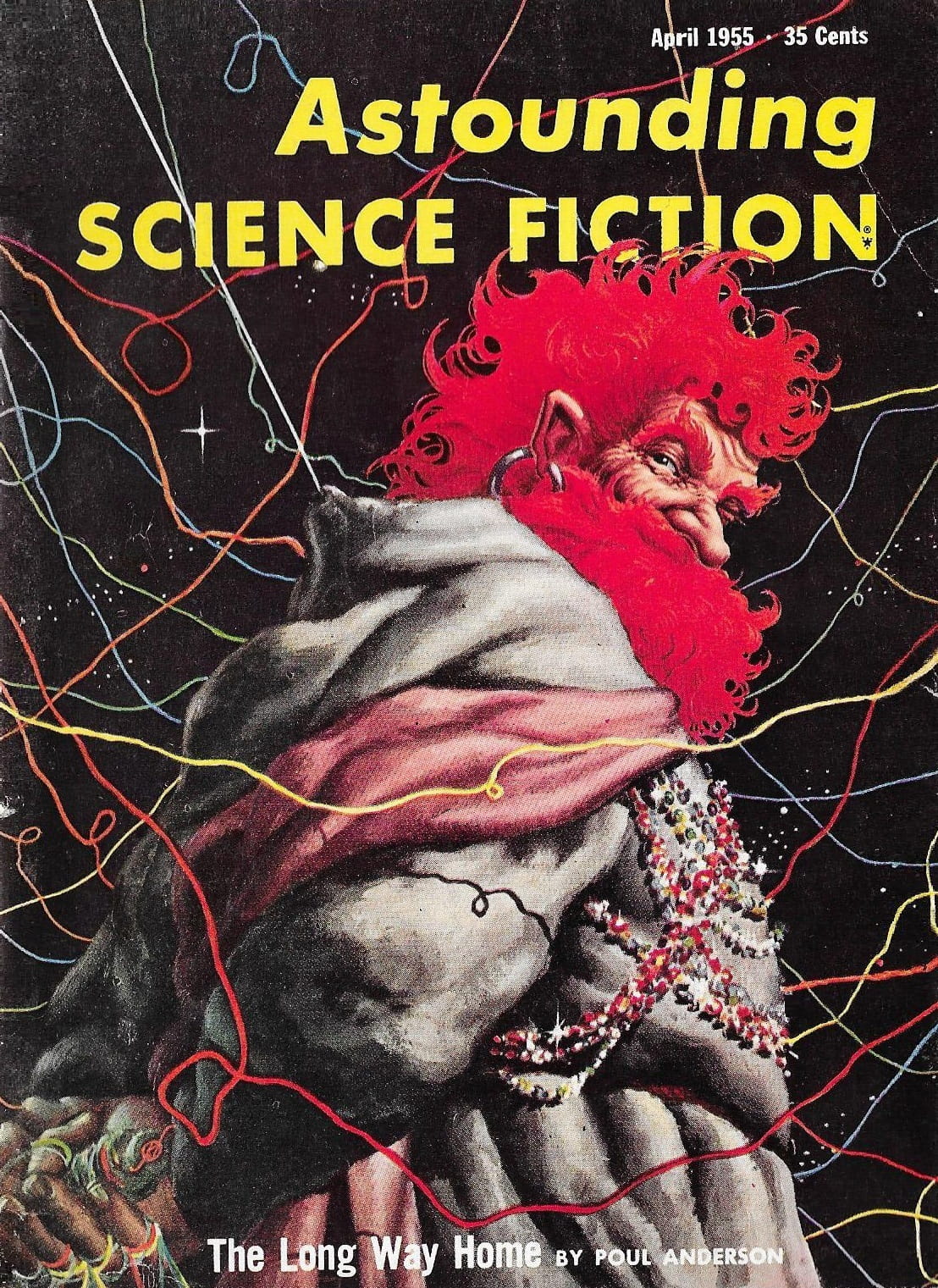
Those early essays are fairly catholic: They discuss Astounding Science Fiction, the leading magazine in the genre, but also less well known (and now less remembered) magazines such as Startling Stories and Science Fiction Quarterly. As a result, they sometimes discuss stories that, in Atheling’s view, are simply bad: Not just against his personal taste (he makes a point of praising a serial, Police Your Planet, as an example of literary naturalism, which he dislikes), but failing to meet objective standards of good narrative technique that, in his view, every competent professional ought to be able to meet.
He eventually works around to the conclusion that the fault is not so much in the writers, who sometimes are beginners at their trade, as in the editors who accept their work, and by doing so teach them that they don’t need to improve their techniques.
Much of the interest here, then, lies not in the stories discussed or (in some cases) even in the authors, but in what Atheling says are objective requirements of good writing. (Specifically, of good commercial fiction, but Atheling considers commercial fiction a valid topic for literary criticism.)
Many of these are negative: Atheling explicitly names among his principles that minute description of irrelevant actions (such as the physical details of smoking cigarettes) are not a valid form of realism and that “concrete is abstract” metaphors are characteristic of over-writing, and later on he objects to such things as repeated statements and as “said-bookism,” or the avoidance of the verb “to say” by using long series of synonyms. In contrast, he passes over Shirley Jackson in brief as “an original and a specialized fantasy writer, a born story-teller, and limited in her appeal.” In contrast, he devotes an entire chapter to one story by Arthur Zirul, a now forgotten writer in whom he sees no merit of any kind.
When he discusses writers such as Poul Anderson or Theodore Sturgeon, it’s often to talk about their less successful work — though sometimes I was surprised by what he puts in that category. In particular, he dismisses Sturgeon’s two Star Trek episodes as “among the poorest” and specifically attributes this to Sturgeon’s being forbidden to re-think characters invented by other writers.
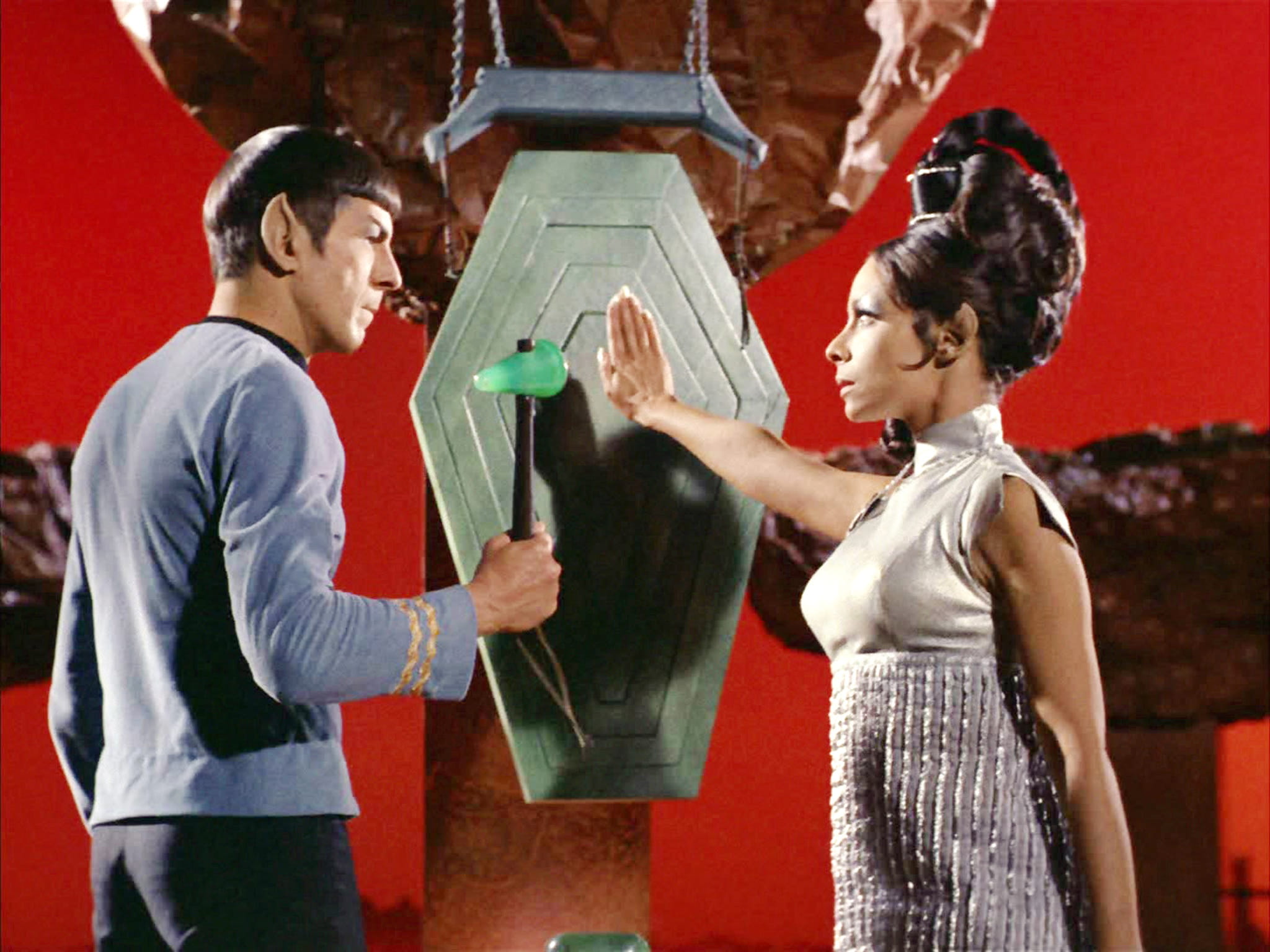
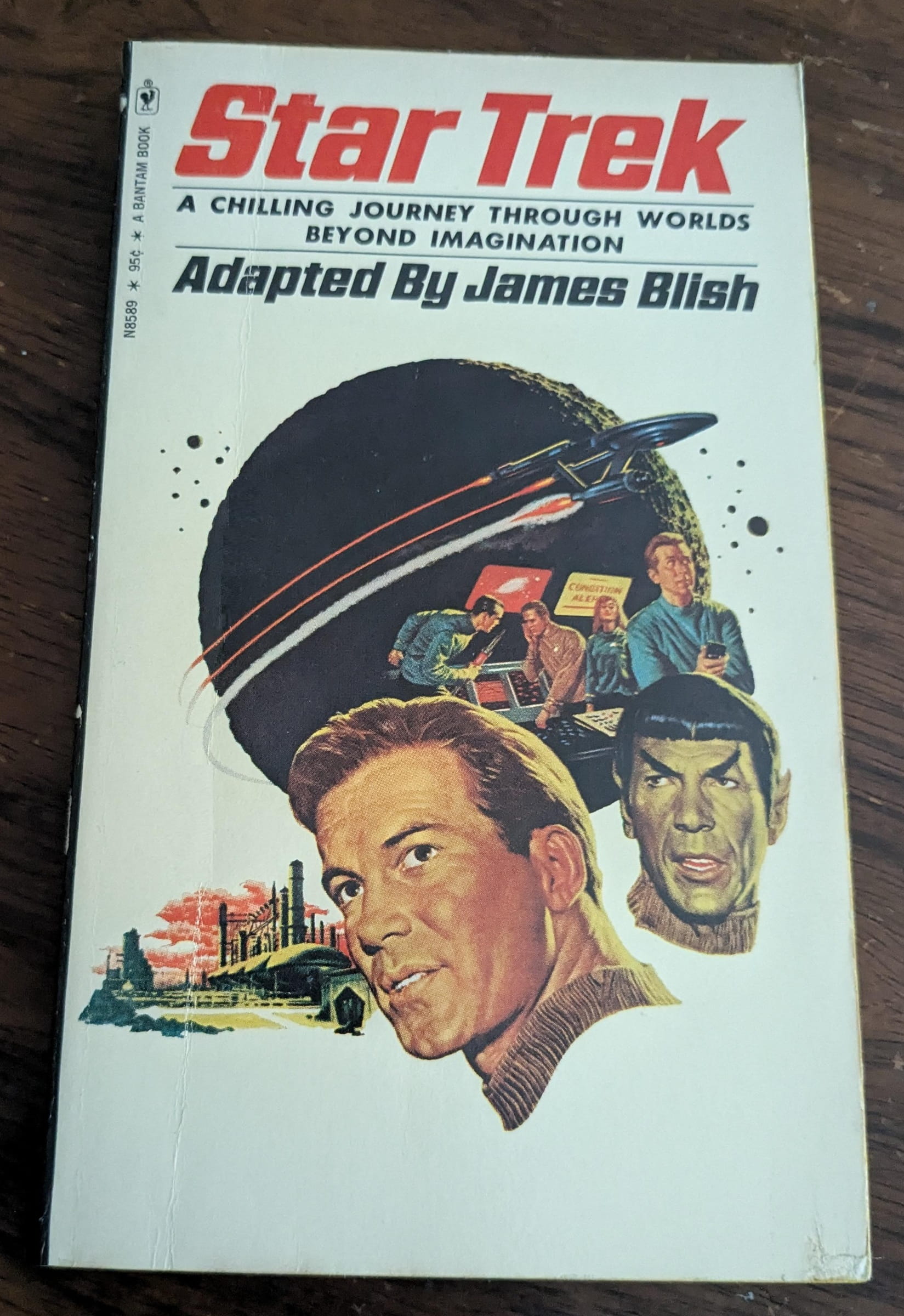
One of those episodes was “Amok Time,” which gave us our image of Vulcan as a planet, of Vulcan culture, and specifically of pon farr, Vulcan lapse into irrationality during a limited mating season, and thus indirectly the entire fanfiction genre of slash! (The comment might apply better to Blish’s own fictionalizations of Star Trek episodes.) Much of this critical writing seems designed to justify the nickname “Sour Bill” that Blish gave his critical persona.
It’s clear, in this discussion, that Atheling is writing about an earlier generation of science fiction fans, with tastes very different from those current in our time: “they actively distrust and dislike emotional content in stories, even in the rare instances where the author has it under perfect control.”
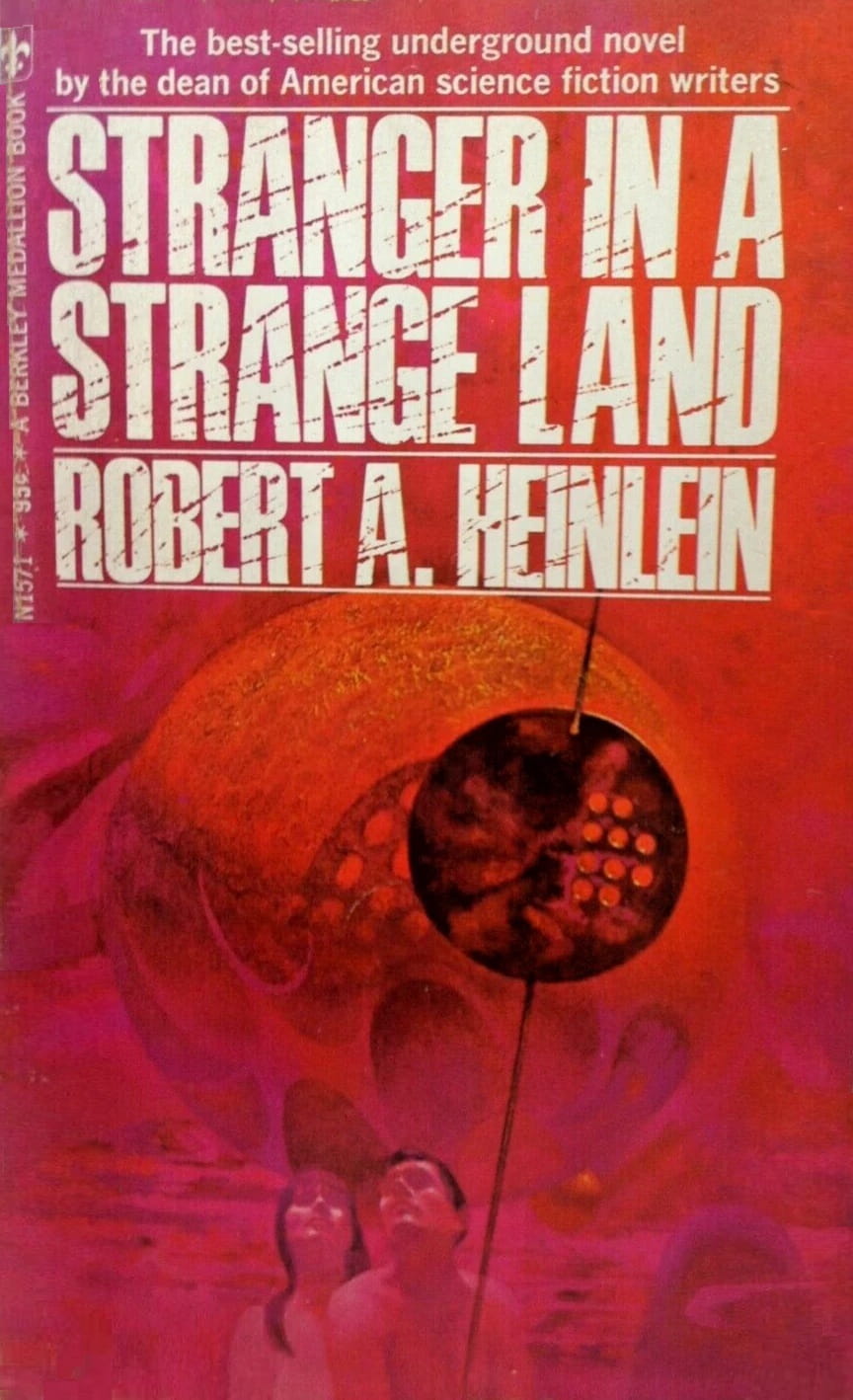
Over time, though, and especially in the second volume, Atheling increasingly turns away from his self-imposed focus to talk about books, authors, or movements. A notable early example is Stranger in a Strange Land, then one of the longest science fiction novels ever published (Heinlein’s even longer original draft has since been published).
He presents this as “another” after a chapter about religiously themed science fiction, but also notes Heinlein’s satiric intent (the “man from Mars” being a traditional viewpoint character for satire). But “the religious material is central,” he says. He notes, accurately, such features as the novel’s reverent attitude toward sex; its larger moral skepticism (though he doesn’t mention the influence of Aleister Crowley, with whom Heinlein was indirectly connected via Jack Parsons and L. Ron Hubbard — and who is specifically mentioned by name in Stranger); and the reliance on miracles that Heinlein himself called out as essential to the story: “levitation, crepitation, intermittent claudication, you name it… and besides, he’s awfully good in bed.” (That list is Blish being intentionally silly, as I found out when I looked up the second and third words.)
 |
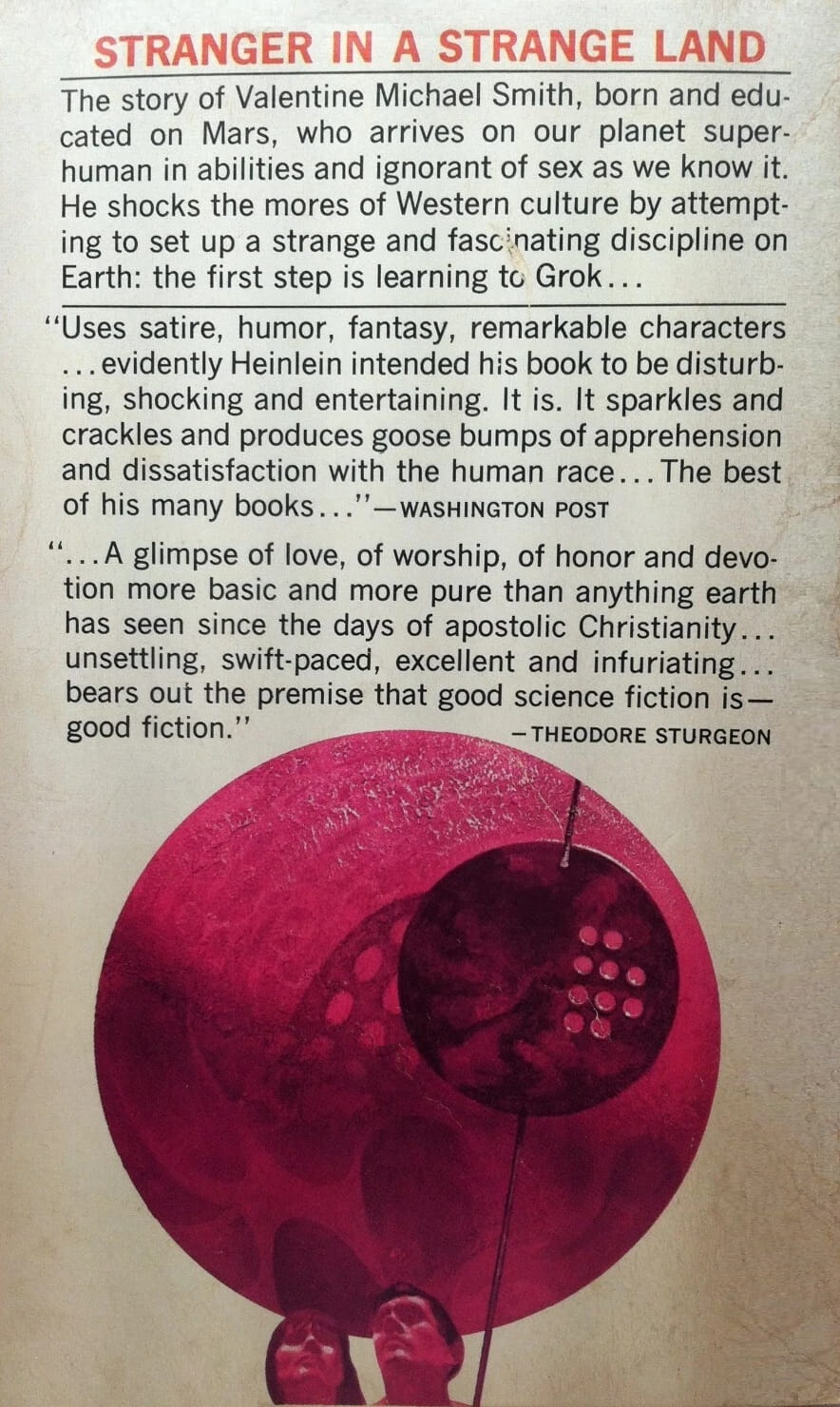 |
Stranger in a Strange Land (Berkley Medallion, March 1968). Cover by Paul Lehr
Almost as interesting was his final chapter, where he discusses the New Wave of the 1960s, commenting on British and American writers from Aldiss to Zelazny, and on Judith Merrill and Harlan Ellison as anthologists. He ends by saying that most of its characteristic writers had “quite outgrown the need for such a group” (in 1970, at the end of his survey) — which seems in much more distant retrospect to be fair (now that we’ve seen such successor revolutions as cyberpunk and new space opera, whose major writers have done much the same).
Much of the interest in these volumes is now historical: They show us a past era in science fiction, as it appeared from inside to an intelligent reader and commenter. I find them worth reading, also, for the way Atheling comes through as a personality, a science fictional curmudgeon somewhat like a miniature H.L. Mencken.
I could rather wish for a similarly cranky series of essays on present-day science fiction! As in the old joke about the curate’s egg (“Parts of it were very good”), Atheling’s proposed objective criteria of good writing strike me as uneven in quality — and they’re not the main attraction for me — but I have to sympathize with his belief in objective aesthetic principles independent of personal tastes, and his willingness to separate the two.
William H. Stoddard is a professional copy editor specializing in scholarly and scientific publications. As a secondary career, he has written more than two dozen books for Steve Jackson Games, starting in 2000 with GURPS Steampunk. He lives in Lawrence, Kansas with his wife, their cat (a ginger tabby), and a hundred shelf feet of books, including large amounts of science fiction, fantasy, and graphic novels.
“Sour Bill”, indeed, the authority who gifted us the indispensable critical term “Idiot plot”. But, like a good whiskey sour, the tartness of his offerings was an enticement and not a turn-off. I enjoyed both volumes of “Atheling” putting sf/f works in the dock. But I shall disagree that the New Wave was essentially over by 1970, as Fred Pohl’s “The Gold at the Starbow’s End”, a sentinel work of the Wave, did not appear until 1972 (which places it in my own “golden age”).
Not being familiar with most author’s writing styles, I would be interested in Blish’s critique of writing execution. “No need to elaborate on “said”” eems to be an almost universal writing rule. Are there unique execution rules for sci fi / fantasy?
Avoiding “As You Know” info-dumping is one of the classic ones.
Another would be “Call a rabbit a smeerp” (also attributed to Mr. Blish), where an unfamiliar name disguises a perfectly routine person/place/thing. A great rabbit (or smeerp) hole to fall into is the Turkey City Lexicon that SFFWA collated from the titular TC writing workshop: https://sfwa.org/2009/06/18/turkey-city-lexicon-a-primer-for-sf-workshops/
C.J. Cherryh, for example, has her hani in The Pride of Chanur drink a hot beverage called “kofi.” That’s not every really trying to hide it . . .
I greatly enjoyed all three collections of Blish/Atheling’s critical writings. (The Tale that Wags the God was the third.) His sourness was a plus!
I found Atheling’s review of “Get Out of My Sky”, a two-part serial in Astounding, very amusing. He speculated that the author must have been induced by the editor (John Campbell, of course) to introduce a Psi element. I guess he probably knew — as of course “Get Out of My Sky” is by James Blish.
(It’s potentially a great story, until a stupid Psi element is added which ruins things!)
So was it in this period that SFF authors started developing more self-consciously literary ambitions? That seems to be generally the reputation of the New Wave era, though of course you had folks like Lovecraft and Howard who certainly wanted to create literature, even in the early days of the field.
Blish himself showed considerable awareness of literary authors well before the New Wave, particularly of Joyce and Pound (from whom he borrowed his pseudonym for these books). Damon Knight is probably a similar case. Poul Anderson was well read in poetry and often borrowed his titles from the classics, as in “Journeys End” and “The Man Who Counts”; it’s also noteworthy that in one of his middle period novels Nicholas van Rijn offers a toast, “Long live freedom and damn the ideologies!” that is a quotation from one of Robinson Jeffers’s less well known poems.
What the New Wave borrowed was more specifically the techniques of naturalism and later of modernism. I would certainly call those “self-consciously literary” as you put it.
Great piece, William. One thing I’d say – In terms of somebody adopting a similar role today – is that Science Fiction is no longer the dominant cultural force in speculative fiction, having been largely supplanted by Fantasy (a reflection of our times, I suspect) so the context might be very different.