The Unfinished Monument: The Steranko History of Comics
Imagine Mount Rushmore with only one president on it. Picture a Washington Monument that’s only 185 feet tall instead of 555. How about a Statue of Liberty missing two arms and a head? No takers? I don’t blame you; there’s nothing more frustrating than a great beginning that remains incomplete.
Take The Steranko History of Comics, a work that was intended to fill six volumes. The first two came out in 1970 and 1972… and then, nothing. It’s been fifty-four years now and I don’t mind telling you, I’m starting to lose hope.
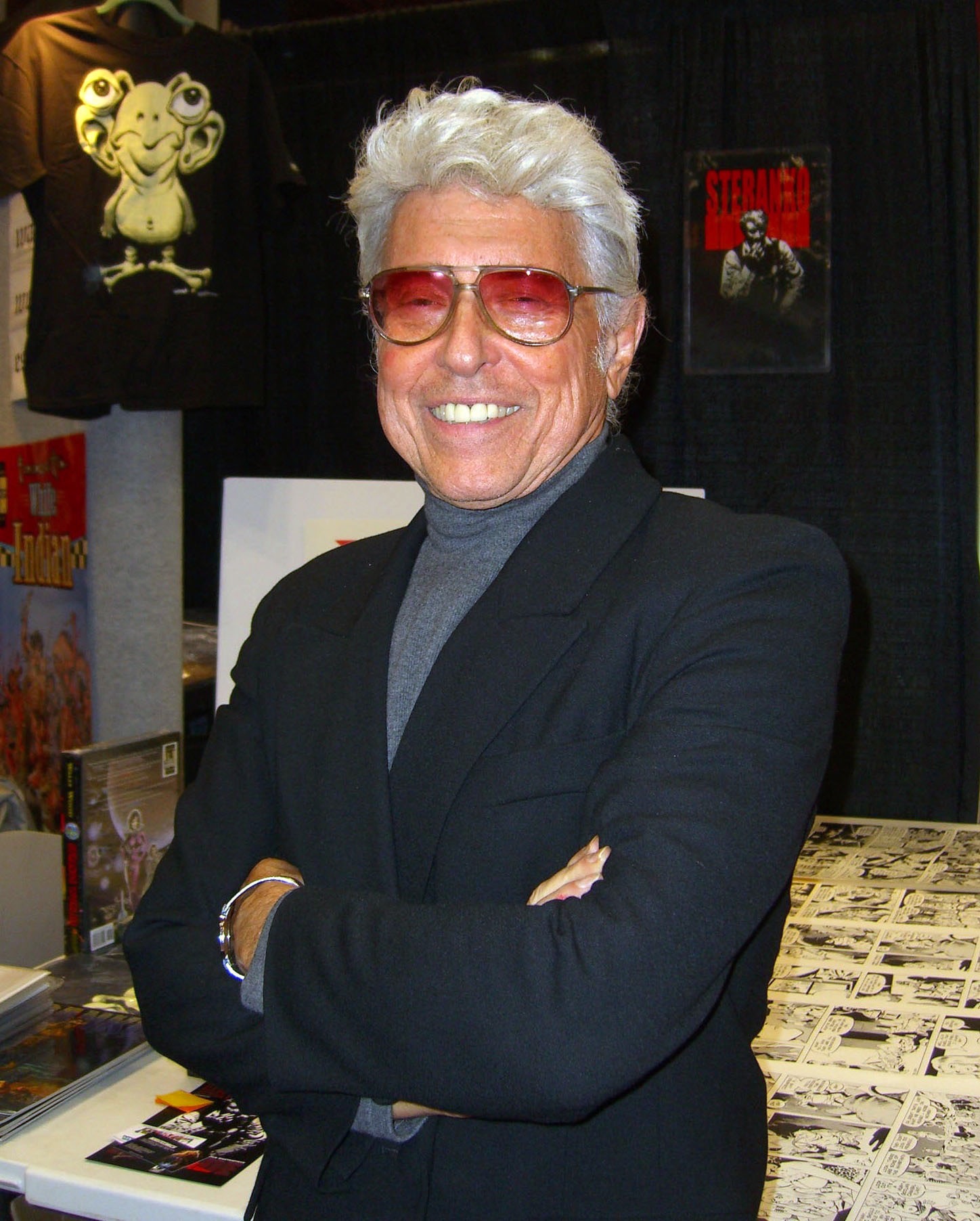
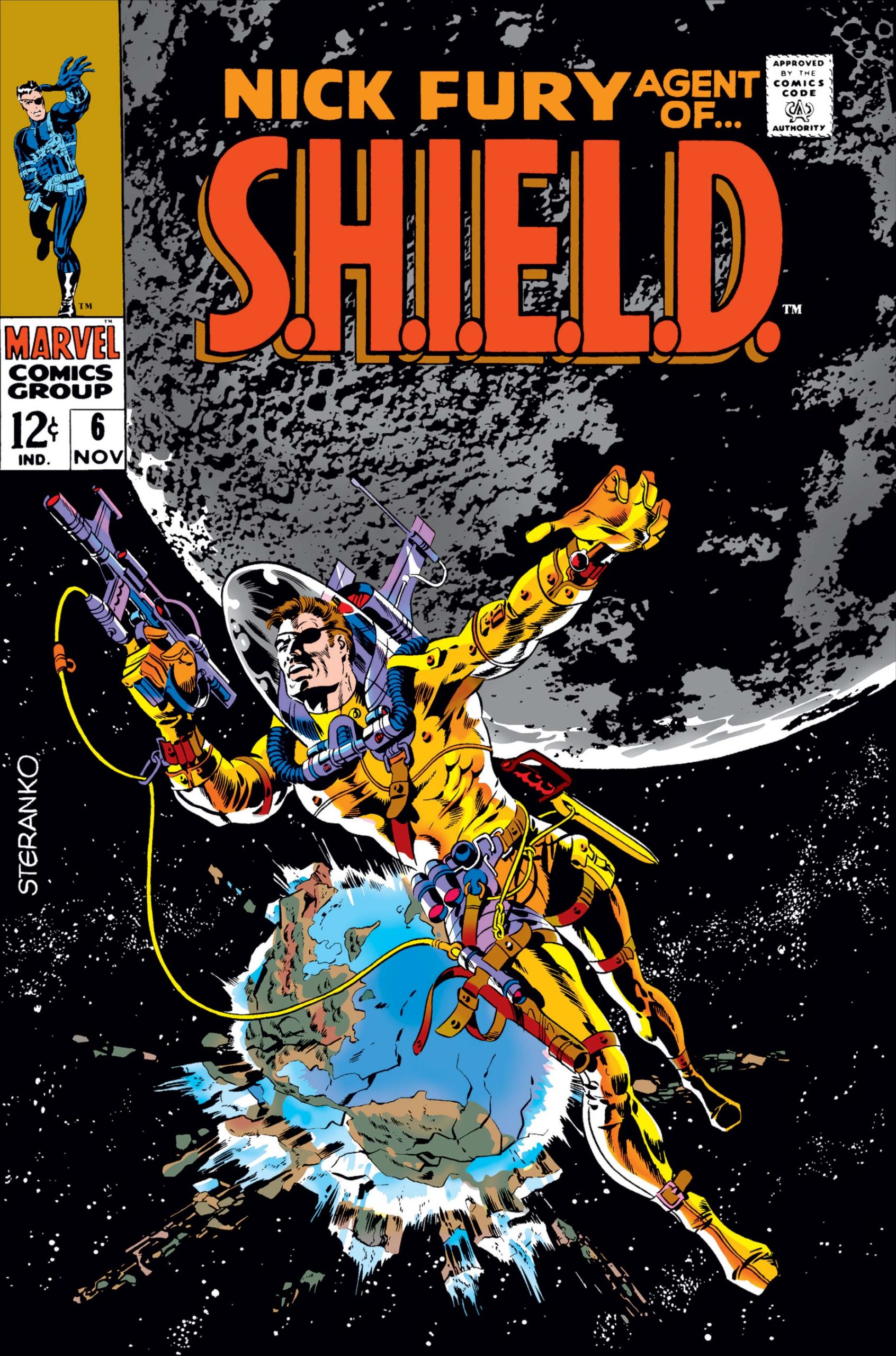
Certainly no one was (or is — he’s still with us at the age of eighty-eight) more qualified to write a history of comics than Jim Steranko. Active in the industry as an artist and writer since the late 50’s, he did his most famous work for Marvel on their Nick Fury, Agent of S.H.I.E.L.D. title. Charging through the door that Jack Kirby had kicked open, Steranko created some images (especially his Nick Fury covers) that have become icons of the psychedelic 60’s as essential as anything by Andy Warhol or Peter Max.
Entering the field when he did, Steranko personally knew the greats, not only of his own era, but of the preceding Golden Age of the 40’s and 50’s, and he made good use of that knowledge in his History of Comics.
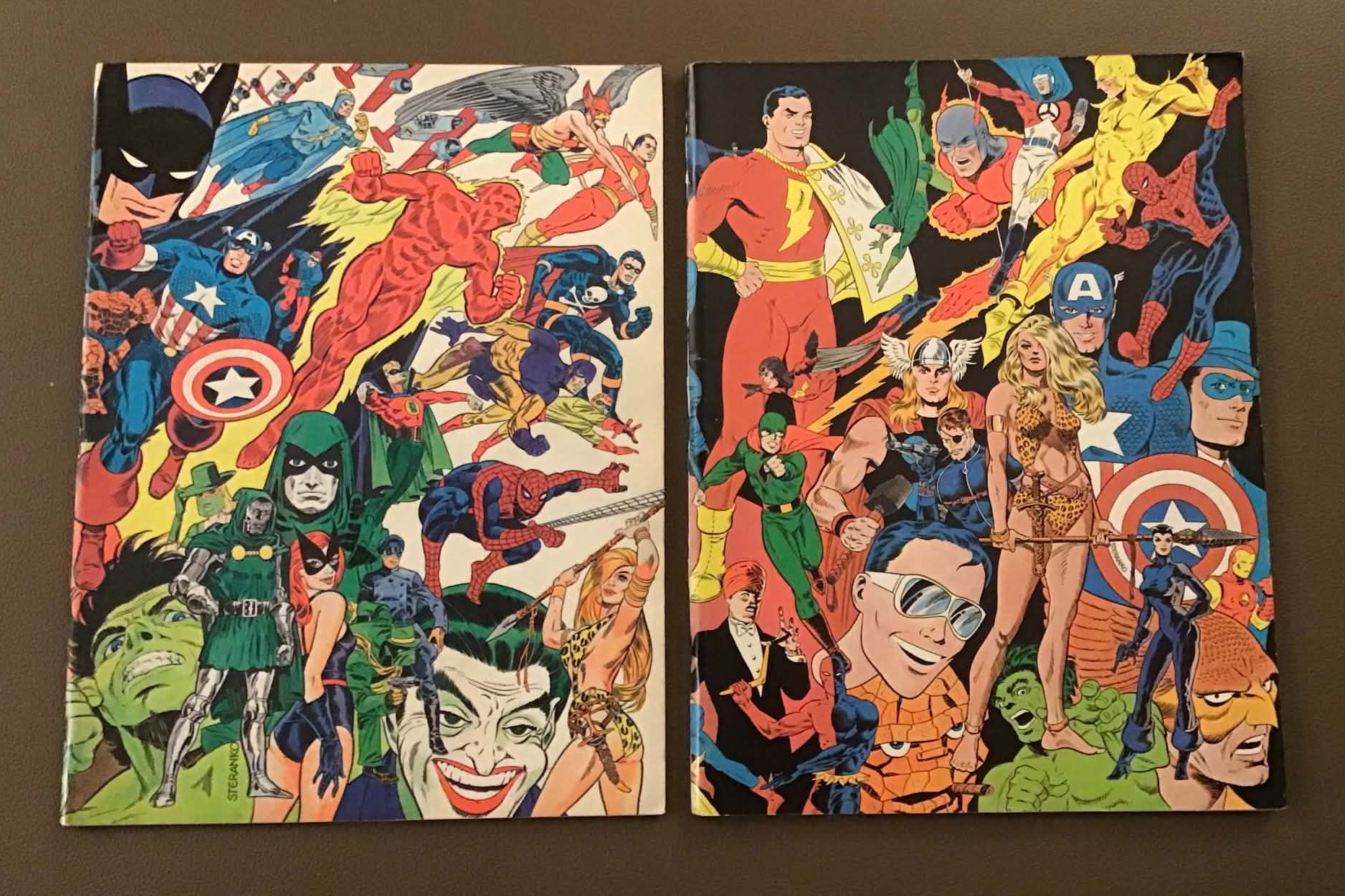
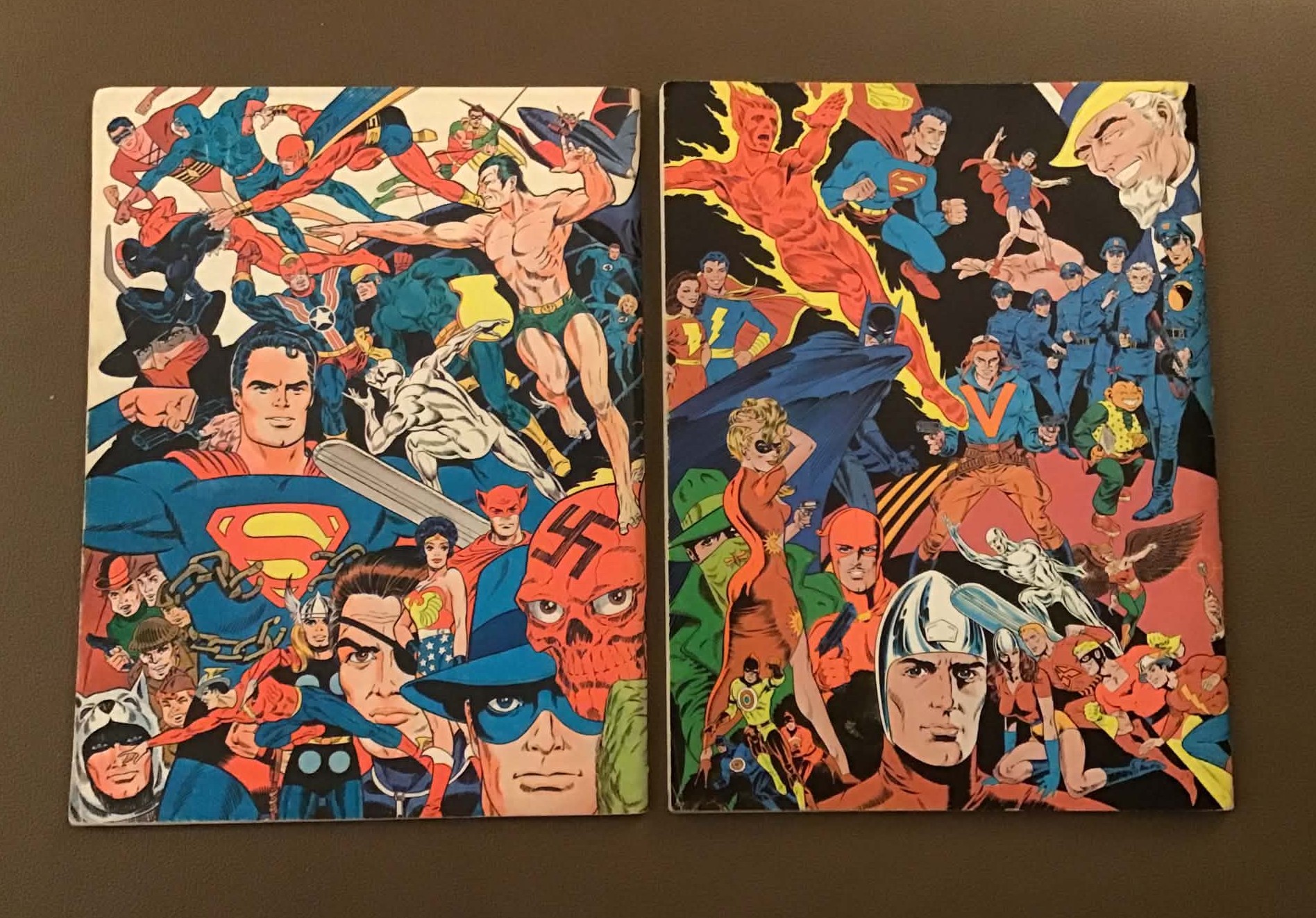
Published by Steranko’s own company, Supergraphics, the first thing you notice about these books is that physically, they’re not conventional books at all — they’re enormous (ten and a half by fourteen inch) comic books with folded, stapled pages rather than bound ones. And the covers! Of course Steranko himself did them, and they are simply gorgeous, almost worth the price of admission all by themselves. (In fact, when the books first appeared you could order just the covers to frame and display. If only I had!)
Each cover is a full-color wraparound featuring comic book characters, the great, the near-great, and ones so obscure that they’re known only to the kind of people who never had a date until they were well into their thirties.
The cover of Volume One sports (among others) Superman, the Human Torch, Sheena, Sky Wolf, the Joker, the Spectre, Doctor Doom, the Boy Commandoes, the Red Skull, Batman, the Silver Surfer, Airboy, Hawkman, and the Shadow, while Volume Two features (again among many others) Captain Marvel, the Spirit, the Thing, the Ray, the Hulk, Spy Smasher, Plastic Man, Bulletman, Doll Man, the Blonde Phantom, Mary Marvel, Johnny Quick, Thor, and the Blackhawks. (For those who have difficulty telling the Green Hornet from the Green Lama, Volume Two came with an insert that identified all the characters on both covers.)
After listing the contents, a notice on the first page of each volume declares, “The remaining volumes will record the comic chronology through the 40’s, into the 50’s and 60’s, on up to the present time.” Promises, promises.
Volume One begins with “a forward on the influence of comics” by no less a personage than Federico Fellini. (In this age of ten-second TikTok videos, maybe I should have preceded his name with “the great Italian director of such classics as 8 ½, La Strada, and La Dolce Vita.” Nah.) Fellini reminisces about the American newspaper strips that he was exposed to in postwar Italy, especially Alex Raymond’s Flash Gordon, before heaping special praise on 1960’s Marvel (don’t complain to me that he mentions Stan but not Jack), which, well before people started talking about “universes,” he treats as one huge meta-story, “a brilliant tale, aggressive and retaliatory, a tale that continues to be reborn for eternity, without fear of obstacles or paradoxes.” I guess if the French can revere Jerry Lewis, Italians can love the X-Men.
With the nod to high culture safely out of the way, Steranko begins at the beginning, and I’m not talking the Lascaux cave paintings or the Bayeux Tapestry — he knows better than to name those artworks or any like them as the real beginning of comics (though he does give such progenitors their due in a snappy dozen paragraphs that take up about half an oversized page).
As befits a book about a visual medium, you don’t even need to be able to read to see where Steranko is coming from; the first page after Fellini’s introduction (and the author’s own) is a full page of wordless, black-and-white (as are all interior illustrations in the History), marvelously kinetic images from Hal Foster’s seminal Prince Valiant. Thus the “Coming Attractions” (as the first chapter is titled) for the comic books were the action/adventure newspaper strips of the 1920’s and 30’s, strips like Dick Tracy, The Phantom, Mandrake the Magician, Wash Tubbs and Captain Easy, Buck Rogers, Tarzan, the previously mentioned Flash Gordon, and Terry and the Pirates. It was here that artists and writers like Alex Raymond, Roy Crane, Lee Falk, Chester Gould, Burne Hogarth, and Milton Caniff established the grammar of science fiction, fantasy, and action storytelling that would become the firm foundation of American comic books.
As for what would be built on that foundation… well, the Shadow knows! In chapter two, “The Bloody Pulps,” Steranko outlines the formula: take vigilante heroes like the Shadow, the Spider, and the Avenger, mix with mental and physical prodigies like Doc Savage and Edmond Hamilton’s Captain Future, add a jigger of hardboiled crime and crimefighting from the pages of Black Mask and similar magazines, stir in a generous portion of superscience from the pages of Planet Stories and Thrilling Wonder Stories, and top it all off with a dash of outlandish menace from supernatural pulps like Weird Tales. Shake well to mix with the graphic storytelling strategies established in the newspaper strips, and you soon will have something partaking of all those elements yet is new and original.
Then all you will need to reach a critical mass of popularity and profitability beyond the avaricious dreams of the cigar-chomping moneymen who financed the first comic books is a breakthrough character, one who will embody all this revolutionary freshness in one irresistible, attention-grabbing package. It didn’t take long for one to appear, and you know who he was, don’t you?
That character, the creation of Jerry Siegel and Joe Shuster, two kids from Cleveland, Ohio (the Krypton of the Midwest) was “The Super Star” that comic books needed to become something more than a marginal fad that came and went like flagpole sitting; he was what the medium had to have in order to establish its beachhead in American culture and consciousness, a beachhead that has only grown ever larger and more unassailable every year since 1938. As Steranko declares in his third chapter, we owe it all to Superman. After chronicling Kal-El’s early years, he unequivocally states,
If he has weakened, we must remember that like the legendary Atlas, Superman bears the weight of the comic world upon his shoulders. If he has been momentarily eclipsed by the scintilla of stylistic trends, we must understand his position is one of stability, not of change. And if he has grown weary, we must embrace him for the ten thousand and one battles he has fought, outselling all his imitators put together, for his is a timeless triumph and from his life stream all hero strips flow.
He is a superman among supermen.
I’ll wait here while you go and get some tissue to dry your eyes.
The rest of Volume One’s eighty-four pages (remember, they’re oversize pages with each one sporting four columns of text) are devoted to the other key figures and genres of the early years, and first up is — of course — Batman. In “The Playboy Hero” Steranko examines the “claustrophobic crimeworld” of the character who, in the description of his co-creator Bill Finger, combined the physicality of Douglas Fairbanks with the mentality of Sherlock Holmes, and together with Superman established DC’s dominance and popularity “beyond the shadow of a doubt.”
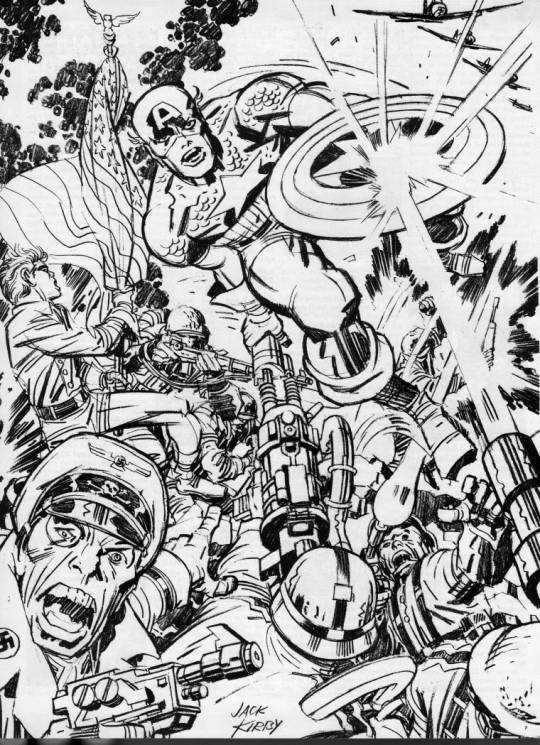
Turning to DC’s competitor, Timely Comics (the prehistoric name for Marvel, but you knew that), the chapter on Captain America (“The American Idol”) is especially interesting, as Steranko played a significant role in the character’s Silver Age renaissance. Captain America’s postwar fall was as precipitous as his rise was meteoric, and Steranko’s words on Cap’s fifteen-year disappearance (AWOL between 1949 and 1964) and the late 40’s superhero decline in general are deeply felt:
He had failed to fulfill the command of natural law: growth. Somewhere along the way his dignity had tarnished. The glory was gone. Captain America became an artifact of an era past.
Cap died late in 1949, officially signaling the twilight of the hero. Sic transit gloria mundi. No one noticed, no one mourned.
We were growing up.
The rest of the volume is devoted to the Golden Age Sub-Mariner and his nemesis the Human Torch and other lesser Timely characters (“Super Double Feature”), and DC’s second-string superheroes (“Best Supporting Players”), the cream of whom would form the first and greatest superteam of them all, the Justice Society of America.
The book concludes with a nod to a once-flourishing genre that doesn’t exist anymore; “The Kid Players” is a pean to Simon and Kirby’s Boy Commandoes and other pugnacious, tommy-gun toting youth organizations of comics’ early days.
The substantially larger (one hundred and twenty-six pages) second volume of the History begins with a thunderbolt. “Shazam!” gives the entire Golden Age history of Captain Marvel, the World’s Mightiest Mortal as he was known to his admirers (or the Big Red Cheese, as he was disparagingly called by his bitterest enemy, Dr. Thaddeus Bodog Sivana). In one of his best chapters, Steranko affectionately takes one of the greatest of all comic book heroes from his birth in the imaginations of writer Bill Parker and artist C.C. Beck to his forced retirement at the hands of DC’s lawyers, who claimed that Fawcett’s wildly popular hero was a blatant copy of their own. (One of Steranko’s signal services is his meticulous demonstration that superficial resemblances aside, Superman and Captain Marvel were really nothing at all like each other.)
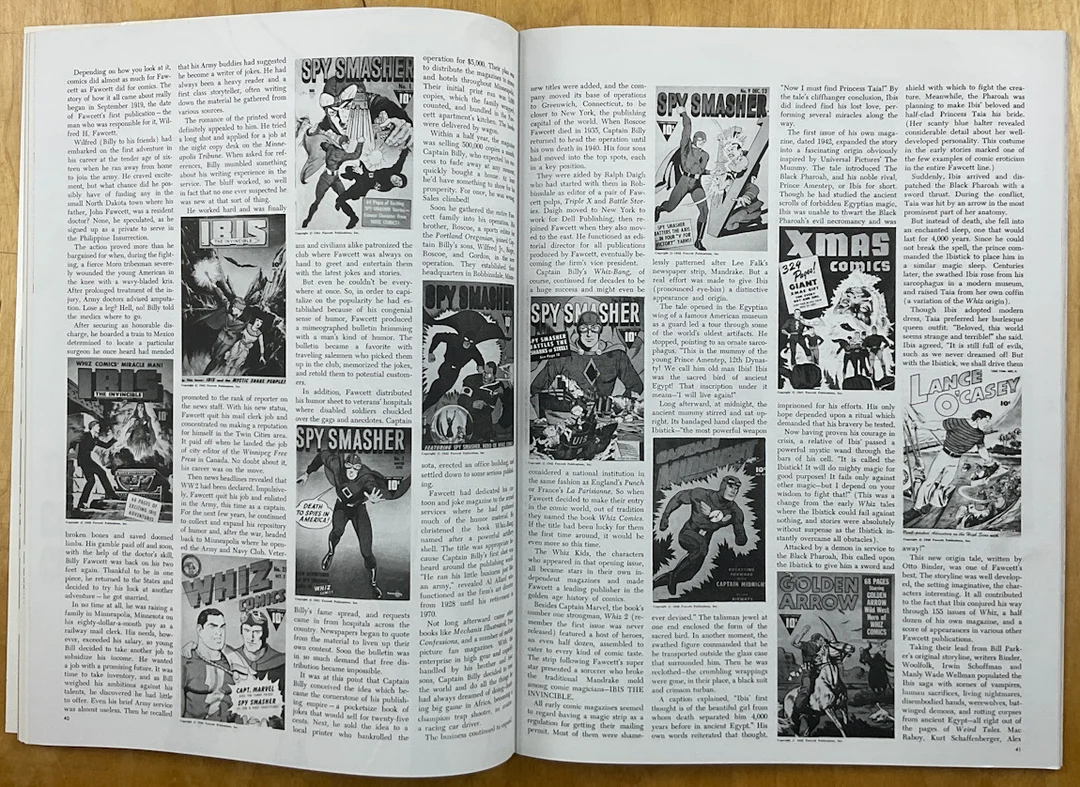
One good chapter deserves another, and the one on the Big Red Cheese is followed by “Lightning Strikes Twice or, Play It Again, Shazam!” which examines the careers of Captain Marvel Jr., Mary Marvel, the three Lieutenants Marvel, Uncle Marvel, and even Hoppy, the Marvel Bunny, hero of several superhero-adjacent funny animal titles.
Fawcett wasn’t exhausted by the Captain Marvel universe (though no one would have blamed the publisher if it had been), and “The Costumed Co-Stars” celebrates Fawcett’s bench players, forgotten long-underwear characters like Ibis the Invincible (a card-carrying, turban-wearing mystic billed as “Whiz Comics’ Miracle Man!”), Spy Smasher, who ran around uh… smashing spies, Bulletman and Bulletgirl, whose wisecrack-prompting phallic headgear beat Saturday Night Live’s Coneheads by a good three decades, and Minute-Man, with an Old Glory-based costume that made him come across as little more than Captain America’s haberdasher.
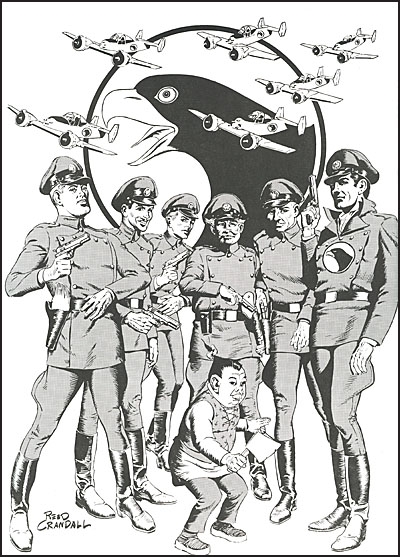
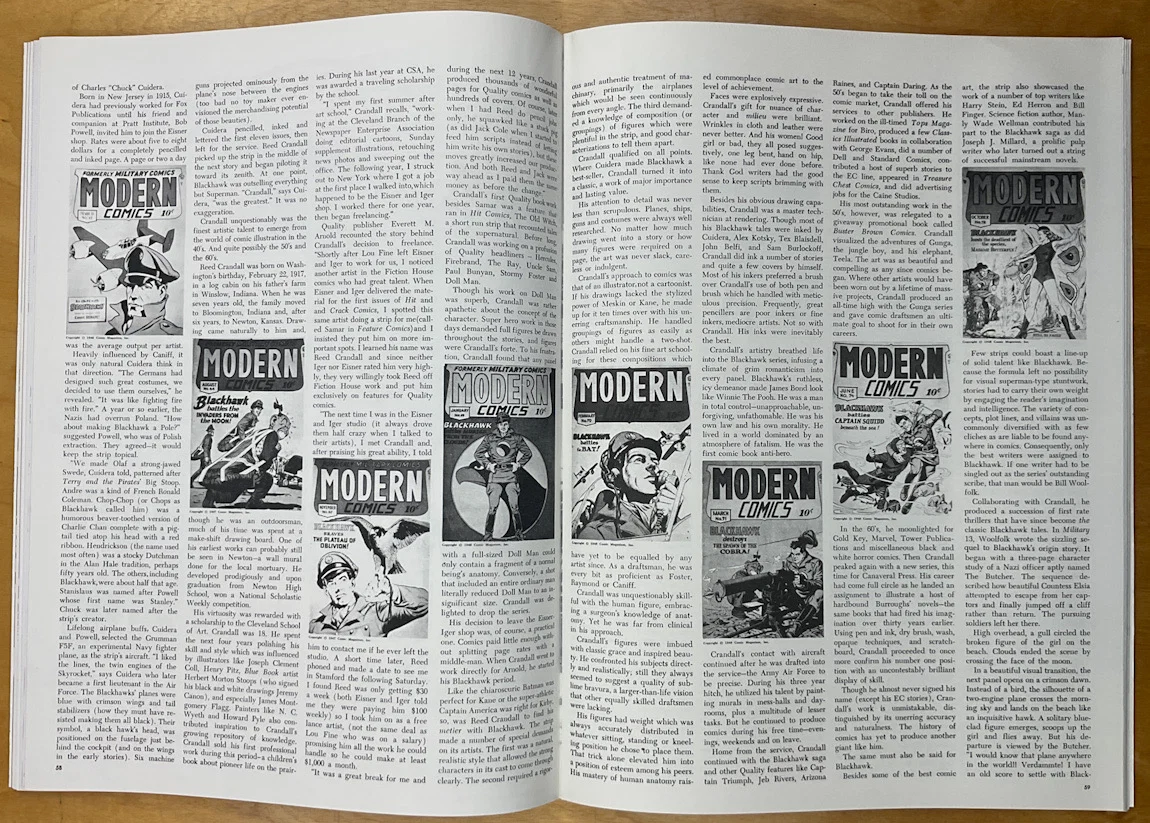
Emerging as they did during the war years of the 1940’s, it’s no surprise that many of the early comic book heroes had a military flavor, none more so than the Blackhawks. “Hawk-A-A-A!” describes the group’s emergence in 1941 in the pages of — you guessed it — Military Comics. Steranko’s cold-eyed judgment of the ostensibly anti-Axis Blackhawk is characteristic of the acuity he displays throughout the History:
Whether he knew it or not, Blackhawk had become the personification of all he hated. In costume and concept he summed up the fascist point of view. In the comic world he remains the ultimate right-winger, the pro-militant avenger taking the law into his own hands, complete with an army of enforcers.
His outfit, replete with Gestapo hat and black boots was, of course, lifted directly from those of the storm troopers and SS men he battled.
There was a difference, however. He was on our side. Where Batman existed in a world created ficticiously around him, Blackhawk abided in the now. His success was, in fact, predicated upon it. Blackhawk’s world was real.
Steranko’s dissection of Blackhawk’s flying corps and its authoritarian philosophy leads smoothly into the next chapter about another genre that’s as long-gone as V-J Day. In “The Flying Heroes” once-famous characters such as Airboy, Sky Wolf, the Flying Dutchman, Iron Ace, Tailspin Tommy (get the extra flight insurance before you take off with him) and Valkyrie and her Airmaidens live again in all their stick and rudder, Immelmann-executing, diving-out-of-the-sun glory.
The next chapter, “The Long Arm of the Law” commemorates one of the most original creators in the history of comics, Jack Cole, the father of the inimitable (though many have tried) Plastic Man. Cole’s surreal work was published by Quality Comics, and “The Big Super Hero Show” gives the history of that imprint, home of some of the finest artists in the industry, legends like Cole, Lou Fine, Reed Crandall and Will Eisner — who supervised the Quality bullpen, which goes a long way towards explaining the visual excellence of the publisher’s output. Quality magazines were full of finely-rendered pages filled with offbeat characters like Plastic Man, Doll Man, Uncle Sam, the Blackhawks (Military Comics was a Quality title), and Kid Eternity. After Quality went out of business, many of these characters were purchased by DC, which stuck them on some damned Earth or other that I’m not sure even exists any more, but that’s another story.
Another character that appeared under the Quality banner was the offspring of arguably the greatest artist-writer in the history of the medium, and the final chapter of the Steranko History of Comics, “Sunday Matinee Idol”, is devoted to that creator and that character. Will Eisner’s Spirit existed on an entirely different visual and intellectual level than any other in the History, even the best of them. Eisner’s stature is such that words about him and his work are almost beside the point, and so Steranko ends the chapter — and the History — with a complete Spirit story, the only character in the book so honored. (The first volume opened with a dedication to Jack Kirby, “without whom there may not have been any comics to write a history about.” Begin with Kirby and end with Eisner — I’d say Jim Steranko knew what he was doing.)
Every chapter of the book is packed with the words of the great comic book artists and writers themselves, men that Steranko interviewed himself for his project, and these first-hand, nut-and-bolts accounts are priceless. Thank God Jim Steranko recorded them before these giants passed from the scene forever. Of course, they didn’t think of themselves as giants, innovators, legends — they were just men determined to do good work in a rough-and-tumble medium that everyone dismissed as worthless and ephemeral. A surprising number of that generation of artists died young, sometimes through alcoholism or even suicide (Jack Cole killed himself); that what they did for money that was often barely enough to keep body and soul together would later turn out to be worthy of exhibition at prestigious art museums is a well-deserved vindication and a delicious joke — though doubtless they would have liked more money even better. (Page rates for top artists could sometimes reach twenty or thirty dollars, but were commonly much lower — ten or even five dollars a page.)
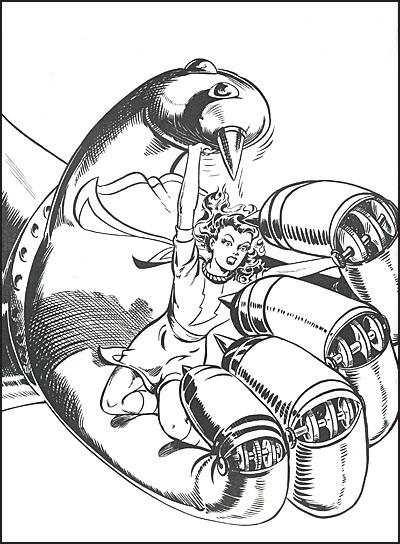
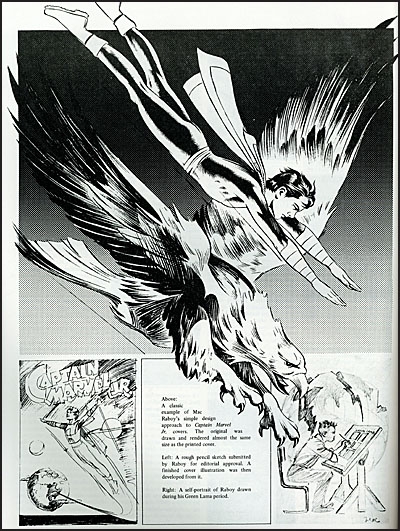
In addition to Steranko’s engaging, detail-filled text, about one third of the History’s total pages are taken up by published and unpublished art from the medium’s top artists, masters like Jack Kirby (the Captain America chapter opens with a full page drawing of Cap doing what he did best– walloping Nazis, and a couple of pages later there’s another full page sketch of a boyishly grinning Cap, signed “To Jim My Pal — Jack Kirby ’67), Joe Shuster (his first drawing of Superman), Jerry Robinson (his first drawing of the Joker), Jack Binder (a ravishing full-page drawing of Mary Marvel riding an enormous butterfly and another of her battling a giant robot), Bill Everett (the Sub-Mariner and the Human Torch in combat), Mac Raboy (Captain Marvel Jr. racing a flying eagle), Reed Crandall (Uncle Sam pushing up his sleeves prefatory to giving it to those Axis rats), and Lou Fine (the Red Bee — with leg irons on! — wrestling a shark), among many others.
The anecdotes, the art, the insight of an author who is himself one of the great comic creators – all of this makes the Steranko History of Comics, abbreviated as it is, a work that is both essential and delightful. We can only imagine what Steranko would have done with Western comics, funny animal comics, the EC horror and science fiction books, crime comics, the Fiction House jungle titles, romance comics, the great characters and storylines of the swinging 60’s Marvel superhero resurgence, the growing social consciousness and storytelling sophistication of DC in the 70’s, underground comics — it goes on and on… or it could have.
It’s not 1972 anymore, and today there’s no shortage of histories of the medium, scholarly, fannish, and everything in between, so it’s not as if we’re left stranded because we never got the last four Steranko volumes; nowadays, if you want to fill in the blanks, there are plenty of other places to go. To name only one, the multivolume, multiauthor American Comic Book Chronicles published by Twomorrows is an outstanding series, with each volume covering a different decade (with the key decades of the 40’s and 60’s requiring two volumes each). Their only drawback is that they are not, let us say, popularly priced.
Steranko supposedly cut his History short after only two volumes because the books just weren’t selling well enough, especially considering the amount of work he put into them, which is as damning an indictment of the American consumer as I’ve ever heard, because I still know of no better place to learn about the fabled Golden Age and its legendary creators and characters. The books have been out of print for half a century but can still be found on eBay; if you’re patient and keep your eyes open you can bag decently priced copies without too much trouble. I damn well know you’re not getting your grubby hands on mine!
Hey! How about that? I made it though a complete piece about the disappointments and frustrations of committing to a series of books that gets off to a great start but stops well short of completion, without once mentioning George R.R…
Oh… crap.
Thomas Parker is a native Southern Californian and a lifelong science fiction, fantasy, and mystery fan. When not corrupting the next generation as a fourth grade teacher, he collects Roger Corman movies, Silver Age comic books, Ace doubles, and despairing looks from his wife. His last article for us was Murder — What Is It Good For? Truman Capote’s In Cold Blood
I remember these! Think I got at least one of them, back in the day. Probably still have it, packed away in a box somewhere. But I was a bit young for the product; I was, after all, raised on comic books, and these were pretty text heavy. And I (then) had little sense of history, or interest in characters I couldn’t actually buy (then) current comics about.
Dig it out, Brian – I guarantee you’ll appreciate it a lot more now! If not, you can put it on eBay and make yourself fifty bucks.
This might interest you https://www.comics.org/issue/1964952/
https://www.tapatalk.com/groups/monsterkidclassichorrorforum/steranko-needs-you-history-of-comics-3-t96564.html
A concluding volume after all this time would be wonderful – I’ll keep my eyes open and my fingers crossed!
I had both volumes stashed away in my old room in Hawaii for decades & picked them out to take back with me to Los Angeles to peruse. Thanks for the overview. The problem is that they cover real early stuff, not the comics or enough of the artists I really care about.
I don’t have the source right at hand, but some years back Mike Royer (yes, that one, the Kirby inker) discussed how he wrote much of the actual text for both volumes. Not all, of course – you’ve done a good job in this article in pulling out sections that are clearly Steranko’s own writing. Royer was working as a researcher and assistant to Steranko at the time, and worked on some other Steranko projects. David Spurlock might know more.
Not certain whether to think of these as primary source documents, or not. But they sound spectacular. Thank you for writing this overview of them, and here’s hoping the third volume will come out posthaste!
I have these and LOVE them. I got to meet Jim a few times and hope to run into him again soon. Thanks for writing this…now I’ll have to go dig them out.