Happy Thanksgiving! Celebrate with an Uncanny Story
It’s Thanksgiving here in the United States. One of the better holidays ever invented, even if you’re a displaced Canadian like me.
 In addition to eating, putting the finishing touches on BG 14, eating, writing my editorial, and eating, I’ll be stealing a few hours for leisure reading. Thanksgiving weekend usually involves at least a little travel (this year we’re celebrating in Madison, Wisconsin, three hours from our home in St. Charles, IL), so anything too long is out. I need something I can finish in short bursts, in between sequential naps in a big green recliner.
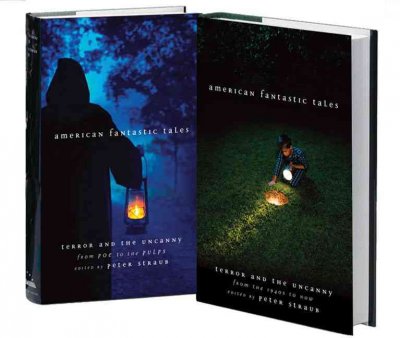
Fortunately, a perfectly apropos choice landed on my doorstep last month, compliments of the Library of America. Peter Straub’s two-volume American Fantastic Tales, subtitled Terror and the Uncanny, is one of those genre-defining collections, a banquet of spooky fall reading that will likely last me months. And just like Thanksgiving, it’s unapologetically American in focus.
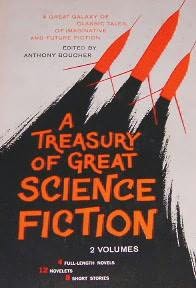
As we’ve already established, I’m a sucker for big retrospective collections. This one reminds me of a favorite from my childhood, Anthony Boucher’s seminal two-volume A Treasury of Great Science Fiction. Gathering numerous tales of vintage SF and even a few complete novels (including Alfred Bester’s The Stars Our Destination and A.E. Van Vogt’s The Weapons Shops of Isher), it captivated me for weeks in the summer of 1977, most of which I spent reading in the trailer in our back yard.
Straub doesn’t include any novels among his selections. But like Boucher’s classic, American Fantastic Tales is huge — nearly 1,5oo pages of fiction, carefully selected to showcase the best horror tales in American history, from Edgar Allan Poe and Nathaniel Hawthorne to Joe Hill, Kelly Link, and Michael Chabon.
 Volume One, From Poe to the Pulps, features Herman Melville, Robert W. Chambers, Edith Wharton, Robert E. Howard, H. P. Lovecraft, Clark Ashton Smith, Robert Bloch and many others. Volume Two, From the 1940s to Now, includes John Cheever, Charles Beaumont, Vladimir Nabokov, Harlan Ellison, Richard Matheson, John Crowley, Stephen King, Steven Millhauser, and over a dozen more.
While I sometimes wished for a few more editorial notes on the selections, overall I’m very impressed. I’m sure this collection (also available in a handsome boxed set from Amazon) will be on more than a few Christmas wish lists.
I hope you find suitable treasures of your own to snuggle down with this weekend. Happy Thanksgiving, Black Gate readers.
 I am going to semi-repeat myself in my next two Black Gate posts, going over graphic novel versions of material that I’ve discussed over the past few months.
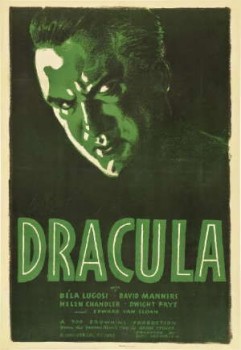 In my favorite month of October, I spent an inordinate amount of time away from my beloved book stores opting for movies and TV instead. Though I rarely pass on a horror flick in either venue, it’s equally rare for me to stumble across an offering that comes close to the entertainment value and overall creepiness of the vintage black and white, Universal Studio classics.
 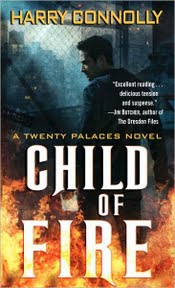 Harry James Connolly made his first fiction sale with “
 Though I had unrealistic high hopes for the remake of The Prisoner, if only because of the presence of Ian McKellan,
 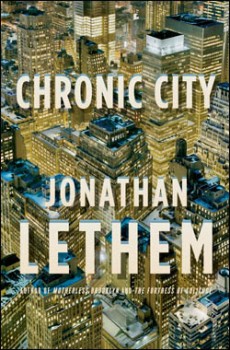 On a more positive note, I just finished Jonathan Lethem’s
  In today’s mail arrived the December 2009
 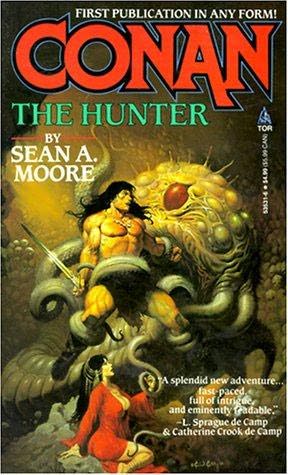 Conan the Hunter


 with my good friend
 ![[info]](http://l-stat.livejournal.com/img/userinfo.gif)
 As far as I’m concerned, Christmas just came early.
 If there is a watch, then there must be a watchmaker. That’s the crux of the argument for intelligent design, that existence, and specifically you and me, are the result of some conscious creator. My main problem with this is the adjective “intelligent.” If I was designing existence, there’s a lot I’d leave out, like cancer or maggots or flatulence or Glenn Beck. Or that for certain kinds of life to continue and thrive, other life forms must suffer. Besides, this all begs the question of, if there is a designer (intelligent or otherwise), who created the designer?