Gen Con – Day 3 Update
Saturday was my last day at Gen Con, and it will be missed … at least for another year. Tomorrow, I’ll post a bit more in the way of reflections, but for now, let me cut straight to some of the games that I came across.
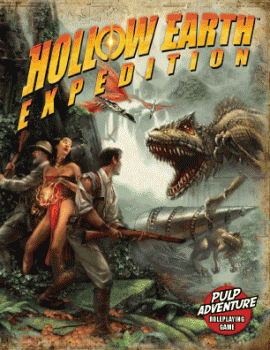 Pulp Adventure Roleplaying Games
For gamers who lean toward pulpy goodness (which I imagine includes many Black Gate readers), there are a lot of great options out there.
One of the best games available for pure pulp action is the Hollow Earth Expedition game (reviewed in Black Gate #12), which is sort of like Indiana Jones meets Journey to the Center of the Earth meets Sky Captain and The World of Tomorrow … with some other craziness thrown in. You really can’t go wrong with a setting that conveniently allows apemen, dinosaurs, Nazis, ninjas, sorcerers, zeppelins, and mad scientists to intermingle.
Since the original release of the game there are now two hardcover supplements available: Mysteries of the Hollow Earth and Secrets of the Surface World. Starting in fall of this year, the creators are planning to begin releasing a series of PDF adventure modules, which they refer to as the “Perils” because they’ll have names like “Perils of Morocco” and “Perils of Brazil” … and, perhaps, if we should be so lucky, “Perils of Scranton.” These PDF modules should be available through DriveThruRPG when they are finally released. In 2011, however, the word is that they’ll be releasing a Revelations of Mars sourcebook … so keep your eyes open for that, lovers of planetary adventure settings!
 The lead story for the
 complete artwork comprising all the issues in 2010) is “Mannikin” by Paul Evanby. The story opens in July 1776, the date of American declared independence from British colonial rule (sidenote: the writer is Dutch and the magazine is published in the U.K.). But this isn’t about Ben Franklin or Thomas Jefferson, and doesn’t even take place in the colonies, but rather signifies the irony of a revolution that resulted in freedom for white Protestant male landowners who relied on the exploitation of African-American slaves to maintain economic autonomy.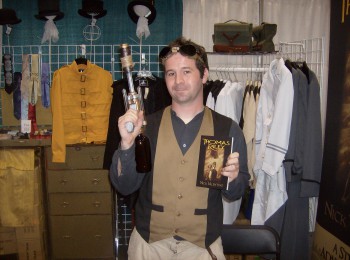
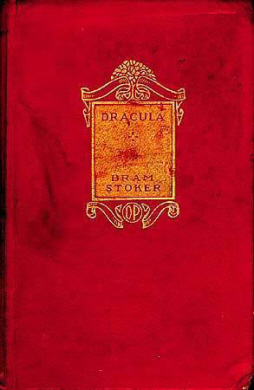 Most literary criticism of Bram Stoker’s Dracula is limited to treating the work as one of the more blatant examples of Victorian sexual repression. A few more adventurous critics are eager to play Freudian detective and speculate what the book reveals about the author’s possible sexual feelings for Sir Henry Irving or his alleged serial infidelity with East End prostitutes.

 Though he’s best known as the author of the Chronicles of Narnia, C.S. Lewis (1898-1963) was also a prolific essayist and an ardent defender of fantasy literature. In addition to medieval studies (The Allegory of Love) and Christian apologetics (Mere Christianity), Lewis wrote several essays about the enduring appeal of
 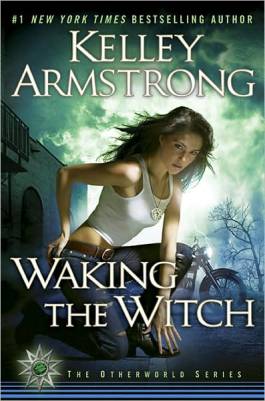 Fresh off my movie frenzy of the last few blog entries, I felt it was time to unplug for a least a week and pick up what looked like the most interesting of the new book releases to find their way first to the Black Gate front office, and then to the underground bunker of Goth Chick News.
 After a hectic morning, my wife and I finally made the 45-minute drive into Indianapolis with our littlest, 8.5-month old Gideon. (The elder, 5-year old Elijah, will be joining us tomorrow.) Parking was crazy, but we found a spot finally and made our trek over to the convention center that is the home to Gen Con, the best four days in gamig (
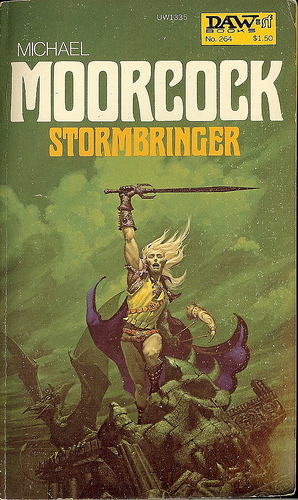
 When I moved to St. Charles, Illinois, in 1997, one of the things that drew me to the town was the abundance of used bookstores. There were roughly a half-dozen in easy driving distance, and two in walking distance. I spent a lot of happy hours picking through the vintage science fiction and fantasy paperbacks, until Alice finally pulled me away to go look at stoneware or baby clothes.
 “Plot is what the characters do