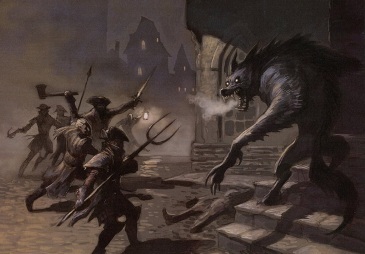
World Fantasy Awards to be Presented this Weekend
 Well, here it is Thursday, so I must be Goth Chick. Except I’m not.
Apologies to all those who tuned in today for their regular dose of 80’s sci-fi movie nostalgia and penetrating interviews with the luminaries of modern horror. Goth Chick is unavailable for her regular Thursday slot this week.
Monday is Halloween, the most important night of the year, and she apparently has more important things to do than be here with us today. Things that likely involve the sacrifice of small farm animals, midnight Sabbaths, and ancient voodoo rites. But I shall say no more, on the advice of counsel and due to the sticky consequences of federal libel law. We wish her well, whatever she’s doing, and we hope there are no witnesses.
Instead, let’s turn our attention to the World Fantasy Convention, happening this weekend in San Diego. WFC is hands-down my favorite convention, and I’ve been attending since 1984, when it came to my home town of Ottawa.
What’s so cool about WFC? For one thing, it’s a professional convention, attended chiefly by established writers, editors, agents, and artists. You can’t sling a dead cat in the dealer’s room without hitting half a dozen well-known names. And unlike other cons (I’m looking at you, Dragon*Con), slinging a dead cat won’t instantly win you half a dozen new friends, either. At WFC, that sort of thing isn’t done.
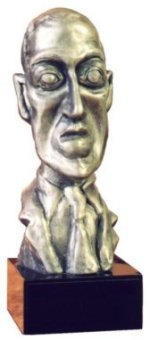
For another thing, the WFC is where the World Fantasy Awards are presented — the highest honor our field can bestow. That’s one above on the left. Yes, they’re in the shape of our beloved patriarch, H.P. Lovecraft. And just like the man’s work, the statue both fills you with a sense of wonder, and kinda gives you the creeps at the same time.
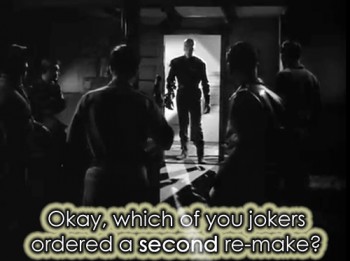 The Thing from Another World (1951)
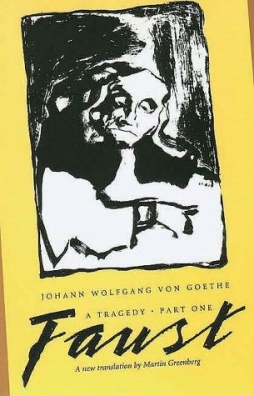 This is the latest in a series of posts about Romanticism and the development of fantasy. You can find prior posts
 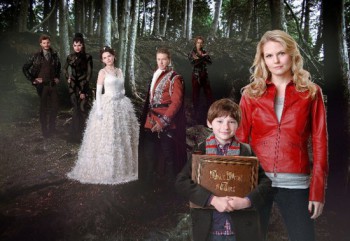 There are two series starting this season which are trying to leverage the world of classic fairy tales to gain ratings on major networks. Though existing fantasy series, like Supernatural, Sanctuary, and Warehouse 13, do often touch on the idea of fairy tales (or mythical creatures, at the very least), a series fully embedded in the classic fairy tales is something I don’t think we’ve really seen before.
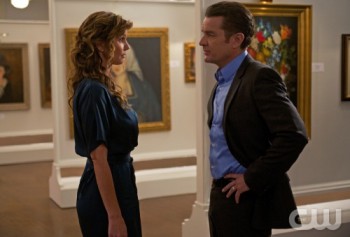
 Back in 1977, science-fiction writer
  Alas, it seems as if the optimists who envisioned the twenty-first century as some sort of glittering technological utopia might have gotten some of the details right, but the award for getting right the overall picture of media and marketing malevolence goes to the more pessimistic cyberpunks. As the opening line of the archetypical cyberpunk novel — Gibson’s Neuromancer — describes it: