Pavis – Gateway to Adventure: The Classic RPG City is Back! (Part Two)
 Last week I began my review of Pavis – Gateway to Adventure, the new RPG supplement from Moon Design Publications for its HeroQuest roleplaying game in the fantasy world of Glorantha, with a bit of history of this greatest of RPG cities, and an overview of what this massive new book contains. This week, I’d like to look at the book’s content in far more detail, with a chapter-by-chapter breakdown of just what you get in its 416 pages.
Chapter by Chapter
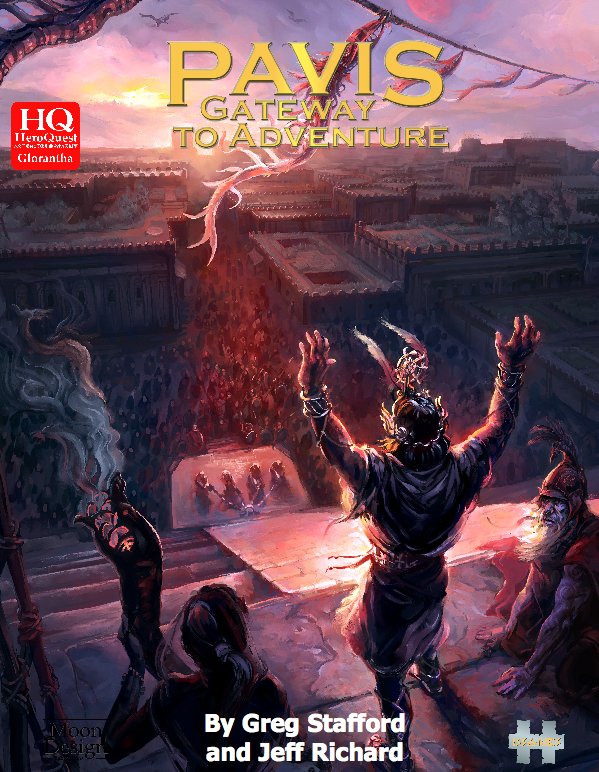
To begin with, the book’s cover is a nice full colour painting depicting a priest of the cult of Pavis, the city god, atop the ziggurat-like temple of Pavis in the new city, facing east over assembled city-folk and worshippers as the sun rises. In contrast to the green and earth tones of the previous two Sartar books, the cover is predominantly pinks, purples, and greys, emphasizing the hazy, desert-like environment of the city. It gives a feel for the predominance of religion – and religious intrigue – in the city.
After credits, contents, and introduction sections, the book launches straight into “Making Your Character”. If you have Sartar: Kingdom of Heroes, you’ll know what to expect here; except that in addition to the Sartarite settlers of Pavis County, there are also HeroQuest keywords and character creation guidelines for Old Pavisites, Sun Domers, Zola Fel Riverfolk, and even Lunar Settlers.
 When the Hero Comes Home is an anthology from Dragon Moon Press co-edited by Garbielle Harbowy and Ed Greenwood. It’s a surprisingly thin book, given that it holds nineten stories by twenty writers (including two Black Gate contributors, Peadar Ó Guilín and Jay Lake, in collaboration with Shannon Page). Its theme is exactly what it says: the homecoming. The point where the story usually ends. I have some reservations about how the book turned out, but the idea’s intriguing: what do you find when you make it back to where you began? Has the place changed, or have you?
 The Raven (2012)

 Back in 2004, a friend and I decided to
  Fox and Phoenix
 No series on the best of modern Arabian fantasy would be complete without going back to the book that many credit with starting the whole trend, Alamut by Judith Tarr.
 The April-May
  as a young boy.