Browsed by
Category: Vintage Treasures

An American Fantasy Master: The Pulp Art of Virgil Finlay

An American Fantasy Master: The Pulp Art of Virgil Finlay

Virgil Finlay cover for Famous Fantastic Mysteries-smallJohn O’Neill graciously offered me a spot in Black Gate’s blogosphere. How nice of him. Silly man, now he has to put up with me.

Most of you probably don’t recognize my name, but I’ve been in the fantasy-sf-comics business for years. I’ve worked at Cinefantastique magazine (and written for it), Mayfair Games, and First Comics. In 1984, I began freelancing and have worked for a number of specialty presses as designer, consultant, guru, you name it.

A few years ago, I decided I wanted more control of the work I was doing, packaged the first US edition of Creature From the Black Lagoon for DreamHaven Books, and co-edited the Worlds of Edgar Rice Burroughs with Mike Resnick for Baen Books. Go buy them both.

So what can you expect from me in the upcoming weeks and months?

Well, I’ll be giving you sneak peeks on things I’m working on, writing retrospectives of great American Fantasists (writers and artists) you should know about, and giving you a lot of information on fantasy films from the silent era to now.

The last bit is because I’m working on a history of fantasy films and occasionally I run across bits that are cool, but just don’t fit into the book. I’ll share them here.

This time, let’s start with a book I’m working on which allows me to talk about that wonderful artist Virgil Finlay.

It’s a 192 page 9 x 12 art book Doug Ellis, Bob Weinberg, and I are putting together, with over 150 black and white Finlay illustrations from Doug’s and Bob’s personal art collections, and a 32 page color section that will include paintings from Glynn Crain’s collection as well.

Read More Read More

A Contagious Love of Fantasy: Lin Carter’s Imaginary Worlds

A Contagious Love of Fantasy: Lin Carter’s Imaginary Worlds

Lin Carter Imaginary Worlds-smallI recently did a review here at Black Gate of L. Sprague de Camp’s 1976 Literary Swordsmen and Sorcerers: The Makers of Heroic Fantasy. De Camp’s book is one of the few histories of the genre of fantasy around, and it is a great and enjoyable book. But it’s not the only one, nor probably the most favored. I get the sense from others’ comments that the Best History of Fantasy title probably goes to Lin Carter’s 1973 Imaginary Worlds.

Each of the chapters in de Camp’s book is dedicated to a separate writer. But most of the chapters in Carter’s book are centered around themes; in each chapter he examines fantasy writers that explore that theme well. In addition, Carter’s concluding chapters contain advice to authors on how to write fantasy. I found this latter part less interesting.

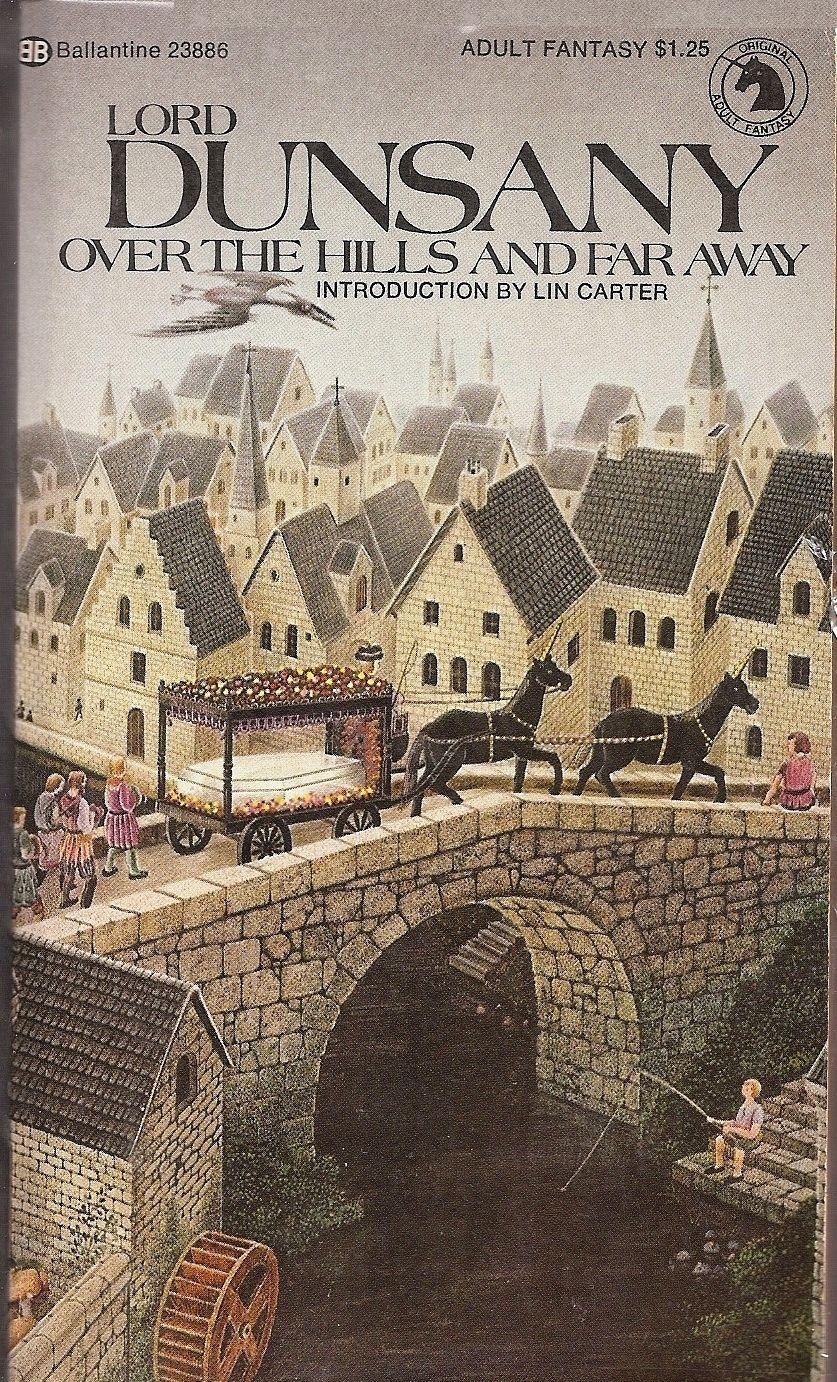
One of the plusses I pointed out for de Camp’s history was that you could tell he loved the genre. The same must be said in spades for Lin Carter. Carter wrote the introduction for Literary Swordsmen, and I was very excited to read de Camp’s book just on the strength of Carter’s intro. Imagine how enthusiastic I was to get Carter’s own book on the subject! (I’ve also heard that Carter’s intros to the Ballantine Adult Fantasy are fantastic as well.)

Carter’s love of fantasy is contagious. He writes with a real verve for his favorite fantasy authors, books, and tropes. Carter is unapologetic about his love for fantasy and seems completely unaffected by criticisms of childishness or escapism. Given his thoughtful interactions with the genre, he does not come off as a slavish fanboy. Instead, Carter strikes me as an intelligent and committed fantasist. Quite refreshing! I wish he were still alive.

Often when I read or hear other people talk about their favorite authors or books, I make notes for possible future purchases. If you’re setting out for yourself the task of trying to catch up on the great works of fantasy, the many references that Carter gives can leave you feeling exhausted.

But Carter is also good at pointing out what you probably shouldn’t bother with or if you’re only going to read one book by author X, make sure you read just Y. These suggestions are incredibly helpful and lessen your anxiety if you are indeed trying to catch up on the great works. (Speaking of which, I definitely want to get a copy of The Worm Ouroboros by E. R. Eddison. De Camp and Carter both raved about it.)

Read More Read More

Galaxy Science Fiction, June 1951: A Retro-Review

Galaxy Science Fiction, June 1951: A Retro-Review

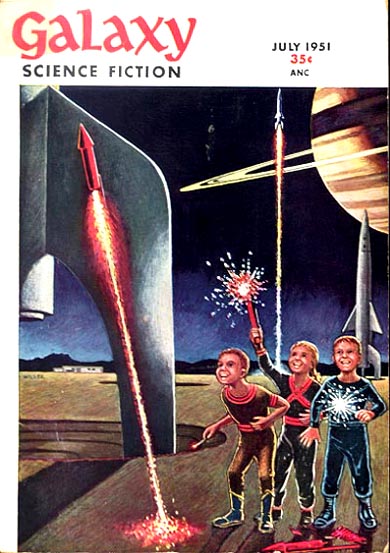
Galaxy Science Fiction June 1951-smallThe June, 1951 edition of Galaxy Science Fiction featured several longer works: two novelets and the second part of a serial novel. That only left room for one short story.

In his editorial remarks, H. L. Gold writes of his discovery of science fiction and how his love for it helped him realize what he wanted for a career.

Unfortunately, the dream of editing as good a magazine as possible does not include production difficulties. Because buying paper these days is like being mugged on a dark street, GALAXY has been late much too often… Other headaches are distribution, newsstand display, rocketing costs, ruckuses over ads, sweating good stories into better stories, and improving art, which has been the biggest single gripe of readers.

Regardless of the hassles, Gold found a way to keep the magazine going, and the June issue is another strong showing.

“Hunt the Hunter” by Kris Neville — Ri and Mia act as scouts for humanity’s leader, Extrone, helping him to successfully hunt a farn beast. Extrone is an intimidating figure who will risk confrontations with hostile aliens for the chance at killing a farn beast, something so rare in the systems humanity controls. Ri and Mia try to hide their traitorous thoughts as they lead Extrone toward the beasts, hoping to complete their mission quickly before Extrone’s impatience leads to wrath.

I loved Extrone’s character in this story. By far, it overshadows everyone else, but it works. I could picture Jeff Bridges playing the role, if this was a movie, barking out commands and delivering the slow, menacing dialogue.

I read a little about Neville, and it seems he was one who quickly vaulted into several of the big magazines. But he apparently felt that his work extended beyond the accepted boundaries of science fiction at the time. So he withdrew from science fiction and instead wrote texts in the field of epoxy resins. Yes, I’m serious.

Read More Read More

An Addendum on Tie-In Fiction

An Addendum on Tie-In Fiction

I wanted to add a couple comments to John’s brief post about tie-ins. Much of the commentary revolved around Alan Dean Foster. He’s a favorite of mine and influenced my writing and career. He and King were the only two authors I took with me to college, and those battered collections are still on my shelves. I’ve corresponded with him over the years, but the only personal contact was when my wife and I shared a pizza with him at Archon (Stephanie did most of the talking, I was hopelessly tongue-tied at sharing pizza grease with a guy who wrote so many books I read to bits). I though I’d expand a little on him as well.

First, to get the curmudgeonly “back in my day” village elder/idiot stuff out of the way . . .

alien-alan-dean-fosterSome of the younger readers of Black Gate might have a hard time imagining how starved we were back then for more of our favorite SF movie worlds. These days, well before a major movie or game comes out, there is almost always a web presence filled with “Would You Like To Know More?” media goodness. But even for a big 20th Century Fox production like Alien, we didn’t have anything beyond a few brief TV spots, reviews, and the same press packet that went to every major paper in the country. If we wanted to know more about the movie’s world, rather than how Sigourney Weaver got along with the cat on-set, all we had to cling to were the tie-ins.

In this, we were very lucky to have a guy like Foster writing the tie-in. In most of his books, he filled in plot holes he spotted with a little business somewhere or other (like why putting the crew of the Nostromo in a single, relatively safe location and turning the rest of the ship into a vacuum wasn’t an option). He also liked to add some flavor to the movie universe, the Alien tie-in memorably begins with a description of the business of recording dreams for entertainment. Since he was usually working from a script, his tie-in also served as a form of “additional scenes” for those days before the advent of DVDs with bonus features. It was from Foster that I first experienced Ripley finding Dallas in the alien’s cocoon, with Brett turning into a facehugger egg next to him. It’s also the only place, even today I believe, where you can get the full scene of the crew getting lucky for a change and Parker almost blasting the damn thing out of an airlock. No need to tell you who sabotages that, I’m sure.

Read More Read More

Vintage Treasures: The Best of Fredric Brown

Vintage Treasures: The Best of Fredric Brown

The Best of Fredric Brown-smallWelcome to the 13th installment of my ongoing examination of one of the most influential book series of my youth, Lester Del Rey’s Classics of Science Fiction line. This time, we’re looking at the 1977 release, The Best of Fredric Brown, edited by Robert Bloch (who had his own entry in the series eleven months after this one, which I discussed back in July.)

The Classics of Science Fiction line was my introduction to many of the major SF and fantasy writers of the 20th Century (well, that and The Hugo Winners, which first introduced me to Poul Anderson, Walter C. Miller, Arthur C. Clarke, and others, and of course the various volumes of The Science Fiction Hall of Fame).

All that education didn’t teach me much about Fredric Brown, however. A week ago, I probably could have named only one Fredric Brown short story from memory, “Arena” — which, admittedly, I dearly loved. I first read it in The Science Fiction Hall of Fame, Volume One, where it was selected as one of the finest short stories ever written, but even before that, I knew it as the Star Trek episode of the same name.

You probably think of it as, “Isn’t that the one where Kirk throws styrofoam rocks at the Gorn?”

Yes. Yes it is. And even though it has been much-parodied (including a brilliant video game commercial starring an 80-year old William Shatner and an aged Gorn in a re-match), it’s still one of the finest episodes of the original series.

So before I sat down to assemble my notes for this article, I took my paperback copy of The Best of Fredric Brown with me on a business trip, to a banking show in Las Vegas, and used the opportunity to reacquaint myself with the author. Honestly, I wasn’t expecting all that much. Not every installment in the Classics of Science Fiction could be a winner.

My mistake.

The Best of Fredric Brown is one of the best short story collections I’ve read in years. Brown is frequently compared to O. Henry for his gift for twist endings and the comparison is apt. Even when you’re on the alert, Brown manages to constantly surprise and delight you in a way that very few authors — in the genre or out — can pull off.

Read More Read More

Mind Meld: Worthy Media Tie-ins

Mind Meld: Worthy Media Tie-ins

Splinter of the Mind's Eye-smallI was honored to be invited to participate in a Mind Meld article at SF Signal earlier this month. The topic was “Worthy Media Tie-ins,” so of course I took the chance to expand on my love of James Blish’s Star Trek books — particularly Star Trek 2, one of the very first books I ever owned, which I first mentioned a few weeks back in my review of The Best of James Blish.

What made James Blish’s Star Trek tie-in books so great? They were fun, fast-paced, and most of all, familiar. Before I plucked Star Trek 2 off the rack, the adult section of the bookstores was a strange and unfriendly place, filled with covers of stiff, formally attired men and much less stiff, partially-attired women. In short, Blish’s books were a gateway drug to a much wider world. With phasers.

But the book I was really dying to talk about was Alan Dean Foster’s Splinter of the Mind’s Eye, the very first Star Wars tie-in novel and the book that launched an entire publishing empire:

Splinter Of The Mind’s Eye isn’t just a media tie-in novel. It’s sort of an alternate-world, parallel-universe media tie in novel. A tie-in novel for a Star Wars universe in some time-stream that has nothing at all to do with our universe.

This is because Splinter Of The Mind’s Eye was written well before the release of The Empire Strikes Back. Before we knew that Vader was Luke’s father, before Han and Leia started making goo-goo eyes at each other, and before Leia traded in her princess gowns for a blaster with a full clip.

So Luke and Leia get a little more frisky in this book than you would reasonably expect from long-lost siblings, and Leia is a bit more of a helpless princess than you would anticipate after seeing Empire. Also, Darth Vader is a total dick, and has no compunctions at all about carving Luke up with his glowy red light sabre. Clearly, the paternity results had not arrived yet.

It’s not all about me, of course. There are some excellent discussions of other classic media tie-ins. John Mierau — who also has fond memories of Splinter of the Mind’s Eye — talks about Eric Nylund’s much-loved Halo novel The Fall of Reach; Aaron Rosenberg highlights Max Allan Collins’s Dark Angel trilogy, which tied up the dangling storylines after the TV series was canceled; James L. Sutter explores Richard A. Knaak’s classic DragonLance series The Legend of Huma; and Chadwick Ginther celebrates David Annandale’s entry in the Warhammer 40,000 universe, Death of Antagonis — among many others.

Enjoy the entire article here. Thanks to Andrea Johnson at SF Signal for the invite — I had a blast doing this one.

The Art of Magic

The Art of Magic

Growing up, Halloween was my favorite holiday. Christmas is great for the presents and Thanksgiving for the feast, but Halloween has a connection with the supernatural that always enthralled me. Ghosts, demons, undead, witches — these were (and are) my meat and mead.

When it comes to fantasy stories, magic is what calls to me. In some stories, the magic is subtle. In others, it’s loud and proud. Here are some of my favorite uses of magic in fantasy.

The Wheel of Time

The Wheel of Time by Robert Jordan: Jordan created one of the most detailed magical systems that I’ve ever read. The powers of the Aes Sedai are rich and varied, and they all originate from an elemental structure that feels both familiar and innovative. Especially in the early books, where the younger characters are learning how to access their power, the unfolding of this magic coincides very well with the physical exploration of Mr. Jordan’s story world. Also, it must be said that Jordan is adept at describing magical battles between wielders of massive power, something that trips up many other authors.

Read More Read More

The Great Captains by Henry Treece

The Great Captains by Henry Treece

oie_262359311A1AFqJk

They were great men, yet to see them only as men, stripped of their doom-driven greatness, is to represent them on too trivial a scale. To draw them as massive heroes only would be to recreate them as inhuman cyphers.

from the preface to The Great Captains

The Great Captains (1956) is Henry Treece’s brutal and gripping version of the King Arthur story. Treece has pruned away the romantic embellishments that have obscured the old legend and returned it to the historic time and place in which it might really have happened. Excalibur isn’t buried in an anvil, but a tree stump, and Camelot isn’t a fairy tale castle, but a restored Roman town. Instead of an anachronistic quasi-medieval setting, the story unfolds during the bloody chaos of the waning days of Roman Britain decades after the last legionaries sailed for Gaul.

Britain’s darkest hours came in the Fifth Century AD, when waves of Germanic invaders swept across the English Channel. Stripped of all Roman soldiers in 407 AD, the people of Britain were forced to fend for themselves. In the end, they failed. None of the 1,000 or more prosperous Roman-style villas survived the Saxon onslaught. London, once rich and home to 60,000 people, was abandoned. Starvation and violence covered the land. Yet there were moments of hope.

In the middle of the Fifth Century AD, Ambrosius Aurelianus, a soldier of noble Roman ancestry, rallied the people and raised an army. For years, he fought off the invaders. His success spurred on the British and a generation after his death, the Saxons were routed at the Battle of Badon, securing another generation of peace for the land. According to the Historia Brittonum, written around 828 AD,

The twelfth battle was on Mount Badon in which there fell in one day 960 men from one charge by Arthur; and no one struck them down except Arthur himself.

This is the first historical mention of Arthur. The Historia goes on to document twelve great battles waged by Arthur, dux bellorum (war leader), against the Saxons and their allies. From this, all the great legends of Arthur Pendragon, Once and Future King, arise. And though many historians today have come to doubt he existed, Arthur lives on as the chivalric hero who leads the righteous against a seemingly overwhelming enemy.

Read More Read More

Vintage Treasures: Greg Stafford’s Pendragon

Vintage Treasures: Greg Stafford’s Pendragon

Pendragon Chaosium-smallBack in August, I wrote a mini-history of one of my favorite gaming companies, Chaosium, in the middle of a review of Pavis: Gateway to Adventure.

That was fun. Plus, it was a great excuse to wax nostalgic about the brief period between 1981 and 1986, when Chaosium released some of the finest RPGs and RPG supplements ever created. Published in handsome boxed editions, they started with Thieves’ World and continued with Stormbringer in 1981, Borderlands (1982), Worlds of Wonder (1982), Superworld (1983), Pavis (1983), Masks of Nyarlathotep (1984), Cthulhu by Gaslight (1986), H.P. Lovecraft’s Dreamlands (1986), Spawn of Azathoth (1986), Arkham Horror (1984), Ringworld (1984), Elfquest (1984), Hawkmoon (1986), and the fabulous Horror on the Orient Express.

Wonderful stuff. Masks of Nyarlathotep is frequently cited — even today — as one of the finest adventures released for any game system, and Arkham Horror is considered a classic board game, still in print today in a new edition from Fantasy Flight Games. Many titles were expanded and reprinted in later editions, including StormbringerCthulhu by Gaslight, and Dreamlands.

But perhaps the most celebrated release, of a fabulous line up, was the title that legendary game designer Greg Stafford — founder of Chaosium and creator of the fantasy world Glorantha — considered his masterpiece: the Arthurian role-playing game Pendragon.

Read More Read More

Where Did Fantasy Come From? A Review of Literary Swordsmen and Sorcerers: The Makers of Heroic Fantasy by L. Sprague de Camp

Where Did Fantasy Come From? A Review of Literary Swordsmen and Sorcerers: The Makers of Heroic Fantasy by L. Sprague de Camp

Literary Swordsmen and Sorcerers The Makers of Heroic Fantasy-smallI love fantasy literature. And I’m greatly interested in its history as well. Where did fantasy come from? Is Tolkien solely to blame? How does King Arthur and his round table knights enter in? What about this business with elves and dwarves? Am I the only one who thinks about where this stuff came from?

As far as I can tell, there are very few fantasy histories out there and not much more than cursory stabs at explaining how we have the fantasy literature that we do. (For a couple of very good ones though, see the introductions to David G. Hartwell and Jacob Weisman’s The Sword and Sorcery Anthology and Jonathan Strahan and Lou Anders’s Swords and Dark Magic.) So, when I recently stumbled across a whole book devoted to the history of fantasy, I grabbed it!

The book in question is Literary Swordsmen and Sorcerers: The Makers of Heroic Fantasy by (now deceased) L. Sprague de Camp, originally published by Arkham House Publishers in 1976. Even if you haven’t been an SF&F (science fiction and fantasy) fan very long, you’ve undoubtedly come across de Camp’s name.

De Camp was one of the most prolific SF&F writers of the twentieth century. He wrote both fantasy and science fiction, as well as non-fiction. I first came across de Camp through my interest in Lovecraft. He seems to have been the first person to have written a biography of H. P. Lovecraft — one that unfortunately has not aged well. But it’s clear that de Camp was very interested in the history of SF&F and particularly fantasy.

I’m not enough of an historian to be able to criticize Literary Swordsmen and Sorcerers on a scholarly level; but as far as being engaging and informative, de Camp’s book is superb.  I found it to be incredibly engrossing — one of those books that are hard to put down.

Lin Carter — another prolific twentieth century SF&F writer — gives a fairly long and informative introduction. It simply whets your appetite for what is to follow.

Read More Read More